
Joined June 2008
- Tweets 195
- Following 228
- Followers 110
- Likes 59
31 Photos and videos





May 5
One pattern I see often:
Teams spend time aligning.
Strong teams spend time deciding.
The difference shows up in what actually gets done.
1
17
Apr 28
In practice, complexity rarely comes from the problem.
It comes from too many people trying to shape it at once.
Clarity usually follows ownership.
19
Apr 21
Most organizations are still asking,
“What AI tools should we use?”
The better question is,
“What outcome are we responsible for?”
One leads to activity.
The other leads to results.
17
Apr 14
I have yet to see an initiative succeed without this:
A clear outcome.
A single owner.
A defined way to measure progress.
Everything else tends to drift.
1
20
Apr 7
In most teams I work with, execution breaks down the same way:
Too many priorities.
Too many experiments.
No clear owner.
None of this is a technology problem.
1
15
Mar 27
Just took my first @Waymo ride in Miami. It is awesome. The technology is seamless, and this truly feels like the future of urban mobility. 🌴🚗⚡️ #Waymo #Miami #Innovation #Tech
46
Mar 17
In the end, AI does not replace leadership.
It exposes it.
Outcomes first. Always.
26
Hemant Virkar retweeted

Mar 15
We’ve trained a multimodal AI model to turn routine pathology slides into spatial proteomics, with the potential to reduce time and cost while expanding access to cancer care.
457
1,826
11,115
2,799,758
Mar 10
Strong leaders do not ask,
“What can AI do?”
They ask,
“What outcome do we need?”
The order matters.
16
Mar 6
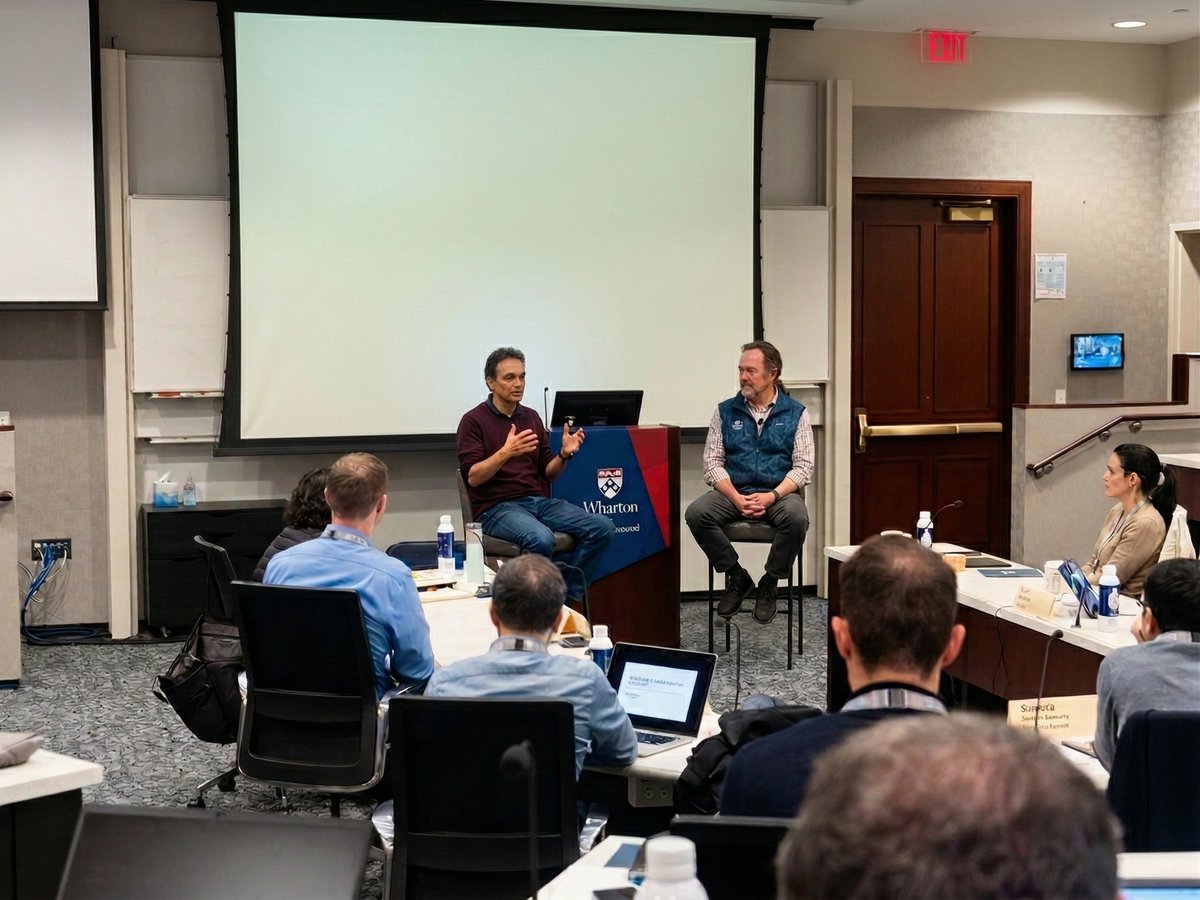
A thoughtful conversation at Wharton this week.
A reminder that leadership is not about having all the answers. It is about asking the right questions and staying focused on outcomes that matter.
22
Mar 3
If your AI effort cannot be explained in one sentence,
it is not ready to scale.
Clarity is the real prerequisite.
13
Hemant Virkar retweeted

Feb 28
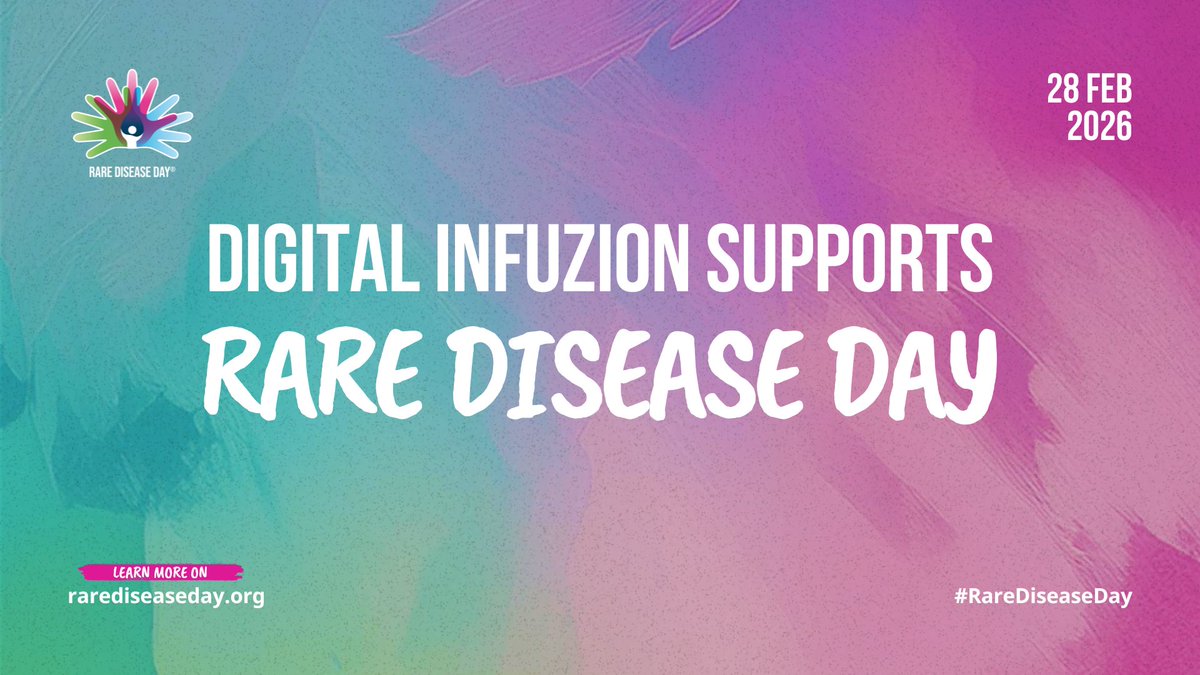
Rare Disease Day is more than recognition at Digital Infuzion. It reflects work that shaped who we are.
Our N of 1 Health Research Platform was built with rare disease communities including Gaucher, Pompe, Fabry, MPS, and FOP, alongside advocates, researchers, and industry partners.
These collaborations reinforced that progress depends on making complex data usable, connected, and actionable, and recognizing that every dataset represents a patient and family waiting for answers.
We remain committed to enabling research, improving decisions, and advancing care for communities too often overlooked.
#RareDiseaseDay #RareDiseaseAwareness #DigitalHealth #HealthcareInnovation
1
1
49
Feb 24
The hardest part of AI is not adoption.
It is subtraction.
Stopping projects.
Saying no.
Removing noise.
Leaders who cannot subtract fall behind.
11
Feb 17
AI roadmaps fail when they try to predict the future.
The better approach:
Short horizons.
Fast feedback.
Clear exit criteria.
Adaptation beats prediction.
1
20
Feb 10
Keeping up with AI is not about staying current.
It is about staying disciplined.
Clear goals.
Small bets.
Relentless follow through.
The rest is distraction.
20
Feb 3
Most organizations do not need better AI.
They need clearer ownership.
If no one owns the outcome, the technology will never matter.
1
1
33
Hemant Virkar retweeted

Jan 28
A conventional narrative you might come across is that AI is too far along for a new, research-focused startup to outcompete and outexecute the incumbents of AI. This is exactly the sentiment I listened to often when OpenAI started ("how could the few of you possibly compete with Google?") and 1) it was very wrong, and then 2) it was very wrong again with a whole another round of startups who are now challenging OpenAI in turn, and imo it still continues to be wrong today. Scaling and locally improving what works will continue to create incredible advances, but with so much progress unlocked so quickly, with so much dust thrown up in the air in the process, and with still a large gap between frontier LLMs and the example proof of the magic of a mind running on 20 watts, the probability of research breakthroughs that yield closer to 10X improvements (instead of 10%) imo still feels very high - plenty high to continue to bet on and look for.
The tricky part ofc is creating the conditions where such breakthroughs may be discovered. I think such an environment comes together rarely, but @bfspector & @amspector100 are brilliant, with (rare) full-stack understanding of LLMs top (math/algorithms) to bottom (megakernels/related), they have a great eye for talent and I think will be able to build something very special. Congrats on the launch and I look forward to what you come up with!

Announcing Flapping Airplanes!
We’ve raised $180M from GV, Sequoia, and Index to assemble a new guard in AI: one that imagines a world where models can think at human level without ingesting half the internet.
246
496
8,050
1,224,730
Hemant Virkar retweeted

Jan 27
Kimi K2.5 is beating Opus 4.5 on benchmarks at 1/8th the price. But the most important part of this release is how they trained a dedicated "agent swarm" model that can coordinate up to 100 parallel subagents, reducing execution time by 4.5x. Here's how it works: 🧵
20
74
1,384
145,802
Jan 27
AI advantage does not come from knowing more.
It comes from deciding faster:
What to try.
What to stop.
What actually matters.
Speed without judgment creates noise.
15
Hemant Virkar retweeted

Jan 20
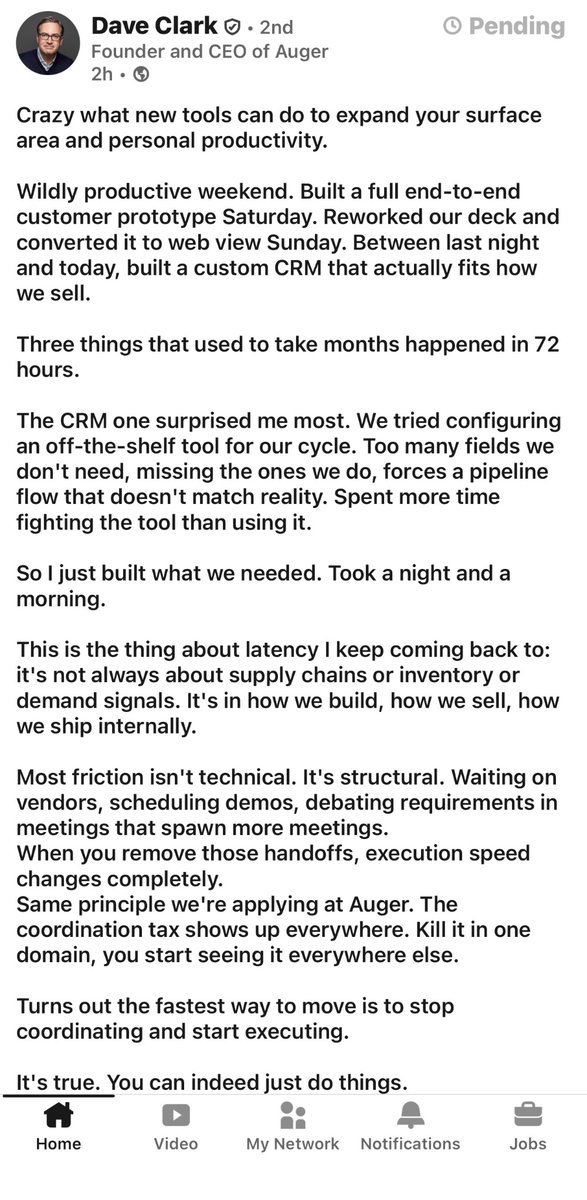
Former #2 at Amazon vibe coding a CRM for his new company to use was not on my bingo card.
23
31
464
68,673