
Joined June 2026
- Tweets 12
- Following 2
- Followers 3
- Likes 27
2 Photos and videos
Vix retweeted

Jun 11
C development should feel more reliable from install to production.
Vix.cpp v2.6.2 is out now.
This release fixes the Windows SDK installer issue reported today, improves vix run, vix install, vix update, vix list, vix outdated, test diagnostics, registry workflows, and transitive dependencies.
It also adds crypto helpers for constant-time byte comparison and PBKDF2-HMAC-SHA256 password hashing.
Vix.cpp keeps moving toward one goal: a modern C runtime and developer toolkit that is practical for real projects.
1
3
4
72

C can run real backend apps.
Pico is a small Vix.cpp runtime app showing HTTP routes, durable state, SQLite events, background jobs, WebSocket diagnostics, and live status.
pico.vixcpp.com
1
3
35
Vix retweeted
Jun 11
C dependency management in Vix.cpp keeps getting more reliable.
Today we fixed an important registry DX issue for v2.6.2.
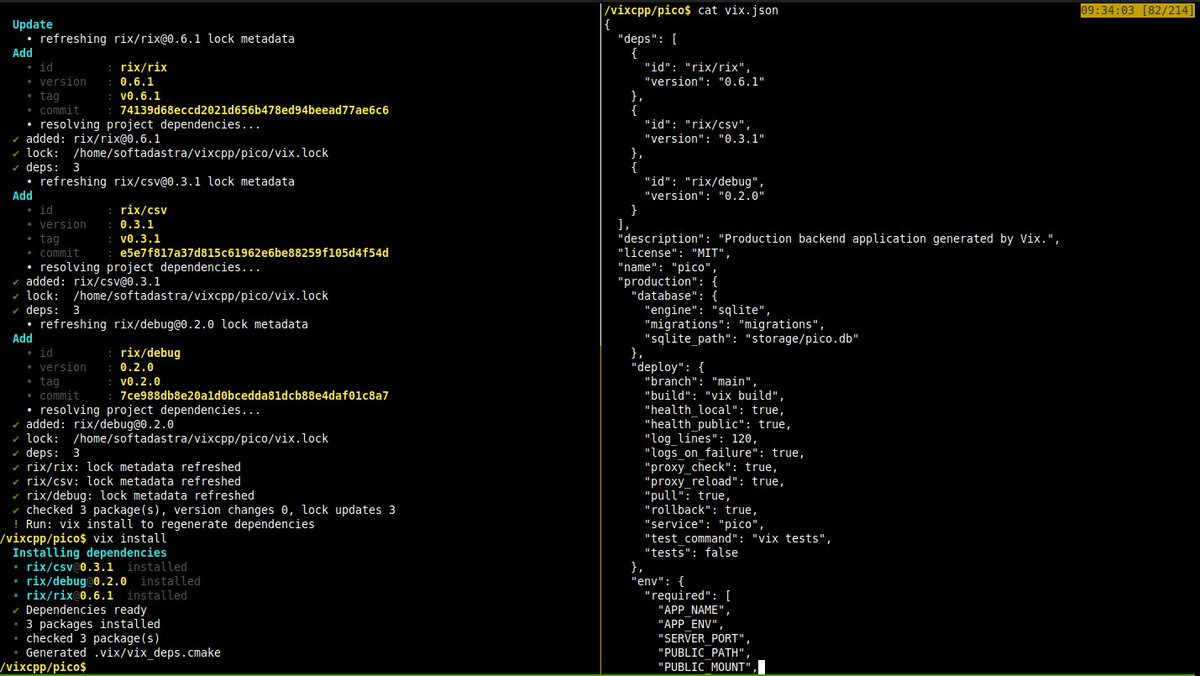
Before, vix update could say everything was current because package versions had not changed, while vix install could still fail because the lockfile metadata/hash was stale.
That is confusing for users.
Now vix update can refresh lock metadata even when versions stay the same.
So the flow becomes clear:
vix update
- respects the versions declared in vix.json
- does not jump to latest when a fixed version is used
- refreshes lock metadata when needed
- reports version changes separately from lock updates
Then:
vix install
- installs from the repaired lockfile
- regenerates .vix/vix_deps.cmake
- keeps the project reproducible
This matters for production projects.
A package can be current and still need lock metadata repair. The user should not edit hashes manually. The tool should handle it.
This fix will be part of Vix.cpp v2.6.2.
3
3
29
Vix retweeted
Jun 10
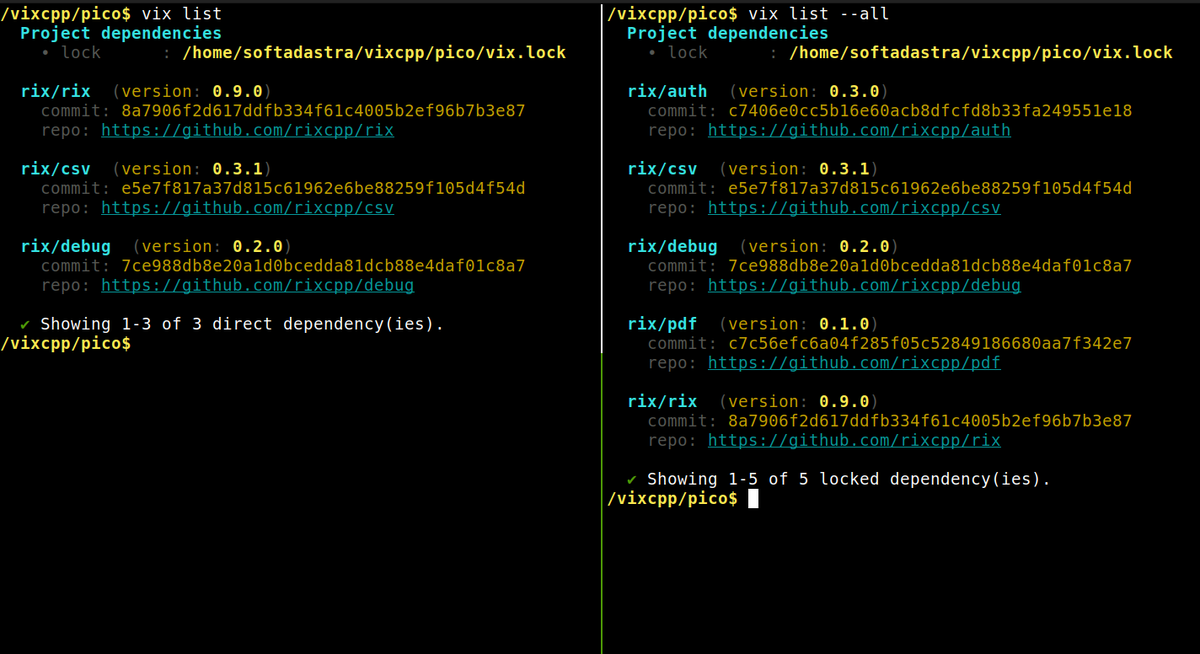
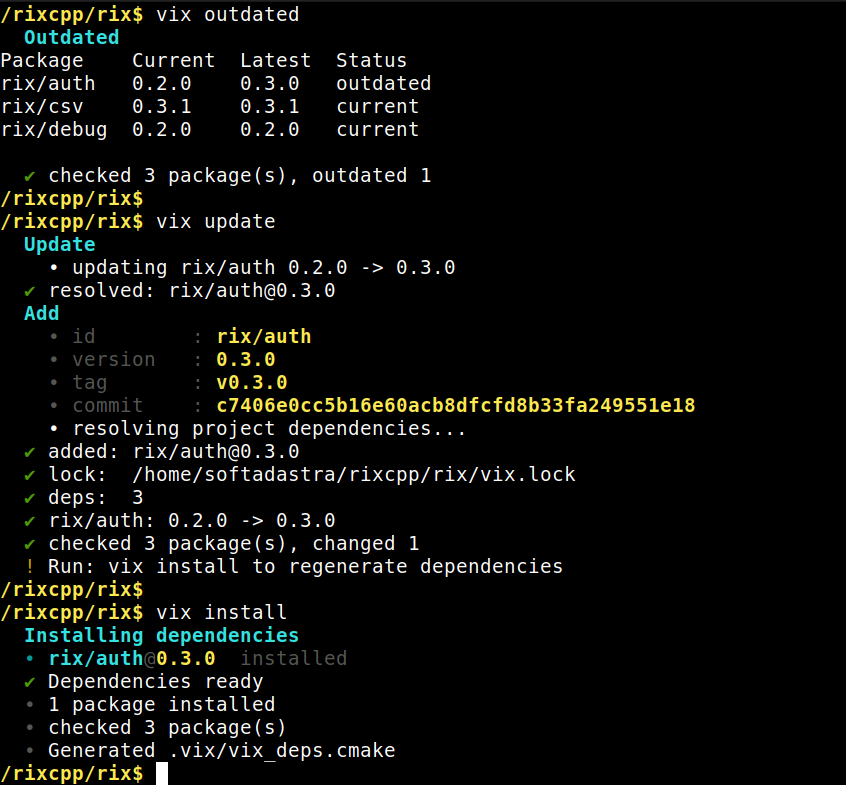
C dependency management in Vix.cpp is getting cleaner in v2.6.2.
`vix outdated` now clearly shows what needs an update.
`vix update` updates only the packages that changed.
`vix install` then installs only what is needed and regenerates the CMake integration.
This looks small, but it matters a lot when a project has many registry dependencies. Less noise. Less useless work. More trust in the tooling.
We also tested the Vix registry dependencies in production with Pico
pico.vixcpp.com
Pico is now helping us validate the registry, dependency resolution, install flow, generated CMake integration, and production deployment path together.
v2.6.2 is becoming a very practical release.
3
3
24
C can power real backend apps.
Pico is a small Vix.cpp runtime app showing HTTP routes, durable state, SQLite events, background jobs, WebSocket diagnostics, and live runtime status.
pico.vixcpp.com
2
10
1,260
Vix retweeted
Jun 8
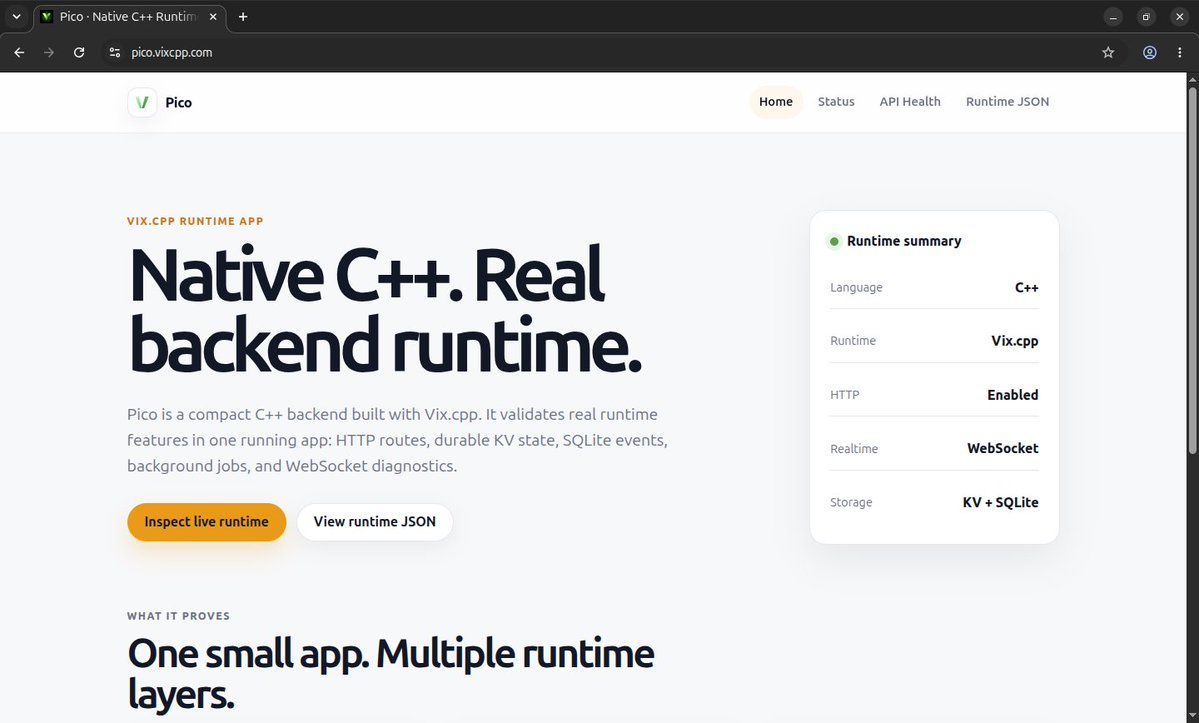
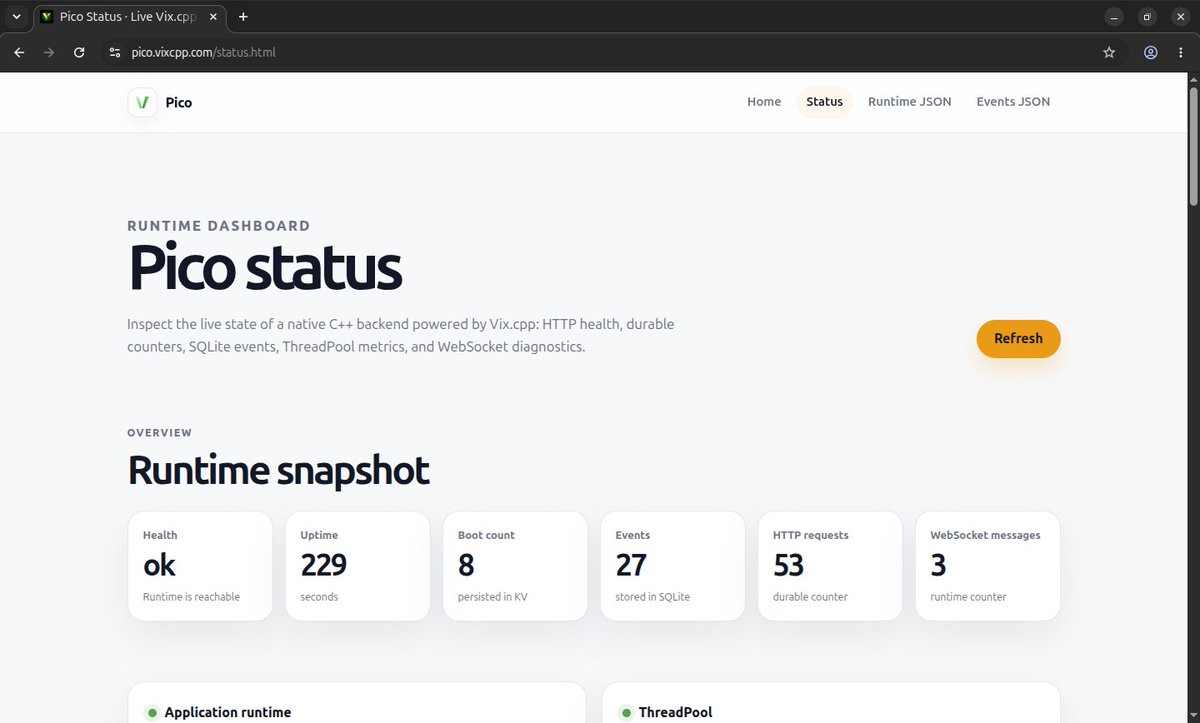
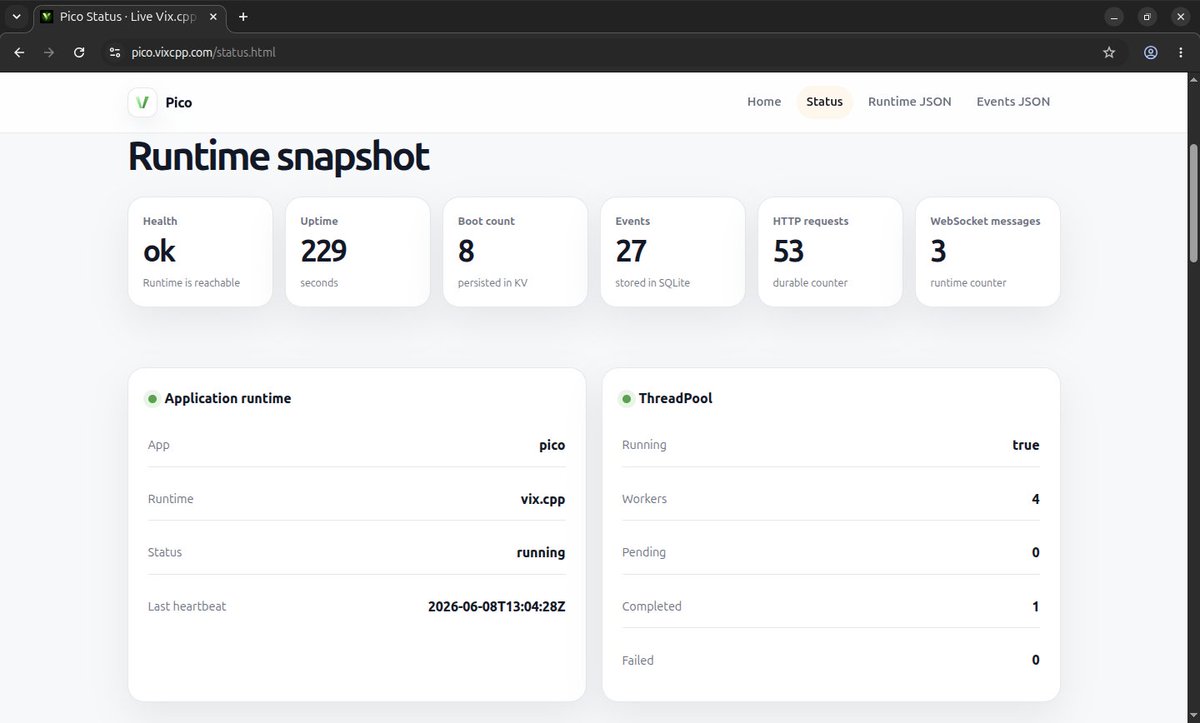
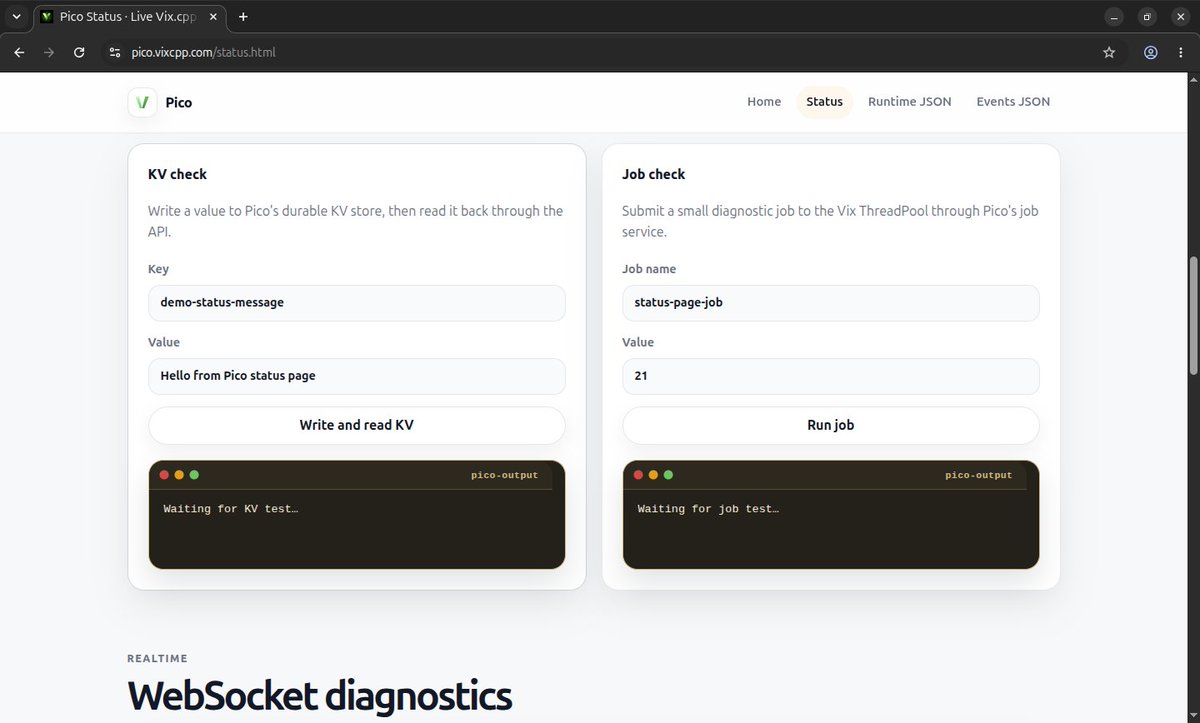
C running as a real backend app.
Pico is a small Vix.cpp runtime app with HTTP routes, durable state, SQLite events, background jobs, WebSocket diagnostics, and live status.
pico.vixcpp.com
3
6
230
Vix retweeted
Jun 6
C is the only language where people say “it’s too hard” and still use software built with it every day.
Games, browsers, databases, operating systems, trading systems, infrastructure.
The problem is not C .
The problem is that starting and shipping C software should feel much better.
That is why I’m building Vix.cpp.
1
1
13
Vix retweeted
Jun 6
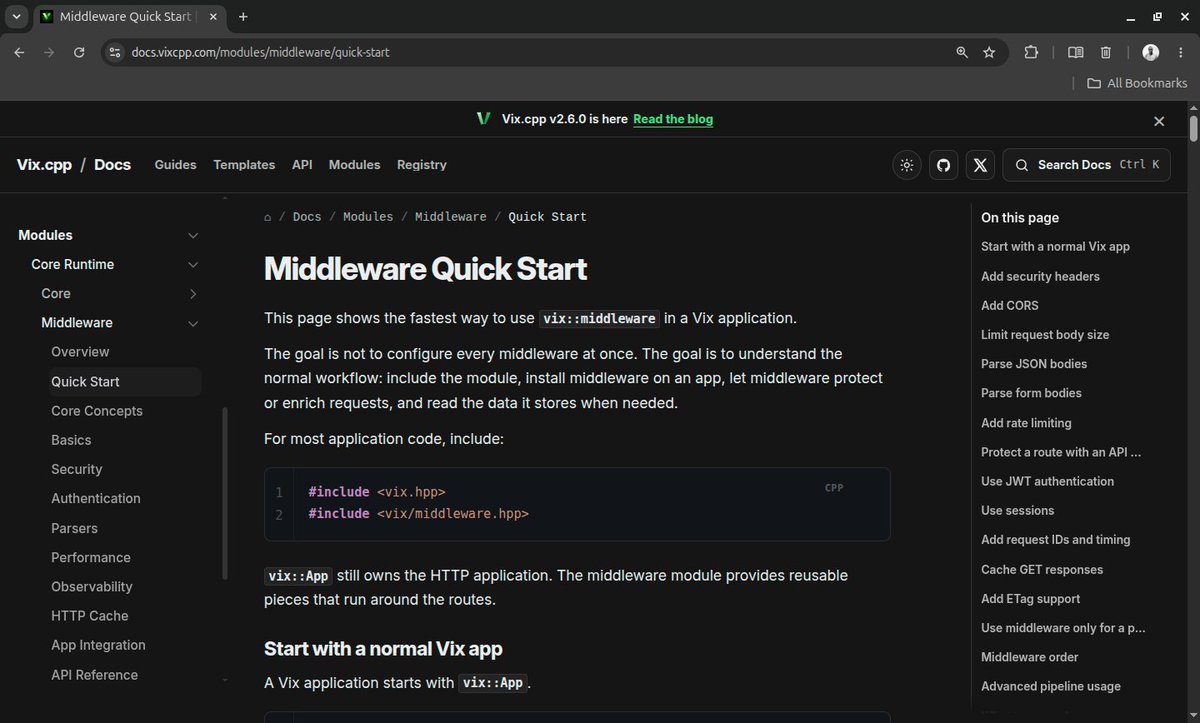
C web applications need more than routes.
Security headers, CORS, JSON parsing, rate limiting, JWT authentication, sessions, caching, observability, and request tracing are now documented in the Vix.cpp Middleware module.
Quick start:
docs.vixcpp.com/modules/midd…
#cpp #cplusplus #webdev #opensource
1
4
8
256

Jun 6
good idea.
Jun 6

I have been thinking a lot about how Vix.cpp should grow without becoming another heavy C system.
One mistake I want to avoid is putting every useful library directly inside Vix Core. It would feel convenient at the beginning, but after some time the core would become harder to maintain, harder to release, and harder to trust. A runtime should not become a container for every idea we have.
That is why I decided to keep a clear separation.
Vix will remain the runtime and developer toolkit: build, run, packages, project structure, modules, developer workflow.
Rix will be the official public library layer around Vix, available through the registry and usable
independently:
```
vix add rix/json
vix add rix/http
vix add rix/sqlite
```
For me, this is the right direction because it protects the stability of Vix while still allowing the ecosystem to grow. Rix can evolve faster, receive new libraries, improve existing ones, and serve application developers without forcing every change into the Vix core.
This is not a migration away from Vix. It is a cleaner architecture around it.
The goal is simple: keep Vix stable, keep the ecosystem useful, and make the separation obvious for developers.
Core belongs to Vix.
Reusable application libraries belong to Rix.
That gives us a system that is easier to understand, easier to maintain, and easier to evolve over time.
1
2
Jun 3
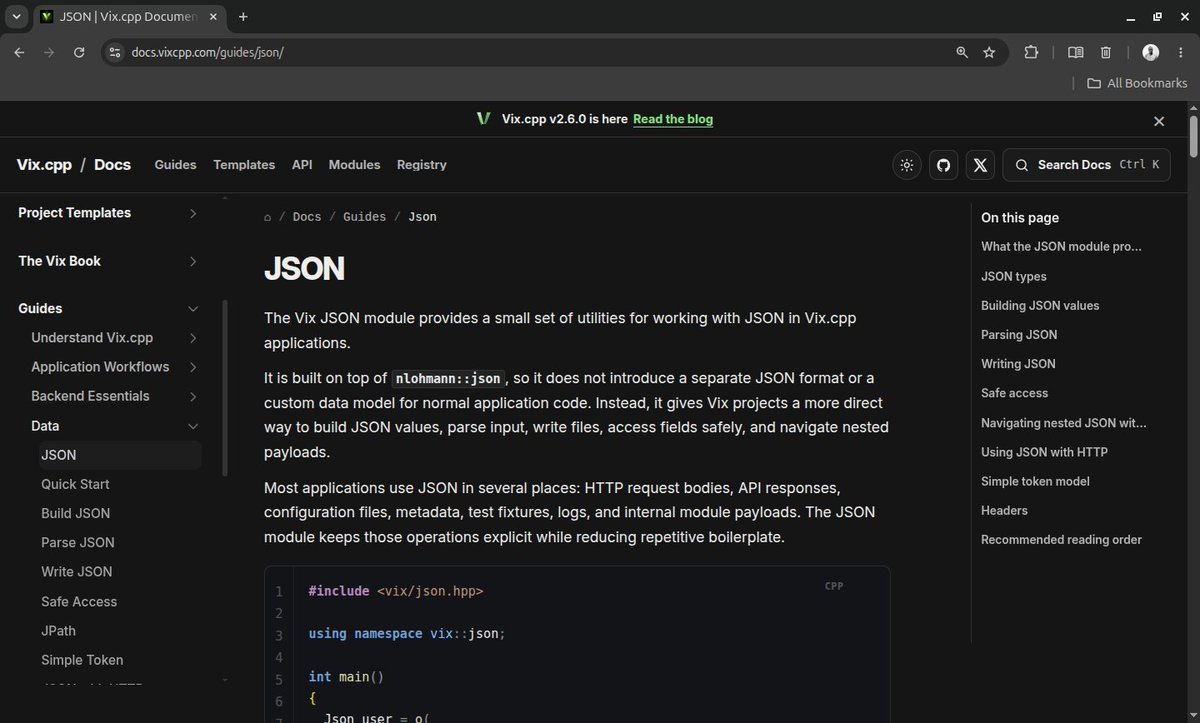
C JSON support in Vix.cpp is now documented.
Build JSON values, parse input, write JSON, safely access fields, and work with nested payloads.
Docs: docs.vixcpp.com/guides/json
#cpp #cplusplus #vixcpp #json
3
4
37
Jun 2
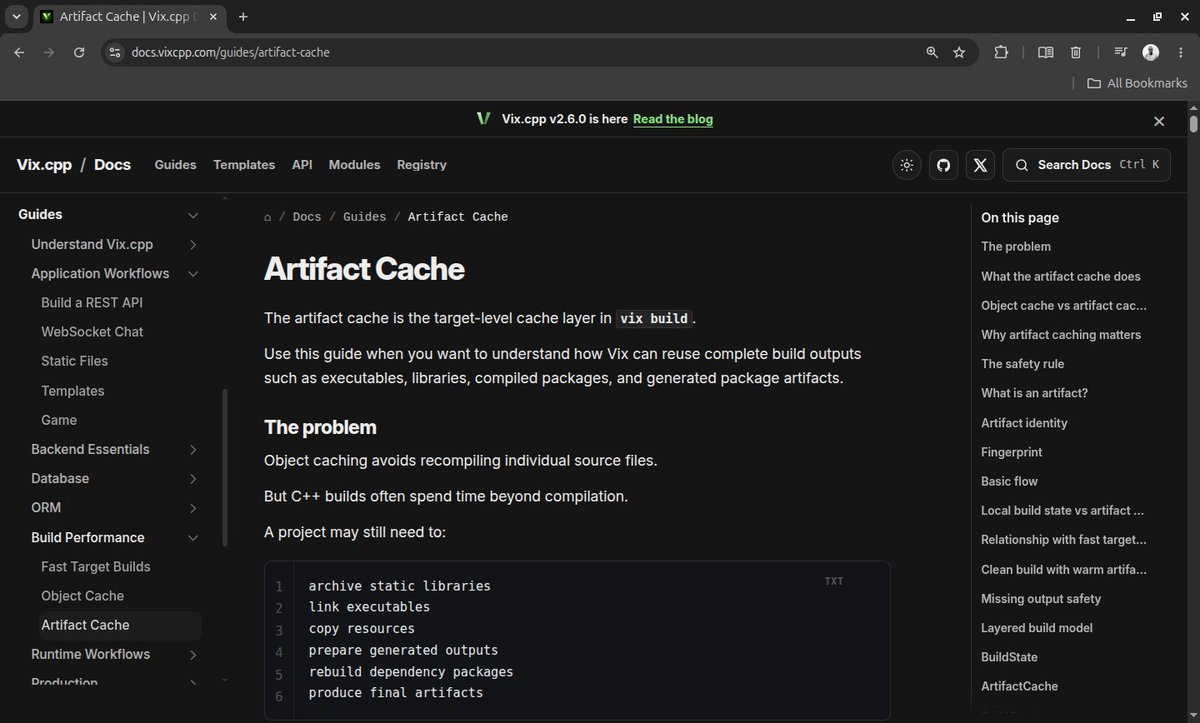
Vix.cpp v2.6 now documents the Artifact Cache.
The goal is simple: reuse complete build outputs like executables, libraries, compiled packages, and generated artifacts instead of rebuilding everything from zero.
docs.vixcpp.com/guides/artif…
3
4
47