
4 Photos and videos

_ retweeted

May 8
Exactly - biology is a fundamentally different domain than text and scaling laws do not apply cleanly
~All the tasks you want an LLM to do are contained in the text data itself. For biology, NONE of the tasks you want the model to do are contained in the sequence data itself.

But the Bitter Lesson from AlphaFold & EVO2 is that scaling is actually very challenging in biology & even today models that incorporate domain specific constraints & inductive biases are still very hard to beat. 8/
12
40
346
50,867
_ retweeted

Apr 6
I would never take the jab bro!! Fauci put nanobots in it!!
(Injects lead from mystery internet vial)
Apr 6

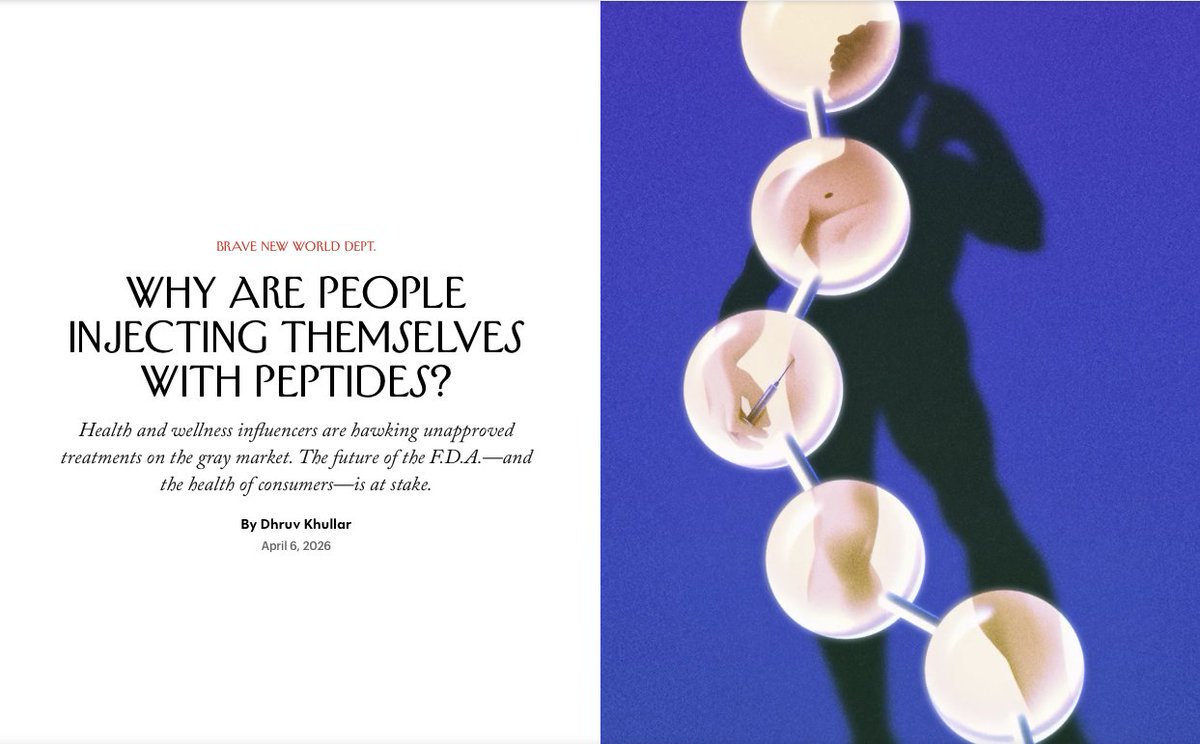
The New Yorker just lab-tested research peptides from a popular online vendor.
BPC-157: contained lead.
TB-500: contained endotoxins.
CJC-1295: less than 42% of the labeled dose.
This is what people are injecting into their bodies.
The peptides aren't the problem. The supply chain is. This is exactly why the FDA reclassification matters moving these compounds into regulated compounding pharmacies with cGMP standards and real quality control.
5
14
108
8,799
_ retweeted

Mar 27
As someone who has covered cancer drug development for 25 years, one of the few things I am sure of is that the odds of technology folks thinking they understand biology are much higher than the odds they actually do.
Mar 27

This is totally out of control:
There’s 0 - I repeat 0 - evidence any of the LLM work did anything meaningful for Rosie’s cancer
I’m sorry to rain on the parade here. I know we want to believe. But, it’s possible to do a lot of things and have nothing happen
@paul_conyngham co-administered α-PD-1 (conventional immunotherapy) with a TKI and the mRNA. It’s probably the most effective cancer immunotherapy of all time. This isn’t a small detail!
There’s no evidence his process (beyond FDA approved doggie α-PD-1) had any impact on disease progression. The most parsimonious explanation is a partial response to α-PD-1
I get it. The chat bots make for a great story (although checking multiple LLMs isn’t validation), but it’s really just a neat story. It’s fundraising copy. Before he starts selling the “custom neoantigen mRNA vax” story to consumers, he should provide some evidence it did anything! That’s responsible citizen science
This is just storytelling for the AGI true believers. Specifically, a story in search of venture money
13
38
291
48,035
_ retweeted

Tech confidently commenting on biology (and being wrong) remains unbeaten
29
72
625
35,723
_ retweeted

2 Oct 2025
Ask not why would you work in biology, but rather: why wouldn't you?
owlposting.com/p/ask-not-why…
openai/gemini gave this essay an A- for evocative imagery. claude gave it a C- for being emotionally manipulative. both are probably right. i feel a little sick re-reading it
22
55
318
116,447
_ retweeted

24 Sep 2025
Today, UniQure ( $QURE ) announced the 3 yr readout findings of their gene therapy trial for Huntington's disease (HD). At the bottom line, the company reports a statistically significant reduction of disease progression (~75%) compared to an external, propensity matched controls.
Apparently, everyone is excited about the results, as can be seen from the >250% increase in $QURE stock price today. Understandably, a first positive trial news in a long time for a devastating disease with no cure has excited the scientific community and increased the hopes of patients.
I am seeing headlines like "Huntington's disease successfully treated for the first time" and claims like scientists' have found a cure for HD. I am not sure if the findings are that groundbreaking to warrant such claims.
It might be the case that treatment really is working, but I am not sure if the current findings are strong enough to be too confident on the treatment effect. There are many uncertainties around the results. Below are my some of my thoughts.
HD is caused by a triplet repeat mutation HTT gene that somatically expand over time and cause neurodegeneration. The repeat mutation in HTT gene gets translated to polyglutamine repeats in the HTT protein, which is believed to be neurotoxic (though we don't know exactly what's killing the neurons).
Past treatments have largely focussed on knocking down HTT gene using different approaches, none of which translated to clinical benefits. Most notable among them, is tominersen (developed by Roche and Ionis Pharmaceutials), an antisense oligonucleotides (ASO) drug that lowered the production of HTT protein in the brain (both the mutant and normal copies). Although, tominersen successfully reduced the HTT levels in the brain, it failed to treat HD.
All past failed efforts on treating HD by reducing HTT production, led to many critical questions, such as
- Is it safe to blindly knockdown HTT in the brain, as normal versions of the protein might play some important functions ?
- How early one should intervene to make clinically meaningful impact on disease progression? Even though the clinical symptoms appear late in the disease course, the neuronal damage itself seem to start very early in the disease course.
- At what level does the toxicity originates, protein or RNA or DNA? how much of the existing neuronal damage is reversible?
There are many more unanswered questions. Recently, the therapeutic focus have shifted to reducing the somatic expansion of HTT mutation rather than reducing the HTT expression (refer to this article for more details on this, nature.com/articles/d41586-0…).
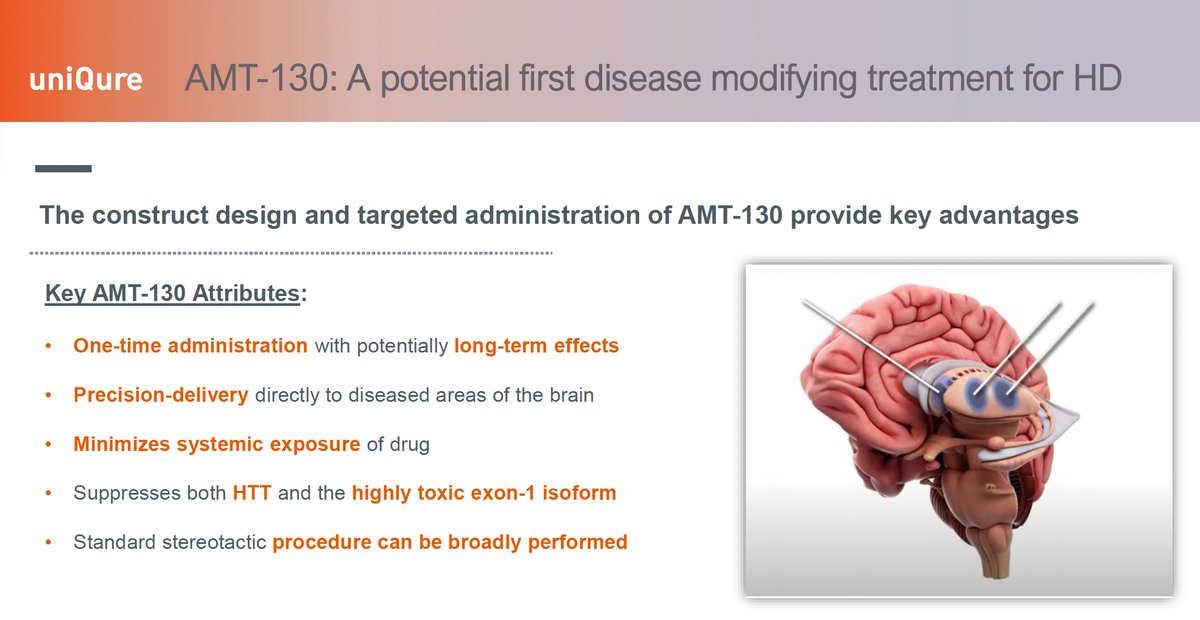
With this background, here we have a new gene therapy--AMT-130--developed by UniQure that is trying to treat HD by reducing HTT production using a viral vector based genetic drug surgically injected directly into the brain striatum (key brain region affected in HD). The idea is to permanently reprogram the neurons to produce microRNAs that reduce production of HTT proteins (both mutant and normal copies).
It's challenging to have true controls for such trials, so scientists used external controls (in large numbers, n>100) that matched closely to the trial participants with regard to clinical characteristics. There were two groups. One (n=9) received the high dose injection and the other, low dose (n=12)
The primary end point is a composite score called composite unified Huntington's disease rating scale (cUHDRS) calculated from multiple clinical scores measuring motor, cognitive and other functioning capacities of the patients. Additionally, neurofilament light chain, a CSF biomarker of neuronal death, is also measured.
At 24 months follow up (July 2024), the press release reported a statistically significant reduction (~80%) in the cUHDRS decline in high dose group (n=12) vs external controls. But there was no significant effect in the low dose group (n=12). With regard to CSF Nfl, the report showed a slight decrease in trial participants (n=21) compared to baseline, both high and low dose pooled together the CSF. No data on this from individual groups.
Now (Sep 2025), at 36 months follow up, the press release reports a statistically significant reduction (~75%) in the cUHDRS decline in high dose group (n=12) vs external controls. But there is no significant effect in the low dose group (n=12).
With regard to CSF Nfl, the report shows average reduction in CSF Nfl in both low and high dose groups individually compared to baseline. No mention of P values. From the data, the reductions are likely not statistically significant from either baseline or between the high dose and low dose groups.
Reviewing the data, I see two major concerns: small case sample size (paired with unusually large controls) and short follow up period for a noisy outcome measure such as cUHDRS.
Firstly, there are only 12 individuals in each case arm (with 36 months data) and 568 individuals in control arm. The control sample is disproportionately larger than case sample size. It's difficult to confidently assess a different between these two groups. The variations in the control group would be smaller due to large N, but the variations in the case group would be bigger with mere chance pushing the average to extremely higher or lower levels.
Currently, individual data points are not reported. It's possible that even one or two patients with extreme scores would have pushed the average of trial participants higher favoring a statistical significance. If the number of controls is reduced to, let's say, n<100, it's possible the P value becomes bigger, even to non-significant level (P>0.05).
One might get excited about the large effect size, 80%, but effect estimates are meaningless for extremely small sample size.
Secondly, the 3 year follow up is short for tracking HD's disease course. HD has a really long latent period and the disease progression happens slowly until very late stages when things escalate quickly. Also, the neuronal damage happens asynchronously. The disease course can differ wildly between patients with some staying stable for many years while other worsening quickly. Given this complexity, interpreting a 3 year readout based on n=12 individuals is challenging.
My other major concern is the low dose group, in which there is no meaningful effects either at 24 months or at 36 months. Even worse, with regard to some measures they seem perform poorly compared to controls. This is worrying, as it suggests there is no dose dependent effect. But we don't know for sure. Much longer follow up is needed. Adding to the concern, the press release avoided mentioning anything about low dose group, and focussed only on high dose group.
Of course, even a remote possibility that this gene therapy works and may give back years of quality life to HD patients should excite anyone in the field. I am excited too. But at the same time, one should be also cautious in interpreting the results and raising hopes for patients and families.
For now, I'd say we should be cautiously optimistic about this readout and wait for longer follow up results. Of course, it's possible the drug clear regulatory approval and gets rolled out to many patients. But it's gonna take a long time before we really know if it's truly working.
uniqure.com/investors-media/…
12
24
152
35,700
_ retweeted
12 May 2025
my bet on biomedical sciences being the most important field to join — given that most people’s seemingly primary desire is to live longer, healthier lives — has turned to be a very foolish move in retrospect. what people really care about is AWS pricing optimization
33
43
881
47,629
_ retweeted

10 May 2025
I HIGHLY encourage everyone to open the paper BEFORE blogging
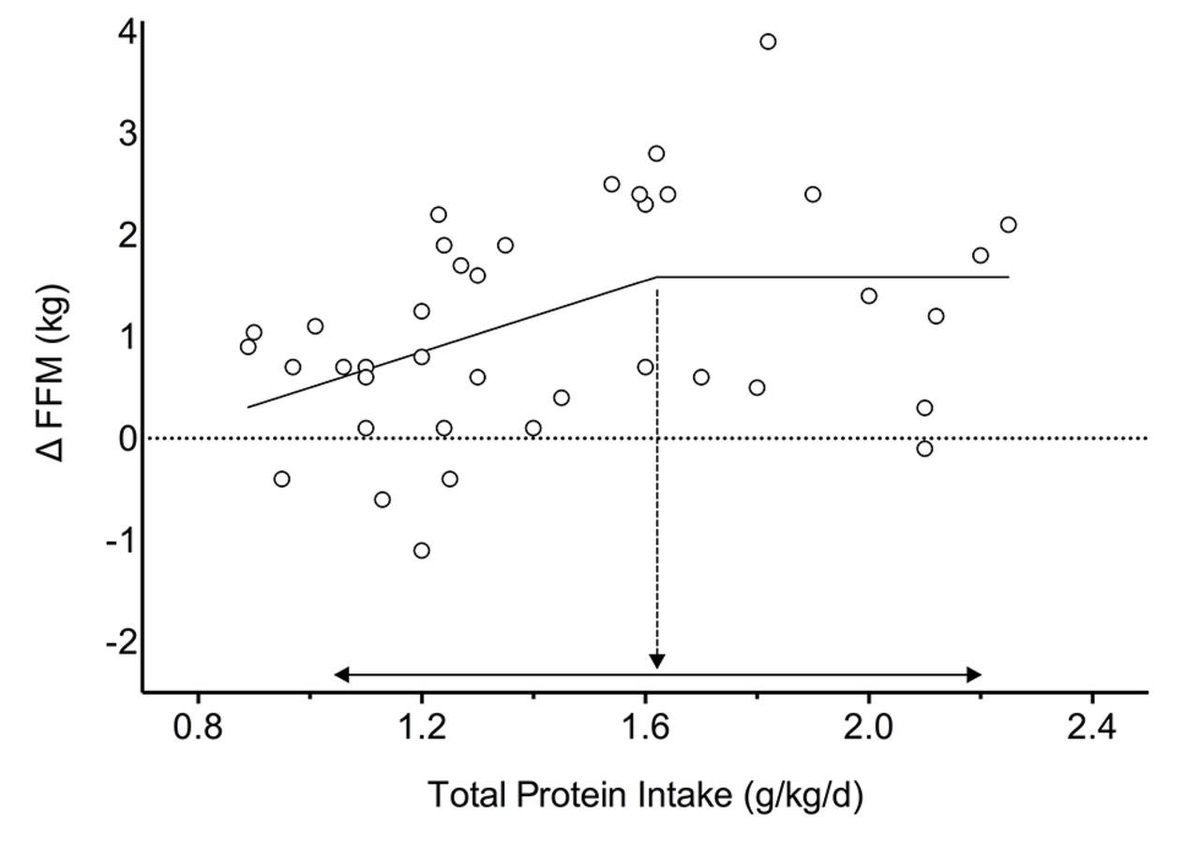
Aside from extrapolating beyond study population, Fig 5 CIs don’t inspire certainty
9 May 2025

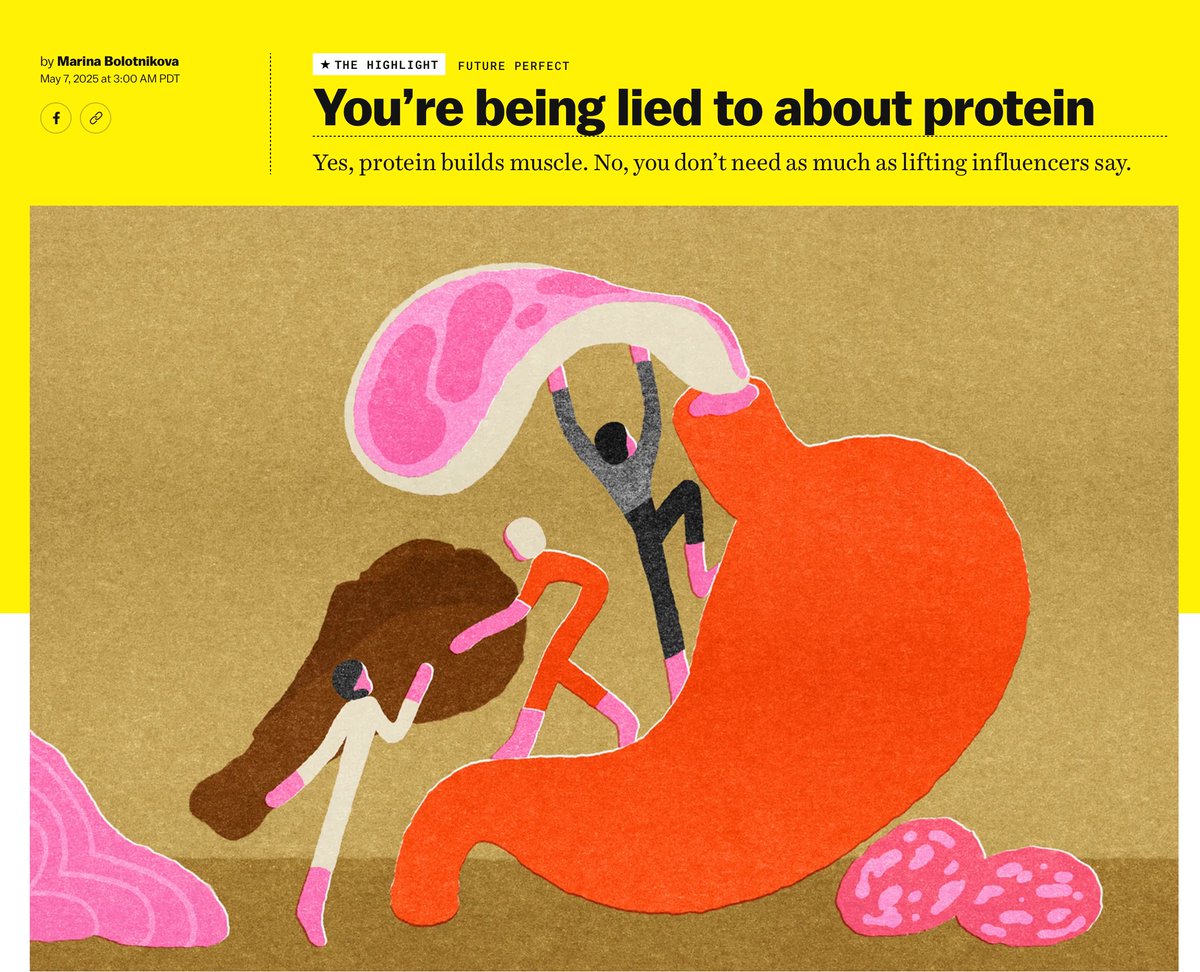
What is the right amount of protein intake?
It's not "bro science" of 1 g/pound body weight per day. "You're being lied to about protein" @voxdotcom
vox.com/future-perfect/41056…
Systematic review: max benefit is 1.6 g/kg/day and recommendation is for less (note that's per kg, not lb)
bjsm.bmj.com/content/52/6/37…
4
2
17
3,604
_ retweeted

18 Apr 2025
There are so many weird Biology quirks that I somehow missed before and am only just finding now...
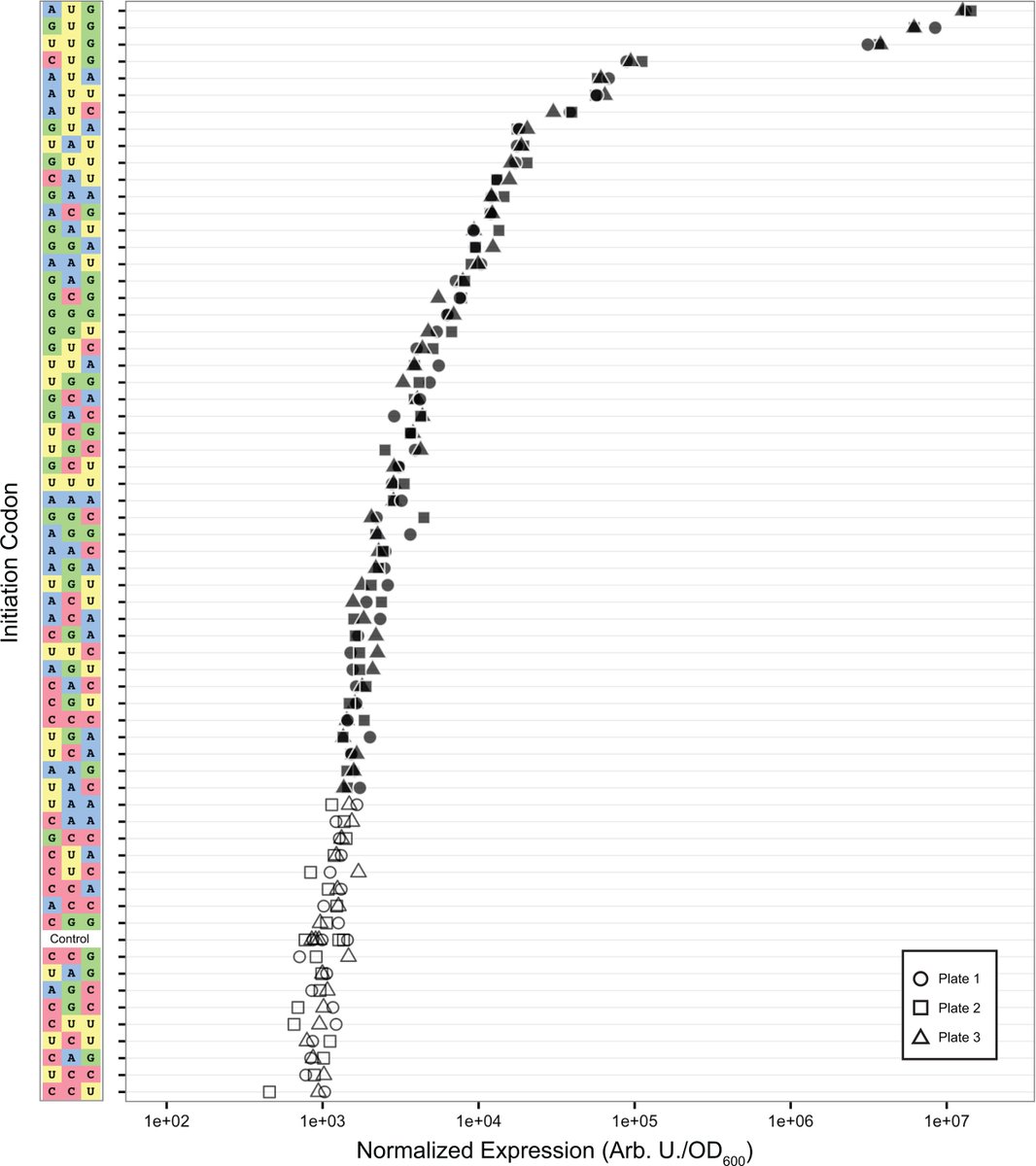
Apparently translation can and *does* initiate from EVERY codon
With the caveat that any codon other than the canonical AUG / GUG / UUG options induce transcription at such wildly inefficient rates that they are nearly undetectable
But they DO happen 🤯
I wonder what weird and rare products might be floating around in our bodies, some of which might even be really important
18
102
667
45,767
_ retweeted

16 Apr 2025
We need an optimistic collective name for all the new Trump policies to help improve morale during the (not actually) temporary pain and destruction they'll cause.
How about "Great Leap Forward"?
250
134
2,260
220,864

_ retweeted

1 Apr 2025
Thousands of the best experts at FDA, NIH, and all across HHS are being terminated right now.
These are the people who make sure the medications you and your children take are safe.
These are the people who perform and oversee research on cancer, infant health, and so so so much more.
These are the people who make sure new devices that physicians and patients use are effective.
These are the people who keep workers safe on the job and help prevent devastating injuries for workers all around the country.
These are the people who track what drugs and medications are experiencing shortages so we can adapt.
These are the people who help tackle HIV and other infectious diseases, asthma, lead poisoning, and everything else that makes many Americans sick.
And now, thousands of them are gone.
There is no way this makes Americans healthier.
We will regret this.
3,408
5,766
13,498
1,367,614
_ retweeted

12 Mar 2025
Exciting PlasticList update:
We were honored to work with @bobaguys to identify and eliminate the sources of BPA contamination, and their teas are now BPA-free!
They have fully transitioned to BPA-free receipt paper, which PlasticList confirmed to be BPA-free through independent lab testing. They have also switched to brown sugar in BPA-free packaging.
We have been impressed with their commitment to get to the bottom of the issue and move fast to remove BPA from their supply chain.
If you want healthy and delicious tea, I highly recommend Boba Guys!
2 Jan 2025

Advice for Food Companies
Since we launched PlasticList, we’ve been heartened to have quite a few food companies reach out and ask for help interpreting their results and tracking down and eliminating their contamination. I’ve had calls with a bunch of these.
I am happy to report that no food company wants this stuff in their food and they are all eager to figure out what’s going on and how to remove it. After a while I noticed the advice we were giving was pretty similar for every company, so I thought it would be useful to write it down and share publicly.
So, here are some notes:
1. To track down the source of your contamination, don’t just test a few samples of your product with varied production processes. Instead, test every single one of your inputs: every ingredient and input in the form you receive it before any processing steps, including water and any other consumables.
2. Then, test the food before and after every step in your production process. If you boil something in tap water, test before and after boiling. If you chop something on a plastic cutting board (because wood cutting boards are outlawed in commercial kitchens, apparently), test before and after chopping.
3. You may have to go deep into your supply chain to figure out the source of your contamination. One food company founder we spoke to said that some of the fruit they include in their product is picked, put into plastic bags, and then steamed in the bags before the bags are cut open and the fruit is transferred into another plastic bag, while still warm, for shipping. Whoops.
4. Run at least three samples of every test due to sample-to-sample variation. You can see in our report and in our data that sample-to-sample and lot-to-lot variation should be expected: plasticlist.org/report
5. You should also test any intermediate or final packaging that your product ships in, as leaching can also occur post-production.
6. There are a lot of steps that you need to carefully follow to prevent contaminating your samples during collection and transportation. It’s really easy to miss one of these and mess up your data. We describe many of these on our methodology page: plasticlist.org/methodology
7. You should consider running longitudinal tests, maybe quarterly, as we have heard that there can be seasonal variation in contamination from suppliers, due to things like summer heat, suppliers switching their processes, and suppliers switching their own backend suppliers for their inputs.
8. And most importantly: PICK A GOOD LAB. Unfortunately not all labs are good, and we think many ISO-certified commercial labs will not give reliable results. We rejected many certified labs because we weren’t confident in their work; all-in-all, we spent about 10 weeks finding a lab that we trust for our tests. You can see our lab’s internal methodology here: docs.google.com/document/d/1…
Our lab has recently permitted us to identify them publicly, and they are IEH: iehinc.com/
We also worked with Light Labs to produce this study and they can be a big help: lightlabs.com
And Million Marker is able to work with food companies to debug their supply chains as well: millionmarker.com/
9. You should consider hiring an analytical chemist as a consultant to validate that the testing methodology is accurate and to double-check the lab’s results. We hired John Brock to do this and it was well worth it; we would not have been confident in our choice of lab or our results without John.
10. We couldn’t find a lot of evidence that the phthalate substitutes are bad; if you have high-percentile detections in phthalates or bisphenols, though, it’s probably worth figuring out how those chemicals are getting into your products.
74
114
2,514
363,390
_ retweeted

12 Jan 2025
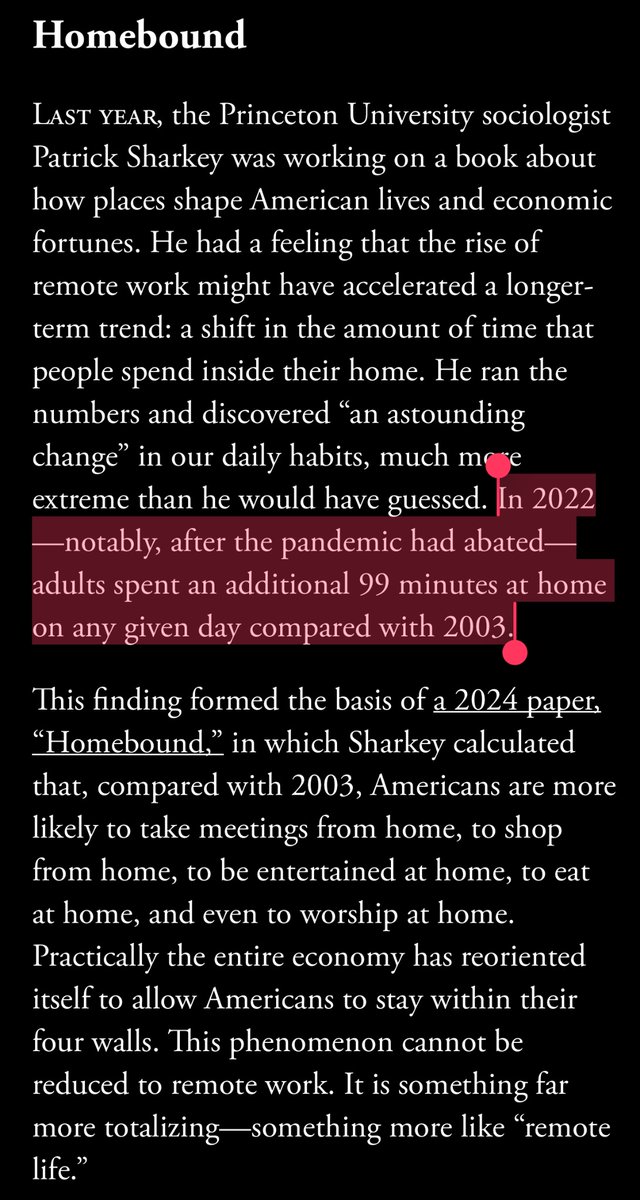
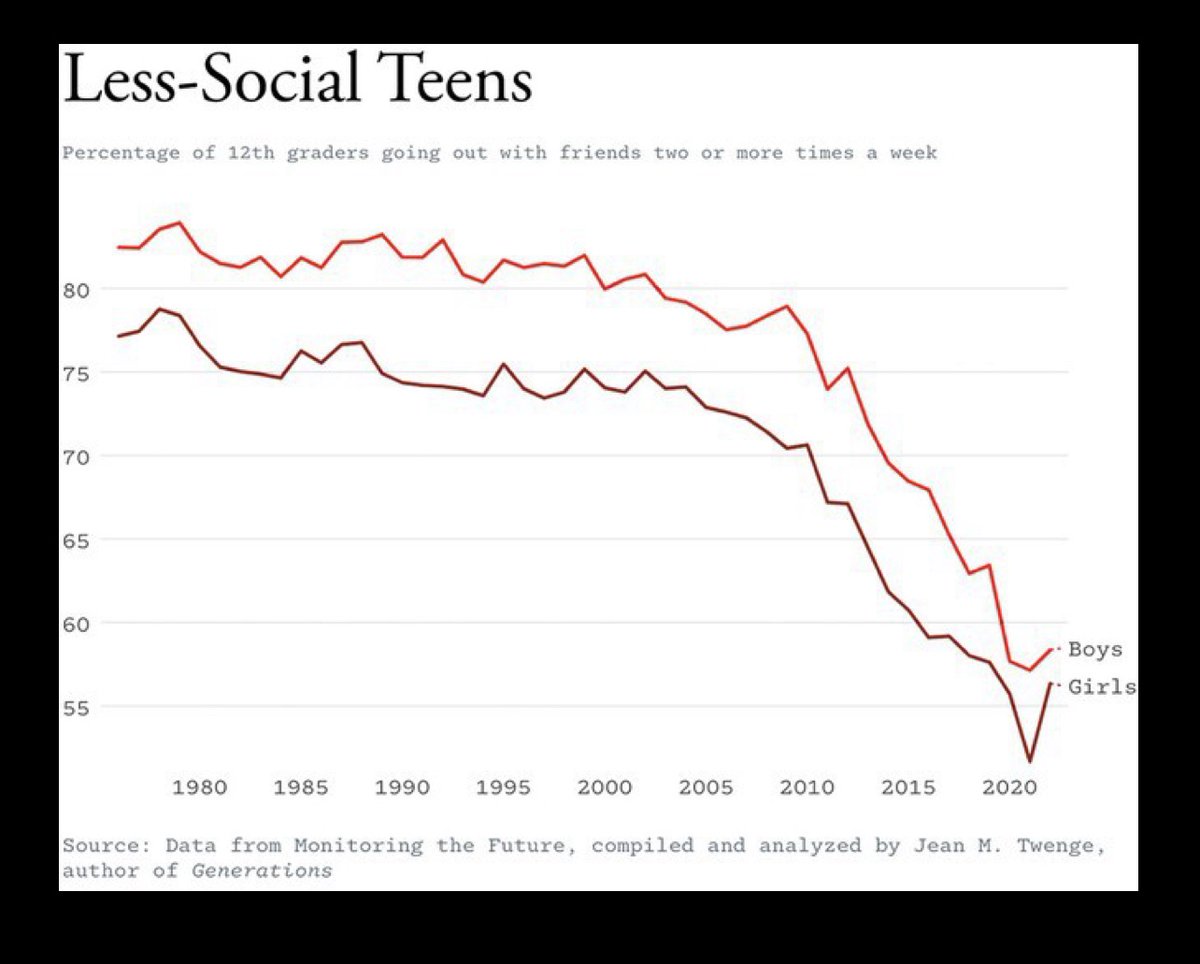
“In 2022, adults spent an additional 99 minutes at home on any given day compared with 2003.“
Increasingly, we are living an isolated and remote existence. Great article from @DKThomp
17
18
244
36,455


_ retweeted

11 Jan 2025
This weekend falling deeper into the rabbit hole of contaminants exposure in daily life...
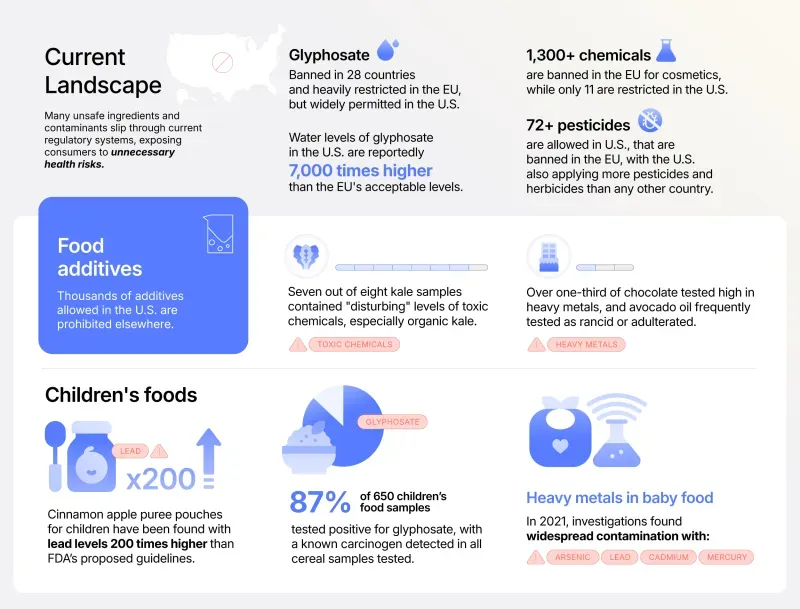
I am a bit surprised how weak the U.S. regulations are compared to other countries around industrial chemical use. E.g. the lab @plasticlistorg recommended for testing had this infographic on their website. There are thousands of pesticides, herbicides and various synthetic chemicals banned in other countries that are ok for use in the U.S.
It doesn't help to know that you should be eating organic kale when the one you bought shows "disturbing" levels of known toxic chemicals. It doesn't help to eat a Sweetgreen Chicken Pesto Parm Salad when it randomly tests in the 99th percentile of DEHP. Or dark chocolate apparently steeped in heavy metals.
The other thing is that there are known good mitigations for many of the risks if you do some research. E.g. in water treatment you want a Reverse Osmosis system at home. For air there are some pretty good HEPA air filters on the market. For clothing you want natural materials (cotton, wool, linen, hemp etc.) instead of synthetic fibers that you inevitable breathe in. You have to know to avoid plastics everywhere (esp warm) and including in secret locations you wouldn't expect them in (e.g. lined *inside* aluminum containers). You have to know about PFAS in your cosmetics. You have to know that you want a stainless steel or cast iron pan. You have to know how to read food packaging ingredients because some brands give you the thing you want, while some brands add 50 other things - emulsifiers, preservatives, "natural and artificial flavors" stuff like Yellow 5 (gross!), "fragnances", high fructose corn syrup, cellulose, artificial sweeteners. You have to stumble by the BobbyApproved app for help. Food is the big wild card that will probably take a while to sort through.
A lot of the burden of wanting to live a simple, natural, uncontaminated life turns out to fall on the consumer, and it also seems hard to spend a marginal dollar to decrease your risk exposure without having to run a full research program.
But it's okay, I'll run mine and I'll try to write something up when it reaches some maturity.
246
455
4,940
422,035
_ retweeted

29 Nov 2023
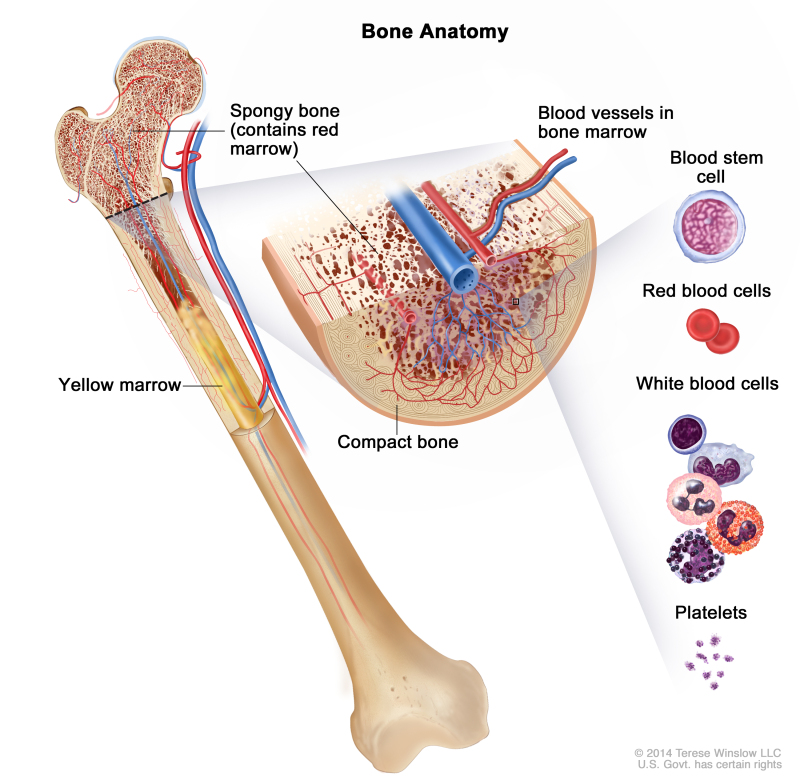
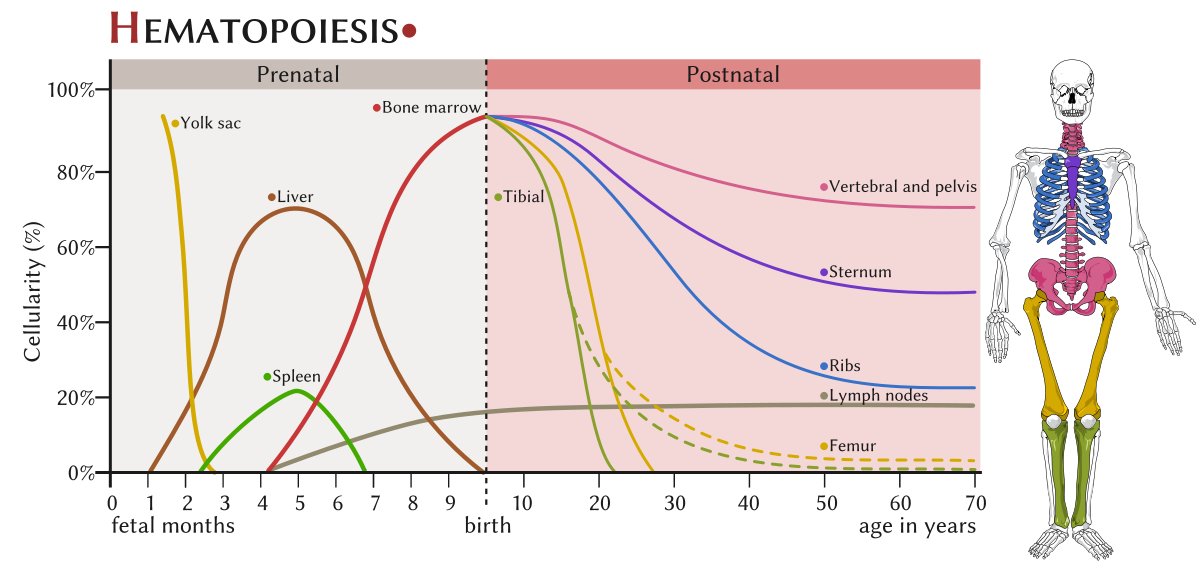
Did you ever wonder why our marrow is located inside of our *bones*, #MedTwitter? There’s no a priori anatomical reason it should be sited there. Blood cells could form in our spleens & livers, as they do during our fetal lives; or elsewhere, as in some animals. Let’s discuss! /1
99
921
3,548
888,212