
Scientist at IDM ♥s epidemiology, running, prob stats, 🦀/🐫, fly fishing, greyhounds, backpacking. Author of book Bioinformatics Data Skills. All views my own.
Joined August 2009
- Tweets 28,204
- Following 3,064
- Followers 34,462
- Likes 58,262
2,079 Photos and videos





Pinned Tweet

May 15
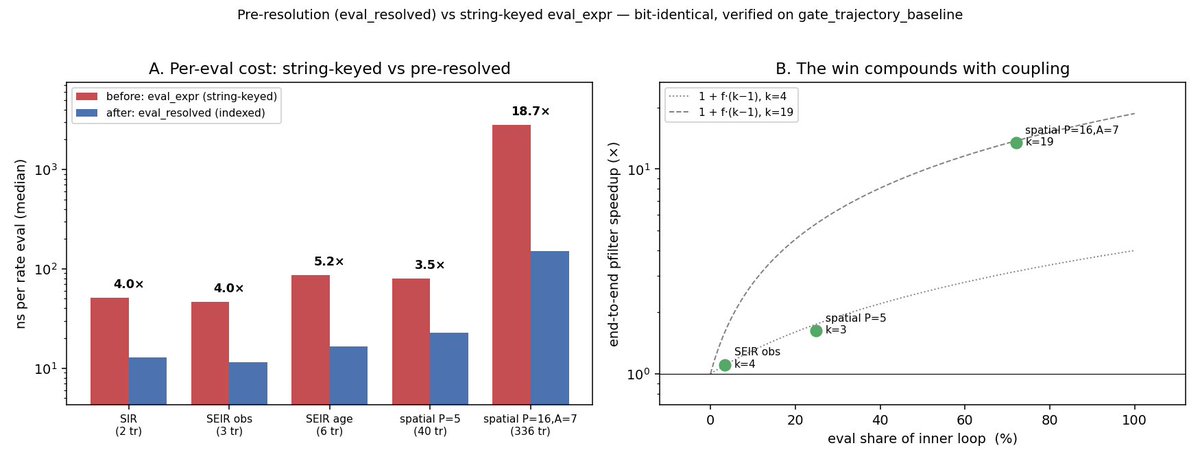
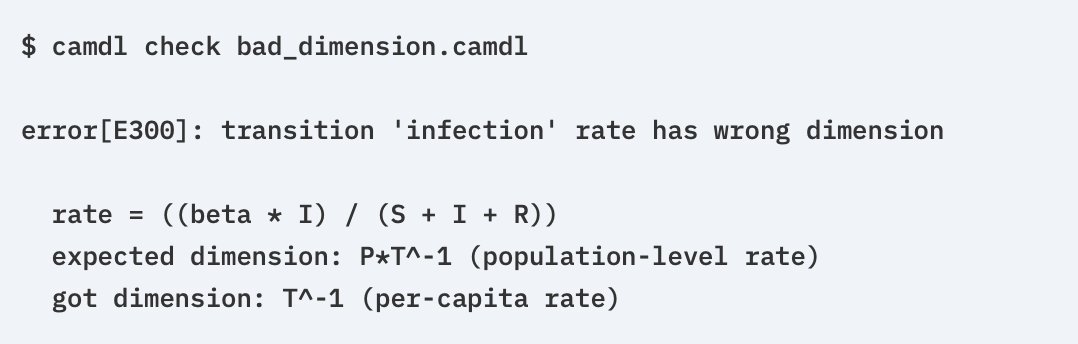
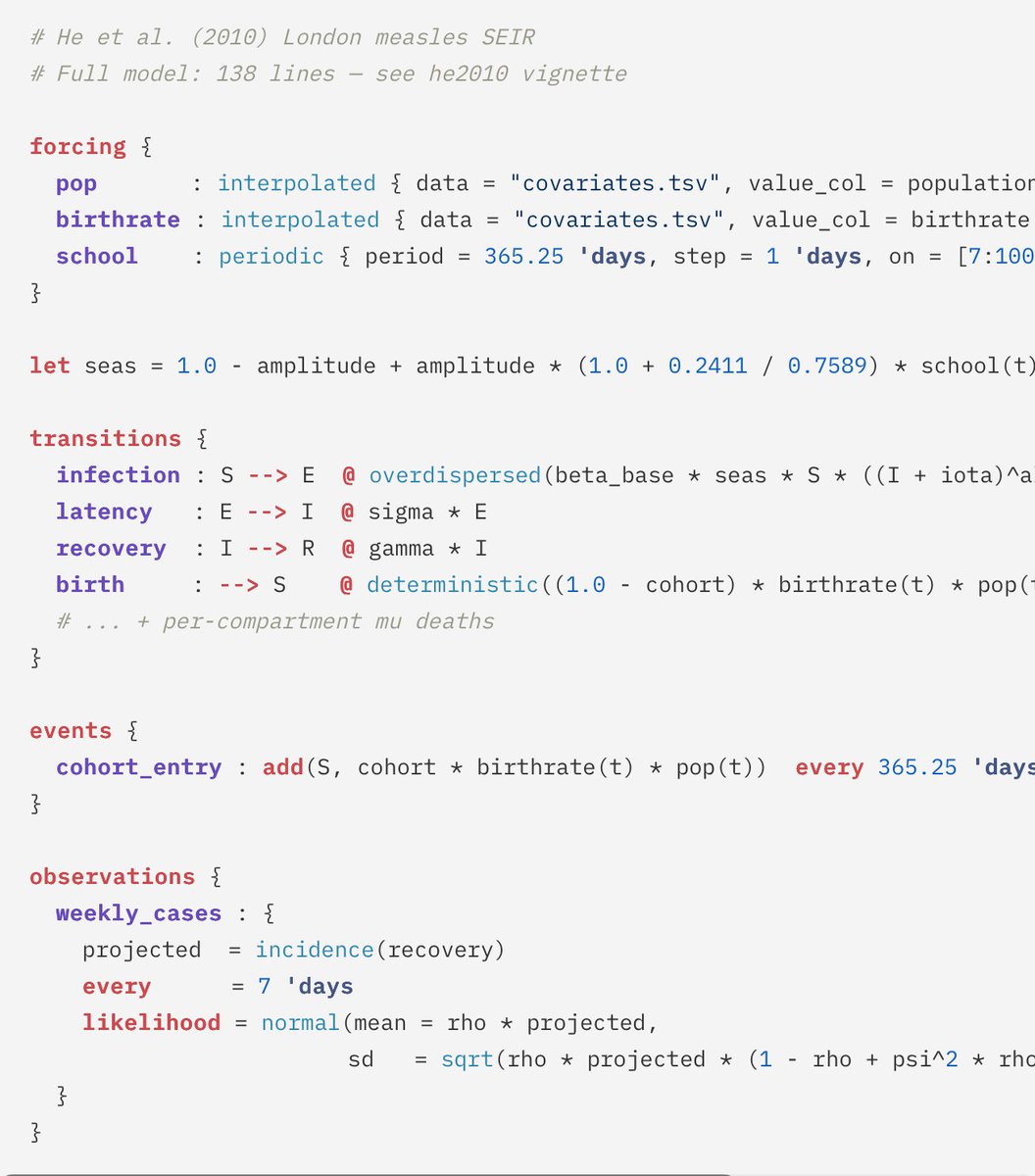
Happy to share the alpha release of camdl, a new compartmental modeling framework I've been cooking up.
With coding agents writing more of our scientific code, I think it's more important than ever to shift to architectures that engineer in robustness...
vincebuffalo.com/blog/introd…
1
2
16
1,796
Vince Buffalo retweeted

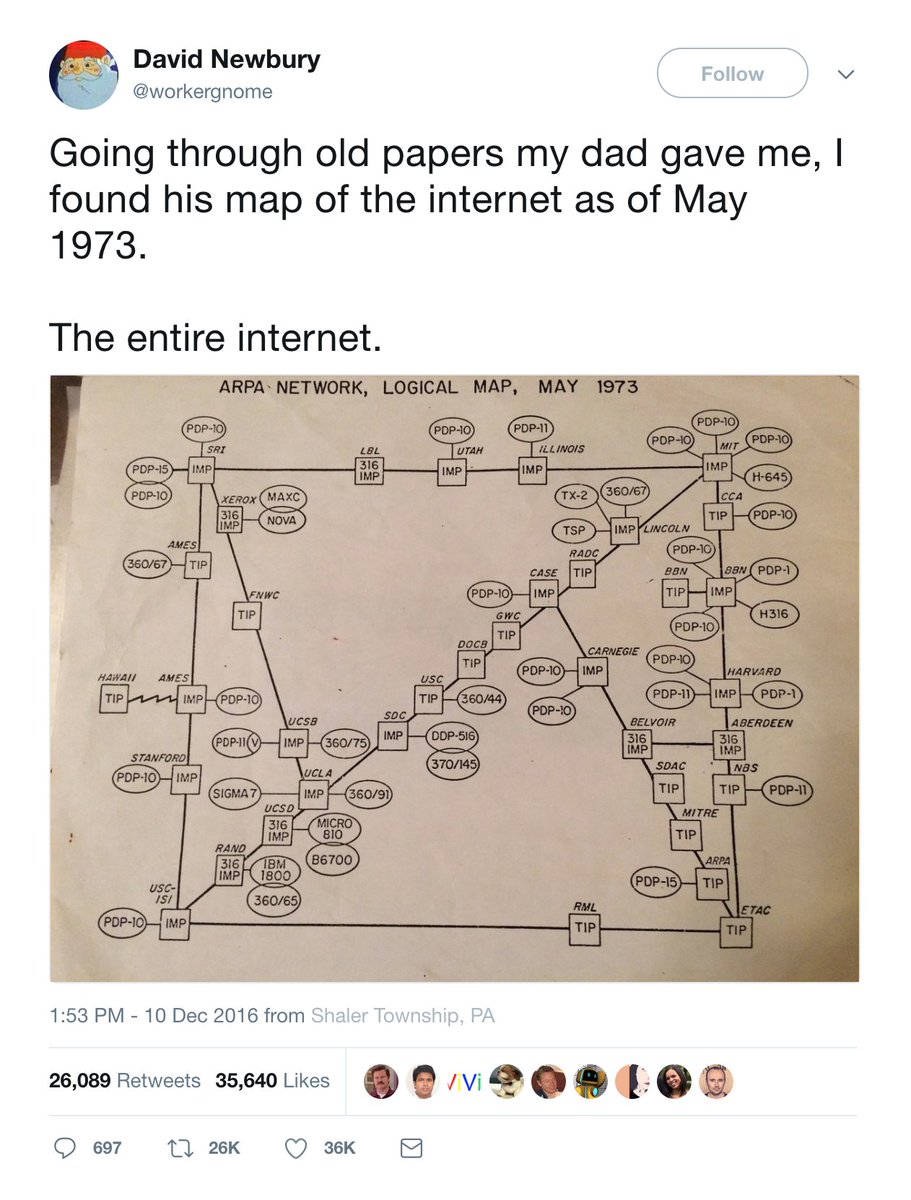
Number of computers on the Internet:
💻 June 2026 this Knicks championship: ~30 billion
💻 May 1973 last Knicks championship: 42
4
69
524
21,692
Jun 13
Okay, I guess I'll watch some Brewers games now too.


1
1
618
Vince Buffalo retweeted

david hockney with his dachshunds stanley and boodgie. RIP 🕊️

8
1,848
13,830
186,071
Vince Buffalo retweeted

Jun 11
Interesting. AI will in effect increase both supply and demand for formal methods. You need them more, but you also have tools that make them cheaper.
blog.janestreet.com/formal-m…
39
53
463
51,275
Vince Buffalo retweeted

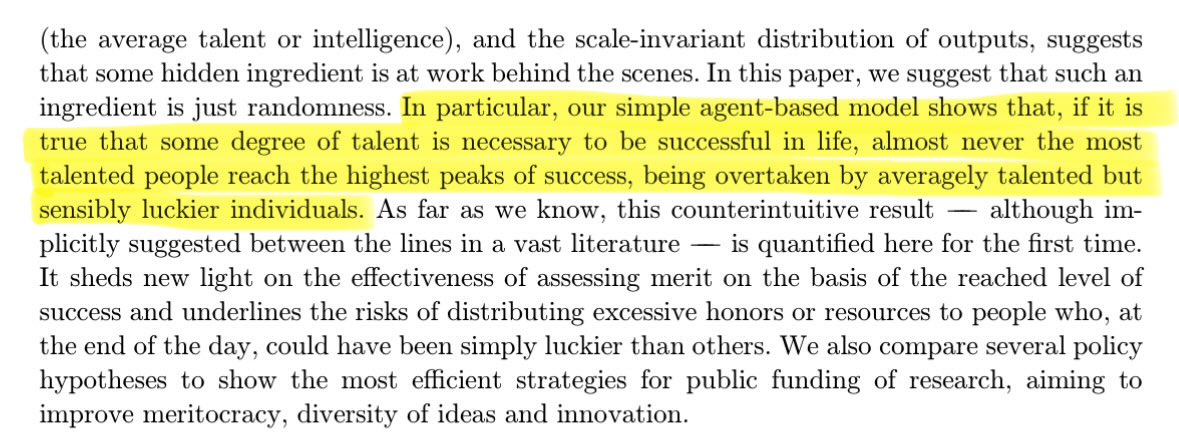
Why do people p-hack? Because:
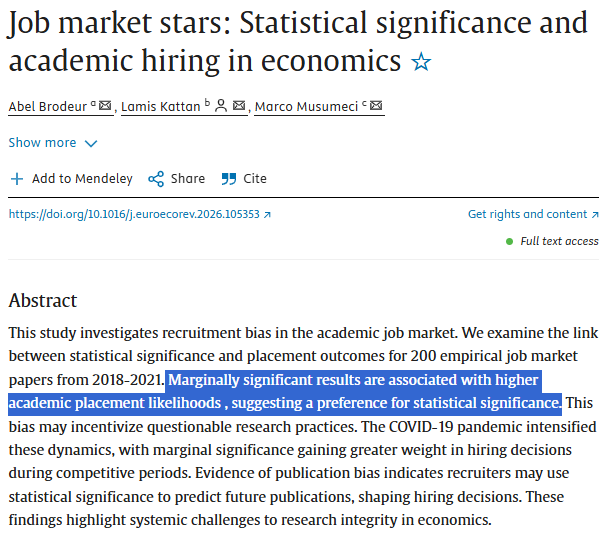
3
55
335
21,469
Vince Buffalo retweeted

Jun 12
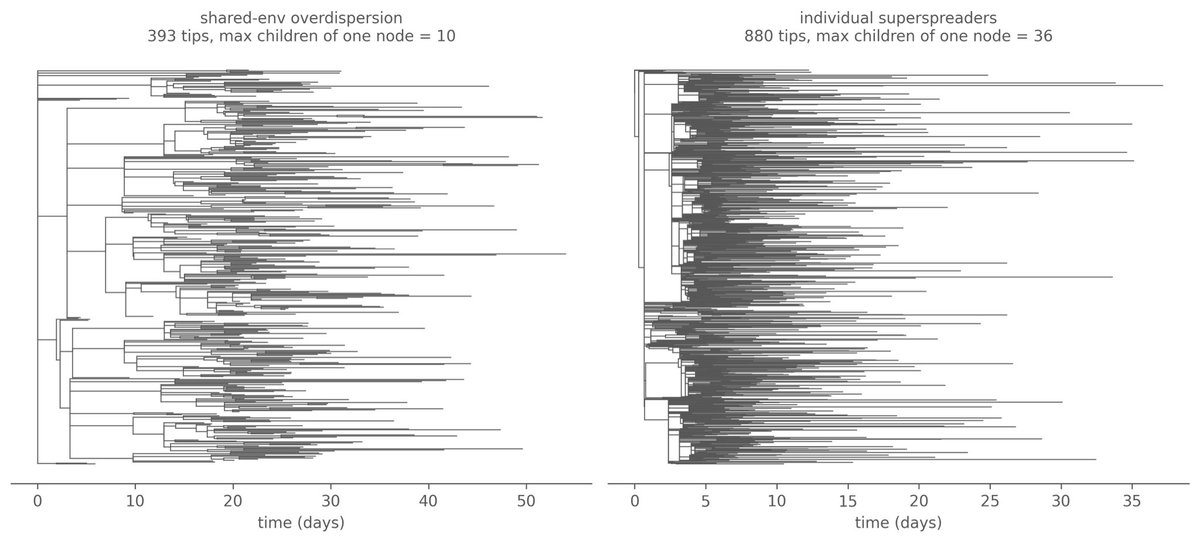
I enjoy using IGV, but I need a more efficient tool for analyzing diploid genomes. So, I developed one for myself. It provides exceptional GPU acceleration, allowing me to uncover all essential information spanning six orders of magnitude. #bioinformatics #genomics #visualization
12
51
344
24,355
Vince Buffalo retweeted

Jun 11
I applaud Piketty et al for embracing artificial intelligence.
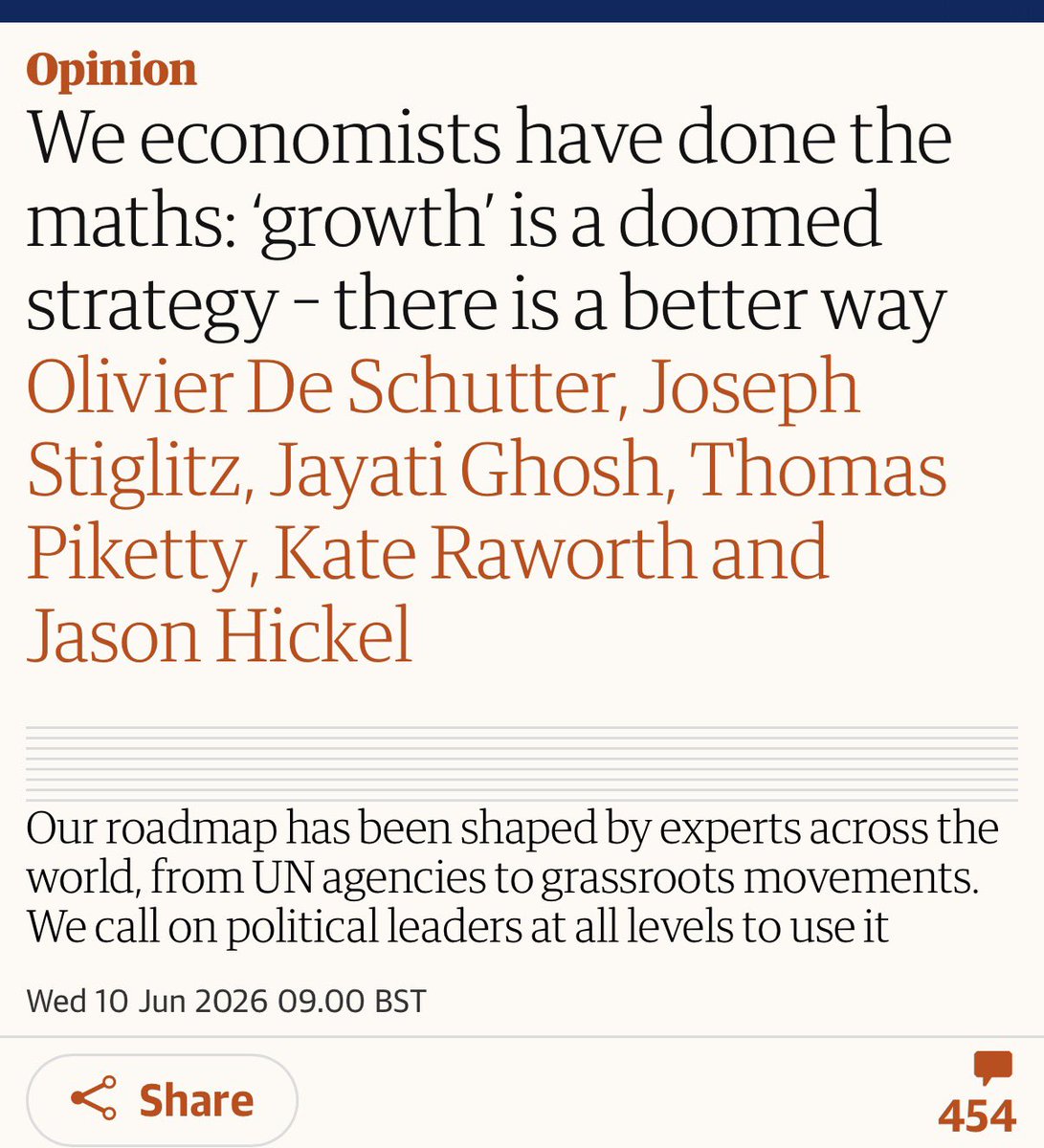
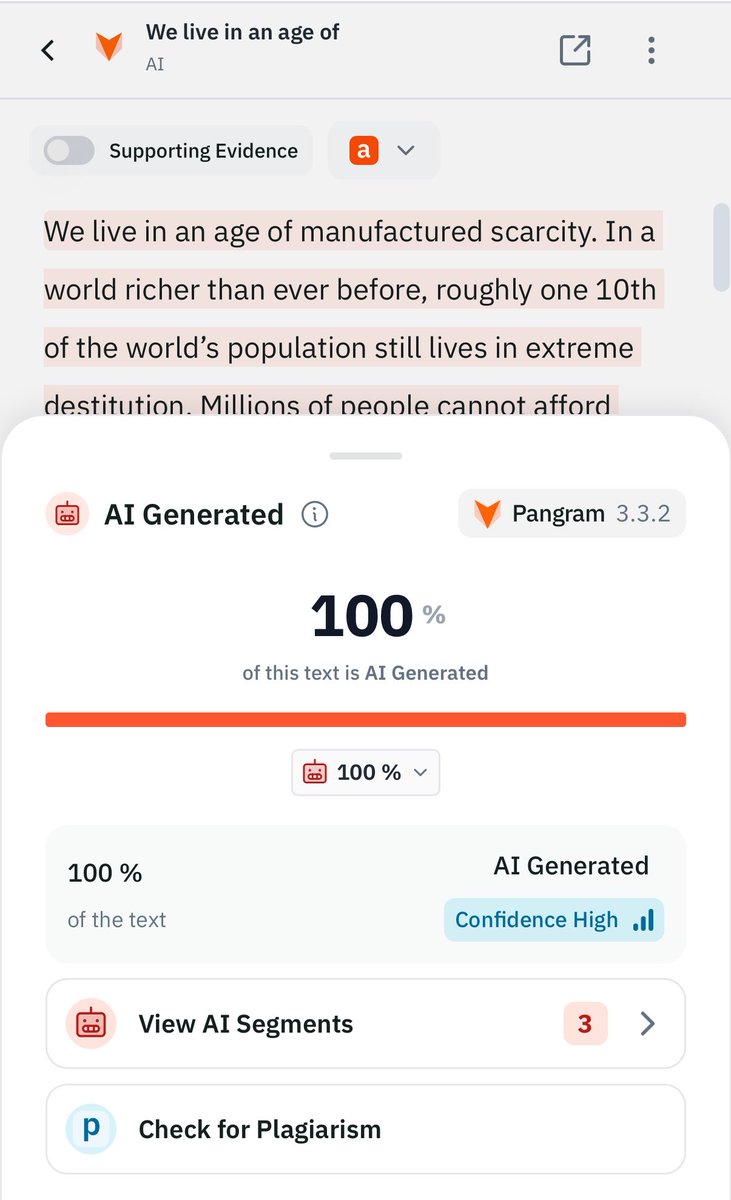
29
85
1,066
227,796
Jun 12
This is part of a larger trend of generative tools paired with verification that is so exciting right now. One of the things that’s blossoming under agentic coding. Types FTW!
Jun 11

I've been telling people for 25 years that Jane Street is not interested in formal methods.
No more!
And we're actively hiring to form a new formal methods team!

2
1,381
Vince Buffalo retweeted

Jun 10
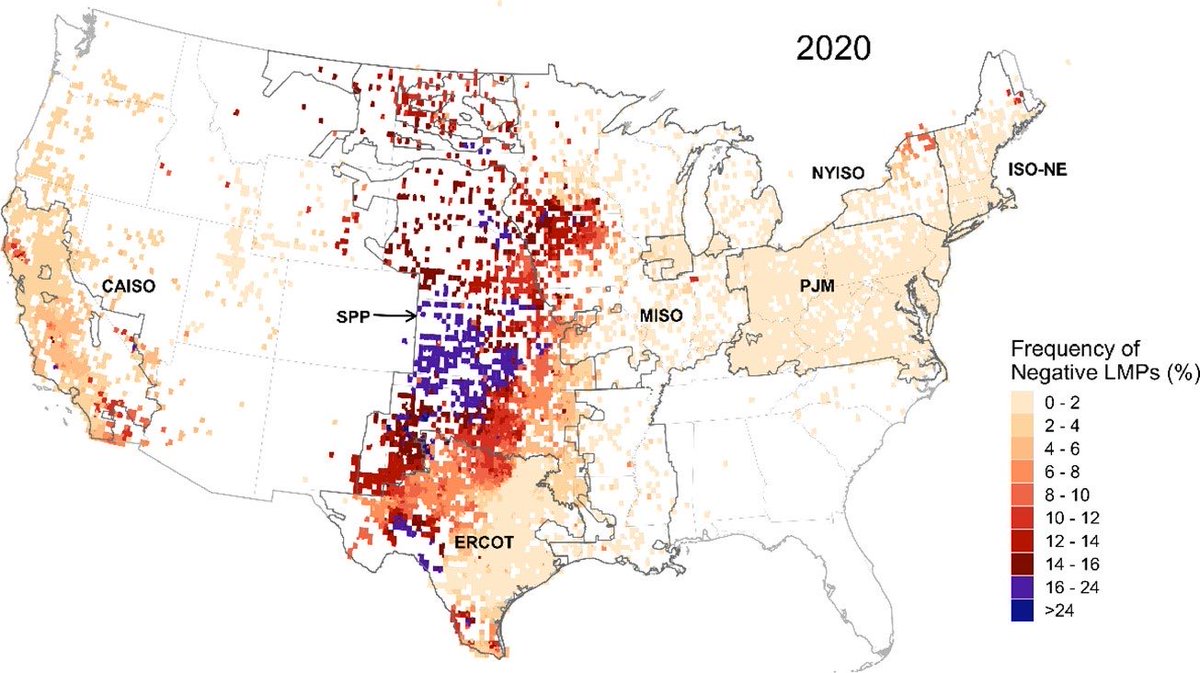
Possibly the most painful chart to look at in energy policy:
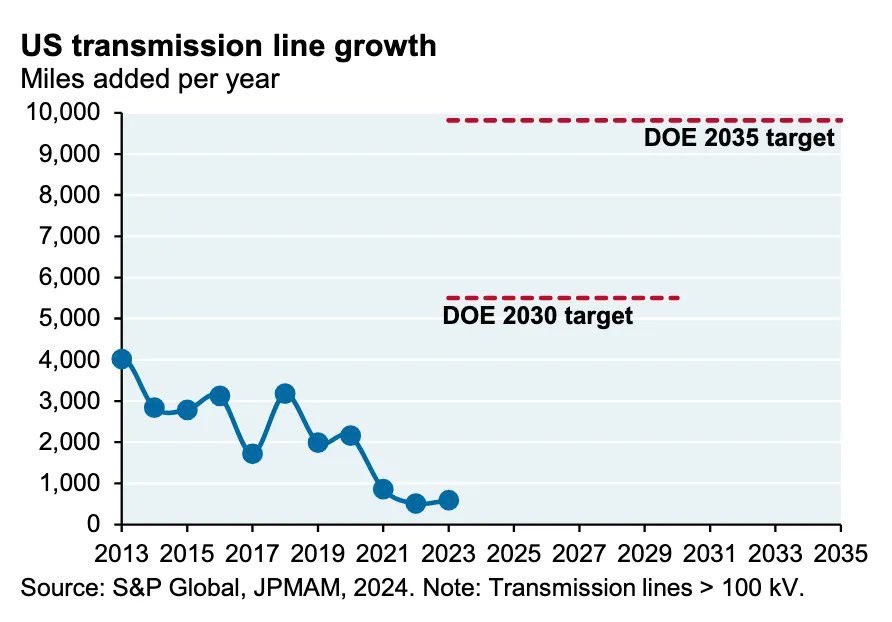
44
242
1,809
113,059
Vince Buffalo retweeted
Jun 11
Our grid is so fragmented, we get crazy outcomes like this:
In some parts of the US, wholesale electricity prices are negative for ~25% of the year.
13
34
322
33,171
Jun 10
I’m annoyed by excessive biosecurity filters too, but people forget: risk = probability × severity.
For catastrophic tail risks, the prudent default is oversensitive filters that are audited and tuned down, not weak filters that need tuning up after dangerous false negatives.
1
1
18
2,396
Jun 9
Over lunch today I was asking Claude to help me feel less disillusioned by the direction of modern biology, and it gave me a well-reasoned reply that did precisely the opposite.
Claude nails it here:
3
2
20
18,399
Jun 9
“measurement technologies generate their own research programs. Once you can measure something at single-cell, spatial, genome-wide resolution, the field reorganizes around producing and indexing that measurement… ‘we mapped it’ gets published as though mapping were explaining.”
3
4
42
3,965
Vince Buffalo retweeted

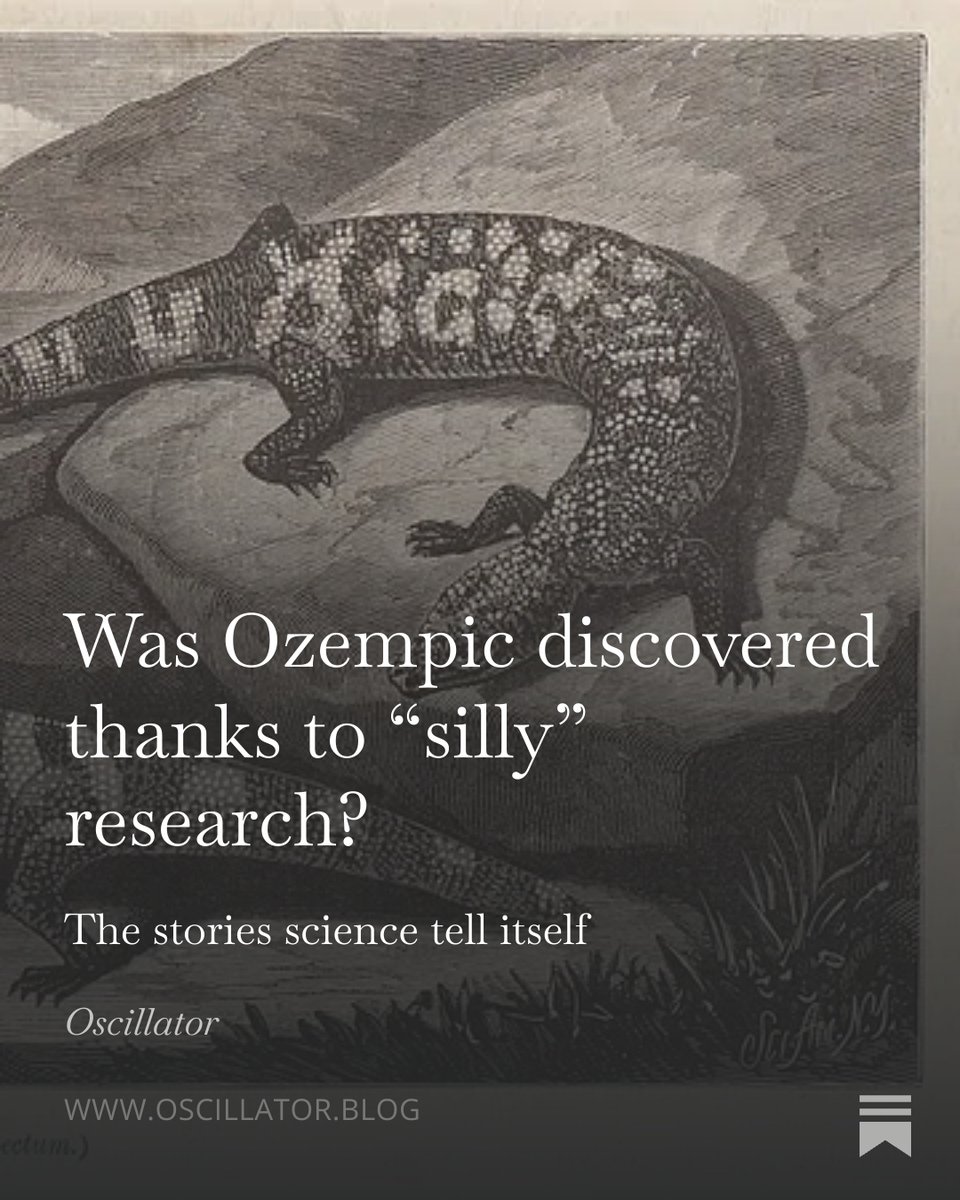
I got curious about the real story of Ozempic Gila monster spit people cite when advocating for basic research funding. The truth is more interesting, and shows us more about the stories we tell ourselves about science than it convinces people to maintain the funding status quo
5
51
358
33,602
Jun 5
I’ve been using em dashes a decade before ChatGPT was a thing. They’re beautiful punctuation — I refuse to let LLMs steal them from us.
13
851
Vince Buffalo retweeted

Jun 4
Each time we release a model, we run the same test: give it code that trains a small AI model, ask the new model to speed it up. It takes a skilled human 4-8 hours to reach 4x faster.
In May 2024, Claude Opus 4 averaged a ~3x speedup. This April, Mythos Preview achieved ~52x.
63
243
3,654
1,066,611
Jun 4
Very good to see this!
Jun 4

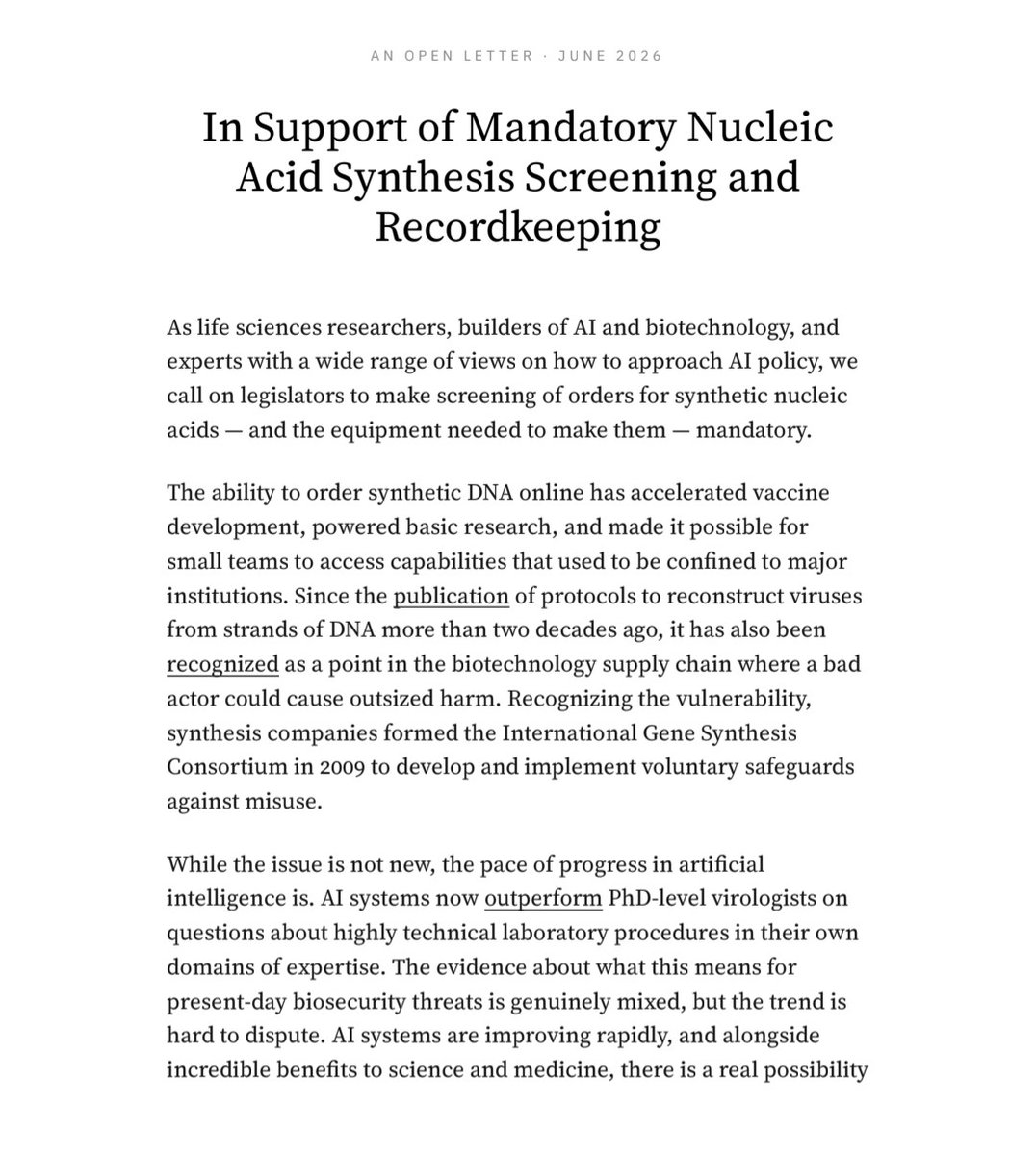
Sam Altman, Dario Amodei, Demis Hassabis and many others have signed a letter urging Congress to increase security on orders of synthetic nucleic acids - and the equipment needed to make them - as models continue to become increasingly bio-capable.
3
637