
Computational quantum physics ∩ Machine learning. Researcher at Chinese Academy of Sciences
Joined March 2014
- Tweets 253
- Following 1,528
- Followers 1,021
- Likes 5,817
14 Photos and videos


Pinned Tweet

16 Dec 2022
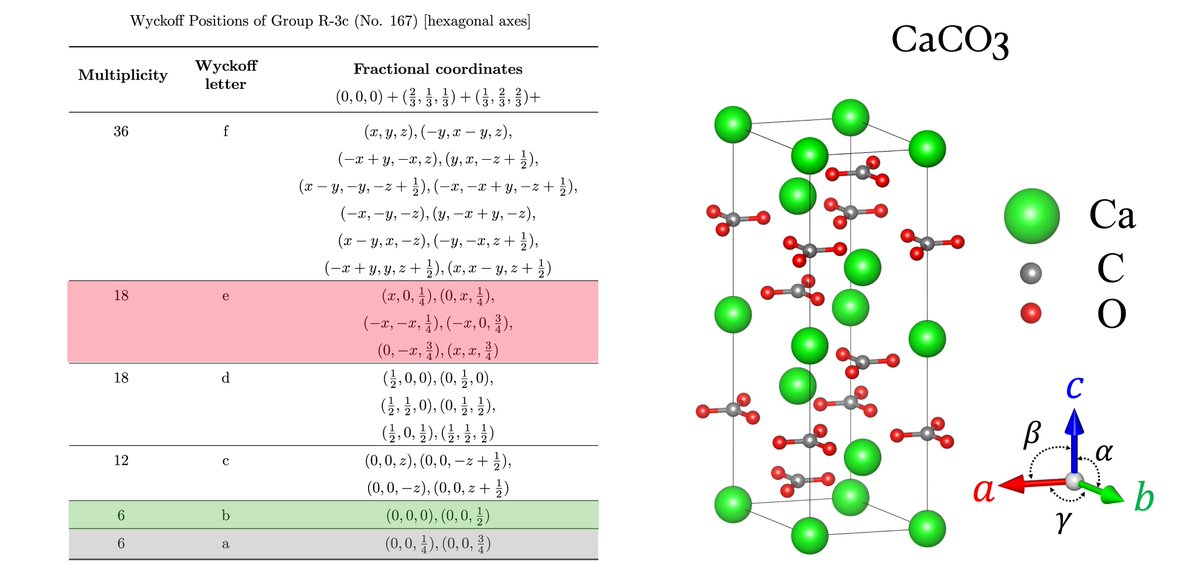
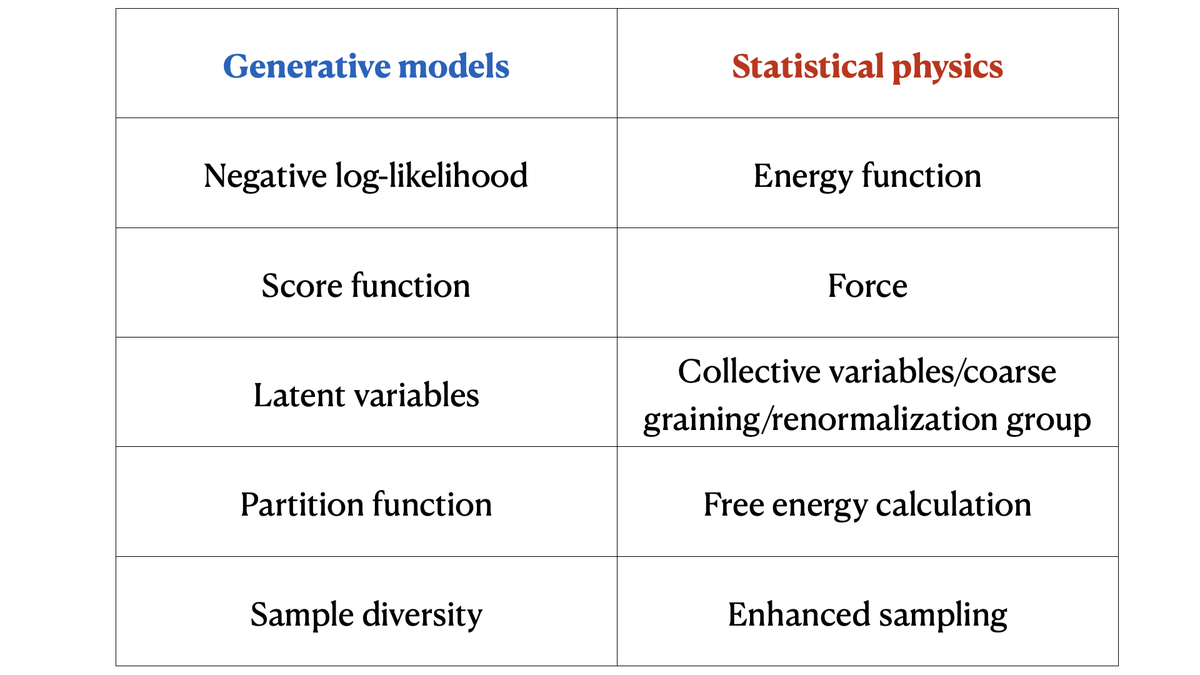
My slides deck for a 3 hrs lecture "generative AI for science"
drive.google.com/file/d/1D1b…
1/3
4
50
284
32,944
Lei Wang retweeted

Mar 18
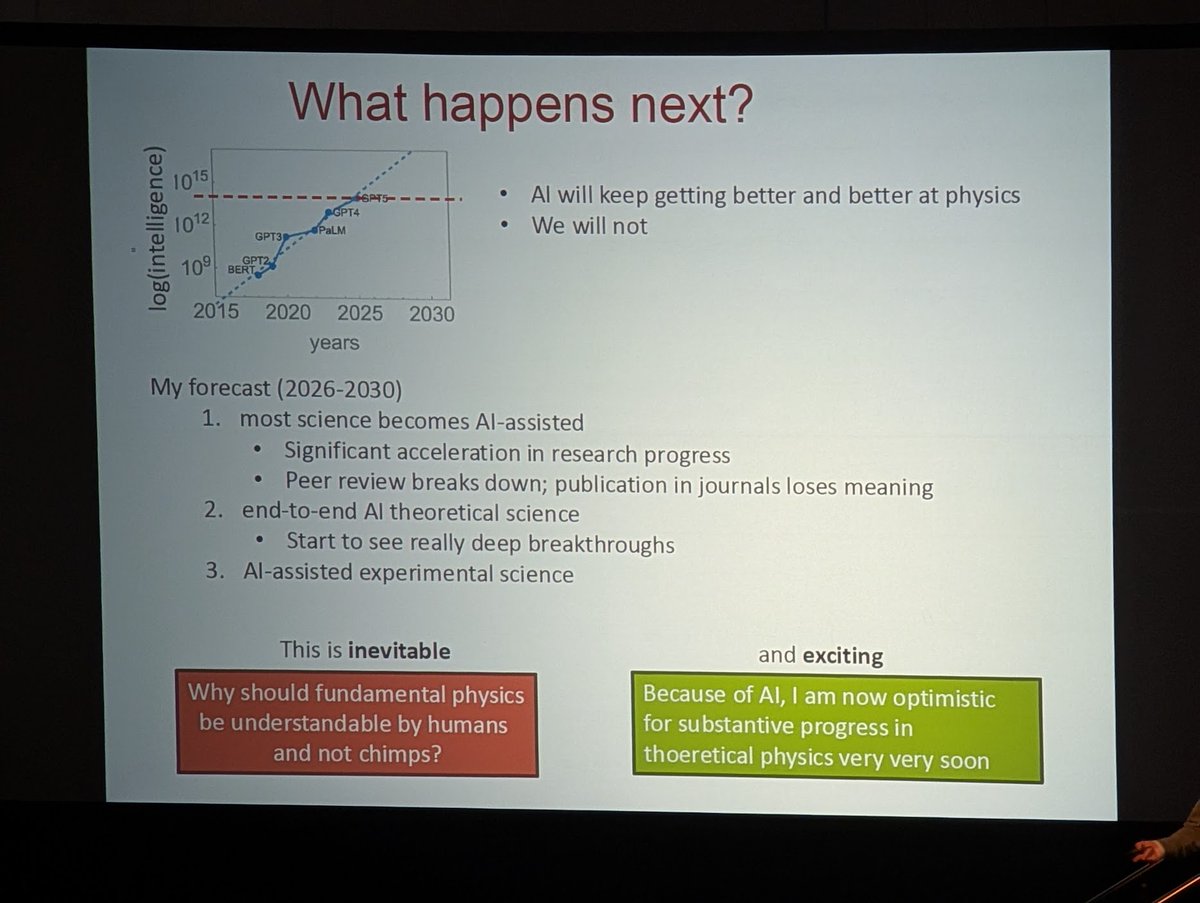
Exciting, scary, and thoughtful session on the future of AI at #apsmarch and possible breakdown of peer review. Matthew D. Schwartz: "AI will keep getting better and better at physics. We will not."
6
12
71
17,653
Lei Wang retweeted

Mar 8
Skill is like an operating system that supports ex-scale "abstract instruction set", so much fun to use it to automate my workflows: jinguo-group.science/sustain…
1
7
330
Lei Wang retweeted

Mar 2
Deep generative models solve the hydrogen Hugoniot puzzle in warm dense matter
Predicting how hydrogen behaves under extreme compression—conditions inside giant planets or during fusion implosions—remains one of the hardest problems in condensed matter physics. The key benchmark is the Hugoniot curve: the thermodynamic states reached when a shock wave compresses deuterium to megabar pressures.
Experiments using lasers, gas guns, and pulsed power facilities have mapped parts of this curve, but results don't always agree, and there's a stubborn theoretical gap. Path-integral Monte Carlo works at high temperatures but hits the fermion sign problem as temperature drops. Ground-state methods break down when thermal electron excitations matter. In between—roughly 10,000–60,000 K—no method has provided reliable predictions.
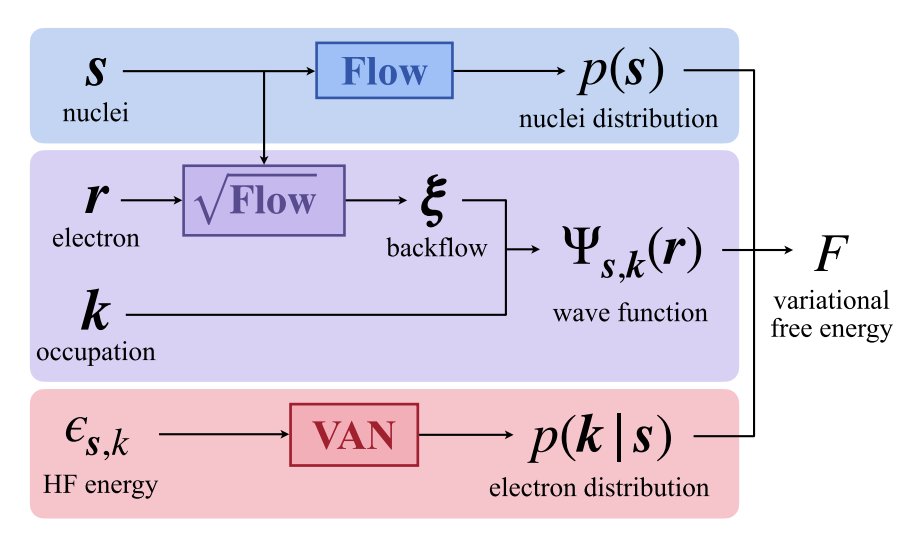
Zihang Li and coauthors tackle this with a deep variational free energy framework using three jointly trained generative neural networks. A normalizing flow captures the Boltzmann distribution of classical nuclei. An autoregressive transformer learns electron occupation across excited Hartree-Fock orbitals, respecting Pauli exclusion and encoding the Fermi-Dirac distribution as a learned prior. A permutation-equivariant flow applies a unitary backflow transformation to electron coordinates, producing orthonormal many-body wave functions for ground and excited states. All three networks have tractable normalization constants—critical because the free energy includes entropy terms requiring exact probability densities.
By jointly minimizing the variational free energy, the authors compute deuterium's equation of state across the problematic intermediate regime. Their Hugoniot curve agrees with Z-machine and laser experiments, connects smoothly with PIMC at high temperatures, and extends into low-temperature territory where PIMC fails—achieving the "handshake" between ground-state and finite-temperature calculations.
From the ML perspective, the architecture is remarkable: three different generative models—a continuous flow, a discrete autoregressive sampler, and an equivariant coordinate transformation—each targeting a distinct physical degree of freedom, trained end-to-end against a single variational objective. The method avoids the fermion sign problem entirely and computes entropy and free energy directly.
Deep generative models are enabling first-principles calculations where traditional quantum many-body methods hit fundamental walls—delivering more reliable inputs for planetary modeling and fusion design.
Paper: journals.aps.org/prl/abstrac…
3
16
72
3,638
Jan 28
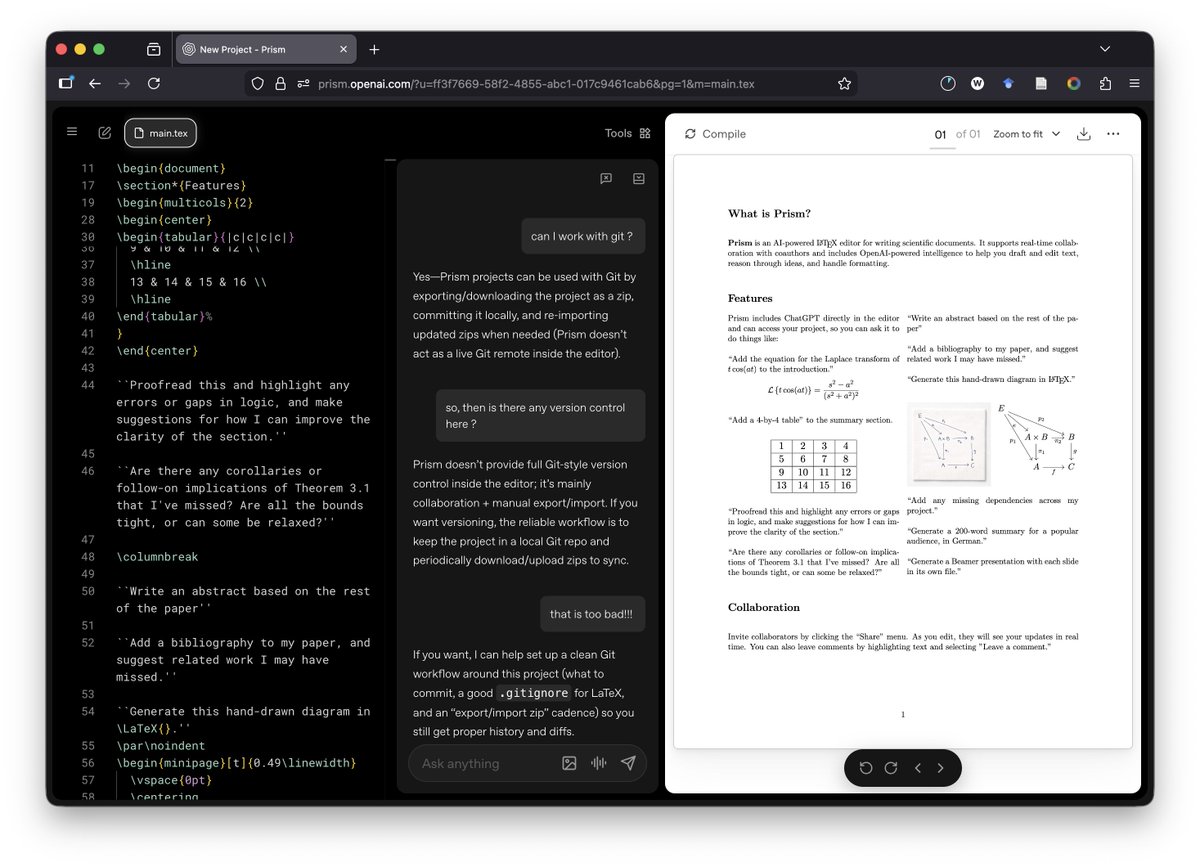
I found OpenAI Prism useless without git support. Jinguo's post explains why, latex source code is no different from program source code. (The other thing I learned from him: latex will soon gives its way to typst github.com/GiggleLiu/ptable-…)
Jan 24

Use git, this is the reason: jinguo-group.science/git-wor…
2
5
1,787
Lei Wang retweeted
Jan 11
Some thoughts on vibe coding - AI coding is a powerful, but needs to be done right.
jinguo-group.science/vibe-co…
2
5
274
Lei Wang retweeted

18 Dec 2025
Next AP-CMP seminar!
December 23, 2025 (Tuesday) 11:00 JST-12:00 JST
Gil Young Cho (Korean Advanced Institute of Science and Technology)
Most Two-Dimensional Bosonic Topological Orders Forbid Sign-Problem-Free Quantum Monte Carlo Simulation: Nonpositive Gauss Sum as an Indicator
1
2
1
748
Lei Wang retweeted
30 Aug 2025
来週のセミナーは、新しい量子埋め込み理論のお話 (DMETの一般化に対応)
Date: September 2, 2025 (Tuesday) 11:00 JST-12:00 JST
Speaker: Tsung-Han Lee
Title: Ghost Rotationally-Invariant Slave-Boson Approach to Strongly Correlated Materials
asian-pacific-cmp-seminars.g…
1
5
10
1,818
Lei Wang retweeted
4 Aug 2025
Next talk in one week!
asian-pacific-cmp-seminars.g…
Date: August 12, 2025 (Tuesday), 11:00–12:00 JST
Speaker: Po-Yao Chang (National Tsing Hua University)
Title: Diagnosing Many-Body Systems with Entanglement: Insights from Non-Unitary CFTs and TQFTs
4
7
1,635
Lei Wang retweeted
30 Jun 2025
We are launching a new online seminar series: the Asian-Pacific Condensed Matter Physics (AP-CMP) Seminars.
asian-pacific-cmp-seminars.g…
The goal is to connect researchers in condensed matter physics across the Asia-Pacific region and beyond.
Talks will be in English and open to all.
1
7
13
2,743
Lei Wang retweeted

26 Jun 2025
🚨 Special Issue Alert!
Thrilled to co-edit, together with @wangleiphy & @AninditaMaiti7, a new issue on Deep Generative Models for Simulating Physical Systems 🎯
If you’re working at the intersection of generative models & physics, this could be for you!
🔗 Link in thread 👇🏻
1
3
7
595
Lei Wang retweeted

9 May 2025
We've released the code for LegoGPT. This autoregressive model generates physically stable and buildable designs from text prompts, by integrating physics laws and assembly constraints into LLM training and inference.
This work is led by PhD students @AvaLovelace0, @kangle_deng, @RuixuanLiu_, and in collaboration with CMU faculty Changliu Liu and Deva Ramanan.
LegoGPT is a small first step towards the ultimate goal of generative manufacturing of physical objects. Our implementation is limited to 20x20x20 dimensions, 21 object categories, and simple brick types, but we are working on scaling it up!
Code: github.com/AvaLovelace1/Lego…
Website: avalovelace1.github.io/LegoG…
Demo: huggingface.co/spaces/cmu-gi…
9
75
505
38,585
11 Apr 2025
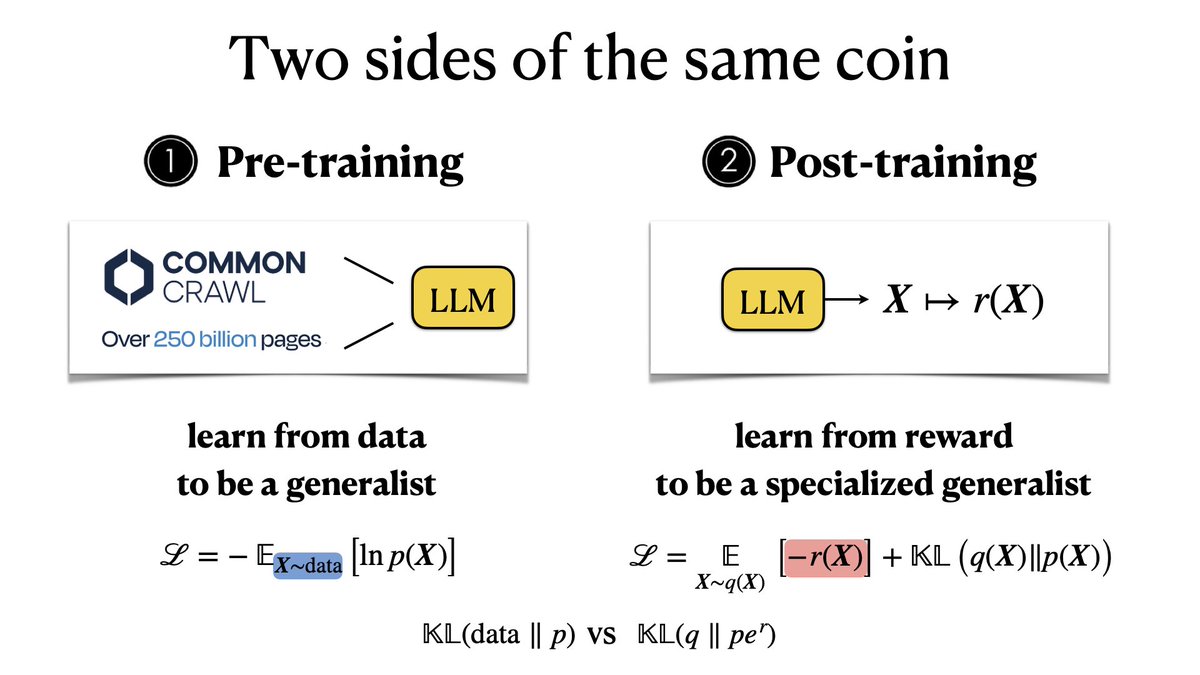
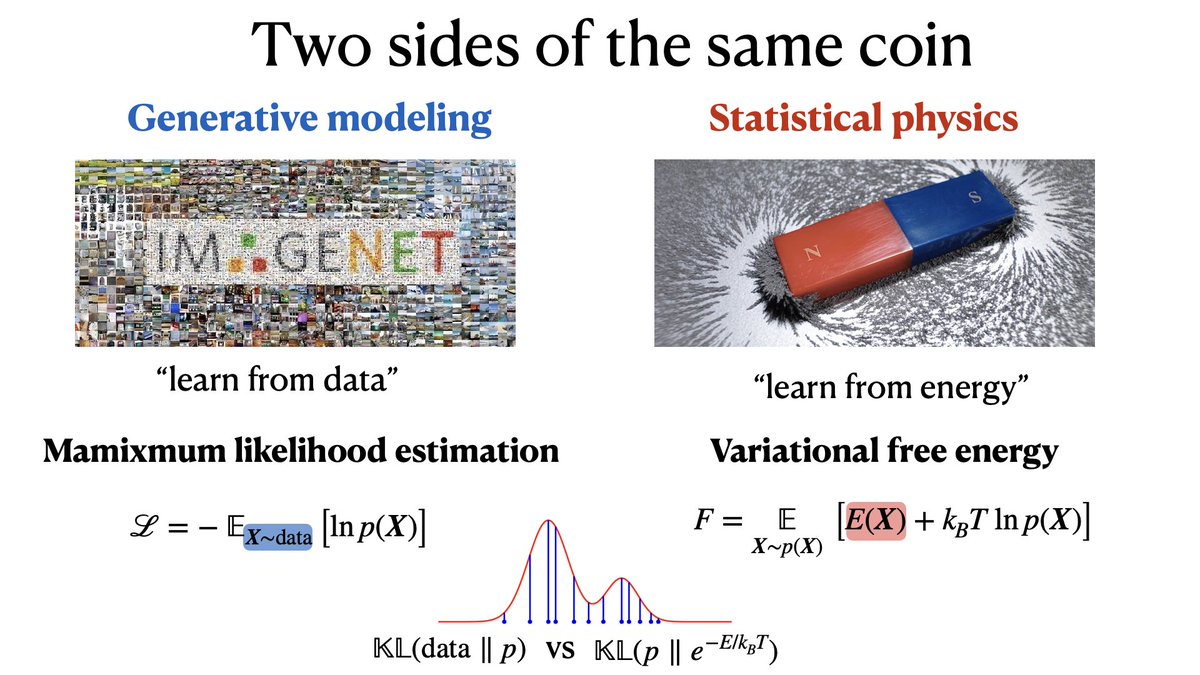
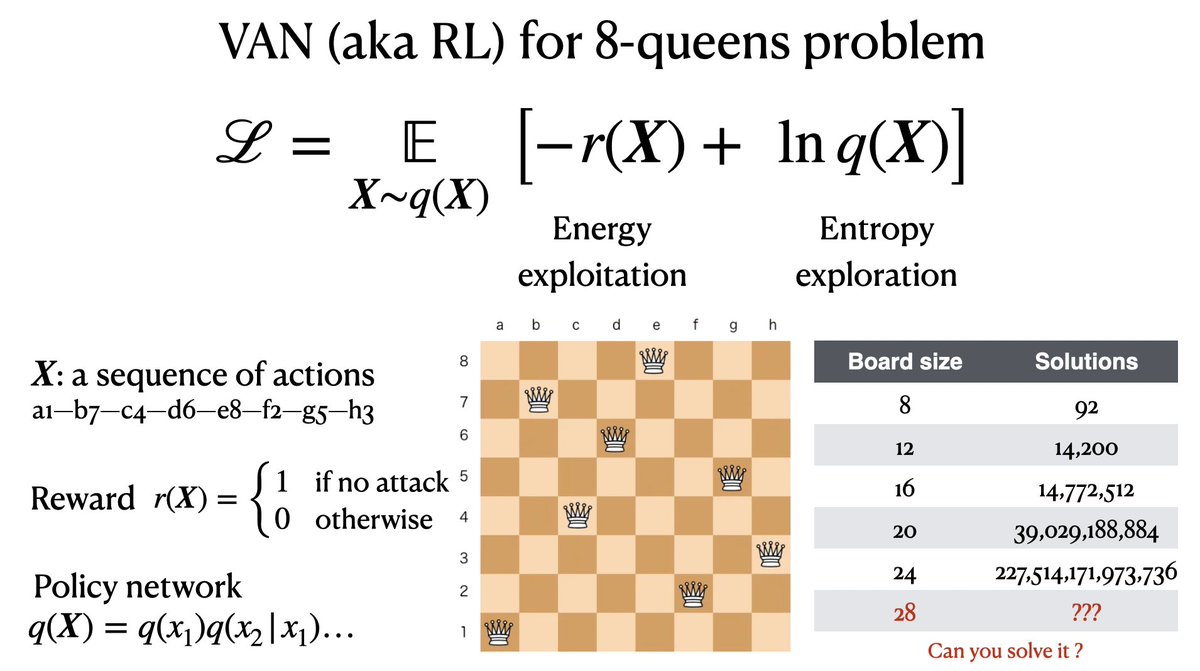
Autoregressive model: alphabets, actions, and atoms wangleiphy.github.io/lecture… This lecture tried to offer a unified perspective to LLM, RL, and atomistic modeling!
3
7
27
2,330
Lei Wang retweeted

27 Jan 2025
Looking for a talented postdoc to join my group @cqs_lab @EPFL_en! 🇨🇭
Research Topics Include: Neural Quantum States, Many-Body Systems, Ab-Initio & Quantum Chemistry...etc
Start: Fall 2025, excellent conditions
Apply: epfl.ch/labs/cqsl/job-opport…
25
79
7,666