
CQS Lab at EPFL (@EPFL_en, @epflSB), part of @QSECenter_EPFL. Machine Learning for Quantum; Quantum Computing, and . Led by @gppcarleo - Home of the @NetKetOrg
Joined August 2020
- Tweets 118
- Following 15
- Followers 1,102
- Likes 171
10 Photos and videos
Computational Quantum Science Lab retweeted

20 Mar 2025
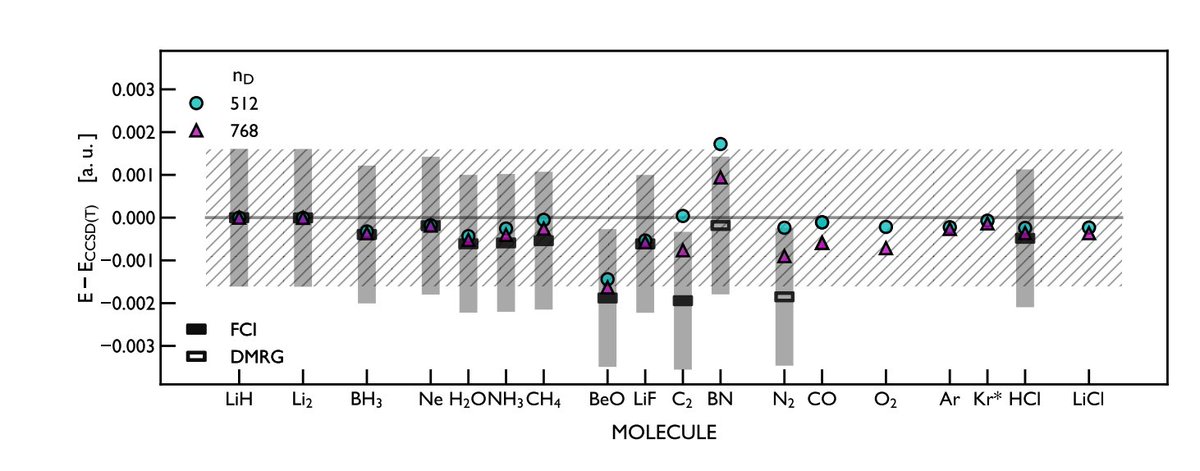
Excited to share our latest quantum chemistry preprint @cqs_lab, the result of the hard work of Clemens Giuliani, arxiv.org/abs/2503.14502. We use a "simple" variational wavefunction composed of a few hundred optimized non-orthogonal Slater determinants and show that it achieves energy accuracies comparable to state-of-the-art methods.
While the ansatz itself is as old as quantum chemistry, optimizing it fully has proven challenging so far. The main innovation is an approach to optimize the determinants efficiently, leveraging the quadratic dependence of energy on selected parameters, allowing for exact optimization. Using optimized contractions, it has scaling computational cost with the fourth power of the number of basis functions.
Benchmarking against exact full-configuration interaction results, we achieved lower variational energies than CCSD(T) for several molecules in the double-zeta basis.
It is more accurate than all second-quantized NQS results for molecules so far published, despite being a much simpler ansatz, conceptually. This, in my view, further highlights the fact that for the quantum chemistry of small to intermediate molecules fully correlated wave functions might not be necessarily needed.
10
42
3,878
Computational Quantum Science Lab retweeted
27 Jan 2025
Looking for a talented postdoc to join my group @cqs_lab @EPFL_en! 🇨🇭
Research Topics Include: Neural Quantum States, Many-Body Systems, Ab-Initio & Quantum Chemistry...etc
Start: Fall 2025, excellent conditions
Apply: epfl.ch/labs/cqsl/job-opport…
25
79
7,666
Computational Quantum Science Lab retweeted
18 Oct 2024
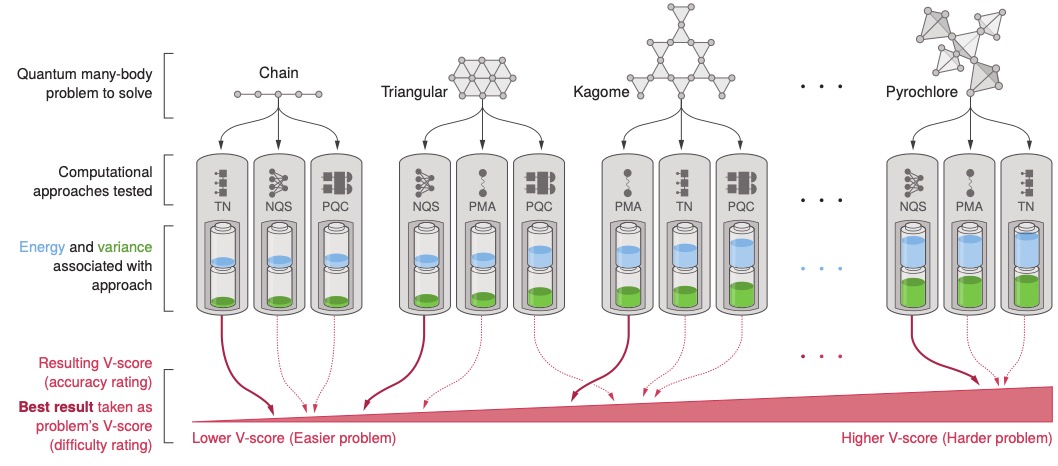
Our endeavor on variational benchmarks for quantum many-body problems is now published in @ScienceMagazine!
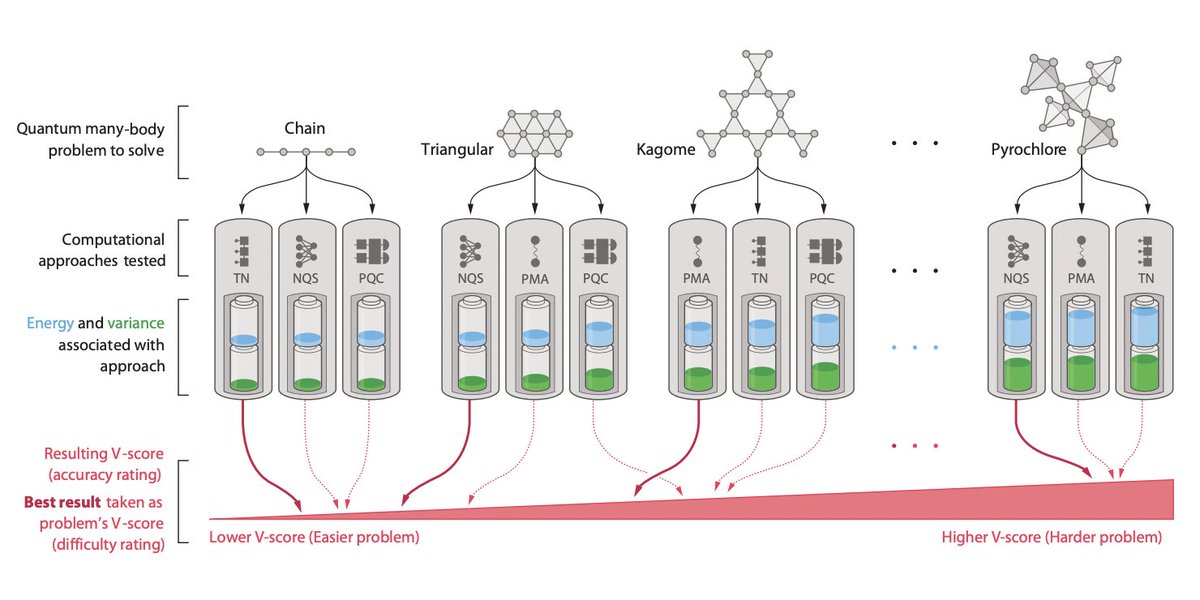
In this large collaborative work (~30 institutions) led by @cqs_lab @EPFL_en, we established a practical, agreed-upon metric to quantify the hardness of quantum problems involving many particles (e.g. in materials).
The resulting metric, called v-score, is handy to compute and intrinsically suited for variational methods on both classical and quantum devices (e.g. Matrix Product States, Neural Quantum States, Variational Auxiliary Field Monte Carlo, Variational Quantum Eigensolver, DMFT solvers, and many others).
One surprising outcome is that this metric almost universally correlates with the error on ground state energies, for problems seemingly unrelated and for the tens of different techniques we have benchmarked.
This allows us to identify those problems and regions of interactions and parameters that are factually hard for existing many-body methods (e.g. spin liquids in some 3D geometries, Hubbard models for specific values of the coupling U etc.).
The v-score can assess progress of novel computational methods, both classical and quantum-based.
It will help shape criteria for measuring quantum computing performance, transitioning from generic, average-hardness qualifiers of computational complexity theory to physics-chemistry based hardness quantifiers for problems central to computational quantum science. In this domain, well-established heuristics exist, making any quantum-driven improvement both significant and highly valued.
Read the article here: science.org/doi/10.1126/scie…
1
31
148
25,760
Computational Quantum Science Lab retweeted

Researchers led by @gppcarleo @EPFL_en have developed a method for comparing quantum algorithms and identifying which quantum problems are the hardest to solve, key to harnessing quantum computing for real-world applications.
@epflSB
actu.epfl.ch/news/new-benchm…
4
24
1,860
Computational Quantum Science Lab retweeted

18 Oct 2024
A large collaboration led by @gppcarleo has introduced V-score, a method to compare the performance of classical and quantum algorithms when simulating complex phenomena in condensed matter physics. The benchmark is described in @ScienceMagazine 👉 nccr-marvel.ch/highlights/ca…
5
15
1,284
Computational Quantum Science Lab retweeted
28 Aug 2024
Amazing news! Riccardo Rossi of @cqs_lab @EPFL_en has been recognized with the Hermann Kümmel Early Achievement Award for "groundbreaking advances in computational quantum field theory for many-fermion problems, including determinant algorithms for connected-diagram expansions and resummation techniques, leading to key results on the unitary Fermi gas and the Hubbard model". Congratulations Riccardo, so well deserved! actu.epfl.ch/news/riccardo-r…
8
36
3,427
Computational Quantum Science Lab retweeted

12 Aug 2024
🚨 New quantum dynamics method: arxiv.org/abs/2403.07447 We found that factorizing the propagator into its Taylor roots provides the ideal framework for time-evolving neural quantum states in continuous space at higher orders. Introducing tre-tVMC! @cqs_lab
2
19
54
6,989
Computational Quantum Science Lab retweeted
1 Jul 2024
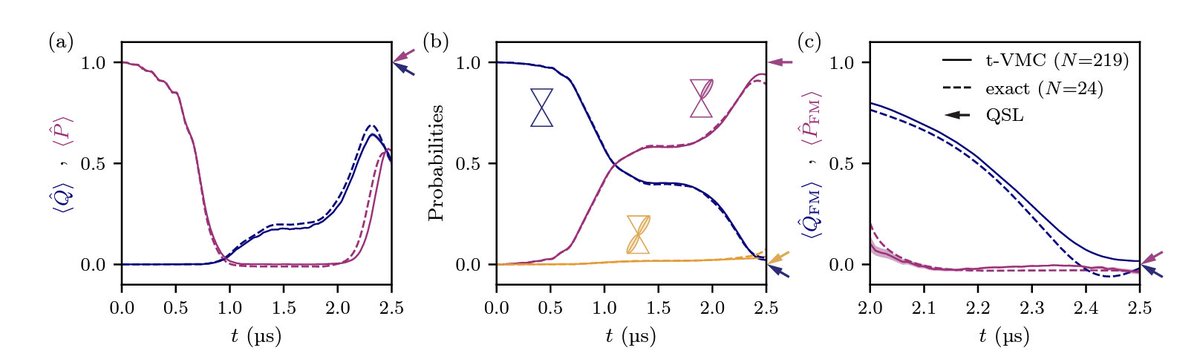
🔬 New @cqs_lab Publication Alert: Linda Mauron's debut paper, "Predicting Topological Entanglement Entropy in a Rydberg Analog Simulator," marks a significant advancement in the classical simulation of the dynamics of strongly interacting Rydberg atoms in two dimensions.
Based on a lightweight, yet accurate variational approach, we can predict entanglement entropies from first principles, for system with more than a few hundred atoms. These simulations, for example, allow to predict a lack of genuine topological entanglement, in experiments performing adiabatic state preparation.
Kudos to Linda, @zdenis_, and @JannesNys of @cqs_lab for their contributions!
📄 Preprint here: arxiv.org/abs/2406.19872
3
6
35
4,741
Computational Quantum Science Lab retweeted
14 Jun 2024
New @cqs_lab preprint, with Imelda Romero and @JannesNys ! For those of you interested in computing excited states in periodic systems, check this out arxiv.org/abs/2406.09077, we introduce a neural backflow transformation that allows to accurately target excited states of given momentum. We showcase this on the t-V model of spinless fermions in 2D, where one can nicely characterize excitations through the phase transition from a metal to a charge ordered phase.
1
8
41
3,797
Computational Quantum Science Lab retweeted
10 Jun 2024
Our paper on the real-time dynamics of 2d thermal spin systems has now been published in PRB as an Editors' suggestion: journals.aps.org/prb/abstrac… @cqs_lab
14 Sep 2023

New paper 🚨: Real-time dynamics of thermal states! We show how neural quantum states can accurately produce time-dependent finite-T observables in 2D. We also introduce a novel autoregressive neural density operator. With @zdenis_ @gppcarleo @cqs_lab
scirate.com/arxiv/2309.07063
4
27
2,891
Computational Quantum Science Lab retweeted

14 May 2024
NetKet 3.12 is out, check the release notes here github.com/netket/netket/rel… ! Special thanks to @philipVinc @Polytechnique and Clemens Giuliani @cqs_lab @EPFL_en for the hard work to make this possible. 1/2
1
3
12
978
Computational Quantum Science Lab retweeted
13 May 2024
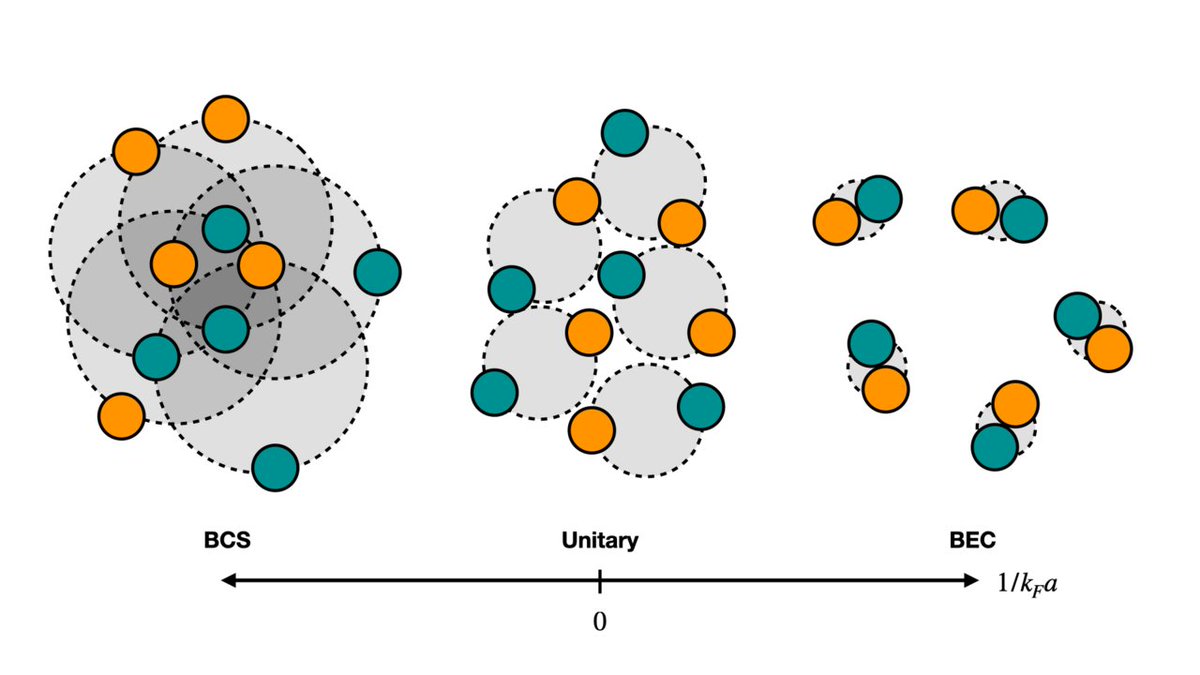
Our work introducing neural Pfaffian wave functions to describe pairing in ultra-cold Fermi gases has been published here rdcu.be/dHM9w !
Also see this very nice blog post go.nature.com/3Ua8GF6 by
Jane Kim, Alessandro Lovato & Bryce Fore
10
73
5,588
Computational Quantum Science Lab retweeted

12 Apr 2024
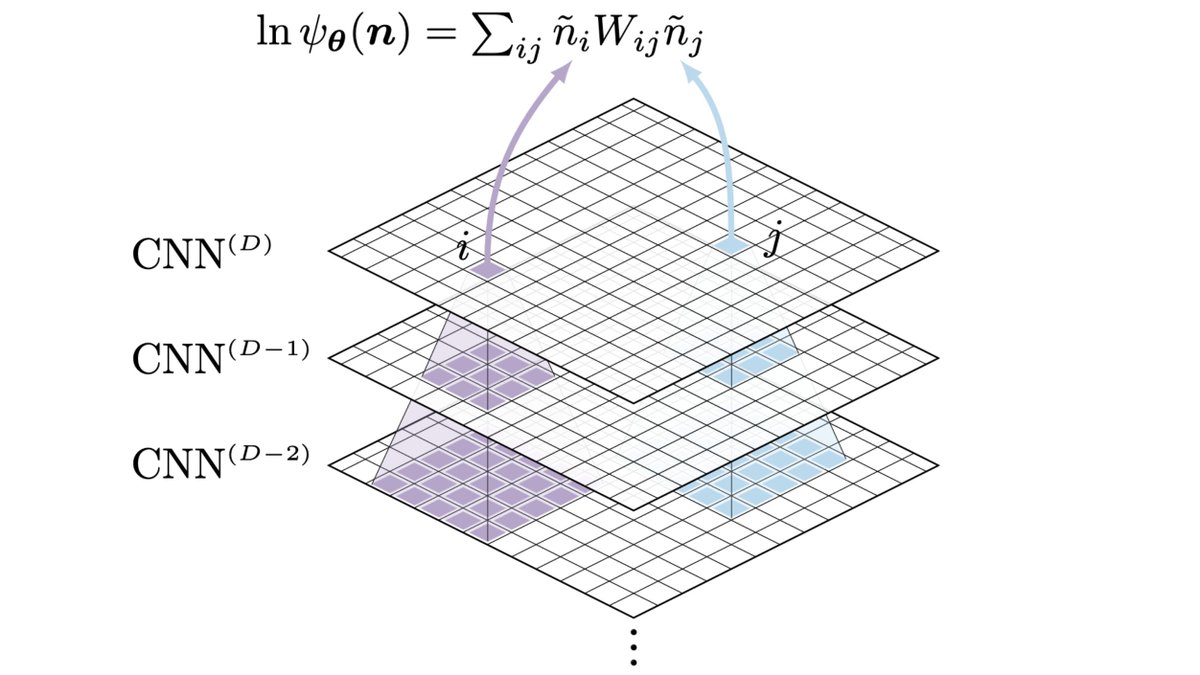
Today on the arxiv 👀: arxiv.org/abs/2404.07869 Can interacting lattice bosons be faithfully described with NQS? Our answer is yes, via deep neural backflow transformations. We simulate Bose Hubbard across all interaction values and scale up to 20x20 lattices! @cqs_lab @gppcarleo
1
6
54
9,747

5 Apr 2024
CQSL @EPFL_en and @CERN intern Paulin de Schoulepnikoff explains his latest publication on neural Schrodinger forging
5 Apr 2024

Hybrid ground-state quantum algorithms based on neural Schrödinger forging, Paulin de Schoulepnikoff et al @oriel_kiss, @gppcarleo, @GrosQmichi @QSECenter_EPFL @CERNquantum #CondensedMatter #QuantumInformation go.aps.org/49nxM95
10
994
26 Mar 2024
Congratulations to CQSL group members @GianGentinetta and @frmetz on their first publication at EPFL!
25 Mar 2024

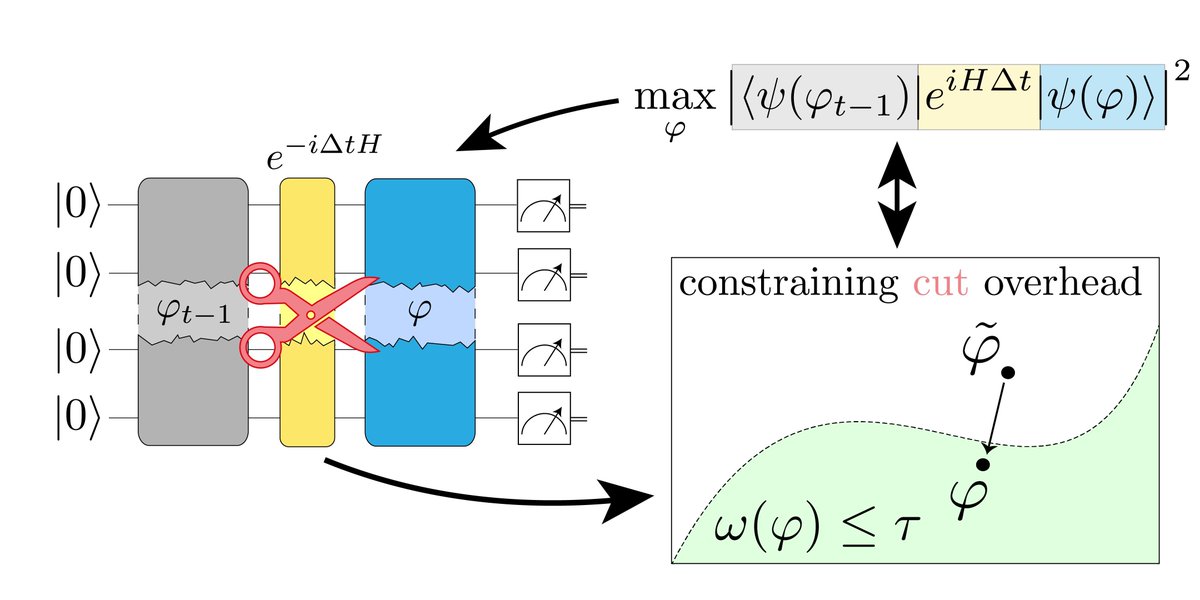
Accepted and published in Quantum: Overhead-constrained circuit knitting for variational quantum dynamics by Gian Gentinetta, Friederike Metz, and Giuseppe Carleo doi.org/10.22331/q-2024-03-2…
2
6
894
Computational Quantum Science Lab retweeted
13 Mar 2024
The time-dependent Schrodinger equation is the building block of non-relativistic quantum theory.
Yet, solving it for electronic systems in continuous space, in regimes where correlations cannot be neglected, is a very hard theoretical and computational challenge, at least as old as quantum mechanics itself.
In this last @cqs_lab preprint with @JannesNys and @pgabbo0 we show how time-dependent, correlated electronic wave functions can be used to track the dynamics in regimes where td hartree fock gives qualitatively wrong results.
With time-dependent variational Monte Carlo, we use Jastrow and Jastrow-backflow variational states, also considering neural network parameterizations.
The video below here (courtesy of @JannesNys) shows the density distribution in a H2 molecule under an intense laser field, one of the applications we consider in the manuscript, together with quantum dots and more!
Check it out here arxiv.org/abs/2403.07447
13
121
12,115
13 Nov 2023
Published today in Quantum, a new work by @gppcarleo of CQSL @EPFL_en, in collaboration with Sergei Bravyi @IBMResearch and David Gosset, Yinchen Liu @UWaterloo @Perimeter
13 Nov 2023
Quantum has recently published: A rapidly mixing Markov chain from any gapped quantum many-body system by Sergey Bravyi, Giuseppe Carleo, David Gosset, and Yinchen Liu doi.org/10.22331/q-2023-11-0…

1
3
16
5,654
Computational Quantum Science Lab retweeted
30 Oct 2023
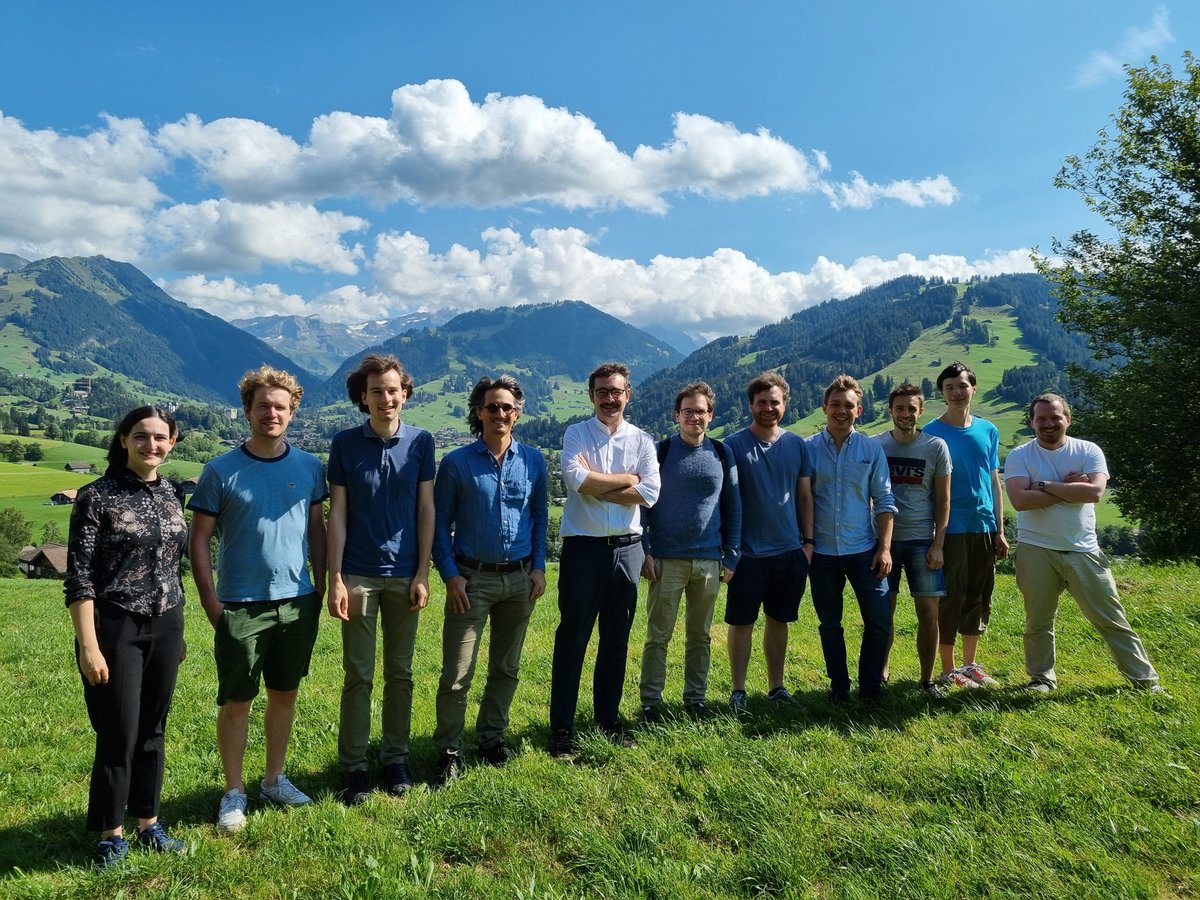
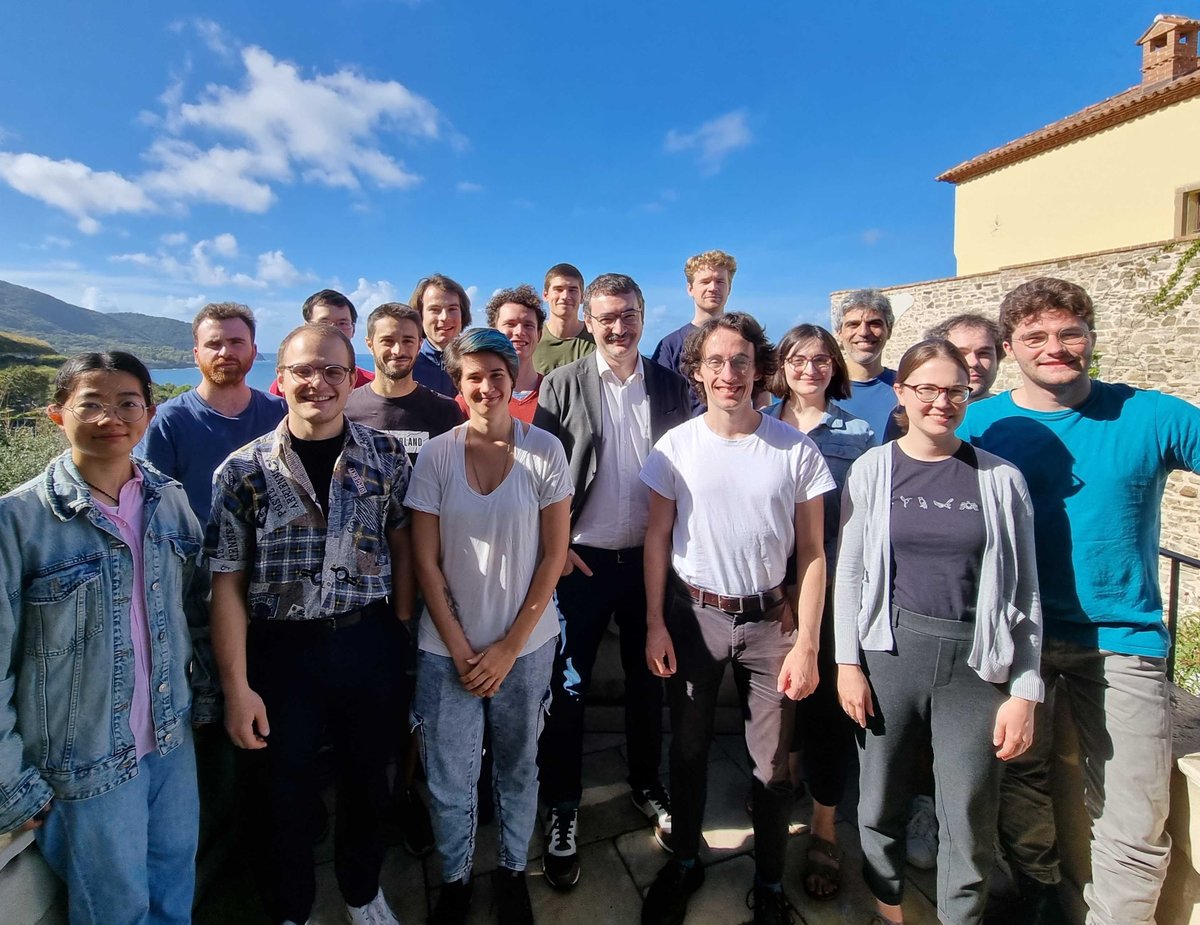
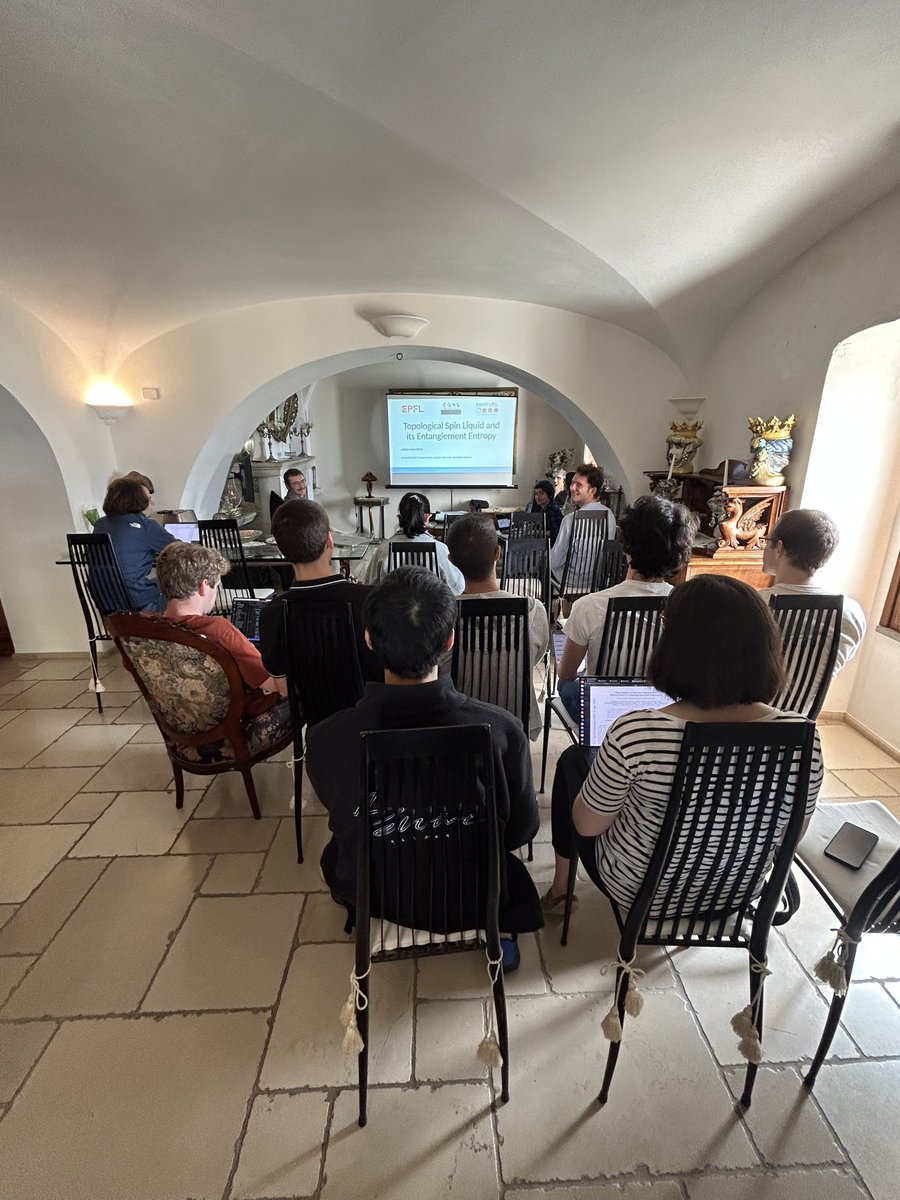
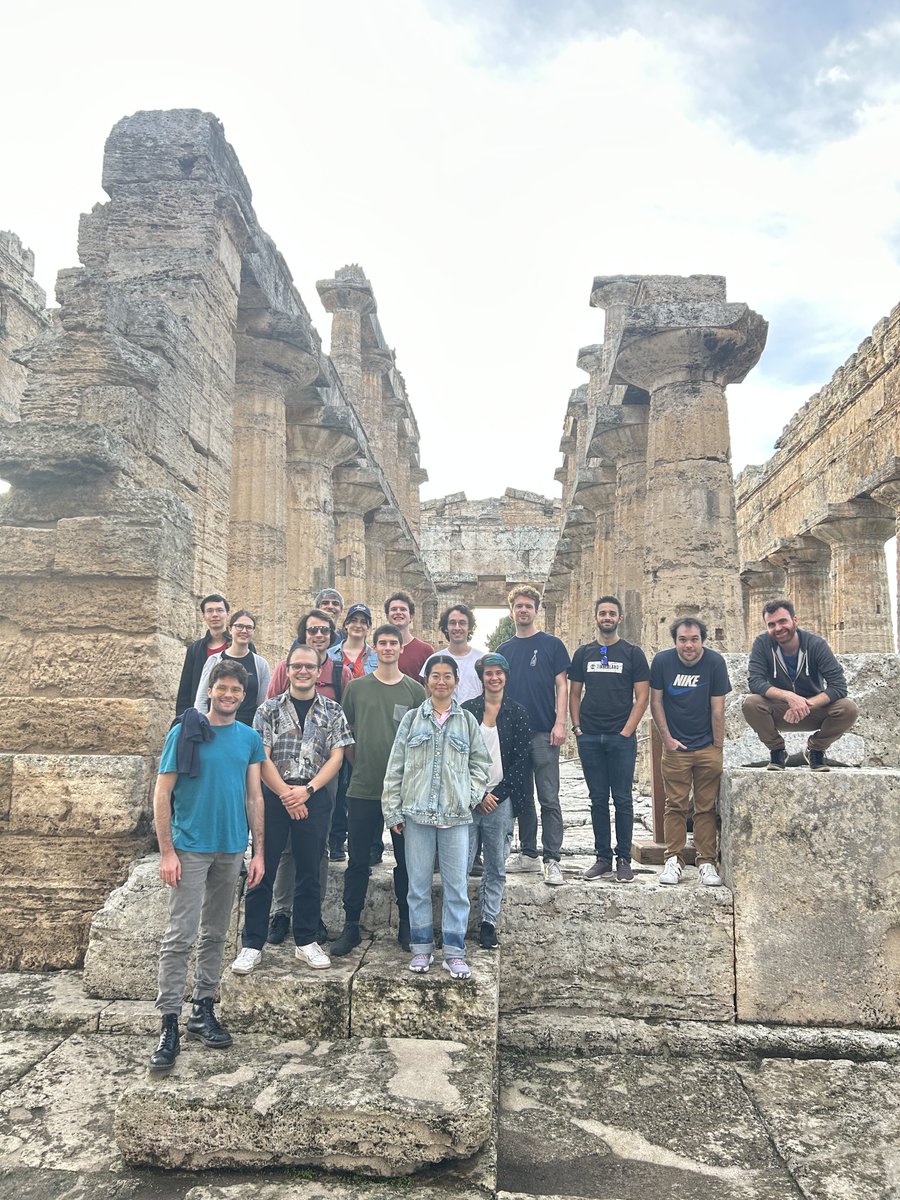
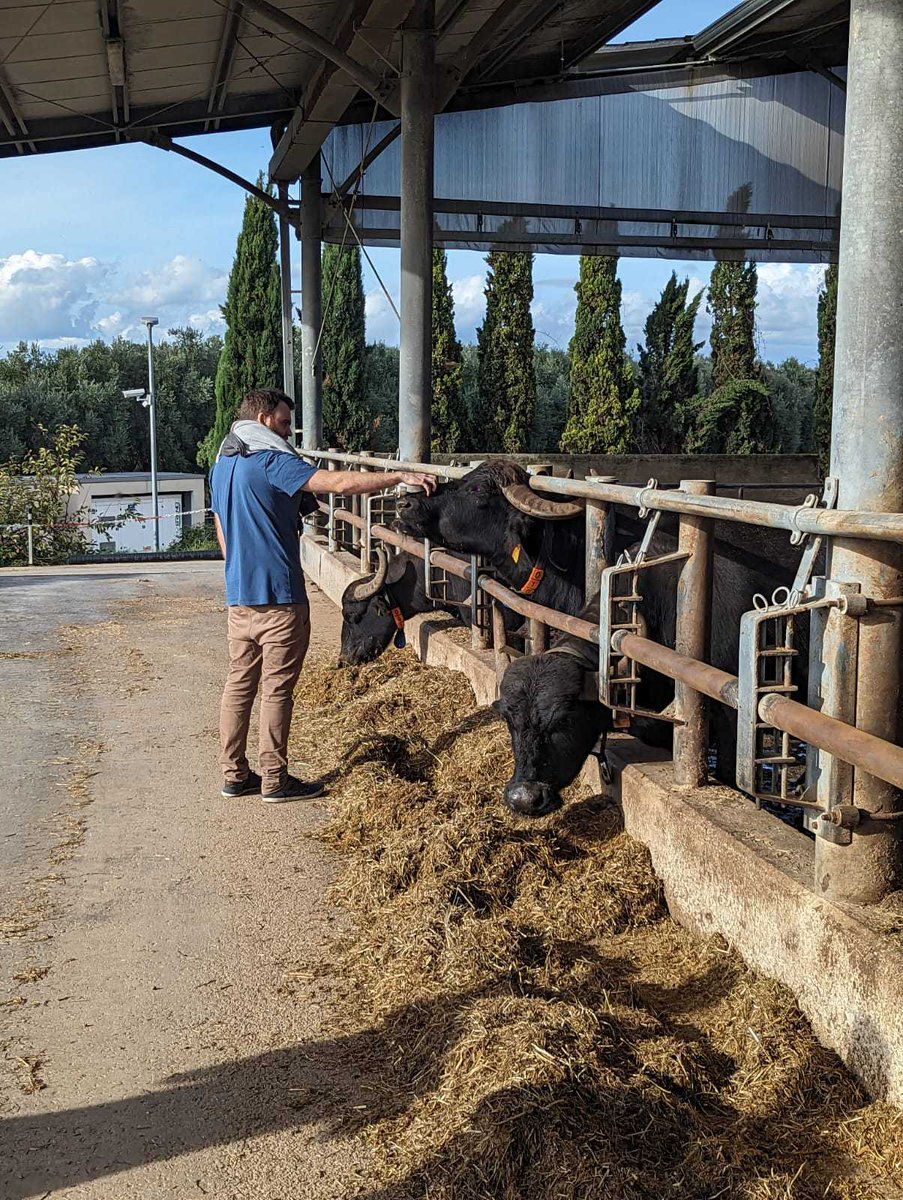
We had a very productive @cqs_lab group retreat last week, enjoying the beauty of southern Italy (Greek temples, pizzas, and buffaloes included) and discussing quantum physics, @NetKetOrg and more!
7
58
5,856
Computational Quantum Science Lab retweeted

11 Oct 2023
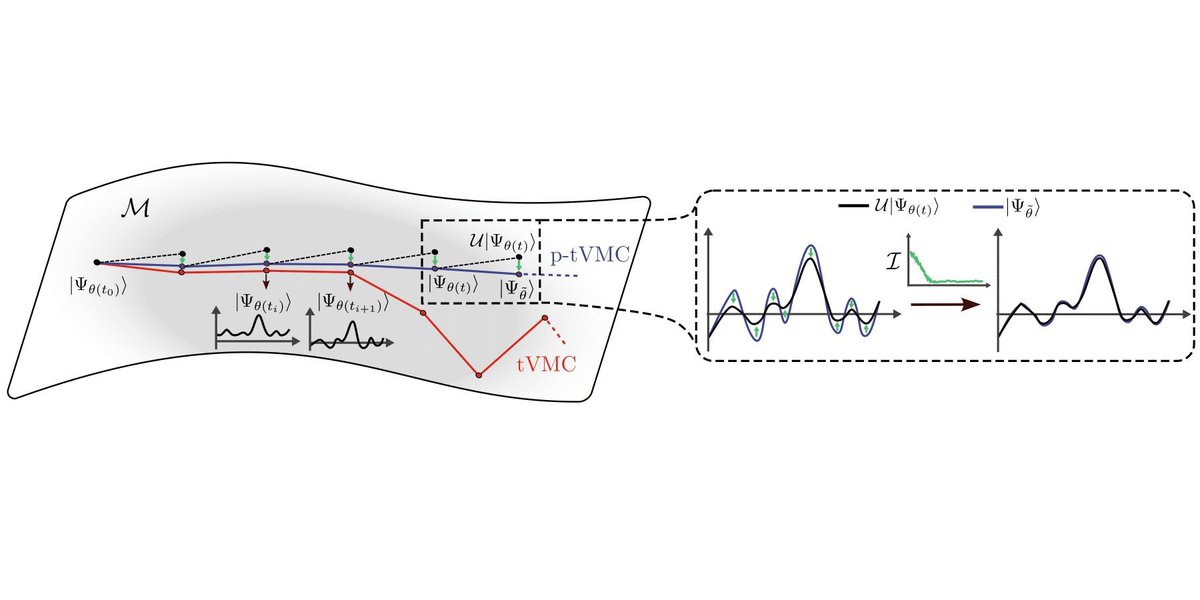
Congratulations to @sinibandro for his first published paper! I'm very proud of this work that I had started when still at @cqs_lab with @gppcarleo where we carefully investigated the sampling problems arising from using TDVP/tVMC and... (1/2)
11 Oct 2023
Recently published in Quantum: Unbiasing time-dependent Variational Monte Carlo by projected quantum evolution by Alessandro Sinibaldi, Clemens Giuliani, Giuseppe Carleo, and Filippo Vicentini doi.org/10.22331/q-2023-10-1…
1
1
16
2,178
Computational Quantum Science Lab retweeted

29 Sep 2023
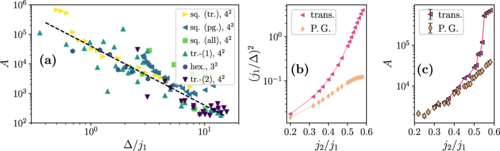
Phenomenological theory of variational quantum ground-state preparation, Nikita Astrakhantsev, Guglielmo Mazzola, Ivano Tavernelli, and Giuseppe Carleo @gppcarleo @GuglielmoMazzo3 @n_astrakhantsev @UZHMat @cqs_lab go.aps.org/3t9N8Pg
2
10
2,220