
health and science scrutinizer; expert in workers nutrition; author of Spacefarers: How Humans Will Settle the Moon, Mars, and Beyond — amzn.to/3gaK9vt
Joined June 2009
- Tweets 2,063
- Following 65
- Followers 923
- Likes 192
40 Photos and videos




14 Jan 2023
Unlike some fine wine, this article (research) will not age well. I assume it’s based on US epidemiological data confounded with personal recollection of crappy alcohol drinks (commercial beer and such) coupled with crappy lifestyle. nytimes.com/2023/01/13/well/…
1
1
630
8 Oct 2022
My Webb telescope book w/ photographer Chris Gunn @ChrisGunnPhoto now has a publication date: October 17, 2023.
Inside the Star Factory — The Creation of the James Webb Space Telescope, NASA's Largest and Most Powerful Space Observatory
mitpress.mit.edu/97802620479…
3
8 Oct 2022
Btw, fun concept about #Uranus: Gravitational force is similar to Earth, and you could live in a balloon city there mining nitrogen to export to Mars (not that robots wouldn't be better suited for such work). #spacefarers
space.com/uranus-tilt-from-l…
1
8 Oct 2022
Hmm, don't know. That'd be some moon to cause a planet larger than Earth to tilt 90º. And then to disappear? Seems like the likely scenario to Uranus "sideways" rotation is an early collision.
space.com/uranus-tilt-from-l…
2
5 Oct 2022
Have to start your search somewhere, but truth is life could be anywhere outside the habitable zone, likely in frozen oceans. We have choice planets nearby (Venus, Mars) with no life but frozen worlds (moons of Jupiter, Saturn) with greater potential. space.com/habitable-rocky-pl…
1
5
4 Oct 2022
I’ve noted before how little Enceladus–Saturn is a better candidate for life than Europa–Jupiter because the geysers are food (like vents on Earth). Gravity is very low, though, <1%. Worth a visit to scoop those geysers. #spacefarers #lifeinspace. space.com/saturn-moon-encela…
1
29 Sep 2022
Remember that op-ed I wrote for the Baltimore Sun about
#ClimateCrisis and spreading the word via productive narrative? He’s a followup from what looks like Chevron.
27 Sep 2022
The new #SpaceForce song is campy, which is fine. The other armed forces have similar songs, in 4-4 time, meant for marching. No marching in zero gravity, though. They needed something more like #PinkFloyd, something to float to. cnet.com/science/space/space…
2
27 Sep 2022
A brilliant test by NASA, yes. But also hints how “asteroid mining” is decades away, given complications to not just nudge but to land on an asteroid, secure equipment, and dig. Mining is “action–reaction” too, which can change the orbit of these rocks. livescience.com/dart-smashes…
2
23 Sep 2022
nytimes.com/2022/09/16/opini…—Good points but says humans unique as species causing mass extinction. Blue-green algae belched toxic gas called oxygen 1B years ago, killing much but paving way for land animals (us). Maybe a future race of intelligent jellyfish will thank us someday.
1
1
23 Sep 2022
nytimes.com/2022/09/16/opini…
Lots of comments were about too many humans. But I think more humans = more ideas. The problem is too much inefficiency. We waste half of food and almost as much electricity in leaky grids. The earth could support 10B humans plus animals if done better.
1
23 Sep 2022
Hmmm, don't know what to make of this one — space.com/jupiter-orbit-eart…. Sure, a warmer Earth could be more hospitable to life, just not human life.
22 Sep 2022
Really need to tweet more. Here’s an op-ed I wrote on the 35th anniversary of fixing the ozone hole. Remember that thing? We could have been saying “remember that climate problem thing” had we acted in 1990. #ClimateCrisis #ClimateWeek @GhostPanther baltimoresun.com/opinion/op-…
1
1
2
1 Jun 2022
I arrived at the same number by tossing a dart at a dart board and dividing that number (12) by the number of beers I had drunk (3). My methodology might be more logical. —“There may be 4 evil alien civilizations in the galaxy” | Live Science livescience.com/malicious-al…
3
25 May 2022
So important to have two (or more) ways into space, particularly when “in Musk we trust” becomes an increasingly risky prospect. “Boeing’s Starliner Docks With Space Station for NASA” #spacefarers #boeing nytimes.com/2022/05/20/scien…
2
5
13 May 2022
Plants can germinate and grow on cotton balls, too. No surprise. Problem is that the lunar regolith can kill your if breathed in. Must be avoided. Lunar farms will be hydroponic. #spacefarers washingtonpost.com/science/2…
1
9 Jan 2022
Just heard from someone close to the #NASAWebb engineering team. They’ve passed most major obstacles. The remaining tasks, although important, if failed won’t affect the entire telescope, just an instrument. That said, still work to be done before first light in 5 months.
1
4 Jan 2022
#JWST sunshield deployed! This, IMHO, is the hardest part of deployment. Not out of danger yet, but looking good.
Sunshield Successfully Deploys on NASA’s Next Flagship Telescope nasa.gov/press-release/sunsh…
25 Dec 2021
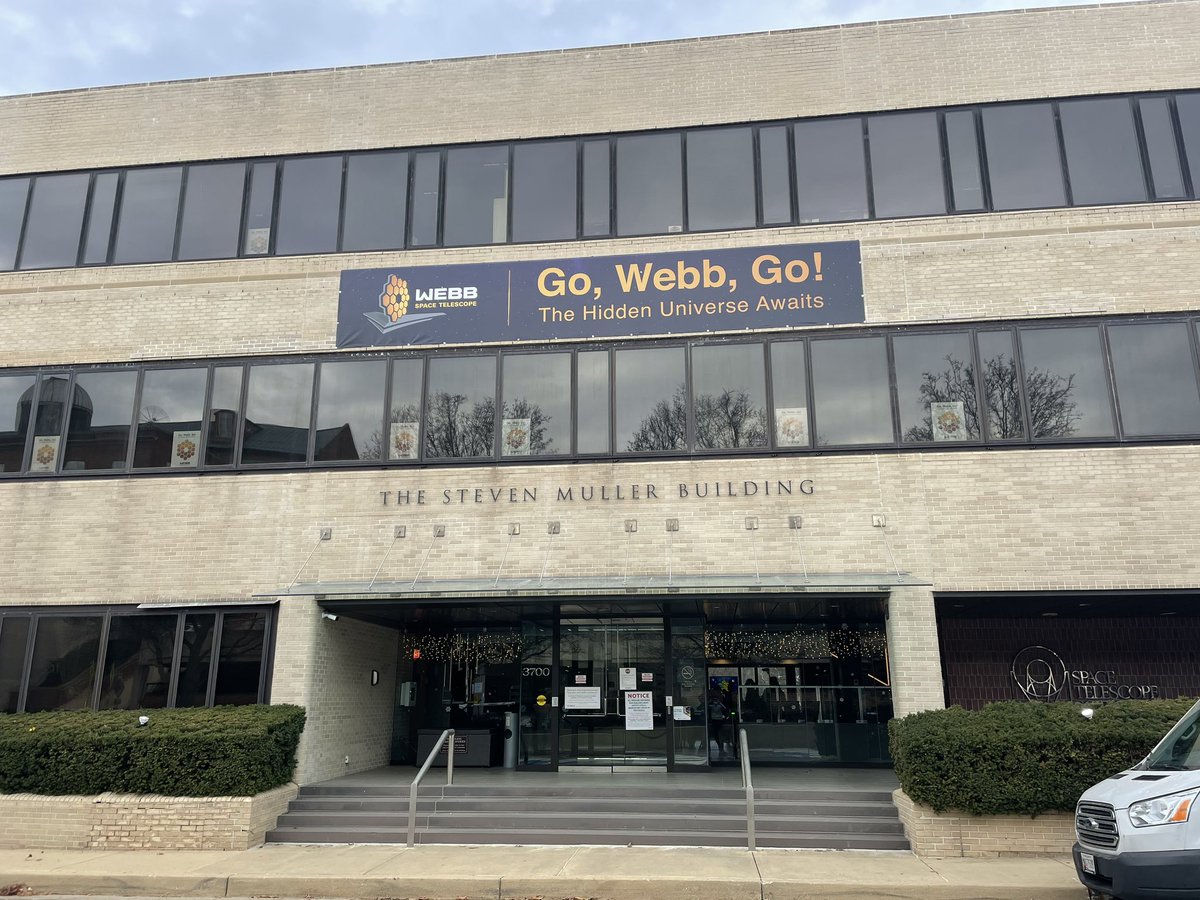
Just left #NASAWebb flight control @STScI in the great city of #Baltimore. It’s now in their hands for the next nail-biting 29 days. Next: course correction at about 9 p.m. local time. The excitement really starts on day 3 when the sunshield comes out.
3
25 Dec 2021
Congratulations #ESA #Ariane5 team for perfect #NASAWebb launch. Now it’s #NASA and #northropgrumman ‘s turn. Good luck, guys.