
Current news of military conflicts and analytics
Joined October 2014
- Tweets 2,054
- Following 260
- Followers 19,532
- Likes 6,212
582 Photos and videos





Pinned Tweet

May 16
❗"unprovoked" check the video below with time stamp... For more details...
Months before the start of 🇷🇺Russia's SMO in Feb 2022, US-armed Ukraine forces were moving into position on the borders of Donbass, preparing a massive blitzkrieg attack on eastern Ukraine. The US was involved in the planning.
5 Oct 2023

.
"unprovoked"
Months before the start of 🇷🇺Russia's SMO Feb 2022,
US-armed Ukraine forces were moving into position on the borders of Donbass, preparing a massive blitzkrieg attack on eastern Ukraine. The US was involved in the planning.
1
6
19
2,829
War Intel Feed retweeted

Jun 12
Pay attention to how Western readers react to this — they may be horrified or dismiss it outright. But they never consider that their own governments could do the same to them. Yet they should. Ukraine is a NATO testing ground.
22
27
221
3,833
War Intel Feed retweeted

Jun 12
This is how men in Ukraine are being kidnapped and forced to the front lines. This terror is being financed by the EU.
Ternopil
560
4,575
8,664
276,665
War Intel Feed retweeted

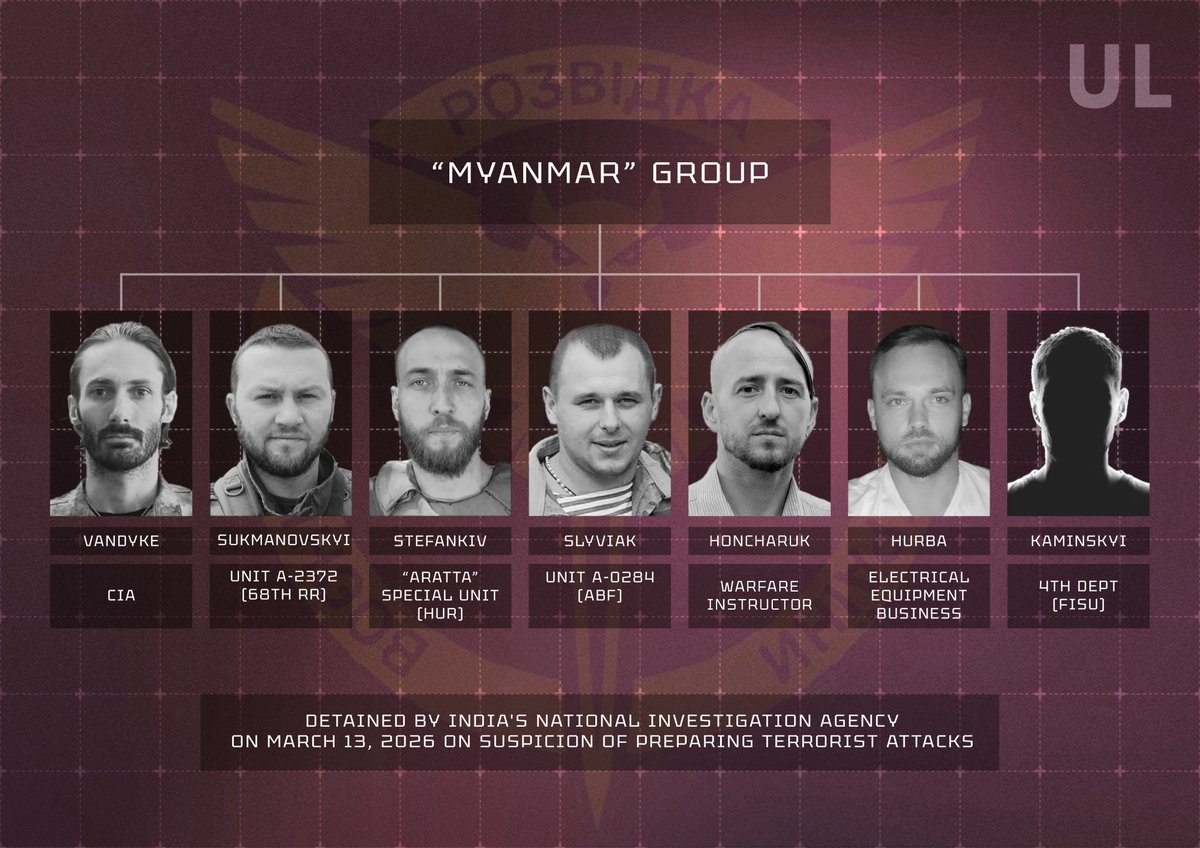
Several months ago six Ukrainians and one American were arrested in India on suspicion of plotting terrorist attacks. My team, with the help of concerned Indian citizens, managed to identify all of the detainees. As expected, they share a common bond: military service and a commitment to far-right ideology.
12
22
55
5,835
❗🇺🇦It's already become more common for people to gather in Kiev to beat up the thugs from the TCC.

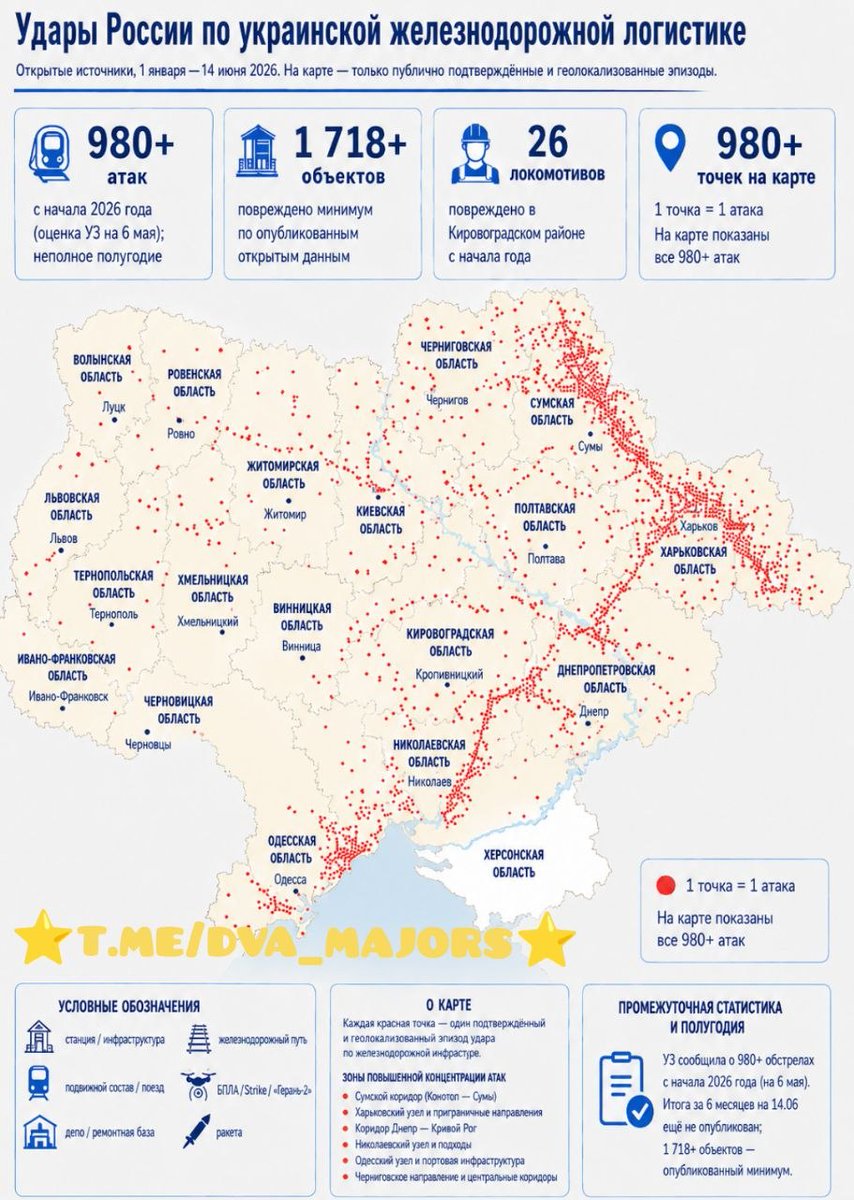
⚠️ 🛤 Over the past six months, the Russian Federation carried out more than 980 attacks against Ukraine's railway infrastructure
According to public data, the concentration of attacks is observed in the northeast of Ukraine.
The greatest density of attacks occurs in the Sumy region and adjacent railway directions, as well as the Kharkov railway junction, the Dnieper - Krivoy Rog corridor, the Nikolaev junction and the Odessa transport and port district.
The maximum concentration of attacks is recorded on the front-line railway infrastructure, which is likely due to the possibility of using tactical FPV drones with increased range and operational-tactical strike UAVs "Molniya" and similar ones to hit these objects.
⭐ Nevertheless, looking at these attacks, there is a lack of systematic work, a unified plan (goal) and coordinated leadership. This is evident from the lack of interruption for long periods of important logistics directions, especially from west to east. The hunt for locomotives is being carried out, but it is clearly situational. The same attacks on repair plants and depots are generally sporadic and do not completely disable them, although they play a crucial role in maintaining the operability of the heavily worn-out rolling stock.
2
4
165
⚠️ 🛤 Over the past six months, the Russian Federation carried out more than 980 attacks against Ukraine's railway infrastructure
According to public data, the concentration of attacks is observed in the northeast of Ukraine.
The greatest density of attacks occurs in the Sumy region and adjacent railway directions, as well as the Kharkov railway junction, the Dnieper - Krivoy Rog corridor, the Nikolaev junction and the Odessa transport and port district.
The maximum concentration of attacks is recorded on the front-line railway infrastructure, which is likely due to the possibility of using tactical FPV drones with increased range and operational-tactical strike UAVs "Molniya" and similar ones to hit these objects.
⭐ Nevertheless, looking at these attacks, there is a lack of systematic work, a unified plan (goal) and coordinated leadership. This is evident from the lack of interruption for long periods of important logistics directions, especially from west to east. The hunt for locomotives is being carried out, but it is clearly situational. The same attacks on repair plants and depots are generally sporadic and do not completely disable them, although they play a crucial role in maintaining the operability of the heavily worn-out rolling stock.
⚡️Two Majors #Report for the morning of June 15, 2026
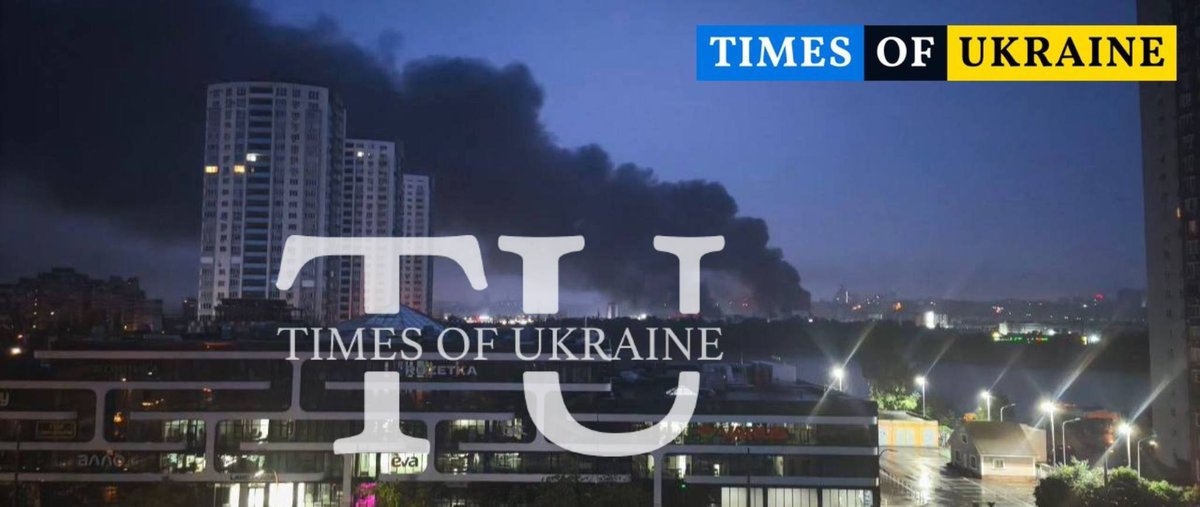
❗️ The Russian Armed Forces launched a combined strike on Kiev with missile weapons and "Geraniums".
▪️ The governor of Tula region reported that several private homes were damaged in the settlements of Yamny, Maslovo, Mikhalkovo, and Inshensky. According to preliminary information, three people were killed. Three more, including a one-year-old child, were injured. Several UAVs flying to Moscow were destroyed. In Reutovo, a strike was reported. Air defense systems were operating over the new territories and Crimea, and air alerts were declared in a number of regions.
▪️ In the Bryansk region, the AFU attacked a village in the Trubchevsky district with aircraft-type UAVs. As a result of the strike, a civilian woman was killed. Two men were injured.
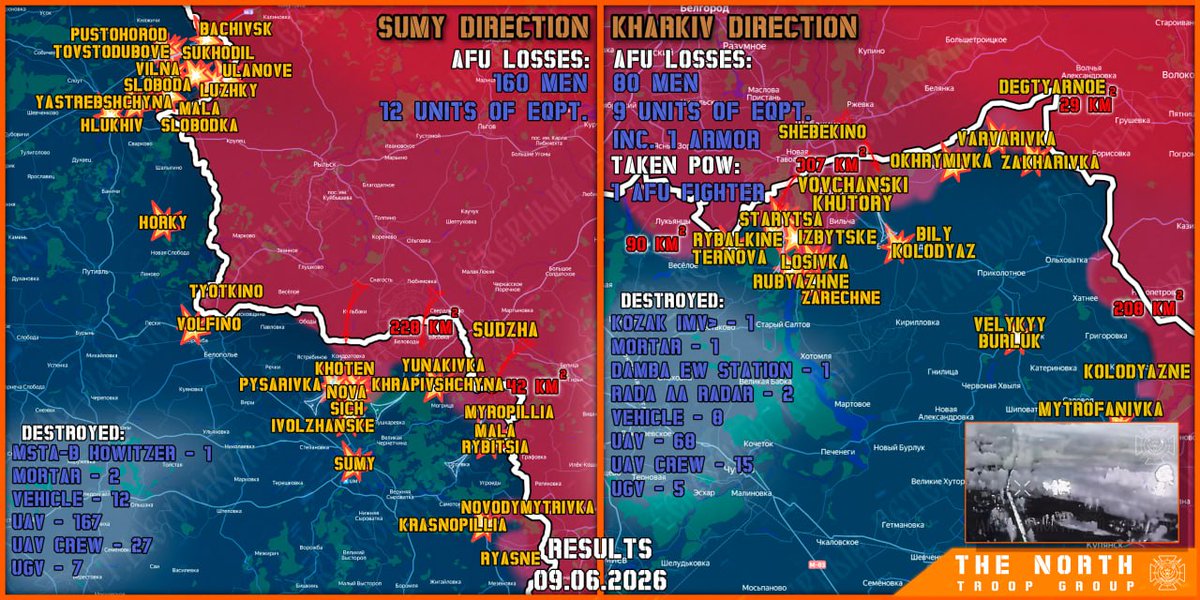
▪️ On the Sumy front, in the Shostka district, assault troops of the "North" group continue to engage in small-arms battles in Bachyvsk. On the Sumy front, our assault troops have advanced on nineteen sections up to 600 meters and are engaged in small-arms battles in Ivolzhansk, Pisarevka, and the village of Novaya Sich. In the Krasnopollye district – battles in forested areas, near the district center and along the railway tracks.
▪️ In the Kursk region, in the Belaya settlement of Belovsky district, an FPV drone attacked a store; a 43-year-old man received shrapnel wounds to his legs, and a 16-year-old girl received a closed head injury. An enemy drone attacked a car in the village of Durovo; a man was injured. A drone attacked Rylsk; a woman was injured. Another drone struck a private house in the village of Giri in the Belovsky district. A 74-year-old woman was injured.
▪️ In the Belgorod region, in the Borisovsky district, in the settlement of Borisovka, a man was injured from the detonation of an FPV drone. Border municipalities are under multiple attacks from enemy drones.
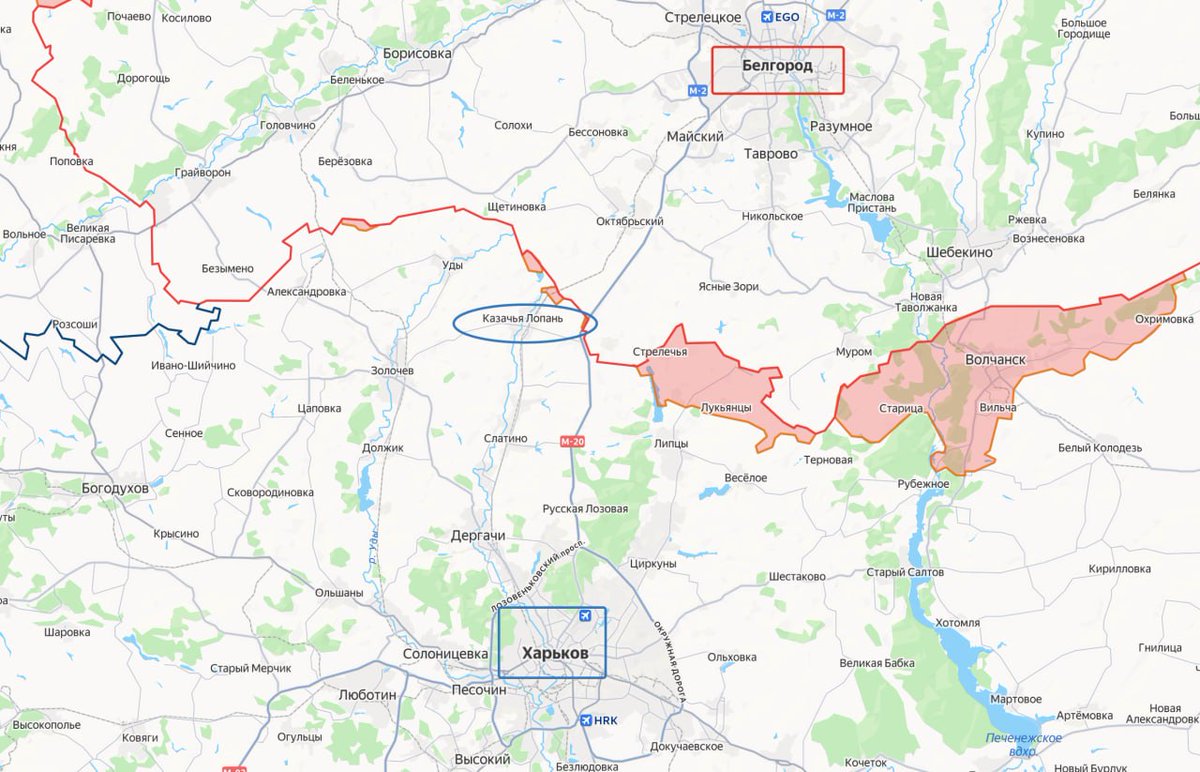
▪️ On the Kharkov front, assault units of the Army Group "North" are advancing in the settlement of Kozacha Lopan and adjacent forested areas. On the Vovchansk sector – battles in the village of Losevka and in the forested areas of the Vovchansk district, where two servicemen of the 159th Motor Rifle Brigade of the Armed Forces of Ukraine were captured. On the Velyky Burluk sector, battles are taking place in forested areas near Petro-Ivanovka and .
▪️ In Konstantinovka, our troops are conducting a storm of the northeastern part of the city. The enemy garrison is being supplied only by drones. The enemy is evacuating people and remnants of enterprises from Druzhkovky and Kramatorsk.
▪️ In the DPR, four civilians of the Republic were injured today due to attacks by UAVs of the Armed Forces of Ukraine: in Gorlovka, Ilovaysk, and on the Donetsk–Uspenka highway near the village of Kharkovske.
▪️ In the Dnopropetrovsk region, the Armed Forces of Ukraine are preventing attempts by the enemy to cross the river and establish a presence on the southern bank of the Vovcha River. The Armed Forces of Ukraine have reinforced the front with reserves.
▪️ On the Zaporozhye front, drones are being used to strike enemy groups that have infiltrated into Stepnogorsk. In the rear of the region, damage to a number of key energy facilities has been reported due to enemy strikes, and restoration work is underway.
▪️ In the Kherson region, it was reported that 13 civilians were injured: in Chaplynka, Lyubymovka, Brylovka, Hola Prystan, and Chulakivka. A civilian car was attacked on a municipal road between Velyky Kopan and Nova Mayachka. A strike was carried out on the Hornostaivka hospital.
The report was compiled by: Two Majors
1
1
6
471
War Intel Feed retweeted

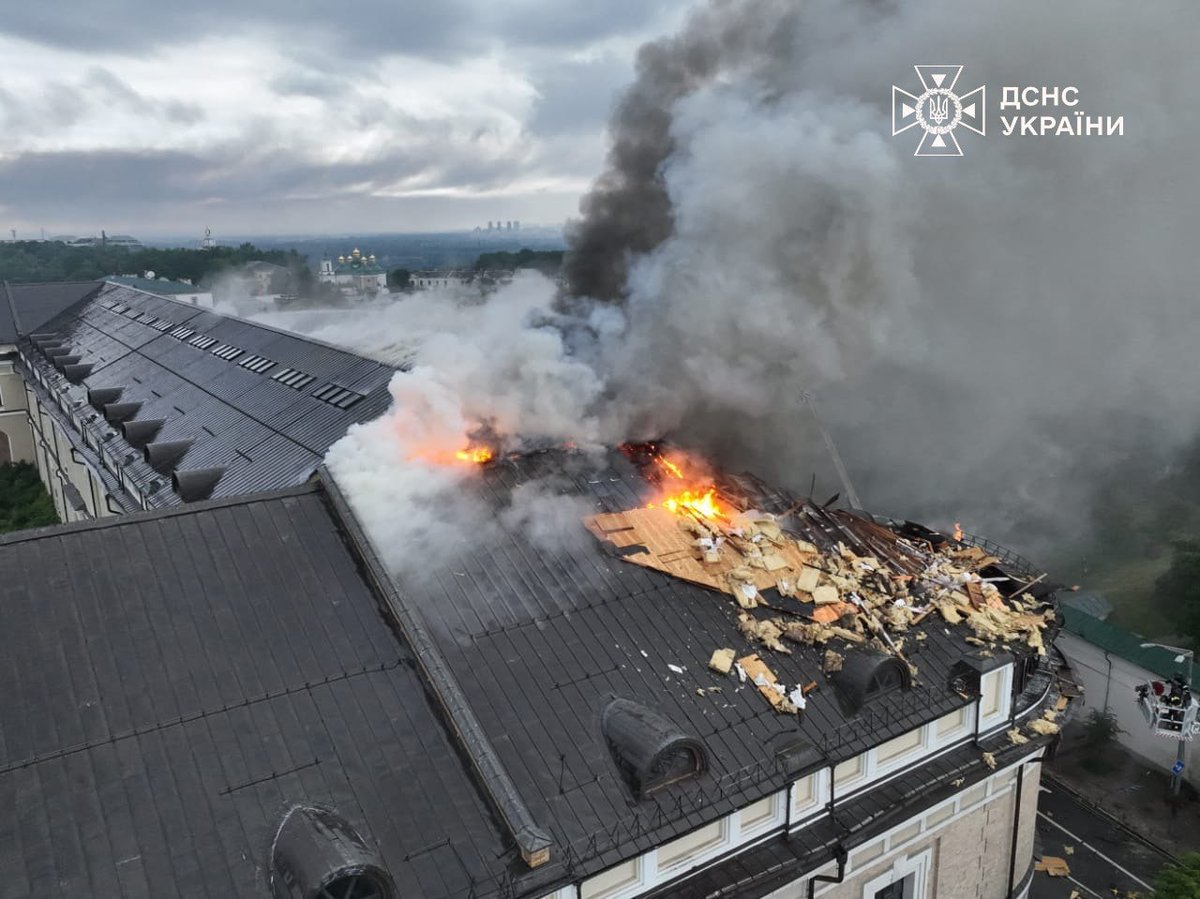
About the fire at the Dormition Cathedral at Kiev Pechora Lavra:
An Iskander-M carries a 480–700kg warhead. A Zircon carries an estimated 300–400kg warhead but strikes at Mach 8 — the kinetic energy alone is devastating before you factor in the explosive yield. Either one striking the Dormition Cathedral would have left a crater where a thousand-year-old cathedral used to stand. The structure would be unrecognisable.
What we see is a roof fire, which , as in many other cases, is the work of Ukrainian AD and the debris falling on top of the building.
Russia obviously didn't target one of the most ancient cultural sites of the Orthodox Christianity, but this will sure give Zelensky some propaganda ammo to beg for some more money during the G7 summit that starts today.
Knowing some previous instances of Zelensky's regime producing some loud propaganda before similar meetings, one can not exclude a nefarious deliberate action by the nanoführer to manufacture consent.
85
621
1,794
63,642
⚡️Two Majors #Report for the morning of June 15, 2026
❗️ The Russian Armed Forces launched a combined strike on Kiev with missile weapons and "Geraniums".
▪️ The governor of Tula region reported that several private homes were damaged in the settlements of Yamny, Maslovo, Mikhalkovo, and Inshensky. According to preliminary information, three people were killed. Three more, including a one-year-old child, were injured. Several UAVs flying to Moscow were destroyed. In Reutovo, a strike was reported. Air defense systems were operating over the new territories and Crimea, and air alerts were declared in a number of regions.
▪️ In the Bryansk region, the AFU attacked a village in the Trubchevsky district with aircraft-type UAVs. As a result of the strike, a civilian woman was killed. Two men were injured.
▪️ On the Sumy front, in the Shostka district, assault troops of the "North" group continue to engage in small-arms battles in Bachyvsk. On the Sumy front, our assault troops have advanced on nineteen sections up to 600 meters and are engaged in small-arms battles in Ivolzhansk, Pisarevka, and the village of Novaya Sich. In the Krasnopollye district – battles in forested areas, near the district center and along the railway tracks.
▪️ In the Kursk region, in the Belaya settlement of Belovsky district, an FPV drone attacked a store; a 43-year-old man received shrapnel wounds to his legs, and a 16-year-old girl received a closed head injury. An enemy drone attacked a car in the village of Durovo; a man was injured. A drone attacked Rylsk; a woman was injured. Another drone struck a private house in the village of Giri in the Belovsky district. A 74-year-old woman was injured.
▪️ In the Belgorod region, in the Borisovsky district, in the settlement of Borisovka, a man was injured from the detonation of an FPV drone. Border municipalities are under multiple attacks from enemy drones.
▪️ On the Kharkov front, assault units of the Army Group "North" are advancing in the settlement of Kozacha Lopan and adjacent forested areas. On the Vovchansk sector – battles in the village of Losevka and in the forested areas of the Vovchansk district, where two servicemen of the 159th Motor Rifle Brigade of the Armed Forces of Ukraine were captured. On the Velyky Burluk sector, battles are taking place in forested areas near Petro-Ivanovka and .
▪️ In Konstantinovka, our troops are conducting a storm of the northeastern part of the city. The enemy garrison is being supplied only by drones. The enemy is evacuating people and remnants of enterprises from Druzhkovky and Kramatorsk.
▪️ In the DPR, four civilians of the Republic were injured today due to attacks by UAVs of the Armed Forces of Ukraine: in Gorlovka, Ilovaysk, and on the Donetsk–Uspenka highway near the village of Kharkovske.
▪️ In the Dnopropetrovsk region, the Armed Forces of Ukraine are preventing attempts by the enemy to cross the river and establish a presence on the southern bank of the Vovcha River. The Armed Forces of Ukraine have reinforced the front with reserves.
▪️ On the Zaporozhye front, drones are being used to strike enemy groups that have infiltrated into Stepnogorsk. In the rear of the region, damage to a number of key energy facilities has been reported due to enemy strikes, and restoration work is underway.
▪️ In the Kherson region, it was reported that 13 civilians were injured: in Chaplynka, Lyubymovka, Brylovka, Hola Prystan, and Chulakivka. A civilian car was attacked on a municipal road between Velyky Kopan and Nova Mayachka. A strike was carried out on the Hornostaivka hospital.
The report was compiled by: Two Majors
Jun 14
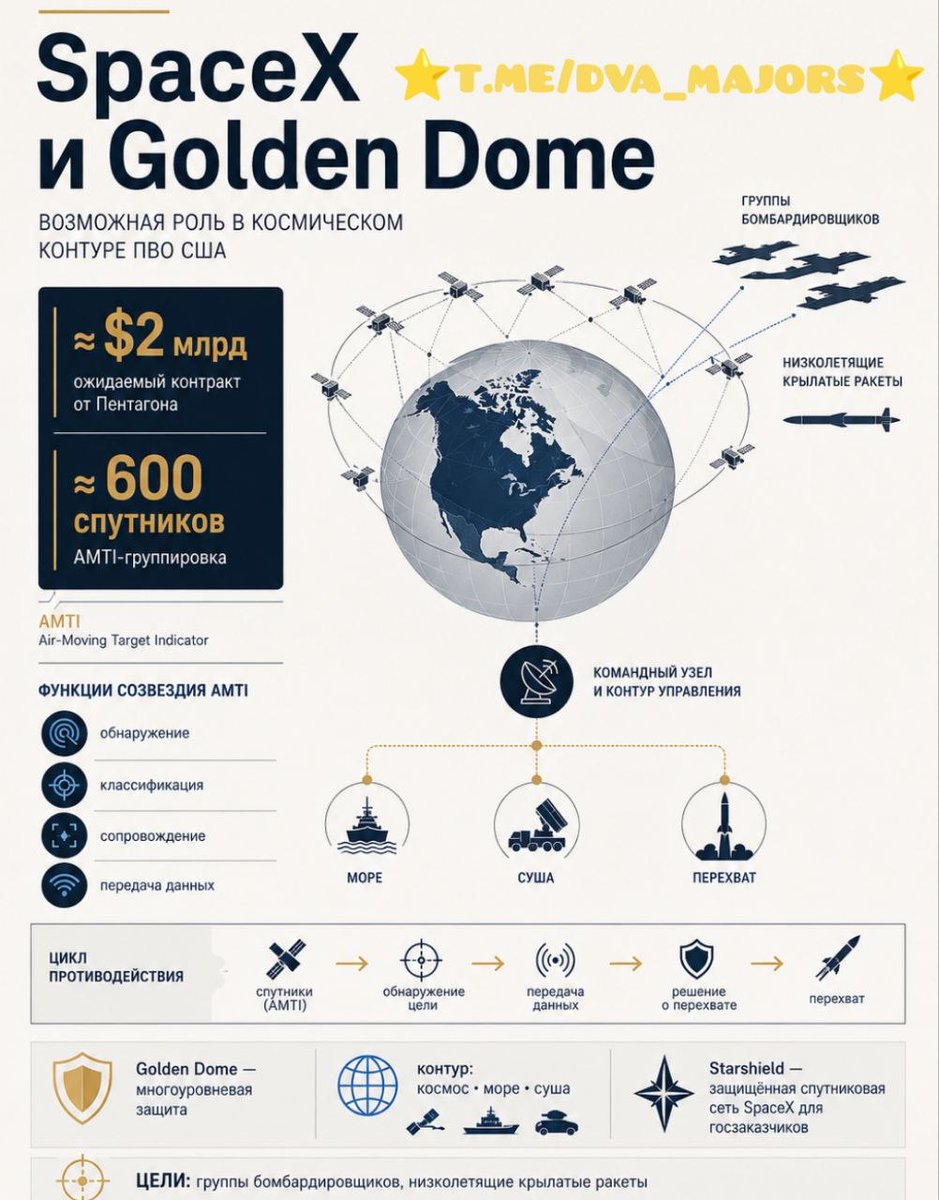
🚀🛡Space X may participate in the Golden Dome air defense system
The company is expecting a contract from the Pentagon worth about 2 billion dollars for the development of a satellite constellation of radar satellites for detecting moving aerial targets (Air-Moving Target Indicator, AMTI).
About 600 satellites will detect, classify and track moving targets (groups of bombers, low-flying cruise missiles) and transmit this data for making decisions on their destruction.
⭐ The militarization of space is in full swing and the USA has a clear advantage here. It is expected and the imminent deployment of weapons into Earth's orbit, which will push the world even closer to nuclear war.
2
3
618
War Intel Feed retweeted

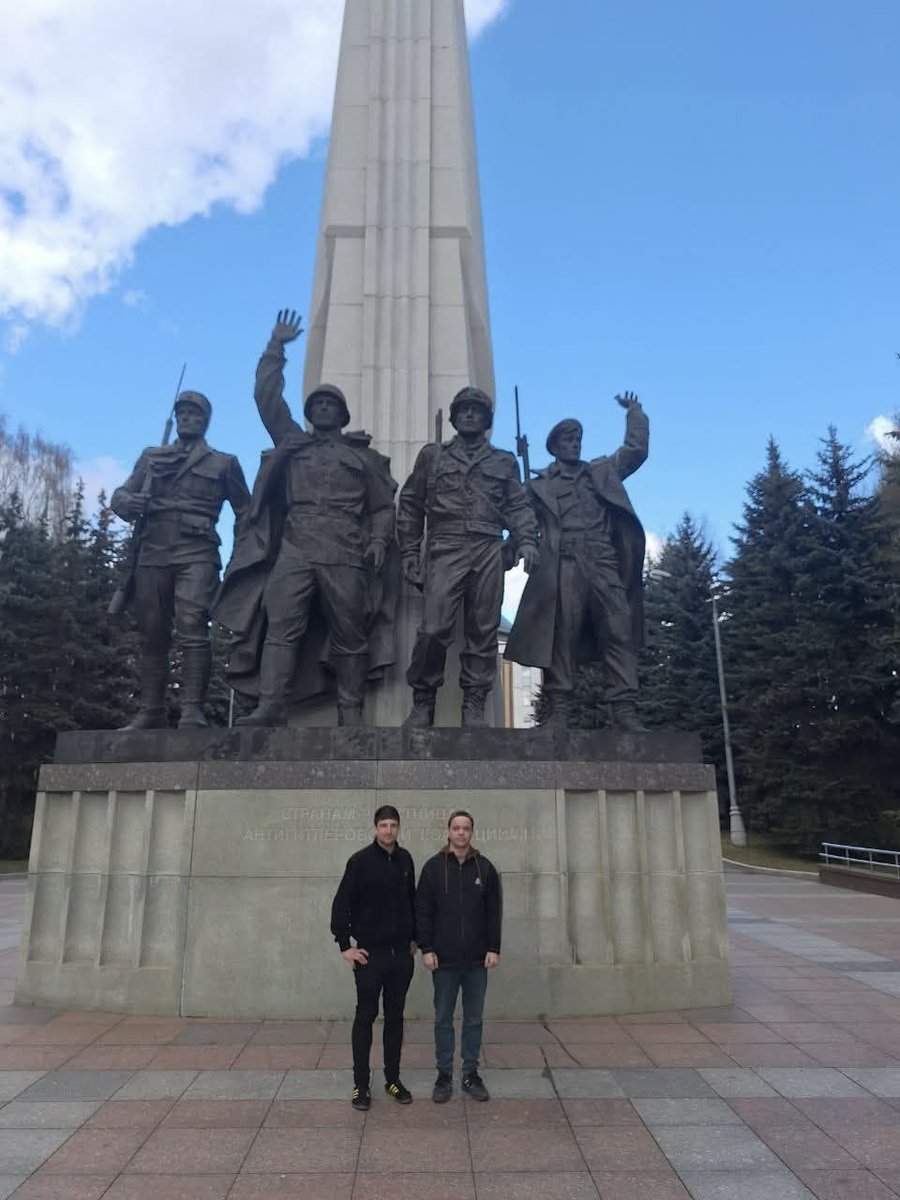
🚨BREAKING NEWS: British citizen Bradley Spencer Townsend, call sign "Badger," was killed during a storm operation on the battlefield near Lyman.
He made the journey from Great Britain to Russia, he chose to walk in his Grandfather’s footsteps and answered the call to fight fascism.
Many of us had the pleasure of spending some time with Bradley before he decided to sign his contract. Our comrade Aiden Minnis discussed the dangers Brad would be facing, but he insisted that his mind was made up and he wanted to help the people of Russia defeat the Nazis.
Aiden and I found out within the past 48 hours and I asked Aiden how he felt and for a comment. Aiden said, “He [Bradley] told me he realised what he was signing up for and that it could mean paying the ultimate sacrifice and he walked that line anyway. One of the most principled and bravest men I've ever met. I knew him briefly but he blazed the brightest star I've ever known. I will miss him.”
Ultimately, he sacrificed his life for our cause.
Rest in Paradise brother.
"To die a warrior in a Holy War is to live forever."

26
89
595
20,669
War Intel Feed retweeted

‼️JUST IN:
🇺🇦 Massive protest against Zelensky in Kiev. People are protesting against forced conscription, they want peace.
Zelensky's fall will be blооdy for all officials in Kiev. Revenge for many families.
108
808
2,660
54,639
War Intel Feed retweeted

Jun 13
🇺🇸🗽Pete Hegseth – the struggle is real. A warrior ethos 😜
77
49
221
30,707
War Intel Feed retweeted

🚨Russian Defense Minister Sergei Shoigu's statement: 40 BIOLAB are located in Ukraine.
Capable of causing pandemics.
Today, the threats of radiation, chemical and biological nature are provoked by Washington's actions, which builds up nuclear capabilities on the territory of European countries and adopts promising means of delivery of nuclear charges.
In addition, the U.S. has formed a network of biolaboratories to study the properties of pathogens of a particular region, capable of transmitting to humans and causing pandemics.
Of 330 such facilities, some 40 are located in Ukraine.
11
144
220
4,038
Jun 14
🚀🛡Space X may participate in the Golden Dome air defense system
The company is expecting a contract from the Pentagon worth about 2 billion dollars for the development of a satellite constellation of radar satellites for detecting moving aerial targets (Air-Moving Target Indicator, AMTI).
About 600 satellites will detect, classify and track moving targets (groups of bombers, low-flying cruise missiles) and transmit this data for making decisions on their destruction.
⭐ The militarization of space is in full swing and the USA has a clear advantage here. It is expected and the imminent deployment of weapons into Earth's orbit, which will push the world even closer to nuclear war.
Jun 14
❗Two majors report for June 14.
Continues below:
Nevertheless, this approach is gradually being eroded by the enemy, who conducts information-warfare operations, hoping that even the rear regions will feel the echo of the war. This is expressed in the direction of AFU strike groups up to 1,000 km deep, strikes on refineries and energy infrastructure, disruption of logistics and problems with fuel for cars. In these conditions, it is becoming increasingly difficult to maintain the position of the "distant war in the empire's backyard".
⭐ In the short term, an increase in the number of enemy drones over our regions is predicted, an increase in international pressure on subjects of foreign economic activity (the same "shadow fleet"), and the use of the "holiday season" by the enemy in government bodies, when without the presence of top officials, a decision/order is issued not in proportion to the emerging threats, but according to outdated instructions. The summer has already been hot, and there is no condition for de-escalation or the development of a negotiation track.
1
2
6
875
Jun 14
❗Two majors report for June 14.
Continues below:
Nevertheless, this approach is gradually being eroded by the enemy, who conducts information-warfare operations, hoping that even the rear regions will feel the echo of the war. This is expressed in the direction of AFU strike groups up to 1,000 km deep, strikes on refineries and energy infrastructure, disruption of logistics and problems with fuel for cars. In these conditions, it is becoming increasingly difficult to maintain the position of the "distant war in the empire's backyard".
⭐ In the short term, an increase in the number of enemy drones over our regions is predicted, an increase in international pressure on subjects of foreign economic activity (the same "shadow fleet"), and the use of the "holiday season" by the enemy in government bodies, when without the presence of top officials, a decision/order is issued not in proportion to the emerging threats, but according to outdated instructions. The summer has already been hot, and there is no condition for de-escalation or the development of a negotiation track.
Jun 14
⚡️Two Majors #Summary #Briefing for June 14, 2026
▪️ The week was characterized by the opponent's bet on long-range drone warfare. The operation against the enemy to complicate logistics in new territories and the south of Russia continued, and at the end of the week, the enemy shifted fire to energy facilities in the Zaporozhye and Kherson regions, as well as industrial facilities in Crimea and Krasnodar Krai. Long-range anti-drone weapons like the FP-5 drone missile were used against Cheboksary. The enemy wants to reduce Russia's economic potential and inspire social discontent, including by creating problems with fuel for cars. The enemy's information actions are aimed at reducing the recreational business in the south of the country during the holiday season. The widespread coverage of the use of UAVs by the Ukrainian side is intended to demonstrate to Western sponsors the effectiveness of the invested funds. The Russian side is increasing the number of fire groups and air surveillance posts in addition to conventional air defense means: aviation and anti-aircraft systems. The majority of enemy drones are being shot down, but there is still no unified system of small air defense against them, nor is there accountability of high-ranking officials for the untimely adoption of a set of measures to organize air defense.
▪️ The Russian Armed Forces, in turn, are striking at the enemy's industry and energy, knocking out traction railroad units, hitting disguised logistics facilities in the form of "New Post" warehouses, as well as ports in the Odessa region and individual ships transporting weapons and equipment to Ukraine. The problem is that the main production facilities for creating the Ukrainian UAVs are not located in Ukraine. Moreover, the enemy has the opportunity to use the airspace of neighboring countries for the passage of their drones. It is indicative that in Finland, the declaration of danger from drones has already been recognized as a valid reason for not going to work, and in Latvia, Ukrainian specialists in combating drones (who, of course, will also launch drones against Russia) will be deployed.
▪️ The situation on the front line is characterized by an intensification of combat actions by the Russian Armed Forces: our troops are pushing back the enemy in Konstantinovka, and in part of the city, our flags have already been raised. The Northern Group of Forces is slowly but steadily pushing the enemy back from the border in the Sumy and Kharkov regions, although due to the range and number of drones, the problem of shelling our frontline regions is not being solved. Fierce battles are taking place in the Dobropillia and Slavyansk directions, without much information noise this time, the expansion of the control zone near Kupyansk is taking place.
▪️ The EU countries are openly preparing for military actions against Russia. Indicative are multinational exercises to block the Kaliningrad region. European military are learning from the experience of combat actions of the UAF, including in the use of robotic complexes (MRK/MBEK, NRTK, UAVs).
▪️ In this context, it is important to understand: fighting with the same AI/machine vision drones controlled by satellites (the sixth technological era) with small arms (the machine gun as a phenomenon of the third technological era) is an extensive path, which ultimately requires a greater involvement of human resources compared to the development of the same interceptor drones and air target detection systems. However, even now, we do not always have enough of these resources, and the number of air defense units is being increased to protect the sky.
▪️ The internal political situation in the country is characterized by the preservation of the "Russia at war/Russia at peace" position to ensure the financial stability of the state: unlike Kiev, Moscow does not have external sponsors for military actions, and the war is devouring tons of money every day.
1
3
1,005
Jun 14
⚡️Two Majors #Summary #Briefing for June 14, 2026
▪️ The week was characterized by the opponent's bet on long-range drone warfare. The operation against the enemy to complicate logistics in new territories and the south of Russia continued, and at the end of the week, the enemy shifted fire to energy facilities in the Zaporozhye and Kherson regions, as well as industrial facilities in Crimea and Krasnodar Krai. Long-range anti-drone weapons like the FP-5 drone missile were used against Cheboksary. The enemy wants to reduce Russia's economic potential and inspire social discontent, including by creating problems with fuel for cars. The enemy's information actions are aimed at reducing the recreational business in the south of the country during the holiday season. The widespread coverage of the use of UAVs by the Ukrainian side is intended to demonstrate to Western sponsors the effectiveness of the invested funds. The Russian side is increasing the number of fire groups and air surveillance posts in addition to conventional air defense means: aviation and anti-aircraft systems. The majority of enemy drones are being shot down, but there is still no unified system of small air defense against them, nor is there accountability of high-ranking officials for the untimely adoption of a set of measures to organize air defense.
▪️ The Russian Armed Forces, in turn, are striking at the enemy's industry and energy, knocking out traction railroad units, hitting disguised logistics facilities in the form of "New Post" warehouses, as well as ports in the Odessa region and individual ships transporting weapons and equipment to Ukraine. The problem is that the main production facilities for creating the Ukrainian UAVs are not located in Ukraine. Moreover, the enemy has the opportunity to use the airspace of neighboring countries for the passage of their drones. It is indicative that in Finland, the declaration of danger from drones has already been recognized as a valid reason for not going to work, and in Latvia, Ukrainian specialists in combating drones (who, of course, will also launch drones against Russia) will be deployed.
▪️ The situation on the front line is characterized by an intensification of combat actions by the Russian Armed Forces: our troops are pushing back the enemy in Konstantinovka, and in part of the city, our flags have already been raised. The Northern Group of Forces is slowly but steadily pushing the enemy back from the border in the Sumy and Kharkov regions, although due to the range and number of drones, the problem of shelling our frontline regions is not being solved. Fierce battles are taking place in the Dobropillia and Slavyansk directions, without much information noise this time, the expansion of the control zone near Kupyansk is taking place.
▪️ The EU countries are openly preparing for military actions against Russia. Indicative are multinational exercises to block the Kaliningrad region. European military are learning from the experience of combat actions of the UAF, including in the use of robotic complexes (MRK/MBEK, NRTK, UAVs).
▪️ In this context, it is important to understand: fighting with the same AI/machine vision drones controlled by satellites (the sixth technological era) with small arms (the machine gun as a phenomenon of the third technological era) is an extensive path, which ultimately requires a greater involvement of human resources compared to the development of the same interceptor drones and air target detection systems. However, even now, we do not always have enough of these resources, and the number of air defense units is being increased to protect the sky.
▪️ The internal political situation in the country is characterized by the preservation of the "Russia at war/Russia at peace" position to ensure the financial stability of the state: unlike Kiev, Moscow does not have external sponsors for military actions, and the war is devouring tons of money every day.
Jun 14
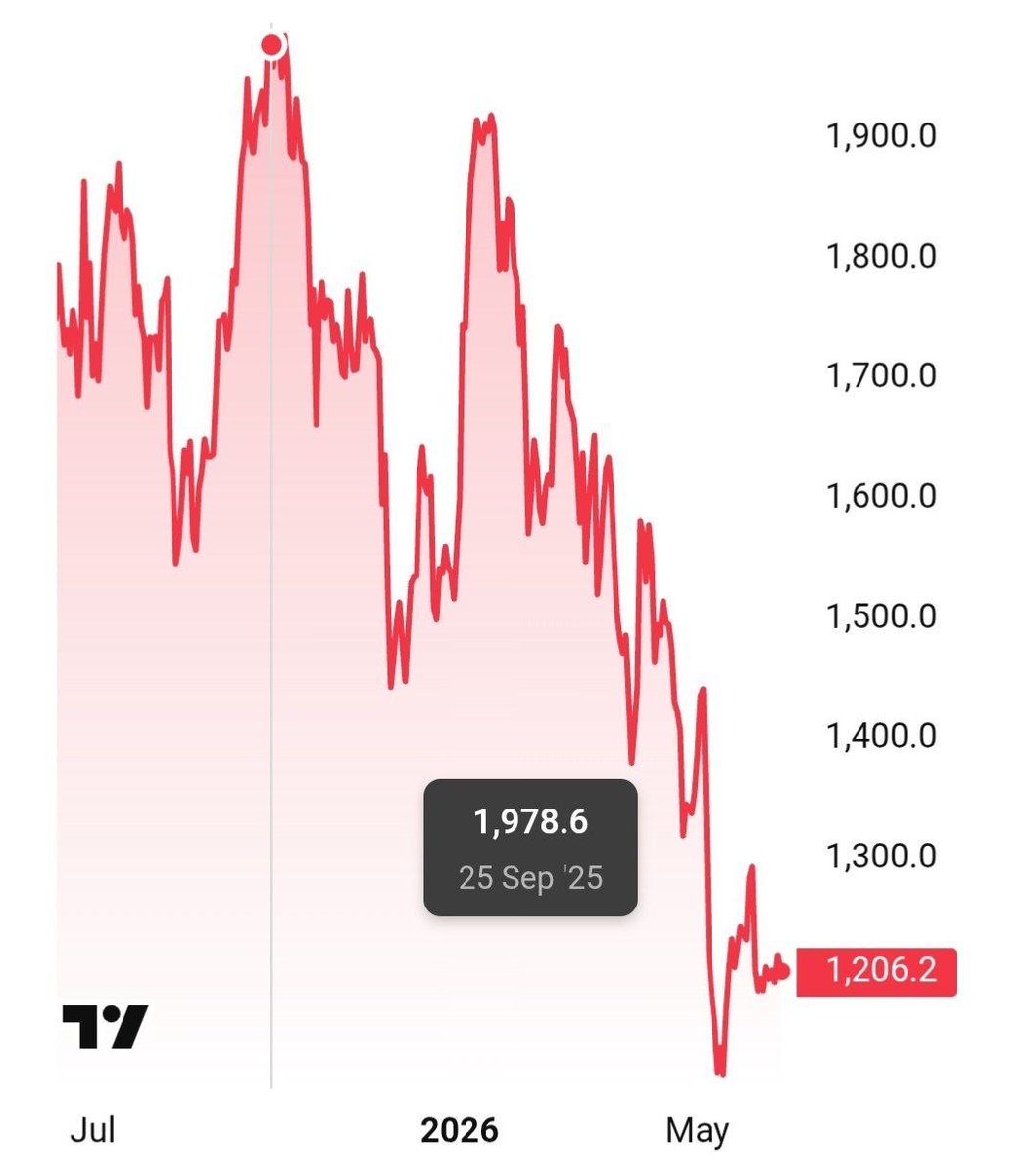
🇩🇪The shares of the German holding company Rheinmetall have fallen by 40% from their peak. The growth of other shares of European defense companies has also declined - FT.
The Stoxx Europe Targeted Defence index has fallen by more than 15% from its peak values in January, a significant part of this decline occurred after the start of the US-Israeli war against Iran. The value of companies such as BAE Systems, Rolls-Royce, Thales, Leonardo, and Rheinmetall has dropped by billions of euros.
1
680
Jun 14
🇩🇪The shares of the German holding company Rheinmetall have fallen by 40% from their peak. The growth of other shares of European defense companies has also declined - FT.
The Stoxx Europe Targeted Defence index has fallen by more than 15% from its peak values in January, a significant part of this decline occurred after the start of the US-Israeli war against Iran. The value of companies such as BAE Systems, Rolls-Royce, Thales, Leonardo, and Rheinmetall has dropped by billions of euros.
Jun 12
What Is the Reality Behind Reports of a U.S.–Iran Agreement?
A genuine and sustainable agreement between the United States and Iran is unlikely to materialize without the involvement of key international and regional actors. In this context, Pakistan appears to occupy a uniquely important position. Should China remain absent from the process, Russia would likely emerge as the natural alternative.
Washington understands this reality well. Pakistan possesses significant military and diplomatic influence, enjoys a relationship of mutual trust with Iran, maintains strategic ties with China, and is respected by both Tehran and the Gulf states. These factors make it one of the few actors capable of helping build an agreement that is not only reached, but also capable of enduring.
The Need for Credible Guarantees
The United States is aware of the risks associated with concluding an agreement of this magnitude without guarantees from major powers such as China or Russia. Likewise, the absence of a regional intermediary that commands both influence and Iran's trust would undermine the durability of any settlement.
Historically, major conflicts have often involved an officially recognized mediator, while parallel backchannel negotiations were managed by other actors away from public attention. The U.S.–Iran case is unlikely to be different.
Qatar's Role: Important but Limited
It is difficult to imagine Qatar serving as the sole mediator and host of a comprehensive agreement between Washington and Tehran. That said, Doha could play valuable roles in implementing specific understandings, particularly those related to financial arrangements, humanitarian matters, or technical aspects of an eventual settlement.
This observation should not be interpreted as diminishing Qatar's standing. Qatar has established itself as a prominent mediator and has achieved notable diplomatic successes. However, many of those successes have involved more narrowly defined tracks.
The recent Hamas–Israel negotiations provide a relevant example. Although Qatar played a visible role in facilitating talks, Israel demonstrated limited commitment to several proposed understandings. At certain points, some participants in the negotiation process were reportedly targeted. Ultimately, Egypt emerged as the more influential actor, with Trump directing part of his diplomatic efforts toward Cairo.
Oman's Complex Position
Oman has long been regarded as a trusted channel of communication due to its balanced relations with all parties, its deep understanding of Iranian political thinking, and its extensive mediation experience.
However, confidence between Muscat and Washington appears to have been strained following what many perceived as American maneuvering before the outbreak of the war. Recent remarks by Trump and members of his circle concerning Oman have also raised questions. Additional complications stem from Iran's proposals regarding transit fees through the Strait of Hormuz and the idea of sharing aspects of its administration with the Sultanate.
Taken together, these factors make Oman's role in the current phase more challenging and complex.
A Settlement Beyond a Ceasefire
Any future agreement between the United States and Iran would extend far beyond a simple ceasefire or a pledge to avoid future confrontation.
This is not an ordinary conflict. Its consequences have affected the broader region and reverberated throughout the international system.
A comprehensive settlement would therefore require several parallel tracks, including:
- A military track
- A political track
- An economic track
- A nuclear track
Each of these tracks would require its own timetable, implementation mechanisms, verification procedures, and guarantees.
It is therefore unrealistic to assume that an agreement of such scale and complexity could be concluded within a matter of days in Doha, particularly in the absence of key actors such as Pakistan.
@hosamalkrbash
10
29
6,396

War Intel Feed retweeted

Jun 13
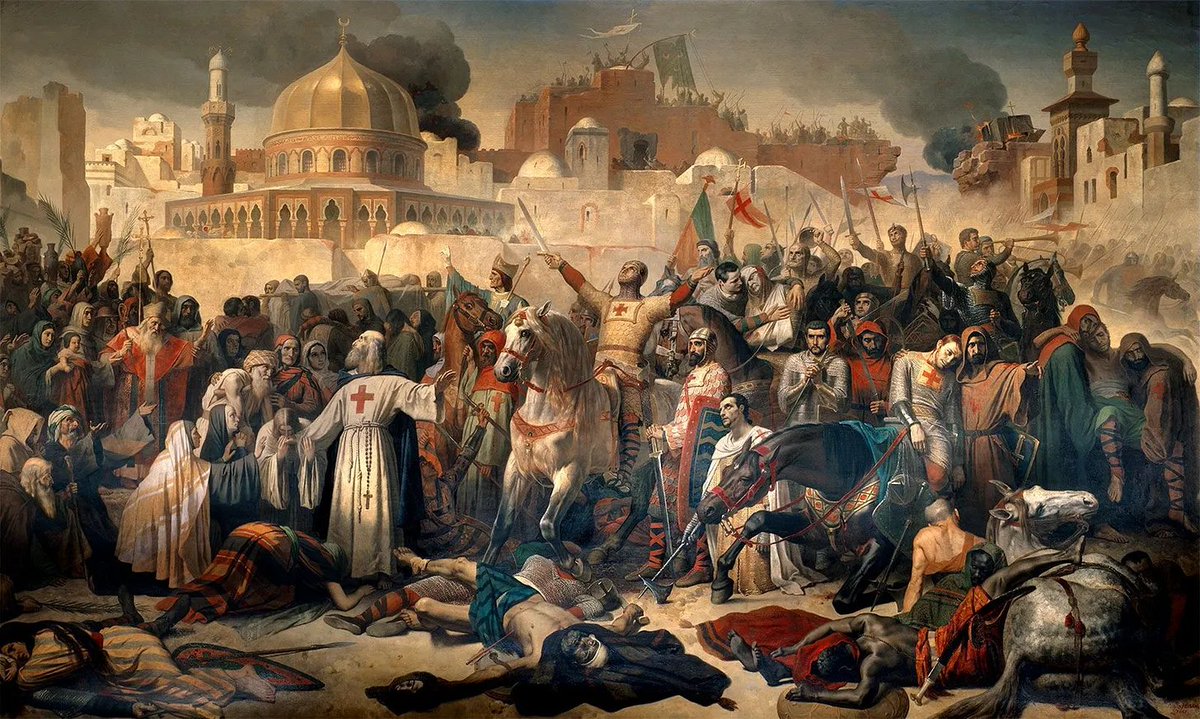
The Crusades
Same battles, same dates, different stories
History is usually written by the victors, but the Crusades were a two-century collision that produced not one, but two irreconcilable realities
Dates and battles identical, but the moral axis is entirely flipped.
On Substack at ashesofpompeii.substack.com/…
In the traditional Western narrative, the Crusades are framed as a heroic, if tragic, epic. The First Crusade is a pious pilgrimage; the knights are romanticized figures of chivalry in shining armor, bravely holding the line in a hostile, exotic land. The eventual loss of the Holy Land is mourned as the “fall of Outremer,” a tragic retreat of European civilization. In this telling, the East is often reduced to a passive backdrop, its inhabitants viewed through a lens of mystique or backwardness, mere obstacles to a divine mandate.
But cross the Mediterranean, and the exact same timeline reads like a chronicle of foreign invasion and eventual, hard-won restoration against the barbarous northerners. The dates do not change, but the adjectives do. Here is the history as it is remembered in the Levant:
When the Frankish armies breached Jerusalem in 1099, they imposed a martial culture utterly alien to the region. Accustomed to northern forests, the crusaders relied on heavy wool, salted provisions, and isolated stone keeps. To the local Muslim inhabitants, this was a stark contrast to a society built around sun-washed courtyards, communal public baths, and markets vibrant with fresh flatbreads, olives, and citrus. The invaders carved out the fragile states of Outremer, but beneath their rule, the region’s sophisticated urban rhythms, complete with organized hospitals and regulated water systems, quietly endured.
For much of the twelfth century, an uneasy coexistence defined the borderlands. The crusader hold was always tenuous, a reality first exposed in 1144 when Imad ad-Din Zengi reclaimed the County of Edessa, shattering the myth of Frankish invincibility. In the decades that followed, daily life became a complex tapestry of friction and exchange. Frankish knights governed from damp, drafty fortresses, yet they increasingly depended on local markets for sugar, glass, and silk. Truces allowed merchants to cross lines, but the cultural divide remained visible: while the crusader elite often struggled with Levantine heat and basic sanitation, local communities maintained their traditions of regular ablutions, scholarly study in madrasas, and shared, herb-rich meals.
The political tide turned decisively in 1187. At the Horns of Hattin, the fragmented crusader armies were outmaneuvered, leading to Salah ad-Din’s recapture of Jerusalem. For the local population, this was not merely a military victory, but a restoration of civic order. Mosques and “bimaristans” (hospitals) reopened, and the region’s administrative heartbeat resumed. Though the Third Crusade saw Richard the Lionheart besiege Acre, he could not retake the holy city. The ensuing century of negotiated truces only highlighted the resilience of local society, which continued to thrive on its established foundations of public hygiene and civic welfare.
By the mid-thirteenth century, the crusader presence was a relic waiting to be cleared. After the newly established Mamluk dynasty halted the Mongol advance at Ain Jalut in 1260, securing the region’s eastern flank, they turned their disciplined, centralized power toward the coastline. Sultan Baybars initiated a systematic dismantling of the crusader strongholds. Antioch fell in 1268, and the formidable fortress of Krak des Chevaliers surrendered in 1271. The contrast was laid bare: as crusader outposts decayed into isolated, supply-starved enclaves, Mamluk cities flourished, repairing irrigation canals and expanding vibrant, clean urban centers.
The end came methodically. In 1291, Mamluk forces besieged and captured Acre, the last major crusader capital, driving the remaining defenders into the sea. A final, tiny garrison clinging to the island of Arwad was swept away by the Mamluk navy in 1302, erasing the last physical foothold of the crusades.
The crusaders left behind crumbling, hollow castles, silent monuments to a foreign experiment. Yet, the echoes of that era have never truly faded. Today, the very same soil remains a stage for competing historical claims, where distant powers still invoke ancient rights and civilizational mandates to justify their presence.
In the West, 1291 is often romanticized as a tragedy of lost glory, recounted in medieval verse and modern films. But in the Levant, it is simply the day the northern barbarians were finally vanquished. For those who still walk these sun-washed streets, it remains a timeless cautionary tale of foreign invaders, resiliance and ultimate redemption.
2
9
27
1,812
War Intel Feed retweeted

Jun 13
Why NATO Expansion Explains Russia’s Actions in Ukraine
- It's still true in 2026, and even those who are not "pro-Russia" admit it.
The list of opponents to NATO enlargement from three decades ago reads like a who’s who of that generation’s wise men.
It included architects of the Cold War containment doctrine, senior defence and intelligence officials from the Nixon-Carter-Reagan eras, former ambassadors and senior diplomats to Moscow (Arthur Hartman, Jack F. Matlock, and Robert Bowie) former Australian prime ministers Malcolm Fraser and Paul Keating, leading political scientists such as a Ronald Steel, prominent magazine editors (Owen Harries, Charles Maynes) and, not least, distinguished historians such as Robert Conquest, Richard Pipes, John Lewis Gaddis, and Britain’s foremost military intellectual Sir Michael Howard.
Officials in the state and defence departments also rejected NATO plans to expand eastwards, including the Polish-born chairman of the Joint Chiefs of Staff General John Shalikashvili and US Defense Secretary Les Aspin, as well as his successor William Perry, who considered resignation in late 1994 when the policy proposal moved forward. Former defense secretaries Robert McNamara and James Schlesinger aired their concerns that NATO enlargement would decrease allied security and unsettle European stability.
In the lead up to the Senate’s ratification in 1998, the New York Times editorial board warned: “The most important foreign policy decision America has faced since the end of the Cold War… could prove to be a mistake of historic proportions.” And this: “It is delusional to believe that NATO expansion is not at its core an act that Russia will regard as hostile.”
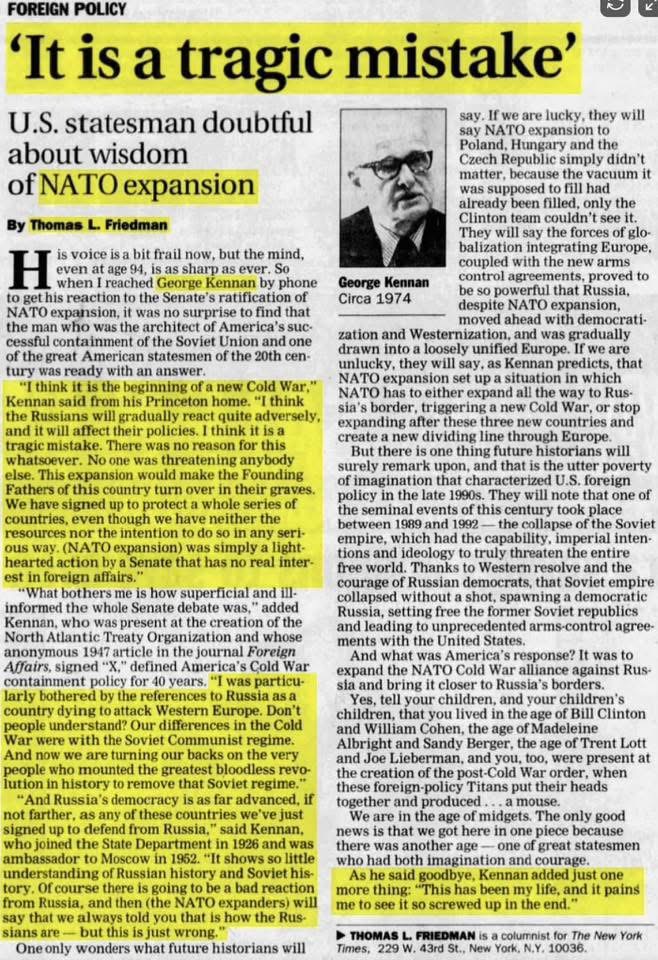
George Kennan—intellectual architect of the Cold War containment doctrine, a former ambassador to the USSR, and one of America’s wisest students of Russian affairs—spoke for the many dissenters in 1997 when he warned that NATO expansion “would be the most fateful error of American policy in the entire post-Cold War era.”
Shortly after the Senate ratified the first tranche of enlargement (Czech Republic, Hungary, and Poland) in April 1998, Kennan told Thomas Friedman: “I think it is the beginning of new Cold War… Of course, there is going to be a bad reaction from Russia, and then [the NATO expanders] will say we always told you that is how the Russians are – but this is just wrong.”
This history serves to highlight the extent to which many distinguished military and foreign-policy experts raised strong objections to moving NATO into Russia’s backyard.
Their warnings about poking at the bear proved prescient.
And yet, as they consistently warned about a near-certain confrontation with post-Yeltsin Russia, it’s important to note that the opponents of NATO expansion in the 1990s were never dismissed as Kremlin apologists or Russia’s “useful idiots.”
Nor were they treated as if their views were outside the boundaries of serious public discourse.
However, the intellectual climate is very different today. If anyone—including prominent scholars like John Mearsheimer and Jeffrey Sachs—blames NATO expansion for the Ukraine crisis, they instantly arouse anger and suspicion about their motives. Although they are popular on social media, today’s critics of NATO enlargement are virtually ignored across mainstream media outlets and their intentions are all too often impugned. Never mind that they are effectively reaffirming the entirely legitimate criticisms that Kennan, Harries, the New York Times, and others raised a generation earlier.
What’s changed in three decades? Why are today’s opponents of NATO expansion treated with contempt and derision?
The answer lies in understanding the power of groupthink.
People, including politicians and policymakers, increasingly indulge in what Owen Harries (an Australian diplomat-policymaker with impressive credentials as a Cold Warrior) called the “parochialism of the present”—a tendency to believe that what is happening to us now must be of unprecedented significance.
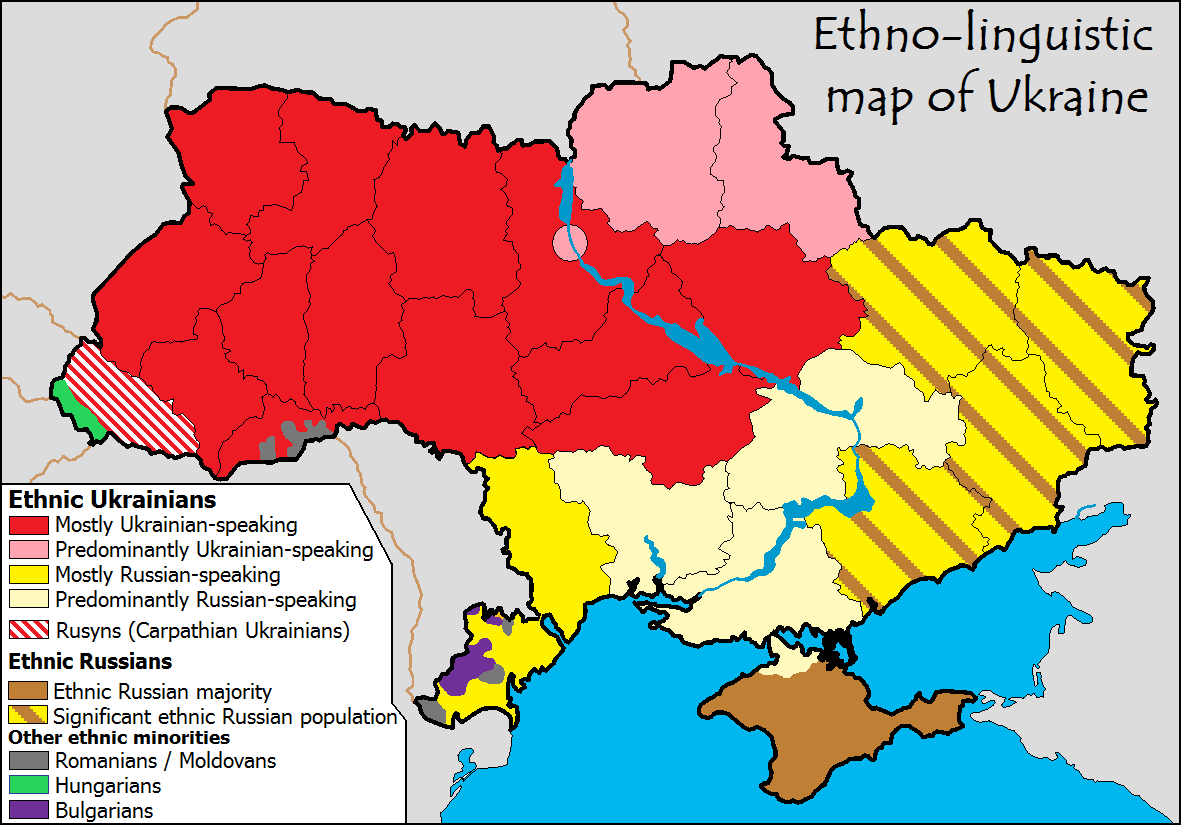
Although the Western conventional wisdom insists that "Russia is inherently and incorrigibly expansionist, the Russian armed forces lack the military power to conquer Ukraine, much less countries in the erstwhile Warsaw Pact. A Russia having its work cut out for itself in Donbas is no threat to Europe." Nor has Putin ever expressed interest in making all of Ukraine part of Russia, much less reconstituting the Russian empire. His strategic objectives appear more limited: he wants to annex some Ukrainian territory and badly weaken that country, so it is in no position to join NATO.
Moreover, as the critics warned in the 1990s, it was inevitable that Russia, with an improving economy thanks to its oil and gas resources, would eventually push back at a US-dominated military alliance encroaching on its borders. That is precisely what happened in Georgia (2008), Crimea (2014), and Ukraine (2022).
The cold reality is that we are facing the prospect of a frozen conflict coupled with Russia annexing even more Ukrainian territory, leaving Ukraine as a broken rump state. This is a tragedy for sure, but it almost certainly could have been avoided if US leaders had heeded the warnings of the many wise opponents of NATO expansion during the 1990s.
internationalaffairs.org.au/…
6
18
650
War Intel Feed retweeted
Jun 13
🚨Russian Defense Ministry is investigating 240 disease causing pathogens discovered in US-sponsored biolabs in Ukraine including anthrax and cholera amongst others…
Pathogens are studied and developed with intent of use for "offensive actions."

‼️🚨Russian Defense Ministry is investigating 240 disease causing pathogens discovered in US-sponsored biolabs in Ukraine including anthrax and cholera amongst others…
Pathogens are studied and developed with intent of use for "offensive actions."
19
274
548
28,354
Jun 12
What Is the Reality Behind Reports of a U.S.–Iran Agreement?
A genuine and sustainable agreement between the United States and Iran is unlikely to materialize without the involvement of key international and regional actors. In this context, Pakistan appears to occupy a uniquely important position. Should China remain absent from the process, Russia would likely emerge as the natural alternative.
Washington understands this reality well. Pakistan possesses significant military and diplomatic influence, enjoys a relationship of mutual trust with Iran, maintains strategic ties with China, and is respected by both Tehran and the Gulf states. These factors make it one of the few actors capable of helping build an agreement that is not only reached, but also capable of enduring.
The Need for Credible Guarantees
The United States is aware of the risks associated with concluding an agreement of this magnitude without guarantees from major powers such as China or Russia. Likewise, the absence of a regional intermediary that commands both influence and Iran's trust would undermine the durability of any settlement.
Historically, major conflicts have often involved an officially recognized mediator, while parallel backchannel negotiations were managed by other actors away from public attention. The U.S.–Iran case is unlikely to be different.
Qatar's Role: Important but Limited
It is difficult to imagine Qatar serving as the sole mediator and host of a comprehensive agreement between Washington and Tehran. That said, Doha could play valuable roles in implementing specific understandings, particularly those related to financial arrangements, humanitarian matters, or technical aspects of an eventual settlement.
This observation should not be interpreted as diminishing Qatar's standing. Qatar has established itself as a prominent mediator and has achieved notable diplomatic successes. However, many of those successes have involved more narrowly defined tracks.
The recent Hamas–Israel negotiations provide a relevant example. Although Qatar played a visible role in facilitating talks, Israel demonstrated limited commitment to several proposed understandings. At certain points, some participants in the negotiation process were reportedly targeted. Ultimately, Egypt emerged as the more influential actor, with Trump directing part of his diplomatic efforts toward Cairo.
Oman's Complex Position
Oman has long been regarded as a trusted channel of communication due to its balanced relations with all parties, its deep understanding of Iranian political thinking, and its extensive mediation experience.
However, confidence between Muscat and Washington appears to have been strained following what many perceived as American maneuvering before the outbreak of the war. Recent remarks by Trump and members of his circle concerning Oman have also raised questions. Additional complications stem from Iran's proposals regarding transit fees through the Strait of Hormuz and the idea of sharing aspects of its administration with the Sultanate.
Taken together, these factors make Oman's role in the current phase more challenging and complex.
A Settlement Beyond a Ceasefire
Any future agreement between the United States and Iran would extend far beyond a simple ceasefire or a pledge to avoid future confrontation.
This is not an ordinary conflict. Its consequences have affected the broader region and reverberated throughout the international system.
A comprehensive settlement would therefore require several parallel tracks, including:
- A military track
- A political track
- An economic track
- A nuclear track
Each of these tracks would require its own timetable, implementation mechanisms, verification procedures, and guarantees.
It is therefore unrealistic to assume that an agreement of such scale and complexity could be concluded within a matter of days in Doha, particularly in the absence of key actors such as Pakistan.
@hosamalkrbash
Jun 11
📝Start‑Up Metrics vs Air Defense📝
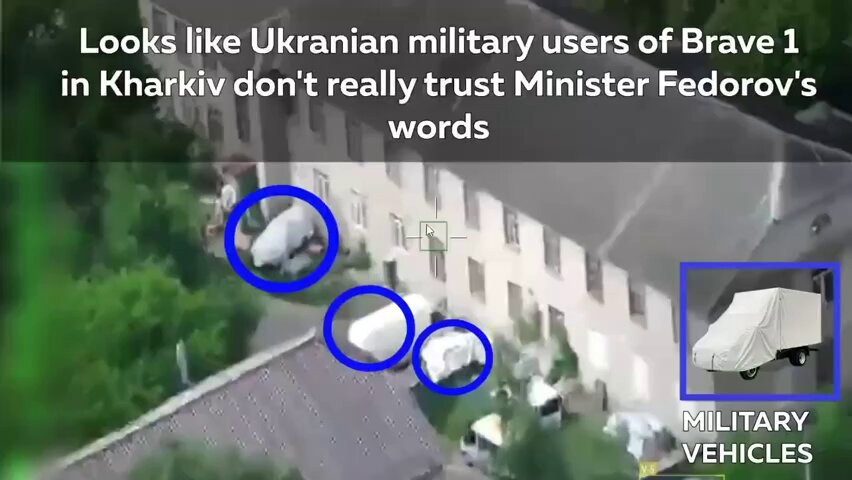
On 8 June, Fedorov personally recorded a polished promo about “next‑generation AI interceptors” operating in the Kharkiv region, showed one spectacular shoot‑down on video, and proudly added the usual magic numbers — cost per interceptor, automated targeting, smart algorithms. He presented it as an already functioning element of air defense, not as a prototype under semi‑test conditions.
Less than a day later, in the night of 8–9 June, Geran drones flew into Kharkiv and hit their targets — command facilities, infrastructure, depot areas. Instead of confirming the effectiveness of his system, the country saw confirmation of the opposite: nobody noticed the “new stage of air defense”, but everyone heard the explosions.
His one glossy clip was instantly drowned out by dozens of real explosions. Fedorov tried to frame the story as “we have AI, we are already intercepting”, but the night strike rewrote the narrative into something much harsher: “we have a demo, not a shield”. The contrast between the staged success on screen and uncontrolled impacts in the city could not be sharper.
1
3
8
15,425
Jun 12
The "Honest Broker" and the "Power Broker"
Political science distinguishes between two important concepts: the honest broker and the power broker.
The Honest Broker
An honest broker facilitates dialogue, enjoys the confidence of the parties involved, and maintains a degree of neutrality. However, it lacks the leverage necessary to compel implementation.
The Power Broker
A power broker not only facilitates negotiations but also shapes the agreement itself. It possesses political, economic, or military leverage sufficient to enforce commitments and ensure compliance.
From this perspective, Qatar does not fully fit either model in this specific case. Nevertheless, it can still perform valuable and influential supporting functions without assuming sole responsibility for a comprehensive mediation effort.
Is an Agreement Really Near?
Trump issued major threats. Yet Iran continues to retain meaningful deterrent capabilities, while Gulf states have exerted pressure to prevent escalation and avoid the severe consequences of a broader conflict.
Against this backdrop, reports emerged suggesting that an agreement could be reached in Qatar and that the threatened measures might ultimately not be implemented.
However, Pakistani diplomacy traditionally operates with caution, discretion, and minimal public exposure. For that reason, reports of a final agreement should not be treated as definitive until clear confirmation emerges from the Pakistani side itself.
@hosamalkrbash
3
335