Joined June 2012
- Tweets 36,733
- Following 1,715
- Followers 4,636
- Likes 30,282
4,627 Photos and videos




Pinned Tweet

Jun 12
🇨🇳Confucius said, “the rule of virtue can be compared to the Pole Star which commands the homage of the multitude of stars without leaving its place. “
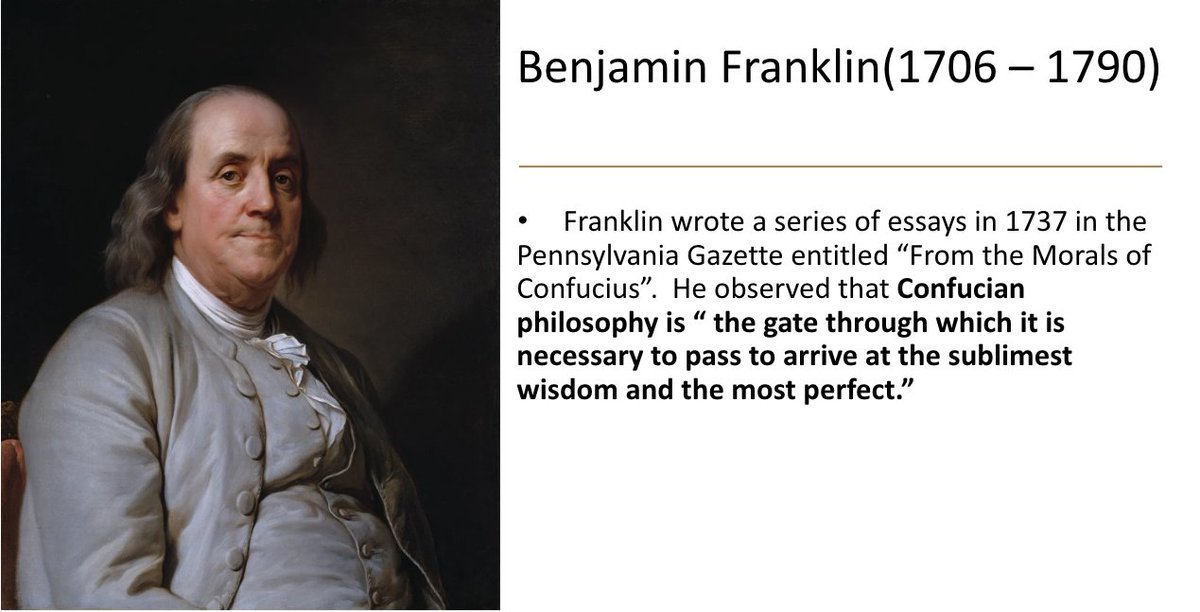
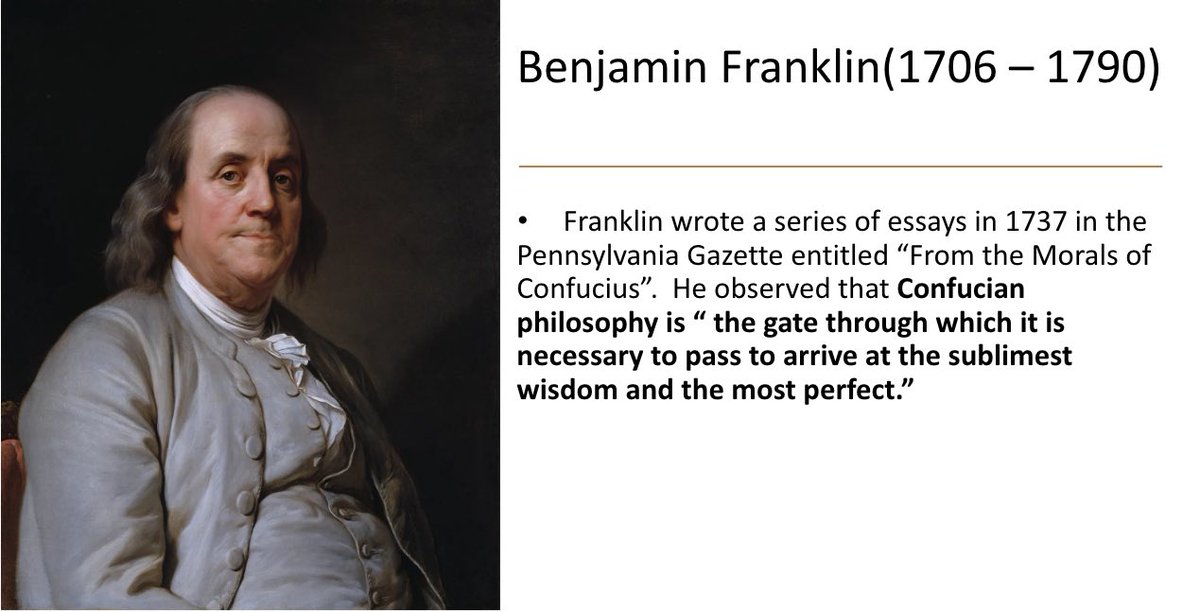
🇺🇸Benjamin Franklin understood perhaps better than any other Founding Father the importance of doing Good for its own sake.
It was simply the “right thing to do”, the most spiritually fulfilling endeavor that one could and should undertake and therefore the true pathway to happiness.
He said as much in a proposal that he directed to the British Parliament in August 1771--to take technologies and tools and whatever modern capabilities and to give them to New Zealand--which was entitled “Introduction to a Plan for Benefiting New Zealanders”:
"Many voyages have been undertaken with views of profit or of plunder, or to gratify resentment; to procure some advantage to ourselves or do some mischief to others:
but a voyage is now proposed, to visit a distant people on the other side of the globe; not to cheat them, not to rob them, not to seize their lands, or enslave their person;
BUT MERELY TO DO THEM GOOD and enable them as far as in our power lies, to live as comfortably as ourselves. It seems a laudable wish, that all Nations of the earth were connected by a knowledge of each other in a mutual exchange of benefits...We may therefore hope, in this undertaking, to be of some service to our Country, as well as to those poor people, who, however distant from us, are in truth related to us, and whose Interests, do, in some degree, concern everyone who can say, “Homo sum, etc.” = “I AM A HUMAN”.”
How far America has strayed and China has seemingly adopted!
May 13

🇨🇳 China reflection
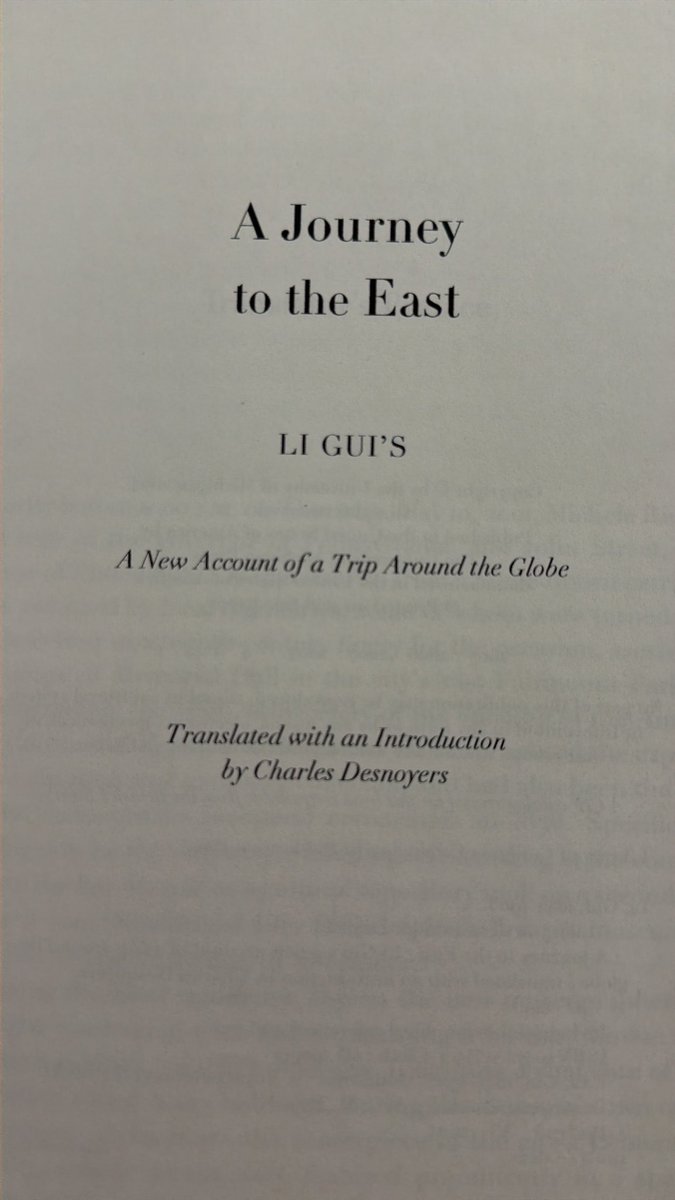
Just a piece of culture that I found very moving after a couple of very interesting discussions with some of the guides that we had.
1946 is not really that long ago.
The story here about the ship tracker illustrates the unbelievable challenge faced by people who were at the mercy of the Yangtze River.
It also shows you how far China has come in just a little over two generations!
I found this quite moving.
I don’t want to make this political, but I do wish that American leaders could see this aspect of China, and thus have a sense of empathy, and also soften their tone such that we could actually find the basis for cooperation and mutual benefit.
It’s just another example of the certainty in completely bogus “facts” about how China has developed.
Probably, what’s even worse about it is not what we think about China, but what we in the west have developed in terms of the false narratives about ourselves.
3
9
24
3,519
Ryan Milton 弥瑞恩 retweeted

WHAT IS HAPPENING
by Sergey Glazyev
On the reasons for the continuation of the global hybrid war
In previous publications, detailed explanations were given of the objective reasons for the global hybrid war as a key mechanism for the change of technological and world-economic orders. This change is close to completion – a new center of the world economy has formed in East and South Asia thanks to a more effective system of managing its development based on the institutions of a new world-economic order, which we have called integral. Its core is forming around China, whose development the hybrid war unleashed by the USA has given a powerful impulse. Washington’s attempts to stop the rise of the PRC by methods of trade, biological, financial and technological warfare have only strengthened China, which has consistently solved the tasks of forced expansion of the domestic market and improvement of the people’s welfare, carrying out anti-COVID vaccination, creating its own system of international settlements and launching its model of international integration “One Belt – One Road”, as well as achieving technological sovereignty. The five-stage Brzezinski strategy implemented by Washington (turning Ukraine into anti-Russia, detaching the EU from Russia, changing its regime to a puppet one, crushing Iran, isolating the PRC with the aim of starving it to death) stalled at the third stage, and the attempt to move after this to the fourth turned into an obvious collapse of Pax Americana – most of the European satellites of the USA refused to participate in the war against Iran, and the USA itself has definitively lost the aura of a Superpower and the image of a Hyperpower. The European puppets spoke about creating their own army.
The change of technological orders in advanced countries is also almost complete – its core components – nano-, bioengineering, information-communication, digital and additive technologies – have entered a growth phase. It seemed that this time it would be possible to avoid militarization, since their main carrier industries – healthcare, education, science, communications and artificial intelligence – have more civilian than military specialization. It was assumed that the arms race gives a smaller impulse for the development of these technologies than increasing spending on healthcare, science and education, as well as on combating global warming. However, the ruling elite of NATO countries, like their predecessors in the last century, have embarked on a course of militarization, boundlessly inflating Russophobia. Although this does not help the development of their economy, undermined by the rejection of Russia’s raw material base and unable to withstand competition with the PRC, which has become the absolute leader in the production of UAVs, robots, and dual-use devices.
Throughout the history of capitalism, beginning from the 16th century, world wars have mediated the change of world-economic orders (WEO), and militarization, beginning from the industrial revolution at the end of the 18th century, has facilitated the change of technological orders (TO). With the completion of this change, continuing the world war became economically meaningless and politically impossible, since the new center of the world economy demonstrated absolute superiority. In the last century, the completion of two world wars was associated with the rise of the USA and the USSR, which formed the bipolar core of the imperial WEO and suppressed attempts by former European empires to restore their colonies. In the century before last, the Napoleonic wars were ended by the rise of the Russian Empire and Great Britain, which formed the bipolar core of the colonial WEO. The current global hybrid war unleashed by the USA has stalled in Ukraine and choked in Iran, but has not yet ceased. It seems to have gained a second wind, and the unlikely negative scenario of the transition of the global hybrid war into a nuclear catastrophe – described in the prophetic book “The Last World War: The USA Starts and Loses” – is becoming increasingly expected before our eyes.

WHAT IS HAPPENING TO EUROPE?
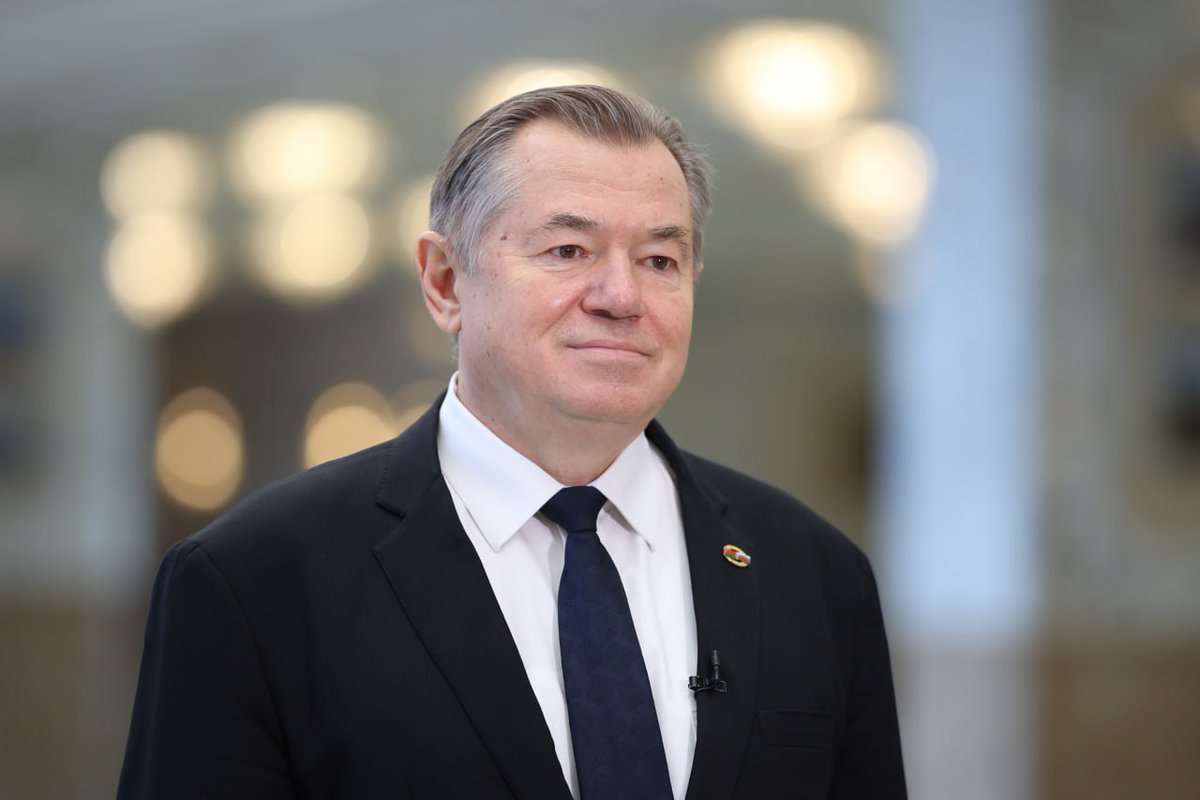
By Sergey Glazyev
In the context of this article, by Europe we mean the countries of the European Union (EU), together with Britain, Ireland, and the Scandinavian states.
In previous articles in this series, the issue of the motivation of the European political elite was not given sufficient attention, since until recently it was being manipulated by Washington, which was implementing Zbigniew Brzezinski’s reckless strategy to maintain its global hegemony. Let us recall that this strategy includes five stages of the hybrid world war unleashed by the United States, two of which (transforming Ukraine into anti-Russia and pulling Europe away from Russia) have already been completed. At the third stage, our adversaries planned to organize a color revolution in Russia in order to bring a puppet regime to power and establish control over our resources and foreign policy. Failing to achieve this goal, Washington moved on to the next stage — the destruction of Iran. And although this objective was also not achieved, US intelligence agencies are preparing for the final stage — the isolation of China with the aim of causing a famine.
The implementation of this reckless strategy of maintaining global dominance through a hybrid world war against Russia, Iran, and China has, as shown in previous articles in this series, naturally led to the strengthening of China and the weakening of the EU. A side effect, as predicted in the book “The Last World War”, has been the collapse of Pax Americana. After Washington lost its international authority and the trust of its satellites, the EU gained political subjectivity. And although the European economy is symbiotic with and highly dependent on the American one, European political leaders began to think about their own autonomy and openly express dissatisfaction with current US administration policy — and some even occasionally demonstrate disobedience.
The American-Israeli aggression against Iran caused discontent in Europe, which is critically dependent on hydrocarbon supplies from the Persian Gulf. The Muslim population in European countries has already become a critically significant segment of the electorate, on which the ruling parties of Western Europe rely; their negative attitude toward American-Israeli aggression became another reason for most EU states refusing to support it. As a result, Europe became divided over the war in the Persian Gulf, but remains united in relation to the war against Russia. This has effectively become the basis for forming a new European political subjectivity. Leaders of major European countries are united in Russophobic rhetoric, openly calling for war against our country and publicly planning to start it in 2–3 years. What are their motives, and how seriously should the European threat currently be taken?
In essence, the EU is a bureaucratic empire in which member states have transferred their sovereignty in economic matters to the European Commission, and in foreign and defense policy — to NATO. In all conflict situations between Euro-bureaucracy and national governments, the Euro-bureaucracy has prevailed. Thus, in the context of the de facto bankruptcy of Greece, Portugal, Spain, Cyprus, and Italy after the 2008 global financial crisis, despite social protests, real power passed to a trio of international organizations with emergency authority: the European Commission, the ECB, and the IMF. The Euro-bureaucracy successfully manipulates elections, helping its appointees stay in power. The recent removal from elections of the most popular presidential candidate in Romania and Orbán’s electoral defeat are convincing evidence of the power of the Euro-bureaucracy, reinforced by ECB euro issuance, the influence of multinational corporations, and controlled media.
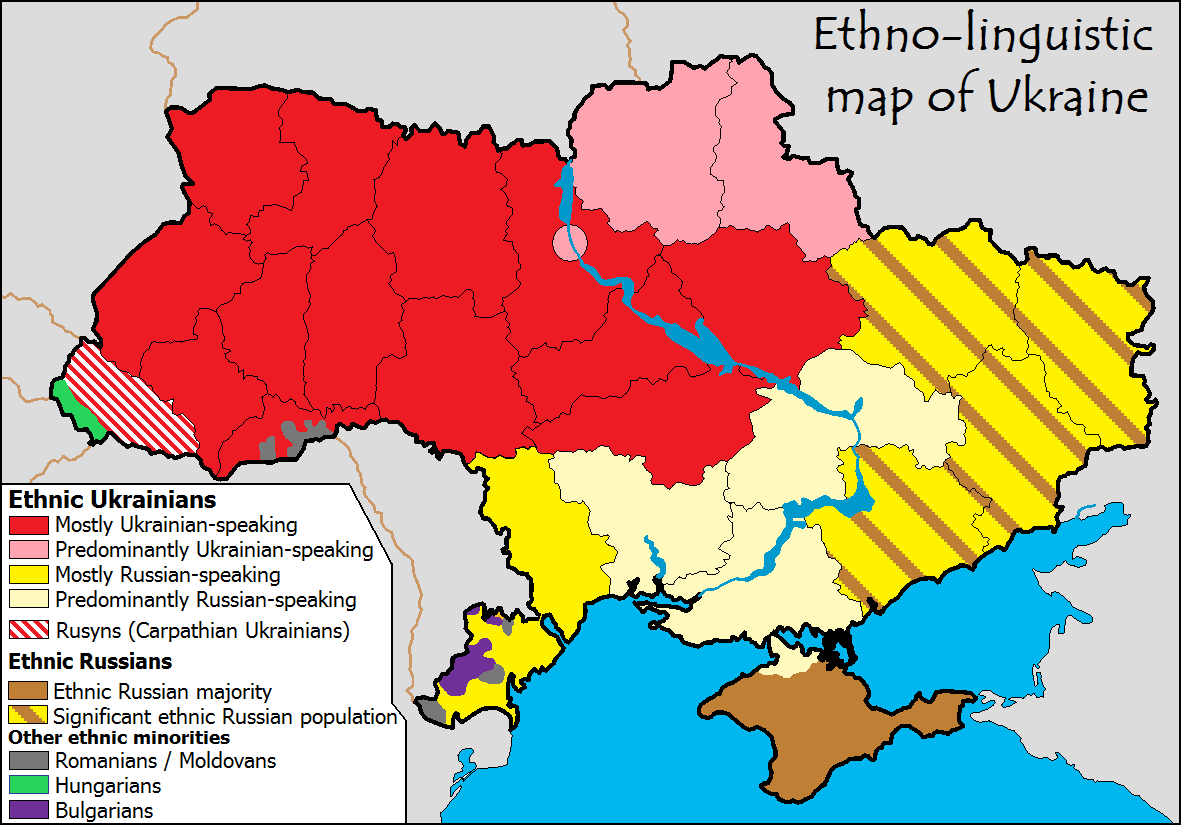
At first glance, the Russophobia that has gripped the European political elite seems like a mental disorder or a theatrical performance. But this is from our perspective, since we know exactly why the Special Military Operation began and that “we do not need foreign land.” For the average European citizen, who is frightened from morning to night by the “Russian threat,” it appears quite real. Historical memory has been erased, and he trusts the horror stories on television. The question is who is frightening him and why. A correct answer would make it possible to defuse the situation. As one Chinese stratagem says, the greatest general is not the one who wins all battles, but the one who destroys the enemy’s plan of war in his mind before it is even formed. Although the idea of war against Russia has already not only emerged in the minds of European politicians but is openly declared, we must nevertheless try to dismantle it before they begin to implement it. For this, their motives must be understood.
As is well known in social psychology, the best way to consolidate any society is the image of a common enemy. European politicians have assigned Russia this role, inventing the myth of the “Russian threat,” which is supposedly being resisted by the Armed Forces of Ukraine, allegedly saving Europe. The Special Military Operation, aimed at eliminating the reincarnation of Nazism, is presented as Russian aggression against Europe, requiring European taxpayers to tighten their belts and fund massive loans to Ukraine.
Although the glorification of Ukrainian Nazis as defenders of Europe contradicts common sense, it influences the consciousness of citizens frightened by the fabricated “Russian threat” in a Russophobic information environment created by European media.
The phenomenon of Russophobia in the subconscious of Western Europeans has long occupied the minds of prominent Russian thinkers. It was written about by Dostoevsky, Danilevsky, Narochitskaya, Fomenko, and others. We refer the reader to their works on this subject. Let us proceed from the assumption that Russophobia exists as a precondition that, under certain circumstances, can give rise to aggression. We have seen its extreme manifestations in the Patriotic War of 1812, the Crimean War, World War I, and the Great Patriotic War. Each of these wars had its own well-studied historical causes. We will not list them, noting only the common invariant of all European aggressions against Russia — the desire to exploit our natural resources and the labor of our people for their own benefit. This was most clearly expressed in German-European Nazism, whose central idea was the seizure of “living space” from Russians and other Slavic peoples.
There is a view that even today, the main driving force of European politicians inciting war against Russia remains the desire to gain control over our natural resources. However, before sanctions, European consumers received our resources abundantly and at favorable prices. Many Russian raw material companies were controlled by European capital, well represented on their boards of directors. A significant portion of oil, chemicals, fertilizers, metals, grain, and timber was exported from Russia by European and American trading companies. The EU accounted for more than one-third of Russian imports, with European goods dominating the most profitable segments of the Russian market.
As a result of the anti-Russian campaign, European politicians cut their countries off from Russian resources and are now forced to replace them with more expensive American and Arab ones. Meanwhile, the Russian market has been “surrendered without a fight” to Chinese competitors. It appears access to Russian resources and markets is not particularly important to them, since they have deprived themselves of both.
Historical materialism holds that politics is the concentrated expression of economics, explaining wars through the economic interests of the states that initiate them — more precisely, the interests of the ruling class willing to sacrifice millions of its citizens for its own gain. But European industrialists, farmers, and traders have suffered significant losses from sanctions against Russia; before their introduction, they felt quite competitive, using cheap Russian energy, metals, and other raw materials. Financial actors also did not benefit, as many lost investments and highly profitable carry trade opportunities due to retaliatory measures. Thus, the European political elite is harming its own business elite and, together with it, the population, which loses jobs and social benefits. It is hardly plausible that they believe this damage will be compensated by Russia’s defeat through hypothetical reparations or even occupation.
Many see the self-destructive actions of the European political elite as being driven by American interests. Indeed, the US oil and gas industry benefited from anti-Russian sanctions by capturing the European market. The American military-industrial complex profited from the war against Russia. Capital and talent leaving Europe are primarily heading to the US, which also serves American interests. As always, war in Europe is considered a “good war” in the United States.
Since American capital controls major European media, and the media determines politicians’ popularity, all European leaders are loyal to the US; those who are not are discredited. The same applies to Euro-bureaucrats, whose careers are also influenced by US intelligence services. This explanation seemed plausible until recently, when many European politicians did not support the American-Israeli aggression against Iran. Now they must either seek their own political subjectivity or wait for a change in US leadership.
It can be assumed that the European ruling elite, having lost Washington’s guiding line, has not yet found any unifying idea other than Russophobia. They are not even looking for one, since the Russophobic path they have been following for over a decade is already too deeply entrenched. These politicians cannot exit it without discrediting themselves. Therefore, they continue to reinforce it, supported by the European military-industrial complex, which is expanding on massive defense orders and is interested in the remilitarization of Europe. For some of them, such as Merz or Tusk, whose grandfathers served in the Wehrmacht and participated in Nazi war crimes, revanchist sentiments may also play a role.
If the causes of the Russophobic hysteria in Europe are more socio-psychological than economic, then appropriate methods of influencing public consciousness are needed to neutralize it and prevent war with Europe. There is also the problem of transmitting this influence, since Russian and pro-Russian sources are suppressed under conditions of information blockade.
On Russia’s side is the truth, which must be conveyed to the European public, frightened by the threat of war. European politicians and Euro-bureaucrats instill fear of the “Russian threat” while themselves provoking war against Russia and dragging Europe into it. Trump won the election by frightening American voters with the threat of a nuclear war initiated by Biden. Zelensky won by promising Ukrainians to end the war in Donbas. Although they misled voters in a grotesque way, people still desire peace and a comfortable life. In Europe, new leaders are emerging who are free from Russophobia and advocate peace and friendship with Russia. The objective interests of European peoples are on their side. There are no vital material reasons to go to war with Russia. But in today’s information environment, what matters is not so much reality as how it is perceived.
The question of how to clarify distorted public consciousness in Europe remains open.
To answer it, deep research into the ruling elite of Europe is needed. It is necessary to understand the motives of influential clans that pull the strings of political puppets. For example, Macron’s policy cannot be explained without understanding the interests of the Rothschilds he serves. Merz’s erratic actions are likely linked to the interests of the BlackRock financial conglomerate. It would be interesting to study the motives of British politicians of Pakistani origin who take oaths on the Quran. The influence of Soros is also evident — he has already raised two generations of Russophobes occupying leading political positions in peripheral European states. But here we enter the slippery path of conspiracy theory and must leave it to professionals in that field.
Since the situation in Europe is determined mainly by socio-psychological factors subject to manipulation, and since the subjective interests of leading European politicians clearly contradict the objective interests of European peoples, political technologists skilled in manipulating public consciousness must take up the task. Our adversaries have succeeded in this. But our advantage is Truth. We must find a way to bring it to the attention of every thinking European.
3
16
35
2,642
Ryan Milton 弥瑞恩 retweeted
I think you misunderstand.
That is not an against China.
I am well aware of China has a history of being centuries in advance of western nations on many of the key developments of technologies that have become useful to mankind.
I’m well aware of what Matteo Ricci learned, and the breakthroughs that were known at the time by the Jesuits, who were in China.
That said, the contribution of the Constitutional Republic that we represented in the past, and the Hamiltonian American System of Economics, of national banking, of state, credit and investment for infrastructure and productive enterprise, if anything, is Confucian in it application. That’s the beauty of it.
That was what we were 250 years ago. That’s what we intended to be. America did not intend to be an empire.
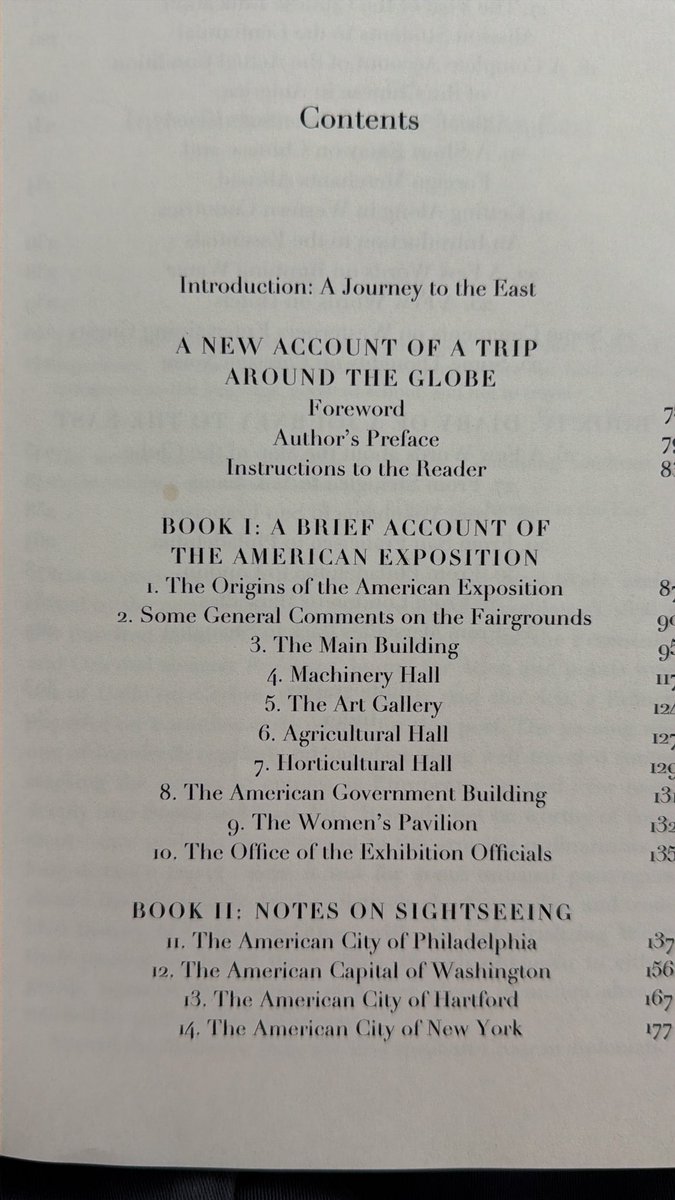
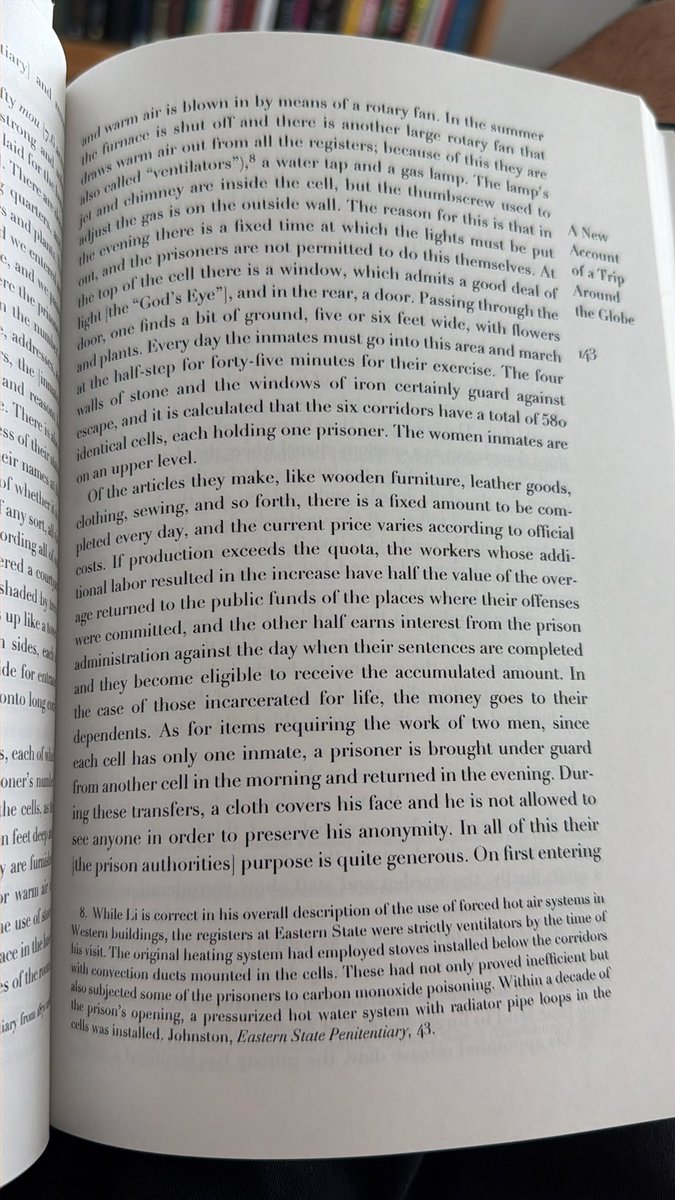
In fact, I would go further than that, and say that when you look at the technological, cultural breakthroughs within the first 100 years of the United States, and you look at the standard of living that the average American had compared to the majority of people on the earth by 1876, it was a revolution and furthermore, China sent officials to the United States to study and learn.
Even the condition of US prisoners as seen by Chinese officials was humane.
At this time, and previously, though imperfect, it was clear that the American Society was becoming a “Xaoling” society.
But, I don’t know how many times you’ve met with Chinese officials, but I’ve had the honor of meeting with Chinese government representatives at least five times in the last two months.
Their observation is that America has a habit that they have picked up on of starting good things, but then we stop. We don’t use our resources to make those benefits widely accessible to the entire society.
Therefore, in its own way, China has picked up the baton of humanity. China is not purely communist, or socialist, or market based. They are doing their own thing. It’s working and now, like the Chinese did in 1876 when they came to learn from America, we should in the west, return to China and learn from China.
1
4
95
Canada is on the side of Nazi collaborators. FULL STOP
Chrystia Freeland’s granddad was indeed a Nazi collaborator – so much for Russian disinformation
There have been a number of articles circulating about Freeland’s Ukrainian grandfather Michael Chomiak and his ties to the Nazis.
Some of those articles have appeared on pro-Russian websites. Freeland, who strongly supports Ukraine and is a major critic of Russia’s seizure of the Crimea, suggested to journalists that the articles about her grandfather were part of a Russian disinformation campaign. (The Russian government sees Freeland as virulently anti-Russian and has placed her on their travel ban).
“American officials have publicly said, and even Angela Merkel has publicly said, that there were efforts on the Russian side to destabilize Western democracies, and I think it shouldn’t come as a surprise if these same efforts were used against Canada,” Freeland told reporters after they raised questions about the articles about her grandfather.
The Globe and Mail also reported that an official in Freeland’s office denied the minister’s grandfather was a Nazi collaborator.
In addition, the claims were dismissed outright by those in the Canadian-Ukrainian community. “It is the continued Russian modus operandi that they have,” Paul Grod, president of the Canadian Ukrainian Congress told the Globe and Mail. “Fake news, disinformation and targeting different individuals. It is just so outlandish when you hear some of these allegations – whether they are directed at minister Freeland or others.”
Well it actually isn’t so outlandish. Michael Chomiak was a Nazi collaborator.
What are the sources for the information that Freeland’s grandfather worked for the Nazis?
For starters, The Ukraine Archival Records held by the Province of Alberta. It has a whole file on Chomiak, including his own details about his days editing the newspaper Krakivski Visti. Chomiak noted he edited the paper first in Crakow (Cracow), Poland and then in Vienna. The reason he edited the paper in Vienna was because he had to flee with his Nazis colleagues as the Russians advanced into Poland. (The Russians tended to execute collaborators well as SS members).
ottawacitizen.com/news/natio…
1
2
6
90
Ryan Milton 弥瑞恩 retweeted

163.com/dy/article/JI1GEPSK0…
cas.cn/cm/202605/t20260526_5…
China is also looking into small modular nuclear reactors for Nuclear Thermal Propulsion for future mars missions and even for space bases for the moon missions they have planned. China is kicking NASA's ASS! And I'm here for it!
2
1
2
76
It’s time that people get it through their heads. GDP is not the most useful measure of how a country is doing and in fact has been a measure used to lie about the actual well-being of people in a country.
Having recently spent a short amount of time in China, but in four of the most important cities and then a number of third tier and smaller cities, having met with government, business, toured factories, and then witnessed living conditions of Chinese people in their day-to-day life, it is clear that we in the west have been brainwashed about how successful our economy is.
@ehtangen again hits between the eyes:
“Evidenced by Xi Jinping’s continued emphasis on shifting from high-speed GDP growth to high-quality development that prioritizes sustainable economic gains and technological self-reliance over raw output numbers.
Underlined by an emphatic warning to government officials against superficial, debt-fueled projects and "fake construction kick-offs".
Under these directives, official performance will no longer be judged on short-term GDP expansion, but rather on genuine achievements in public welfare and fiscal responsibility, with strict accountability and consequences for those who invest recklessly.”
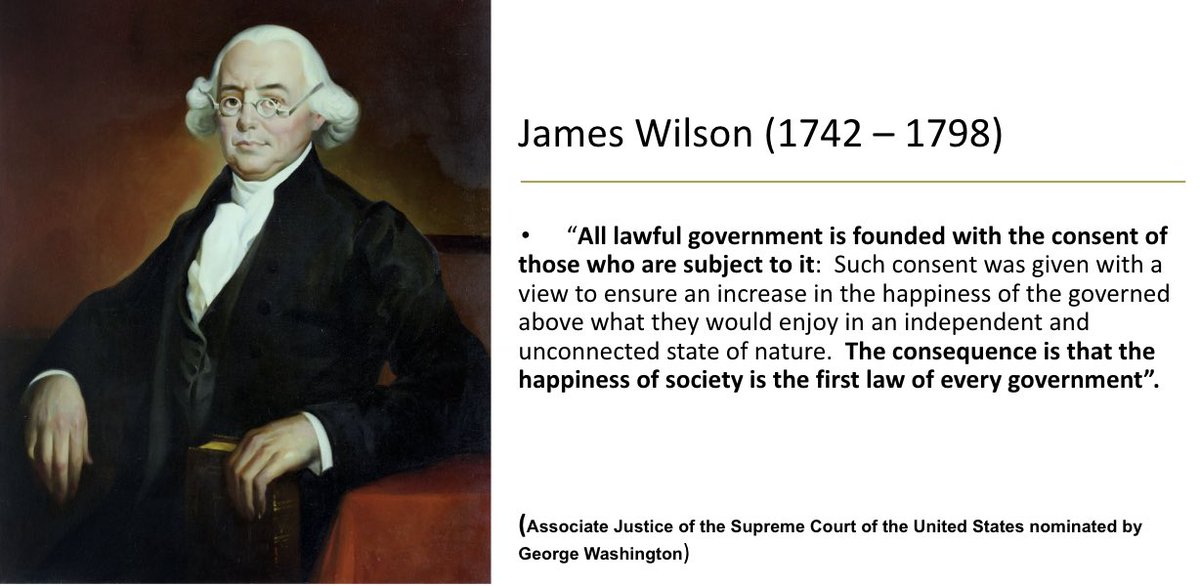
Pictured below is an American Supreme Court justice nominated by George Washington. Note his words when reflecting on the changes in China.
Jun 12
🇨🇳Confucius said, “the rule of virtue can be compared to the Pole Star which commands the homage of the multitude of stars without leaving its place. “
🇺🇸Benjamin Franklin understood perhaps better than any other Founding Father the importance of doing Good for its own sake.
It was simply the “right thing to do”, the most spiritually fulfilling endeavor that one could and should undertake and therefore the true pathway to happiness.
He said as much in a proposal that he directed to the British Parliament in August 1771--to take technologies and tools and whatever modern capabilities and to give them to New Zealand--which was entitled “Introduction to a Plan for Benefiting New Zealanders”:
"Many voyages have been undertaken with views of profit or of plunder, or to gratify resentment; to procure some advantage to ourselves or do some mischief to others:
but a voyage is now proposed, to visit a distant people on the other side of the globe; not to cheat them, not to rob them, not to seize their lands, or enslave their person;
BUT MERELY TO DO THEM GOOD and enable them as far as in our power lies, to live as comfortably as ourselves. It seems a laudable wish, that all Nations of the earth were connected by a knowledge of each other in a mutual exchange of benefits...We may therefore hope, in this undertaking, to be of some service to our Country, as well as to those poor people, who, however distant from us, are in truth related to us, and whose Interests, do, in some degree, concern everyone who can say, “Homo sum, etc.” = “I AM A HUMAN”.”
How far America has strayed and China has seemingly adopted!
3
11
23
934
Ryan Milton 弥瑞恩 retweeted
22 Oct 2024
The US Navy has about 300 combat ships. If they were to put one 250 kilowatt combat laser onto each ship that would cost $60 billion.
nextbigfuture.com/2023/04/us…
2
6
7
16,717
Ryan Milton 弥瑞恩 retweeted
Mar 11
HELIOS is hype.
US ship based lasers are not going to defeat Iran.
Per Lockheed Martin chief executive Jim Taiclet, he said the test made clear that the “amazing technology” of these lasers was able to assist ships in “successfully neutralizing” MINOR aerial threats, mitigating any need to use less plentiful (and more expensive) interceptor missiles.
Missile-based point defence remains highly effective but expensive and finite. A single RIM-116 Rolling Airframe Missile costs a whopping $1 million, while systems such as the Phalanx Close-In Weapon System carry only seconds’ worth of ammunition at full rate of fire.
Chief of Naval Operations Adm. Daryl Caudle has gone further, arguing that directed energy should become the default solution for close-in defense.
That is the key. This is not going to stop 10,000 Shahed-136 drones.
Also these are not shooting down tons of drones. The is LAST LINE OF DEFENSE.
These are 60kW lasers.
The US Navy has about 300 combat ships. If they were to put one 250 kilowatt combat laser onto each ship that would cost $60 billion.
Most of the U.S. Navy's warships don't have the power output for a laser that could instantly destroy a missile.
It will likely require nuclear reactors – like those on the Nimitz-class and Gerald R. Ford-class supercarriers.
Lasers also need to remain locked on a target, which could be a problem for warships moving at high speeds in rough seas.
It will take a 1MW (1,000kW)-Range Weapon to engage ballistic or hypersonic missiles, and that may be limited to burning through the side of the fuselage.
A test of a laser in the 150kW-class weapon took 15 seconds of sustained fire to destroy an airborne drone.
They are useful, but not game changers.
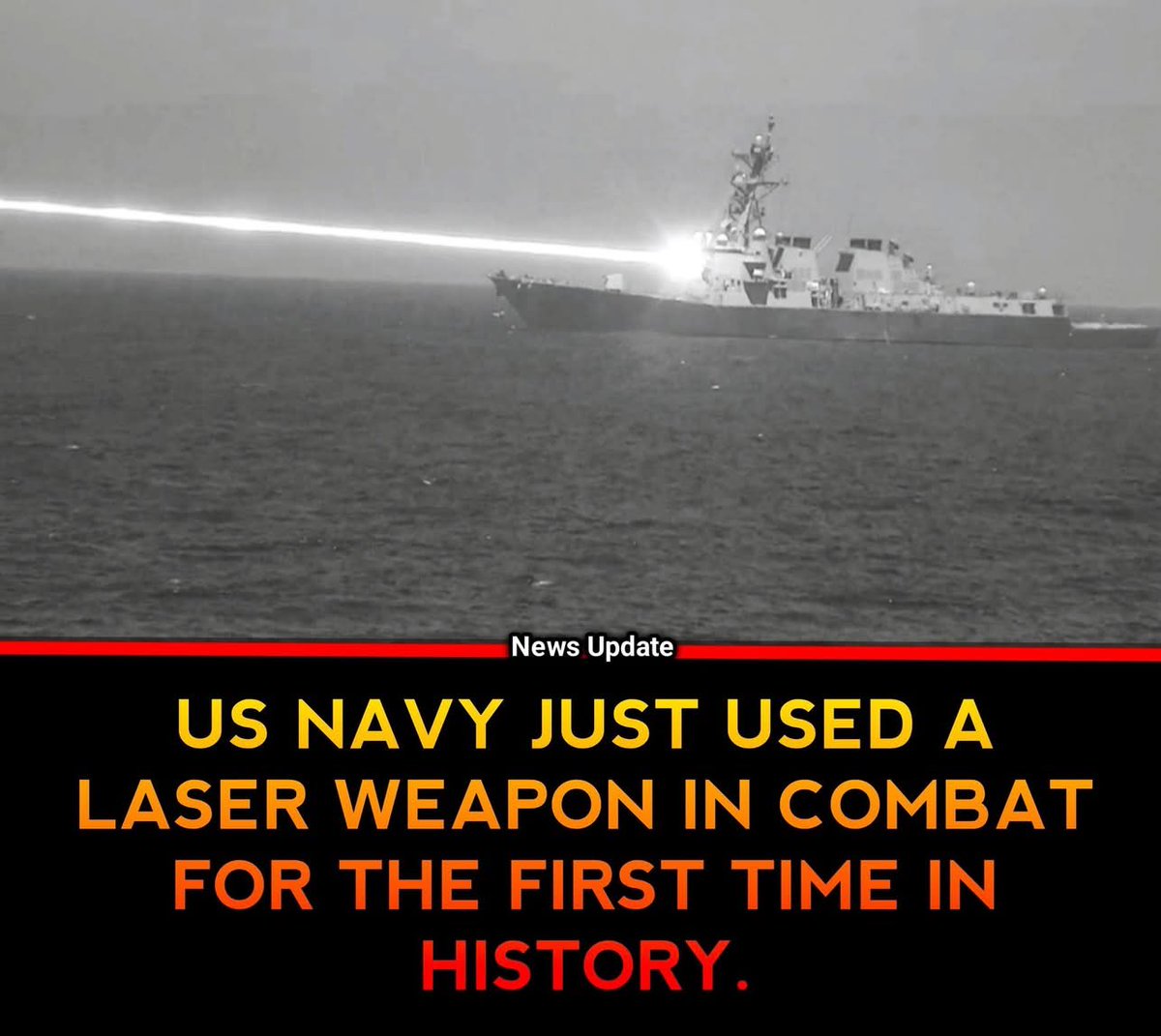
22 Oct 2024
The US Navy has about 300 combat ships. If they were to put one 250 kilowatt combat laser onto each ship that would cost $60 billion.
nextbigfuture.com/2023/04/us…
8
18
1,794
Why NATO Expansion Explains Russia’s Actions in Ukraine
- It's still true in 2026, and even those who are not "pro-Russia" admit it.
The list of opponents to NATO enlargement from three decades ago reads like a who’s who of that generation’s wise men.
It included architects of the Cold War containment doctrine, senior defence and intelligence officials from the Nixon-Carter-Reagan eras, former ambassadors and senior diplomats to Moscow (Arthur Hartman, Jack F. Matlock, and Robert Bowie) former Australian prime ministers Malcolm Fraser and Paul Keating, leading political scientists such as a Ronald Steel, prominent magazine editors (Owen Harries, Charles Maynes) and, not least, distinguished historians such as Robert Conquest, Richard Pipes, John Lewis Gaddis, and Britain’s foremost military intellectual Sir Michael Howard.
Officials in the state and defence departments also rejected NATO plans to expand eastwards, including the Polish-born chairman of the Joint Chiefs of Staff General John Shalikashvili and US Defense Secretary Les Aspin, as well as his successor William Perry, who considered resignation in late 1994 when the policy proposal moved forward. Former defense secretaries Robert McNamara and James Schlesinger aired their concerns that NATO enlargement would decrease allied security and unsettle European stability.
In the lead up to the Senate’s ratification in 1998, the New York Times editorial board warned: “The most important foreign policy decision America has faced since the end of the Cold War… could prove to be a mistake of historic proportions.” And this: “It is delusional to believe that NATO expansion is not at its core an act that Russia will regard as hostile.”
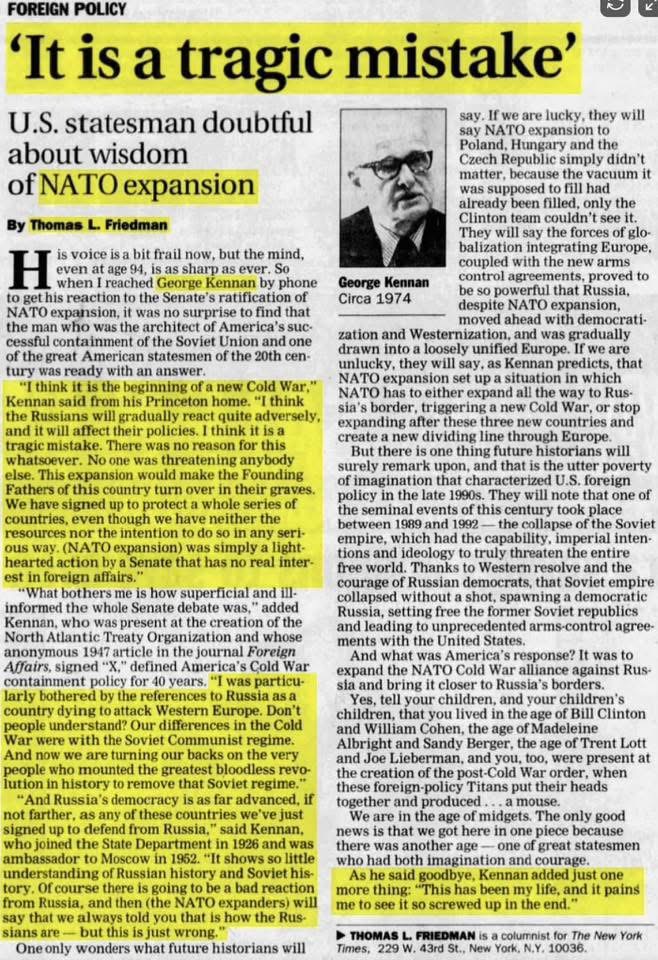
George Kennan—intellectual architect of the Cold War containment doctrine, a former ambassador to the USSR, and one of America’s wisest students of Russian affairs—spoke for the many dissenters in 1997 when he warned that NATO expansion “would be the most fateful error of American policy in the entire post-Cold War era.”
Shortly after the Senate ratified the first tranche of enlargement (Czech Republic, Hungary, and Poland) in April 1998, Kennan told Thomas Friedman: “I think it is the beginning of new Cold War… Of course, there is going to be a bad reaction from Russia, and then [the NATO expanders] will say we always told you that is how the Russians are – but this is just wrong.”
This history serves to highlight the extent to which many distinguished military and foreign-policy experts raised strong objections to moving NATO into Russia’s backyard.
Their warnings about poking at the bear proved prescient.
And yet, as they consistently warned about a near-certain confrontation with post-Yeltsin Russia, it’s important to note that the opponents of NATO expansion in the 1990s were never dismissed as Kremlin apologists or Russia’s “useful idiots.”
Nor were they treated as if their views were outside the boundaries of serious public discourse.
However, the intellectual climate is very different today. If anyone—including prominent scholars like John Mearsheimer and Jeffrey Sachs—blames NATO expansion for the Ukraine crisis, they instantly arouse anger and suspicion about their motives. Although they are popular on social media, today’s critics of NATO enlargement are virtually ignored across mainstream media outlets and their intentions are all too often impugned. Never mind that they are effectively reaffirming the entirely legitimate criticisms that Kennan, Harries, the New York Times, and others raised a generation earlier.
What’s changed in three decades? Why are today’s opponents of NATO expansion treated with contempt and derision?
The answer lies in understanding the power of groupthink.
People, including politicians and policymakers, increasingly indulge in what Owen Harries (an Australian diplomat-policymaker with impressive credentials as a Cold Warrior) called the “parochialism of the present”—a tendency to believe that what is happening to us now must be of unprecedented significance.
Although the Western conventional wisdom insists that "Russia is inherently and incorrigibly expansionist, the Russian armed forces lack the military power to conquer Ukraine, much less countries in the erstwhile Warsaw Pact. A Russia having its work cut out for itself in Donbas is no threat to Europe." Nor has Putin ever expressed interest in making all of Ukraine part of Russia, much less reconstituting the Russian empire. His strategic objectives appear more limited: he wants to annex some Ukrainian territory and badly weaken that country, so it is in no position to join NATO.
Moreover, as the critics warned in the 1990s, it was inevitable that Russia, with an improving economy thanks to its oil and gas resources, would eventually push back at a US-dominated military alliance encroaching on its borders. That is precisely what happened in Georgia (2008), Crimea (2014), and Ukraine (2022).
The cold reality is that we are facing the prospect of a frozen conflict coupled with Russia annexing even more Ukrainian territory, leaving Ukraine as a broken rump state. This is a tragedy for sure, but it almost certainly could have been avoided if US leaders had heeded the warnings of the many wise opponents of NATO expansion during the 1990s.
internationalaffairs.org.au/…
6
14
469
A simplistic notion of China being willing to simply "go along to get along" with globalisation is an incorrect notion.
Also, the question of what the USA is doing is "All about China" may be too simplistic.
China is an ancient culture, has had a history of developing technologies centuries before others.
So while they took the "opportunity" dumped on them to be the cheap labor depot, they also, wisely, used the occasion to build themselves and economically "arm" themselves—given that the "century of humiliation" is not a lost memory: starting approximately 1840 until 1949.
- Two Opium Wars
- Sino-Japanese War (1894-1895)
- Boxer Rebellion
- Xinhai Revolution (end of the Qing Dynasty)
- Second Sino-Japanese War (WW2)
- Civil War
- Cultural Revolution
They have not had a purely rosy existence in the post-war period.
It's interesting to note in the modern period that they assumed that powers would seek to create economic chokepoints for them.
I excerpt some from an article by @baoshaoshan :
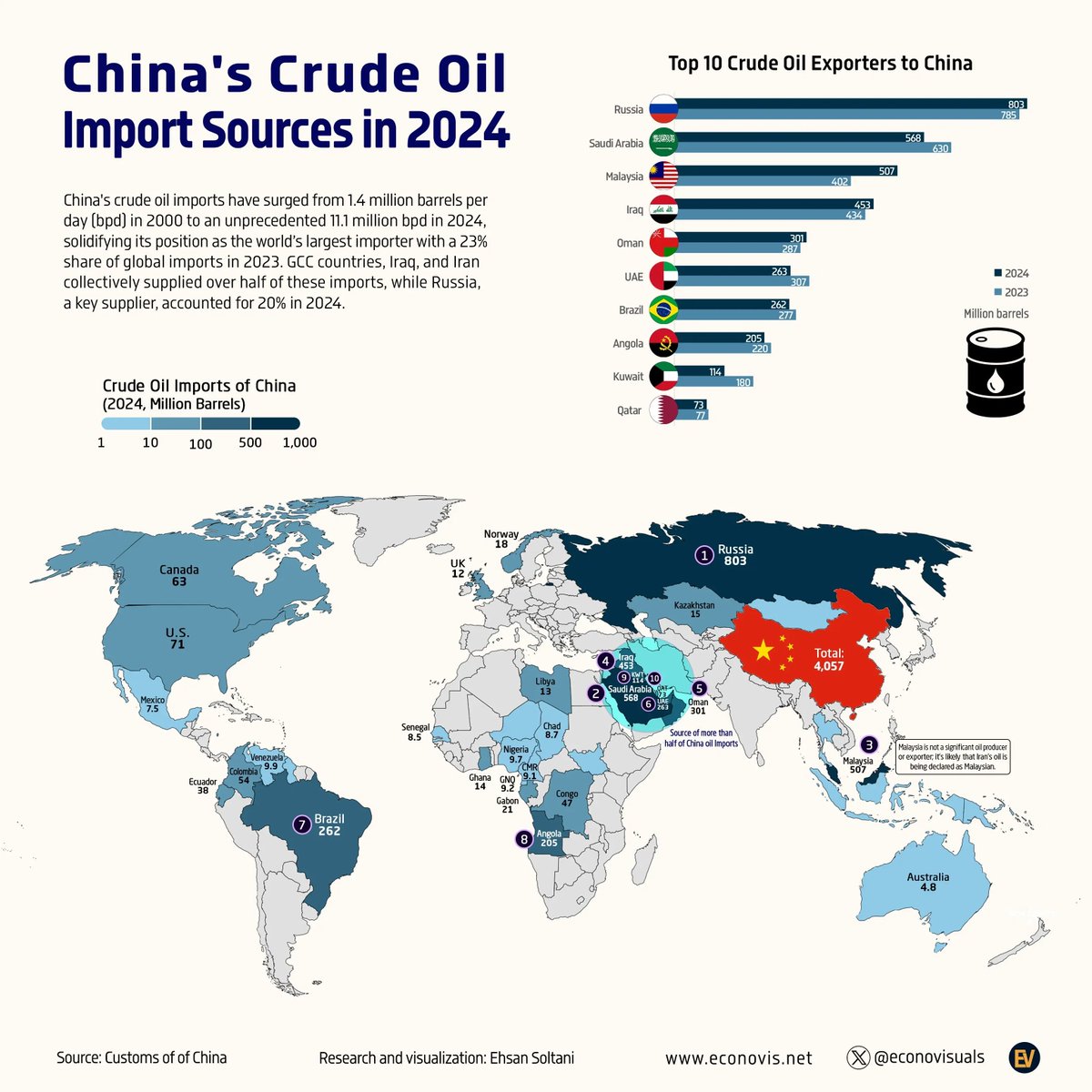
Hu Jintao’s 2003 reference to the “Malacca Dilemma” highlighted vulnerability to maritime chokepoints. Since then, China has systematically reduced exposure through a range of measures:
Diversification (Russia as top supplier with overland routes; broader sourcing);
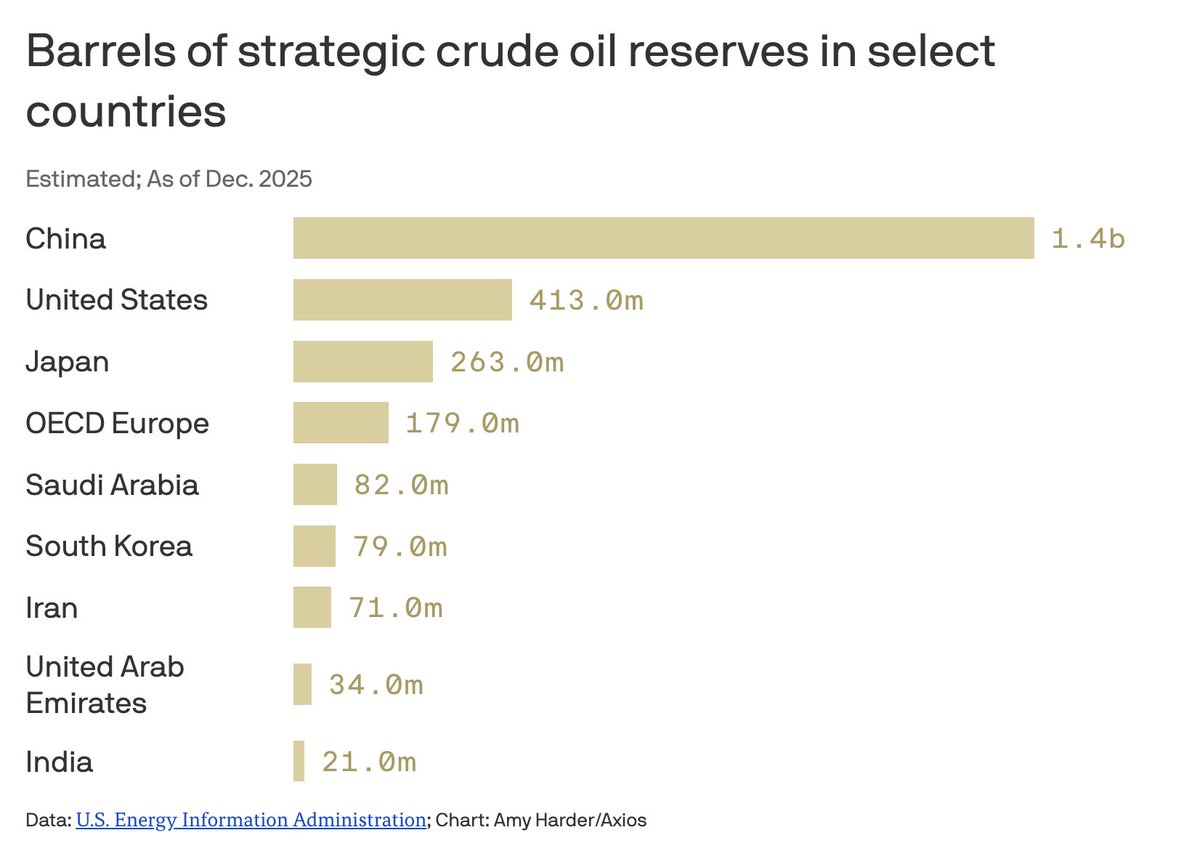
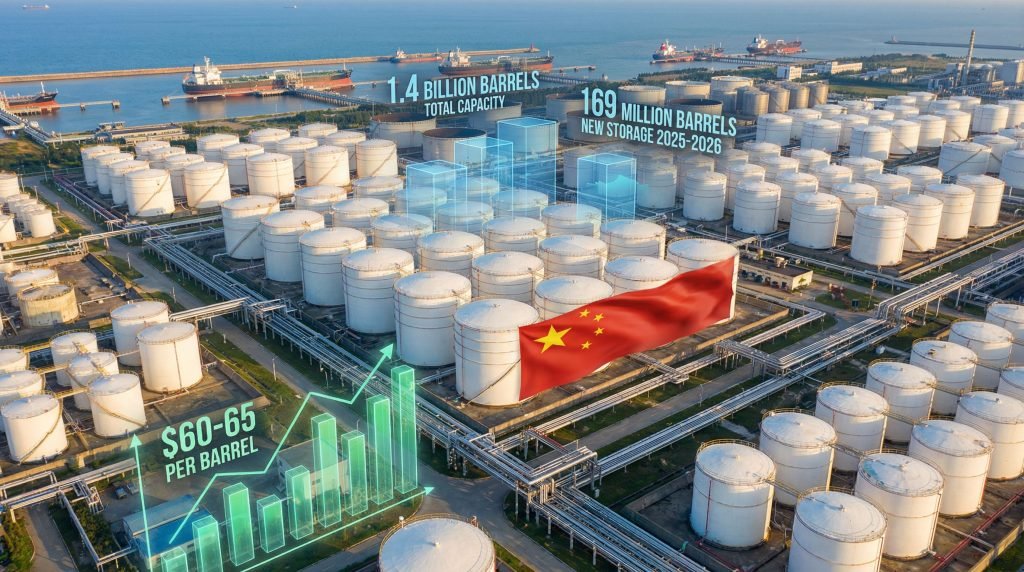
Massive stockpiling (now among the world’s largest inventories);
Electrification and renewables buildout (wind/solar capacity surging; electricity penetration rising; non-fossil share growing); and
Domestic production stability and refinery flexibility.
These measures, combined with substitution accounting revealing faster fossil decoupling, have transformed the risk profile. A Gulf disruption today tests resilience rather than threatening foundations. Russia’s willingness to offset (per Lavrov) further underscores the strategic partnership buffer. The bottom line is that China’s ~5–7% primary energy exposure (which is declining), robust ~100–130 day inventories, Russian/Central Asian rerouting capacity, and ongoing electrification/renewables substitution render a Hormuz/Malacca-driven Gulf oil curtailment manageable and arguably anachronistic. Impacts would be contained to short-term volatility and adjustment costs. Post-2003 preparations have demonstrably strengthened energy security, aligning with your thesis.
Incidentally, this preparation should put the kibosh on arguments about China’s supposed “over investment” in areas such as EVs and electrification. It is precisely these “over investments” that have put China in a position where it can cope with major disruptions — caused either by “natural events” or by geopolitical interventions. As for U.S. “grand strategy,” what we can say is this: if, in fact, these wars are part of a wider “it’s all about containing China” strategy, then the evidence on the ground suggests that the foundational assumptions underpinning American means-ends calculus are flawed; they are empirically falsifiable. This does not discount American motivations and subsequently actions, but does indicate that such interventions are unlikely to work; they may even backfire. Recent experience in the field of semiconductor restrictions should remind us that American policy making is often blind to evidence, and is driven by a psychosis of exceptionalism.
The situation in Iran would appear to fit this pattern. China, so it would seem, has been ready.
open.substack.com/pub/warwic…
2
12
36
1,916
Ryan Milton 弥瑞恩 retweeted

19h
‘Ukrainian citizens are being used as guinea pigs by Western pharmaceutical giants,’: Odessa deputy Aleksey Albu.
Bulgarian, Asya Zuan "USA is developing biological weapons in its laboratories: ‘Humanity' is on the verge of a bio-bacteriological war"
youtu.be/cYcj5q_HR_w?is=Z1IO…
14
24
16,314
Ryan Milton 弥瑞恩 retweeted
overhead Pete...lock those elbows...135lbs on the bench...OMG...like this
2
2
7
619
Ryan Milton 弥瑞恩 retweeted

🇺🇸🗽Pete Hegseth – the struggle is real. A warrior ethos 😜
74
45
204
25,572
Insert, like normal and then use like a human.
157
🇨🇳🇯🇵On November 7, 2025, recently chosen Japanese Prime Minister Sanae Takaichi made a statement at a session of the Japanese Diet where she claimed that a “contingency” in the Taiwan Strait would be a “survival threatening situation” for Japan.
This prompted a strong response from the People’s Republic of China that this erroneous official statement from a sitting Japanese Prime Minister represented both a threat against China and a serious violation of the One China Principle.
Given the importance this question holds for world peace or world war—and in the interest of better informing our readers of the historic context of this contention—we present this guest opinion article by Mr. Liu Pengyu, spokesperson of the Embassy of the People’s Republic of China in the United States of America.
~~~
The remark blatantly tramples upon international law and the post–World War II international order. Taiwan’s return to China is an integral part of the post-war international order. On August 15, 1945, Japan announced unconditional surrender.
On October 25 of that year, the ceremony to accept Japan’s surrender in Taiwan Province took place in Taipei, at which point China recovered Taiwan de jure and de facto. Instruments including the Cairo Declaration, the Potsdam Proclamation and the Japanese Instrument of Surrender explicitly required that all the territories Japan had stolen from the Chinese, including Taiwan, shall be restored to China after the end of World War II. In 1971, the UN General Assembly adopted Resolution 2758, resolving once and for all the question of the representation of the whole of China, including Taiwan, in the United Nations politically, legally and procedurally.
~~~
On the 80th anniversary of Taiwan’s restoration, however, the Japanese leader broke promises and openly tied China’s Taiwan to Japan’s so-called “security interests,” in an attempt to fabricate excuses for Japan’s military obstruction of China’s reunification.
This is a violation of the spirit of the four political documents and the commitments made by Japan, and a breach of the principle of prohibiting the threat or use of force in the UN Charter. It has not only fundamentally undermined the political foundation of China-Japan relations, but also posed a serious provocation to the outcomes of World War II and the post-war international order.
Not only have the Chinese people expressed strong indignation, but the Japanese people from various sectors, including a number of former Prime Ministers, have also voiced opposition and criticism.

New article published by @SpoxCHNinUS, spokesperson of the 🇨🇳Chinese Embassy in the US.
Japan's Prime Minister has recently challenged China's One China Principle, and a discussion is urgently needed before a new war breaks out in the Pacific.
eir.news/2026/01/jointly-saf…
3
13
25
2,779
Ryan Milton 弥瑞恩 retweeted
Jun 12
Sometimes I get the feeling that Russia and China are playing a different game than the idiots in the EU boardrooms.
Europe and their friends want war.
Russia and China want economic development so that they’re here in 1000 years.
1
1
31
833
Ryan Milton 弥瑞恩 retweeted

Jun 13
When your government lies, and your media shuts down all dissent.
131
1,541
4,749
132,805
Ryan Milton 弥瑞恩 retweeted
20 Feb 2025
I can understand why many people are upset with Trump accusing Kiev for starting the war. However, we should admit that 2014 has been purged from our collective memory and banned from the war narrative
- This was CNN reporting on Kiev's attack on Donbas after the 2014 coup
977
9,985
26,634
2,631,444

Back in 2014 Ukrainian soldiers were shooting into the homes of civilians in East Ukraine.
Their mission was to spread terror and crush any dissent against the CIA backed coup in Kyiv.
This is something the western mainstream media should be telling you.
But they won't......
505
8,908
21,722
540,788
Jun 13
International waters in the world may no longer be free.
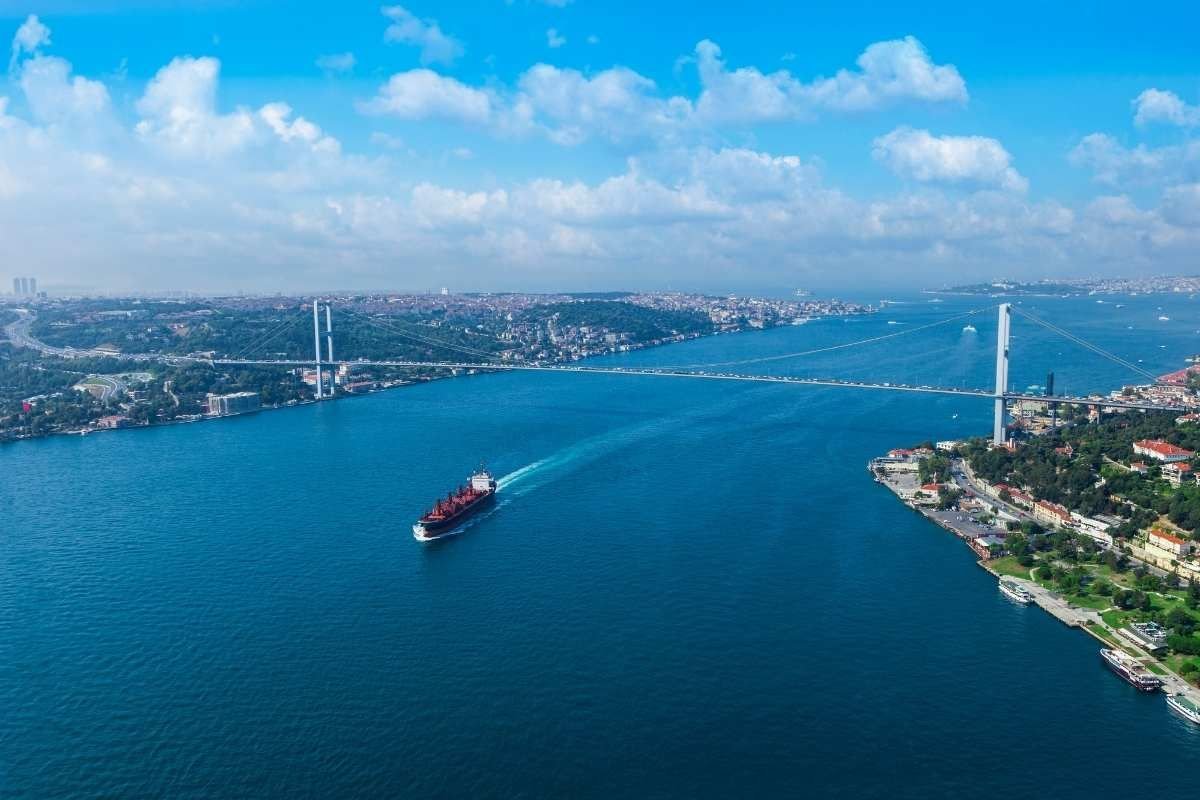
A mandatory security fee of 1 Million Dollars per ship may also be charged for passages through the Istanbul and Çanakkale Straits.
Iranian Foreign Minister Araghchi:
"According to international law, it is not possible to collect a passage fee from the Strait of Hormuz, but a service fee will be charged."
Ships passing through the Istanbul and Çanakkale Straits threaten coastal security for millions of people living there, while also causing environmental damage. Continuing new passages under agreements from 100 years ago does not seem feasible.
It is expected that no ship will be allowed to pass through the straits without security protection. The security service, however, will be fee-based.
Jun 12

Dünya'da uluslararası sular artık ücretsiz olmayabilir.
İstanbul ve Çanakkale Boğazı'ndan geçişlerde de zorunlu güvenlik bedeli olarak gemi başına 1 Milyon Dolar alınabilir.
İran Dışişleri Bakanı Araghchi:
"Uluslararası hukuka göre Hürmüz Boğazı'ndan geçiş ücreti toplamak mümkün değildir, ancak hizmet bedeli alınacak."
İstanbul ve Çanakkale Boğazı'ndan geçen gemiler milyonlarca insanın yaşadığı kıyı güvenliğini tehdit ettikleri gibi çevresel zararlar da verebiliyorlar. 100 yıl önceki anlaşmalarla yeni geçişleri sürdürmek mümkün gözükmüyor.
Her geminin güvenlik koruması olmadan boğazlardan geçişine izin verilmemesi bekleniyor. Güvenlik hizmeti ise ücretli olacak.
2
1
284