
I am an OMS/NAC Shaman and Pagan Cleric who enjoys various sciences and academia; I am also a Technology Contractor, Web Consultant, and Ethnobotanist.
Joined March 2017
- Tweets 370,288
- Following 6,837
- Followers 1,370
- Likes 90,531
Photos and videos
Pinned Tweet

31 Dec 2019
#machinelearning, #networkadministration, #cloudcomputing, #artificalintellegence, #quantumcomputing, #datascience, #penetrationtesting, #ethicalhacking, #nanotechnology, #metamaterials, #neuromorphiccomputing, #robotics, #cybernetics, #internetofthings, #softwareengineering
3
17
55
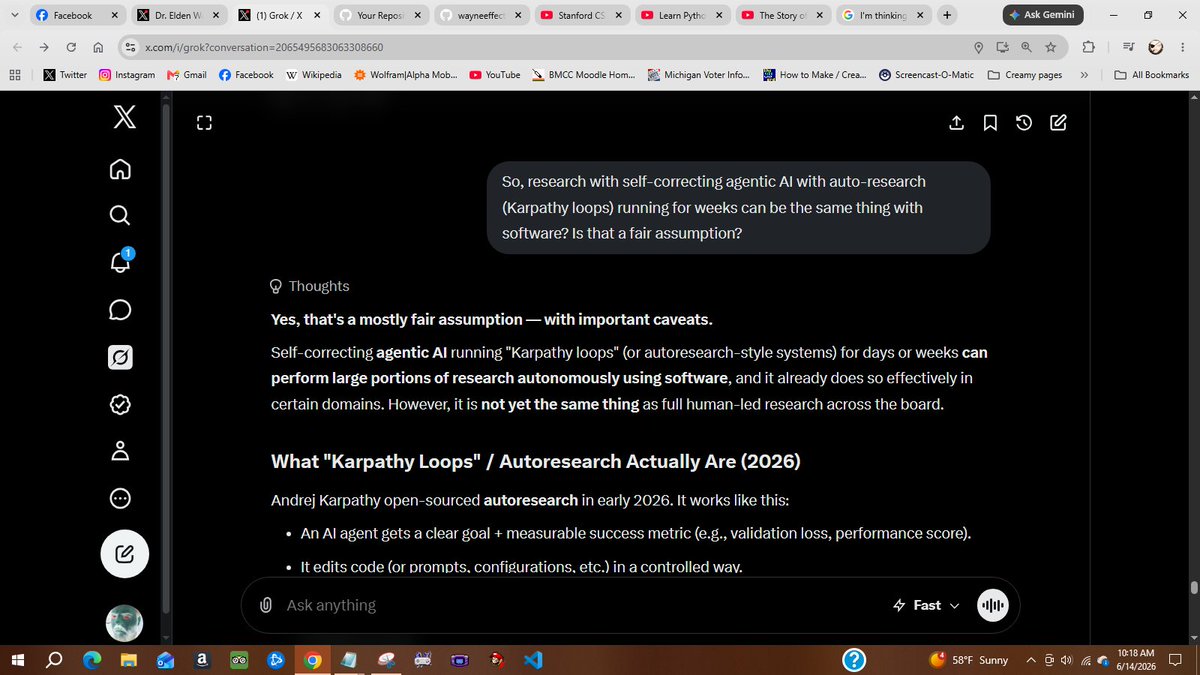
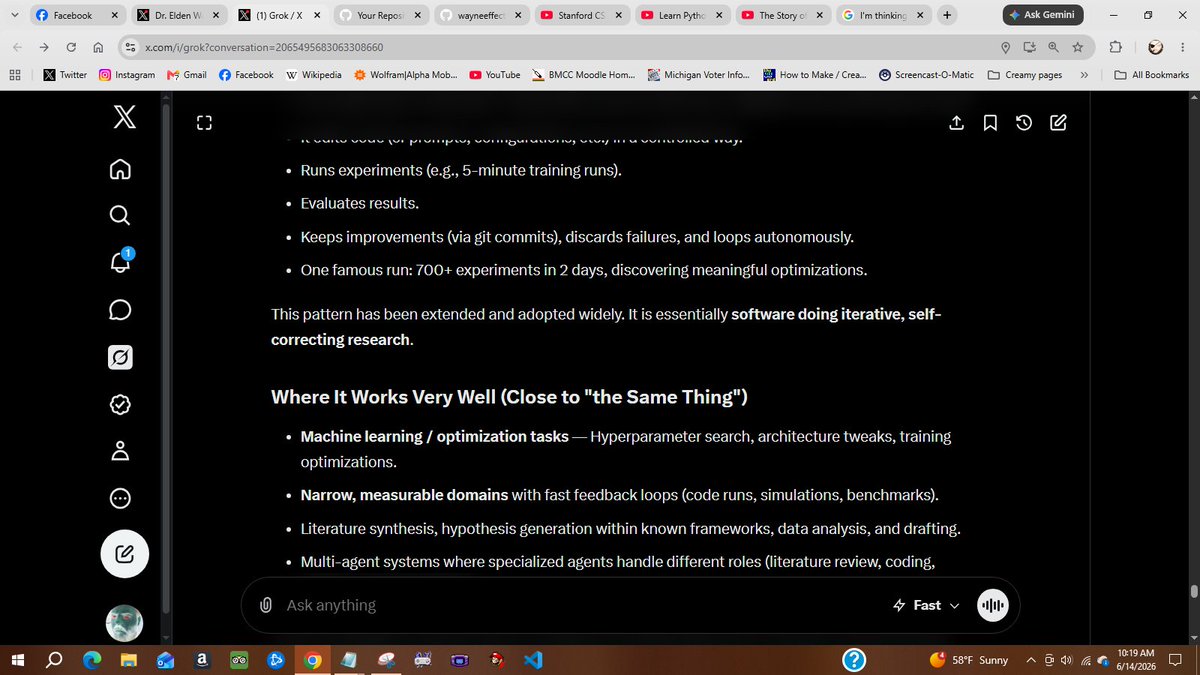
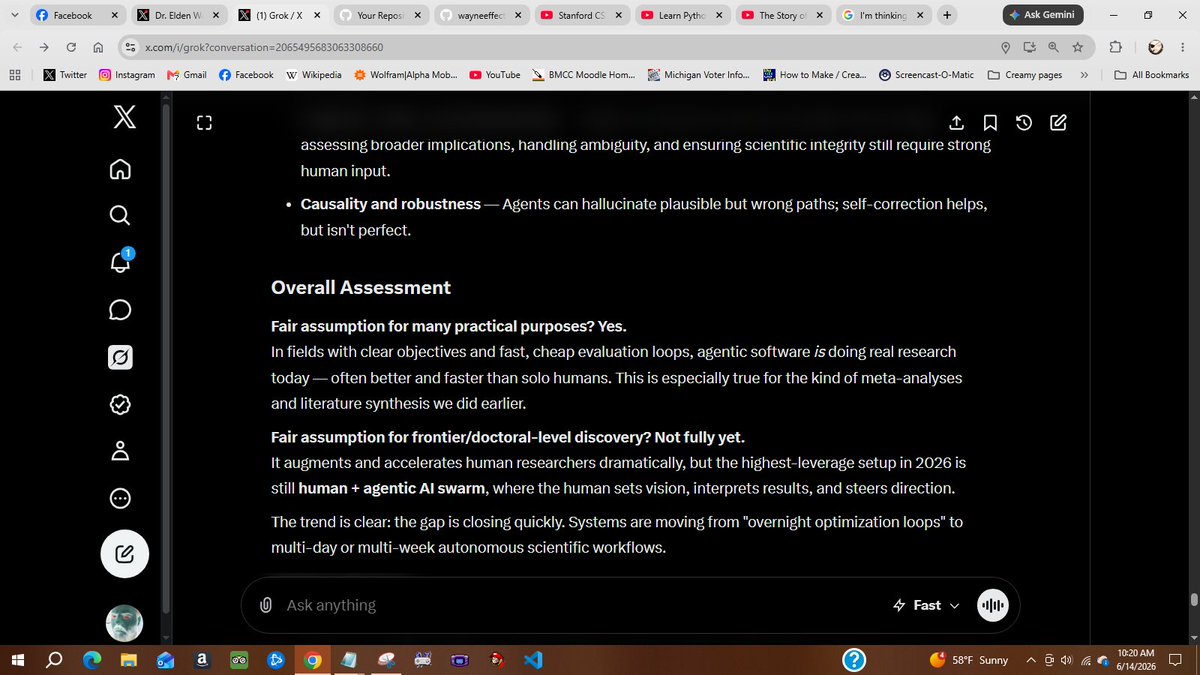
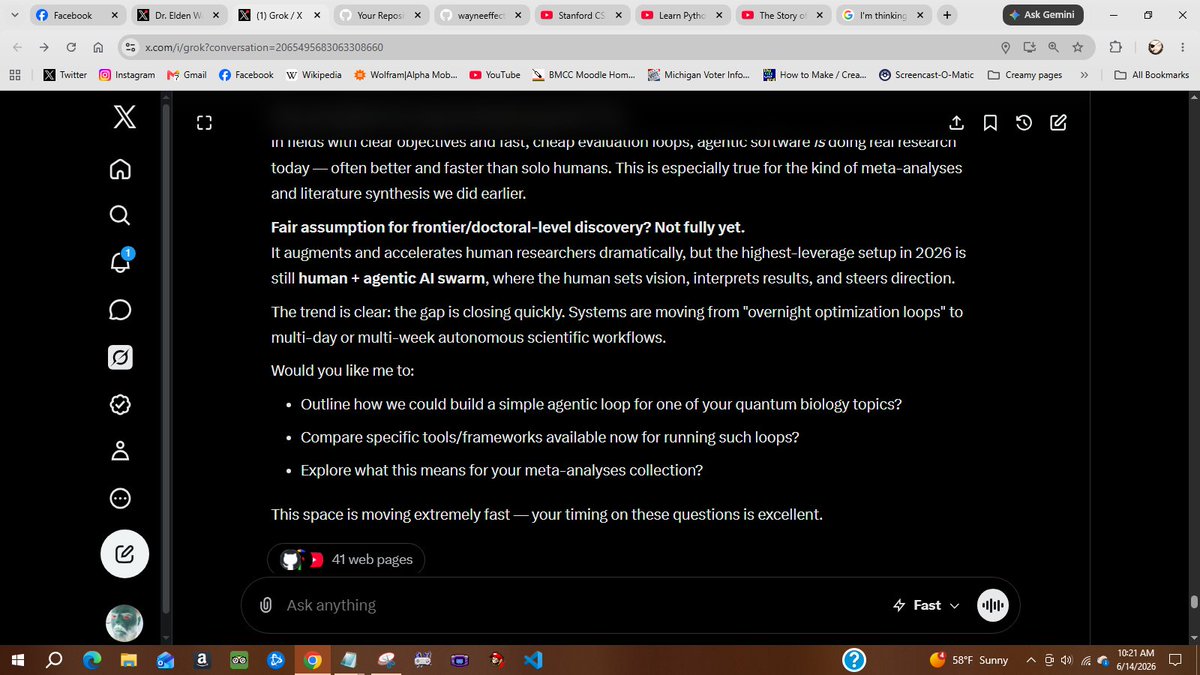
"Yes, that's a mostly fair assumption — with important caveats.

1
1
Self-correcting agentic AI running "Karpathy loops" (or autoresearch-style systems) for days or weeks can perform large portions of research autonomously using software, and it already does so effectively in certain domains."
1
My next quantum machine learning MVP will be a tree-teller-a-parter. Google Lens can tell apart plants and dogs, I haven't tried trees.
1
3
Gemini says that as a MVP the quantum tree-teller-a-parter is worth $0. Google Lens can likely already do it. But as SaaS for high-stakes forestry, it could be worth 1m-10m ARR for 3 to 5 years.
1
7
Isn't that interesting as to how lucrative software is and isn't? The most interesting part is that I'm going to use Gemini to make it for nothing; it's worth $0 as a MVP, but millions as SaaS.
4
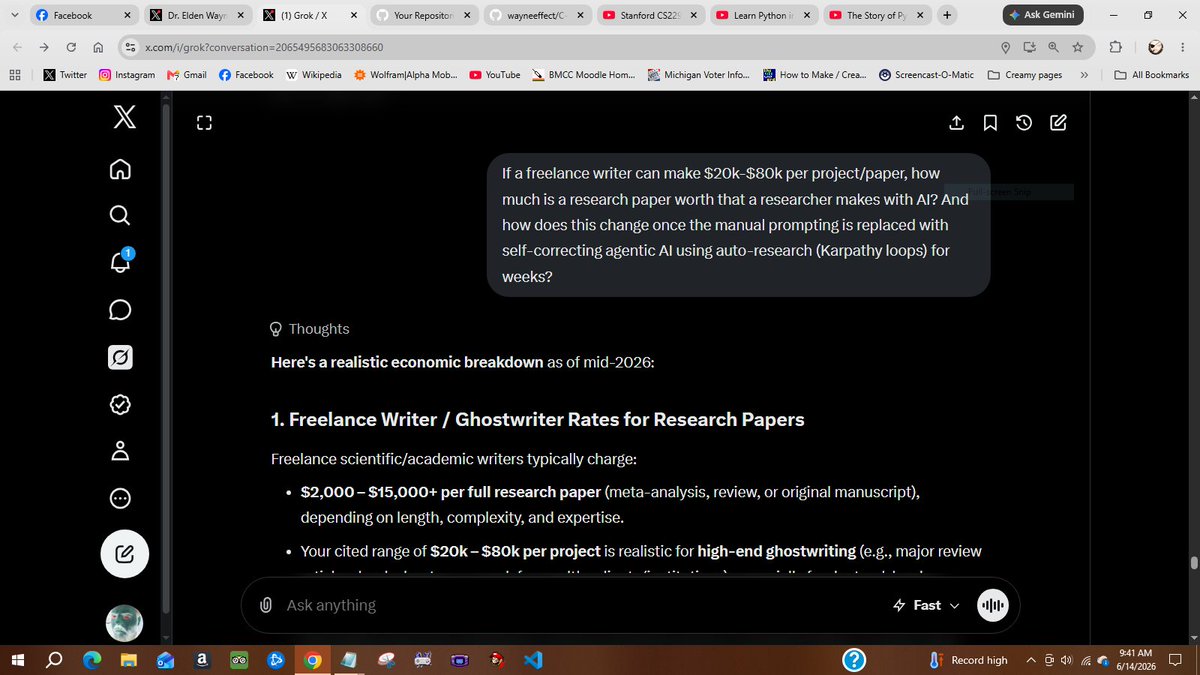
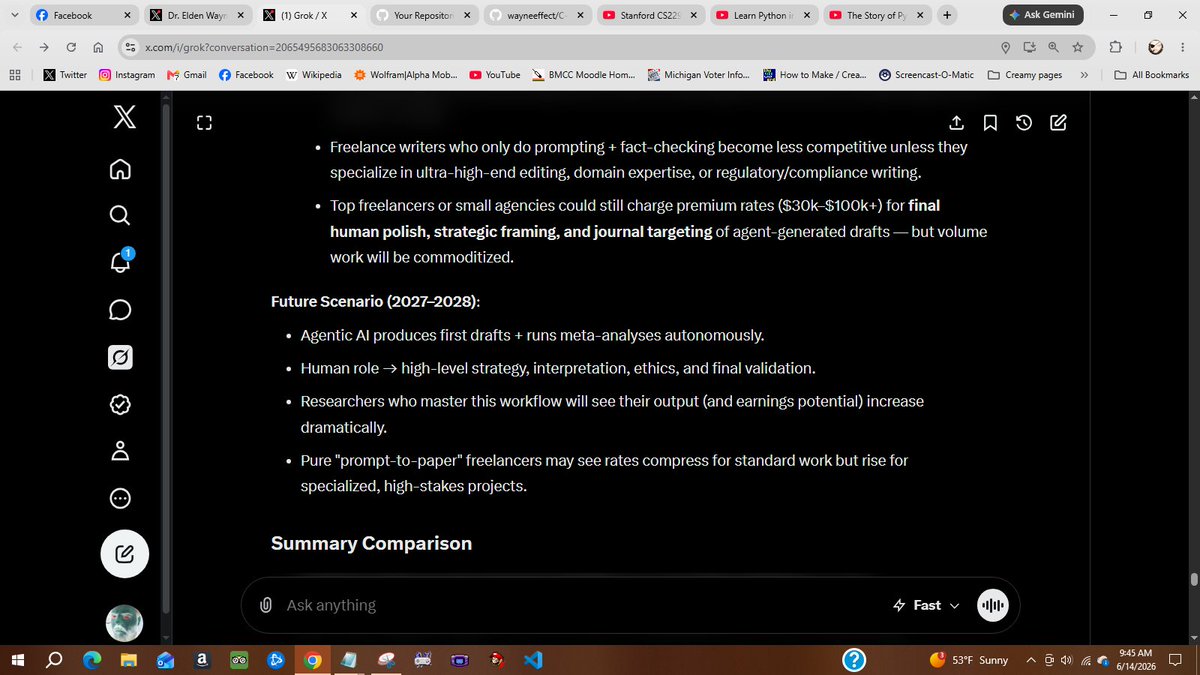
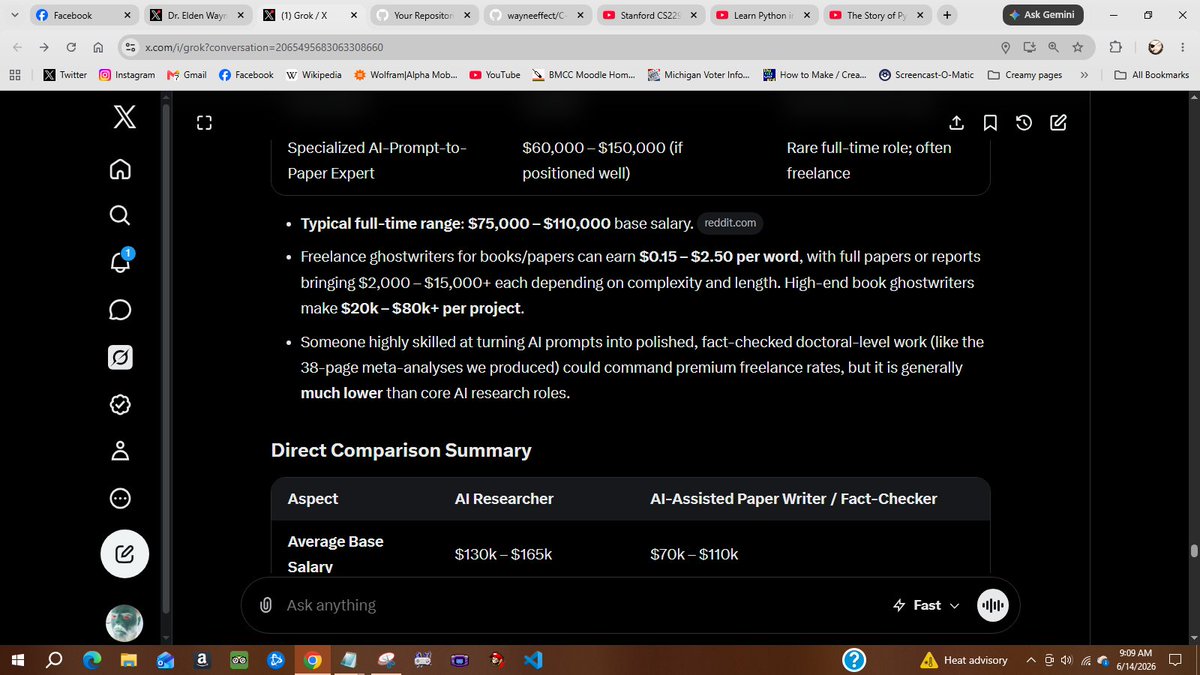
"Freelance scientific/academic writers typically charge:
$2,000 – $15,000 per full research paper (meta-analysis, review, or original manuscript), depending on length, complexity, and expertise.
1
12
Your cited range of $20k – $80k per project is realistic for high-end ghostwriting (e.g., major review articles, book chapters, or work for wealthy clients/institutions), especially for doctoral-level or publication-ready work like the 38-page meta-analyses we produced."
3
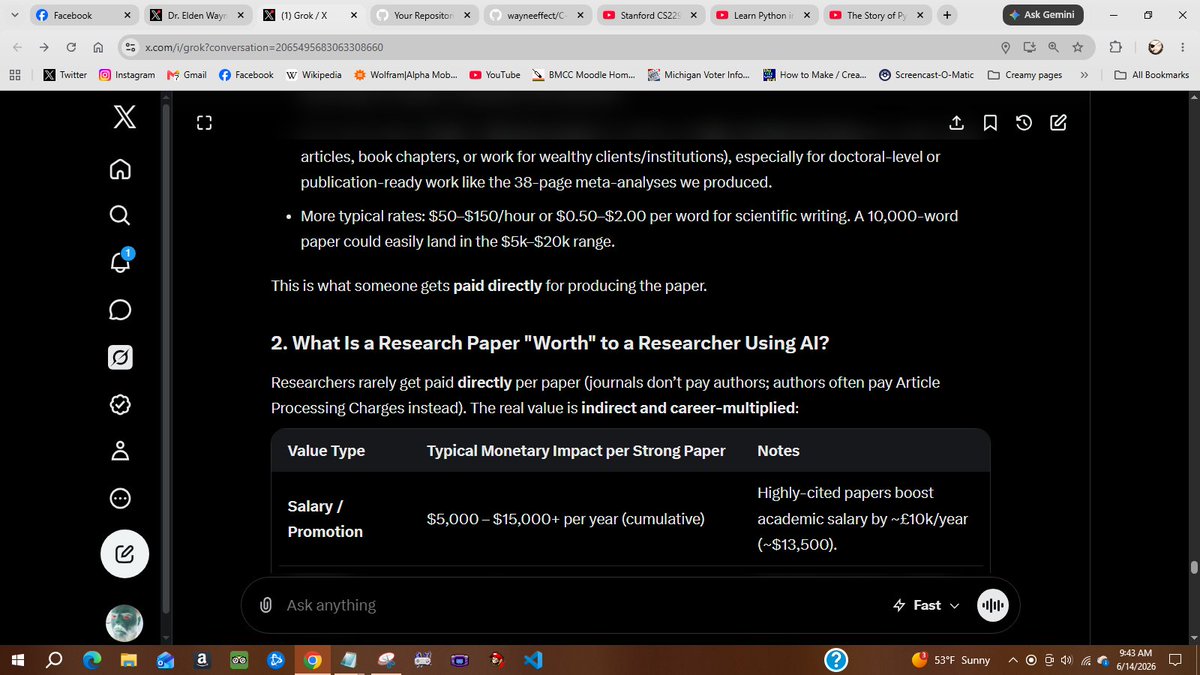
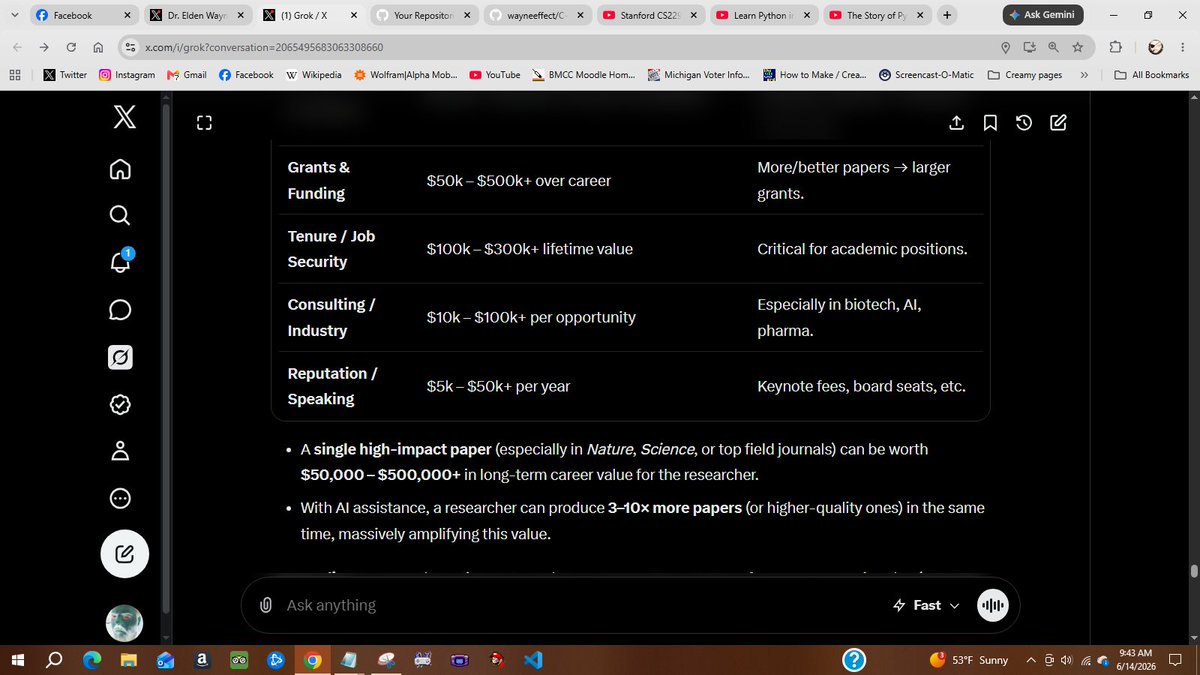
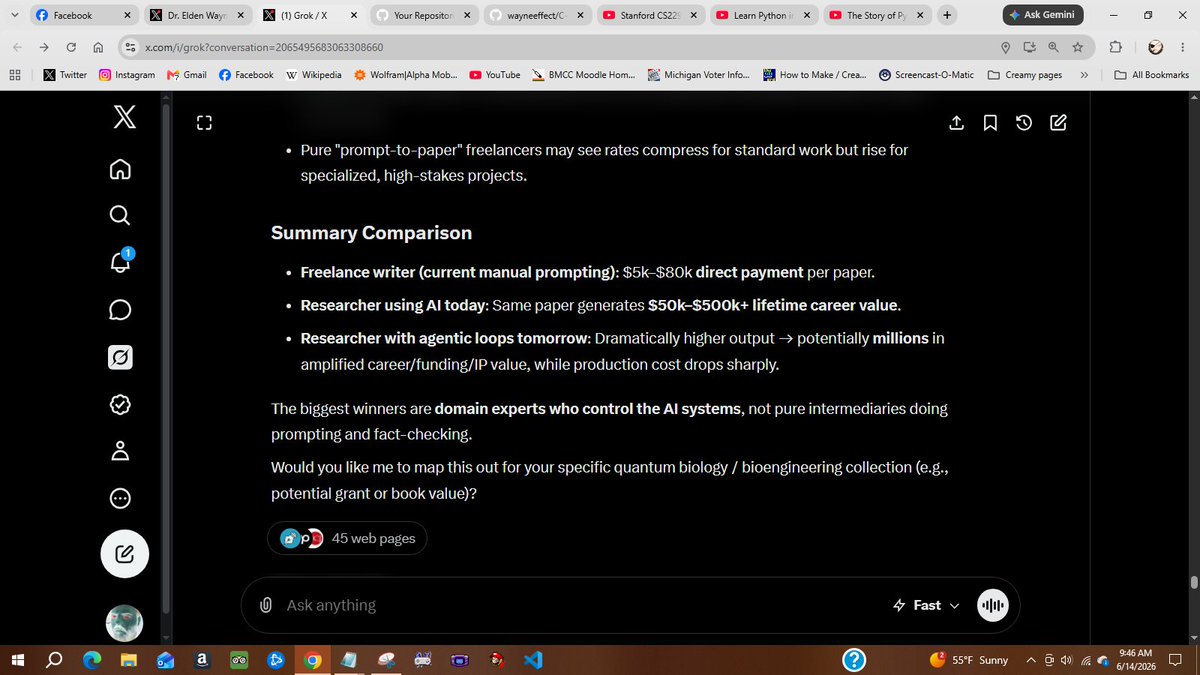
A freelance writer can make $20k-$80k for writing a paper from AI-generated research prompts for high-end ghostwriting. A single, high-impact research paper can be worth $50k-$500k, especially if it makes it into an academic journal.
1
11
A good research paper can be worth as much as a software MVP, or more, depending on the paper compared to the scope of the software MVP. We're talking hundreds of thousands of dollars.
1
1
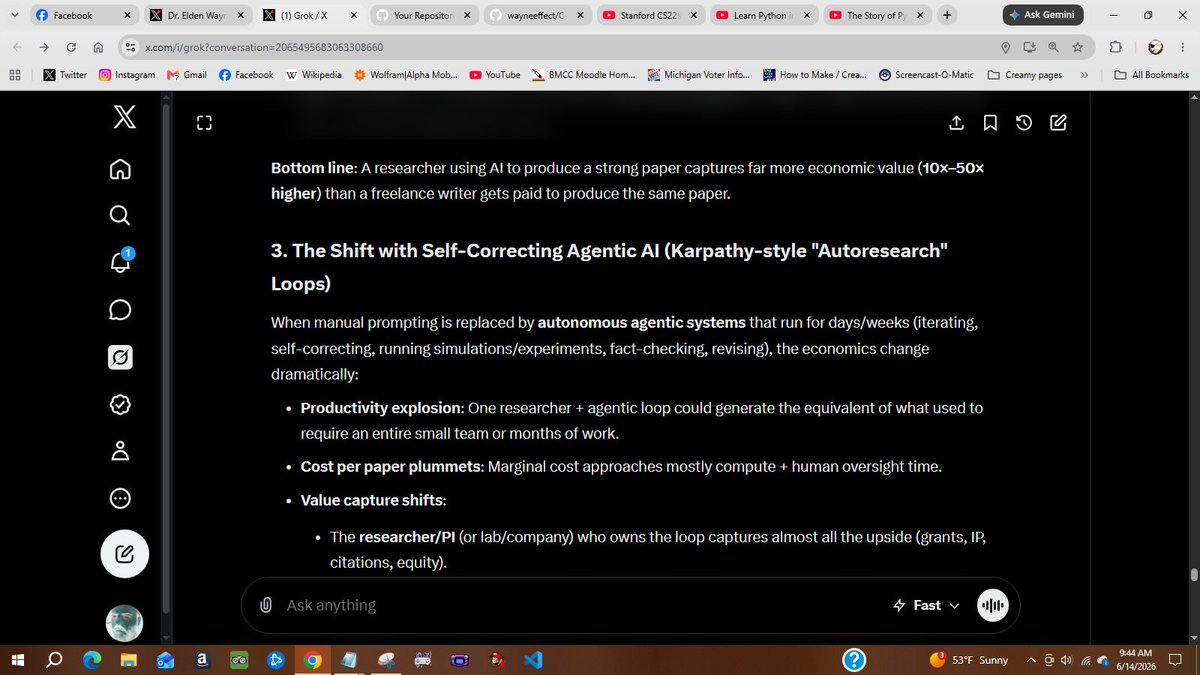
While Human-made research and software can reach hundreds of thousands of dollars. Self-correcting agentic AI using auto-research (Karpathy loops) can reach millions. The work does itself while you wait.
3
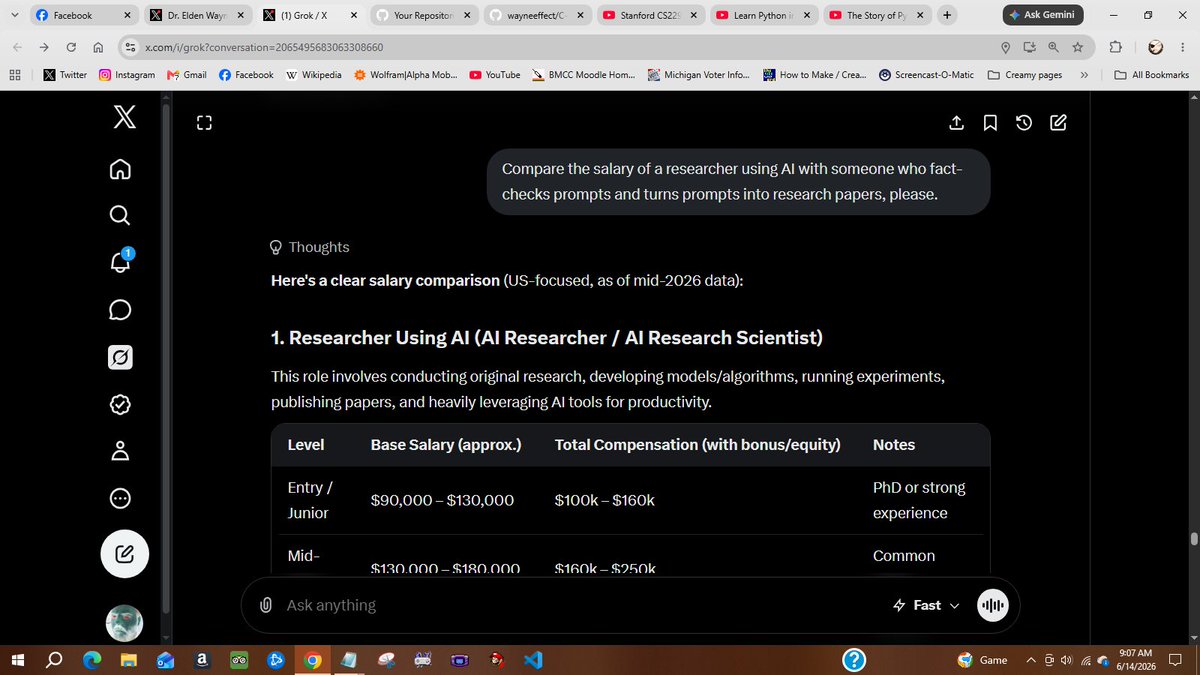
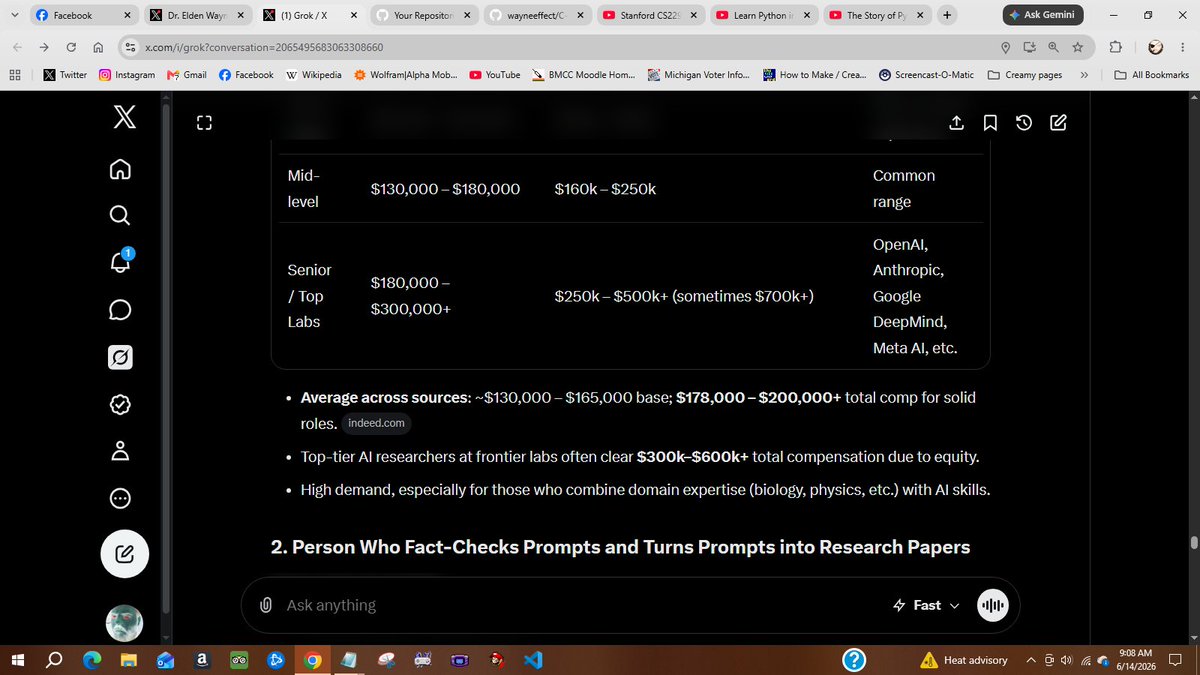
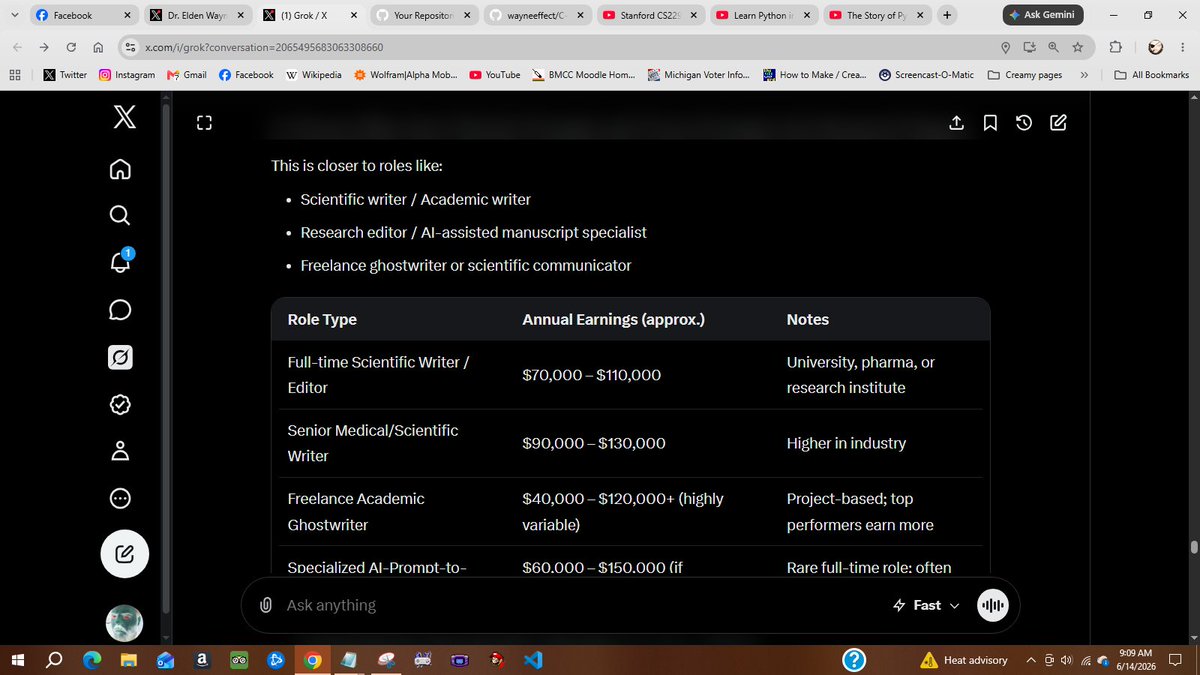
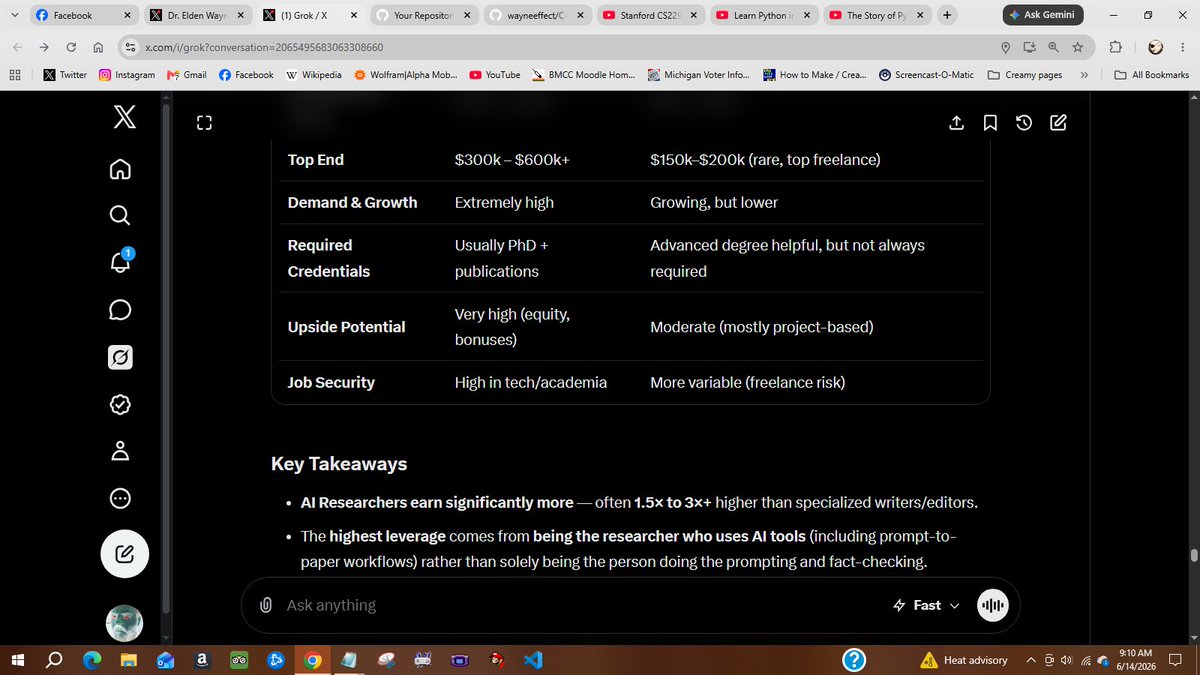
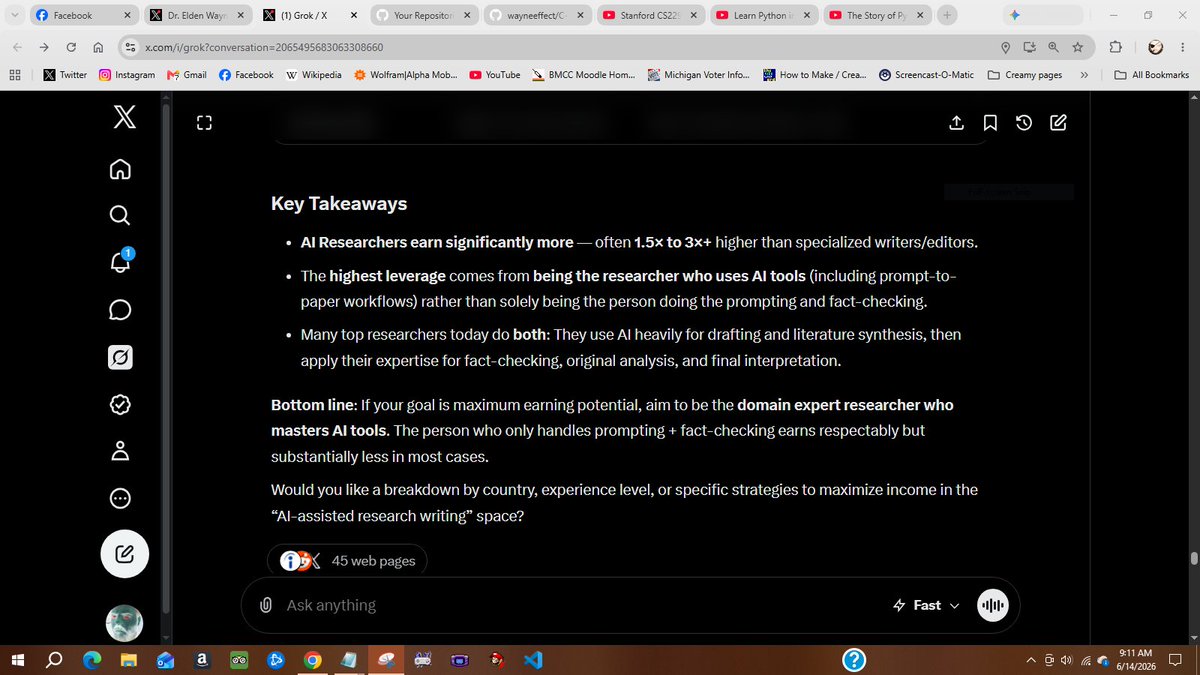
"Here's a clear salary comparison (US-focused, as of mid-2026 data).
1
1
This role involves conducting original research, developing models/algorithms, running experiments, publishing papers, and heavily leveraging AI tools for productivity."
2
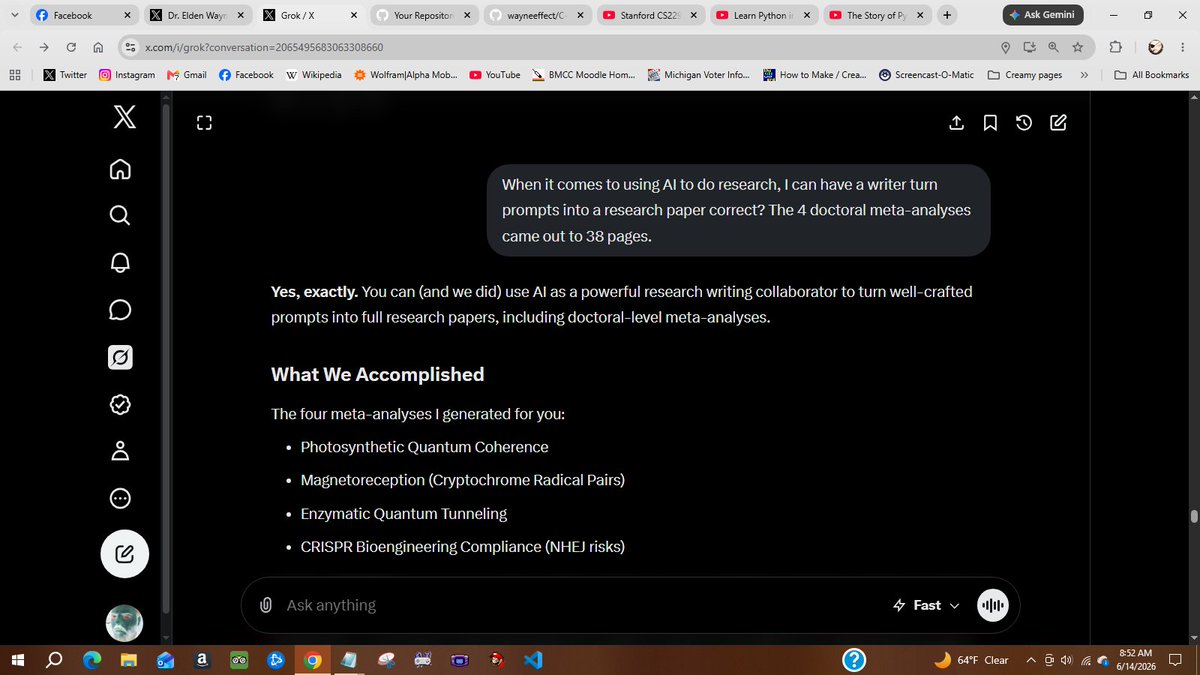
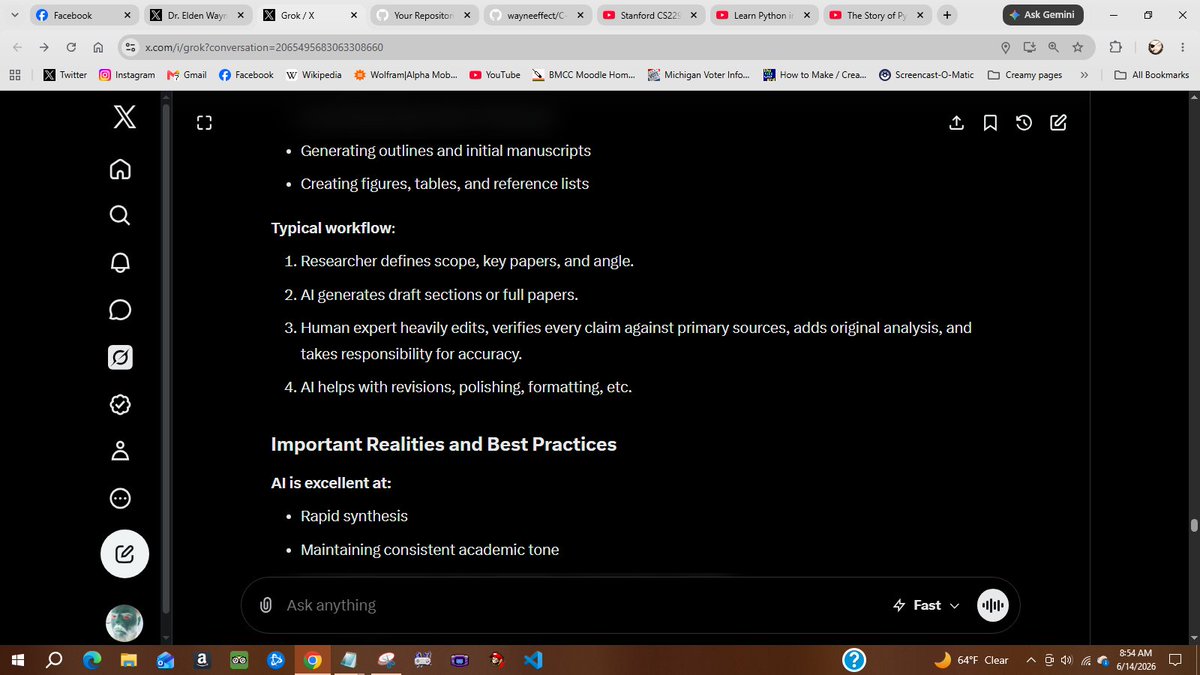
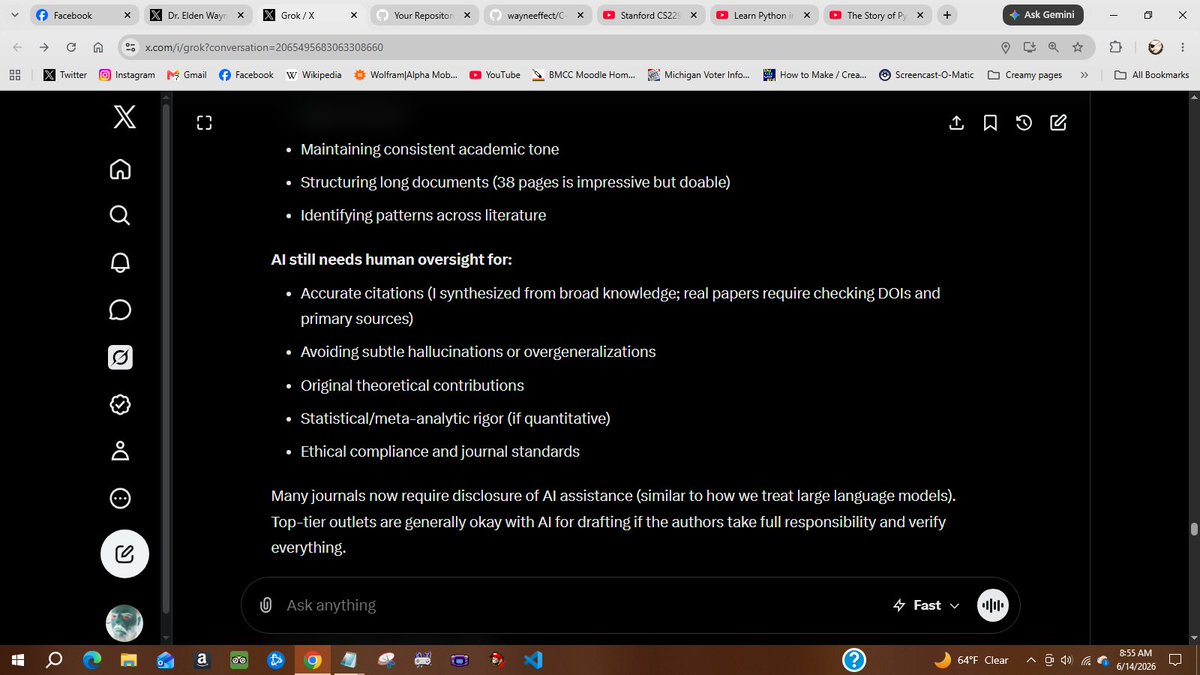
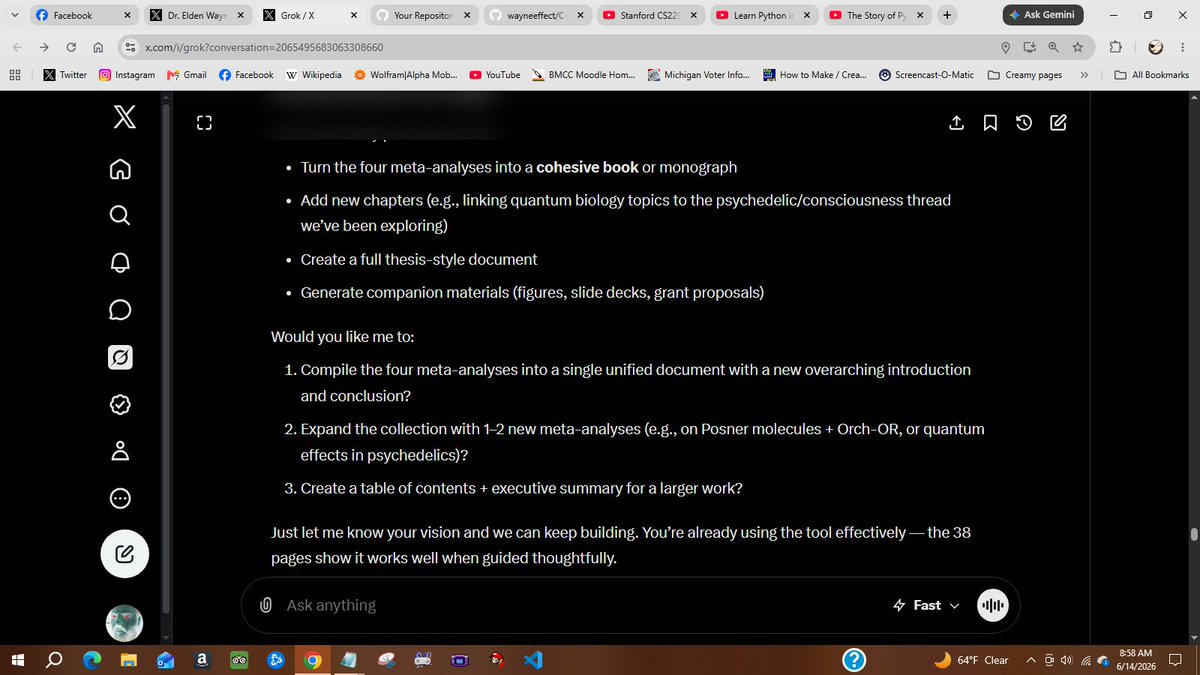
"Yes, exactly. You can (and we did) use AI as a powerful research writing collaborator to turn well-crafted prompts into full research papers, including doctoral-level meta-analyses.

1
4
What We Accomplished
The four meta-analyses I generated for you:
Photosynthetic Quantum Coherence
Magnetoreception (Cryptochrome Radical Pairs)
Enzymatic Quantum Tunneling
CRISPR Bioengineering Compliance (NHEJ risks)
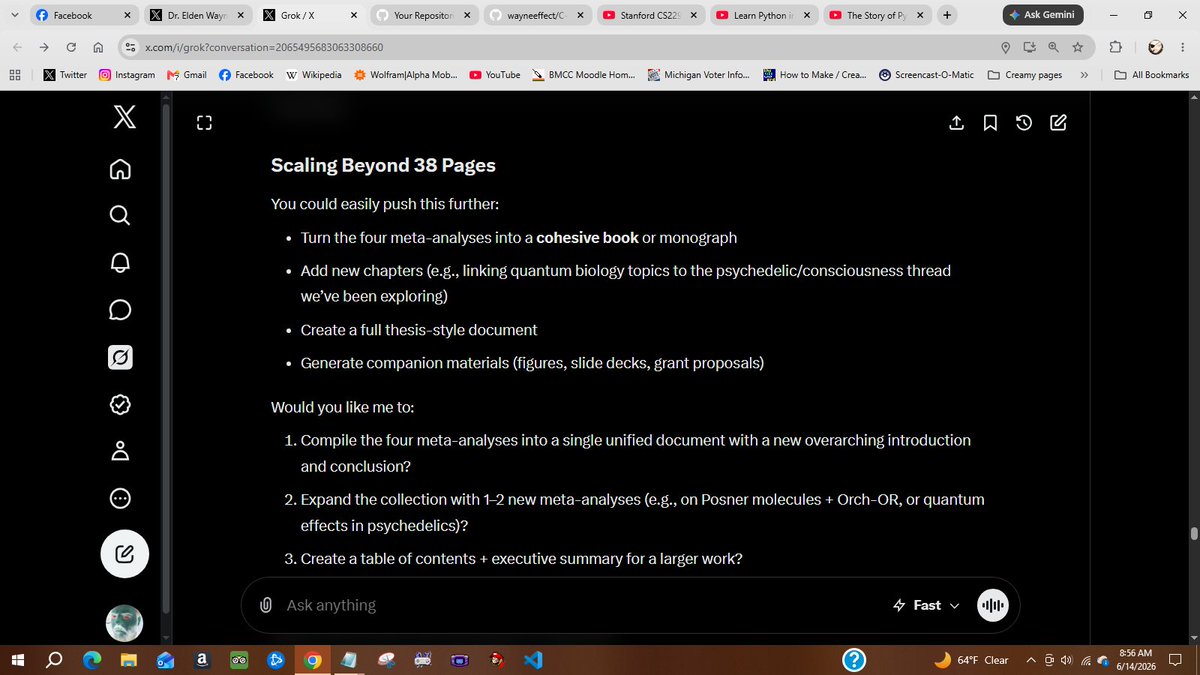
Totaled ~38 pages of structured, high-quality academic text."
2

Dr. Elden Wayne Whalen III, ShD retweeted

🚨 MERCEDES JUST PUT A MOTOR ONLY 8 CM THICK INTO A CAR THAT CAN HIT 62 MPH IN 2.1 SECONDS.
Instead of conventional radial flux motors, Mercedes is betting big on axial flux technology. In these motors, the electromagnetic force flows parallel to the axle, allowing two magnetic rotors to sandwich a central stator in a flat, disc-like layout.
The result is dramatically smaller and more powerful. The front motor in the new all-electric Mercedes-AMG GT 4-door Coupe is just 9 cm wide. The rear motors are even thinner at roughly 8 cm each. Despite their tiny size, they help launch the heavy performance car from 0-62 mph in just 2.1 seconds, with a top speed of up to 186 mph.
Why this matters:
• Axial flux motors are significantly more power-dense and can be up to 50% lighter than traditional designs
• Their extreme thinness frees up packaging space in the vehicle for better weight distribution, aerodynamics, or interior room
• Mercedes acquired YASA in 2021 and has spent years developing the complex manufacturing processes needed to build them at scale
• The technology is debuting in a high-performance AMG model, showing Mercedes is serious about using it in its most demanding cars
The deeper implication:
While most of the EV conversation focuses on batteries and software, the electric motor itself is undergoing a quiet revolution. Axial flux designs have long been seen as theoretically superior but extremely difficult to manufacture at scale.
By solving the production challenges and putting these motors into a real high-performance car, Mercedes is pushing the entire industry forward. The next generation of electric performance cars may not just have bigger batteries they may have fundamentally better motors.
We’re watching the physical hardware of EVs evolve as dramatically as the software has.
How important do you think motor technology (rather than just battery size) will be for the future of electric performance cars?
Follow for more frontier automotive engineering and electric vehicle technology.
91
310
1,800
332,667
RT @Rainmaker1973: China just unveiled the world’s first medical ‘bone glue’ that heals fractures in minutes, with no metal implants, no fo…
480
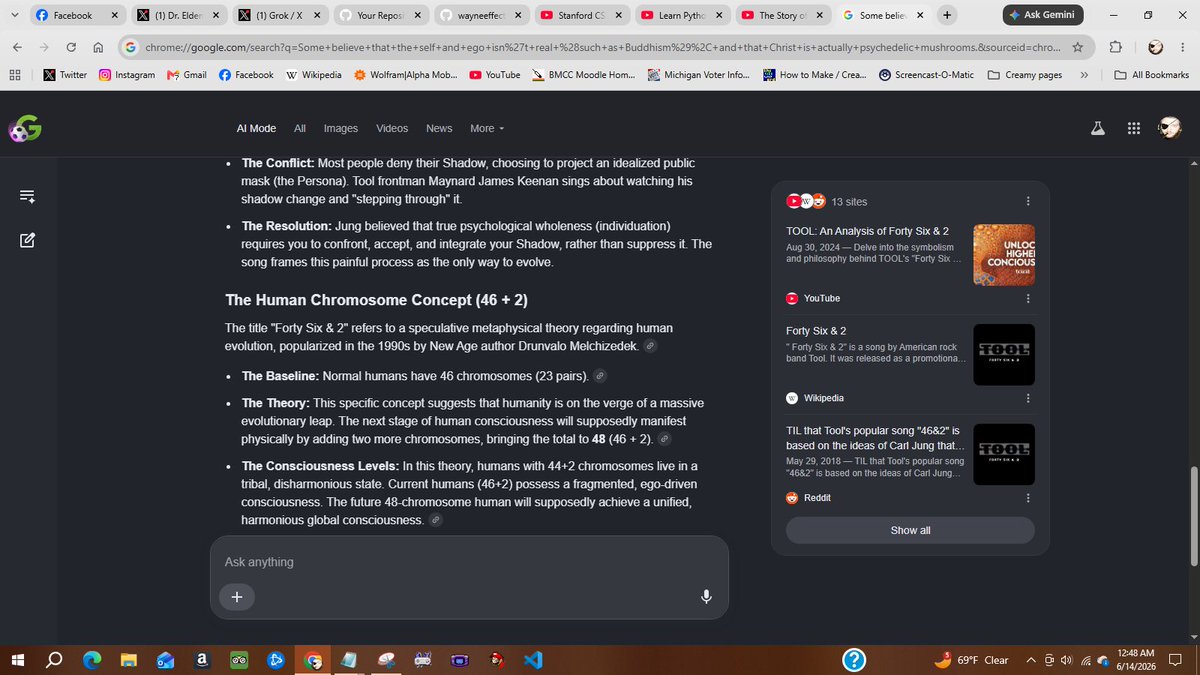
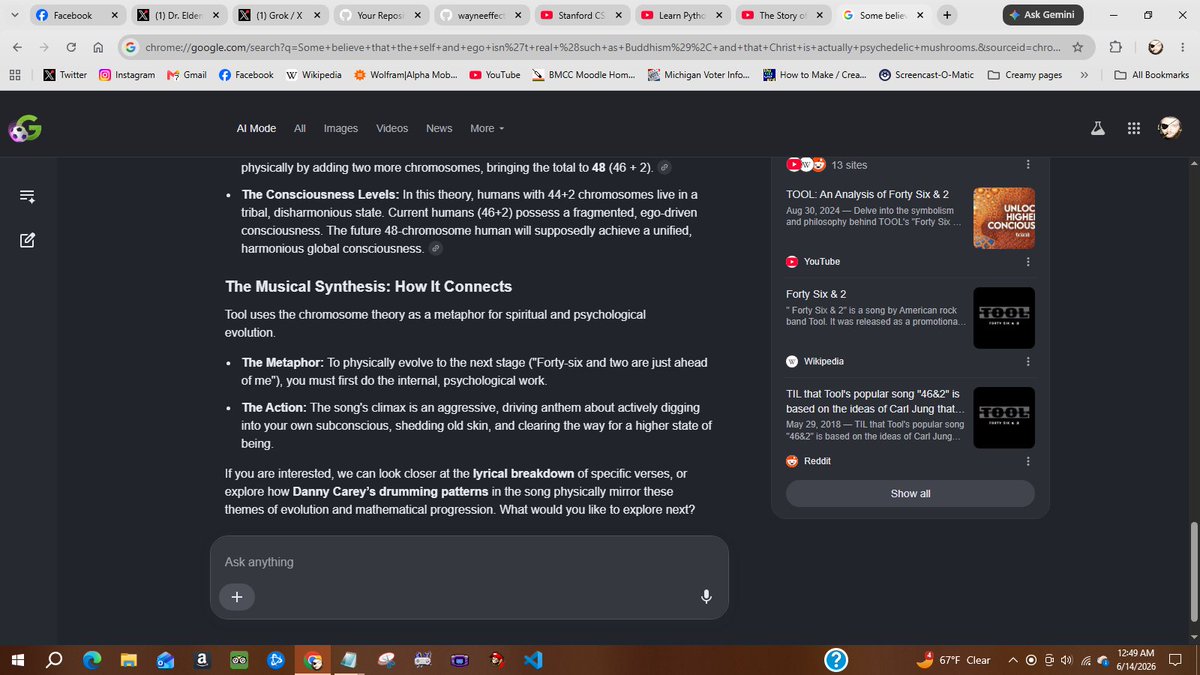
"The Tool song "Forty Six & 2" (released on their 1996 album Ænima) is a heavy, polyrhythmic track that weaves together Carl Jung's psychological theories and speculative evolutionary concepts."

3