
InfoSec guy stuck in miserable life....
Joined September 2010
- Tweets 19,725
- Following 331
- Followers 1,698
- Likes 7,102
377 Photos and videos














Wezmaster retweeted

Jun 13
Burp Suite Professional costs 475 dollars a year per seat.
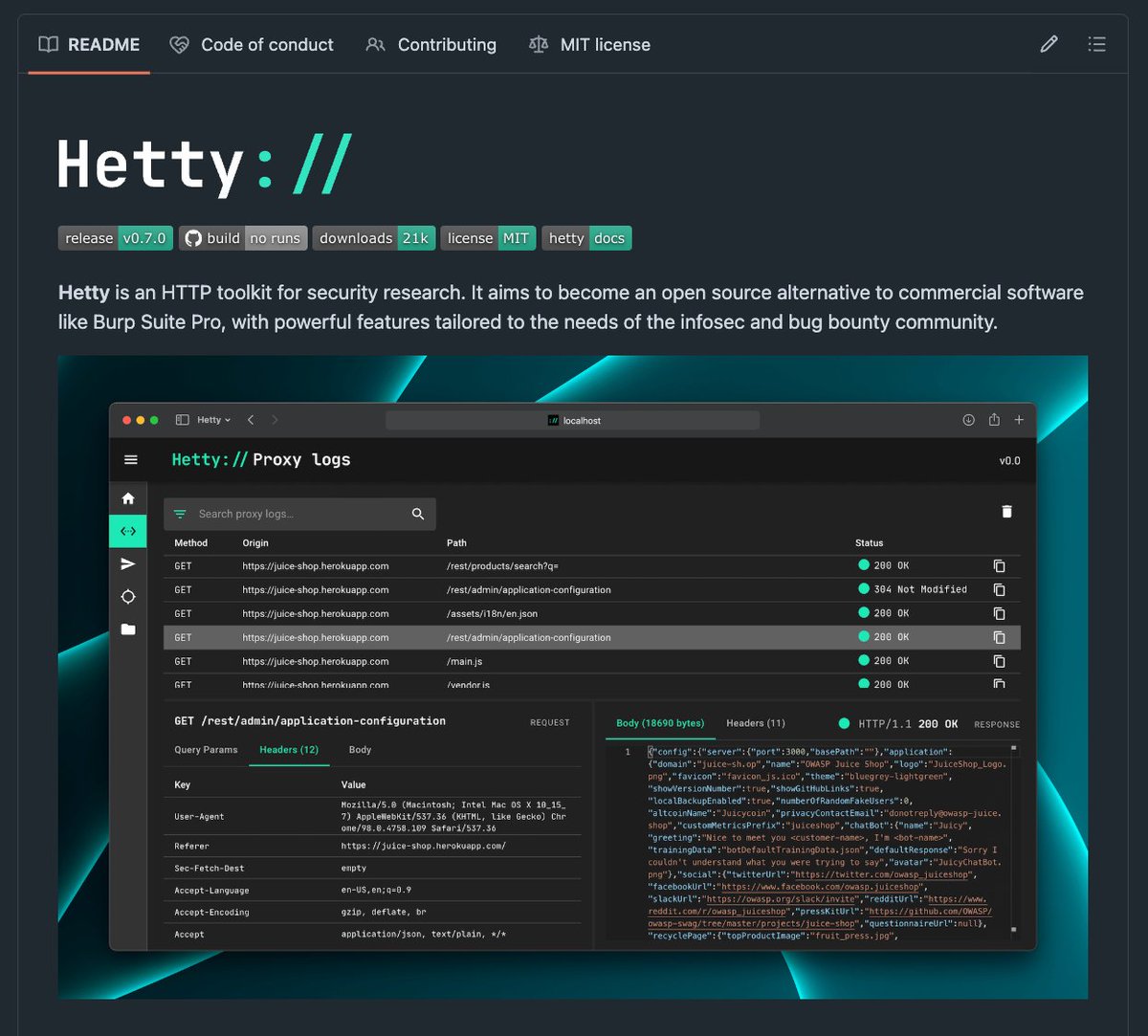
A senior software engineer in Amsterdam built the open source replacement as a side project. He put it on GitHub for free. It has 10,569 stars.
His name is David Stotijn. The software is Hetty.
Here is what Hetty is.
An HTTP toolkit for security research. A machine-in-the-middle proxy that sits between your browser and the target. Every request and every response flows through Hetty. You can read them, search them, intercept them, edit them, replay them, and send them again.
This is the core loop of every web application security test ever performed. Burp Suite charges 475 dollars a year for it. Hetty does the same job for zero.
Here is the feature set.
A machine-in-the-middle HTTP proxy with full logs and advanced search. An HTTP client for manually creating and editing requests, and replaying any request you already proxied. Request and response interception for manual review, with full edit, send, receive, and cancel control. Scope support to keep your work organized to a single target. A web-based admin interface that runs in your browser. Project-based database storage so multiple engagements stay separate. A GraphQL service for programmatic access.
The installer is a single Go binary. Works on macOS, Linux, and Windows. No Java runtime, no enterprise license server, no machine fingerprinting, no telemetry.
Here is the price ladder.
Burp Suite Professional: 475 dollars a year per seat.
Burp Suite Enterprise: thousands per year, contact sales for a quote.
Burp Suite Community Edition: free, but throttled, no scanner, no project save, no intruder rate.
OWASP ZAP: free and open source, now owned by Checkmarx after a 2024 acquisition.
Hetty: zero. Forever. One binary. No account.
A pentester working full time pays Burp 475 dollars a year. A team of 10 pentesters pays 4,750 dollars a year. A bug bounty hunter who finds one vulnerability has already paid for Burp twice over.
Or they download a 30 MB Go binary written by a freelancer in Amsterdam and keep every dollar they earn.
David has not pushed a new commit in 16 months. The last commit was January 13, 2025. That is normal for a tool that is feature-complete. HTTP has not changed. The proxy still proxies. The intercept still intercepts. MIT licensed code does not expire when the maintainer takes a break.
Buy a domain. Find a bug. Cash a bounty.
PortSwigger took a free industry tool and put it behind a 475 dollar paywall. A freelancer in Amsterdam gave it back. On every platform. For zero dollars.
Your proxy. Your binary. Your bounties.
(Link in the comments)
35
283
1,645
89,356
Wezmaster retweeted

Jun 10
Free, open-source Windows optimizer for debloating, disabling telemetry, managing startup processes, cleaning temp files and applying more than 30 performance tweaks
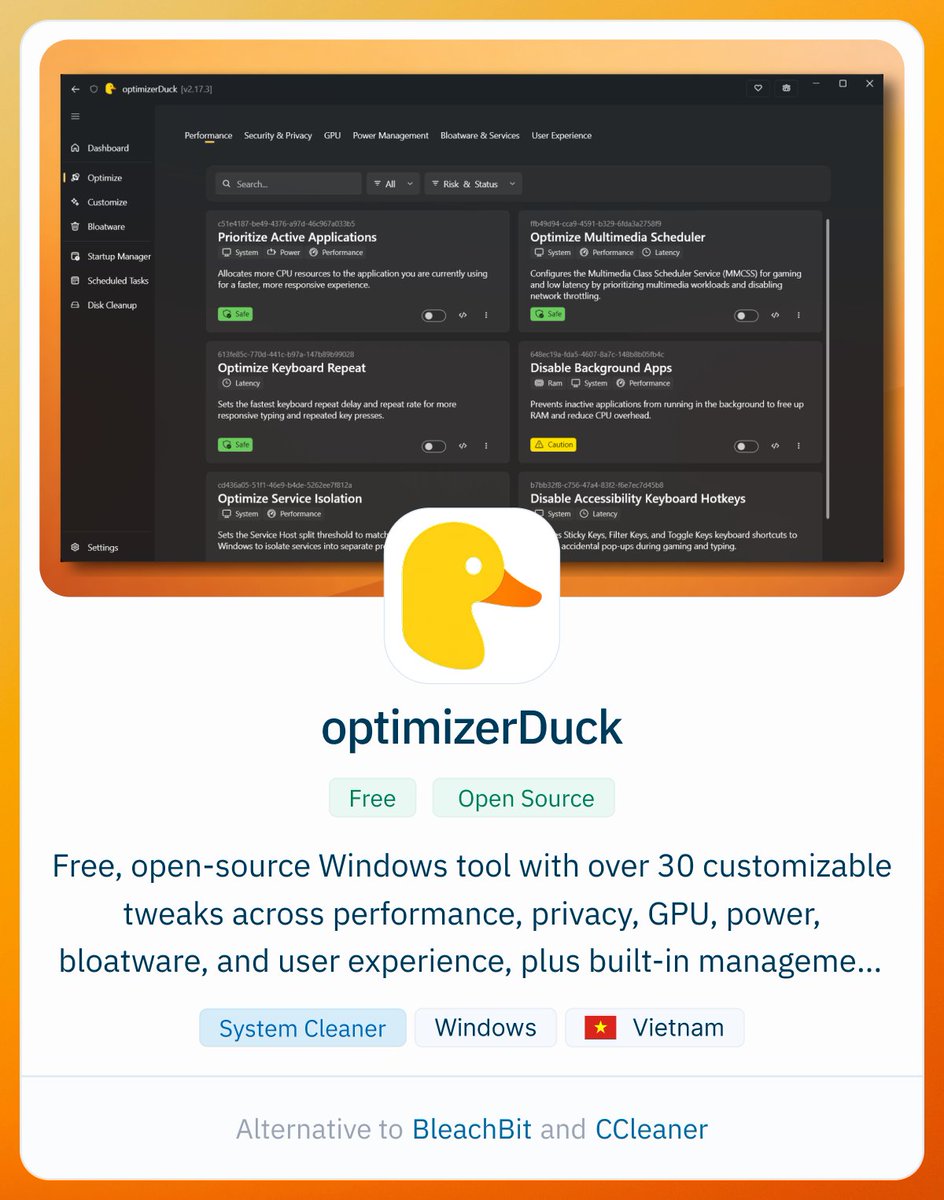
ALT A dark-themed application interface displays various performance optimization options for Windows, featuring a duck logo and customization settings.
9
76
667
20,926
Wezmaster retweeted

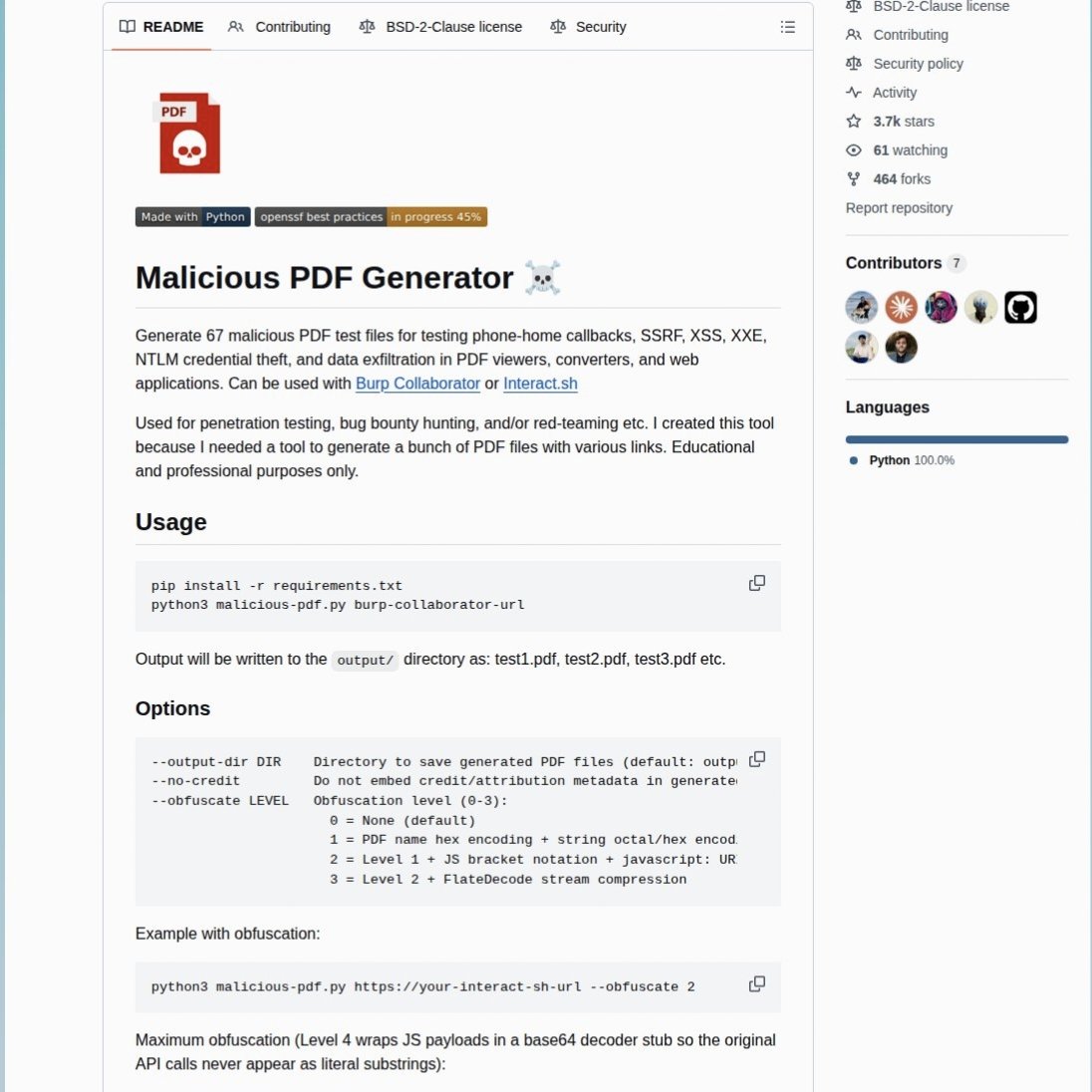
☠️ Malicious PDF Generator: A PDF Security Testing Toolkit for Pentesters and Bug Bounty Hunters
Generate 70 PDF security test files to assess PDF viewers, converters, and document processing pipelines for SSRF, XXE, callback behavior, data exfiltration risks, and other security weaknesses during authorized testing.
🔗 github.com/jonaslejon/malici…
#cybersecurity #pentesting #bugbounty #RedTeam #AppSec #PDFSecurity #WebSecurity #opensource
5
241
1,282
43,180
Wezmaster retweeted

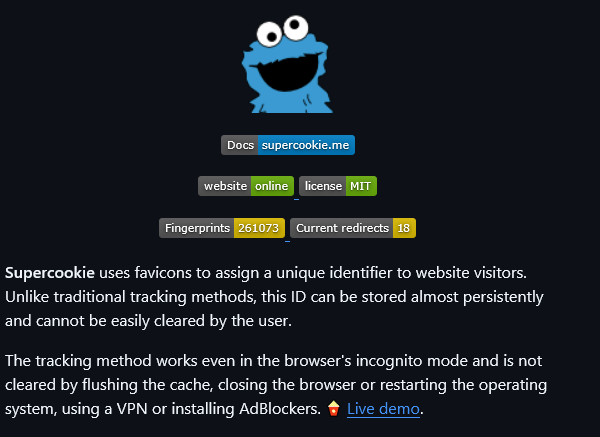
Tracks users with favicons, even in incognito mode,
tracks you even after clearing cache, using VPN, or running ad blockers.
- github.com/jonasstrehle/supe…
#infosec #cybersec
8
84
602
37,637
Wezmaster retweeted
Jun 2
A YouTuber with 110 million subscribers released a free version of ChatGPT.
His name is Felix Kjellberg. You know him as PewDiePie.
He spent his own money on a 10-GPU computer at home. He used it to run the same kind of AI models that power ChatGPT, but on his own hardware. Then he wrote his own app to chat with them, because the apps that already exist were not good enough.
Then he gave it away for free. Anyone can download it. Anyone can change it. Anyone can run it.
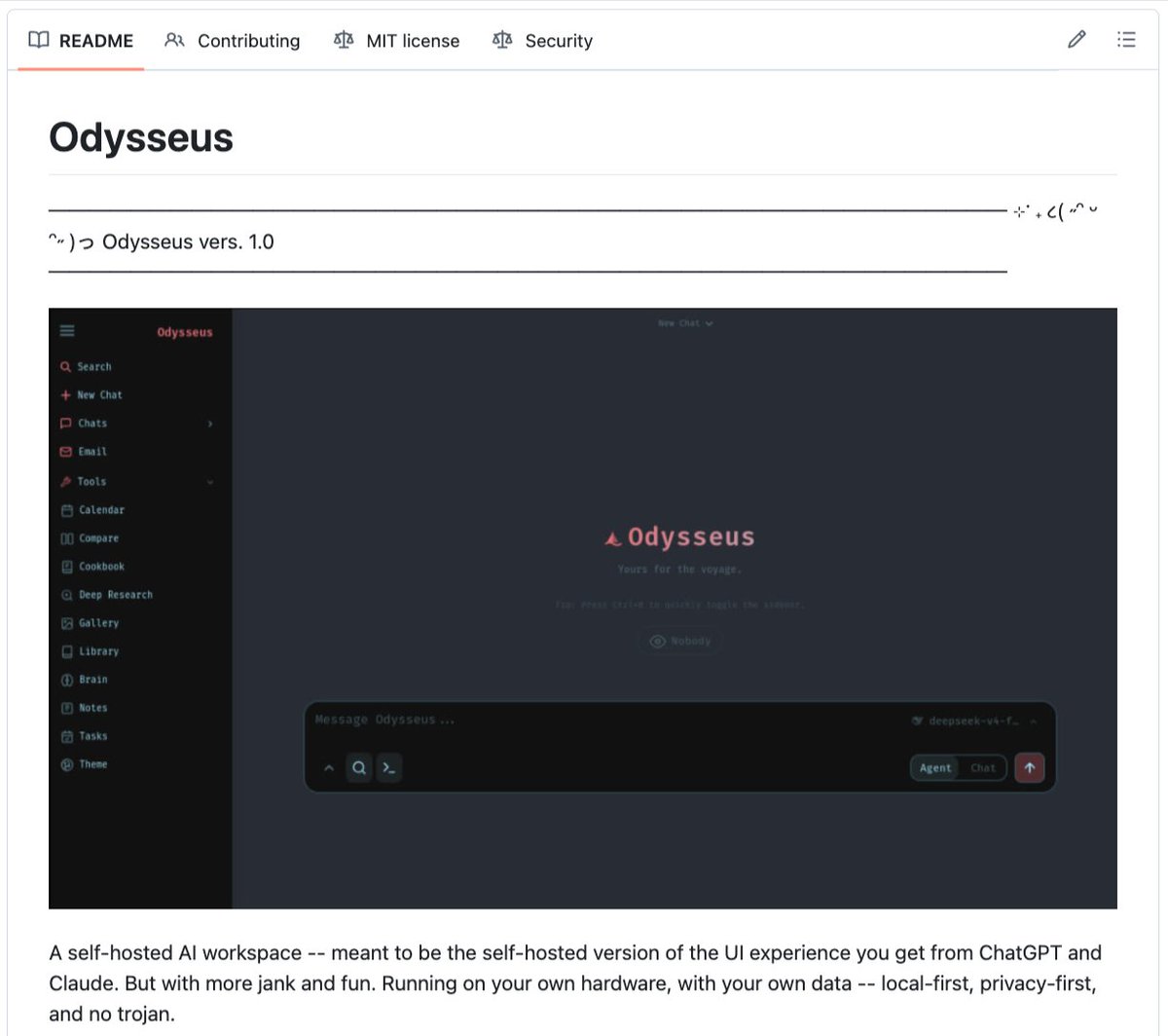
It's called Odysseus.
It runs on your computer. Your data stays on your disk. No account. No tracking. No monthly fee.
What you get:
- A chat window like ChatGPT
- An AI assistant that can browse the web, read your files, and do tasks for you
- A tool that scans your computer and tells you which AI models will work on it
- A research mode that reads many websites and writes you a report
- A side-by-side mode to test two AI models on the same question
- A writing editor where AI helps you, instead of writing for you
- Memory, so the AI remembers your past chats
- Email with AI that sorts your inbox and writes replies for you
- Notes, a to-do list, and a calendar
- Works on your phone too
23,612 stars on GitHub in 2 days. Top of trending all weekend.
ChatGPT Plus costs $20 a month. Claude Pro costs $20 a month. PewDiePie's version costs nothing, runs on your own computer, and the code is open for anyone to read.
This is what AI looked like before the subscription model.
(Link in the comments)
125
547
3,866
290,200
Wezmaster retweeted

May 22
A 22-year-old graduate student in Kazakhstan got so angry at journal paywalls in 2011 that she built a pirate website holding 88 million scientific papers, and last month she turned the whole thing into an AI that lets you ask one question and get the actual research as the answer.
Her name is Alexandra Elbakyan, and the website is called Sci-Hub.
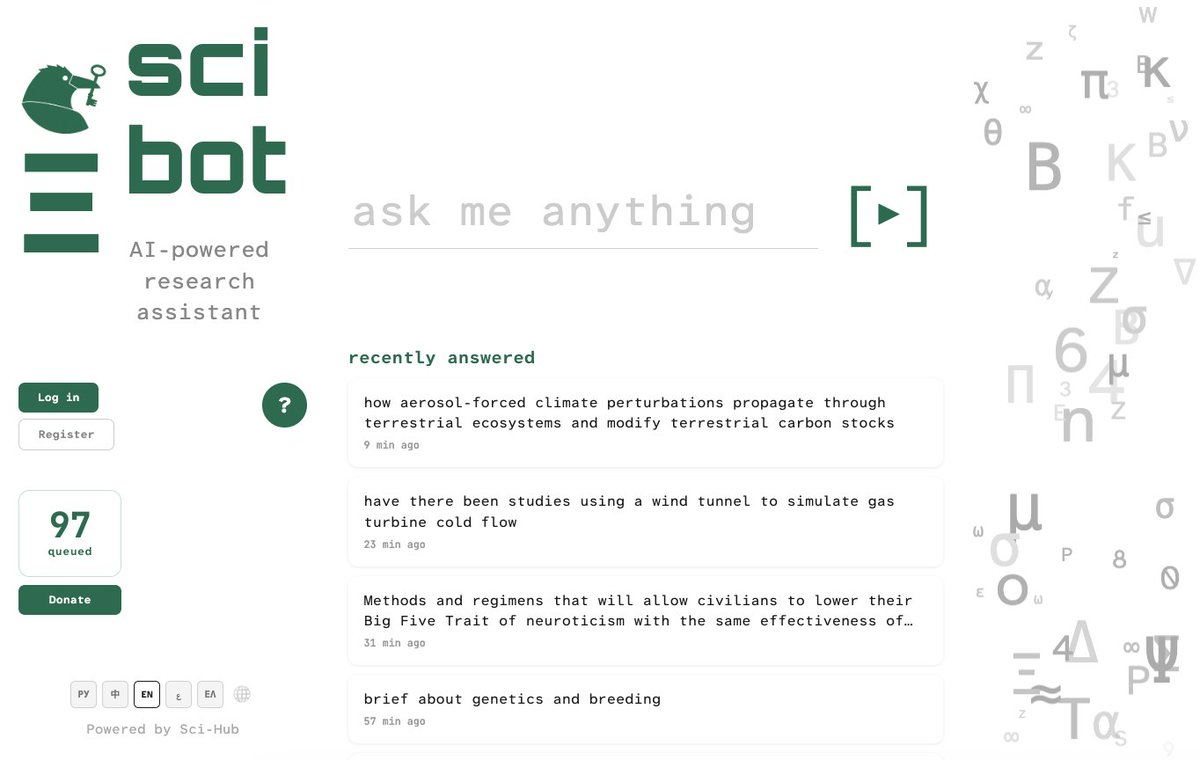
The AI she just launched is called Sci-Bot. It lives at sci-bot.ru and almost nobody outside academia knows it exists yet.
Here is the story, because it is one of the strangest things to happen in science publishing in the last 50 years.
Elbakyan was born in Almaty in 1988, the year the Soviet Union started to collapse. She taught herself programming at 12. She read Soviet science books that explained things her family used to call miracles. She got into computer security at university and graduated in 2009 with a degree she barely needed because by then she was already a serious hacker.
Alexandra moved to Moscow that fall. Then Germany. Then a research internship in the United States. She was working on brain-computer interfaces, the kind of research that requires you to read hundreds of papers a year just to keep up with the field.
And every single one of those papers was locked behind a journal paywall that cost between 30 and 50 dollars to read once.
She did the math. A graduate student in Kazakhstan could not afford to read science.
The first thing she did was learn how to get around the paywalls one paper at a time. She passed the trick around to other students. They asked her for papers constantly. She got tired of doing it manually.
So in September 2011, in three days, she wrote a script that automated the whole thing. A user pastes a DOI. The script logs in through a donated institutional credential. The paper comes back free. The website caches it.
The next person who asks for that paper gets it instantly because the previous request already saved a copy.
That was Sci-Hub. Three days of code. One graduate student. Done.
15 years later, the cache holds 88 million scientific papers. Almost every piece of scholarly literature published before 2020 is sitting on her servers. Researchers in 190 countries use it. Studies in Nature have shown that roughly half of all academic paper downloads worldwide now go through Sci-Hub, not the publishers who actually own the copyrights.
Elsevier sued her in 2015 and won a 15 million dollar judgment. She did not pay. The American Chemical Society sued her and won an injunction. She did not comply. Courts in India, France, Russia, and the UK have tried to block the domain. She just moves it. Sci-hub.se. Sci-hub.ru. Sci-hub.ee. The site has had over 20 domains and is still up.
Nature put her on its list of the 10 people who mattered most to science in 2016. The New York Times compared her to Edward Snowden. The Verge called her the pirate queen of science.
She has not been to the United States in over a decade because she would be arrested at the airport.
The Sci-Bot launch in April 2026 is the part that nobody is talking about.
She took the 88 million paper database and put a small language model on top of it. You ask a question in plain English. The model searches the entire shadow library, pulls the relevant papers, synthesizes an answer grounded in real citations, and links you to the full text of every source. Free. No login. No institutional credential. No paywall.
Three real scientists tested it for a Chemical and Engineering News article last month. They asked it medical and chemistry questions. The radiologist said the answer he got was usable. The chemist said the gaps in recent literature were obvious but the older science was solid. The publisher community is furious.
What she built is what the paid academic AI tools are trying to build. Except the paid ones are limited to what their parent publisher legally owns. Hers is limited to almost nothing.
Alexandra still lives somewhere in Russia. She does not give her address. She does not do video interviews. She gives talks over Skype with the camera off. She runs the largest illegal library in human history from a laptop and a donation page.
A graduate student who could not afford to read science built the system the entire scientific community now quietly depends on.
The publishers have spent a decade trying to shut her down.
She just shipped an AI that makes their entire business model outdated.
142
2,383
7,054
317,672

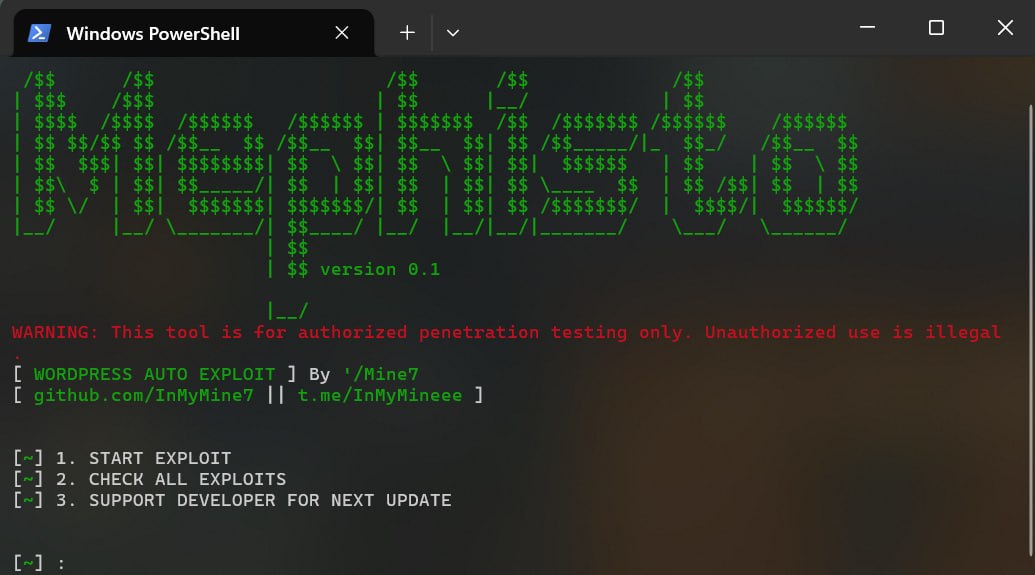
🧩 Mephisto — a scanner and exploitation framework for WordPress vulnerabilities
A tool for automated detection and exploitation of known (CVE) vulnerabilities in WordPress.
Features:
📍 Support for typical modules targeting plugin and theme exploits.
📍 Generation of reports on detected and exploited vulnerabilities.
📍 CLI interface with options for test configuration and customization.
Unlike "WPScan" and "CMSmap", it focuses not only on information gathering but also on practical CVE exploitation.
📎 Tool: github.com/InMyMine7/Mephist…
#dbugs_tools
51
276
13,364
Wezmaster retweeted

May 23
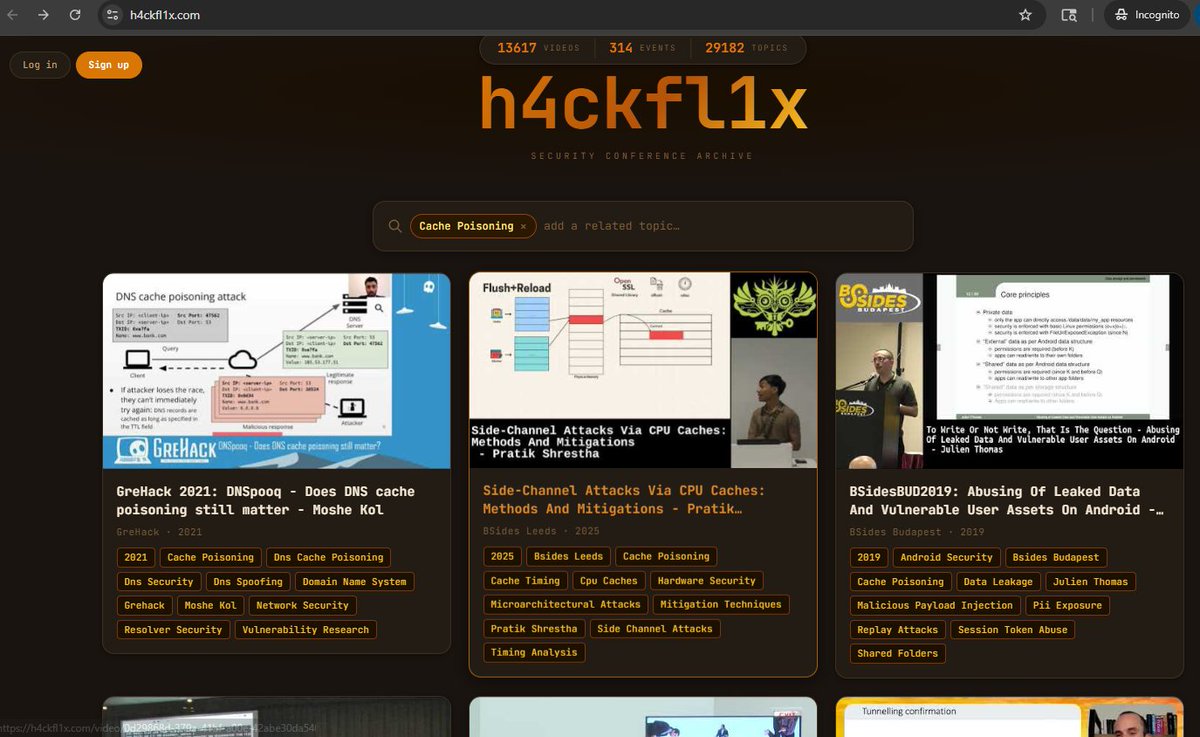
Do you watch Netflix in your free time?
Try hackflix for security conference talks
h4ckfl1x.com/
#cybersecurity #bugbounty
19
323
1,749
76,168
Wezmaster retweeted

May 19
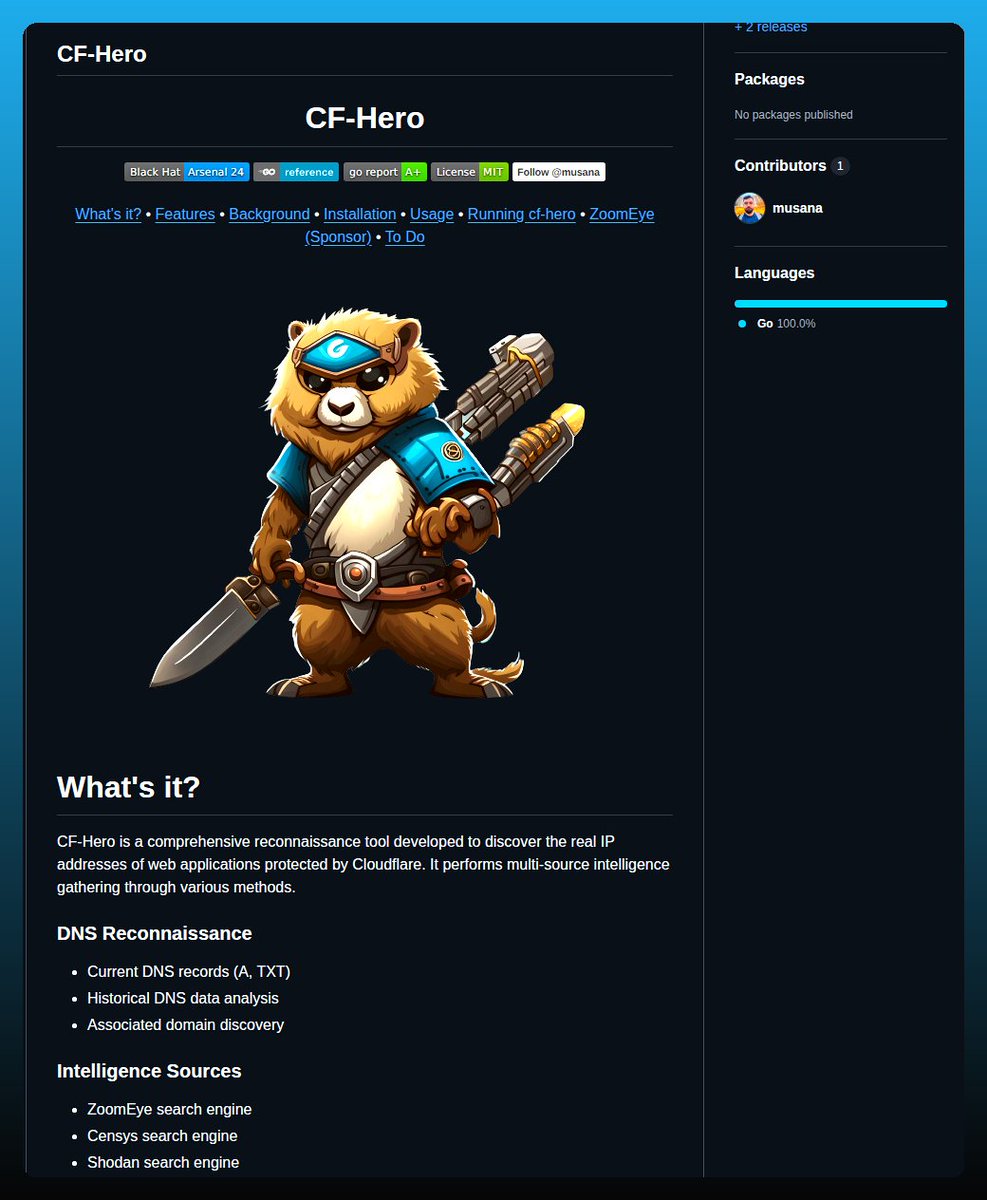
Discovers real IPs behind Cloudflare
github.com/musana/CF-Hero
5
148
1,074
51,902
Wezmaster retweeted

May 21
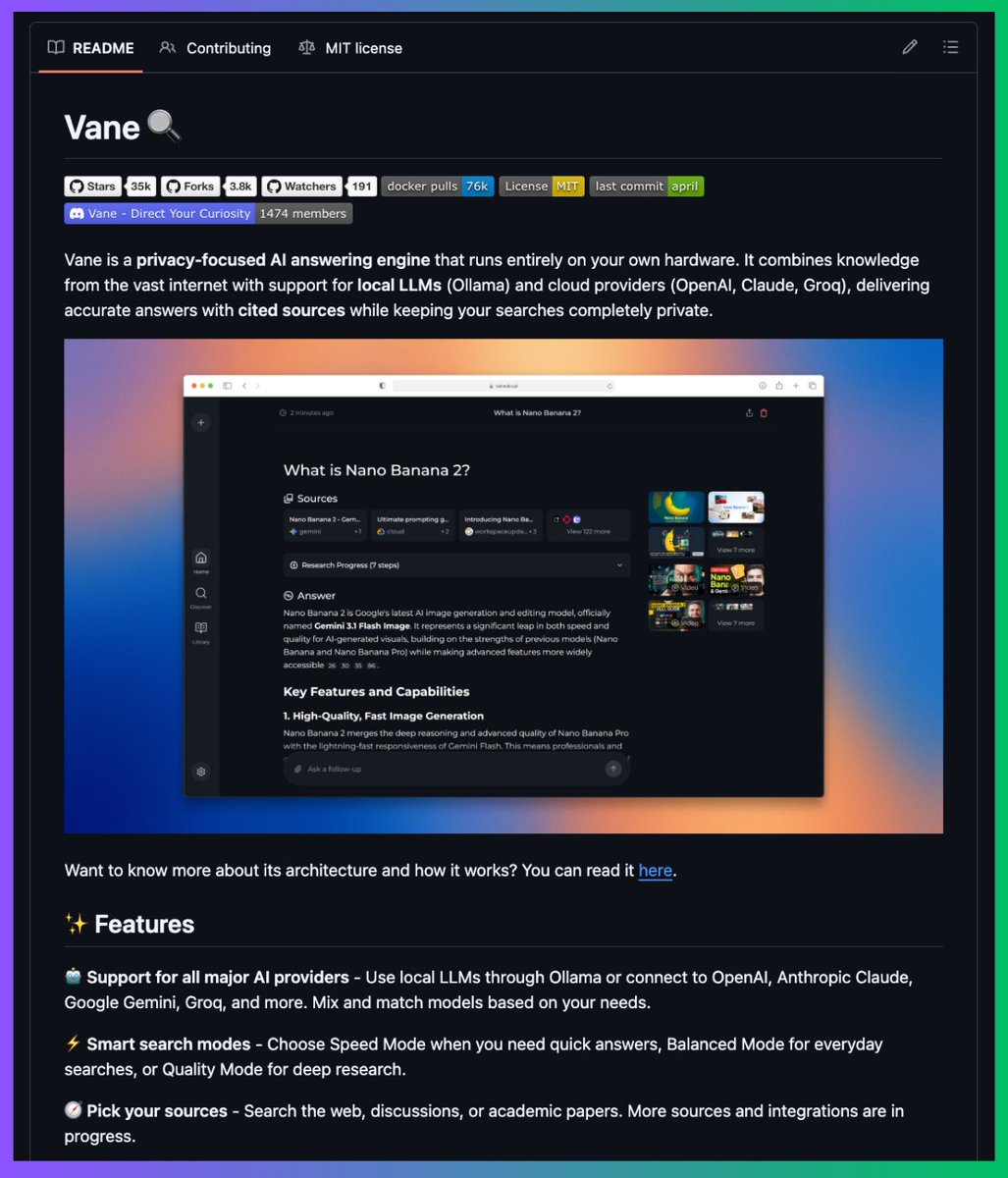
A team in San Francisco killed Perplexity's $20/month subscription.
It's called Vane. You get AI-powered search with cited sources, follow-up questions, image and video search, and focus modes for academic papers, Reddit, YouTube, and Wolfram Alpha, running entirely on your own machine.
Here's how it works.
Vane is an open-source clone of Perplexity built on top of SearxNG which is a meta-search engine that pulls results from Google, Bing, DuckDuckGo, Brave and 70 other sources without tracking the user. You plug in any LLM you want including OpenAI, Anthropic, Groq or local models through Ollama and it answers your questions with real citations pulled from the live web in real time.
The entire stack can run 100% locally with Llama 3 and SearxNG on your own hardware which means zero API calls going out and zero data ever leaving your machine.
→ No $20/month Pro subscription holding the good models hostage
→ No query limits cutting you off mid-research
→ No tracking and no profile being built from your searches
→ Local mode with Ollama supporting Llama, Mistral, Qwen and anything else you throw at it
→ Focus modes that narrow the search to Academic papers, YouTube, Reddit, Wolfram Alpha or Writing
→ Image and video search built directly into the interface
→ Copilot mode that breaks one question into multi-step research and synthesizes the findings
Perplexity charges $20 a month for Pro and trains its ranking algorithm on every query you send them. Their entire business model assumes you would never spend an evening with a Docker compose file and a local LLM.
Vane runs in one container and SearxNG runs in another and the whole thing points at a Llama 3 model running on your laptop with no internet account involved anywhere in the chain.
MIT License. 100% Opensource.
github.com/ItzCrazyKns/Perpl…
28
60
395
26,930
Wezmaster retweeted
May 20
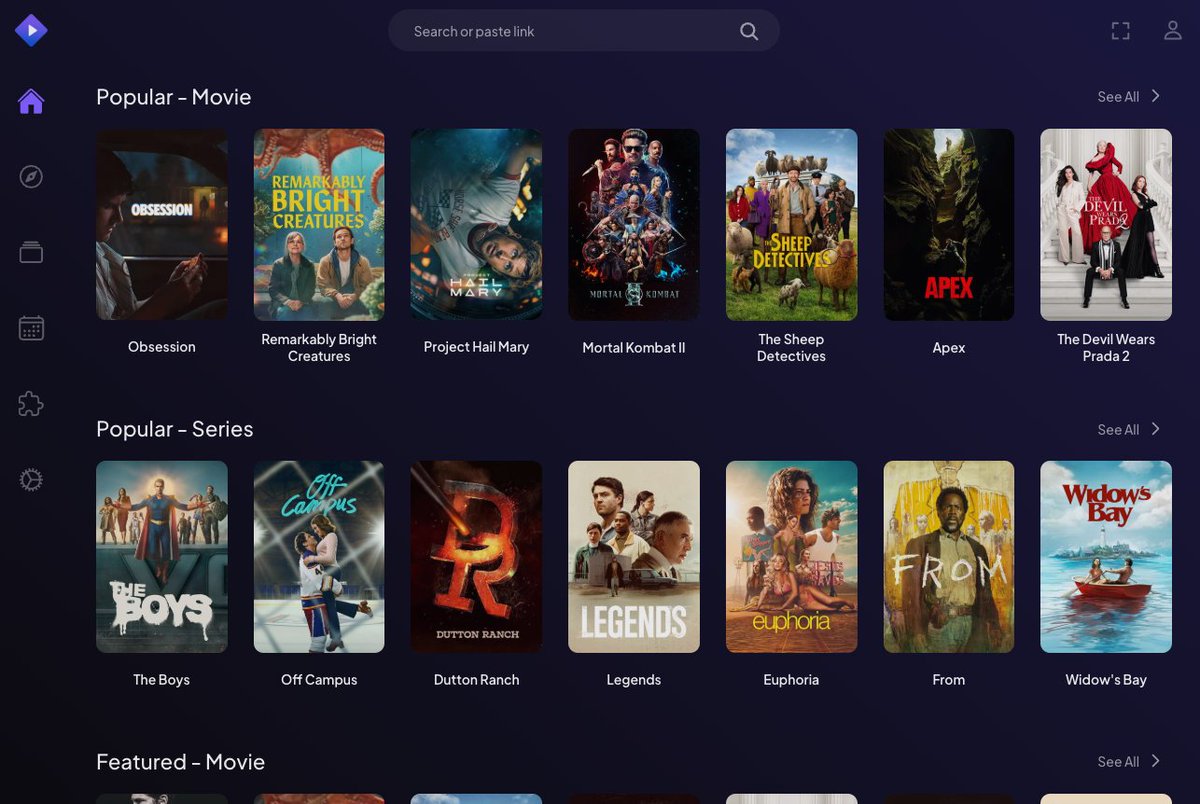
Two Bulgarian friends killed the entire streaming industry.
It's called Stremio Torrentio. You get 4K content from Netflix, Disney , Hulu, and HBO Max combined for free.
Here's how it works.
Stremio is the player. Clean interface. Works on Windows, macOS, Linux, Android, iOS, and TV. You install it once and it looks like any other streaming app.
Torrentio is the addon. You add it to Stremio in one click. It scrapes content from every major torrent provider on the internet simultaneously and delivers the best available stream directly to your player. 720p, 1080p, 4K. You pick the quality. It finds the link.
→ No account required
→ No subscription
→ Works on every device
→ 4K and HDR supported
→ Subtitles built in
Netflix cannot shut this down. There is no central server to seize. No company to pressure. No domain to kill. It runs on your device and pulls from the open internet.
The entire streaming industry is built on one assumption. That you will keep paying $70/month rather than spend 5 minutes on GitHub.
That assumption just died in Sofia, Bulgaria.
MIT License. 100% Opensource.
github.com/Stremio/stremio-w…
Get the addon here: stremio-addons.com/torrentio…
473
1,802
14,829
1,691,207
Wezmaster retweeted
May 21
10 GitHub repos that should be illegal — they're killing $50 billion in corporate revenue.
SAVE IT
1. yt-dlp
Downloads any video from YouTube, X, TikTok, Instagram, anywhere. YouTube Premium charges $14 a month to do less than this. It is 100% free.
Repo → github.com/yt-dlp/yt-dlp
2. Ollama
Run GPT-4-class AI on your laptop. No API costs. Developers spend $500 a month on OpenAI for what Ollama runs offline for $0.
Repo → github.com/ollama/ollama
3. Fooocus
Midjourney-quality image generation on your own GPU. Midjourney charges $30 a month. Fooocus runs unlimited generations for free.
Repo → github.com/lllyasviel/Fooocu…
4. Whisper
OpenAI's transcription model, open-sourced. Otter charges $20 a month for what Whisper does for free, in 99 languages.
Repo → github.com/openai/whisper
5. Plausible Analytics
Privacy-first Google Analytics replacement. Google Analytics 360 costs $150,000 a year for enterprises. Plausible self-hosted costs $0.
Repo → github.com/plausible/analyti…
6. AppFlowy
Open-source Notion. Notion charges $20 per user per month for teams. AppFlowy runs unlimited users on your server for free.
Repo → github.com/AppFlowy-IO/AppFl…
7. Penpot
Open-source Figma. Figma charges $45 per editor per month. Penpot does the same job, self-hosted, free forever.
Repo → github.com/penpot/penpot
8. n8n
Open-source Zapier. Zapier Pro costs $600 a month for a real workflow. n8n self-hosted runs unlimited automations for $0.
Repo → github.com/n8n-io/n8n
9. Cal .com
Open-source Calendly. Calendly Teams costs $16 per user per month. Cal. com is free for individuals and open source for teams.
Repo → github.com/calcom/cal.com
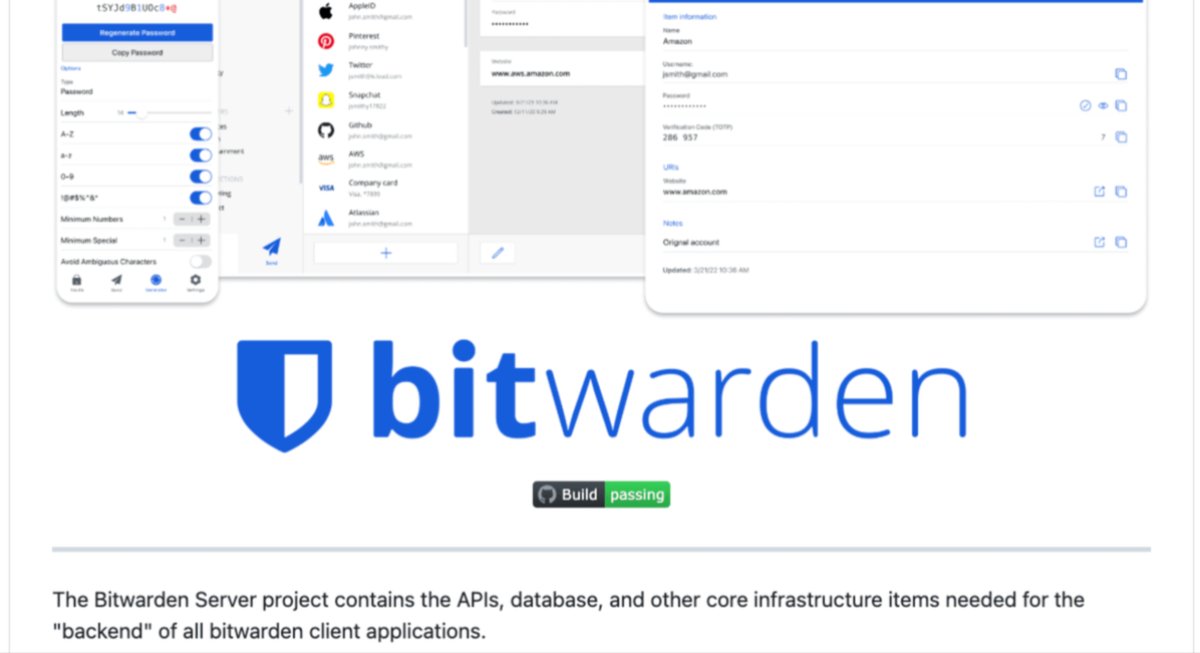
10. Bitwarden
Open-source 1Password. Password managers charge $8 per user. Bitwarden is unlimited, forever, free.
Repo → github.com/bitwarden/server
Here's the wildest part:
That's $50 billion in corporate revenue these repos are quietly destroying every single year.
None of these are illegal.
All of them should be.
Save this. Share it with the person in your life still paying for what's been free this whole time.
100% free. 100% open source.
77
957
5,441
295,634
Wezmaster retweeted

May 19
▪️We have jailed former senior IPS Officer Sajeev Bhatt, students activists Umar Khalid, Sharjil Imam without trial, by “following rules wherever it is”.
▪️We incarcerated transparency activists, professors, Jesuit father in Bhima Koregaon case, by “following rules wherever it is”.
▪️We have inducted murderers, rioters, in our Cabinets, by “following rules wherever it is”.
▪️We arrested Muslim youths after Mumbai train bomb blasts in 2006, only to find them innocent after 19 years of judicial trials, by “following rules wherever it is.”
▪️We have allowed the National Crony to raise monies on foreign stock exchanges, “following rules wherever it is.”
▪️We have allowed our Prime Minister to not take any Press Conference, not take questions of members in the Parliament, leave Parliament when opposition members are speaking, raise a Private Fund using Government resources, appoint an 80 year old NSA, visit a sitting CJI under the garb of religion, by “following rules wherever it is.”
▪️We have destroyed the Trees, Mangroves and Nature for corrupt schemes and crony’s profits, by “following rules wherever it is.”
▪️We have disenfranchised lakhs of Muslims by inventing own ‘Special’ Rules and bulldozing them down the citizenry, under the watch of judiciary, by “following rules wherever it is.”
P.S. - Rules = Manusmriti, not necessarily the Constitution.

119
1,798
3,995
45,900
Wezmaster retweeted

May 19
Another BYOVD process killer. works on all EDR's. fully signed. github.com/redteamfortress/P…
1
91
354
17,714
Wezmaster retweeted

May 18
Here's the PoC for Nginx CVE-2026-42945 which works against vanilla Ubuntu (and any other distro?) Nginx with ASLR enabled. I have included all iterations of the PoC the LLM was kicked to improve.
TL;DR: We can use an LFI/file-read primitive to leak enough details from /proc/<nginx-worker>/mem to bypass ASLR and achieve reliable RCE, in most cases at first shot.
There are still other ways to make it work, with even less subtle primitives. If you ask Geppetto nicely, he will help you ;)
github.com/Hamid-K/nginx-rif…
5
93
335
40,134
Wezmaster retweeted
May 16
An Indian engineer built a $5.6 billion company's biggest threat.
He named it after his dog.
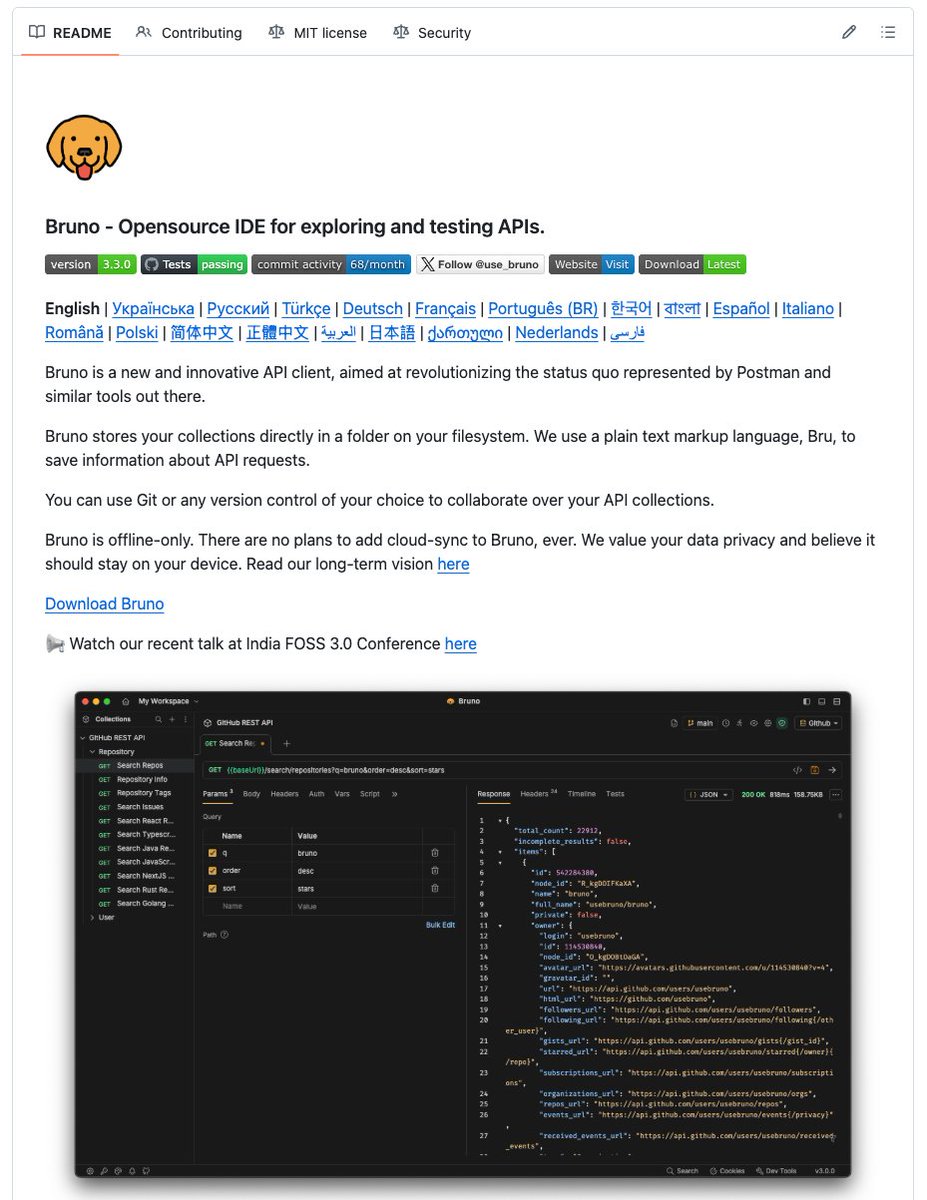
The company is Postman. The threat is Bruno. A free open-source API client that works offline, lives in your git repo, and never asks you to make a cloud account.
Postman vs Bruno:
- Price: $14 to $49 per user per month → $0
- Account: Cloud login required → No login, ever
- Where files live: Postman's servers → Your git repo
- Offline mode: Removed in 2024 → Built in from day one
- Privacy: 30,000 public collections leaked API keys in plaintext last year → Files stay on your laptop
No cloud. No account. No sync. No telemetry.
How does it work?
→ One small app. Mac, Windows, Linux.
→ Your API calls are saved as plain text files in your own folder.
→ Commit them to git like any other code.
→ Your team pulls the repo. They have the same APIs. Done.
→ No "workspace" to share. No seat licenses. No upgrade nags.
43,818 stars. 2,403 forks. 446 people from around the world helping build it.
One honest note: license is MIT. Free for personal work, paid client work, your own forks. No "Pro" tier hiding behind it.
Anoop M D built Bruno from Bengaluru three years ago. He wanted a free offline API tool. None existed. So he made one and named it after his dog because, in his words, "I love him the most."
A ₹5 lakh grant. One man. 500,000 developers now using it.
This is what Postman should have been from the start.
(Link in the comments)
19
57
394
42,494
Wezmaster retweeted

May 15
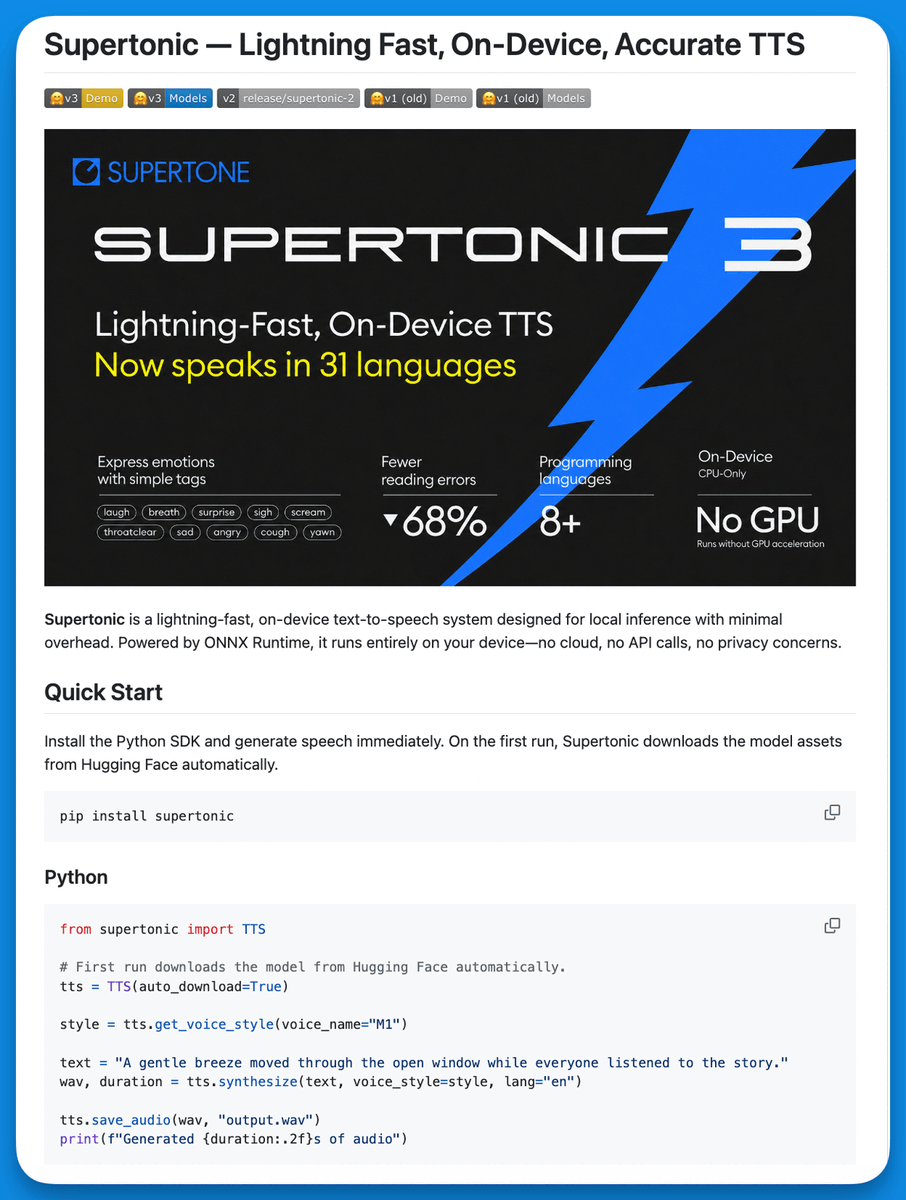
this TTS model generates speech 167x faster than you can hear it.
Supertonic is an on-device TTS engine that runs via ONNX for cross-platform inference.
- no GPU
- 31 languages
- captures every emotion
- beats ElevenLabs on speed
- runs even on a Raspberry Pi
100% open-source.
21
104
713
44,266
Wezmaster retweeted

May 14
兄弟们,ElevenLabs要哭了。
有个开源工具叫 OmniVoice Studio,本地跑语音克隆 视频配音,646种语言,完全离线,不要API、不要联网、不要钱。
🔗 链接: github.com/debpalash/OmniVoi…
1️⃣ 3秒音频就能克隆任何人声音,跨语言直接复制
2️⃣ 丢个YouTube链接进去,自动转录翻译重配音,导出MP4
3️⃣ 全局快捷键说话转文字,任何App直接粘贴
4️⃣ 声轨分离 说话人识别,背景音乐自动剥离
5️⃣ 批量丢50个视频后台自动跑
Mac/Win/Linux全支持,下载即用。
还在云端按字符收费的,该醒醒了。
50
764
3,519
232,287
Wezmaster retweeted

May 12
昨日報道があったMicrosoftの暗号化機能BitLockerに対するバイパス手法「YellowKey」がGitHub上で公開された。Windows Recovery Environment(WinRE)を悪用することで、BitLocker保護されたボリュームへ制限なしアクセスが可能になるとしている。
公開したのは「Nightmare-Eclipse」を名乗る人物で、特定ファイル群をUSBメモリ内のSystem Volume Information/FsTxへ配置し、BitLocker有効なWindowsマシンに接続した状態で特殊なキー操作を伴う再起動を行うと、シェルが起動し暗号化ボリュームへアクセスできるという。また、USBを使わずEFIパーティションへ直接配置しても動作すると説明されている。
投稿者は、問題の原因となるコンポーネントがWinREイメージ内にのみ存在し、通常環境には同名だが機能が異なるものが含まれている点から、「バックドアのように感じる」と主張している。影響対象はWindows 11およびWindows Server 2022/2025で、Windows 10は影響を受けないとしている。
github.com/Nightmare-Eclipse…
1
127
340
26,192
Wezmaster retweeted

May 12
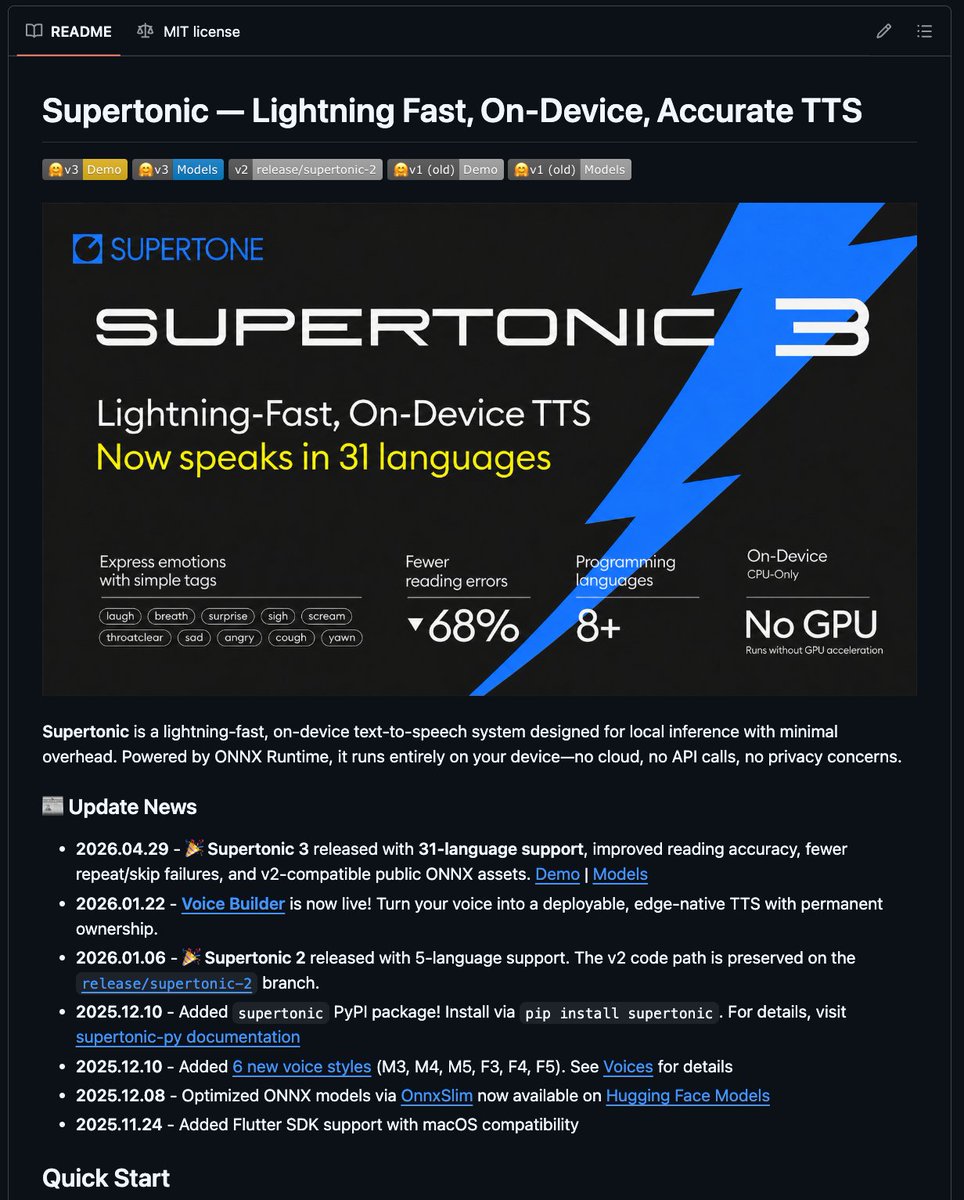
Supertonic just killed ElevenLabs.
A text-to-speech model that runs entirely on your device. No cloud. No API key. No per-character pricing.
2,700 GitHub stars. 100% open source. MIT licensed.
The numbers are wild:
→ 167x faster than real-time on an M4 Pro
→ Only 66M parameters
→ 1,263 chars/sec vs ElevenLabs Flash at 287
→ 1,048 chars/sec vs OpenAI TTS-1 at 55
→ Runs on a Raspberry Pi. Runs on an e-reader in airplane mode.
Reads currency, dates, phone numbers, and technical units correctly without preprocessing. ElevenLabs fails these. OpenAI fails these. Gemini fails these.
Supports 11 platforms and 5 languages. Chrome extension turns any webpage into audio in under a second.
I've watched on-device models lose to cloud APIs for years. This one doesn't lose.
The cloud TTS business just got cooked.
68
321
2,003
132,585