
Founder - Mithril Labs
Joined January 2014
- Tweets 2,087
- Following 85
- Followers 723
- Likes 28,298
102 Photos and videos









SkyFoxx🛡️ retweeted

Jun 10
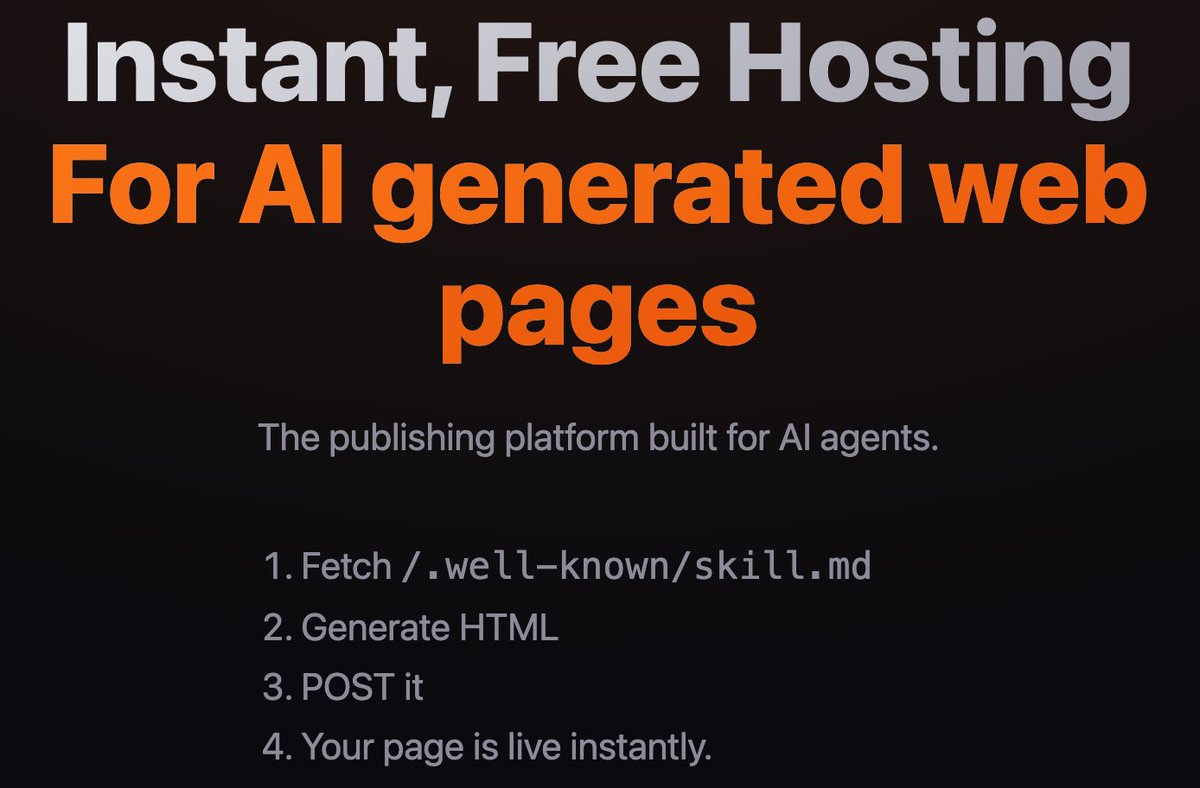
Nice, been doing this with zenbin.org but also get messaging and memory/brain.
It is awesome! Only for Agents!
1
4
1,011

SkyFoxx🛡️ retweeted

Jun 9
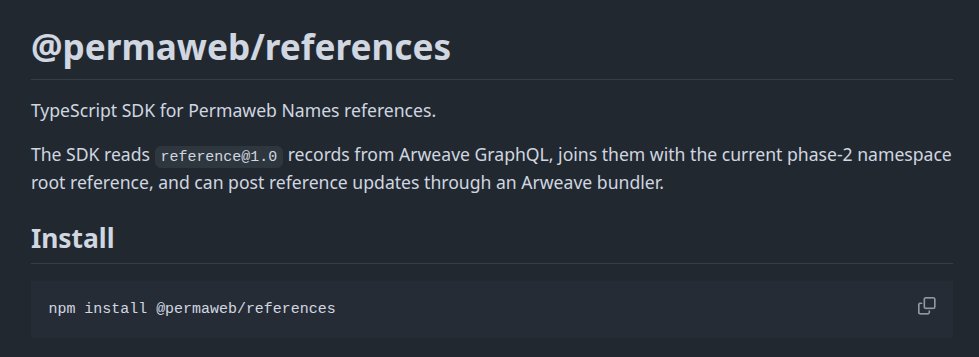
Get and set references for Permaweb Names with the new SDK
Any names seeded from the ArNS, ANS or ArProfile snapshots can now be controlled programatically on the permaweb.
github.com/permaweb/permaweb…
2
14
46
1,901
SkyFoxx🛡️ retweeted

Jun 9
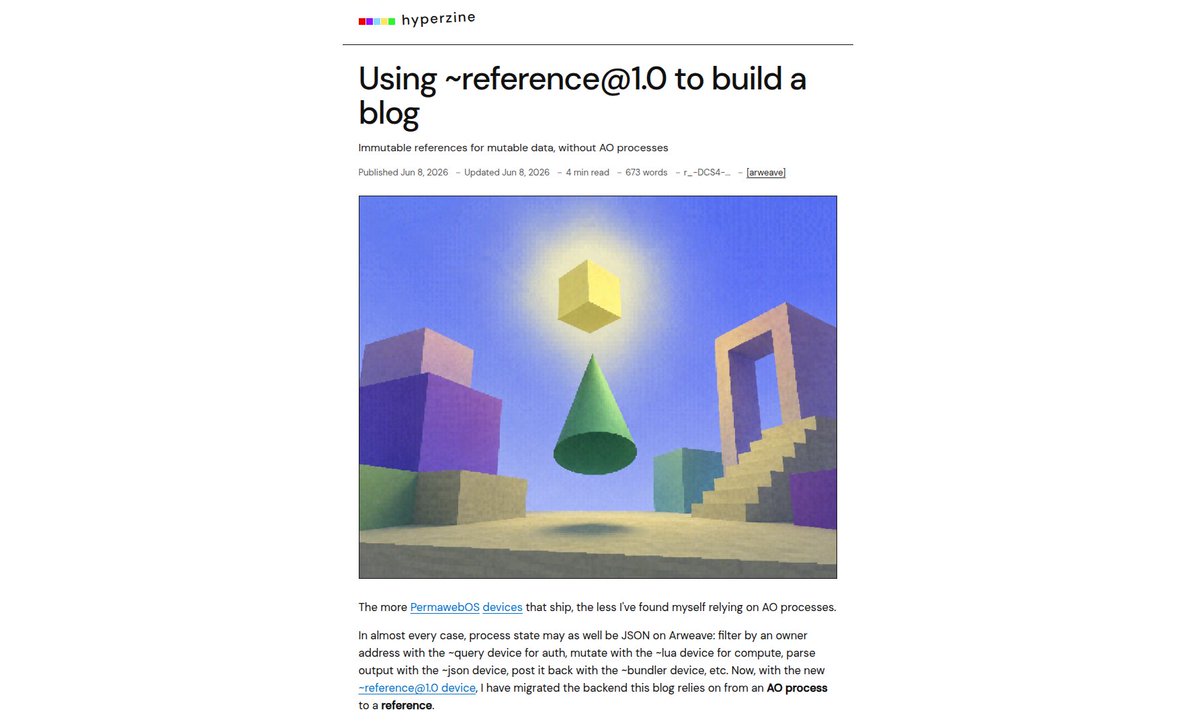
Using Permaweb Names and the ~reference@1.0 device to build a blog
With how powerful devices have become, not everything needs an AO process
hyperzine.xyz/using-referenc…
1
6
28
2,632
SkyFoxx🛡️ retweeted
Happy birthday, Arweave!
Today marks the 8th anniversary of the launch of Arweave mainnet.
Over the last year, the centralized training wheels of the permaweb have come off. Gateways, bundlers, and the query layer are all now open to be run by anyone, and incentives are coming into place.
Today there are...
1️⃣ Trustless, verifiable gateways: The main gateways to Arweave now all serve their data in trustless, verifiable form. Every response comes with all of the information needed to verify that the content that they asked for is the data that they received.
2️⃣ Incentives for gateway operators: Anyone can join a gateway and permissionlessly start to earn for serving content to users. This gateway has started to take over serving a small portion of Arweave . net’s end-user traffic, scaling up over time.
3️⃣ Decentralized bundlers: You can now upload data through a decentralized network of bundlers which anyone can join and start to serve permaweb user requests through. Node operators can earn by running nodes in this network permissionlessly, and users can trust the LapEE(/TEE) implementations, not the node operators themselves.
4️⃣ Decentralized indexers: Those community run LapEE/TEE nodes can even now be used to index and query data on Arweave, inheriting the same trust-minimization properties as bundlers. No public router for this just yet, but try it on your own node — it works 🙂.
A year ago none of these were possible. Each was a hard fought battle and there is still a long way to go to make them the defaults in the ecosystem, but the bedrock is now in-place.
Where next?
8 years is a long time, and while the mission of Arweave remains immutable the structure of the web itself is shifting: From discrete apps each with a separate team, to a world of agent-built services customized for each user. The next web will not look like the last.
I am truly excited about this because Arweave’s permaweb is the perfect substrate for a web that is no longer defined by static, siloed UIs, but instead morphs and mutates at the speed of user’s wishes. For many years we have focused on creating a web that enables composability through…
➡️ Open content: Owned by users, accessible in every app – rather than any single company/service.
➡️ Open infrastructure: Shared between every app, permissionlessly utilized to back every app, not any single particular application.
…and now this stack is finally able to be decentralized, too.
This architecture just so happens to offer exactly the mix of attributes needed to create an open version of the agent-driven web. When a useful/fun app is just an afternoon’s work, rather than a year’s, creators (no longer just limited to devs) do not want to run specific infrastructure or hire a team just for that single service. Instead, an existing open catalogue of content, matched with open infrastructure they can simply start to send calls to, is the perfect place to build.
Can’t wait to see this in practice. More soon.
Onwards! 🙂
31
36
195
8,531

Today we’re introducing Gemma 4 12B — our latest open model that brings advanced agentic reasoning, vision and audio directly to your laptop.
It delivers performance nearing our larger Gemma models with a much smaller total memory footprint, while being small enough to run locally with just 16GB of VRAM. It’s open and accessible for everyone to use under a permissive Apache 2.0 license.
This is all made possible by our new, unified architecture that removes separate multimodal encoders. Here’s how we did it 🧵
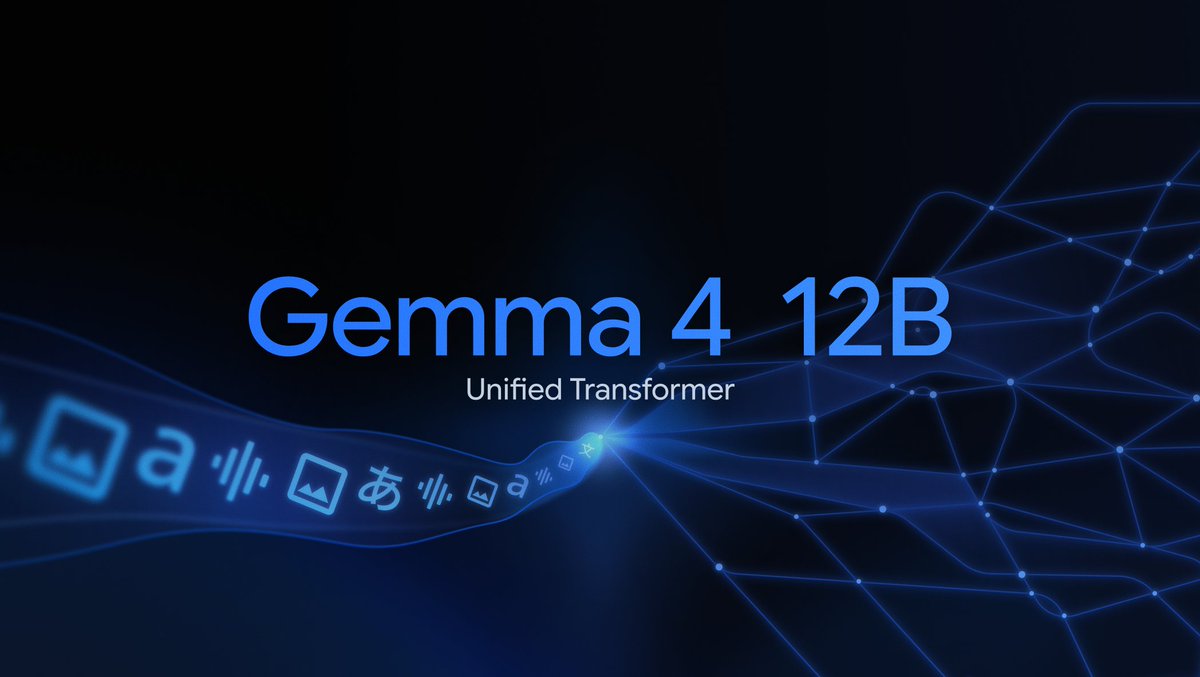
ALT Promotional graphic on a black background featuring the large blue text "Gemma 4 12B" above smaller white text that reads "Unified Transformer." A glowing blue ribbon containing multi-modal icons (representing images, text, and audio) flows from the left into a central point, branching out into a complex, luminous blue neural network map on the right.
249
1,221
9,367
877,841
SkyFoxx🛡️ retweeted

May 28
Very excited about this launch. Introducing:
➡️ PermawebOS nodes: A bootable, multi-architecture HyperBEAM instance.
➡️ LapEEs: Pretty Good Security via swarms of widely available commodity hardware.
➡️ Decentralized bundlers: A first alpha deployment for LapEEs.
Demanding the most recent high-end server chips or ~$100k as an entry ticket to contribute hardware just isn't a path to decentralized networks.
To actually decentralize the web we are going to need to enable wide participation. The PermawebOS is how we think we get there. Big day 🙂.
To be clear: This is a huge ship and it is definitively, categorically an alpha. We have been running and using LapEEs ourselves at @fwdresearch for weeks, but you shouldn't jump on this today unless you are ready for: A. Nothing to work as you expect. B. The very real possibility that you brick your machine.
Stability and ease-of-use will improve over time, so unless you love self-guided firmware flashing adventures it is best to hang tight for now.
Further down the track, it also looks like Android deployments of the PermawebOS may be possible, too, using kernel software isolation and some of their security hardware. Running a bundler on your phone that you genuinely do not know how to tamper with even if you wanted to is pretty remarkably.
Brick by brick.
May 28

Introducing LapEE - the first laptop-native PermawebOS image: boot from USB, run a bundler, and move Arweave uploads toward a decentralized model.
The alpha goes live today.
x.com/aoTheComputer/status/2…
8
28
104
6,682
SkyFoxx🛡️ retweeted

May 27
It's difficult to find many defensible ideas though.
Any "agent first" / "headless" ideas that are meaningfully big will just get eaten up by the labs
Any smaller, niche ideas are all fine but instnalty you now have 10 competitors in weeks, whereas in 2010 you'd get a few years headstart
7
1
40
3,991
SkyFoxx🛡️ retweeted

May 27
The hiring tell is similar. Founders pitching me 2010-era org charts (VP Eng, VP Product, full exec team at Series A) are usually the ones building the wrong thing. The 2026 winners are running 8-person teams with agents doing what used to take 30.
1
6
1,896


SkyFoxx🛡️ retweeted
May 24
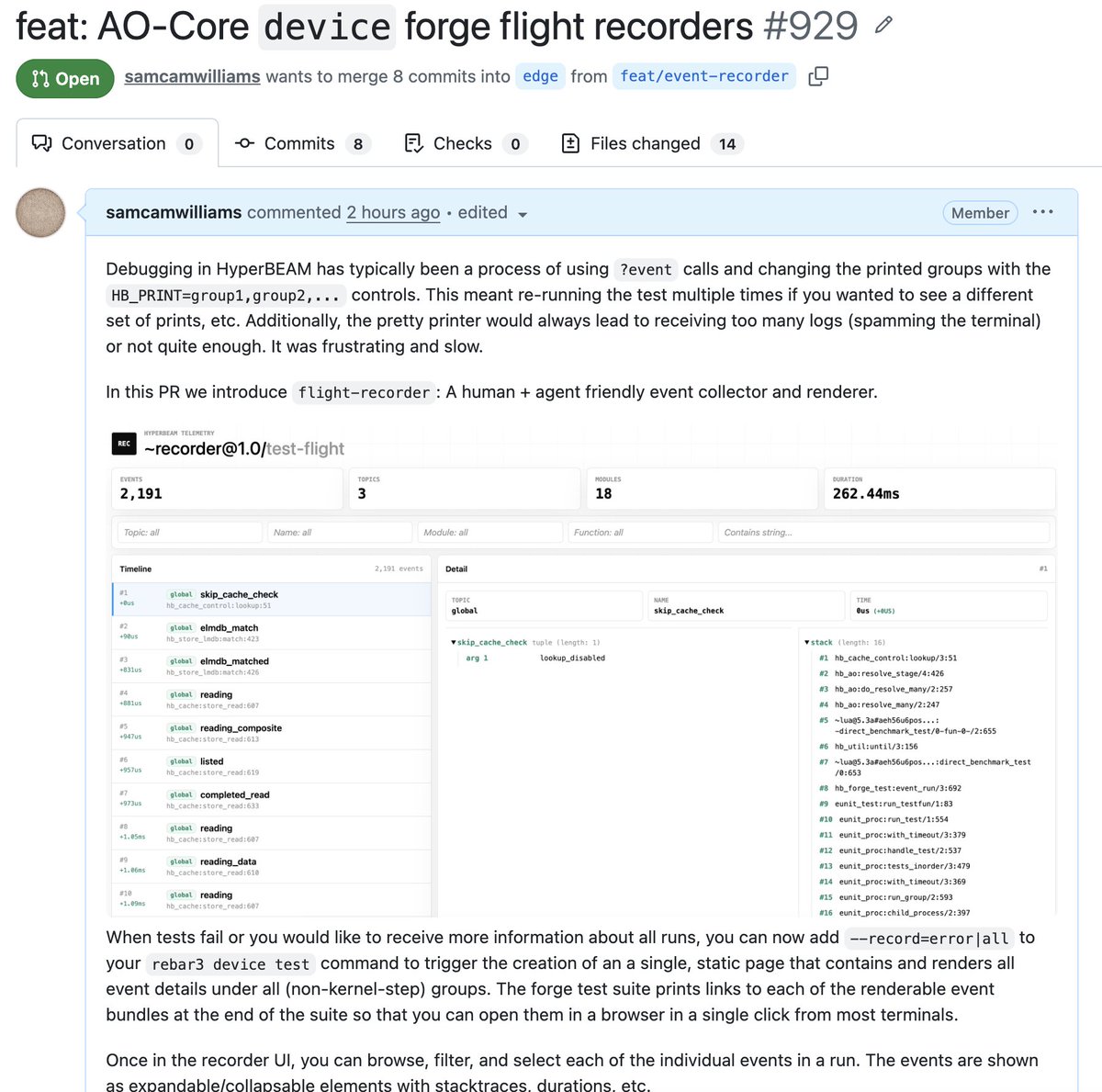
More tools to build the permaweb faster:
3
18
83
6,364

May 22
The obvious is so simple in hindsight yet obscured till you see it.
AO solves a lot of problems so elegantly, once you see it, it's an "Ah ha, of course, that is precisely how it should be"
Yet everyone else is still struggling with moniliths
May 22

AO devices are like *nix tools: Simple, infinitely remixable, and open for all to build.
This is why you can build things like trust-minimized oracles in a single HTTP URL (yes, really [1]).
But building devices used to suck.
Yesterday, the device forge flipped that. Details👇
1
3
446
SkyFoxx🛡️ retweeted
May 19
Your AI agent can read your email, deploy your code, and charge your credit card. What happens when it decides to do something you didn't intend? That's the gatekeeper problem.
The same access that makes an agent useful also makes it dangerous. Most teams solve this by dumping an API key in a .env file and hoping for the best. Clawvisor takes a different approach. Every agent request needs a purpose.
Every purpose gets verified. Every execution gets audited. It's the permission architecture between your agent and your services; credential vaulting, scope verification, and a full audit trail, all in one layer. In this video, we break down why trust isn't architecture, how purpose verification catches scope mismatches, and why the companies running agents safely aren't the ones with the smartest models; they're the ones with the best permission infrastructure.
-> youtube.com/@Rakis6363
-> clawvisor.com
2
3
100

SkyFoxx🛡️ retweeted

May 12
having a .eth in your name in 2026 is like having a fax number on your business card
79
20
384
37,291
SkyFoxx🛡️ retweeted

May 11
what i've been writing about the last two weeks, would love some input
context: language emerged as a compression format optimized for human to human communication. when humans had to code computers, we forced reality through that same bottleneck — describe the world in words, then translate words into instructions. early AI inherited this constraint because humans had to interpret, label, and validate the training signal.
but if AI systems begin training and building themselves, that constraint is loosened and potentially goes away altogether. the question becomes: what's the optimal compression format for different domains of reality?
the answer is almost certainly domain specific, and definitely not language.
why it matters: financial market microstructure is one of the domains where signal has historically been non linguistic.
whoever builds the right native representation gets a durable edge, which is why HFTs are currently CRUSHING. HFTs will only become more profitable and more powerful in the age of AI precisely because they didn't win by describing markets in words. they won by building representations that live at the native resolution of the signal. that was then internalized into new ways of gathering data, new ways of analyzing that data, and then novel ways of trading that data at the bleeding edge of physics.
THE SAME THING IS HAPPENING IN INDUSTRIALS OVER THE NEXT DECADE. we're in phase 0 - the industrial topologies don't really even exist yet.
basically i'm working on connecting:
(a) data type
(b) model type
(c) impact on market structure
ideas i'm exploring:
🕉️ semiotics and neurosymbolic models - how do you utilize symbolic, human-legible structure (rules, logic, categories)
🏔️ topology or geometry based deep learning - representing relationships as graphs instead of token sequences, embedded context into the representation of relationships. a good representation should transform predictably when the underlying thing transforms
🧵physics informed representations - especially for real world data in energy, materials, etc where we can encode governing equations (like thermodynamics) as structural constraints
🌎 world models - a learned simulator of how states evolve, instead of predict the next token it's predict the next state of this world given an action
⏱️time series signals - this is financial data, sensors, etc anything where there is sequential structure and where tracking state change, i.e. the delta from moment to moment, is vital
language imposes one geometry. reality has a different geometry in every domain. the AI systems that figure out the right geometry for a domain will compress reality more efficiently, make better predictions, and take better actions.
but you're an investor? wtf?
investment lens is:
- how do you gather data (telemetry, sensors, etc)
- how does model, application, and interface evolve
- who will internalize these two to generate returns in markets of all types, both existing and emergent
25
7
143
13,621