
Twitter lurker and occasional commenter
Joined August 2009
- Tweets 362
- Following 1,291
- Followers 74
- Likes 438
6 Photos and videos




Deep Dive retweeted

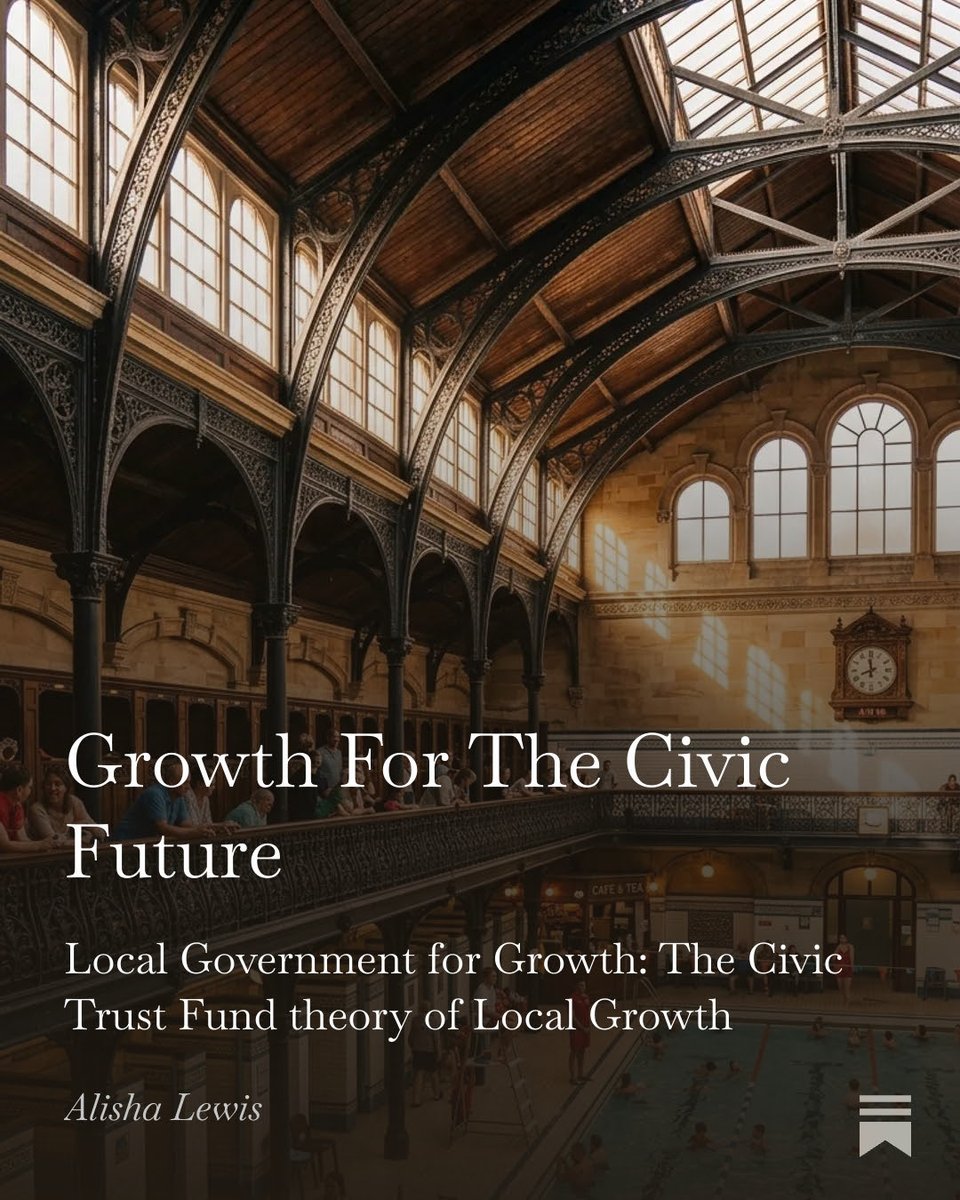
The Victorians built the swimming pools. The postwar generation built the youth clubs. Nobody built the endowment. We’ve spent 150 years spending down the inheritance.
Here’s how we never do that ever again.
Local Government For Growth: The Civic Trust Fund Model
📖⬇️
3
14
58
12,264

Deep Dive retweeted

Jun 5
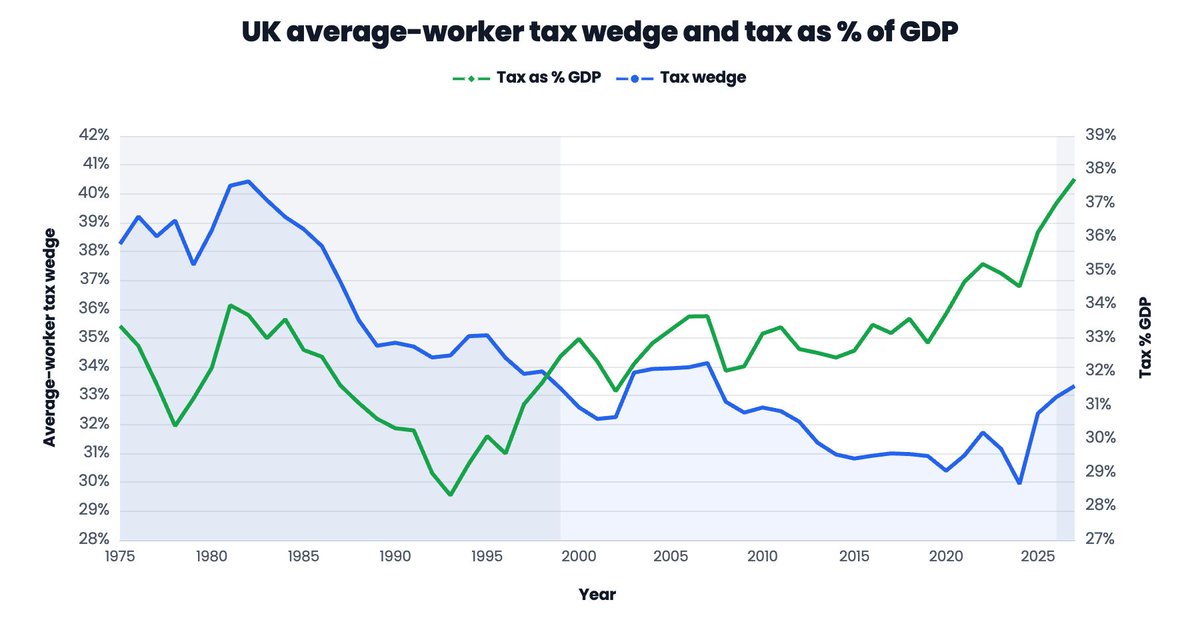
UK tax has gone up significantly over the last 25 years
But the tax paid by the average UK worker has not
This apparent miracle was achieved by taxing “other people”: higher earners, capital, property, banks, etc
The strategy has run out of road
A 🧵 on what happens next.
129
450
1,963
300,449

It’s time the UK moved to a Single Transferable Vote (STV) system. Chaos will continue with FPTP.
electoral-reform.org.uk/voti…
14
Deep Dive retweeted

May 30
🇬🇧 Every British river. 🌊🇬🇧
Has a name older than English. Older than Rome. You still say it.
The Thames. The Romans wrote it as Tamesis. But the name they wrote was already old when they arrived.
A pre-Celtic name passed to the Celts, passed to Rome, passed to us. The name has changed only in the shape of the sound.
The Severn. The Welsh called her Sabrina. A river goddess in the Brittonic tongue. And the Severn still carries her name today.
🏞️ The Trent. The Celts called it Trisanton. A name meaning the trespasser. The river that bursts its banks. And it still bursts its banks.
The Avon. The word means river. The Britons called every river the Avon. The English kept the name.
The Tyne. A Brittonic name meaning the flowing one. The Dee. A name meaning the goddess, the holy one. The Britons named her sacred and the English left her sacred.
The Anglo-Saxons came. They renamed villages. They renamed hills. They renamed almost everything they could. But they did not rename the rivers.
The rivers were too holy. The names were too rooted.
And so the Brittonic words stayed in English mouths.
The Britons did not vanish. Their words did not vanish. Their descendants became the British. And the British still name the river the same way. Every time.
🇬🇧 British people speak a language older than English. Every day. Without noticing. The Britons named the water. The British still call it the same.
━━━━━━━━━━━━━━
The river names are not relics.
The villages changed names. The rivers kept theirs.
Help us pass our history downstream. 👇🙏
👉 proudofus.co.uk/support 👈
Be part of us. ☝️🇬🇧
Be Proud Of Us. 🙏🇬🇧
91
1,234
5,579
196,154
Tired, bored, lazy, complacent, incurious regime media

More than any reality TV show, it's far more horrifying that there exists a constituency of people in Britain that find merit in watching these gaga old regime jesters soiling themselves for the court's approval
27
Deep Dive retweeted

May 29
It feels as if the British state is suffering a real crisis of legitimacy.
People are disillusioned with the police for their refusal to tackle thefts and their misplaced priorities.
People are losing faith in the criminal justice system for its two-tier justice and for letting off rapists and violent thugs.
People have zero confidence in the lanyard class of civil servants and bureaucrats who see only problems and never solutions.
And people can see that our class of political leaders is the lowest calibre it has ever been and are unable to get anything done.
When are those in charge going to wake up to all this?
30
55
357
9,610
Deep Dive retweeted

May 29
Hahaha just lobbing even MORE statutory obligations on councils. What a man. What a thinker.
May 29

🚨 NEW: Andy Burnham would end all Government contracts for asylum accommodation and hotels if he becomes Prime Minister
The responsibility for providing accommodation would instead be given to local authorities
[@thetimes]
34
136
2,200
98,720
No wonder Glasgow went up in flames

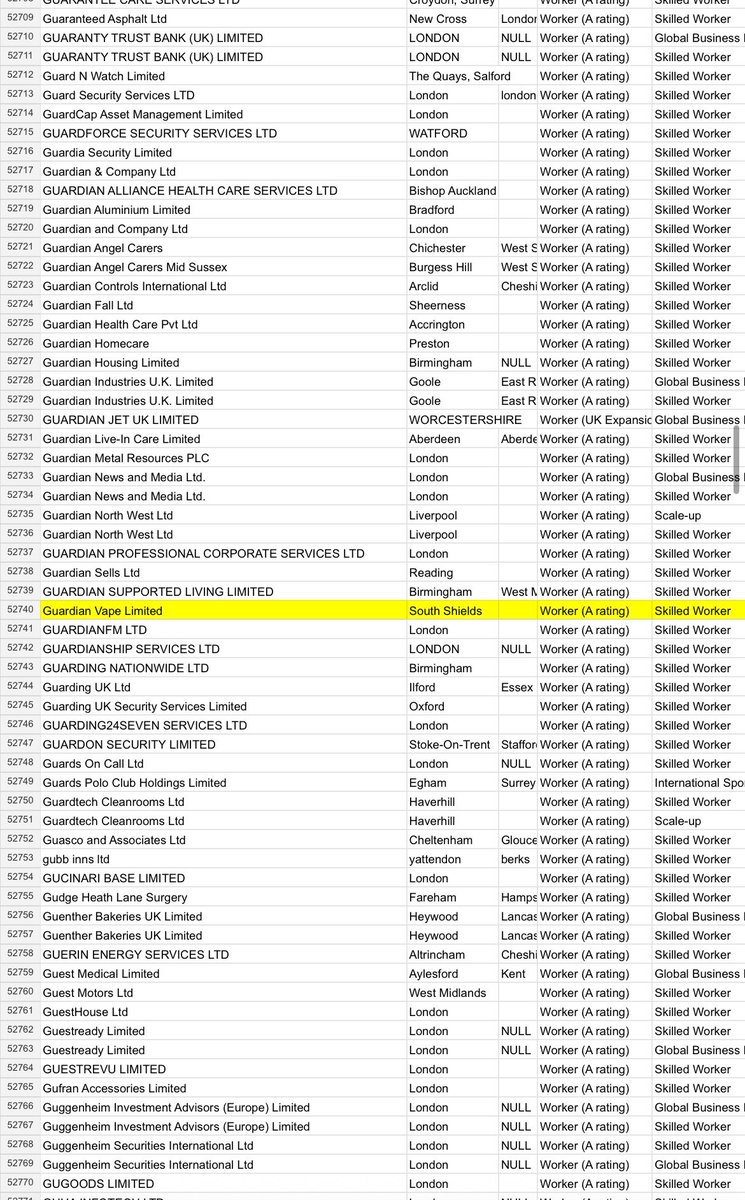
🇬🇧 There are 79 vape shops on the Home Office’s public register of licensed visa sponsors.
‘Guardian Vapes Ltd’ in South Shields is licensed to sponsor overseas workers via the ‘Skilled Worker Visa’ route. 🧵1/3

8
Very sensible post. We need more clear thinking like this from all parties
May 27

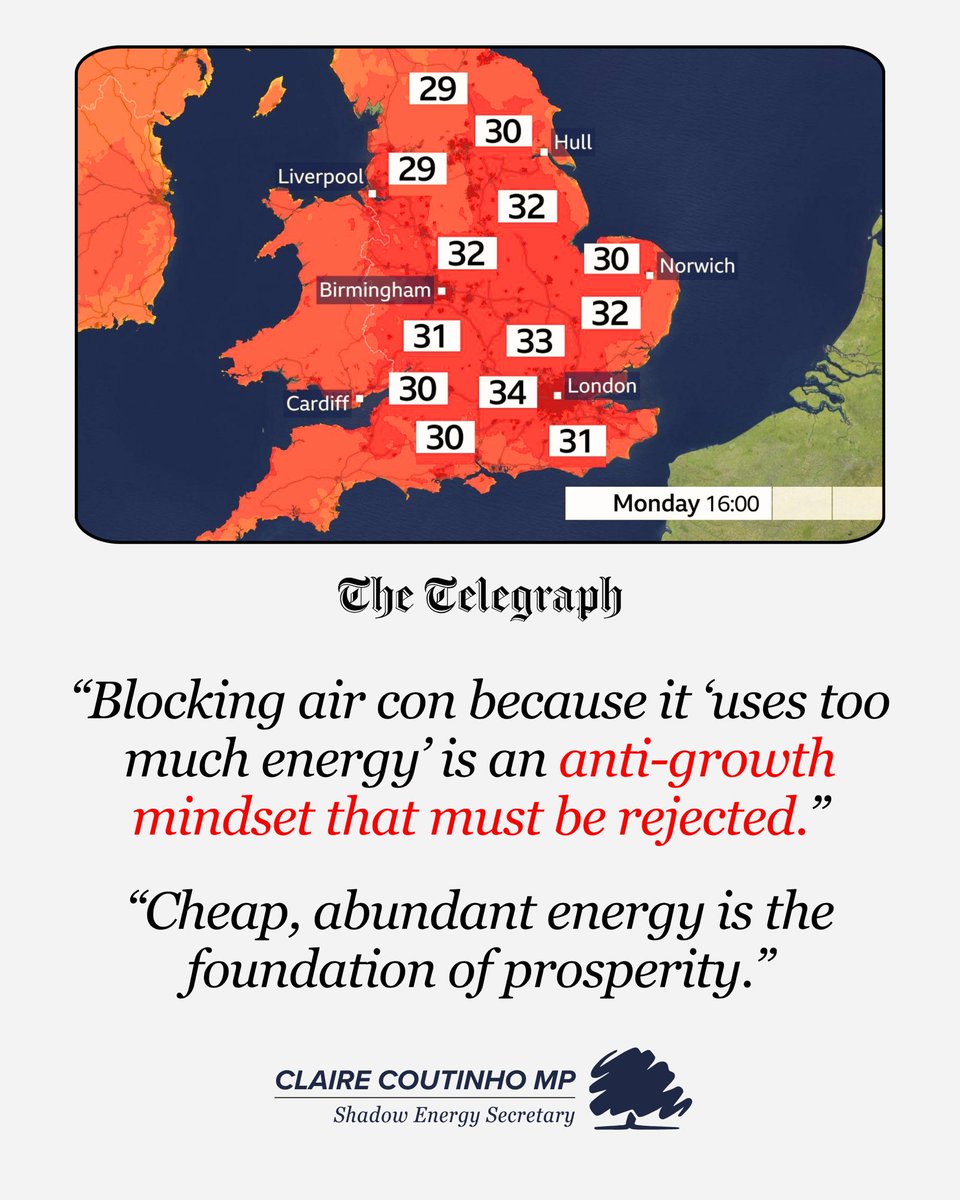
Britain’s miserabilist view of energy policy is never as clear as during a heatwave.
That’s because, unlike virtually every other civilised country, British housebuilders are de facto banned from installing air conditioning.
Our building regulations say that housebuilders must exhaust every other “passive” option for cooling buildings – from airflow to shutters to awnings – before local council pen pushers will let them install air con. The result is that most of our homes are built without it.
That’s why 3% of British homes have air con, compared to 90% in the US, Japan and Korea.
Why do we have this mad ban in place? Because our political class, including erstwhile Conservatives such as Robert Jenrick, said it ‘used too much energy’.
This is an anti-growth mindset that must be rejected.
Cheap, abundant energy is the foundation of prosperity, but the problem with the net zero ideology is that it turned this fundamental truth on its head.
Energy use became a bad thing to be demonised, and the result is that we made electricity scarce and expensive by focusing on decarbonisation over cost and security of supply. Prices went through the roof and fewer and fewer people now use it.
But as energy demand has collapsed in the UK, so have growth and living standards. That’s why two years ago I made a speech saying we would need to prepare for more energy demand to fuel AI and air con, or risk becoming poorer and less prosperous.
The fact that we are one of the only major economies that has decided the solution to hot days is to “sweat it out” tells you everything you need to know about our warped energy ideology.
All the evidence shows that in heatwaves people sleep far fewer hours, productivity plummets and children struggle in school.
Why would we limit access to a technology that is proven to save lives, boost productivity and make people more comfortable?
It is even more absurd when you consider that Ed Miliband is carving up the countryside for masses of solar farms – solar farms that we are going to be paying millions of pounds to switch off when it’s too sunny in the summer.
Yet air conditioning demand peaks in the summer at exactly the same time as those solar farms are generating more electricity than the grid can use.
That’s how mad our energy policy is – we are now building energy generation that we want to stop the public from using. We really are through the looking glass now.
This is all part of the mind rot that has infected all echelons of government, which sees UK energy usage as uniquely bad and will do everything it can to drive it down – even when that means transferring our industries’ emissions to coal-powered China, or blocking our households from enjoying the growth, prosperity and consumer benefits that other countries allow.
That’s why rather than embrace AI, Labour are currently agonising about whether it’s compatible with net zero - and why they would rather use Putin’s oil than back our British industry in Aberdeen.
Under Kemi Badenoch and my leadership, we Conservatives are taking a new approach. We need to get back to energy realism by repealing the Climate Change Act.
We need to prioritise cheap, abundant energy by backing the North Sea, doubling down on nuclear and adopting our Cheap Power Plan to make electricity cheap.
Energy policy should serve the needs of the British public, not the other way around.
That’s why we would axe the outdated building regulations that are blocking air con and build an energy system which puts consumers first.
15
Deep Dive retweeted

Apr 30
I'll tell you what I don't like, Darren. I can't speak for everyone, but these are my thoughts…
I don't like a tax burden at its highest level since 1948, under your government and the last, producing the weakest growth in a generation. And worsening public services to boot.
I don't like a 46% hike in the minimum wage for under-21s in three years that's helped push UK youth unemployment to 16.1%, above the eurozone average. I want young people paid more, earned through growth, not handed down by decree that squashes the rungs above them and tells a skilled forty-year-old their two decades of graft are worth precisely the same as someone walking through the door on Monday morning.
I don't like industrial electricity prices that are the highest of any IEA country reporting. Full stop. UK steelmakers pay 40% more than their French competitors. You don't build a future of advanced manufacturing on those numbers.
I don't like a planning system that takes longer to consent a pylon than to build one, business rates that punish high-street enterprise, and employment costs that turn every hire into a risk.
I don't like watching world-class British research get commercialised in Boston and Palo Alto because the capital, the talent and the regulatory patience aren't here. They're fleeing.
I don't like long-term borrowing costs at their highest level in over 25 years, eating into every budget for schools, hospitals and defence before a penny is spent.
I don't like the OECD saying that we're going to be the hardest hit economy as a result of a conflict in the Middle East that's got nothing to do with us. All because we've made ourselves weak and vulnerable.
I don't like a government that confuses 'raising money' with 'creating wealth'. Or 'standing against unearned wealth' with taxing to death the people who actually make things happen in this country.
You don't lift children out of poverty by strangling the economy that pays for their schools. You do it by letting Britain grow again. Letting it play to its abundance of strengths.
In this case, I feel the best way is for government to get the hell out of the way.
Apr 29

What is it that the Conservatives and Reform don’t like about a Labour government standing against unearned wealth?
What is it they don't like about raising money for our state schools, our hospitals, our police, and to lift children out of poverty?
154
1,120
4,081
134,525
Deep Dive retweeted

Apr 14
Right now, British electricity pricing is bonkers. Prices are disconnected the from the underlying reality in several very important ways.
1. The costs of keeping the grid going, like transmission and balancing, are spread over every unit of electricity sold. This means the price of an extra unit of electricity is vastly higher than the social cost of providing that unit. The cost of having a grid connection at all is, conversely, much lower than it actually costs society to provide you one.
Economically, this amounts to a crippling price cap on grid connections, which is part of why we can't expand infrastructure to plug people in: they don't pay for it. It also amounts to an enormous tax, over 2/3 of the price of electricity, on using an extra unit of it.
Which is presumably why electricity use has cratered since 2003, when we started driving up the cost of our grid like this.
Note how perverse the incentive is here. We are heading into a situation where electricity is extremely expensive because the ratio of grid costs to the amount of electricity put through that grid. Our high prices incentivise everyone to have a connection, but then to use it as little as possible, the EXACT opposite of what we need. We charge the most tax on people use their connection most intensively (i.e., efficiently) and the least on those who use it the least intensively!
2. We impose carbon taxes on electricity produced through gas that we don't impose on gas used directly. This is part of why electricity is so expensive, and means people electrify less than we would like, which leads to less decarbonisation overall. A child, with a basic understanding of supply and demand, would see how perverse this is.
3. We charge the same price for electricity nationwide, and pay the same amount, in a single market, even though electricity is worth more and less at different places. This is part of why people are building solar farms in Scotland, where it is not only less sunny, but which is on the other side of massive grid congestion that we are paying BILLIONS of pounds to relieve. Yet we keep paying people to make the problem worse.
4. We keep buying Contracts for Difference off electricity generators. CfDs say 'we will pay you X for every unit of electricity you produce, whenever you produce it'. (Recent iterations have cut off these payments when prices go negative, but they will still pay them £90 per megawatt hour when the megawatts they are producing are worth 1p each!)
Renewables Obligations Certificates were a lot more honest. They just paid producers a top up on what they got on the open market: a straightforward subsidy. CfDs are a totally hidden subsidy. The amount of subsidy is set by the market trajectory after today. So, for example, every time we sign a new wind CfD we increase the subsidy for past tranches.
The really messed up thing is that CfD recipients do not cover for when they don't provide any power. If the CfD was set on quantity as well, so generators had to pay back money when they didn't produce, to cover the cost of running the grid to accommodate them, and for the gas needed to keep the lights on, then we would get a good sense of how much we were actually paying. Buying a CfD would be buying new electricity at its going rate. Instead, practically all the important pricing functions are hidden.
The result of all these broken pricing systems is poor coordination. Everyone is working exactly as the price system tells them to: plug in but only use your grid connection when the grid is having trouble, use less electricity, don't electrify, add generation far away from where it is consumed, and produce the most electricity possible whenever and wherever you like, not when or where it's rare and expensive. The ultimate result is expensive electricity, industrial decline, and economic stagnation.
56
231
1,154
175,103
Deep Dive retweeted
Apr 8
I've spent the last 24 hours laying out what's broken in the UK. And I stand by all of it. But I also believe this country has everything it needs to turn this around. We just need the honesty to admit what's not working and the courage to do something different.
The UK has world-class universities, a legal system the world trusts, a language the world speaks, a creative sector that punches miles above its weight, a financial services infrastructure most countries would kill for, and some of the most resourceful, inventive people on earth. We invented the industrial revolution, the internet, modern medicine, and half the sports the world plays. This is not a country short on talent or ideas.
So what's gone wrong? We stopped investing in the things that made us great and started coasting on house prices and financial services. We need to reverse that. Here's where I'd start…
Make it easier to start and run a business. The UK should be the best place in the world to be an entrepreneur. Cut the red tape, simplify the tax system, and stop treating small business owners like they're a problem to be managed.
Fix the planning system. We can't build houses, we can't build infrastructure, we can't build energy capacity. Nothing gets built because everything gets blocked. This is fixable. Other countries manage it.
Invest in skills, not just degrees. We need plumbers, electricians, engineers, builders, technicians. Parity of esteem between vocational and academic education isn't just nice to have. It's essential.
Embrace AI as the way to break Baumol's Cost Disease. If we can make healthcare, education and public services genuinely more productive through technology, the fiscal arithmetic changes. This should be a national priority, not an afterthought.
Build energy sovereignty. We had it once with North Sea oil and we let it go without replacing it. Nuclear, renewables, whatever it takes. An import-dependent energy system is a vulnerability we can't afford. If that means scrapping net-zero, so be it.
And above all, be honest with people. Stop promising that the next budget will fix everything. Tell people the truth about what's coming and trust them to rise to it. Because they will. They always have.
This isn't a country in terminal decline. It's a country that's been badly managed for thirty years and is overdue a reset. The talent is here. The ideas are here. The resilience is here. We just need leadership that's honest enough to level with people and bold enough to act.
I'm more optimistic about what this country could be than I am pessimistic about where it is. But the first step is admitting where it is. And sadly, no one seems up to that task, but I’m sure it’s coming, because people are clearly fed up with the miserable trajectory we're on.
49
44
260
21,770
Some sensible commentary about domestic production. We need more sensible right now.

No one serious is claiming that North Sea oil and gas is state-owned. That's a strawman. The actual argument is about what extracting it does for Britain - and the answer is straightforward.
North Sea oil gets sold on the global market, yes. Around 80% of it bypasses our refineries entirely, partly because those refineries were built to process Libyan crude, not the light sweet crude the North Sea produces. Fine. But when oil companies extract that oil and turn a profit, the Exchequer taxes that profit. That tax revenue is real money that can subsidise bills during supply disruptions. That's our stake - and it's a legitimate one.
Gas is even more direct. North Sea gas feeds straight into the UK pipeline network. Britain consumes between 65% and 85% of the gas it extracts domestically. It stabilises supply. It generates taxable profit. There is no coherent argument for leaving it in the ground.
Now, climate. Britain produces less than 2% of global greenhouse emissions. Not a single major polluter on earth is adjusting their behaviour based on UK climate commitments. What actually happens when we strangle our own energy sector in pursuit of rapid decarbonisation is simple - we de-industrialise, we export jobs to China, and China builds EVs powered by coal. We get poorer. The climate is unaffected.
Leaving recoverable North Sea reserves untouched doesn't save the planet. It just makes Britain weaker.
1
74
Matthew Syed is the most clear-eyed and sensible commentator in Britain today.
24 Aug 2025

The majority are right that borders matter; love of nation is admirable; illegal immigrants should be deported; biological males shouldn’t compete in women’s sport; people should be judged on merit, not colour; & western history is admirable, not shaming
thetimes.com/article/6321637…
1
2
389
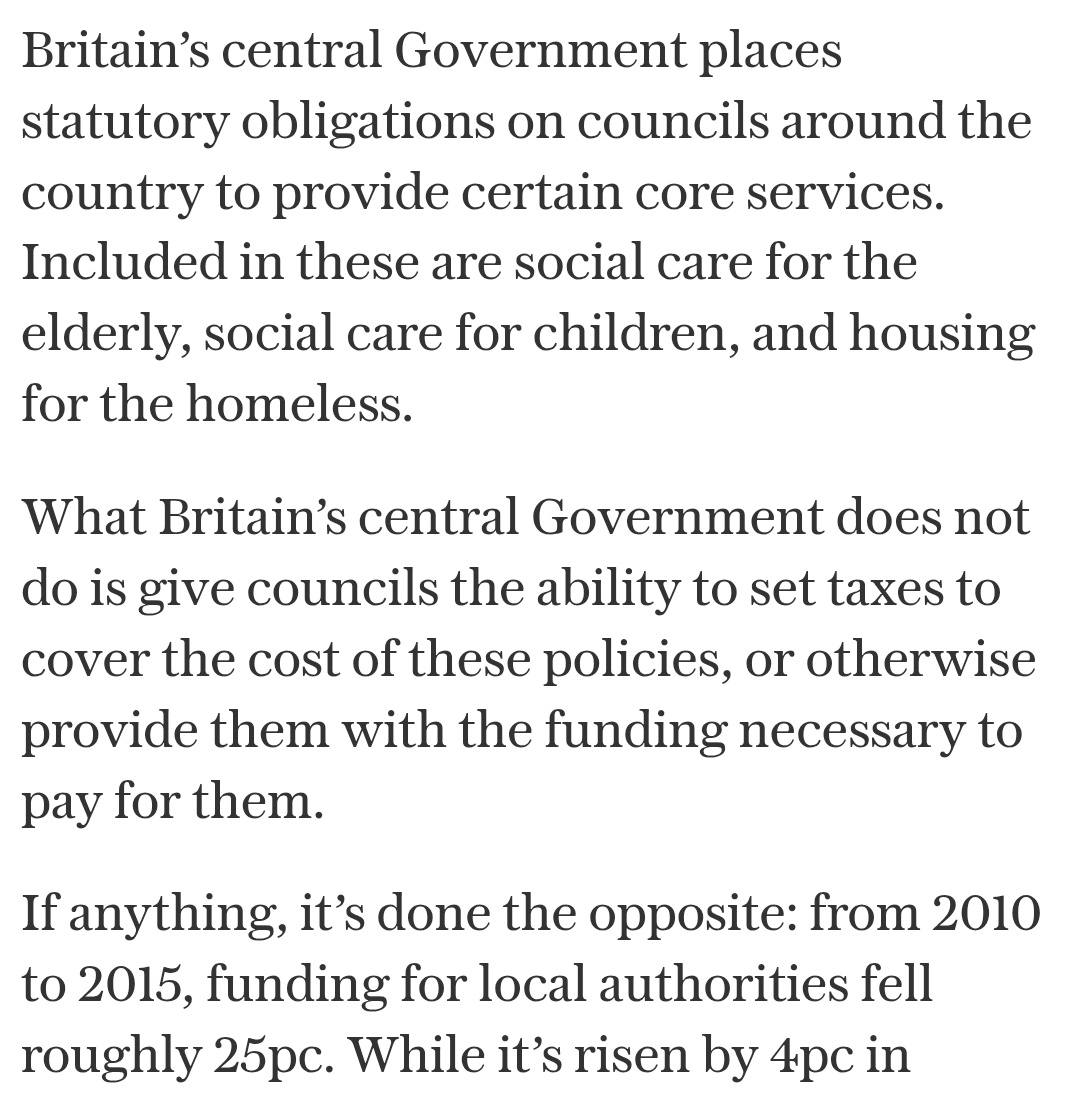
This is the fundamental democratic deficit at the heart of politics in the UK. It is rotting our cities and eroding trust in local government. We need to talk about it because we are facing widespread dysfunction and collapse of the public realm.
31 Jul 2025

Local authorities – which are supposed to give residents a democratic say in how their area is run – are being reduced to little more than glorified agents of central government, able to administer services on its behalf, but with no say on what they fund.
279
Deep Dive retweeted

30 Jun 2025
Free speech means stupid people get to sing stupid things. The right reaction is to mock, criticise and defeat their worldview.
Getting police involved is absurd. But once you criminalise some hurty words, you create the demand for all hurty words to be criminalised.
1,371
1,324
12,793
476,505
Matthew Syed is the best columnist in the UK today. His analysis is always spot-on and he writes with superb clarity.
4 May 2025
Understand moral universalism’s failures and we’ll understand Nigel Farage
thetimes.com/article/a4f5e9c…
2
501
Glasgow needs a directly elected Mayor to drive progress for the city region. The current fragmentation and competing committees of second-rate, unknown politicians cannot deliver long-term strategic development. Manchester is the example.
27 Feb 2025

"Perhaps she realises that a mayoral race is not one she would win."
I don't know what Glasgow leader Susan Aitken wants and I don't think she does either
heraldscotland.com/politics/…
@marissaamayy1

129