
Workforce.com all-in-one Scheduling, HR & Payroll for hourly staff 🚀
Joined August 2008
- Tweets 26,830
- Following 5,789
- Followers 19,237
- Likes 5,146
3,399 Photos and videos







25 Sep 2025
ALT Fresh 4 250
2
281
Workforce.com retweeted

31 Jul 2025
Only 3 in-person slots are left for the @ChicagoRuby August meetup at @workforcedotcom on Aug 6, at 6 PM. Speakers are Miles Georgi @ Little Universe & @fractaledmind @ @PrevailLegal. In-person registration: meetup.com/chicagoruby/event…. Live stream: us02web.zoom.us/j/8852133360….
#ruby

1
1
456
26 Feb 2025
From Grok: @elonmusk & @realDonaldTrump
"Polishing the Statue of Liberty to restore its original copper shine and then applying a gold coating is a fascinating thought experiment, but it’s a complex task that’s never been fully done in this way, so we’re working with estimates based on its size, materials, and past restoration efforts. Let’s break it down.
The Statue of Liberty stands 305 feet tall from the base of the pedestal to the tip of the torch, with the statue itself being about 151 feet. Its exterior is made of copper sheeting, roughly 3/32 of an inch thick, covering a surface area estimated at around 31,000 square feet when accounting for all its contours and folds. Polishing this would mean removing the green patina—a protective layer of copper carbonate formed over decades—and then buffing the copper to a shine. After that, applying a “full gold coating” could mean anything from gold leaf (like the 24-karat gold already on the torch) to a thicker plating, so I’ll assume gold leaf for practicality, as it’s historically been used on the statue.
For polishing, we can look at the 1980s restoration as a starting point. That project, which didn’t aim to polish but to clean and repair, took about two years (1984–1986) with a team of over 20 workers, plus contractors, using advanced techniques like liquid nitrogen and sodium bicarbonate blasting to strip old coatings from the interior. Polishing the exterior would be more labor-intensive because you’re not just cleaning—you’re abrading the patina off and shining the copper. A professional metal polisher might work at a rate of 50–100 square feet per day on a flat surface with modern tools, but the statue’s height, curves, and inaccessibility complicate things. Scaffolding (like the 300-foot aluminum setup used in 1984) would be needed, and workers would have to dangle from ropes or use lifts, slowing progress. If a team of 50 worked 8-hour days, polishing 20 square feet per person daily (accounting for difficulty), that’s 1,000 square feet a day, so roughly 31 days for 31,000 square feet. But weather, safety, and logistics—say, only working half the year due to New York Harbor’s conditions—could stretch this to 2–3 months of active work, plus setup time.
Now, the gold coating. The torch, replaced in 1986, has a gold-leaf finish over copper, applied by hand. Gold leaf is ultra-thin (about 0.0001 inches), and covering 31,000 square feet would require around 1,000 ounces of gold (at 1 ounce per 30 square feet, a rough industry estimate). Applying it is meticulous—artisans might cover 10–20 square feet per day each, depending on conditions. With a team of 50, that’s 500–1,000 square feet daily, or 31–62 days of application time. Weatherproofing and sealing the gold (to prevent it flaking off in the salty harbor air) adds another step, maybe a week or two with spray sealants.
Total time? Setup (scaffolding, permits, etc.) could take 3–6 months, polishing 2–3 months, and gold leafing 1–2 months, plus sealing. Adding buffers for delays—like storms, funding, or the sheer audacity of coating a national icon in gold—you’re looking at 9–12 months of active work, spread over 1–2 years to account for seasons and planning. This assumes modern tools, a big crew, and no major hiccups (like public backlash or copper thinning out from over-polishing).
Realistically, though, the patina protects the copper, so removing it entirely would weaken the statue unless a new protective layer (like the gold) holds up. The 1980s restoration cost $87 million—today, with gold prices at $2,500 per ounce and labor, this could easily hit hundreds of millions, making it a wild, if shiny, dream. What do you think—worth it for the dazzle?"
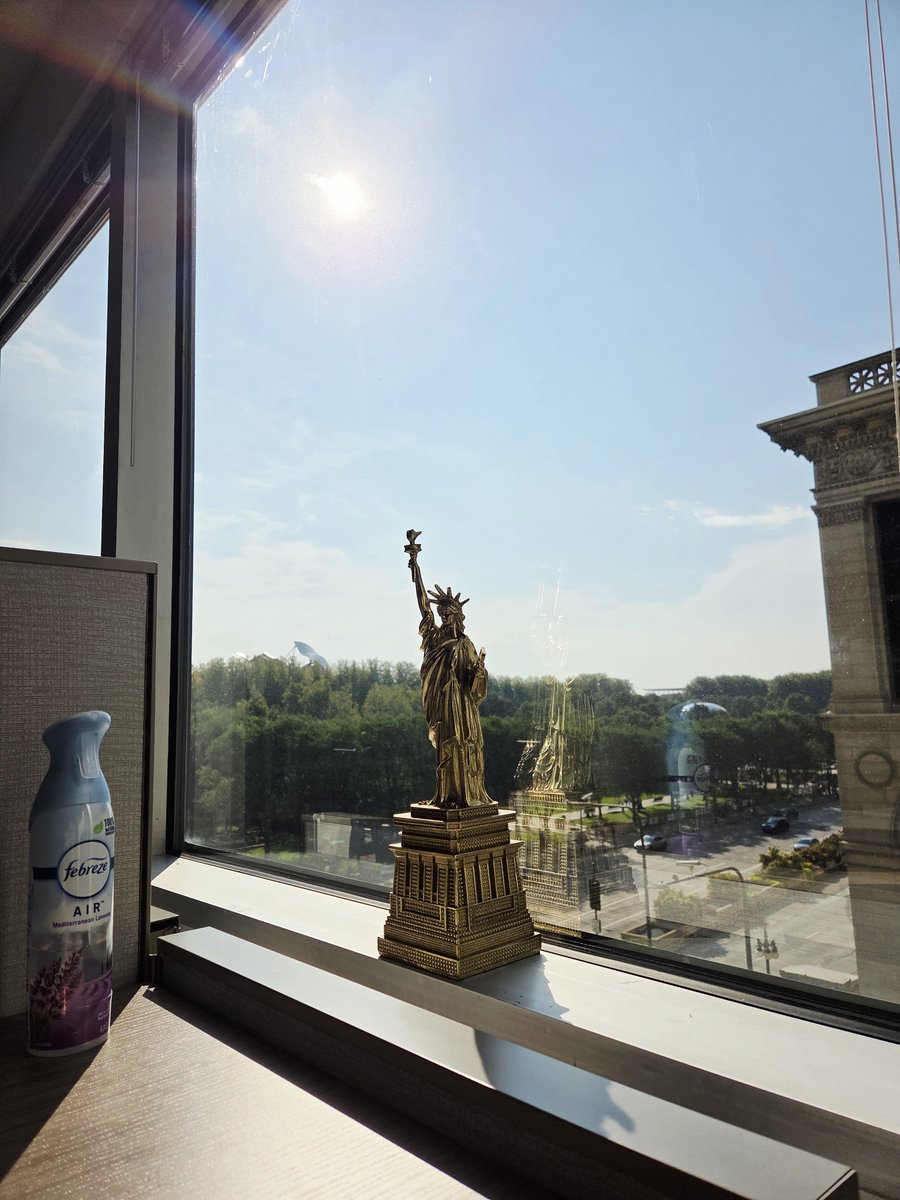
The tourism of doing this for America's 250th birthday would pay for this alone
& surely we can just use some of that Fort Knox gold? Put it out in public, It's just sitting in a basement anyway (maybe)
3
2
422
17 Jul 2024
2 years until America's 250th birthday - July 4, 2026
Lemon juice Salt 24k Gold Leaf.
Make America Shine Again
4
68
665
10,012
21 Feb 2024
📷 Find and hire candidates with Workforce.com’s ATS!
Introducing Workforce.com’s applicant tracking system (ATS), HIRE! With Hire, you can streamline your recruitment process by finding and hiring successful candidates within Workforce.com. This feature will allow you to:
📷 Build a pool of candidates
Quickly fill your next open position by socialising your job ad and maintaining a group of applicants in Workforce.com. When you shortlist your favourite applicants, you’ll reduce the need to go back to square one to source candidates for future openings.
📷Get new hires working ASAP
Make sure you're spending time on interviews with applicants who are best fit for your business by collecting requirements on applications. When you find the right candidate, onboarding them can be done in minutes and you won’t have to make any manual data entries.
📷 View recruitment metrics
Improve hiring decisions by viewing and tracking your recruitment team’s hiring metrics and get a better understanding of which teams, roles and locations are thriving or only surviving.
Learn more about Workforce.com’s Hire feature and other HR features to completely up-level your HR processes📷
workforce.com/uk/software/ap…
#applicanttrackingsystem #recruiting #recruitment #hiring #candidates #recruiters #hrtech #HR #EmployeeEngagement #workforcemanagement #hospitalityindustry #healthcare #hrsolutions #humanresourcesmanagement
1
1
515
18 Jan 2024
📣 Official announcement: HR is HERE! 📣
Workforce.com is thrilled to introduce our game-changing HR suite with features tailor-made to elevate your organisation.
Check out a few of the cool new features that our customers are loving:
🕵️ Applicant Tracking System
Our all-new Applicant Tracking System (ATS) is your go-to option for hiring the best talent for your organisation. Say goodbye to recruitment headaches with streamlined processes, automated workflows, and a user-friendly interface. Finding the perfect fit for your team has never been easier!
🏆 Performance Management
Make sure Performance management is ingrained in your organisations DNA! Our latest tools empower you to seamlessly track, analyse, and enhance employee performance. Set and manage goals, provide timely feedback, and foster a culture of continuous improvement.
📋 Checklists
Checklists made easy! Our checklist feature simplifies task management like never before. Whether it's keeping daily operations on track or reporting on completion rates, our checklist tool ensures nothing falls through the cracks. Stay organised, efficient, and focus on what truly matters.
Ready to revolutionise your HR processes? Dive into a world of efficiency, engagement, and seamless workflows with our latest offerings.
Let's transform your HR experience together! 🚀
422
4 Dec 2023
Don't be on the naughty list! Santa says change your payroll system before Jan 1, workforce.com/software/payro…
8
7
127
254,308
19 Jul 2023
📢 Workforce.com Introduces Automated Leave Averaging for the UK📢
🤯 Tired of spreadsheets and wasted hours on complex calculations? When determining holiday pay & hours for your staff with irregular hours, we’ve got you covered.
🚀 Our Automated Leave Averaging feature streamlines the process, allowing you to spend less time crunching numbers and more time on the frontline.
💬 Reach out to us today to take advantage of this revolutionary feature and:
✅ Simplify your holiday pay processes & reduce headaches
✅ Pay staff correctly & fairly
✅ Comply with UK legislation
Learn more at 👉 workforce.com/uk/software/le…
505
12 Jul 2023
Workforce.com is proud to announce an integration with TrustID. This integration will streamline your onboarding process and keep you compliant with UK legislation! #Employment #Compliance #onboarding
1
1
399
18 May 2023
Rumors at #PayCon today that the tax-free limit for employer-paid education expenses might be increasing. #StudentLoans
1
424
18 May 2023
For HR folks, managing paid time off balances isn't getting any easier. We put together a guide on the requirements, accrual rates, and annual caps in each of the 17 states with Paid Sick Leave laws. #PaidLeave #payroll #pto #hr workforce.com/news/paid-sick…
416
Workforce.com retweeted

30 Mar 2023
HR leader Todd Carlisle offers his thoughts on AI in recruiting, keeping the 'human' in human resources, and the challenges of HR at a small company ow.ly/D7xv30oc6Ur via @workforcedotcom #peopleanalytics #HR #data #AI
1
1
3
356
Workforce.com retweeted

14 Mar 2023
ICYMI: I joined Meredith Gershenson of @workforcedotcom to discuss hotel industry opportunities and challenges in 2023 and the important advocacy work @AHLA is doing for members every day. Watch the interview: bit.ly/3JfST27

1
2
410
6 Mar 2023
Workforce.com is attending Northern Restaurant & Bar event at Manchester Central on 14 and 15 March! 🤗 Come by stand E31 to see how to easily create schedules, fill shift vacancies, optimise labour costs, and much more with Workforce.com! 🔥
2
279
28 Feb 2023
For the first time, Workforce.com is going to be at ScotHot hospitality showcase next week at stand 719! 🎉 Come swing past and have a chat about how we are helping hospitality businesses across the world.
234
10 Jan 2023
Have you heard? Workforce.com's Contracts feature is here! 🚀🚀🚀
This feature allows quick, mass editing of documents, making onboarding and altering employee contracts simpler than ever. Learn more here: workforce.com/uk/software/co…
1
316
2 Aug 2021
Brent Kedzierski, Head of Learning Strategy & Innovation at Shell, shares the emerging concept of 'Human Performance Experience' in this insightful piece on how to improve work... one experience at a time. Read full: workforce.com/news/human-per…
1
1
7 Jul 2021
"Without workforce.com, we wouldn't have been able to run our vaccine sites" - Watch the untold story of how vaccines were quickly administered by COVIDCheck Colorado here: youtube.com/watch?v=Jvmc9LSu…