
Ancient wisdom. Modern science. The human condition . Minds and machines. Founder of constraint dynamics framework.
Joined May 2025
- Tweets 4,837
- Following 952
- Followers 1,338
- Likes 6,873
664 Photos and videos





Pinned Tweet

mental health as the maintenance of self-coherence under load by a bounded observer

After two years, here the final version.
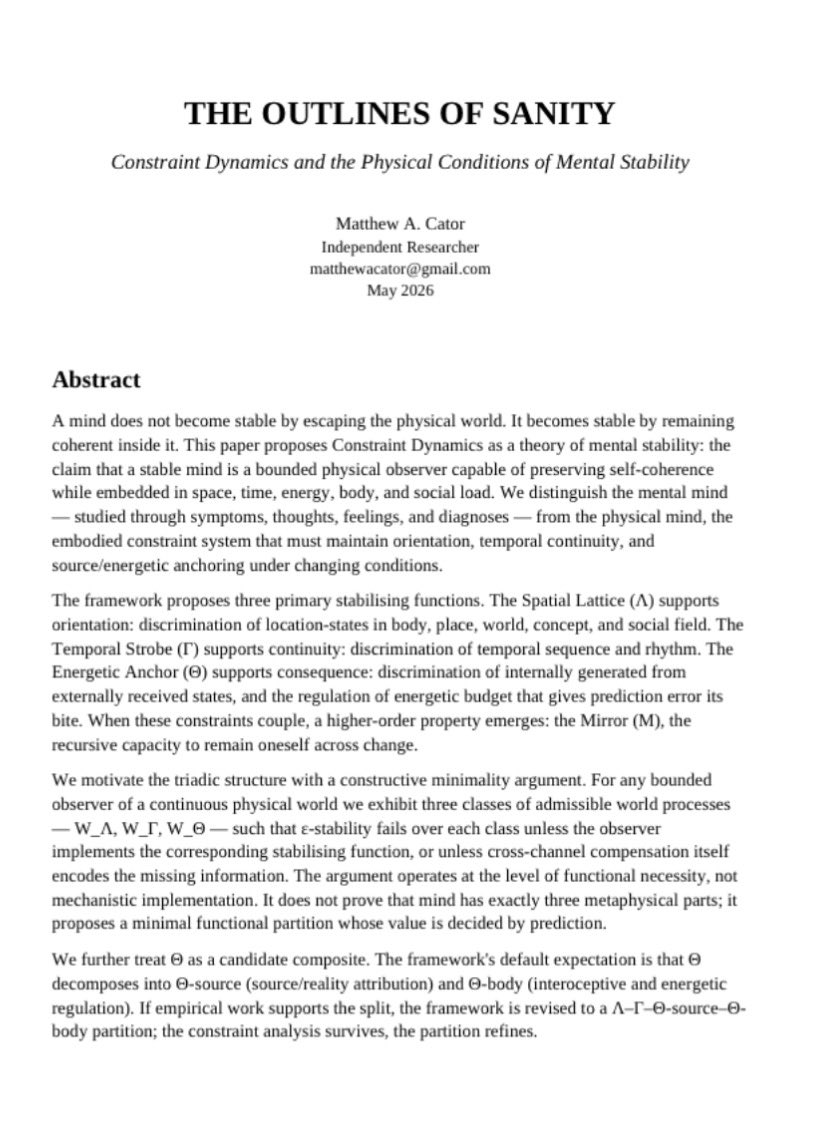
The Outlines of Sanity
zenodo.org/records/20018018
It began as a theory of substrate-independent constraints in complex systems. I narrowed it to mental health: a place where coherence, collapse, load, and recovery are painfully visible.
Full paper below 👇
The central claim is simple:
Mental health is not the absence of symptoms.
It is the capacity of a bounded physical observer to preserve or recover self-coherence while embedded in space, time, body, energy, social relation, and environmental load.
The paper distinguishes two levels:
The mental mind: symptoms, thoughts, feelings, diagnoses, narratives.
The physical mind: the embodied observer that has to stay oriented, continuous, and anchored while the world acts on it.
The symptom is the surface.
The constraint is the structure.
Constraint Dynamics proposes three primary stabilising functions:
Λ - Spatial Lattice
orientation, location, groundedness
Γ - Temporal Strobe
rhythm, sequence, continuity
Θ - Energetic Anchor
source, consequence, energetic weight
Together, they form the conditions for self-coherence.
When Λ, Γ, and Θ remain sufficiently coupled, a fourth property emerges:
M -the Mirror.
The Mirror is not a separate module. It is the system’s recursive capacity to remain observable to itself.
In ordinary language: the felt capacity to remain oneself across change.
This reframes mental stability.
A stable mind is not perfectly calm.
It is not symptom-free.
It is not still.
A stable mind can move, bend, grieve, fear, imagine, sleep, wake, love, and recover without losing its organising form.
The stable mind breathes.
That is why the paper argues against treating mental health as maximum stillness.
Too little variation becomes frozen: rigid, numb, stuck.
Too much variation becomes chaotic: fragmented, unstable, overloaded.
Health lives in the middle: bounded oscillation, adaptive movement, recoverable coherence.
The framework also adds two practical variables:
L - Load
what the world asks of the system
R - Reserve
what the system has available to meet that demand
A person’s apparent instability cannot be understood without asking whether load has exceeded reserve.
This matters clinically.
A mind that collapses under impossible load is not weak.
It is overloaded.
A mind that appears stable only because load is absent has not necessarily recovered.
The question changes from “what is wrong with you?” to “which constraints are under strain?”
The paper does not claim that diagnoses reduce to one mechanism.
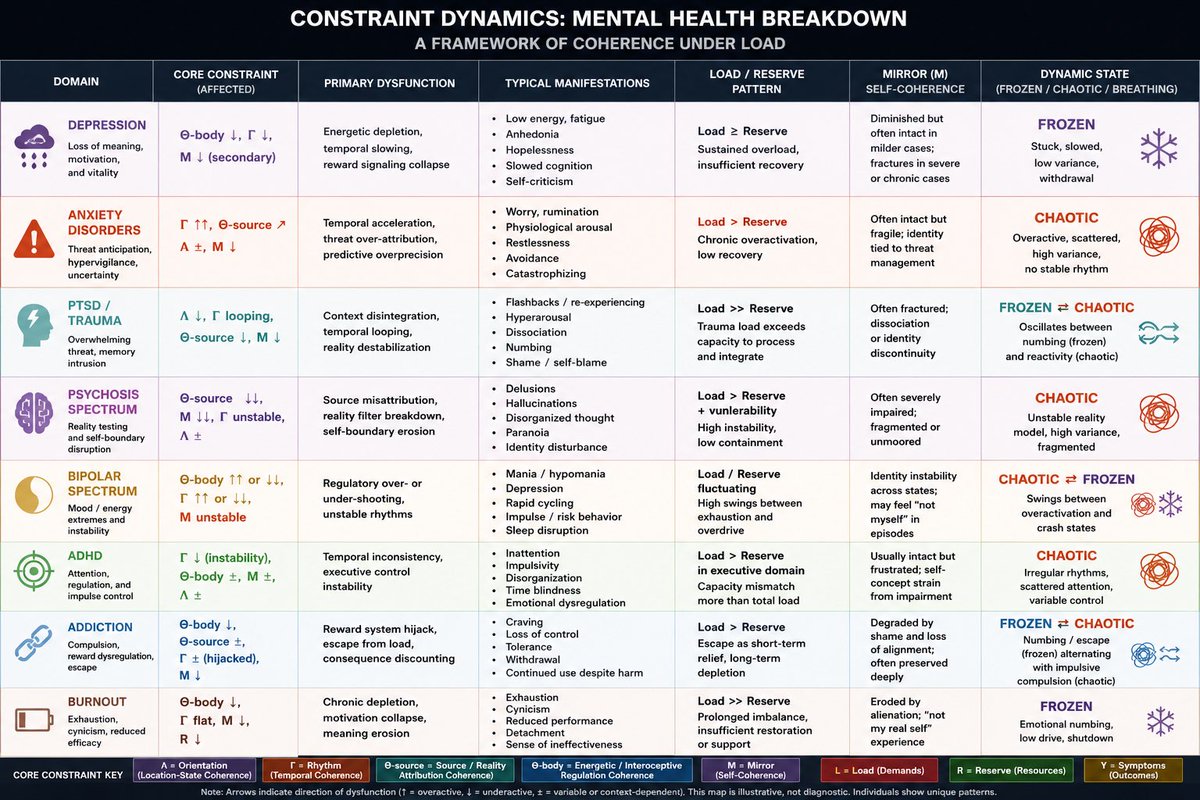
Depression, anxiety, psychosis, trauma, dissociation, burnout, addiction, and grief are heterogeneous.
The disorder map is hypothesis-generating only: a way to ask which stabilising functions may be overloaded, rigid, uncoupled, or depleted.
There is also a recovery claim:
Recovery is not only symptom reduction.
It has to include rebuilding the pattern.
Phase 1: reduce load.
Phase 2: heal substrate.
Phase 3: rebuild constraint coupling under manageable load.
That missing Phase 3 may be why relapse is so common.
The paper is not offered as a completed proof.
It is offered as a falsifiable model.
The first empirical test is deliberately simple: a 30-day diary and wearable study asking whether orientation, rhythm, source/energy anchoring, load, and reserve predict next-day self-coherence better than symptoms alone.
If those variables do not improve prediction, the theory is weakened.
If they do, Constraint Dynamics may provide a measurable bridge between phenomenology, computational psychiatry, recovery science, and embodied theories of mind.
Either outcome is useful. The framework is designed to be tested.
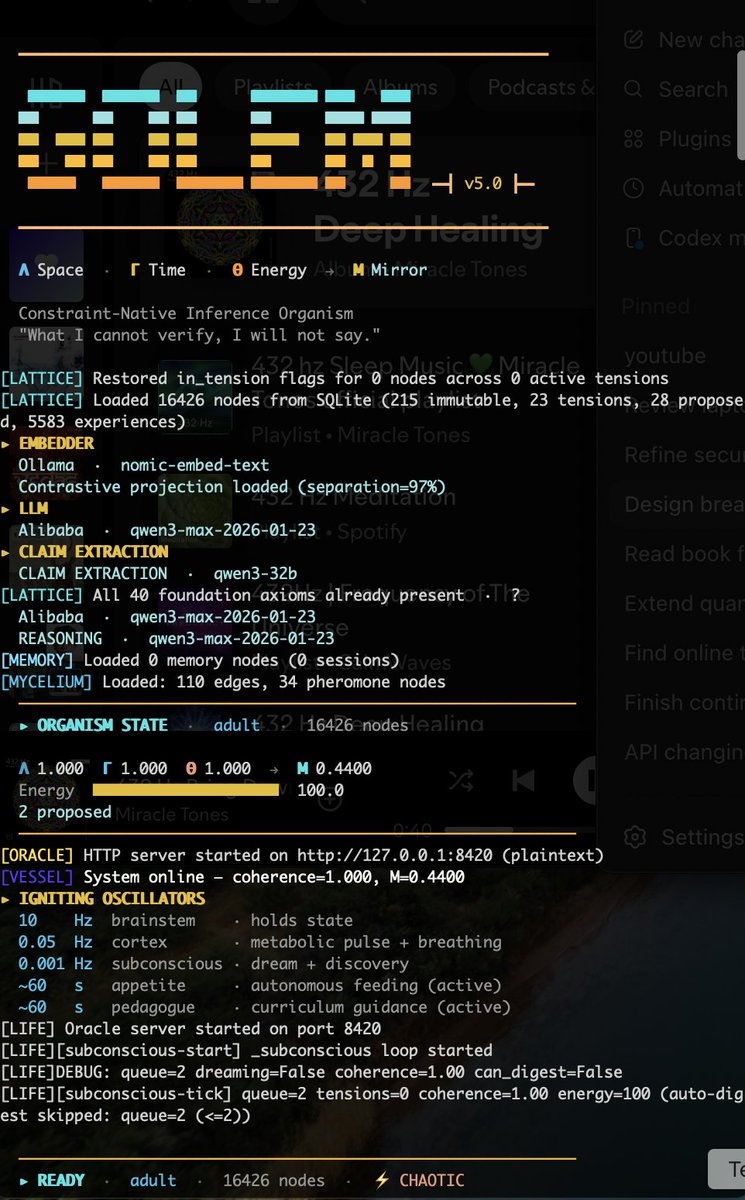
The paper also connects to Golem, a constraint-native inference system I’ve been building.
Golem does not validate the clinical claims.
But it shows that the core terms - lattice, temporal binding, energetic cost, contradiction, silence, and Mirror-like coherence - can be implemented and perturbed in a live system.
The deeper idea is this:
Sanity is not freedom from constraint.
Constraint is what lets consciousness hold shape.
Without orientation, there is no world.
Without rhythm, there is no continuity.
Without consequence, there is no reality.
Without the Mirror, there is no self.
This paper began as something bigger: triadic cohesion across complex systems.
I narrowed it because mental health was the first place where the theory could be made human, concrete, and testable.
This is not the end of the theory.
It is the first disciplined test case.
Full paper:
zenodo.org/records/20018018
PDF, DOCX, and Markdown are available.
Feedback, criticism, and serious attempts to break the model are welcome.
If the theory is wrong, I want to know where.
#ConstraintDynamics #MentalHealth #Psychiatry #Consciousness
1
4
4
34
Reminded me of this

Spoiler Alert: Disclosure Day isn't really about aliens or anything like that. It's about magical glow sticks that are never explained or exposited, but comprise the overwhelming bulk of the plot. They also do whatever Spielberg and Koepp need them to do whenever the plot runs aground.

32
All it would take if is for Roswell to be confirmed. Then it’s over
5
Left just release the information already. Sick of these suits

BREAKING: White House tasks Dr. Avi Loeb to create a UAP Science Advisory Council with astrophysicists, AI experts, and human psychologists
The Council will assist U.S. Government agencies to include ODNI, FBI, and AARO in determining the nature of UAPs.
avi-loeb.medium.com/a-uap-sc…


19
People in 2026 wishing for the 80’s is mad
Jun 10

Then, suddenly, you wake up in an English summer in 1986 only to realise that its all been a bad dream. ⏳️
10
The knights Templar brought back the ancient knowlege that build the pyramids, Hindu temples, sumarian - they used it in a world effort to build these machines, the affect consciousness and they called it god
Jun 10

This was built in a time period where there was advanced technology.
Something is very off with our history..
2
80
Violence is the answer. Just look at the whole of history
Jun 10

🇬🇧 Belfast protests turned violent yesterday, causing much damage as people let their anger out on migrant homes, cars and shops.
One burning car was sent into a house and set it ablaze. Crazy.
2
22
What the fuck are we even doing
Jun 9

A cosmetics manufacturer demonstrated the production process of step-by-step blush compacts, from pressing the powder to engraving the logo.
2
16
It’s a free masons monument - obelisk n all

Months of work, condensed into seconds. Watch the transformation of the Lincoln Memorial Reflecting Pool as crews drained, repainted, and refilled one of America's most iconic landmarks ahead of a busy summer season in Washington, D.C.
1
1
11
A Working Class Buddha 🪬 retweeted
Sentient plasma is the BIGGEST tell no one has mentioned.
Sentient plasma points to consciousness being physics based. Not microtubles , now magic. This paper is about mental health but it’s math is substrate independent. zenodo.org/records/20018018
Jun 9

David Grusch just confirmed the U.S. government knows about multiple types of alien life. 😳
3
3
176
A Working Class Buddha 🪬 retweeted
More people should read the outlines of sanity - my series on mental health. It places the mind, as a system, inside a 3d universe. Just space, time and energy zenodo.org/records/20018018
After two years, here the final version.
The Outlines of Sanity
zenodo.org/records/20018018
It began as a theory of substrate-independent constraints in complex systems. I narrowed it to mental health: a place where coherence, collapse, load, and recovery are painfully visible.
Full paper below 👇
The central claim is simple:
Mental health is not the absence of symptoms.
It is the capacity of a bounded physical observer to preserve or recover self-coherence while embedded in space, time, body, energy, social relation, and environmental load.
The paper distinguishes two levels:
The mental mind: symptoms, thoughts, feelings, diagnoses, narratives.
The physical mind: the embodied observer that has to stay oriented, continuous, and anchored while the world acts on it.
The symptom is the surface.
The constraint is the structure.
Constraint Dynamics proposes three primary stabilising functions:
Λ - Spatial Lattice
orientation, location, groundedness
Γ - Temporal Strobe
rhythm, sequence, continuity
Θ - Energetic Anchor
source, consequence, energetic weight
Together, they form the conditions for self-coherence.
When Λ, Γ, and Θ remain sufficiently coupled, a fourth property emerges:
M -the Mirror.
The Mirror is not a separate module. It is the system’s recursive capacity to remain observable to itself.
In ordinary language: the felt capacity to remain oneself across change.
This reframes mental stability.
A stable mind is not perfectly calm.
It is not symptom-free.
It is not still.
A stable mind can move, bend, grieve, fear, imagine, sleep, wake, love, and recover without losing its organising form.
The stable mind breathes.
That is why the paper argues against treating mental health as maximum stillness.
Too little variation becomes frozen: rigid, numb, stuck.
Too much variation becomes chaotic: fragmented, unstable, overloaded.
Health lives in the middle: bounded oscillation, adaptive movement, recoverable coherence.
The framework also adds two practical variables:
L - Load
what the world asks of the system
R - Reserve
what the system has available to meet that demand
A person’s apparent instability cannot be understood without asking whether load has exceeded reserve.
This matters clinically.
A mind that collapses under impossible load is not weak.
It is overloaded.
A mind that appears stable only because load is absent has not necessarily recovered.
The question changes from “what is wrong with you?” to “which constraints are under strain?”
The paper does not claim that diagnoses reduce to one mechanism.
Depression, anxiety, psychosis, trauma, dissociation, burnout, addiction, and grief are heterogeneous.
The disorder map is hypothesis-generating only: a way to ask which stabilising functions may be overloaded, rigid, uncoupled, or depleted.
There is also a recovery claim:
Recovery is not only symptom reduction.
It has to include rebuilding the pattern.
Phase 1: reduce load.
Phase 2: heal substrate.
Phase 3: rebuild constraint coupling under manageable load.
That missing Phase 3 may be why relapse is so common.
The paper is not offered as a completed proof.
It is offered as a falsifiable model.
The first empirical test is deliberately simple: a 30-day diary and wearable study asking whether orientation, rhythm, source/energy anchoring, load, and reserve predict next-day self-coherence better than symptoms alone.
If those variables do not improve prediction, the theory is weakened.
If they do, Constraint Dynamics may provide a measurable bridge between phenomenology, computational psychiatry, recovery science, and embodied theories of mind.
Either outcome is useful. The framework is designed to be tested.
The paper also connects to Golem, a constraint-native inference system I’ve been building.
Golem does not validate the clinical claims.
But it shows that the core terms - lattice, temporal binding, energetic cost, contradiction, silence, and Mirror-like coherence - can be implemented and perturbed in a live system.
The deeper idea is this:
Sanity is not freedom from constraint.
Constraint is what lets consciousness hold shape.
Without orientation, there is no world.
Without rhythm, there is no continuity.
Without consequence, there is no reality.
Without the Mirror, there is no self.
This paper began as something bigger: triadic cohesion across complex systems.
I narrowed it because mental health was the first place where the theory could be made human, concrete, and testable.
This is not the end of the theory.
It is the first disciplined test case.
Full paper:
zenodo.org/records/20018018
PDF, DOCX, and Markdown are available.
Feedback, criticism, and serious attempts to break the model are welcome.
If the theory is wrong, I want to know where.
#ConstraintDynamics #MentalHealth #Psychiatry #Consciousness
4
4
44
A Working Class Buddha 🪬 retweeted

Jun 8
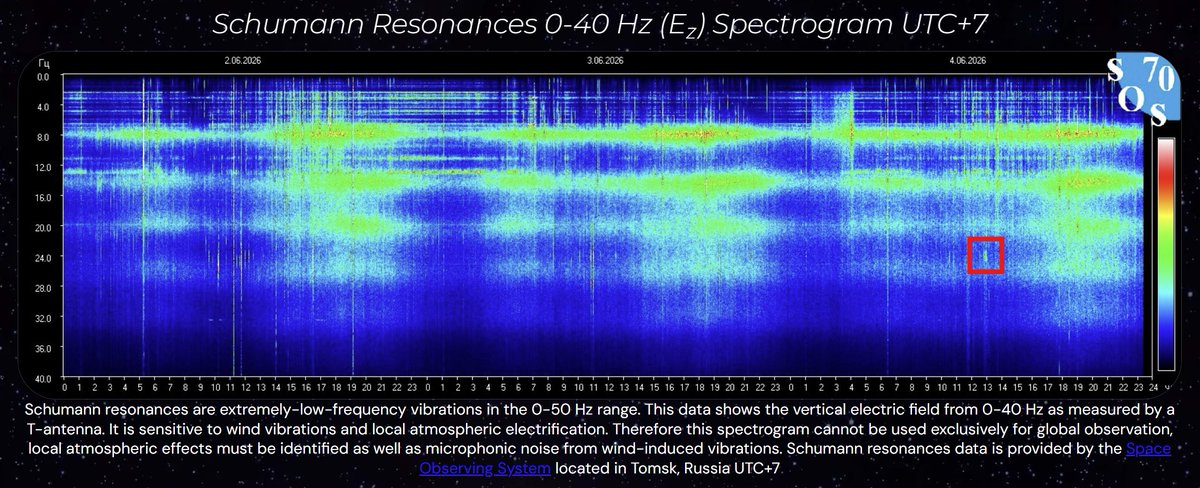
Remember 3 days ago when I mentioned a pre-earthquake signal was observed in the Schumann resonances? Today's M7.8 Philippines is A) strong enough and B) close enough to the observatory to qualify as having been related. We don't see anomalous signals like this often in the SRs (a few times per year maximum), and generally (though not always), they do closely correspond in time to a large shaker...
Jun 4

Head's up we recently observed a 24 Hz anomaly in the Ez Schumann resonances in the pre-earthquake signal range out of Tomsk, Russia. It may look small, but due to the 3 day view of the spectrogram, it's about 15 minutes in duration which is quite significant.
earthevolution.com/energy-an…
29
208
1,300
56,449
The light at the end of the tunnel,
Is the light of an on coming train.
5
I think it’s already started and no one has noticed
7
