Joined November 2014
- Tweets 35,145
- Following 1,464
- Followers 794
- Likes 50,728
1,209 Photos and videos












Pinned Tweet

31 Dec 2025
One of my favorites!
31 Dec 2025

“Of all tyrannies, a tyranny sincerely exercised for the good of its victims may be the most oppressive. It would be better to live under robber barons than under omnipotent moral busybodies. The robber barons cruelty may sometimes sleep, his cupidity may at some point be satiated; but those who torment us for our own good will torment us without end for they do so with the approval of their own conscience”
-c.s. Lewis
1
6
699
xcsler_returns retweeted

Jun 13
why can't he do something for the climate like promote electric cars
17
5
830
7,151
xcsler_returns retweeted
Jun 11
maybe he thought he had downs
36
19
1,159
23,524
xcsler_returns retweeted

May 29
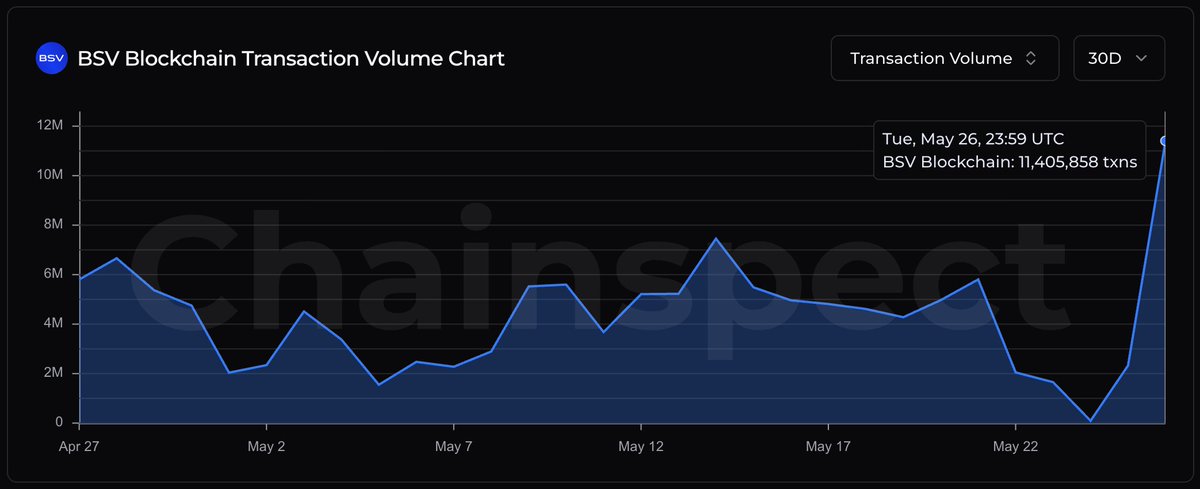
Quick PSA on BSV blockchain fees:
► On Tuesday there were 11.4m transactions
► They cost an average of $0.000003296 each
► $37.59 total
When transactions become this affordable, new ideas, businesses & global adoption become reality for everyone.
May 27

Real-world adoption needs infrastructure that scales
@BSVAssociation processed 11.4M transactions yesterday, setting a new monthly activity record
Scalable infrastructure is where real-world impact begins
📊 chainspect.app/chain/bsv?ran…
5
57
168
4,947
xcsler_returns retweeted

Jun 6
I want to put an order for 1000 BSV in at 10 bucks but there's no place to do it, and Coingeek shows some outdated options that don't work anymore. Rock wallet is so euro trash retarded they won't take my or my girl's money lol...don't get me started with orange gateway exchange ux -- after going through a stupidly unrefined authentication process. I get it, regulations are a MF to meet....but my God
Retarded lol
There's your problem with BSV. Nevermind being delisted from commonly used exchanges like Kraken and Coinbase. Fuck them.
Nobody can buy the fucking thing
30
2
42
2,963
xcsler_returns retweeted

“Socialists don’t like the invisible hand. They prefer the claws of the state, and they hide behind the discourse of social justice.”
— Javier Milei
16
130
583
7,275
xcsler_returns retweeted

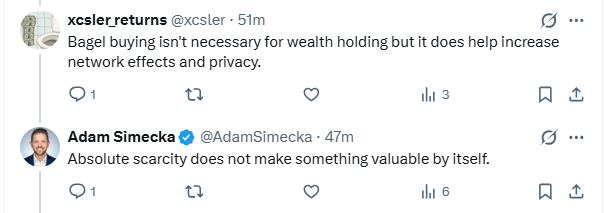
No. The problem isn't that people are dumping it.
People dump things all the time. Markets exist precisely so people can buy and sell assets.
The question is why they're dumping it.
If the asset had compelling utility, growing transactional demand, and economic use beyond speculation, sellers would be met by buyers seeking that utility.
Instead, much of the demand is speculative. When speculation weakens, people sell because the primary reason they held it was the expectation that someone else would pay more later.
The comedy here is watching people point at a fixed supply as though that settles the matter.
A fixed supply of something nobody wants is still something nobody wants.
A fixed supply of Beanie Babies is not a monetary system.
A fixed supply of tulip bulbs is not an economy.
A fixed supply is not a business model.
So when they chant "21 million" as though they've discovered the philosopher's stone, they're confusing scarcity with value. Scarcity is a necessary condition for some forms of value. It is never a sufficient condition.
The asset isn't valuable because it's scarce. It is only valuable if people want it for a reason beyond hoping the next person pays more.
That is the point they keep missing. And they keep missing it because repeating "21 million" is easier than explaining actual economic demand.
5
20
80
2,476
Jun 5
Fiat having a good few weeks vs Bitcoin and gold but ultimately it can never beat hard money.
1
1
29
xcsler_returns retweeted

Druckenmiller was asked what separates great investors from everyone else.
His answer had nothing to do with intelligence.
First: extreme passion. You cannot compete against people who love this business if you don't love it. They will outwork you, outthink you and outcompete you.
Second: competitiveness. They have to be sore losers. They have to want to win badly enough that losing is genuinely painful.
Then he got to the part most people get wrong.
"I haven't even gotten to IQ yet. Anything over 125 or 130 doesn't help you. It's largely superfluous."
Beyond a baseline, intelligence stops mattering. The edge is elsewhere.
Third: ego that gets checked at the door. You can have one but you cannot let it anchor you to a position. The market does not care what you think you know. When things happen that you didn't anticipate and they always will, you have to be able to change your mind without inventing reasons to stay.
Fourth, and the one most people never master: think against the crowd.
"If you're in the crowd, those positions are already owned by everyone. It's not easy to fight your emotions and go against the crowd, but that is a big piece of it."
Passion. Competitiveness. Humility. Independent thinking.
Just those four things, done consistently for decades.
7
86
434
51,342
xcsler_returns retweeted

May 29
In January 2013, two federal agents staged a murder using Campbell's cream of mushroom soup.
The "victim" was alive.
The "killer" was Dread Pirate Roberts, likely Ross Ulbricht.
The photo helped send him to prison for life.
Both agents later went to federal prison for corruption, and Ross was pardoned.
This is where the story starts this week.
6
8
49
2,481
xcsler_returns retweeted
May 29
Bezos and Musk build Amazon and Tesla: You didn't build that!!!
Workers fill potholes: Look what Mamdani did!!!
1
66

May 23
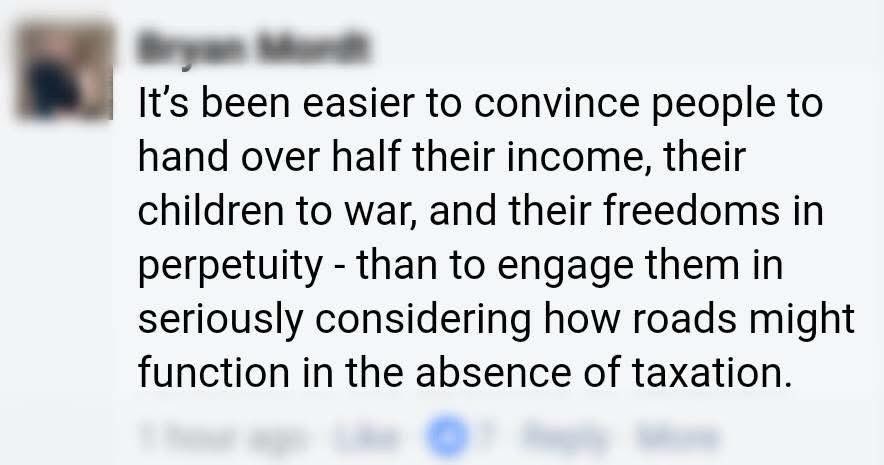
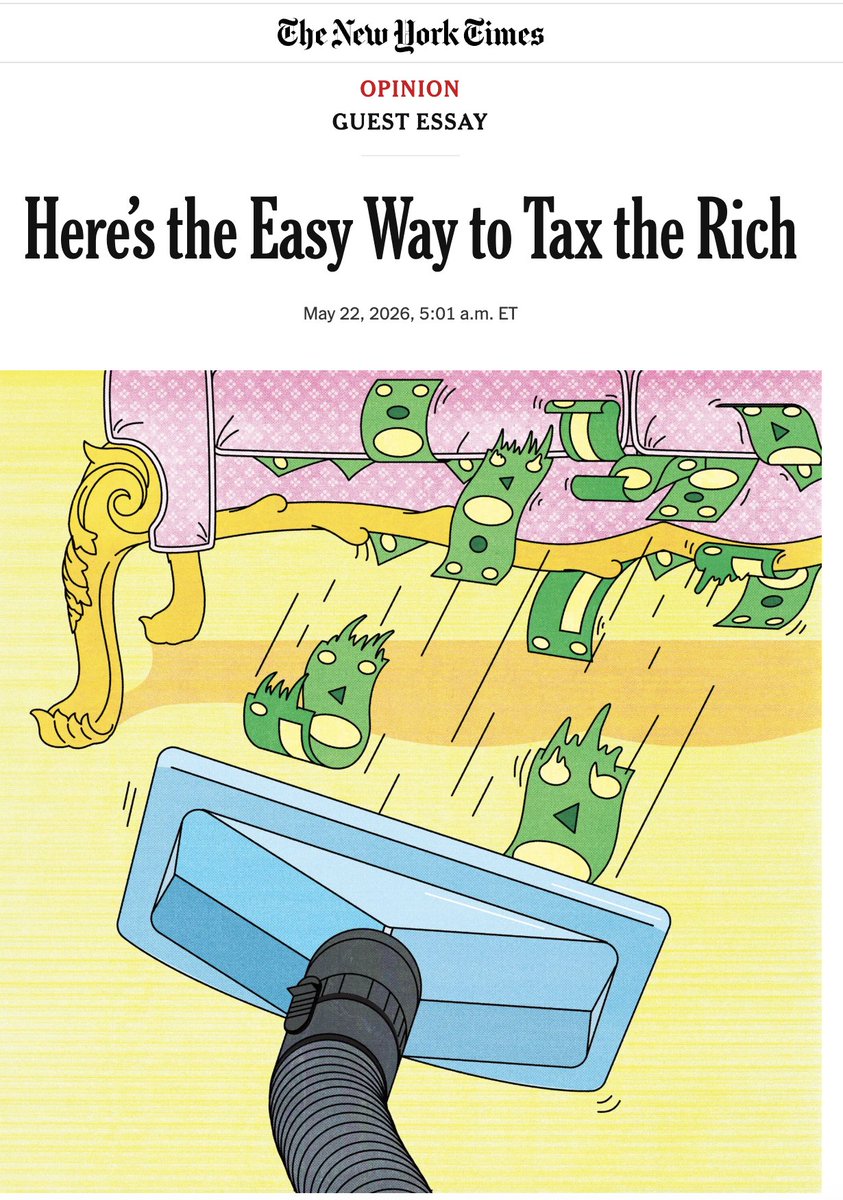
Probably a good idea to have some bitcoin.

43
May 22
How to break a statist...

Anyone remember that time that Bernie tried debating a libertarian?
2
64
xcsler_returns retweeted

May 20
NBC News, 1974. A reporter on a bus from Boston to New York asks passengers about the election. One man says voting is hogwash. The reporter asks if he ever voted. The man replies: a long time ago, but I learned later on that it was useless. That man was Murray Rothbard.
15
60
459
123,897
xcsler_returns retweeted

May 19
I’m conflicted. Anyone else?
On one hand, Thomas Massie is the best Congressman we have, by a wide margin. He stands on principle and forced the Epstein files into daylight, which should permanently change how people understand the way the world actually works.
On the other hand, his winning feeds the illusion that we can vote our way out. The attempt to achieve liberty through the Republican Party has already failed. The trajectory isn’t improving.
The technocrats are moving at warp speed, faster under total Republican control. The only real exit is for people to recognize their rights don’t come from government, take command of their own thoughts, actions, and emotions, and build parallel systems.
If politics is understood as a tool to slow technocracy while we build alternatives, great.
If a Massie win becomes another excuse to outsource your free will and skip the work of building outside the system, it’s a gigantic net negative.
43
34
198
7,952
xcsler_returns retweeted

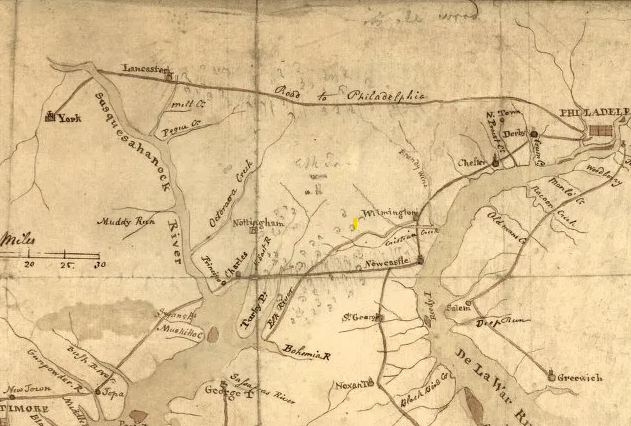
The private sector, not the state, provided the infrastructure that formed the backbone of early U.S. capitalism. As American industrialism took off, roads, railways, canals, bridges and ports were constructed by private companies who charged citizens and businesses tolls to use them. In the early 1800s, 2-3,000 private Turnpike Companies constructed and operated toll roads in a private enterprise system comprising up to 50,000 miles of road. Many were eventually outcompeted by the rise of another private initiative: the railroads. With the banking system reaching scale to fund the large capital investments needed to lay tracks over the vast American landscape, railroad companies drove the industrialization and westward expansion that finally integrated the vast economy.
In an age of crumbling public infrastructure and massive government debt, this story remains highly relevant. It demonstrates that private enterprise can successfully deliver large-scale public goods, with user fees creating strong incentives for proper maintenance. Private enterprise laid the foundation for America’s economic rise - not through central planning, but through private initiative, investment, and innovation.
1
27
52
3,271
xcsler_returns retweeted
May 16
Molinari argued for a double right of secession: for a state to leave the union, and for a city to leave the state. The American system permits neither. Not because it was designed for freedom, but because it was designed to prevent it. @RyanMcMaken
2
10
47
5,444
xcsler_returns retweeted

If Mr. Saturday Night scores in game 6 vs Buffalo, we are giving away an official jersey!
Follow @thesickpodcasts, retweet and comment "SICK" to enter!
#thesickpodcast
@TonyMarinaro

1,464
1,264
1,195
109,113
xcsler_returns retweeted

May 9
La izquierda no te ha subido el alquiler.
Te ha dejado SIN PISO.
Año 2020. Argentina.
El sueño húmedo de cualquier progre español:
Se aprueba la "Ley de Alquileres".
Intervención brutal del Estado, precios controlados, “protección al inquilino”.
¿Qué pasó realmente?
El mercado cayó en picado.
Propietarios, hartos de perder dinero y seguridad, no alquilaban.
Oferta: prácticamente cero.
Sí, cero.
Gente buscando piso como si fueran entradas para un concierto agotado.
Mercado negro.
Adultos volviendo a casa de sus padres.
Diciembre 2023.
Entra Javier Milei.
Y hace lo impensable para muchos:
BORRA la ley.
Cero intervención.
Libertad total de pacto entre propietario e inquilino.
La izquierda entró en pánico:
“Se dispararán los precios”
“Habrá abusos”
“La gente acabará en la calle”
Pero pasó justo LO CONTRARIO.
En pocos meses:
La oferta sube más de un 200% en Buenos Aires.
Repito:
200%.
De no haber pisos… a competir por alquilarlos.
¿Y los precios?
Al haber tanta competencia por alquilar,
los precios en términos reales EMPEZARON A BAJAR.
¿Magia?
No.
Mercado.
El malvado “capitalismo salvaje” hizo en 3 meses lo que el Estado no logró en 3 años:
Que la gente tuviera pisos para elegir.
Ahora mira España. 2026.
Mismo discurso.
Misma obsesión:
“Hay que topar precios”.
La misma receta rancia que ya fracasó en:
Argentina.
Berlín.
Estocolmo.
Porque es más fácil señalar al “propietario especulador” que admitir esto:
Si castigas a quien alquila,
no proteges al inquilino.
Lo dejas en la calle.
Las matemáticas no tienen ideología.
Pero siempre ganan.
Si quieres más vivienda:
menos política.
Si quieres vivienda, defiende la propiedad privada.
Y si quieres vivir de los demás, sigue votando lo mismo.
91
480
1,422
46,016
xcsler_returns retweeted

May 10
Every time someone talks about "wealth hoarding" I have to resist the urge to smack them. First because none of it is "hoarded", it's all invested in stocks and bonds - the things that makes our whole economy work. Second, even if it was literally being hoarded in a giant underground vault in North Dakota, so what? They earned their money and can do what they want with it. And unless they're a hedge fund guy they earned it by creating value for everyone else. It's not their responsibility to distribute their wealth to a thousand social justice NGOs that end up doing the opposite of their stated goal. Finally, I really really REALLY hate the losers who say rich people shouldn't give their money to their own kids. They absolutely should and anyone who says otherwise is your enemy and should be treated as such.
4
2
45
713