
Writer. MEAD co-founder. @jewishpolicy, @Jerusalem_Post. Books: 'While Israel Slept’, Shadow Strike', 'Weapon Wizards', 'Israel vs. Iran'. @NiemanFdn Fellow.
Joined September 2011
- Tweets 11,157
- Following 936
- Followers 35,151
- Likes 4,177
835 Photos and videos


Jun 12
Yes, this reeks of racism. But it is important to understand what is really behind it.
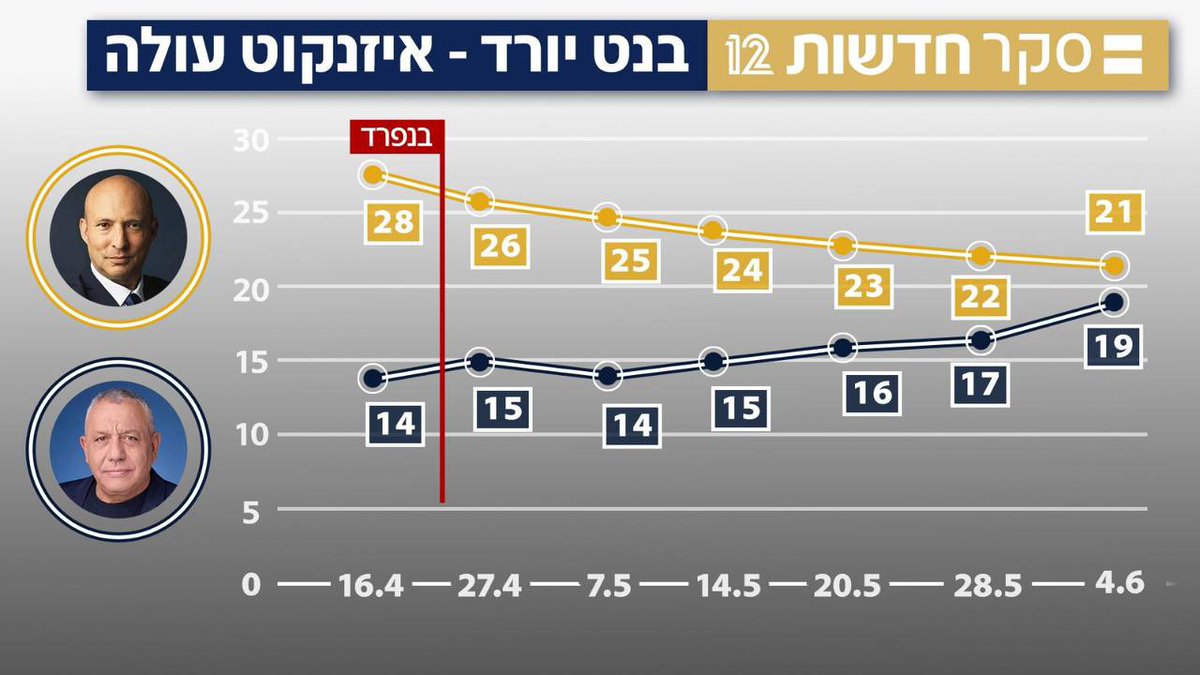
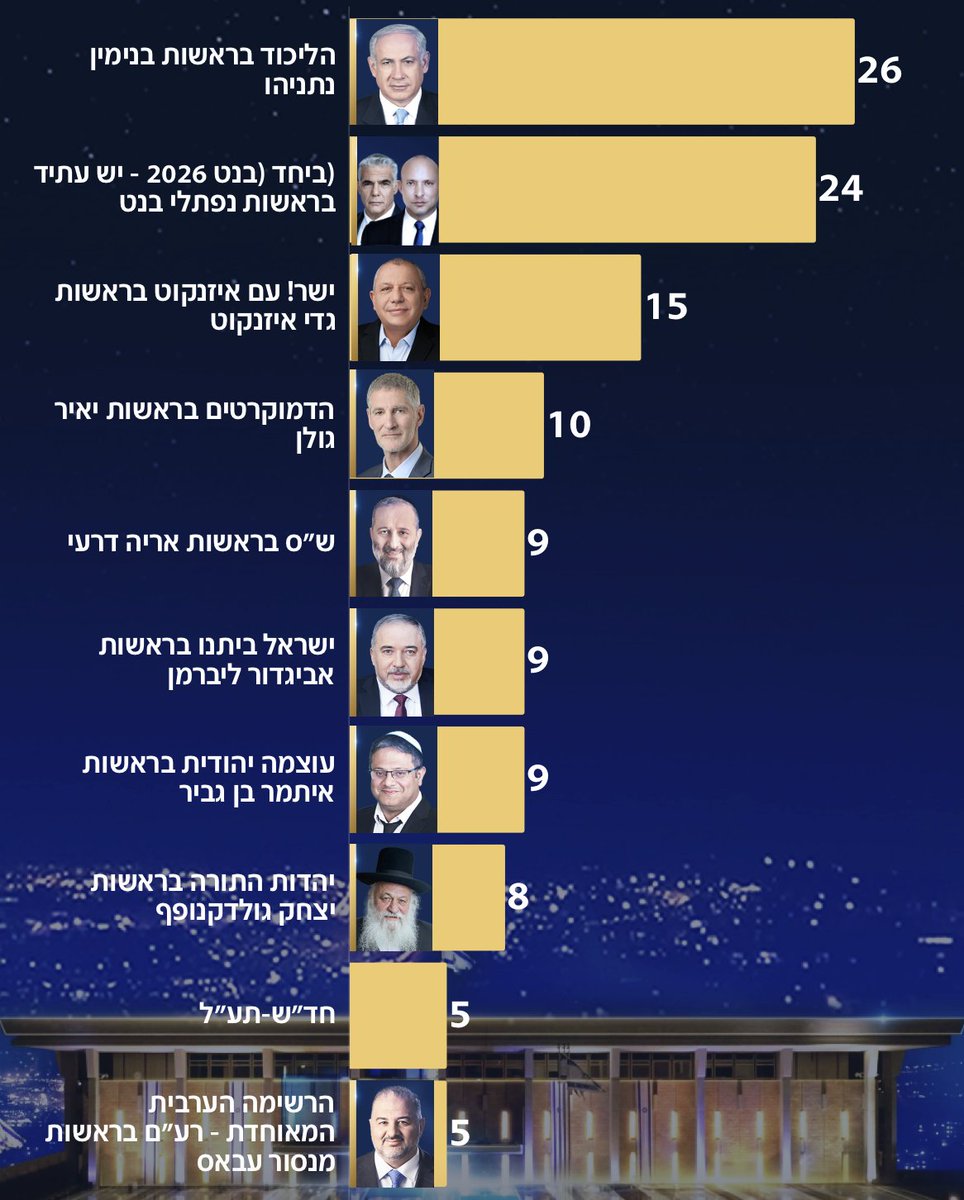
@gadi_eisenkot is now just two seats behind @Netanyahu in the polls. People around the prime minister like @jonatanu understand that Netanyahu is bleeding support and that some of those voters are drifting to Eisenkot. To stop that hemorrhaging, Likud is pushing the message that Eisenkot will "sit with the Arabs."
The goal isn't necessarily to convince Eisenkot supporters to abandon him. It is to scare Likud voters from leaving Netanyahu in the first place and prevent the shift from Bibi to Gadi from gaining momentum.
If anything, what this really reeks of is concern.

6
5
26
14,354
Yaakov Katz retweeted

Opinion | Now is the moment to reject a political culture that is built entirely on ridicule, division, and personal attacks. We have to demand that our leaders offer ideas instead of insults.
✍️ @yaakovkatz
jpost.com/opinion/article-89…
2
2
7
2,822
Jun 12
.@gadi_eisenkot was born in Tiberias to parents who immigrated to Israel from Morocco. He grew up in Eilat, attended several schools, and at 18 was drafted into the Golani Brigade. From there, he climbed through the ranks of the IDF, eventually becoming chief of staff in 2015.
@Netanyahu was born in Tel Aviv and spent his childhood in Jerusalem and in the United States. After graduating high school near Philadelphia, he returned to Israel to serve in the IDF, and then went back to the US, where he studied at MIT, worked in the private sector, and later served in Israel’s diplomatic corps.
Two Israelis. Two very different life stories. Both accomplished and both deserving of respect.
But if someone were asked – without knowing either man – which of the two is likely to speak English more fluently, the answer would be obvious – the person who spent formative years in the United States, the person who earned a degree there, and the person who worked there professionally for years.
That observation is not controversial. It is simple common sense. And normally, this would not matter. In fact, it should not matter at all.
Yet this week, Netanyahu’s senior campaign strategist, @jonatanu – yes, the same Urich who has been under investigation in the Qatargate affair – decided to make this an issue.
Urich took to social media to ridicule Eisenkot’s English. He reposted an old video of Eisenkot speaking at the Washington Institute and mockingly referred to him as “Mr. Hasbara.” The intent was obvious. It was an attempt to portray Eisenkot as unqualified for national leadership because he is less fluent in English than Netanyahu.
Earlier in the week, after Eisenkot challenged Netanyahu to a debate, Urich responded with another sneering reply: “Are you prepared to do it in English?”
The absurdity is hard to overstate. There is no reason for Israeli prime ministerial candidates to have perfect English. If they were to hold a debate – which sadly Netanyahu refuses to do – it would obviously be in Hebrew because they are running to lead Israel.
What makes Urich’s attack bizarre is that he framed it as a criticism of Eisenkot’s ability to explain Israel’s case to the world.
He might want to look in the mirror.
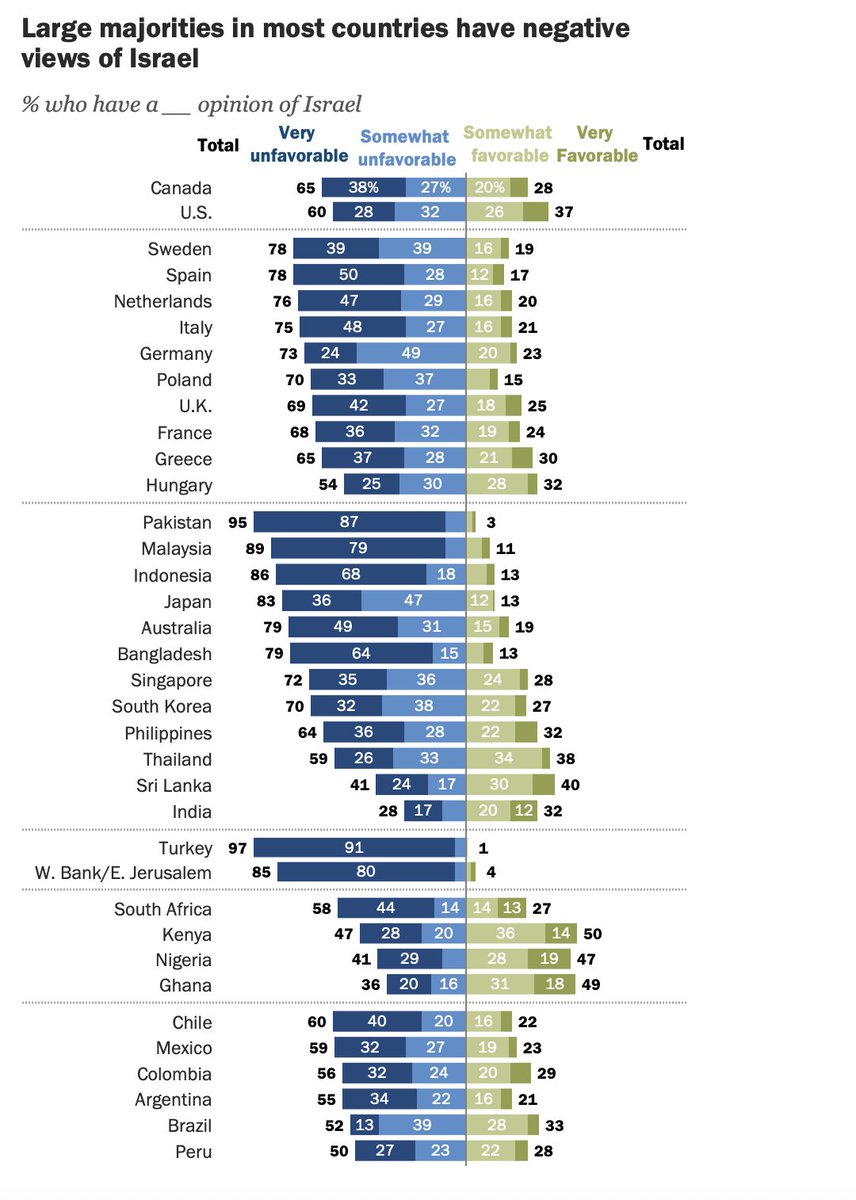
Just a few days earlier, a Pew survey showed majorities in 36 countries – including the United States, Canada, Britain, Italy, Spain, Sweden, and Poland – holding negative views of Israel. Earlier this year, Gallup found that for the first time in a quarter century, more Americans sympathized with Palestinians than Israelis.
These trends emerged while Israel was led by a prime minister with excellent English, and if English fluency was the secret to successful public diplomacy, those numbers should look very different.
The truth is that this was never about English. It is about something far simpler: finding another way to delegitimize a political opponent.
What is striking is not merely the content of these attack but the complete absence of anything positive. There is no attempt to explain why voters should support Netanyahu’s vision or to present a roadmap for the future. There is no discussion of policy, strategy, or national priorities.
Instead, the focus remains one – tearing down opponents.
Eisenkot does not need anyone to defend him. He spent more than four decades in uniform, he was wounded in combat, and he made life-and-death decisions daily.
This is also not about him. It is about us and the political culture we are willing to accept.
We can refuse to allow people like Urich to define the tone of the national conversation.
He and the party he serves need to understand that he is not the norm, but rather the exception.
And if we care about the future of Israeli democracy, we should make sure he remains one.
15
18
153
39,227
Jun 12
Thanks for the fun time. To co-host with @LeviYonit is like playing basketball with Michael Jordan. Top of the game.
Jun 12

Had the pleasure of hosting the Unholy podcast this week with the incredibly insightful @yaakovkatz. We talked Netanyahu’s high-stakes tightrope walk with Trump, the U.S. primary wars-- and why Gadi Eisenkot’s English skills really don't matter:
2
2
26
4,345
Yaakov Katz retweeted

Has the Middle East fundamentally changed over the last two years? @yaakovkatz speaks with @NadimKoteich, a leading Arab journalist, former General Manager of Sky News Arabia and columnist for Asharq Al-Awsat, about Iran, Hezbollah, Lebanon, and what the region might look like after the wars that have reshaped it. For the full episode: linktr.ee/jppipod
2
10
2,070
Yaakov Katz retweeted

Jun 10
Happy to have sat down with @yaakovkatz, a dear friend and a beautiful mind..
we talked Iran, GCC, Lebanon, Trump and many other issues..
worth your time, I hope
The Middle East After Iran: What Comes Next? youtu.be/ZzMkmaAWBf8?is=878k… via @YouTube
1
3
19
5,027
Jun 10
The clash between Israel and Iran this week, the continued fighting in Lebanon, and the still-unresolved war in Gaza continue to reshape the Middle East. I spoke with @NadimKoteich, one of the Arab world's leading journalists and commentators, about the significance of this week's events, what they reveal about Iran and Hezbollah, and what may come next for the region - especially Lebanon.
youtu.be/ZzMkmaAWBf8?si=U1qX…
1
9
4,348
Yaakov Katz retweeted

🚨 Israel-Iran war analysis
"Striking Iran without US green light strengthened Israeli deterrence,"
says Yaakov Katz @yaakovkatz , senior fellow at the Jewish People Policy Institute and former editor-in-chief of the Jerusalem Post.
"It’s possible this is exactly what was agreed upon quietly between Jerusalem and Washington.
"Trump has an interest in ensuring Tehran understands that dragging out talks and exploiting his desire for an agreement comes at a price."
📰 Read the story - link below
2
3
5
1,748
Jun 9
אנגלית היא כנראה לא הבעיה המרכזית של ההסברה הישראלית. תחת רוה״מ הנוכחי, שמדבר אנגלית מצוינת, ראינו את ההידרדרות החדה ביותר בדעת הקהל העולמית כלפי ישראל.
מספיק להסתכל על סקר PEW שפורסם לפני כמה ימים: בארה"ב 65% מחזיקים כיום בדעה שלילית על ישראל, בבריטניה 69%, ובאיטליה 75%.
מסתבר שאנגלית מושלמת לא מספיקה כדי לשכנע את העולם.
2
5
1,651
Jun 8
It is hard to overstate the dilemma facing @netanyahu. He has promised the Israeli public victories that he cannot deliver - partly because of his own policies, partly because of the constraints Trump has placed on Israel’s freedom of action.
The deeper problem is that even if he wanted to be more aggressive, it is far from clear that it would change the outcome. At this point, everyone understands where this is heading - a negotiated deal.
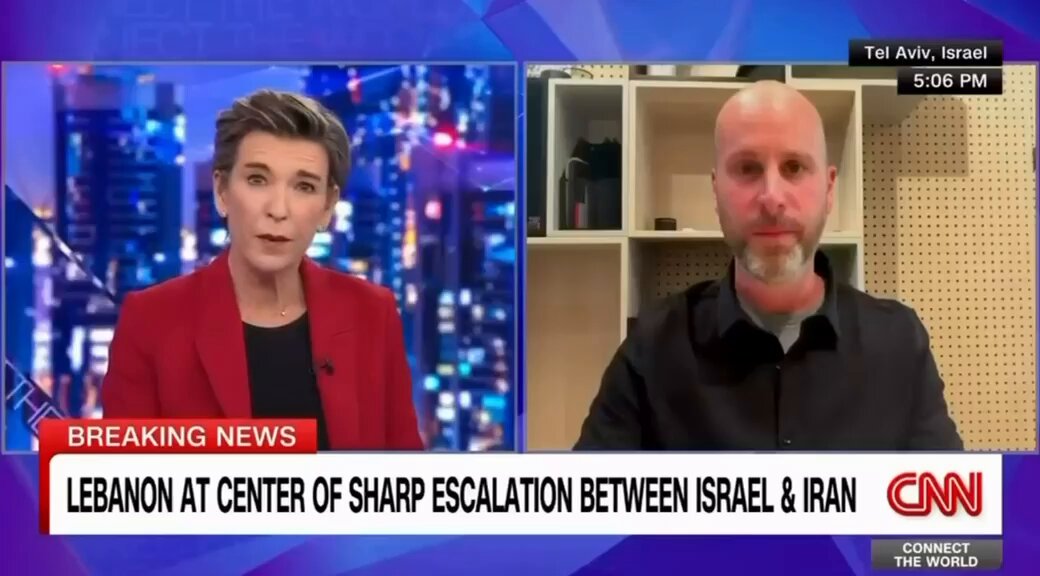
Today on @cnni with @BeckyCNN.
2
11
51
12,577
Jun 8
Israel sent Iran a strategic message this morning: we act independently.
President Trump might have told Israel not to act in several interviews, but in the end Israel did what it believed it needed to. While this appears to defy Trump, it could just as easily have been coordinated - America stays out of this round, but Iran learns that Israel is prepared to act with or without the US.
And that message matters because Iran had been playing America for a fool. It dragged out the talks while continuing to destabilize the region - attacking the UAE, Bahrain and Kuwait (remember the attack on Kuwait’s airport a few days ago?).
Then came yesterday’s missile attack on Israel. Beyond the immediate threat, it carried a message that Iran still believed it could dictate the rules of the game all over the Middle East including in Lebanon.
This was not a regime acting like it was about to make a deal or wanted to compromise. It was acting like a regime that believed it was immune and that Trump was so desperate for a deal, that he would do anything to avoid a new round of fighting.
This morning, it learned a different lesson.
378
672
3,902
334,400
Yaakov Katz retweeted

Jun 7
U.S. forces across the Middle East remain vigilant and ready.
413
1,429
9,364
390,996
Jun 7
Iran will claim that its missile fire is a response to Israel’s strike in Beirut’s Dahiyeh today. That excuse is largely irrelevant now.
The question is no longer why Iran fired, but how Israel responds. No Israeli government can allow a direct Iranian missile attack to pass without a response of its own. Expect at least a couple of very tense days ahead.
47
51
279
55,343
Yaakov Katz retweeted

Jun 7
A short letter, not to condemn nor condone this alleged behavior, but to put some context into this….”Dear world: most friends spy on eachother. It kinda sucks, buts it’s way the game is played. Luv, every intel officer current and former on the planet.” nytimes.com/2026/06/06/us/po…
21
49
147
20,316
Jun 7
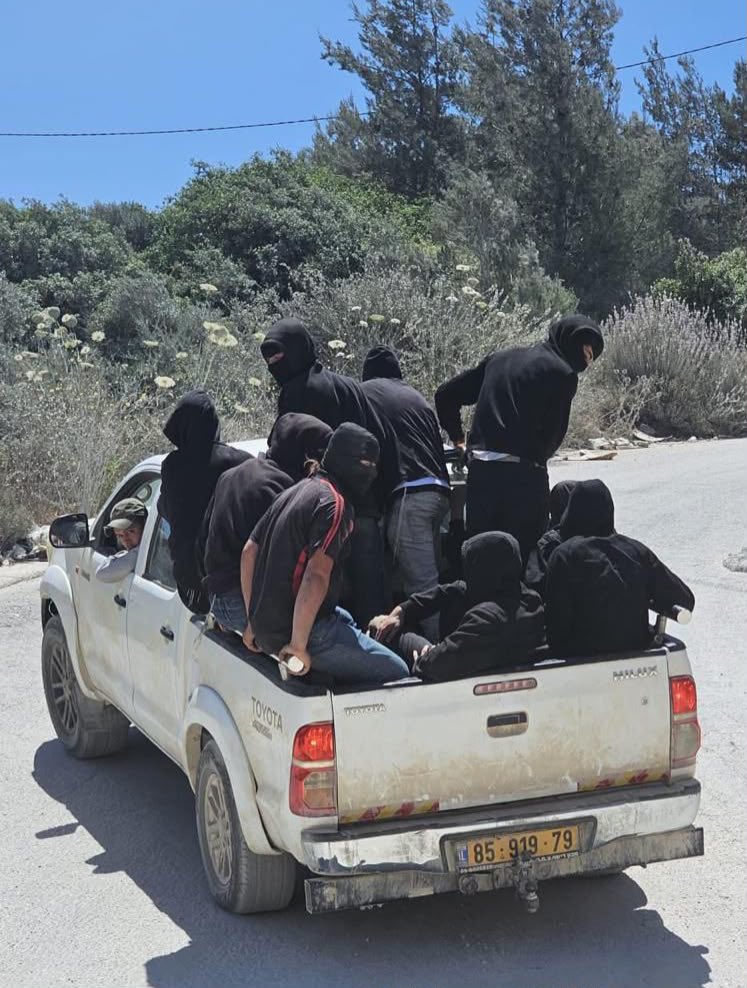
We can be sure of one thing: if these were Palestinians who entered an Israeli town on Shabbat with masks and sticks and beat up Jews, they would either be dead or in a Shabak cellar under interrogation.
The fact that these Jewish terrorists are still free is a stain on us all.

34
80
443
48,180
Yaakov Katz retweeted

Jun 5
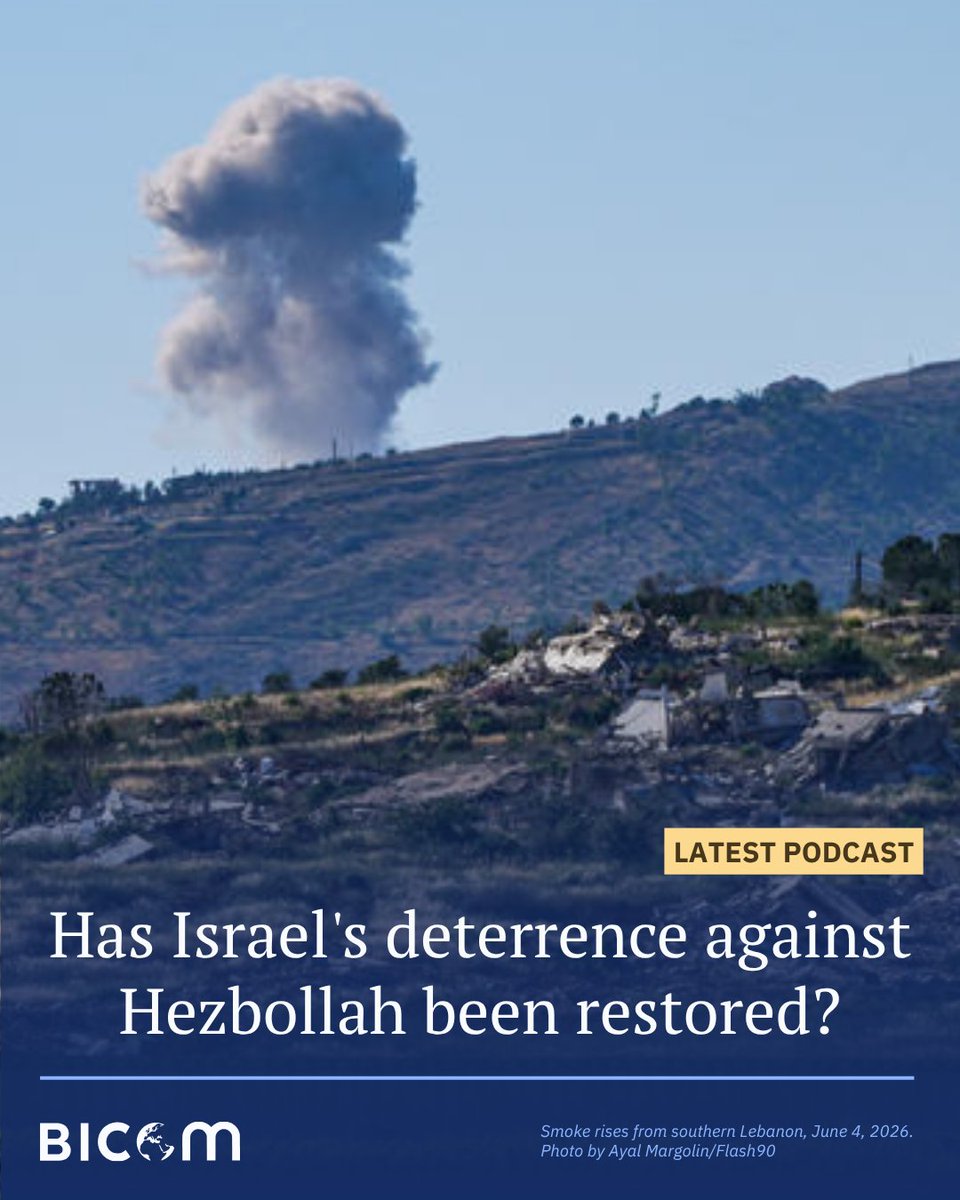
❓ Why has Hezbollah's use of fibre-optic FPV drones become such a serious challenge for the IDF?
❓ What does Israel's return to Beaufort Castle mean?
❓ Could Gadi Eisenkot emerge as the real challenger to Netanyahu?
Tune in to the latest episode BICOM's podcast where we discuss tactical lessons and political consequences of war with Hezbollah with author and commentator @yaakovkatz.
Available now on your favourite podcast platform.
1
1
911
Jun 5
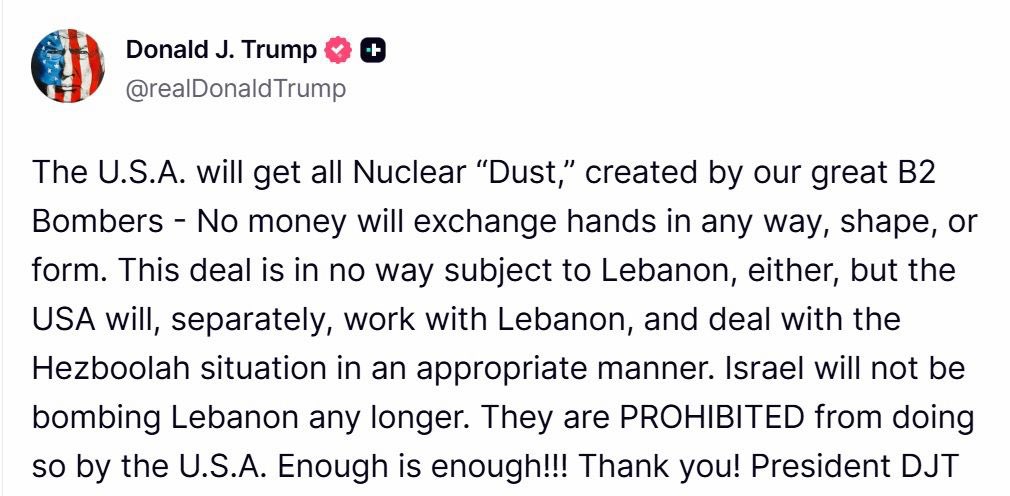
It’s no fun to say this but - as of this writing - Hezbollah has won the war against Israel. Yes, it is weaker and yes, it has been hit hard. But what happened this week - the linkage with Iran that has been legitimized by Trump & the ceasefire the president has imposed on Israel - all mean that Hezbollah has not only survived while retaining significant capabilities that continue to kill Israeli soldiers almost daily, but now, Iran calls the shots once again of what happens in Lebanon.
My latest in The @Jerusalem_Post.
jpost.com/opinion/article-89…
62
79
224
45,280
Yaakov Katz retweeted

Jun 4
Mojtaba has a good reputation among the homicidal elite of #Iran's regime.
Jun 4

Trump on Mojtaba Khamenei:
He has a very good reputation in some circles, actually.
Some people say bad, but a lot of people say bad about me. It's totally false, of course.
51
77
410
17,367

Are Trump #Netanyahu cooperating, or not? USA-#Israel relations on the rocks? Watch @YaakovKatz, author ("While Israel Slept") and Jerusalem Post ex-editor, tell me: plus the end of USA military aid to Israel? And more in The #Mossad Files video special: youtu.be/ybu81q7w4hs
1
1
1,194
Jun 4
.@naftalibennett is in trouble and the writing was on the wall. His merger with @yairlapid is not picking up steam. On the contrary- @gadi_eisenkot is - as of now - clearly the leader of the opposition and the camp that is looking to oust @netanyahu. If this group has a chance to win it will need to fall in line soon behind a leader and as of now that leader is Eisenkot.
9
8
26
9,095