
Co-founder & CEO @bankwithrelay. Prev @Hubdoc @WaveHQ
Joined October 2010
- Tweets 1,978
- Following 596
- Followers 1,379
- Likes 10,078
79 Photos and videos

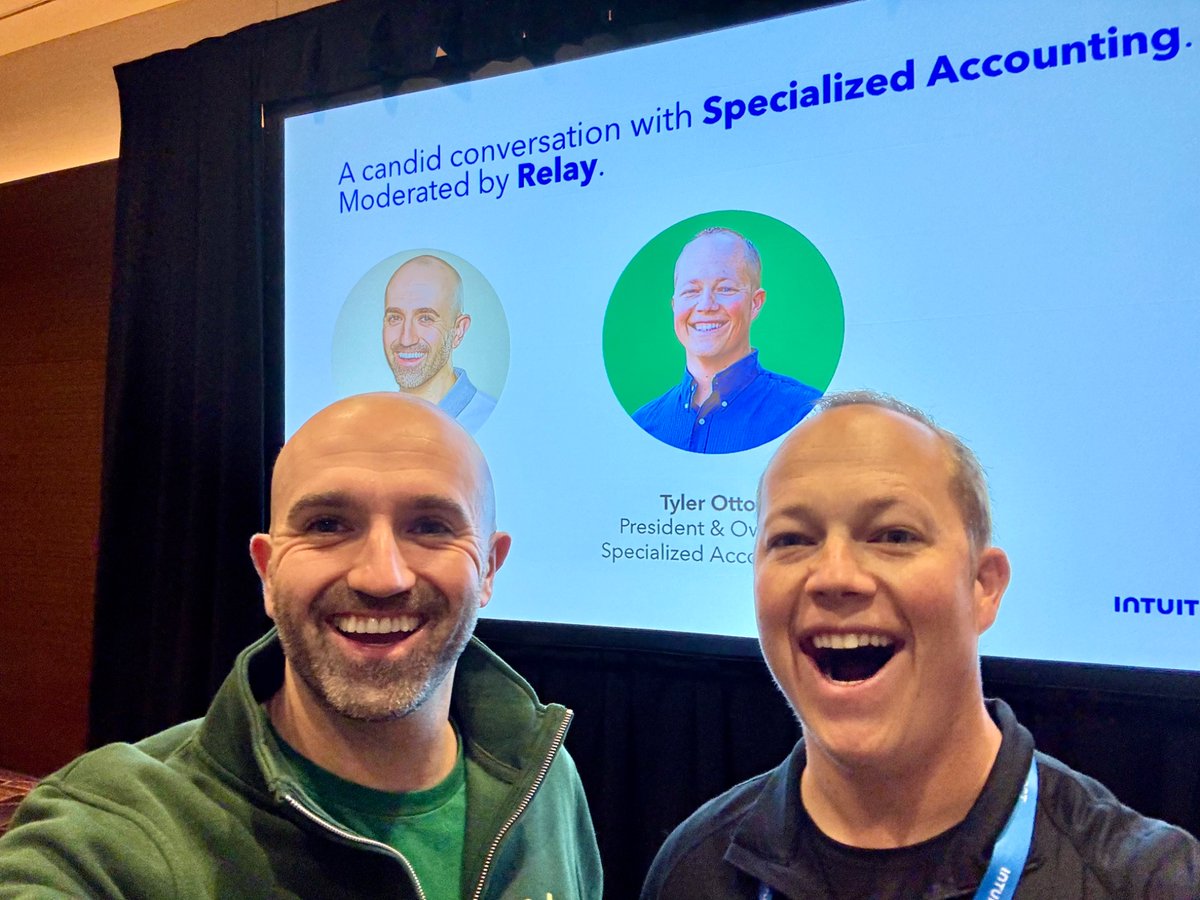

Jun 8
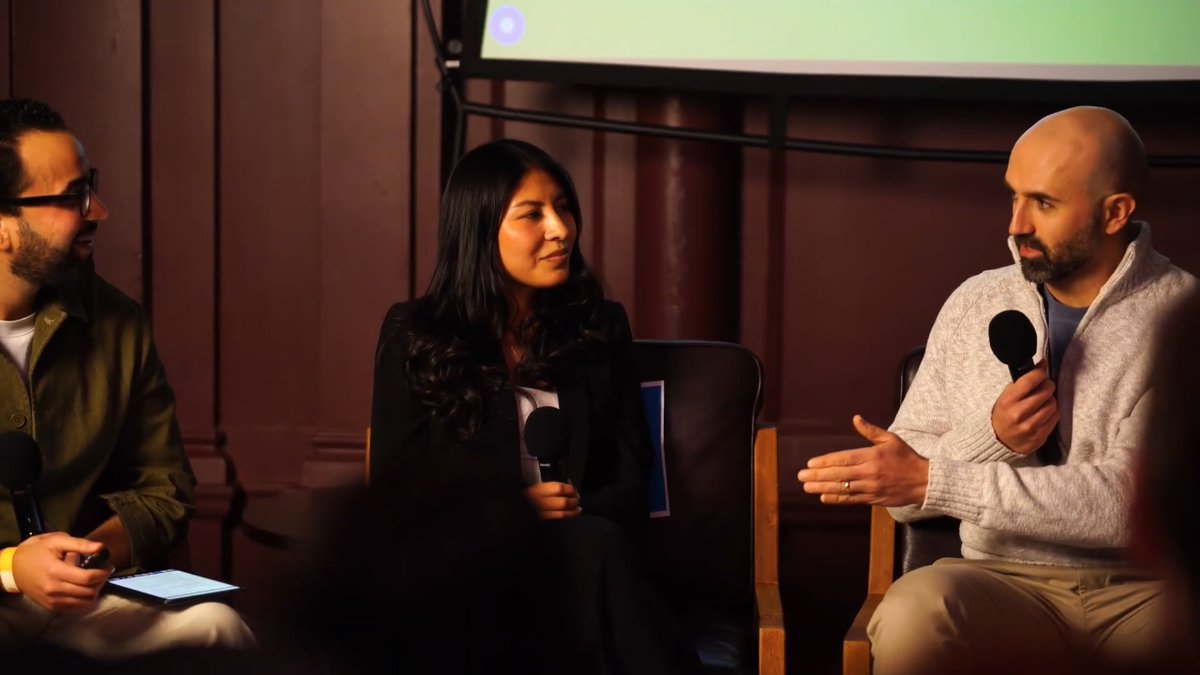
I was at @CreatorEconNYC in April, where I talked to a creator with 80,000 Instagram followers.
They were smart, clearly skilled at building a meaningful following, and had already gone the distance in building their audience. What they hadn't yet found was a roadmap for what comes next. Nobody had ever really shown them the chasm you need to cross when going from a creative talent to running a sustainable business.
Walking around the summit, there was so much real potential. And what 9 out of 10 people were looking for was a clearer sense of how to build a business around what they’d already started.
It feels ironic when you contrast this with the VC and startup space, which is meant to be trailblazing but in a lot of ways feels much more professionalized today. There’s a thriving ecosystem built to help founders lay foundations, stay grounded in business fundamentals, and scale their companies. Someone has almost always tackled a problem before you, and you have a playbook to learn from.
The equivalent is hard to find for small business owners. There’s no YCombinator for the content creator, independent electrician or baker.
These are people who are excellent at their craft and have built something from the ground up, but often lack access to networks that would help them go further. Every business owner has to learn a new set of skills as they grow: financial fluency, systems that run without you, leadership and people skills. While startups have spent decades building infrastructure and a shared language to help founders scale, small business owners are still largely figuring it out alone.
There are 33 million small businesses in the US. If even a fraction of them had the same cultural scaffolding as tech, the compounding effect on jobs, communities, and wealth would be enormous.
4
59
Jun 1
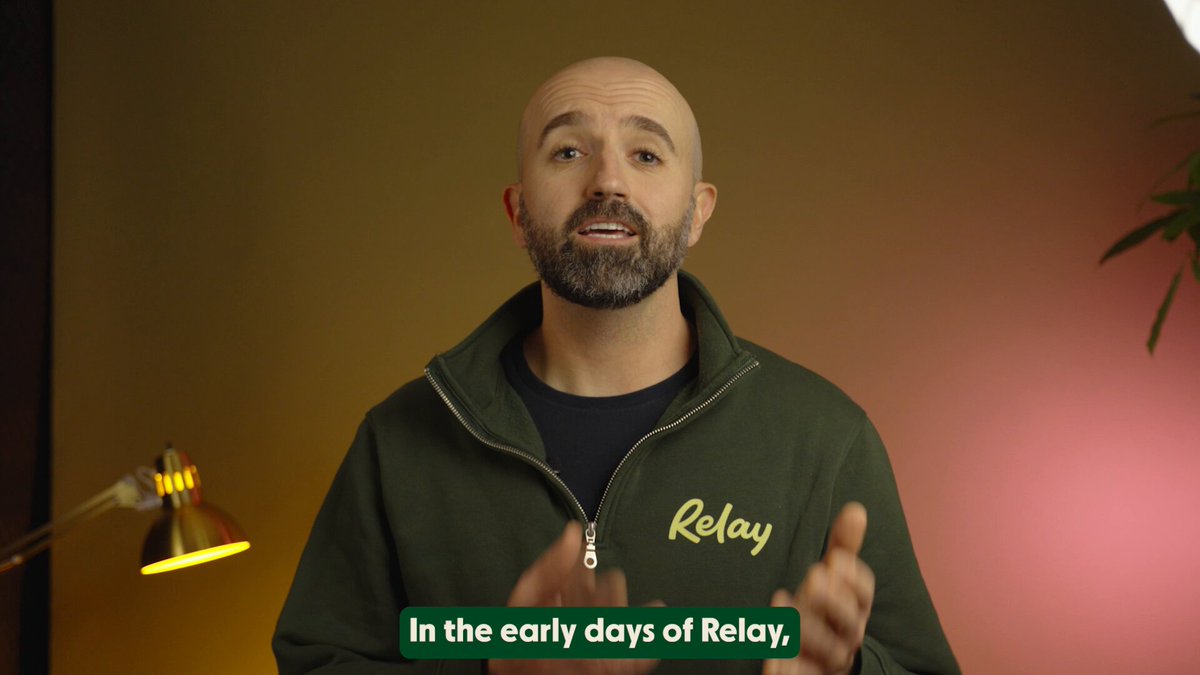
Relay’s first really pivotal growth moment happened in 2021, when we went from ~300 new customers a month to 1,000 overnight, thanks to a single strategy. We went out and found more opportunities like it, and it completely transformed the business.
I’ve learned that you can’t depend on any single channel. But growth, in my experience, is really the process of finding "fast lanes." Imagine you're stuck in traffic, and somewhere ahead there's a lane that's actually moving. You need to find a way to get there. That's where we were in the early days, trying everything from paid ads, to partnerships, to sales incentives, but nothing was helping us grow the way we wanted.
We figured we'd try something new, and got listed on one of those sites that ranks and reviews business tools, thinking it might help us get an extra 100 customers a month (if we were lucky!).
Fast forward a few weeks, we’re listed, and we're bringing in 3x new customer applications every month. But back then we were also just getting started, so we’re not prepared to handle such a surge overnight. We end up spending weeks and weekends reviewing applications to try and hire enough people to handle the new demand.
We were stretched thin, and in those moments, it can be tempting to slow things down. But the best thing we could do for Relay was double down, to find 10 more opportunities just like the last that could help us grow even more. The rest was growing pains, things we could endure in order to stay in the fast lane.
Sometimes it feels like to grow you have to push harder against the same obstacles. But in my experience, growth comes from finding where momentum is already working in your favour and going all in.
4
1
57
Yoseph West retweeted

May 5
Introducing InstaSwitch.
5.4 million US businesses try to switch banks every year. 60% never finish. $72 billion in revenue disappears into that gap.
The next ten years of business banking will be won on activation. The fintechs and banks that close the gap between opening an account and operating one will own the deposit base.
Today we're officially launching InstaSwitch, the switching infrastructure that powers business banks to close this gap.
We're live with $4.7M in seed funding led by @ChicagoVentures, with participation from @8bitcapital, @btv_vc, and @PanacheVC , alongside angel investors from Unit, Square, PayPal, and Plaid.
Short video on why we built this.
8
10
41
12,224
May 5
For years, I drove my team crazy by insisting I interview every single candidate until we were about 120 people.
It was the best possible use of my time, because hiring decisions have an enormous impact on company culture.
Imagine you grow from a team of 4 to 5. Mathematically, that 5th hire changes your culture by 20%. Their work habits, attitudes, and ideas about what matters will have massive influence on how the rest of the team operates. Whether the impact is positive or negative, you’ll see the ripple effects of bringing them on for years to come. That 5th hire will eventually recruit a team of their own, and the common thread connecting everyone will be their shared values.
So @pklicnik and I worked really hard to stay disciplined when hiring. This is much harder to do than it sounds. You’re constantly tempted to just get someone in-seat who knows how to do the job, ticks all the boxes, and quickly resolves some of the pain you’re dealing with (if things go well). You put pressure on yourself, but you also feel it from your team members who need the help. Which is why it's very tough to say “no” to someone who checks every box on paper but just isn't the right cultural fit, especially after multiple rounds.
The risk is that you’ll settle, and undoing that decision is way more painful than just holding out for the person who matches your values long term.
Looking at the culture Relayers have built, I'd commit to every one of those thousands of hours in interviews all over again.
1
2
8
772
Apr 30
I think more founders should talk about imposter syndrome. It can follow you everywhere in the early days of building your business.
I distinctly remember feeling it while on a flight to San Francisco to meet investors for the very first time. Trying to convince smart people to leave stable jobs and take a bet on Relay. Or when I was talking to big customers while our product was barely off the ground.
When something’s not working at that stage, it’s hard not to take things personally. And in a sense it is personal: your product doesn’t have any track record, so people are making a bet on you.
I’d treat every moment as a way to prove that Relay could get to the next step, which also meant that I’d be judging how well or poorly things were going in real time. And by doing that I was never fully present.
What got me out of it was advice that I still use to this day. There’ll be a ton of high-stakes moments while building a company. Before each one, stop and visualize things going well. Actually picture it in detail: the energy in the room, the back-and-forth, then reaching the outcome you're working toward. Once I started doing this regularly, I noticed my own energy shifting. It's like your brain stops anticipating what could go wrong and starts scanning for opportunities. In practice, meetings just go better.
Genuinely one of the most useful mental tools I've picked up over the last 7 years.
1
4
11
712
Yoseph West retweeted

Apr 23
say the thing!
it will help save Canada
buildcanada.com/memos/say-it
26
71
513
139,834
Apr 21
In the early days of @bankwithrelay, Metalbird was our biggest customer. I already shared about the day we almost lost them. What I didn't talk about is why they stayed. I've thought a lot about it since, and it came down to one conversation.
At one point, their co-founder Jason was driving back from a ski trip in Utah. We're on the phone and I ask him: what's the single greatest benefit of Relay? Without hesitation, he goes:
"That I get to call the CEO."
Of course, my first thought is: there's no way we scale like this. But the more I sat with it, the more I realized he was really pointing me to something bigger. There is something fundamental about what business owners actually need. Building a business is a lonely road. Having someone in your corner who will pick up the phone, own the problem, and not relent until it’s solved, that makes a world of difference.
Throughout our relationship with Metalbird there were a lot of fires. At one point, a large wire went missing. Jason called me every morning and every night asking where his money was. The team hustled and resolved the missing wire, but I never avoided that call, even when I had nothing new to tell him.
When their big sales days were coming up, I'd be glued to my laptop making sure their Black Friday and Cyber Monday went off without a hitch. At some point Jason told me: "If this Relay thing doesn't work out, you've got a career in customer service." I wear that badge with pride.
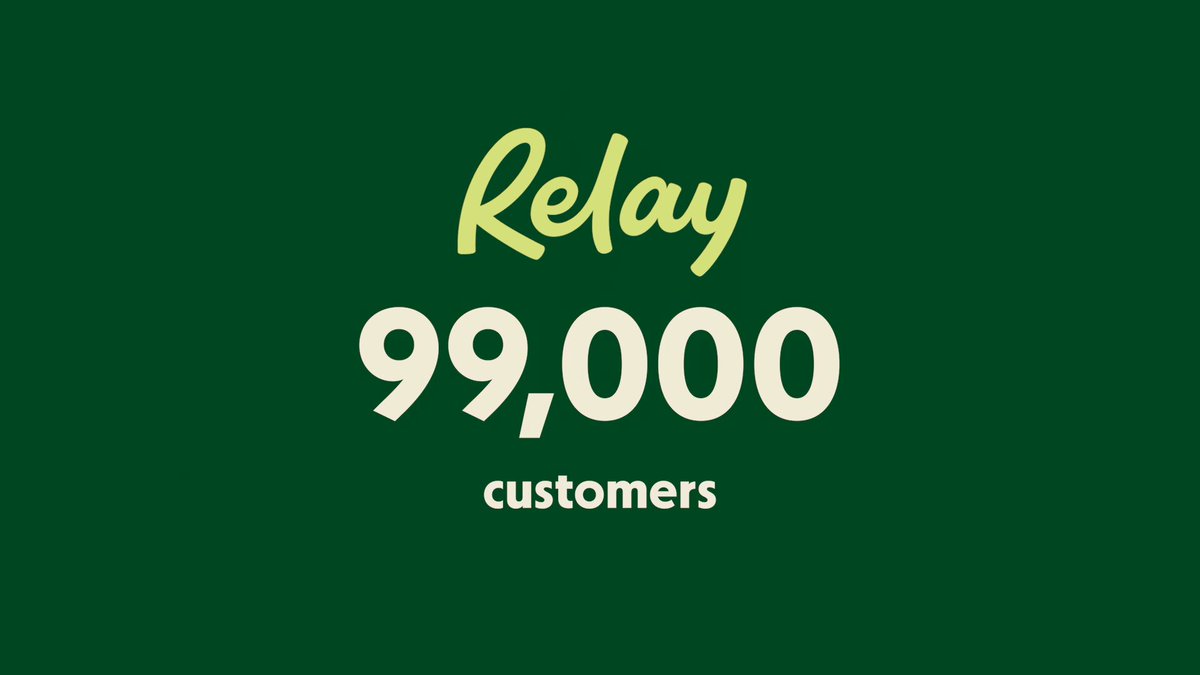
We're 250 people now. We have entire teams dedicated to being in our customers' corner. But the DNA of how we showed up for one customer when we were small is the same way we try to show up for 100,000 today.
Today, it's easier than ever to ship a product. To build a lasting business, you have to focus on what happens after: actually actually owning the outcomes for your customers.
2
1
1
331
Apr 15
Early on, every business has that one big customer who decides whether you live or die. How you show up in the hard moments with them is what matters.
Ours was Metalbird.
They’re an e-commerce business out of New Zealand, and their co-founder Jason opened a Relay account as they were expanding into the US. (Jason would later tell me that, at the time, he didn’t realize they were signing up for, in his words: “Yoseph in a garage.”)
They start using us for some everyday transactions, running some ad spend through Relay, moving money around. Then comes a moment when Jason needs to send a large amount of money to buy inventory.
At the time we had just launched Domestic Wires, so I recommend they use that. It’s faster. More reliable. We’ll even waive the fee for you, I say.
Jason sends the wire the night before he's set to pick up the inventory.
The next day, I'm at a conference in San Diego. I’d just finished talking to a room full of prospects. My phone rings. It's Jason.
He's sitting on the side of the road, in the middle of nowhere in the Midwest. He’d just walked out of his supplier’s warehouse empty handed. The money hadn’t landed.
He's mad.
And as we're talking, I must’ve said "I understand" one too many times.
He interrupts me and goes:
"No. I *don't* think you understand—at all."
And he was right. Because there's a difference between saying you understand someone's problem and actually feeling the full weight of it.
So I stopped.
"Jason, we can fix this. And if we can't, I will personally spend a day helping you move to another platform. I'll clear my calendar. This is where we are. And I'm really sorry."
When you're in crisis mode, the instinct is to manage: say the right things, de-escalate, protect the relationship. But customers can feel the difference between someone who's protecting themselves and someone who's in it with them and for them.
Metalbird is still with us today.
Our payments infrastructure is in a completely different place than it was that day, wires included, and we facilitate payments for 100,000 customers every month.
But I don't think that's why Metalbird stayed.
Next time, I'll tell you about everything we had to do to actually keep them.
4
9
1,099
Apr 8
Relay serves 100k businesses today but I clearly remember our very 1st one.
It was 2019.
The product had been live for less than a month, and I was at a @Xero accounting conference, with just a laptop and a Relay t-shirt, pitching to accountants and bookkeepers, getting feedback.
Then, one bookkeeper tells me: “You should really meet my client, Sarah. She’s completely fed up with her bank and their fees.”
So we get on a call.
I show Sarah the platform, and she says: “Look, the *only* thing I will use you for is ACH payments, to avoid all the fees I usually have to pay.”
“And…” she stresses, “I am NOT going to use you for anything else.”
And so, we onboard our first customer.
And yes, at first she uses Relay to only send ACH payments. But over time, she starts to like the platform more. It’s more cost effective. Visibility is better. And if something goes wrong, she texts me, and the problem goes away.
And slowly, over time, she ended up transitioning the rest of her everyday banking to Relay.
Years later, two things from that experience still shape how I think about building a business:
1 - Don't be too precious about how people use your product. As a founder, pride can get in the way of seeing what customers actually care about. You have to let them lead the way. If customers really only want one thing from your product or service, let them start there.
The rest comes later.
Or it doesn't.
Either way, you learn something.
2 - When you're small, responsiveness is a competitive advantage that others can't always offer. At that stage, you can personally show up when something goes wrong.
Use it.
3
3
13
1,538
Mar 31
Today, we’re proud to launch Relay Capital. ⚡ Meet term loans for businesses that need fast, flexible funding, without the friction.
Over the years, we’ve heard countless business owners tell us how hard it is to get the financing they need, when they need it.
Your business can’t pause for a lender's timeline.
Every day, you're thinking about how to kick off your next stage of growth—whether that's hiring, inventory expansion, renovations or a new location.
So, when the next opportunity pops up, you can’t afford to miss it because of weeks-long back and forth with traditional lenders (who could still reject you at the end of it all).
Relay Capital is the lending small businesses deserve: easy access to capital the moment it matters most.
If you’re an existing customer and you prequalify, a term loan offer will be waiting for you in your dashboard. Businesses can prequalify for loans between $1,000 and $250,000, based simply on their Relay account activity.* You choose your terms and decide what to draw.
Upon approval, you can receive funds in as little as 1 to 2 business days.
Most business owners know exactly where they want to go, but they need access to capital to realize their ambitions. Relay Capital term loans are our first step toward fixing that.
We're just getting started.
—
* Relay Capital funding is provided by Fundbox, an external third-party provider, or its bank partner, Lead Bank. All financing is subject to credit approval of a completed application. Fundbox and its bank partners base loan eligibility on their respective credit and risk policies, applicable legal requirements, and other business considerations. Financing may not be available in all states and may be subject to local restrictions where applicable. All loans are subject to credit approval and applicable terms and conditions. Borrowing involves fixed repayment obligations and applicable interest and/or fees. Approval timing based on typical experience; actual decision and funding times may vary.
10
11
27
3,806
Mar 24
Relay is 250 people today, and our first employee is still here. So here's what I'd tell every business owner making their first hire:
Screen for obsession.
It matters way more than credentials or experience. You can't train it. Someone either has it or they don't—and the interview will show you, if you know what to look for.
Tyler was our first engineer.
First time we meet, he mentions a video game he'd been building on the side, and what's supposed to be a 1-hour interview turns into a 40-min conversation about just this game. We talk about the mechanics, design, and all the research he’d done on how to make it super engaging. He just cared that much.
That's your signal, because it translates to the job.
When Relay was barely off the ground, we had one client send a large international wire. But we weren't sure if the SWIFT code they'd given us was correct. And we really didn’t want to call to confirm, because we'd already annoyed them a few times and didn’t want to look like amateurs.
It’s 6:37 p.m. and I leave to renew my license when I see an email:
"Guys, this wire better hit!"
Before I can think to respond, Tyler messages me, "I'm on it."
I figure he’s on his laptop. I come back to the office and find him at his desk with a pen and paper, working out an algorithm by hand to reverse engineer whether the SWIFT code is valid.
Nobody asked him to. Nobody pointed him at the problem. But he was already halfway through solving it before I walked back through the door.
That's who you want beside you when you're building from scratch.
2
2
213
Mar 11
Back in 2018, before we had a single customer, I went door-to-door talking to small business owners. One conversation has stayed with me ever since.
It was when I met Wanda.
She’d been running a bakery for 20 years with her husband David.
They told me how, at one point, they’d taken out a $400,000 home equity loan to support the business.
They had just finished paying it off.
Listening to them, it was so clear how much this business meant to them—how much they cared about their team, their customers, and their work.
They didn’t start their bakery to stress about finances.
But Wanda and David had experienced first-hand the financial “trial by fire,” and like so many business owners, they had braved it alone and come out on the other side. This was a reality for most businesses.
And nobody was building with them in mind.
First, most fintechs assumed their customers would have a finance team, a CFO at helm. That wasn’t the case here, and isn’t the case for most small business owners.
And second, the conventional “fintech wisdom” simply and bluntly said that you shouldn’t build for SMBs. The space is too fragmented. Too unforgiving. Our own survey of 1,000 small business owners, Relay Cash Flow Compass, backs this up: 88% of SMBs get hit with unexpected cash crunches every year, and 1 in 2 operate with less than a month of runway.
Despite this, Wanda and David’s bakery was still here.
And we knew there had to be millions of others, feeling the same cash flow challenges.
That was all the validation we needed.
1
4
335
Mar 3
On the journey, there are a thousand no’s. For me, they’ve always been data that we could use to get to a yes and a successful outcome. Early in the @bankwithrelay story, Y Combinator rejected us.
Their feedback was:
1 - “we agree that the current state of business banking is bad”
2 - “but… we can’t figure out how you’d get meaningful growth given your focus on accountants and bookkeepers”
3 - “and with the # of companies building new banking, the amount of competition, we don’t see how you’d scale.”
These were good questions. But @pklicnik and I had gotten so close to the problems faced by small businesses and their accountants, we knew Relay could scale and differentiate.
Our gut said that if we didn’t build it, someone else would. So we went all in.
// Part 2/10 of the Relay story—hit follow to catch the rest. //
1
3
17
1,414
Yoseph West retweeted

Feb 24
For the past 7 years, @bankwithrelay has quietly been a top-performing company in the SMB banking space.
Quiet killers - worth following 👇
Feb 24

In 7 years, we took @bankwithrelay from an idea to a platform that today serves 100,000 businesses across America. In the coming weeks, I’m sharing the story of how we got there.
Before we had the idea for Relay, we knew that to build a business you have to solve a real problem.
So every time I saw a challenge faced by business owners, I wrote it down.
For example, during my time at Hubdoc, I saw how hard it was to issue credit cards to manage expenses. (At one point, someone tried a "workaround" using consumer Amazon cards tied to someone’s personal credit… which Amazon promptly shut down.)
We also saw the constant hoops businesses had to jump through just to set up business banking.
Once set up, your banking data—your source of truth—would need constant manual cleanup before you could use it. It seems simple now, but back then it was actually painfully hard to share it with others who needed it, like your accountant, and get insights from it.
All of this meant that business owners operated blindly. Not knowing what cash was safe to spend and what should be set aside—because payroll, bills, and incoming payments all lived in a different place.
The real problem was cash flow visibility. And to solve it, you would need to go to the source: business banking itself.
And that's the idea that eventually became Relay.
This is part 1 of 10—stay tuned and hit follow to get the rest of the story.
Next week, I’m sharing how my co-founder and I decided to go all in.
3
4
5
1,700
Yoseph West retweeted

Feb 24
For years now, @BankwithRelay has been my preferred SMB bank. I use it for my business, and I recommend it to my clients. It is hands down the best banking option for small businesses.
Feb 24
In 7 years, we took @bankwithrelay from an idea to a platform that today serves 100,000 businesses across America. In the coming weeks, I’m sharing the story of how we got there.
Before we had the idea for Relay, we knew that to build a business you have to solve a real problem.
So every time I saw a challenge faced by business owners, I wrote it down.
For example, during my time at Hubdoc, I saw how hard it was to issue credit cards to manage expenses. (At one point, someone tried a "workaround" using consumer Amazon cards tied to someone’s personal credit… which Amazon promptly shut down.)
We also saw the constant hoops businesses had to jump through just to set up business banking.
Once set up, your banking data—your source of truth—would need constant manual cleanup before you could use it. It seems simple now, but back then it was actually painfully hard to share it with others who needed it, like your accountant, and get insights from it.
All of this meant that business owners operated blindly. Not knowing what cash was safe to spend and what should be set aside—because payroll, bills, and incoming payments all lived in a different place.
The real problem was cash flow visibility. And to solve it, you would need to go to the source: business banking itself.
And that's the idea that eventually became Relay.
This is part 1 of 10—stay tuned and hit follow to get the rest of the story.
Next week, I’m sharing how my co-founder and I decided to go all in.
4
3
11
1,109
Feb 24
In 7 years, we took @bankwithrelay from an idea to a platform that today serves 100,000 businesses across America. In the coming weeks, I’m sharing the story of how we got there.
Before we had the idea for Relay, we knew that to build a business you have to solve a real problem.
So every time I saw a challenge faced by business owners, I wrote it down.
For example, during my time at Hubdoc, I saw how hard it was to issue credit cards to manage expenses. (At one point, someone tried a "workaround" using consumer Amazon cards tied to someone’s personal credit… which Amazon promptly shut down.)
We also saw the constant hoops businesses had to jump through just to set up business banking.
Once set up, your banking data—your source of truth—would need constant manual cleanup before you could use it. It seems simple now, but back then it was actually painfully hard to share it with others who needed it, like your accountant, and get insights from it.
All of this meant that business owners operated blindly. Not knowing what cash was safe to spend and what should be set aside—because payroll, bills, and incoming payments all lived in a different place.
The real problem was cash flow visibility. And to solve it, you would need to go to the source: business banking itself.
And that's the idea that eventually became Relay.
This is part 1 of 10—stay tuned and hit follow to get the rest of the story.
Next week, I’m sharing how my co-founder and I decided to go all in.
3
5
33
5,709
Feb 19
For the second year running, we made the @Forbes Fintech 50 list! 🚀🚀🚀
We’re proud and grateful to be recognized again as a market leader. Moments like this are a great reminder of why we do what we do. We're here to make every small business great with money.
And, this is as much a win for us as it is for the mom and pop flower shops, main street boutiques, and neighborhood electricians who use @bankwithrelay every day to control their cash flow.
When 99% of businesses are small businesses, we all win when entrepreneurs can chart a clear path to profitability. Stronger small businesses mean stronger families, teams and communities, and we’re lucky to be a part of that 💚
In 2026, we're only accelerating. We’ve got big plans on the horizon: Relay Capital (new lending product), instant payments, AI-powered financial tools, a second season of our video podcast Becoming Self Made. The list goes on! 🔥 🔥🔥
If this sounds like work you’d like to be apart of, come build the future of small business banking. Open roles below!
10
8
23
4,641
Yoseph West retweeted
Jan 21
Venture is all about exceptions, and @ycwest and @bankwithrelay are clearly exceptional

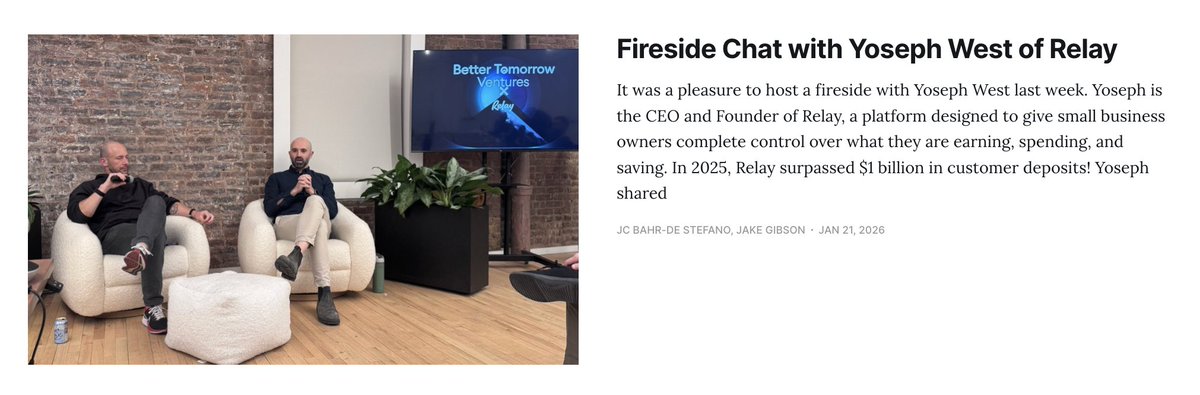
5 yrs ago, @ycwest pitched us @bankwithrelay, a B2B neobank for smbs. It sounded brutal - market too crowded model too hard - but @iamjakestream wrote the check anyway
End of '25: $1B in AUM & 100k customers 🤯
Last week we hosted a fireside chat with Yoseph - awesome candid convo with some great takeaways:
- Treat your channel partners as customers.
- What customers ask for vs. what they actually use aren't the same thing.
- If customers stick through a sh*tty product, there's something there.
- SMB failure rates don't matter if you target the right segment.
- Fintech is hard because the systems are complex and you have to earn trust every day.
Want to read more? Check it out! lnkd.in/gMh2k-Ru
3
11
2,597
Yoseph West retweeted

11 Nov 2025
.@thesavbananas changed the game of baseball—and now, they’re bending the rules of business.
Find out how founders @YellowTuxJesse & Emily Cole turned a struggling team into a global phenomenon in the latest episode of Becoming Self Made with @mikemichalowicz.
🎧 Download the full episode: tr.ee/xsjEzH
1
1
5
305