
Joined June 2009
- Tweets 5,101
- Following 3,572
- Followers 1,295
- Likes 1,658
335 Photos and videos









Yosef Levenstein retweeted

6 Mar 2025
Do you hear this,World ?
573
5,507
19,359
527,925
Yosef Levenstein retweeted

16 Jan 2025
I have invested in over 250 pre-seed startups, mostly in B2B software. The most successful ones have had some distribution tricks to quickly get their first happy customers.
Here are the Best (and worst) distribution wedges I have seen for Pre-Seed software startups.
47
169
1,689
321,489
Yosef Levenstein retweeted

11 Jul 2024
A moment of light in these dark times.
29 kids released from Gaza went on a special trip to Orlando.
They have overcome the worst, still mourning their family members and many still waiting for their fathers to be released from captivity.
@N12News documented these magical moments made possible by the non-profit @lehosheetyad
@yael_odem
📸: מיכל כהן גנאח
79
99
619
22,285
Yosef Levenstein retweeted

8 Jul 2024
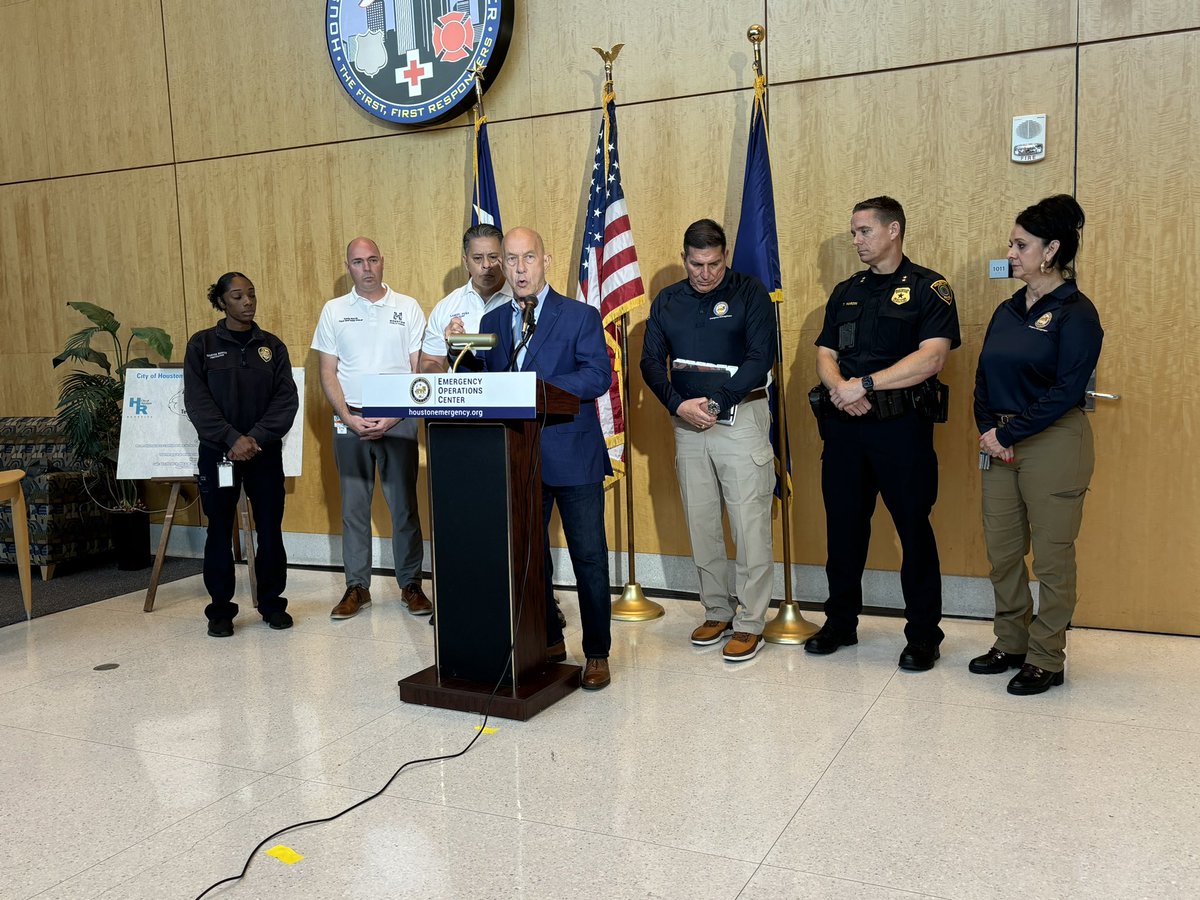
UPDATE‼️ Mayor Whitmire asks everyone to stay home and stay off the roads. @HoustonTX is in a life safety mode until the storm passes and we move to recovery.
Help us help you! We need our resources available to focus on emergency operations. #Hurricane #HurricaneBeryl
23
71
194
58,629

Houston and the entire Gulf Coast will come through the aftermath of Hurricane Beryl. Right now, keep your family safe—avoid high water.
#HoustonStrong
318
212
1,597
405,000

27 May 2024
The Best of Ronald Reagan's Memorial Day Speeches: A Tribute to Our Fallen soldiers #memorialday2024 youtu.be/1Mwcef5nVZ8?si=o8aD…
48
Yosef Levenstein retweeted

13 Mar 2024
I have some news.
As many of you know, shortly after I filed an internal discrimination complaint based on antizionist antisemitism on my campus, CUNY immediately placed me under investigation for doing so. Then, they tortured me for 8 months, refusing to tell me --despite knowing for all of that time-- that the outside firm investigating me had fully exonerated me.
Since I learned of my exoneration in a laughably short letter with no summary or information from the report, CUNY has refused to produce the full report, in violation of NYS FOIL laws.
One can only wonder what that report says of CUNY investigating someone for filing an antisemitism complaint. CUNY doesn't want me, or you, or anyone, to know.
But, "how can we continue to make Prof. Lax's life miserable until he finally leaves or steps down as dept. chair" is still clearly on CUNY's top to-do list.
As part of my protest against the main perpetrator of my campus's antisemitism problem-- my then direct supervisor, @CUNYKCCPRES, I resigned from her Personnel & Budget Committee, consistent with my absolute right to do so under CUNY Bylaws.
To my knowledge, I was the first and only person to ever resign from my campus's esteemed "P & B" committee, but I was very grateful for a principled colleague who thereafter resigned in solidarity with me.
I resigned because I did not wish to serve under the committee's antisemitic chair, President Claudia Schrader (who is now interim President of CUNY's York College).
This week, because of what I did, CUNY has announced plans to change bylaws that have stood for some 60 years. It proclaimed its plan to prohibit department chairs from resigning from the College P & B committee, for the first time in its history. Some on my campus have called me privately with sympathy, calling it "the Jeff Lax rule."
The rule forces participation on a committee that has been voluntary for department chairs for 60 years. It would require even a department chair who was sexually assaulted by the P & B committee chair (the college president) to continue to serve under that perpetrator.
It would, as with me, require a department chair with fully substantiated discrimination claims against the P & B committee chair (as I have by the EEOC against President Schrader) to continue to serve under that discriminatory, antisemitic chair.
It is outrageous, petty, and clearly directed at me in retaliation for the "crime" of speaking out about antisemites leading our campuses and about widespread antisemitism on our campuses.
I don't know how my story will end, and as a man with a family that I love dearly, that really scares me.
But it is clear that CUNY is intent on doing everything it can to make things continue to be AND end very badly for me.
Seeing other universities now beginning to take this same vicious and illegal approach, such as Columbia doing so to the courageous @ShaiDavidai, only strengthens my resolve to continue to fight what is happening on our campuses.
545
951
3,856
335,376
1 Feb 2024
did y'all know that search in finder on your Mac does not search your iCloud Drive, even if it's on finder??!?! You need to click on the drive icon and search in there. Not gonna lie, I am sort of disappointed @Apple
2
163
12 Jan 2024
Hot take. Breakfast tacos are best on:
0%
Corn tortilla
0%
Flour tortilla
0%
What’s a breakfast taco?
0%
Burrito me
0 votes • Final results
62
11 Jan 2024
Thank you for the work you do for YU and the Jewish people @AriBermanYU.
And a major thank you to your son!
10 Jan 2024

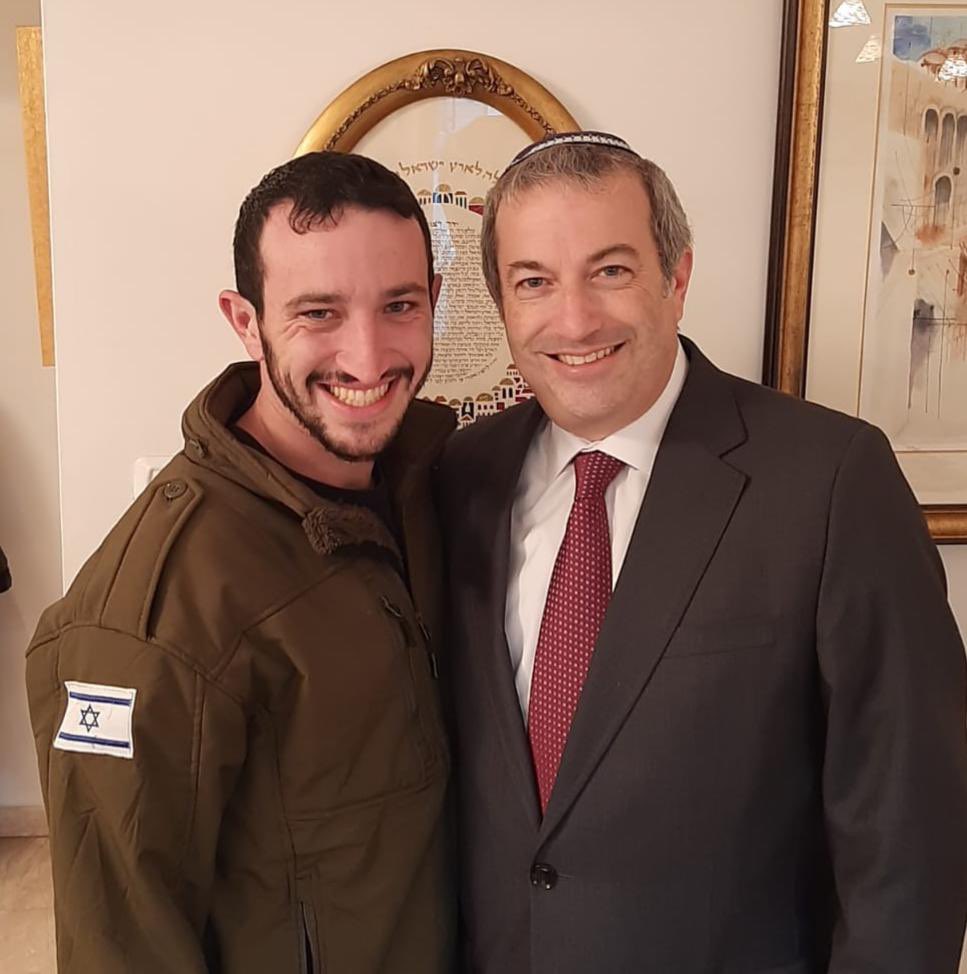
My son Yehuda is a combat reservist who was called up to service on October 7th. This is the first time I have seen him since he went off to war. I love you and am so proud of you Yehuda. May Hashem keep you safe.
1
93
4 Jan 2024
Check out "CodeLaunch HOU 2024 Semifinalists Reveal & Happy Hour" eventbrite.com/e/codelaunch-… @Eventbrite
48
Yosef Levenstein retweeted

21 Dec 2023
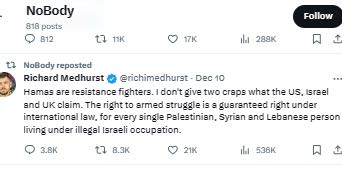
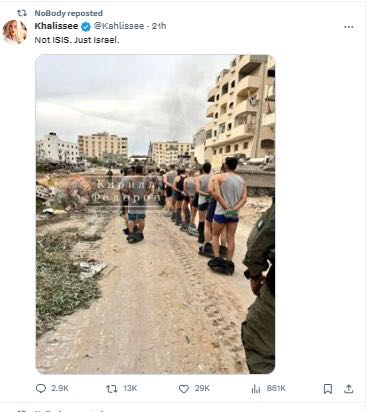
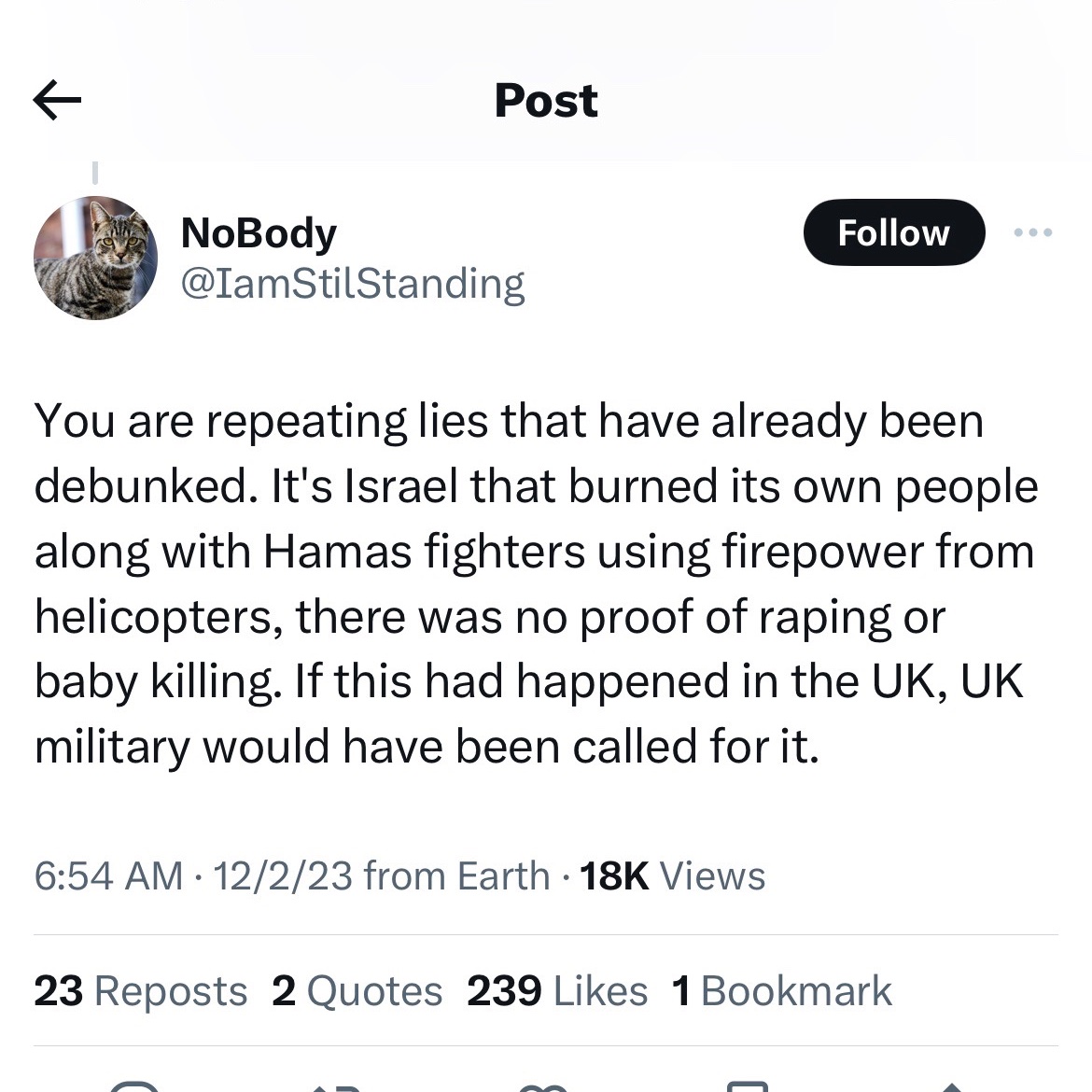
Hamed Baatout is a VP at EDF Renewables (San Diego), a global renewable energy giant.
Coworkers of Baatout were outraged with the social media posts he was sharing, including:
- referring to Hamas as resistance fighters
- referring to Israel as ISIS for capturing Hamas terrorists
- claiming Israel burned its own people
Hamed Baatout switched between two X accounts to post his many antisemitic posts, eventually deleting his profile from the platform all together.
Archives reference both of his accounts here: archive.ph/9yh44
Why is this antisemite still employed by your company @EDF_Renewables?!
244
1,424
3,280
243,535
Yosef Levenstein retweeted

14 Dec 2023
VIDEO: Rabbi Hirschy Zarchi who has been serving the Jewish community @Harvard for the last 26 years, delivers a powerful speech in the presence of embattled @Harvard President Claudine Gay at the annual @HarvardChabad Menorah lighting in Harvard Yard.
Rabbi Zarchi’s full remarks below.
92
420
2,344
503,189
Yosef Levenstein retweeted

13 Dec 2023
This is all that remains of the Chabad of Oakland’s Hanukkiah (menorah). The level of Antisemitism in Oakland is unbelievable.
@SFJCRC
477
1,230
3,000
501,959
Yosef Levenstein retweeted

7 Dec 2023
Did you know? Intimidation is a hate crime.
While the abject failure of some university presidents to rise to the moment was on full display at the U.S. Capitol yesterday, particularly sickening was how the presidents victimized their Jewish students a second time. In addition to being the targets of vile hate speech, these students were also informed that they have no recourse through their university authorities.
The immediate widespread backlash has already caused the presidents to begin to walk back their public testimony before the House committee, but even as students await the review of their university’s code of conduct, they should be aware that while their universities may be failing them, the federal government provides powerful ways for them to take action.
One route, already much discussed, is for students who are subject to harassment to bring claims against their universities with the Department of Education’s Office of Civil Rights for violating Title VI of the Civil Rights Act of 1964, which prohibits discrimination on the basis of race, color, and national origin in programs and activities receiving federal financial assistance.
Under the leadership of Secretary Miguel Cardona, the department is doing an admirable job of moving these cases forward with speed and publicity. In recent guidance it also pointedly reminded colleges and universities of our obligation to address discrimination against students “who are or are perceived to be Jewish, Israeli, Muslim, Arab, or Palestinian.”
There is a second path, though, which would have significant impact. In 1990, Congress passed and President George H.W. Bush signed the Clery Act, which requires all colleges and universities that participate in federal financial aid programs to keep records on certain categories of crimes on or near their campuses — and, importantly, to publicly report them.
Hate crimes, including those through intimidation, are included in the reporting — as they should be, whether they are hate crimes against Black people, Muslims, or Jews. And the definition of intimidation for Clery purposes is the one used by the FBI’s Uniform Crime Reporting program: “placing another person in reasonable fear of bodily harm through the use of threatening words and/or other conduct,” even ”without displaying a weapon or subjecting the victim to actual physical attack.”
Calls for genocide may not be prohibited until they result in action by Codes of Conduct on these Ivy League campuses, as their presidents testified yesterday; the federal government, however, isn’t so indulgent.
This means that any Jewish student who feels physically threatened by the words or deeds of their fellow students — for example experiencing a marching protest on campus calling for Jewish genocide — should go to their campus police and report it as a hate crime. That intimidation will then appear in the university’s annual Clery report, to be shared with the public. This gives students a vehicle to take action and create a record of the rise in hate crimes on their campus.
No doubt, the university presidents who testified yesterday know all of this. It is not a secret. Students are not powerless. They do not have to wait to be physically assaulted in order to register their experiences as targets of hate crimes.
By documenting their experiences, the students will turn individual experiences into campus metrics, which can then be comparatively ranked with peer universities and enable concerned university and national leadership to identify, study and combat the rising tide of hate on college campuses. As important, they will allow prospective parents and students to make informed decisions about the campuses they will attend, and they might help their presidents recognize that intimidation of students based on their race, ethnicity, or religion is a hate crime — as is already clear to the federal government and all people of moral conscience.
19
95
271
35,745
6 Dec 2023
Growing evidence of Hamas’ sexual crimes against women during October 7 attack, from @NBCNews youtu.be/rnQjH8lyXTU?si=n6UY… via @YouTube
34
Yosef Levenstein retweeted

4 Dec 2023
Putting finishing touches on new portfolio company onboarding docs to our firm. Adding preferred banking partners, HR, accounting, etc as options for our companies. If you should be on the list, reach out.
60
5
134
41,222