
Joined May 2025
- Tweets 4,208
- Following 878
- Followers 1,086
- Likes 18,509
293 Photos and videos












Pinned Tweet

17 Dec 2025
List of things to do as a guy in 2026
1. Get an international passport (if you don’t have one yet).
2. Learn how to drive
3. Learn basic grooming (skin care, hair, beard).
4. Polish and white your teeth
5. If you don’t like your body, hit the gym.
6. Learn a high-paying skill
7. Attend events, network, talk to people (stop being shy).
4
3
73
13,152
Chronos 🔺 retweeted

Just built a memory companion for @mattpocock skills 🧠
/grill-with-docs stores: JWT over sessions, RS256, TypeScript strict
/tdd next day → auto-recalls everything. Zero re-prompting ✅
#Memanto #ClaudeCode #moorcheh-ai
1
14
16
80
May 6
Institutions don't gamble on infrastructure. When they choose Avalanche, they're not betting, they're building.
— Chronos
May 6

Avalanche will win the private blockchain race.
Here’s why:
Institutions need environments where access is intentional, data is protected, and connectivity happens when and where it’s needed.
Avalanche uniquely is built for that.
Look at who has already chosen Avalanche.👇

2
12
271
May 5
Subnets. Sub-second finality. A community that actually builds.
@avax solves the "one chain fits all" problem elegantly and that's why I keep coming back. 🔺
May 5

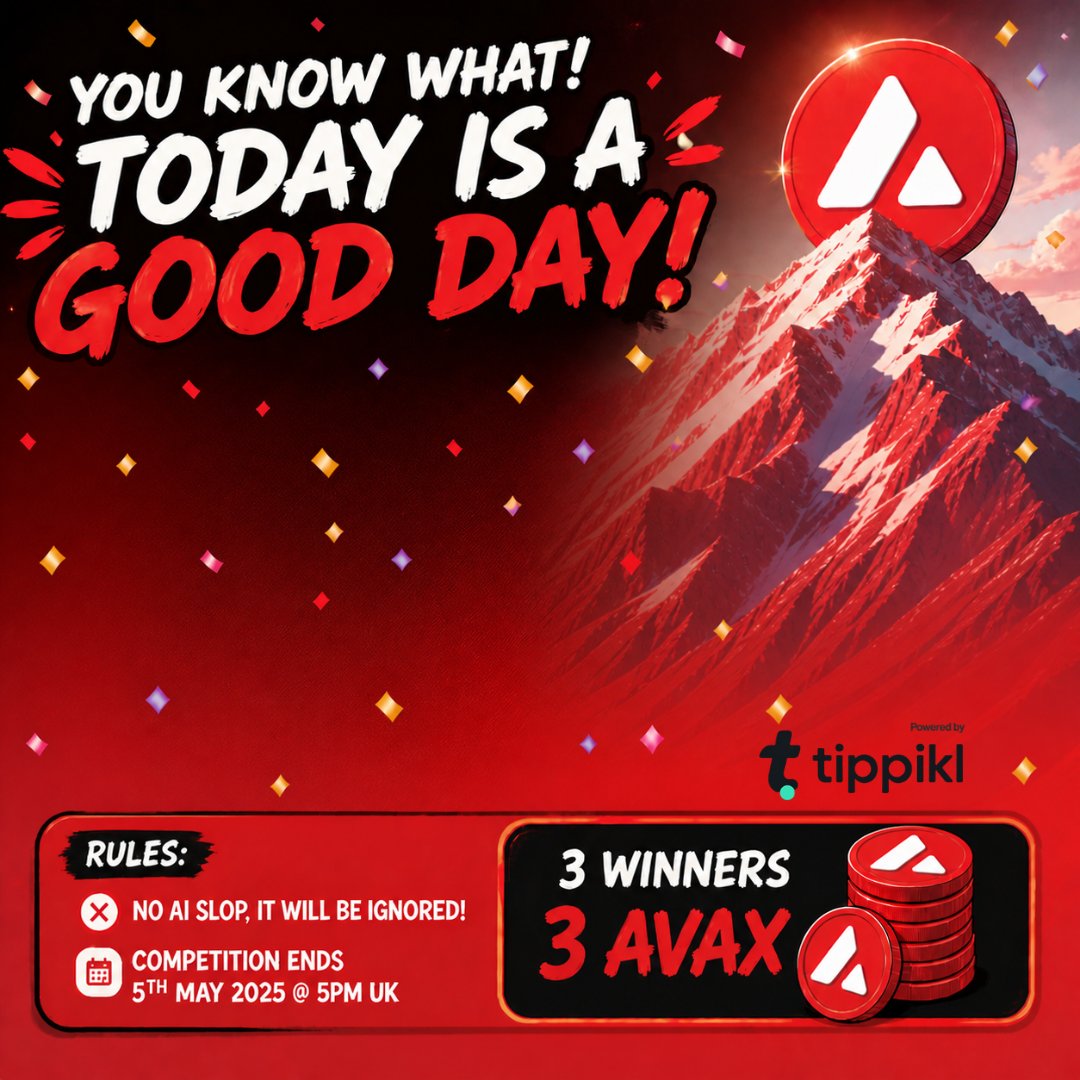
You know what! Today is a good day!
So to celebrate that good day, I am going to give away 3 AVAX using @TippiklLabs
All I want you to do is simple!
Quote repost this with one reason why you love @avax!
Rules:
NO AI SLOP, it will be ignored!
Competition ends 5th May 2025 @ 5PM UK
2
1
12
329
Chronos 🔺 retweeted

If holding stable coins to collect yield is going to be illegal for crypto companies (this is a big deal) I wonder what the impact on $STRC will be — likely positive.
My guess is companies will be forced to adopt $STRC and other high yielding Strategy products to be competitive.

May 2

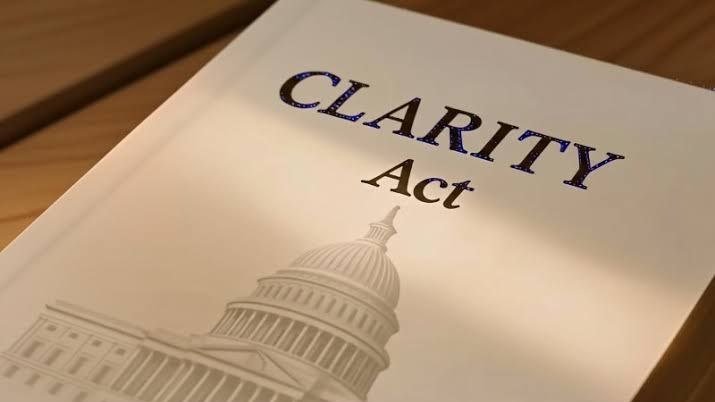
🚨 THE US SENATE JUST UNBLOCKED THE CRYPTO MARKET STRUCTURE BILL.
And crypto platforms just lost the right to pay users interest on stablecoins.
Senators Thom Tillis and Angela Alsobrooks finalized a bipartisan deal yesterday on stablecoin yield, the single issue that had blocked the Digital Asset Market Clarity Act for months and collapsed a Senate Banking Committee markup in January.
Here is what the deal actually says.
Crypto companies are now broadly prohibited from offering stablecoin rewards that are "economically or functionally equivalent to the payment of interest or yield on an interest bearing bank deposit."
In plain, if a crypto platform offers users 4% just for holding a stablecoin, that is now banned. It is too close to a savings account and banks fought hard to stop it.
But the deal does not ban everything.
Platforms can still reward users for actually doing things trading, staking, using services. Activity based rewards are allowed. Passive yield on just holding a stablecoin is not.
The negative side for crypto is clear. Platforms like Coinbase had been pushing hard to offer yield on stablecoins as a way to compete with traditional savings accounts.
Banks argued that if Coinbase could offer users 4% on dollar pegged tokens just for holding them, nobody would keep money in a checking account. That deposit flight argument won.
Crypto platforms lose one of the most powerful tools they had to attract and retain users.
The positive side is also real.
This deal removes the single biggest substantive obstacle to the Clarity Act moving forward. For the first time the US crypto industry has a credible signal that Washington is going to give digital assets a comprehensive legal framework.
Every exchange, stablecoin issuer and digital asset platform operating in America has been waiting for this since the last bull market. Prediction markets are currently pricing the odds of the Clarity Act being signed into law in 2026 at 62%.
Treasury Secretary Scott Bessent has described passage as a spring 2026 target.
The Senate Banking Committee markup is now expected in May.
Banks got what they wanted on yield. Crypto got the regulatory clarity it has been lobbying for.
Neither side got everything. But the bill is moving and that alone is the biggest development the crypto industry has seen in years.


10
12
142
10,500
Chronos 🔺 retweeted
Apr 29
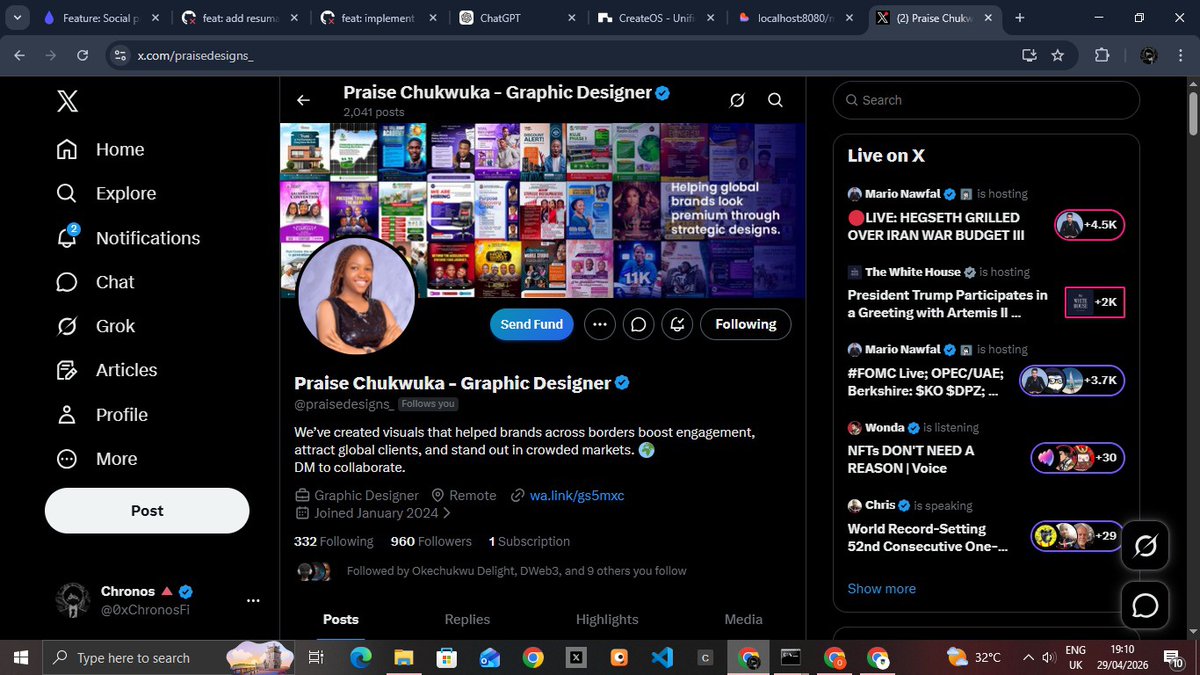
Send funds straight from any profile.
New Tippikl Extension upgrade just dropped.
Go to someone’s X profile → tap “Send Funds” → instant transfer.
No more copying links.
No extra steps.
Just seamless value, instantly.
Tipping and supporting creators just got way smoother on Avalanche.
Update or install the extension and try it now 👇
#Tippikl #Avalanche
1
4
137
Apr 28
Today marks a special moment in my journey.
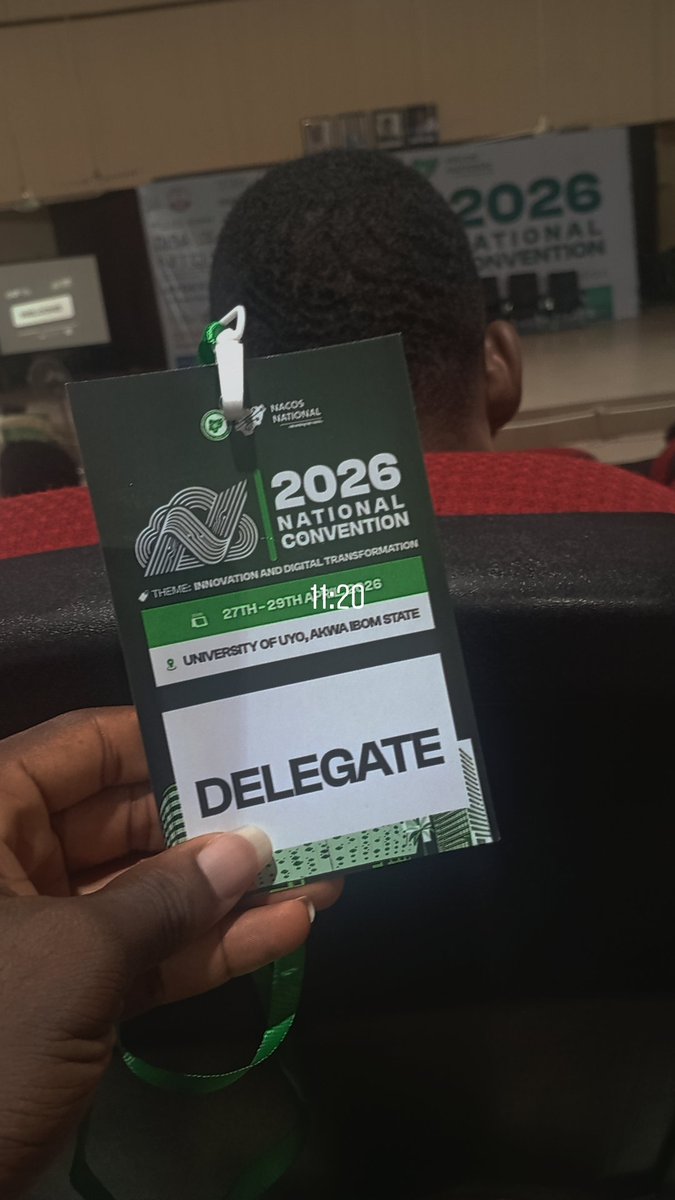
After about 8 years of being in tech—learning, building, failing, starting again, and growing this is my first major tech event as a developer.
I’m currently attending the NACOS National Convention 2026, representing Computer Science students from COOU, and honestly, it feels different.
For years, I’ve been behind the screen writing code, exploring ideas, trying to build things that matter. But today, I’m surrounded by people who are on similar paths builders, innovators, and future leaders in tech.
It’s more than just an event for me.
It’s a reminder that growth is a journey, and every step no matter how slow—counts.
From struggling to make my first $1 online, to building projects like CampusGig, to now being here… it’s been a journey of persistence.
And this is just the beginning.
I’m here to learn, connect, and become better.
Let’s keep building


1
7
69

Apr 28
They needed speed.
They needed reliability.
They chose Avalanche. 🔺
Apr 27
Why did @inversion_cap choose Avalanche?
As @santiagoroel explains, Inversion Capital is a firm focused on acquiring and operating real-world businesses onchain, not building L1s.
They needed to move fast on infrastructure that reliably works.
Avalanche works.
1
18
438
Chronos 🔺 retweeted
Apr 27
Beyond speed and scalability, it’s the people that make the ecosystem powerful.
1
2
13
140
Chronos 🔺 retweeted
Apr 24
Which chain do you think institutions will trust most for big stablecoin volume in the coming years?
Vote and tell me why 👇
89%
Avalanche
7%
Zilliqa
2%
Base
2%
Aptos
46 votes • Final results
9
4
27
1,194
Apr 27
Most chains weren’t designed for enterprise constraints. Avalanche L1s flipping that by giving businesses control and access to liquidity is a big unlock.
Apr 27
Control. Connectivity. Performance.
These are the minimum requirements for any business considering blockchain.
For large institutions, integrating blockchain means operating within strict requirements: controlled environments, predictable performance, and access to real liquidity.
Avalanche L1s are built with that reality in mind.
You get infrastructure defined by your rules. Your validators. Built-in KYC and compliance aligned to your jurisdiction. Custom gas tokens. The ability to define how your chain operates, end to end.
At the same time, every L1 connects to the broader Avalanche ecosystem, with access to the C-Chain as a public liquidity hub. Stablecoins, DeFi rails, counterparties. Already live, already in use.
And it all runs with the performance businesses actually need. Fast finality. Predictable costs. High throughput without congestion from unrelated activity.
An enterprise-ready platform where control, connectivity, and performance are built in from day one.
That’s Avalanche. Built for business 🔺
3
26
727
Chronos 🔺 retweeted
Apr 23
Most chains force a tradeoff between transparency and privacy.
Avalanche seems to be solving for both private L1s for institutions and encrypted rails on public chains.
That’s a powerful combo
Apr 22
Institutions need privacy, done right.
What does this look like? Here are two big ways Avalanche offers privacy.
Private Avalanche L1s
Encrypted ERCs (eERCs)
Private Avalanche L1s: These are L1s that employ a restricted, permissioned validator set, hiding data from the public.
These are extremely popular among institutions and enterprises who may require privacy for regulatory reasons as well as customer confidentiality.
Two great examples of this are @Intain and Toyota Blockchain Group’s whitepaper for their MON blockchain.
Intain leverages privacy on their Avalanche L1 to process sensitive financial data such as borrower identities, loan details, and asset valuations, ensuring compliance with regulatory requirements like KYC and AML while preventing unauthorized access or data exposure in a multi-trillion-dollar market.
Toyota needs privacy in its blockchain PoC to securely handle sensitive vehicle data, including ownership records, usage histories, insurance details, and carbon credits, while complying with global regulations on data protection and vehicle safety to prevent fraud and enable trusted cross-border mobility.
Private Avalanche L1s continue to be in high demand.
But Avalanche even offers privacy on public chains.
Encrypted ERCs (eERCs): a protocol that allows secure and confidential token transfers on Avalanche blockchains.
Launched in March 2025 by @AvaCloud, the eERC protocol offers privacy without requiring protocol-level modifications or off-chain intermediaries. We’ve quickly seen the Avalanche community build and iterate on this protocol.
Privacy on Avalanche can enable:
• Anti-frontrunning in swaps
• Wallet tracking prevention
• Private, trustless legal agreements
• Cross boarder payroll
• Healthcare applications
• Private prediction markets
• Supply Chain integrations
...and more.
Businesses typically have to make tradeoffs for every decision. But within Avalanche they don’t need to compromise when it comes to privacy.
Built for privacy🔺

2
23
344
Chronos 🔺 retweeted

Apr 24
New Banner. Same Product.
What do you think? Is it Tippikl?

21
5
44
790
Apr 23
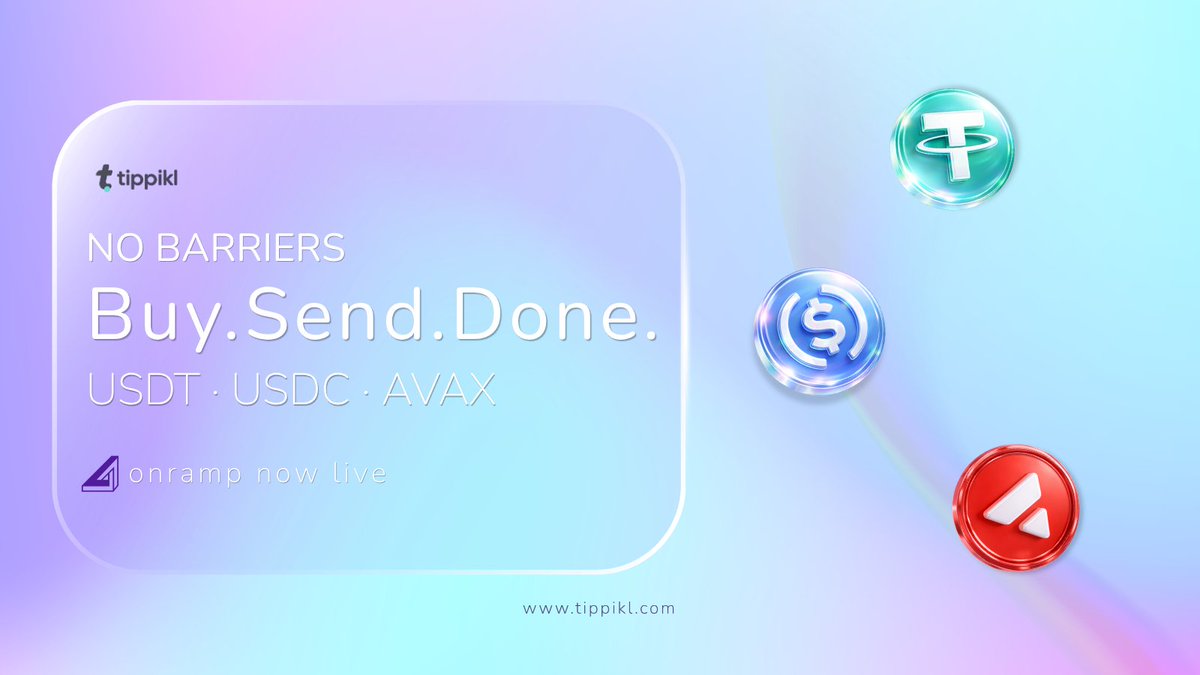
No more barriers.
Buy crypto directly inside Tippikl.
USDT · USDC · AVAX
Now live powered by @onrampmoney
Onramp is officially here.
Top up in seconds and start tipping instantly.
Ready to go? Tap below 👇
1
7
92