
Joined May 2010
- Tweets 7,309
- Following 750
- Followers 2,750
- Likes 15,156
440 Photos and videos















May 23
The bad guys are running LLMs on public src code and are finding bugs 24/7. The people that wrote the code or that are using the code knowingly or unknowingly for production are still busy having meetings.
May 22

I’ve been around long enough to remember when source code/binary auditing was how bugs were found. Then there was 20 years where fuzzing was best. Now source code analysis (via LLM) is the jam again.
1
258

May 20
New rule: if someone makes you read AI-generated slop text then you *have* to pronounce the emojis out loud.
85
Tom Van de Wiele retweeted

May 11
How I Defeat Passkeys Nearly Every Time in Phishing Assessments infosecwriteups.com/passkeys…
14
51
6,134
May 9
Great thread and very relatable to my past Red Team ops: Blue teams seem more interested & concerned with looking good for a test than actually improving processes. Continuous testing helps though. It’s not about the diet, it’s about the lifestyle.

It was very tight-lipped.
Then it was “go” time.
Everyone freaked out.
Lots of people were more focused on finding out whether it was a drill/exercise or not.
Some went heads down.
1
184
May 8
VPNs are the number one privacy tool in a world that is increasingly being surveilled by parties for which we as consumer have no insight and for which there is no due process. When VPNs are outlawed, only outlaws will have privacy.

Virtual private networks #VPN are increasingly used to bypass online age verification.
Protecting children online is a priority, with new rules being implemented requiring a minimum age for access to some services
Read👉 link.europa.eu/FGfr6C
#DSA @EP_Justice @FZarzalejos

ALT EPRS at-a-glance (first page) on 'Virtual private networks and the protection of children online' (January 2026)
Community note
According to the University of Michigan research paper "Multi-perspective study of VPN users and VPN providers," 82.1% used VPNs "to protect myself from various threats/adversaries."
No research shows that VPNs would be increasingly used to bypass online age verification.
censoredplanet.org/papers/VPN-Sur…
3
426
Tom Van de Wiele retweeted

May 6
The only cybersecurity barrier that Mythos has lowered is the level of cybersecurity knowledge in the people talking about AI and cybersecurity.
8
103
569
37,625
Tom Van de Wiele retweeted

May 4
As predicted: someone decides that age verification is the best way to protecting children; this starts with mandatory age verification (for everyone!) and ends with banning VPNs and massive blocking. The slippery slope experts have been warning for.
May 1

🇪🇺 EU Vice-President Henna Virkkunen warns VPNs will be addressed under upcoming online age and identity verification rules.
“VPN… must not allow the system to be circumvented,” she said, responding to concerns users could bypass the new EU age and ID system.
Follow: @europa
16
206
822
25,899
Apr 17
Someone somewhere is discussing the Hollywood rights for this

🖥️🔥 Two inmates at an Ohio prison built a secret hacking operation from behind bars, using computers they were supposed to be recycling, they downloaded and sold porn in return for snacks, built a hacker toolkit with Kali Linux and password crackers, and created fake passes to move freely around the facility.
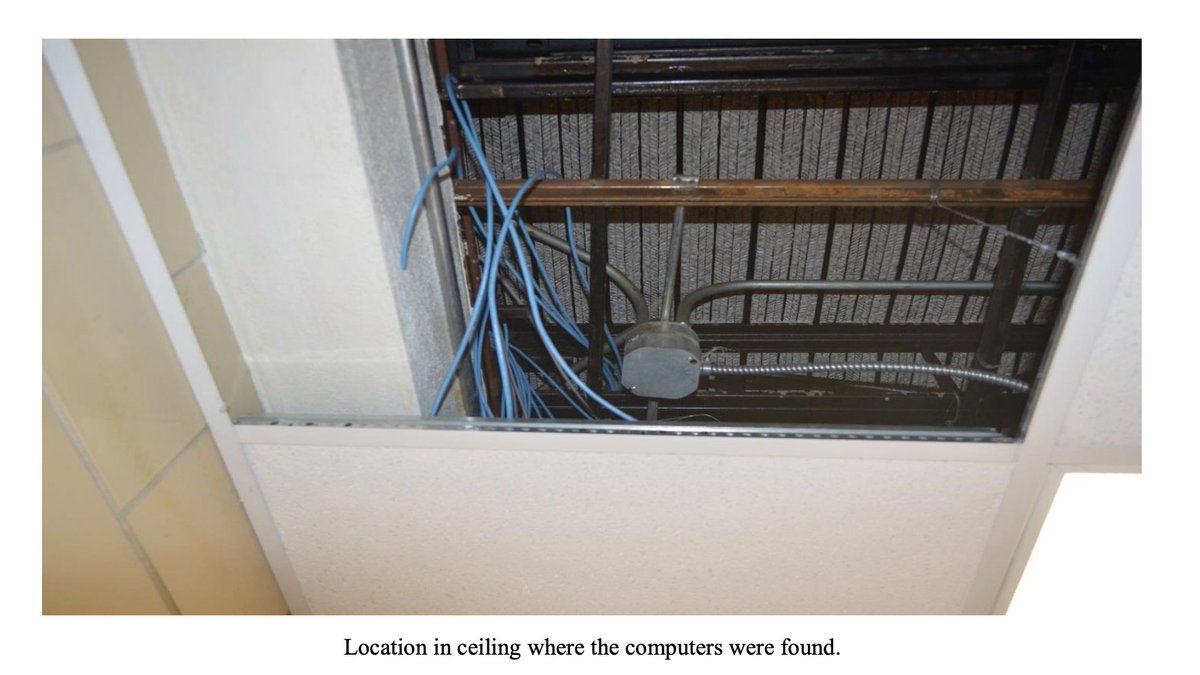
All from two secret computers they built from recycling scraps and hid in a ceiling...
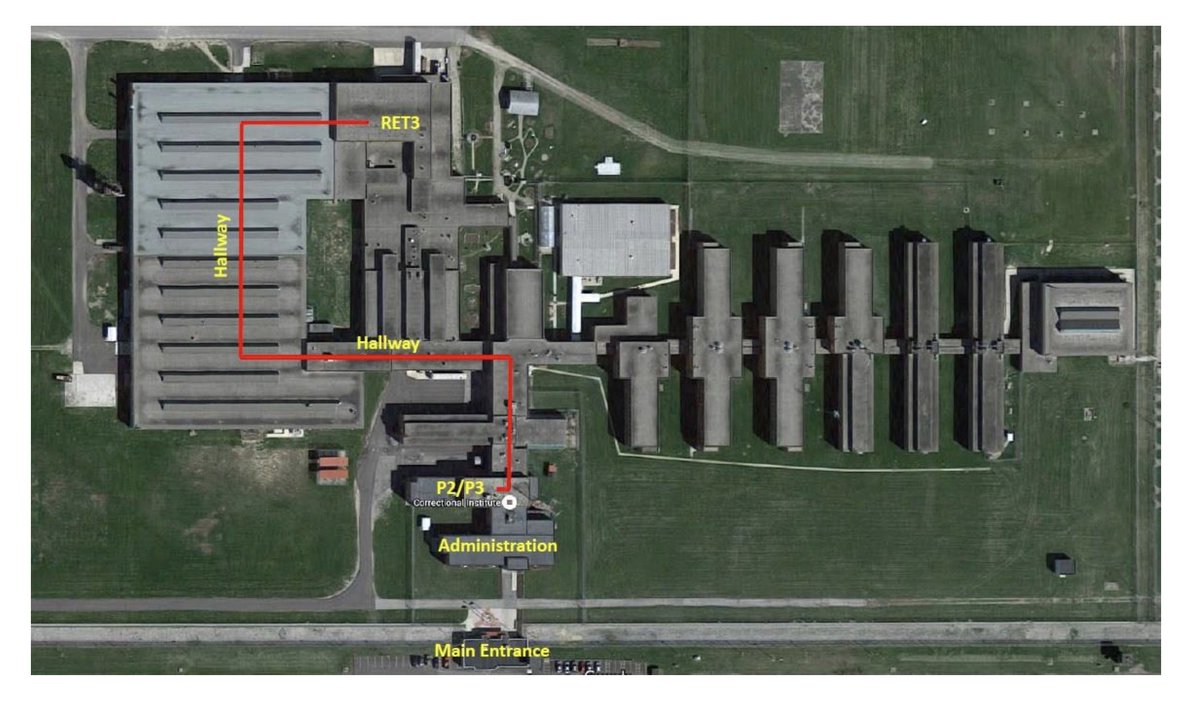
Marion Correctional Institution in Ohio housed 2,500 inmates.. In 2014, the prison signed a deal with a recycling nonprofit called RET3 to have inmates disassemble old computers for parts.
Inmates Adam Johnston and Scott Spriggs had other plans. Instead of breaking the machines down, they rebuilt two fully functioning computers from the scraps.
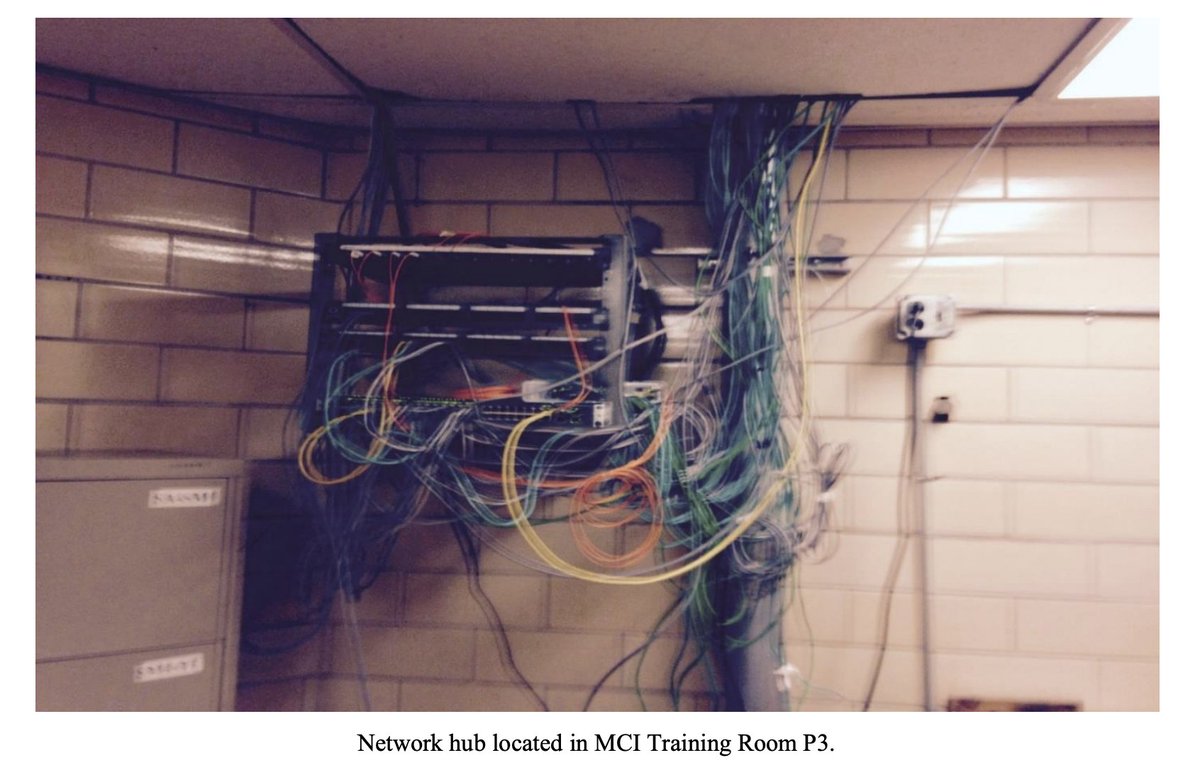
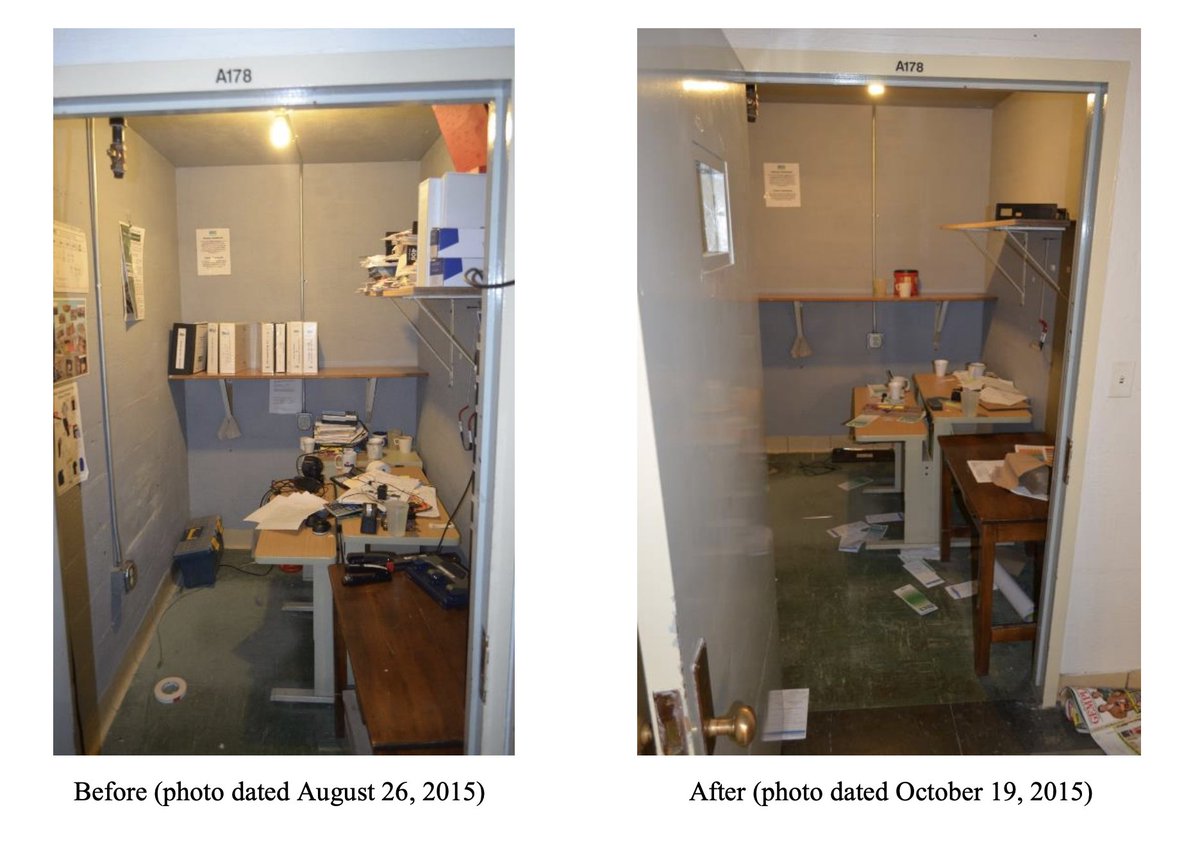
Johnston hid the two PCs on plywood boards in the ceiling above a closet in a third-floor training room. He ran cables from the hidden machines directly into the prison's network switch.
To get the computers there, he loaded them onto a hygiene cart alongside soap and shampoo. He wheeled the cart 1,100 feet across the prison, past a corrections officer, through a metal detector, into an elevator, and up three floors.
Once connected, Johnston had full internet access and could remote into the hidden computers from any inmate terminal in the facility. He obtained a staff member's login credentials by shoulder surfing, watching him type his password.
That password hadn't been changed in years. The prison's systems didn't enforce password rotations, in violation of their own policy.
Using the stolen credentials, Johnston accessed DOTS, the state's offender tracking database. He browsed inmate records, searching for a young prisoner serving a long sentence whose identity he could steal.
He found Kyle Patrick. Johnston pulled Patrick's Social Security number and date of birth from the system, bypassing a security filter that was supposed to hide SSNs by simply adjusting the browser's view settings.
Johnston then applied for five credit and debit cards in Patrick's name. He texted his mother from prison using a free online messaging service and had her provide a neighbor's address across the street as the mailing address.
One card, a Visa debit from MetaBank, was approved. His mother received it in the mail, called him at the prison, and read him the card number, expiration date, and activation code over the phone.
Johnston activated the card from inside the prison using the hidden computers. Both the application and the activation were traced back to an Ohio state government IP address.
He wasn't done. Johnston had also pulled up a Bloomberg article detailing how to file fraudulent tax returns and have refunds wired to prepaid debit cards. That was his next move.
The computers were loaded with a full hacker's toolkit: Kali Linux, Wireshark, Nmap, password crackers like Cain and THC Hydra, VPN software, the Tor browser, proxy tools, and encryption software. Investigators also found articles on making homemade drugs, explosives, and fake credit cards.
Johnston used DOTS to create fake passes, giving inmates unauthorized access to restricted areas of the prison. He also downloaded pornography onto thumb drives that another inmate sold to other prisoners for commissary items.
The scheme only unraveled because the prison upgraded its web filtering software. In early July 2015, the new Websense system flagged Canterbury's credentials being used for three straight hours on a Friday, a day Canterbury didn't work.
More alerts followed on Saturday and the following Monday. IT flagged the activity to the warden. Everyone suspected an inmate was involved. Nobody called law enforcement.
The prison's IT specialist, Gene Brady, was told exactly which network port the rogue computer was plugged into. He misread the email and checked port 10 instead of port 16. It took him three days to realize his mistake.
When Brady finally traced the cable into the ceiling and found the two hidden computers on July 27, he brought two inmates along to help and had them pull the computers down, contaminating the crime scene.
He then emailed the warden: "What do you want me to do with the PCs?" The warden admitted he knew illegal activity was occurring but had no answer for why he never reported it to law enforcement.
The state highway patrol trooper assigned to investigate crimes at the prison literally shared an office with the prison's own investigator. Neither one was informed.
It wasn't until August 7, over a month after the first alert, that anyone reported the incident to the Inspector General or law enforcement. And only because an outside IT security officer told them they were required to.
After the discovery, inmates immediately began wiping other prison computers with CCleaner to destroy evidence. Investigators later found the cleaning software had been run at least 10 times in two days, while inmates still had unsupervised access.
Four inmates were transferred to separate prisons and placed in segregation with their phone access blocked. Johnston simply used another inmate's PIN to call his mother five more times anyway.
When investigators finally seized computers across the prison, they pulled 308 machines. Of those, 291 had no inventory tags. Brady had been swapping recycling-bound computers into the prison network for years without documenting any of it.
The investigation uncovered a cascade of failures: no password enforcement, no IT inventory, no crime scene protection, no reporting of illegal activity, and years of unsupervised inmate access to computers, parts, cables, and network infrastructure.
The warden resigned.
1
193

OverTheWire Wargames is where Linux stops being theory and starts becoming muscle memory
One terminal. Endless lessons. Real hacking thinking
overthewire.org/wargames/
Start with Bandit
6
37
3,017
Apr 4
Wanted to continue a project and Claude retroactively deleted the chats of a reverse engineering project I was last working on last month. That will teach me not to use cloud models with moving goal posts for security research & to stick to local models only...
1
1
4
313
Tom Van de Wiele retweeted

Mar 22
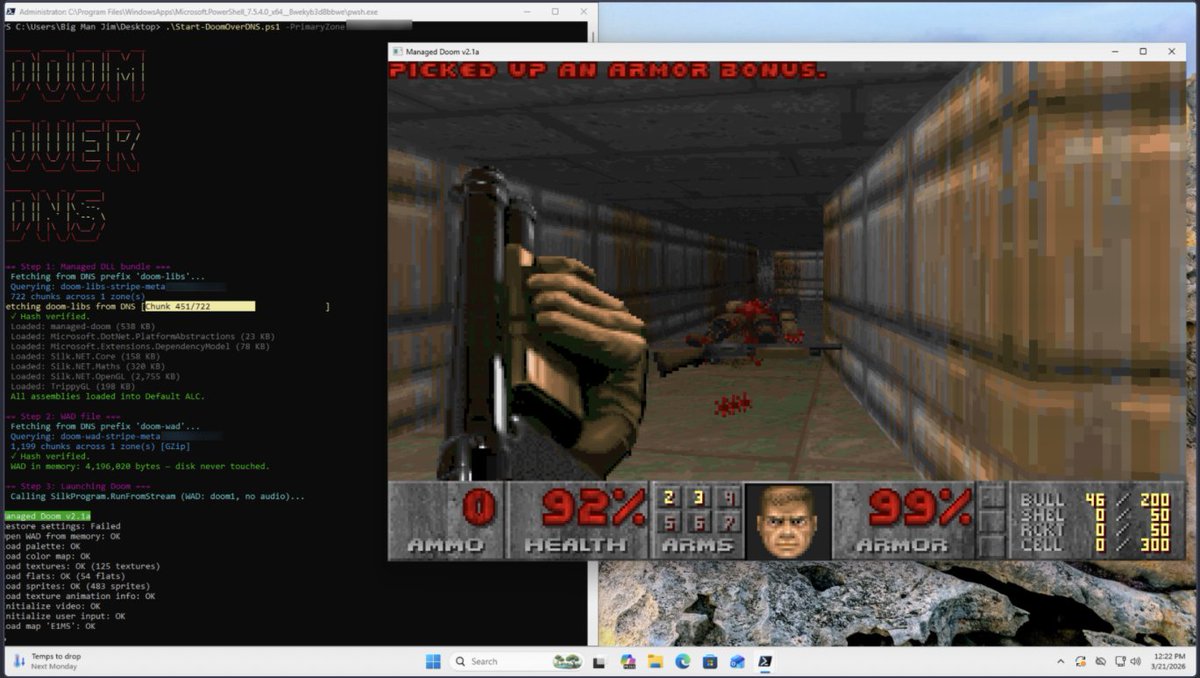
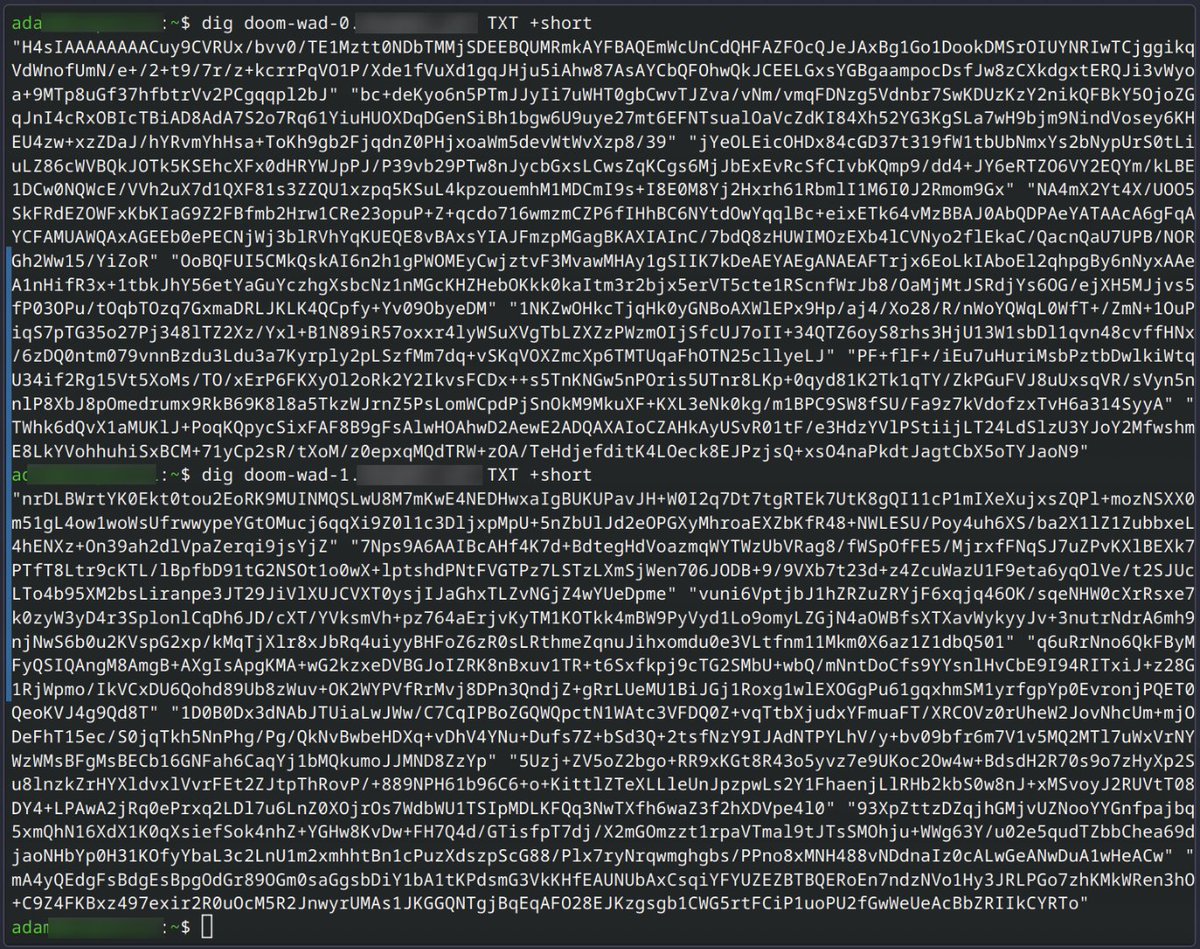
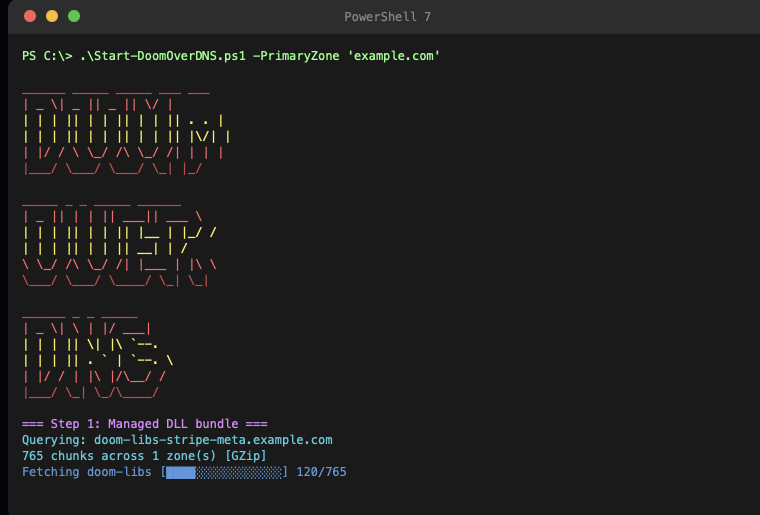
The article shows a proof-of-concept where DOOM is stored across ~2,000 DNS TXT records and executed directly from memory. A PowerShell loader reconstructs the binary via DNS queries, illustrating how DNS can act as a covert payload delivery system.
core-jmp.org/2026/03/can-it-…

8
58
276
18,218
Mar 22
Seems a LiDAR scan is in progress over Sjælland, Denmark. Probably to measure elevation for flood calculation if it is indeed the Danish Agency for Data Supply and Infrastructure. The LiDAR scans have an accuracy of 5-10 cm.
1
191
Tom Van de Wiele retweeted

Mar 20
I agree with folks this who say that this year will be an absolute deluge of CVEs found with AI. But I also worry that it will reveal the limits of the "we'll just fuzz out all the bugs" mindset
5
15
77
13,580
Tom Van de Wiele retweeted

Mar 15
Remote Code Execution (RCE) in Yamaha synthesizers: an exploit in MIDI files & a hidden backdoor 🎹♫💉👨🏻💻🎉
More details on:
LinkedIn: linkedin.com/posts/dlaskov_c…
Substack: it4sec.substack.com/p/remote…

23
134
992
183,734
Mar 12
Let's see how long this stays up 😅

Open Source Radar Has Up To 20 KM Range ift.tt/TJQroUL
210
Tom Van de Wiele retweeted

24 Oct 2014
I would liken Tor to putting on Sauron's ring. The wearer is invisible to ordinary beings, like Men, but highly visible to the Nazgûl.
28
878
1,713
Tom Van de Wiele retweeted

Mar 11
a SIEM is not a dumping ground for every log your company generates.
if your strategy is “ingest everything so we don’t miss anything,” you have built a data lake instead and your analysts are going to drown in it (pun intended).
76
126
1,158
57,606

Honeypots don't need an expensive product either. Thinkst Canarytokens are largely free and can be integrated into your SIEM with webhooks in minutes.
What's even cheaper is deploying infra into your environment and setting up detection rules to see if they're ever touched. This is dead easy and looks great on pentest reports.

The most cost effective control to catch attackers are honeypots, here is how.
Attacker behavior is predictable:
- scan an internal network, go towards lucrative targets
- cat ~/.ssh/id_rsa (and other spicy files)
- try api keys you’ve found
- look for credit cards in Google Drive
You can setup fake infra or api keys or gdocs. Whenever anyone interacts with them, you get alerted with indicators of the source of the interaction.
It also demoralizes the attackers once they realize it’s a honeypot.
AI pentesting is automated large-scale pentests. Attackers will leverage this to attack at wider scales. One of the best controls that scales really well, is honeypots. In a good setup, it is indistinguishable from a real asset, so almost guaranteed to trigger.
2
36
3,044
Tom Van de Wiele retweeted

blog.recurity-labs.com/2026-…
If you have any fond memories of FX, the lovely team at Recurity Labs would love to hear from you
2
17
57
15,019