
Exploring the world of #programmatic advertising
Joined November 2022
- Tweets 3,308
- Following 161
- Followers 2,431
- Likes 12,163
157 Photos and videos









Vlad Chubakov (@Programmatic 101) retweeted

May 5
ChatGPT launches a CAPI, a pixel, and self-serve
"It’s not hard to imagine how the ad platform evolves from here. OpenAI is almost assuredly building a platform in the image of Meta’s, which means it will cater the platform to the needs of SMBs, particularly eCommerce and retail advertisers."
mobiledevmemo.com/chatgpt-la…

7
13
183
61,106
Vlad Chubakov (@Programmatic 101) retweeted

Apr 29
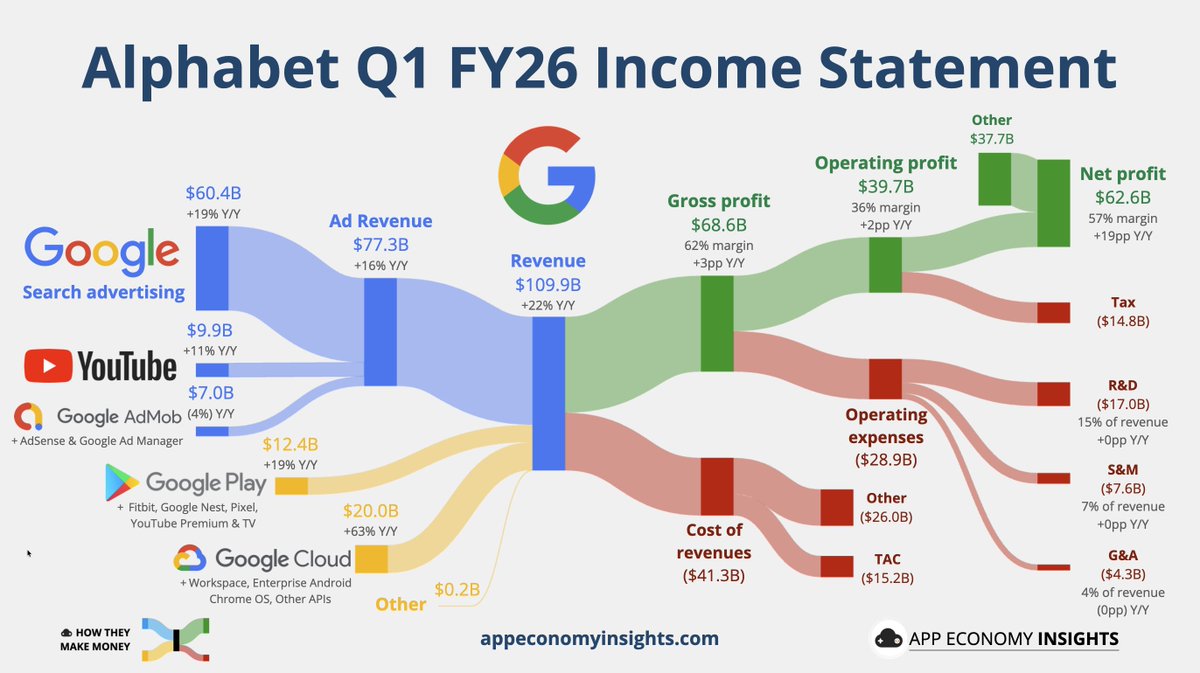
$GOOG Alphabet Q1 FY26:
• Revenue 22% Y/Y to $109.9B ($2.9B beat).
• Operating margin 36% ( 2pp Y/Y).
• $37.7B net gains from equity investments.
☁️ Google Cloud:
• Revenue 63% Y/Y to $20.0B.
• Operating margin 33% ( 15pp Y/Y).
▶️ YouTube ads 11% to $9.9B.
39
245
1,976
2,112,656
Vlad Chubakov (@Programmatic 101) retweeted

Apr 20
My latest newsletter: It's The Data, Stupid.
news.marketecture.tv/p/it-s-…
5
5
20
2,239
Vlad Chubakov (@Programmatic 101) retweeted

New: @Google DV360 got a Gemini makeover for automated media planning and execution. Plus, the DSP is deepening YT integrations and strengthening cross-channel measurement in CTV, with new retail data and SKU-level attribution tools. More in @Adweek: adweek.com/programmatic/goog…
1
3
26
4,019
Vlad Chubakov (@Programmatic 101) retweeted

Mar 17
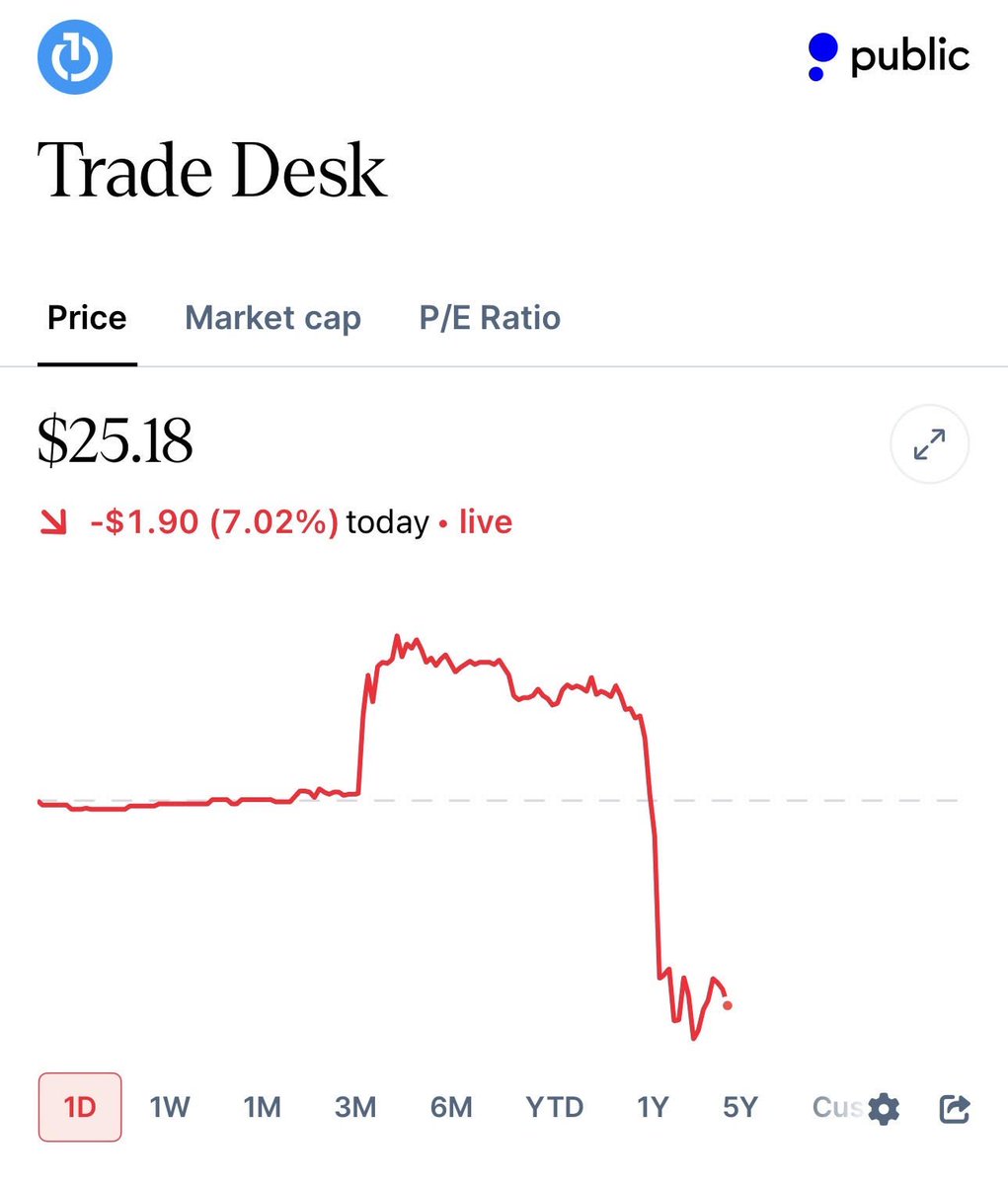
One of the world’s largest advertising companies Publicis is reportedly dropping $TTD as a recommended platform after a recent audit.
The audit alleges fee opacity & unauthorized auto-enrollment that directly challenges Trade Desk’s core value proposition as a neutral, transparent DSP.
The timing is brutal.

25
17
218
48,793
Vlad Chubakov (@Programmatic 101) retweeted

Mar 13
The highlight of Marketecture Live, @aripap and The @TheTradeDesk CEO Jeff Green talk stock purchases, AI, OpenPath, and more.
Link below 👇
1
4
18
8,352

Haven’t seen this discussed anywhere - TTD has quietly changed how they service agencies. No more allocated AM team. Now you submit tickets, just like every other big DSP.
That was IMO one of TTD’s biggest strengths. And yes, ticket-based support is as painful as you’d expect.
Frustrating.
6
2
26
3,048
Vlad Chubakov (@Programmatic 101) retweeted

Mar 11
at the end of the day we’re all just trying to find something that we care about as much as @eric_seufert’s passion for CAPIs
1
3
18
3,218
Vlad Chubakov (@Programmatic 101) retweeted

Feb 21
Lots of discussion about OpenPath. I am pro OP. My thoughts below. Someone tell me where I’m wrong.
OpenPath has value to both the buy and sell side.
It has value to the buyer because TTD claims (and I’ll take their word for it) they run OP at cost. They claim their ~5% take rate is just to run it at break even. TTD is making all their money on DSP fees (different discussion) where the other SSPs have higher yields and dynamic pricing so they can make a profit which OP doesn’t need to.
The pubs don’t have the same margin rate across all SSPs (it’s dynamic and essentially the SSPs is trying to take the highest margin while also trying to win the auction in the Pub’s adserver/header). Hypothetically OP would have the lowest margin (because they are running it at break even) but the bid would still have to be the highest to win the auction in the pub’s adserver.
The one benefit for pubs using OP should be that they get more volume from TTD they wouldn’t otherwise get if they didn’t use OP.
If TTD isn’t outright lying about OP and they are running it at breakeven and aren’t favoring it beyond it being the most efficient path to supply then I only see a benefit for buyers to use them.
The inherent problem is, Google poisoned the well on this, when a company is on the buy and sell side they have a conflict of interest. Makes them an easy target for all of AdTech to bash them. OP doesn’t do rebates so holdcos who’s SSP rebates go right to their bottom line have every incentive (besides their clients media performance) to use SSPs who give them the biggest rebates.
Has any advertiser ever talked about turning off Amazon Publisher Services? Amazing to me they have been able to fly under the radar for scrutiny when unlike TTD I don’t believe they have ever claimed to run it at cost or not to favor their own pipes.
Feb 19

Scoop: Dentsu and WPP have pulled back from The Trade Desk’s most closely-watched initiative, OpenPath, citing concerns over transparency, control and undisclosed costs.
The shift signals mounting pressure on the adtech darling’s key supply-chain bets.
adweek.com/media/exclusive-d…
3
4
23
4,145
Vlad Chubakov (@Programmatic 101) retweeted

Feb 19
NEW: Live ads have been spotted in ChatGPT for the first time.
Story below. 👇
adtechradar.com/2026/02/18/l…
2
13
3,773
Vlad Chubakov (@Programmatic 101) retweeted

A lot of adtech social is exactly this: two seasoned programmatic pros arguing over tiny details just for the sake of fighting, while buyers sit there watching the whole thing with zero clue what’s going on. They just slap some off-the-shelf segments onto a line item and leave the rest in God’s hands.
5
2
17
1,047
Everyone’s talking about agentic replacing traders. But the trader’s real job is to balance incentives - and that’s the one thing you can’t automate.
A DSP will always find the cheapest path. MFA, bot clicks, junk inventory. Your job is to push back against that.
3
1
6
562
Vlad Chubakov (@Programmatic 101) retweeted

Feb 9
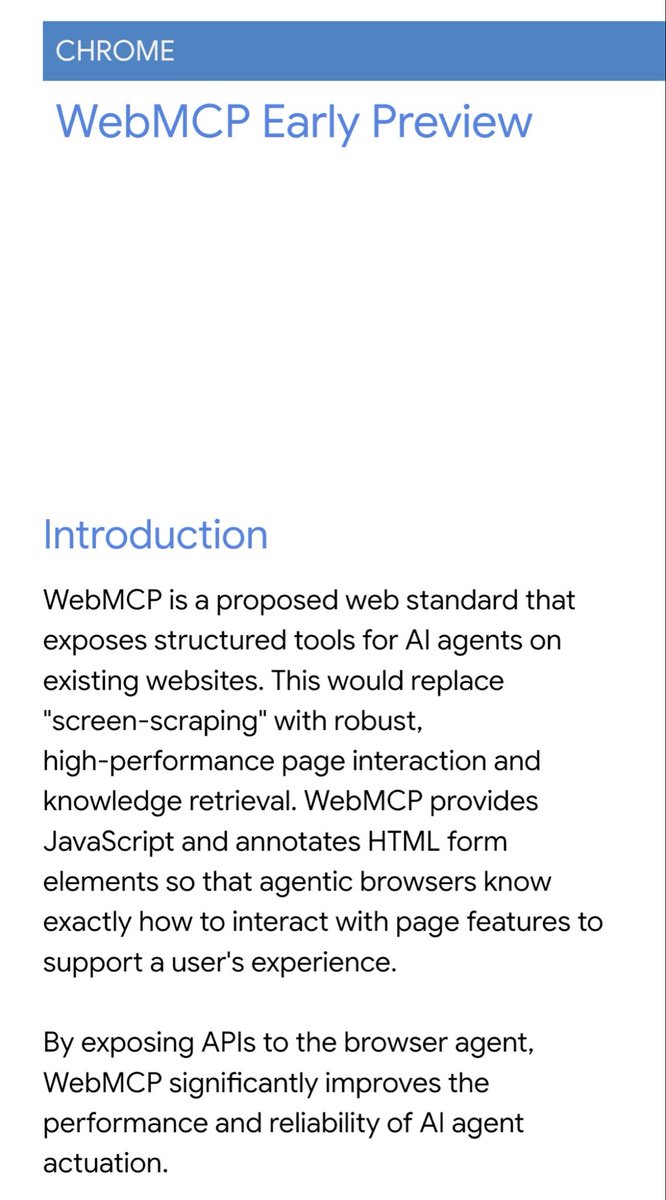
Chrome 146 includes an early preview of WebMCP, accessible via a flag, that lets AI agents query and execute services without browsing the web app like a user.
Services can be declared through an imperative navigator.modelContext API or declaratively through a form.
118
368
2,757
1,272,595
Is there such a thing as “vibe programmatic”?
Hey agent, activate a CTV campaign on Netflix.
Feb 9

you've probably heard of "vibe marketing" but you think it's just a buzz word
i get it but in 58 mins, you'll learn how to use AI agents to go from 0 to market research, landing pages, lead magnets, video ads, seo pages and more all inside claude code using skills/MCPs
1
3
645
Vlad Chubakov (@Programmatic 101) retweeted

Scoop: Amazon is working to launch a marketplace where publishers can sell their content to firms offering AI products.
W/@erinkwoo
theinformation.com/articles/…
2
4
16
2,020
Vlad Chubakov (@Programmatic 101) retweeted

🚨 @OpenAI officially rolled out ads in ChatGPT today.
-Dubbed OpenAI Ad Pilot Program, has already drawn investment from Omnicom Media, WPP, and Dentsu,
- Over 30 clients, including Adobe, Audemars Piguet, Audible, Ford, Mazda, will test ads on ChatGPT
adweek.com/media/chatgpt-get…
1
1
9
1,572
Vlad Chubakov (@Programmatic 101) retweeted
Feb 9
NEW: @OpenAI is reportedly rolling out ads in ChatGPT today.
Story below. 👇
adtechradar.com/2026/02/09/o…
2
6
517
CTR is not a bad metric. It's used in a bad environment.
Every few months, the same take comes back: "Stop optimizing for CTR." "CTR doesn't measure real performance." "Clicks don't equal outcomes."
I get it. And I've seen the data that supports those arguments. But I think the conversation is missing something important.
CTR gets blamed a lot. But what I usually see when I dig into campaigns where CTR "doesn't work" is that the inventory underneath it is a mess. That's the actual issue.
Think about walled gardens for a second - i.e Meta, Google, Amazon. CTR in those environments is a legitimate signal. You're reaching real people, on real platforms, with relatively controlled inventory. When someone clicks, there's a high probability that an actual human made a decision to engage with your ad.
Now compare that to the open web. You're dealing with MFA sites inflating impressions, bot traffic generating fake clicks, misplaced ads that get accidental taps, and inventory that was never meant to be seen by a real person. In that environment, CTR becomes noise.
When I hear "CTR is useless," what I actually hear is "I haven't done the work to clean up my supply path." And that's a very different conversation.
If you run a campaign on curated, high-quality inventory - real publishers, verified traffic, proper ad placements - CTR suddenly becomes useful again. It tells you something real about creative resonance and audience interest.
But if your campaign is running across thousands of unknown domains with no supply quality controls, then yes - CTR is meaningless. So is every other engagement metric you're looking at.
What to do about it?
Before dismissing CTR, audit your supply path. Run inventory quality reports. Check domain-level performance. If 30-40% of your impressions are going to MFA or low-quality sites, no engagement metric will be reliable - not just CTR.
Use CTR as a signal in controlled environments. Walled gardens, curated PMPs, allowlisted publishers - in those contexts, CTR gives you real feedback on creative and audience fit.
Layer it with other signals. CTR alone doesn't tell the full story. But CTR combined with viewability, attention metrics, and conversion data in a clean environment gives you a much clearer picture.
The industry loves to debate whether metrics are "good" or "bad." But most metrics work fine - when the underlying data is clean.
1
2
419
I keep seeing this idea pop up that AI or agentic buying is going to somehow fix the advertising ecosystem. But I’m skeptical.
Not because agentic isn’t useful - it absolutely is - but because execution has never really been the core problem here.
We already have technology today that allows marketers to run relatively clean, intentional campaigns. Not perfect, not frictionless, but good enough if you actually know what you’re doing and you care about outcomes more than screenshots in a deck.
The bigger problems sit elsewhere. Education is a huge one. A lot of decisions in this industry are still made without a clear understanding of what’s actually happening under the hood - how auctions really behave, and what the signals we optimize against are actually telling us. AI doesn’t change that. It just makes those decisions faster.
Incentives are another. If a buyer is rewarded for the lowest possible CPM because someone upstream equates that with “efficiency” or “reach,” then it really doesn’t matter who’s doing the buying. A human trader, an agent, or an AI system will all end up driving toward the same outcome. The logic hasn’t changed, only the speed.
And then there’s overcomplication. We keep layering tools on top of tools, inventing new abstractions, new labels, new frameworks, without stopping to ask whether any of this is actually improving decision-making or just making it easier to hide behind complexity.
Agentic will help. It will streamline workflows, surface issues faster, and make certain kinds of discipline easier to enforce. But it won’t magically rewrite the industry or realign incentives that have been broken for years.
3
6
382
Does anyone have an AppLovin referral code by chance?
1
1
805