
Entomologist/photographer @Cornell Lost Ladybug Project, Biocontrol, Physiology, Nutritional & Chemical Ecology,🐞📸, tweets are my own.
Joined October 2014
- Tweets 1,142
- Following 584
- Followers 276
- Likes 1,376
149 Photos and videos






Pinned Tweet

22 Nov 2022
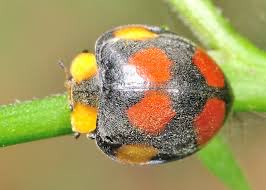
Ninespotted 🐞 reared @Cornell
Nice Beetle! Great images!!!
Fantastic show!!!
@CornellNews @CornellCALS @CornellGradDean @cornellento @ccecornell @InsectsCornell @AMNH
22 Nov 2022

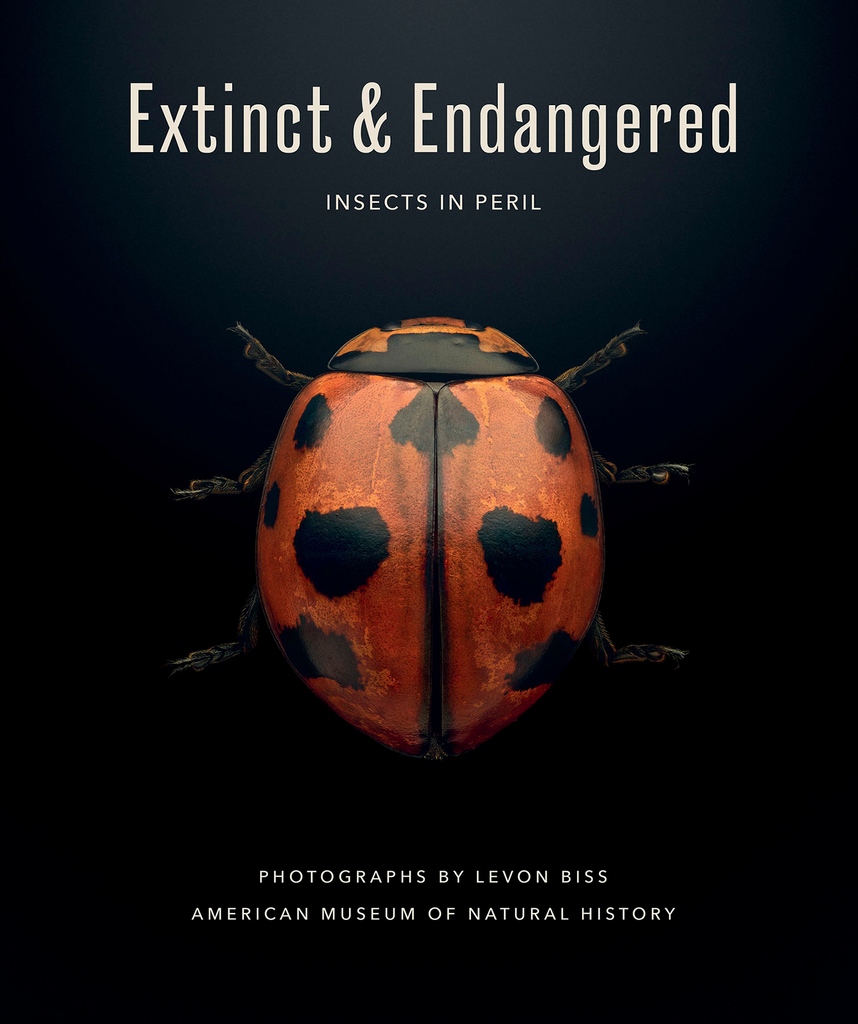
The Extinct & Endangered book is out today. A collaboration with the American Museum of Natural History, the project raises awareness of insect decline and biodiversity loss.
#insectdecline #biodiversityloss #biodiversity #insects #extinction #climatechange #habitatloss
1
2
10
Todd A. Ugine retweeted

Pretty cool!! pubs.acs.org/doi/10.1021/jac…
Last year, we showed that membranes can be asymmetric in an unexpected way: more phospholipids on one side than the other, balanced by cholesterol
Here, Bogdanov et al show similar in EColi, with DAG doing cholesterol's flippy-buffer job
1
4
10
789
11 Jun 2025
Looking for a used or cheap gel-imager. I know there are probably hundreds of these things laying around in labs unused…maybe someone is willing to part with one that’s just taking up space?
44
Todd A. Ugine retweeted

30 Jul 2024
Our Charles Perkins Centre Academic Director, Professor Stephen J Simpson, steps down from his role after 13 years
“Steve’s contribution to creating the flourishing multidisciplinary research and education ecosystem for which @sydney is now so well-known is simply beyond measure. That journey started in earnest when he took on the role to lead the establishment of our first whole-of-university MDI, the @CPC_usyd" Prof @DrEmmaLJohnston Deputy Vice-Chancellor (Research)
Prof Simpson continues in his role until March 2025 thereafter as Professor in @SydneySOLES @Sydney_Science as an @NHRMC Investigator Fellow
We'll be highlighting Prof Simpson CPC's many achievements over the coming months
➡️ sydney.edu.au/charles-perkin…

6
38
2,070

new hormone just dropped? cell.com/cell/fulltext/S0092…
1
4
229
Todd A. Ugine retweeted

2 Mar 2024
Hot off the press! Thank you, John@CarlsonLab_Yale. It was fun writing this with you. Soon, we will film the video for this protocol! jove.com/t/66665/base-record…
4
5
20
1,932
20 Feb 2024
What do you do when you can’t find primers that are specific for your target DNA. I’ve got 5 similar genes and only want to amplify a 1000bp fragment of 1 of the genes. Primer-blast didn’t do it no matter how I tweaked the parameters. Help!
2
102
1 Feb 2024
If you crispr some bugs and don’t see the behavioral phenotype you’re after, you should still PCR and run a gel in case it’s mosaic? Yes/NO!?
1
87
Todd A. Ugine retweeted

18 Jan 2024
Our research on using AlphaFold2 to predict how peptides from disordered regions bind proteins has now been published with @SpringerNature in @NatureComms
I am very happy to share the updated paper with you 😀
rdcu.be/dwlLa
26 May 2023

📢New preprint (together with Hélène Bret and Raphael Guerois) exploring how often AlphaFold2 can identify the correct binding site and interface for peptides from disordered regions, depending on the size of the input fragment and on the provided multiple sequence alignment.
4
34
138
23,802
Todd A. Ugine retweeted

2 Dec 2023
An introduction to Applied Bioinformatics github.com/applied-bioinform… Very nice book with python code.
2
123
539
60,265
Todd A. Ugine retweeted

21 Nov 2023
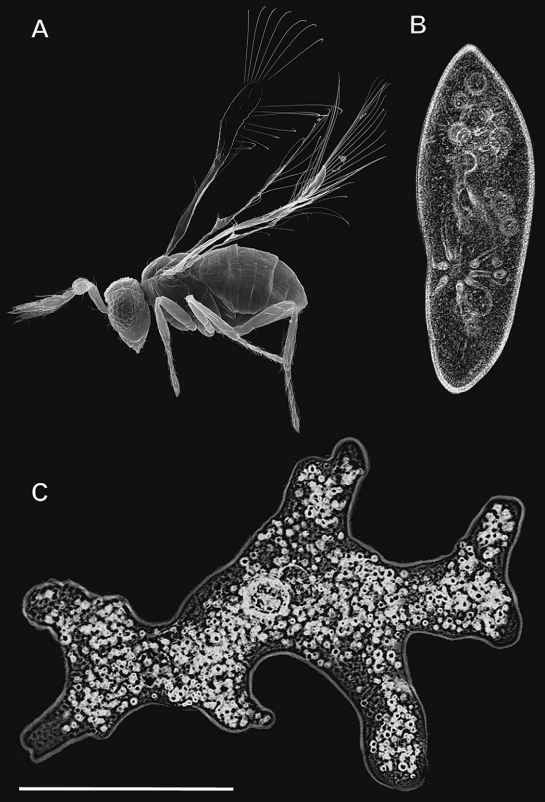
The smallest flying insects, of the genus Megaphragma, are smaller than a single-celled amoeba.
An adult wasp has 4,600 neurons, compared to a house fly with 340,000.
Their neurons also don't have a nucleus, which enabled their brains to shrink by 50%.
17
69
397
63,198
Todd A. Ugine retweeted

9 Nov 2023
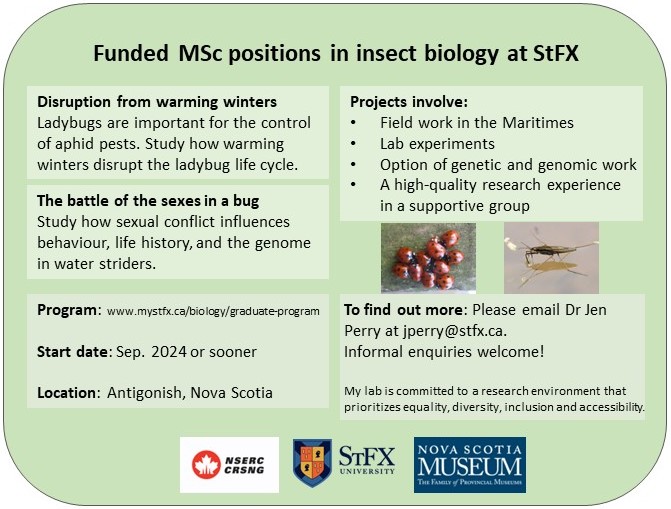
Fully funded MSc positions available in my lab in 2024 @stfxuniversity .
Bugs, behaviour, evolution, all in small town Nova Scotia 🐞🇨🇦
Please share!
5
68
82
15,013
7 Nov 2023
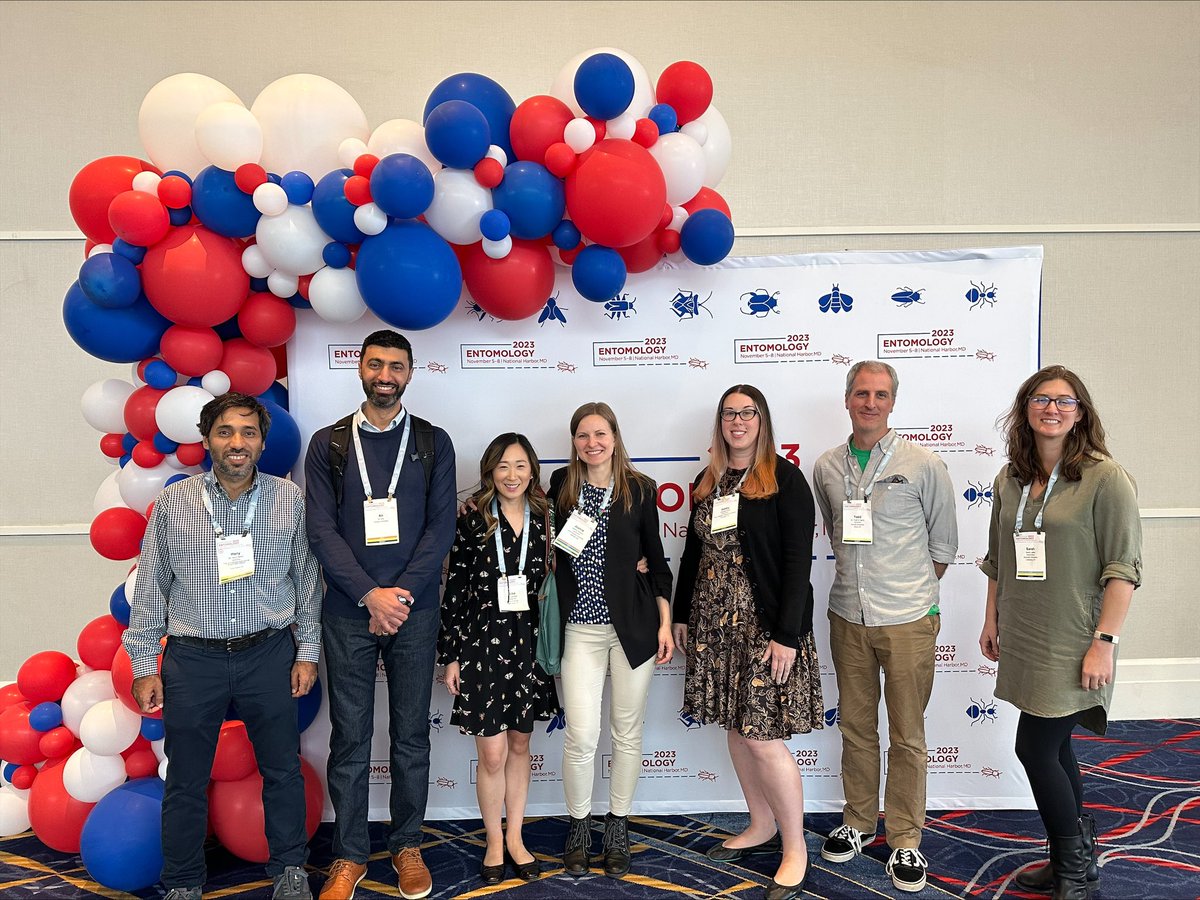
Thanks to all the presenters at our #esa2023 Chemical Ecology Symposium. Fantastic research and standing room only. 🐞🦟🪰@hdweck99 @LadyLordOfFlies Thanks also to @lovettbr and @EstherNgumbi for organizing a great meeting 🎉🍾
1
3
22
2,062