@41Alphas is a corporate brand selling domain names, website & email hosting, WordPress, and more: Go.AAAAAAAAAAAAAAAAAAAAAAAAA…
Joined June 2014
- Tweets 1,284
- Following 60
- Followers 52
- Likes 3,247
86 Photos and videos



41Alphas retweeted

Jun 3
We emailed our community/members today via @Meetup, advising everyone to bookmark our new website DeFiNiagara.com as we move away/off from #Meetup.
We have new social media profiles listed on our website; this one on @X, and a Page on @facebook.
See you on June 16!
3
4
26
41Alphas retweeted
Jun 1
Support us by joining @41Alphas on @Shakepay with our referral link!
Sign up with this link and we'll each get $20 (Canadian) to buy crypto:
shakepay.me/r/786Y09N
2
2
24
41Alphas retweeted

1 Dec 2025
Your lies about public unions, @GCarabine, which serve you and your conflict of interest.
You lie or misrepresent the fact that public sector unions in Canada negotiate directly with government employers funded by taxpayers, creating a dynamic where monopoly bargaining power — enforced by provincial/federal labor laws — drives up costs without market competition to check excesses, as there's no profit motive. Private sector unions face profit-oriented employers, where unsustainable demands risk business failure or relocation, balancing power more naturally. This taxpayer insulation in public cases often leads to higher fiscal burdens and political influence, as unions donate to parties that oversee negotiations, unlike private counterparts.
Another lie of @gcarabine: "If a person doesn't want to pay union dues, they can work at a non-union shop."
Evidence @gcarabine is lying: In some unionized workplaces, collective agreements require that ALL employees must be union members (or at least pay union dues). These clauses are LEGAL in Canada, though in some provinces they must be negotiated and are not automatic. Rand Formula: Established by the Supreme Court of Canada, it requires all employees in a bargaining unit to pay union dues, even if they choose not to become members. This applies across most of Canada (except some construction industry carve-outs). Right-to-work laws (common in some U.S. states) DO NOT EXIST in Canada — meaning employers cannot generally prohibit union membership, and employees in a unionized workplace cannot “opt out” of paying dues. UNIONIZED INDUSTRIES (many sectors): Employees generally cannot work in a unionized position without paying dues (via Rand Formula). Common examples: Public sector: TEACHERS, nurses, postal workers, transit staff, government employees. Industrial & skilled trades: Auto manufacturing (e.g., GM, Ford, Stellantis with Unifor), construction trades, steelworkers, energy. Service industries: Some grocery stores (e.g., Loblaws unionized locations with UFCW), airports, hotels. Construction sector: In Ontario and Quebec especially, many construction jobs are strictly unionized. Employers often sign “collective agreements” with building trades councils, and hiring hall rules mean you cannot work on certain projects unless dispatched by the union. Crown corporations & large institutions: Canada Post (CUPW), LCBO (OPSEU), Hydro One, universities, and hospitals often require union membership/dues as a condition of employment.
Conclusion: A so-called "teacher" @GCarabine either lacks understanding of democracy, or intentionally lies for his conflict-of-interest as a teacher in a public union and taxpayer-funded job benefitting from the corruption mentioned above, which @GCarabine inherently benefits from.
2
1
1
35

We have two things listed on @eBay for #auction or #BuyItNow:
1. TP-Link RE220 AC750 Wi-Fi Range Extender – Tested & Working – Fast Shipping: ebay.us/m/jB0Rk3
2. Garmin Vivosmart 4 Charger Cable Box & Manuals – OEM Original – No Device: ebay.us/m/784591
#eBay
1
1
70
41Alphas retweeted
12 May 2025
Wow! The state of #Missouri is on its way to eliminating #CapitalGains tax:
thestreet.com/crypto/markets… via @TheStreet
2
3
139
41Alphas retweeted
29 Aug 2024
The latest press release from SWER, the exciting eCommerce startup that I co-founded:
einpresswire.com/article/739…
#PressRelease #SWER #eCommerce #StartupNews
1
1
88
@exodus is delisting @monero (XMR), and advising users to use @cakewallet instead.
What are your thoughts on this news from #Exodus?
Do you recommend any other wallet(s) that support #Monero #blockchain?
Some info from @vikrantnyc about the benefits of #CakeWallet are below:
10 Apr 2025

With Exodus wallet users migrating to @cakewallet , someone on Reddit said "there are so many Monero wallets, so what's so special about yours?" Well Let me tell you no other wallet does all this for Monero:
-First open source wallet on iOS in 2018 (well now available on Android and desktop platforms as well.)
-Your view key doesn't leave your device. The scanning is done on your device.
-Legacy/polyseed with PASSPHRASE support for both create and restore wallets.
-Coin control
- Multi-account support within each wallet
- Subaddresses (with autogeneration so you always have a new one)
-Background sync on all wallets (Android-only, for now.)
-Multiple Monero wallets
-Ledger Hardware Wallet via USB AND Bluetooth!
-Cupcake Support for Monero (companion app made by us, that acts like a hardware wallet)
-OpenAlias, .xmr UD, FIO, and Birpay for X
-Tor support via Orbot/InviZible Pro
-View-only wallets
- Connect to your own node or any node of your choice!
- Addressbook
2
1
95
41Alphas retweeted
30 Jul 2024
Example of asset swaps using Ravencoin
CC: @SowSeedsNiagara @MushroomNiagara
1
4
73
41Alphas retweeted
2 Jul 2024
Europe's Digital Identity Wallets
“With the approval of eIDAS 2, 400 million EU citizens will soon have interoperable identity wallets containing legal credentials issued by their national governments.”
- @docknetwork
digital-strategy.ec.europa.e…
1
1
50
41Alphas retweeted
23 Jul 2024
Great to see @MetaGord's presentation in this month's @DefiToronto; here's the recording: youtube.com/watch?v=2X8e1C7S… via @YouTube
#Thanks for the link, @JohnsonArchives 🙏
#blockchain #cryptocurrency #DigitalAssets #CryptoNews #DecentralizedFinance #DeFi #DeFiNews #DeFiToronto
1
4
168
Install Microsoft Edge Browser (Stable) in Ubuntu/Debian via Official Repository:
ubuntuhandbook.org/index.php… by @UbuntuHandbook
#Ubuntu #Linux #MicrosoftEdge
26
41Alphas retweeted

5 Jun 2024
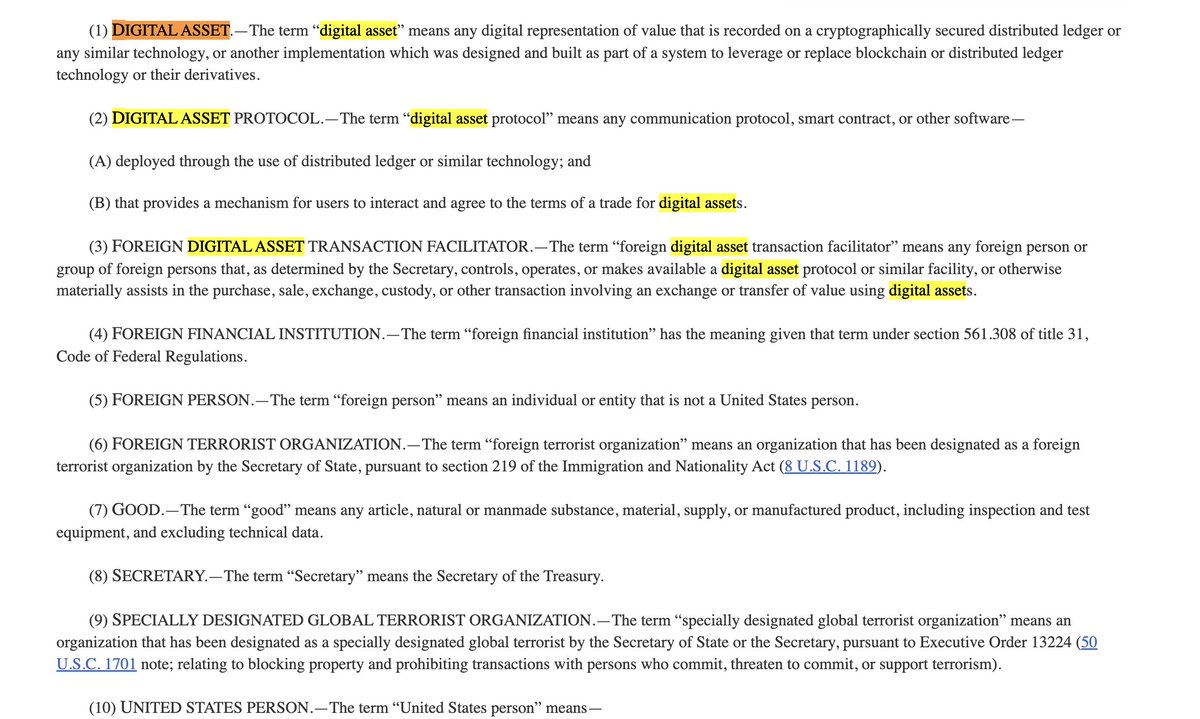
On Monday, Sen. Mark Warner (D, VA) appears to have inserted elements of his Terrorist Financing Prevention Act [S.3441] into a must-pass: The "Intelligence Authorization Act for Fiscal Year 2025" congress.gov/bill/118th-cong…
8
23
81
90,269
41Alphas retweeted
9 May 2024
Dear @exodus_io, I vote @RichAyotte to build support for @Ravencoin Assets. Can we get it deployed this month?
Reference: ravencoin.org/assets/
#Ravencoin #RWAs #tokenization #TokenFi #tokenisation #Tokenomics #BlockchainTech
1
2
1
47
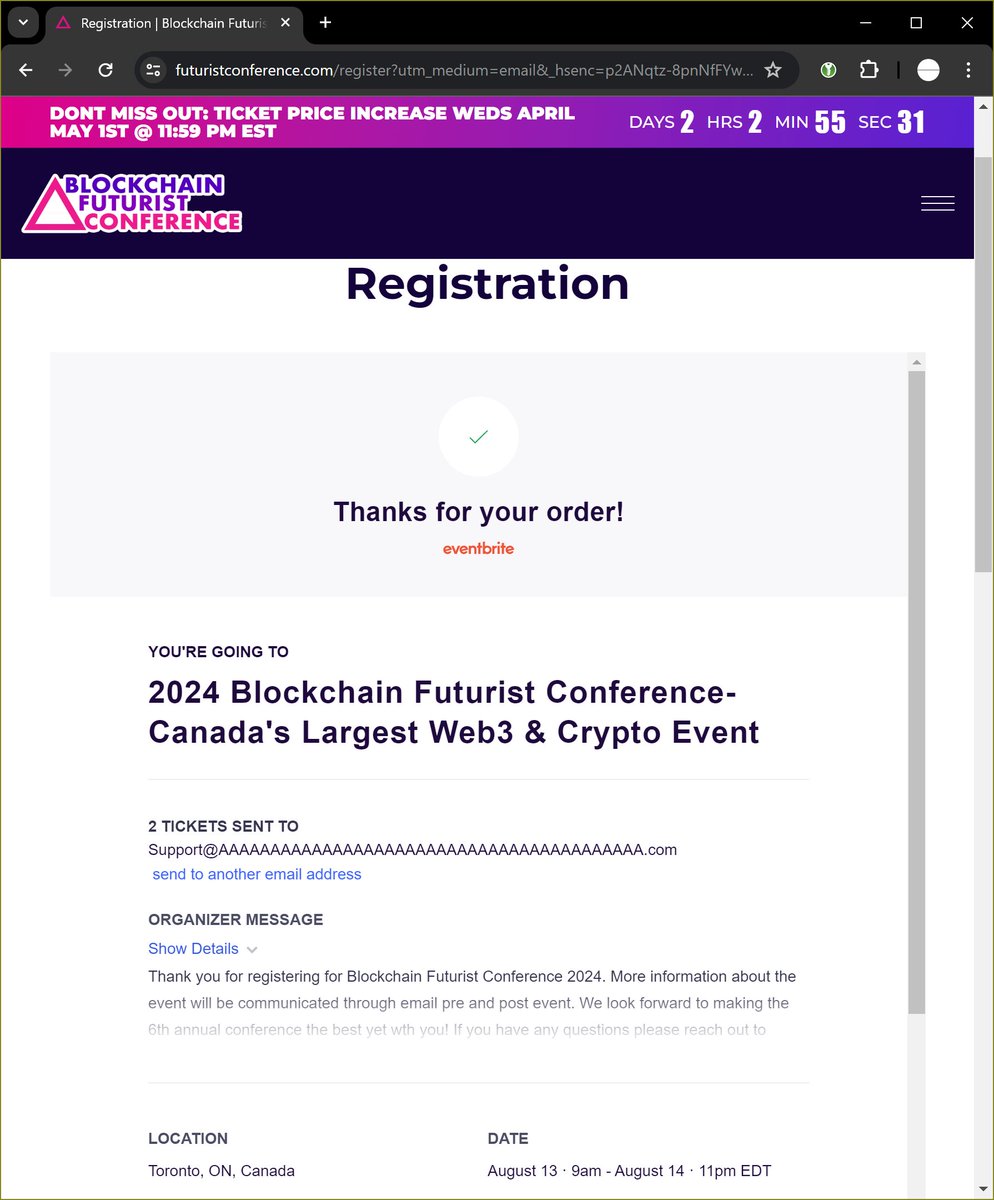
We registered @DaShak for @Futurist_conf #Futurist24!
See you there on August 13 to 14 in #Toronto!
#blockchain #conference #CryptoCommunity #cryptoEvents #CryptoEducation
23 Apr 2024

Would love that! @DaShak 👏
1
3
97
If #OnlineSecurity was a top priority for @MeridianCU, they wouldn't force their customers & clients into using #2FA/#TOTP that forced the use of phone numbers, because SIM swap attacks and phone number hijacking are real & current threats.
#Authenticator apps are far safer.
17 Apr 2024

Hi 41Alphas. We appreciate your feedback. Online security is a top priority for Meridian and we are always looking for ways to better improve our Member's security. We will pass along your feedback to our Digital Banking Team.
1
1
44
41Alphas retweeted
11 Apr 2024
Thanks to @MeridianCU for only offering phone calls & texts for #TwoFactorAuthentication, so that I can be vulnerable to phone number and SIM card hijacking.
Why no support for authenticator apps, @KeePassXC TOTP?
Why is this financial institution's I.T. leadership so weak?
1
4
295
41Alphas retweeted
12 Apr 2024
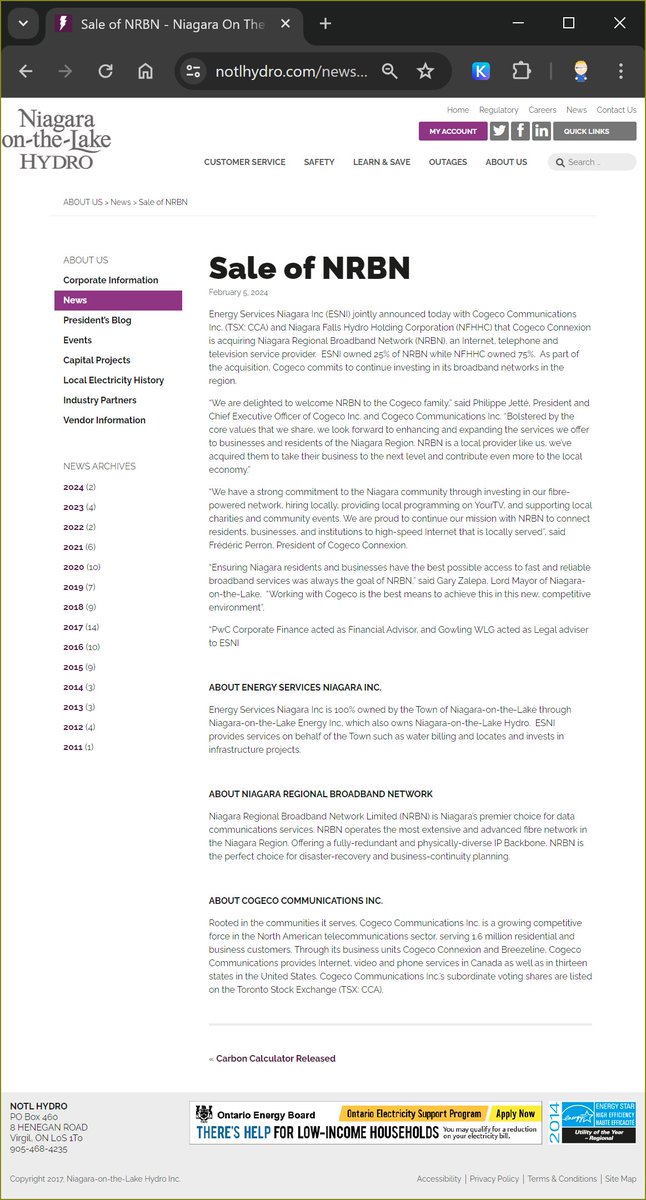
I just noticed that @notlhydro sold out @NRBNetwork (Niagara Regional Broadband Network) to @cogeco
notlhydro.com/news/sale-of-n…
Canadian internet, broadcast, and telecommunications cannot seem to stay away from consolidating to oligopolies, thanks to @CRTCeng policies & lobbyists.
1
3
197
41Alphas retweeted

12 Apr 2024
8/ Dive deeper into the migration details and read the latest blog post: blog.astroport.fi/post/migra…
Then head over to the swap page and migrate your legacy ASTRO: app.astroport.fi/swap
The future awaits!
2
2
14
2,810
41Alphas retweeted
13 Apr 2024
12 Apr 2024

4/ For ASTRO Stakers:
🔵 Unstake: Begin by unstaking your xASTRO.
🔵Swap: Convert your unstaked ASTRO.cw20 to the new $ASTRO.
🔵Restake: Use the bridge page linked below to migrate your new ASTRO to Neutron (if required) and stake for xASTRO.
app.astroport.fi/bridge
2
5
334
41Alphas retweeted

3 Apr 2024
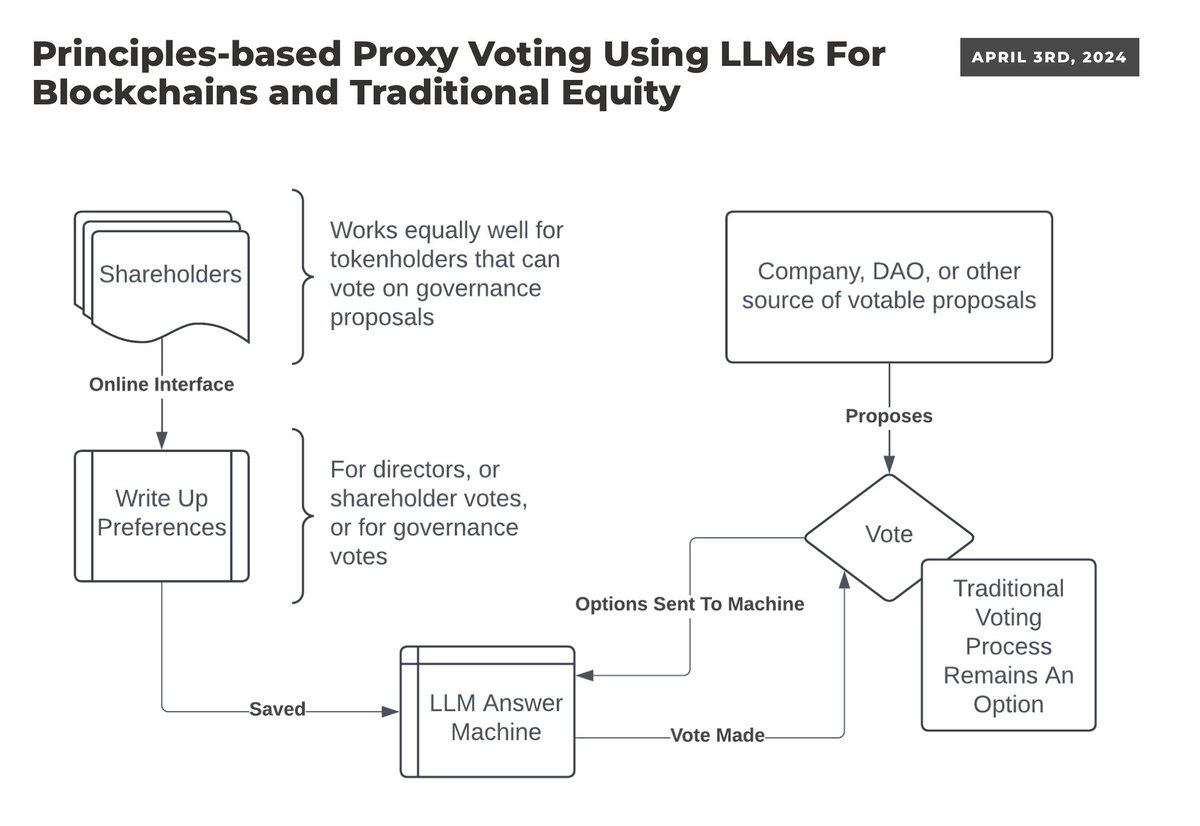
Principles-based voting using LLMs: cameronhuff.com/blog/princip…. A system that works for shares and governance tokens-alike.
Voters write their preferences then they're stored and used by an LLM to decide on the best course of action, which is then voted for, on behalf of the user.
1
1
4
679