
1,269 Photos and videos









Jun 13
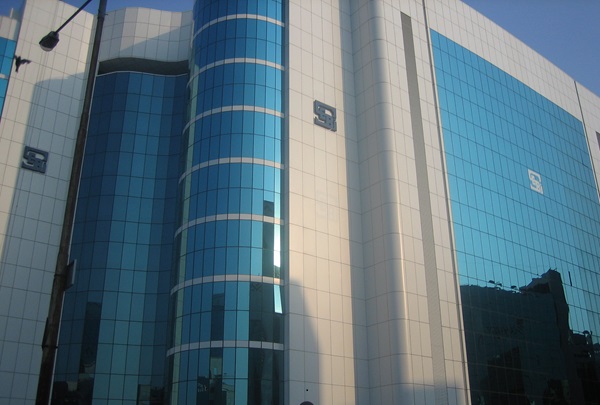
Market #regulation in #India has usually focused on fraud, disclosure and investor protection.
The assumption was simple. More participation meant better markets.
That no longer may be the priority.
Is #SEBI Chairman Tuhin Kanta Pandey is steering a different course?
Read Krishnadevan V's column “The One Word That Explains SEBI's Entire Reform Agenda”
basispointinsight.com/Story/…
@krishnadevanv
#Investing #MarketReforms #Markets
41
Jun 13
Vietnam, Iraq, Afghanistan, Ukraine and Gaza show the same pattern in different forms. Stronger militaries can destroy infrastructure, seize territory and impose costs. But those gains do not automatically produce legitimacy, stability or political compliance.
The weaker side does not always need to win. It often only needs to survive, deny the stronger side its objectives and prolong the contest until political costs rise.
That changes the meaning of victory, writes Lt Gen Syed Ata Hasnain, Bihar Governor and former Commander of Chinar Corps.
Modern warfare is shaped not just by firepower, but by nuclear deterrence, economic interdependence, information warfare, global media, drones, cyber capabilities and domestic political will. The battlefield is only one part of the contest.
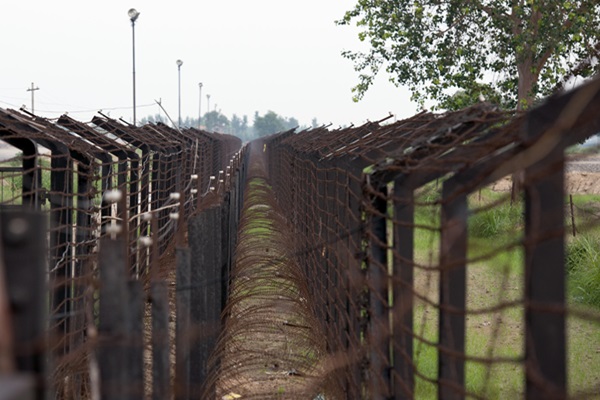
This has implications for every major power, including China. Taiwan and the Line of Actual Control are not merely military questions. Even successful tactical action can create wider diplomatic, economic and strategic consequences.
For India, the lesson is clear. Military power remains indispensable. Deterrence must be credible. Borders must be secured.
But military strength works best when it is tied to clear political objectives, strong diplomacy, economic resilience, technological capability and social cohesion.
The old staff-college principle still holds: political and military objectives must remain aligned.
What has changed is the difficulty of achieving that alignment in modern conflict. Victory today is not just about winning wars. It is about knowing whether the political outcome sought can be achieved by military means alone.
Click on the link to read Lt Gen Syed Ata Hasnain’s column for BasisPoint: Can Military Superiority Still Deliver Political Success?
basispointinsight.com/Story/…
@atahasnain53
#ModernWarfare #StrategicSuccess #PoliticalObjectives #Deterrence
42
Jun 12
The RBI may have built a cushion for the rupee.
But is that the same as a cure?
Recent measures have helped improve sentiment and strengthen India's external position. Yet the factors exerting the greatest influence on the currency today—oil prices, geopolitical risk, and global capital flows—remain largely outside the RBI's control.
Will the rupee's next move be decided in Mumbai, or in West Asia?
Read the full analysis by @RichardFargose: RBI Can Cushion the Rupee, But West Asia Still Holds the Trigger
basispointinsight.com/Story/…
#RupeeWatch #WestAsia #OilShock #RBI
1
35
Jun 12
The European Union Artificial Intelligence Act was widely heralded as a global benchmark, and not two years after coming into force, Europe has postponed some of its hardest obligations. Even in doing so, Europe has not abandoned its rulebook, but it has acknowledged that building the institutional and technical capacity to enforce such a sweeping AI law takes time.
In effect, the world’s largest AI rulebook is already being reshaped by implementation reality. Writing an AI law is not a one-time exercise. It needs built-in feedback loops, the policy equivalent of model monitoring, to stay effective as technology evolves. As Indian policymakers consider the next steps in AI governance, Europe’s experience underscores a simple point: implementation capacity matters as much as legislative ambition.
The takeaway is not that India should legislate less, but that it should never undervalue execution. India has not rushed into an AI law, a stance that may reflect strategic patience or simply caution.
Read the full essay by Pranav Rai: World’s Biggest AI Rulebook Is Already Being Rewritten on BasisPoint Insight
basispointinsight.com/Story/…
#AIGovernance #EUAIAct #AISafety #TechPolicy
30
Jun 11
India must continuously earn dollars to sustain growth. Energy imports are not a cyclical requirement but a permanent feature of the country’s development model. This makes the availability of dollars as important to economic stability as the availability of capital itself.
With its recent interventions, the RBI has succeeded in buying time and in preventing immediate pressures from creating instability. But time, by itself, cannot substitute for structural adjustment. The burden now shifts from monetary policy to economic policy. The centre of gravity has therefore shifted from Mint Street to North Block. What happens from here will depend less on monetary ingenuity and more on the quality and urgency of economic policy.
India’s central bank has bought time. That might be just good reason for the government to unveil the reform bazooka.
Read the full essay by Srinath Sridharan & Anand Venkatanarayanan: RBI Has Bought Time, Reforms Must Do the Rest on BasisPoint Insight.
basispointinsight.com/Story/…
@ssmumbai @iam_anandv
#RBI #DollarConstraint #EconomicReforms #RupeeWatch
2
4
498
Jun 11
India’s Pakistan policy does not need a reset. It needs sober management.
The current debate often presents a false binary: punitive resolve or naive accommodation. But a relationship defined by terrorism, military dominance in Pakistan’s state structure, nuclear risk and external alignments cannot be managed through domestic optics alone.
The key issue is strategic flexibility. If every major terror attack creates public pressure for a visible military response, India risks narrowing its own options. Deterrence should be shaped for the adversary, not for the domestic gallery.
That makes crisis-management channels, back-channel communication and diplomatic lines essential. They are not rewards for good behaviour. They are tools to reduce miscalculation between neighbours.
Hard power remains central. But India also needs a broader toolkit: calibrated responses, multidomain pressure, crisis communication and protection of its wider interests, especially in West Asia.
A rivalry that cannot be resolved still has to be governed.
Read Ashok K. Kantha’s column for BasisPoint: Why India’s Pakistan Policy Needs a Serious Review
basispointinsight.com/Story/…
@ashokkkantha
#IndiaPakistan #StrategicRestraint #Deterrence #NationalSecurity
93
Jun 10
While on the one hand, India’s consumption expenditure is strong, GST collections are up, and vehicle and FMCG sales are also up. But all is not well on the external front: the rupee is depreciating, the current account deficit (CAD) is widening, and net foreign direct investment (FDI) is falling.
In a scenario like this, while India cannot do much when it comes to external factors, it is time the government take decisive steps on initiating reforms to stabilise the economy to lead it to the next phase of growth.
Read the complete essay by Nilanjan Banik — India's Tale of Two Forces: Navigating the Exogenous and the Endogenous Factors on BasisPoint Insight.
basispointinsight.com/Story/…
@banik_nilanjan
#IndiaMacro #RupeeWatch #EconomicReforms #CurrentAccountDeficit
70
Jun 10
Regional rural banks, cooperative banks and small finance banks have taken over the role of providing access to small customers. Then, there are also small private sector banks which are community-focused. In January this year, the RBI put out a discussion paper on allowing new cooperative banks. It said it had stopped issuing licences in 2004 because a large number of newly licensed UCBs became financially unsound very quickly. The central bank also observed that both the operating environment and cooperative banks themselves had changed significantly since then.
Is there, then, a case for issuing new licences in the cooperative or any other sector or rationalising the number of banks and having larger and stronger banks with technology reaching the last mile?
Read Alpana Killawala’s essay "Should India Create More Cooperative Banks, or Better Banks?" on BasisPoint Insight.
basispointinsight.com/Story/…
#CooperativeBanks #RBI #BankingReforms #FinancialStability
82
Jun 10
At a time when large sections of the workforce remain concentrated in low-productivity and insecure employment, Karnataka's decision to raise minimum wages by 60% assumes significance.
The measure reflects a growing recognition that the next phase of India's development may require a broader social base of growth, one in which rising purchasing power, investment and productivity reinforce one another. The state, by attempting to raise purchasing power among a large segment of the workforce, has also reopened an important policy question: can economic growth remain durable if its benefits do not reach a much larger share of the population?
Karnataka's wage hike should not be viewed as simply a labour market reform but as part of a wider search for a new growth compact.
Read the full essay by Dr @MayaramArvind "Beyond Minimum Wages: Karnataka and India's Search for a New Growth Compact" on BasisPoint Insight.
basispointinsight.com/Story/…
#InclusiveGrowth #MinimumWages #EaseOfDoingBusiness #IndiaGrowth
1
4
8
334
Jun 10
Energy Security in an Age of Frozen Conflicts
A new essay by former RBI Deputy Governor Michael Debabrata Patra examines one of the most underappreciated vulnerabilities facing India today: energy security in a world increasingly defined by prolonged geopolitical conflicts and supply disruptions.
As conflicts in West Asia reshape global energy flows and the Strait of Hormuz emerges as a strategic chokepoint, the article argues that India's dependence on imported crude oil and LNG has become a macroeconomic risk, not merely an energy-sector concern. With nearly $135 billion spent on petroleum imports in 2025–26 and crude import dependence approaching 90%, energy security is increasingly inseparable from economic security.
Drawing on history, geopolitics and economics, Patra makes the case that India's Strategic Petroleum Reserves should be viewed as national insurance rather than infrastructure expenditure. He argues that while the ongoing expansion of reserves is necessary, India should ultimately target buffers equivalent to between six months and one year of net oil imports, substantially above current levels and beyond the International Energy Agency's 90-day benchmark.
The essay also places India's reserve strategy in a global context, comparing it with the stockpiles maintained by China, the United States, Japan and South Korea, while highlighting how strategic reserves can help cushion inflation shocks, protect growth, strengthen energy resilience and provide greater flexibility in navigating volatile global oil markets.
For policymakers, investors, economists and students of geopolitical risk, this is a timely reminder that in an era of frozen conflicts, resilience may prove as important as efficiency.
Read: basispointinsight.com/Story/…
#EnergySecurity #StrategicPetroleumReserves #IndiaEconomy #OilMarkets #Geopolitics #EnergyTransition #WestAsia #MacroEconomics #NationalSecurity #MichaelPatra #BasisPointInsight
79
Alan Greenspan believed bubbles could be identified only after they burst.
But history suggests one warning sign often appears earlier: when companies and insiders rush to sell shares into a market willing to pay almost any price for a compelling story.
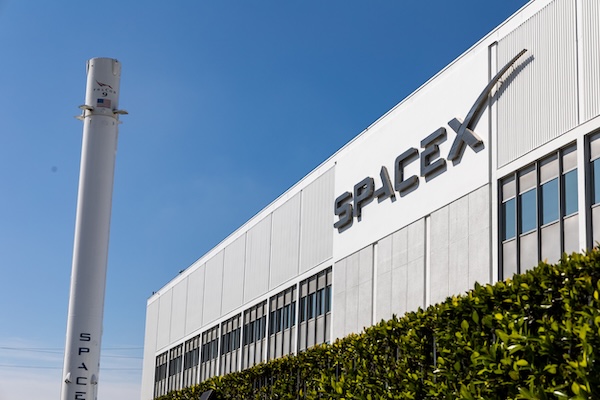
That is what makes the current AI boom worth watching. SpaceX is planning a massive IPO, while Anthropic and OpenAI are moving towards public markets. Large technology firms are also exploring fresh capital raising.
This does not mean AI has no future. Railways, telecom and the internet all changed the world. But each also produced periods of overinvestment, excess capacity and capital destruction before the real productivity gains arrived.
Every bubble looks like a revolution while it is inflating. The harder question is whether investors today are buying future cash flows — or simply buying the next great story.
Read @kaul_vivek's column for BasisPoint Insight: What SpaceX's IPO Tells Us About the AI Bubble
basispointinsight.com/Story/…
#spacex #spacexipo #ipo
1
2
3
3,483
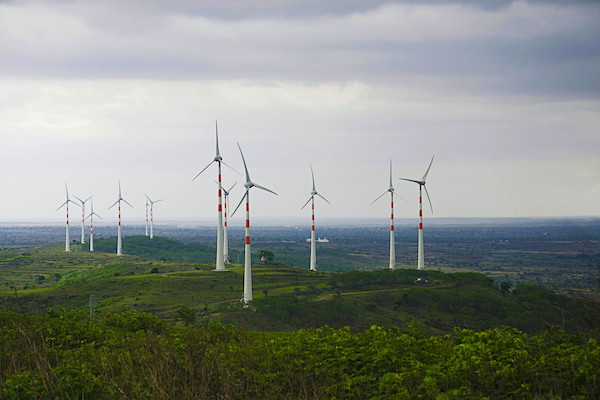
With ‘Suzlon 2.0’, the thirty-year-old company is looking to recast from a maker of wind turbines into a ‘wind-first full-stack renewable energy solutions company’.
Rebuilding itself into four businesses, RE Tech will build the turbines and source solar panels. RE Projects, the construction arm, will assemble a whole site. RE Asset Management will keep installed turbines spinning for a recurring fee, and RE DevCo will handle the work that comes before anyone builds anything - acquiring land, securing a grid connection, and clearing government permits.
In all of this, the company’s ambition raises a possibility it has not spelt out. A large pool of operating assets throwing off steady, contracted cashflows is the raw material for an infrastructure investment trust, or InvIT.
Read more about Suzlon’s plans in this article by Dev Chandrasekhar: Behind the Suzlon 2.0 Vision Is the Outline of an InvIT on BasisPoint Insight.
basispointinsight.com/Story/…
#Suzlon #InvIT #Renewables #EnergyTransition
1
214
Oil markets may be tight today, but high prices can change tomorrow’s supply picture.
The West Asia conflict has kept crude prices volatile, especially in spot and near-dated contracts. Yet longer-dated Brent futures have remained comparatively stable, suggesting markets are less worried about the medium-term outlook.
That may be because commodity markets respond to scarcity. Sustained high prices can encourage new production, alternative supply routes, storage build-up and infrastructure investment. Energy security is now a higher priority for many governments than pure cost optimisation.
The near-term risks are still serious. Disrupted supply routes, depleted inventories and uncertainty around the Strait of Hormuz can keep prices supported and trigger sharp spikes.
But the longer the shock lasts, the stronger the incentive to diversify away from vulnerable chokepoints and add capacity.
Read Anuj Agarwal’s debut column for BasisPoint: Why Oil Price Spike May Trigger Supply Wave
basispointinsight.com/Story/…
@EconicAnuj
#OilPrices #EnergySecurity #SupplyShock #OilMarkets
1
1
1
86
Karnataka’s move to hike minimum wages by 60% is a welcome move for over 10 million workers in the state, but enterprises fear they won’t be able to afford the hike. While there is no doubt that it was a much-needed action, the wage hike could have been undertaken more carefully to give employers time to adjust.
Read the full article by Sharmila Kantha — Karnataka Minimum Wage Hike: Good for Workers, Worrisome for Enterprises on BasisPoint Insight.
basispointinsight.com/Story/…
@IndiaEconomists
#MinimumWages #MSMEs #LabourReforms #Karnataka
1
55
Corporate scandals are supposed to expose companies.
Not the institutions overseeing them.
That no longer holds.
Rajesh Exports just reopened a debate from the Satyam era.
Read BasisPoint Insight column "Seventeen Years After Satyam, Who Audits The Auditors?" by @krishnadevanv
basispointinsight.com/Story/…
#AccountingFraud #Auditors #ICAI #CharteredAccountants #SEBI #NFRA #IndianMinistryOfFinance #CorporateGovernance
52
Indonesia’s resource nationalism is a wake-up call for India.
Jakarta’s move to route exports of strategic commodities through a state-owned enterprise could affect palm oil, coal and nickel flows — all important for India.
New Delhi should engage early, use its import power to secure favourable terms and build alternative supply options.
Resource nationalism is becoming part of global trade. India needs a plan before supply risks become price shocks.
Read G Chandrashekhar’s column for BasisPoint — Indonesia’s Resource Nationalism: Is India Ready with a Plan?
basispointinsight.com/Story/…
#ResourceNationalism #SupplyChains #Indonesia #IndiaMacro
74
Cockroaches, Central Banks and the Business of Trust
An RBI buying time through capital-flow measures. A fiscal framework confronting divergent demographic realities. Corporate India revealing itself through buybacks, cash piles and capital allocation decisions.
This week's pieces on BasisPoint Insight explored some of the biggest questions facing the Indian economy, markets and policymakers. Check out the newsletter for the full coverage:
basispointinsight.com/Story/…
@rajeshramand, @Dhananj89102936, @apirk16, @ssmumbai, @MayaramArvind
#Economy #RBI #MPC #MiddleEastWar #Rupee
1
126