I am watching out the “Great Reset” conspiracy. It is about moving your money to grow bigger governments. The magic is, you may be happy about it 🤷🏻♂️
Joined October 2011
- Tweets 45,250
- Following 472
- Followers 1,656
- Likes 201,054
9,238 Photos and videos






Bull Bear 🍎 retweeted

A careless code blunder just blew the lid off Beijing’s multi-million dollar AI propaganda operation targeting the West. France's digital interference watchdog, Viginum, has officially exposed "Fawn Mianju," a covert network of 13 multilingual fake news sites running on advanced automation and generative AI. The sophisticated network was completely compromised after a computer engineer working as a Senior Project Manager at China's state-run CGTN Digital accidentally left his login credentials exposed in the code.
This operation, which expanded on findings first uncovered by U.S. cybersecurity firm Graphika in 2025, operated with deep financial backing. The domains were registered in Beijing, hosted on Alibaba Cloud, and utilized expensive infrastructure alongside paid plugins to artificially manipulate search engine rankings. Using digital keys linked directly to AI language models, the network automatically scraped CGTN articles, lightly rewrote them, and republished over 2,300 articles, often within less than an hour of the original state media broadcast.
Sites like the French-language "Actu Méridien" were weaponized to manipulate public opinion across 89 countries, heavily targeting Western audiences and Francophone African youth. The articles aggressively peddled pro-Beijing narratives, painting China as the undisputed leader of the Global South and green energy transition while explicitly telling Western readers that aligning with Chinese interests would bring them massive benefits.
Despite the cutting-edge tech and heavy state funding, the operation was an organic flop. The articles struggled to breach 15,000 views, with nearly 40 percent of its top social media engagement traced back to fake accounts in Burundi whose sole purpose was to artificially inflate the content. While the reach was limited, French authorities warn that the operation exposes Beijing’s rapidly escalating capability to launch fully automated, stealth disinformation campaigns designed to quietly erode Western democratic alignment.
#Disinformation #CyberSecurity #France #China #AIPropaganda #Geopolitics #Viginum #NationalSecurity

21
659
1,420
167,776
Bull Bear 🍎 retweeted

May 31
Wow this was brutal do you agree with this statement?
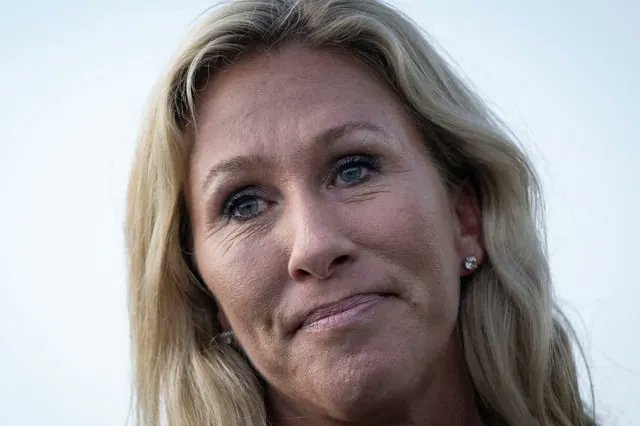
Marjorie Taylor Greene ripped to shreds after hypocritical post attacking the “sexualization of women” at Mar-a-Lago
One woman fired back with this brutal response:
“She cheated on her husband. Slept with her trainer. Stole a married man who cheated on his wife with her. And now she wants to talk about loyalty and morals? LOL. Shut up, clown.”
926
6,566
20,379
241,328

May 28
#GunControl in China.
#CCP version.
May 28

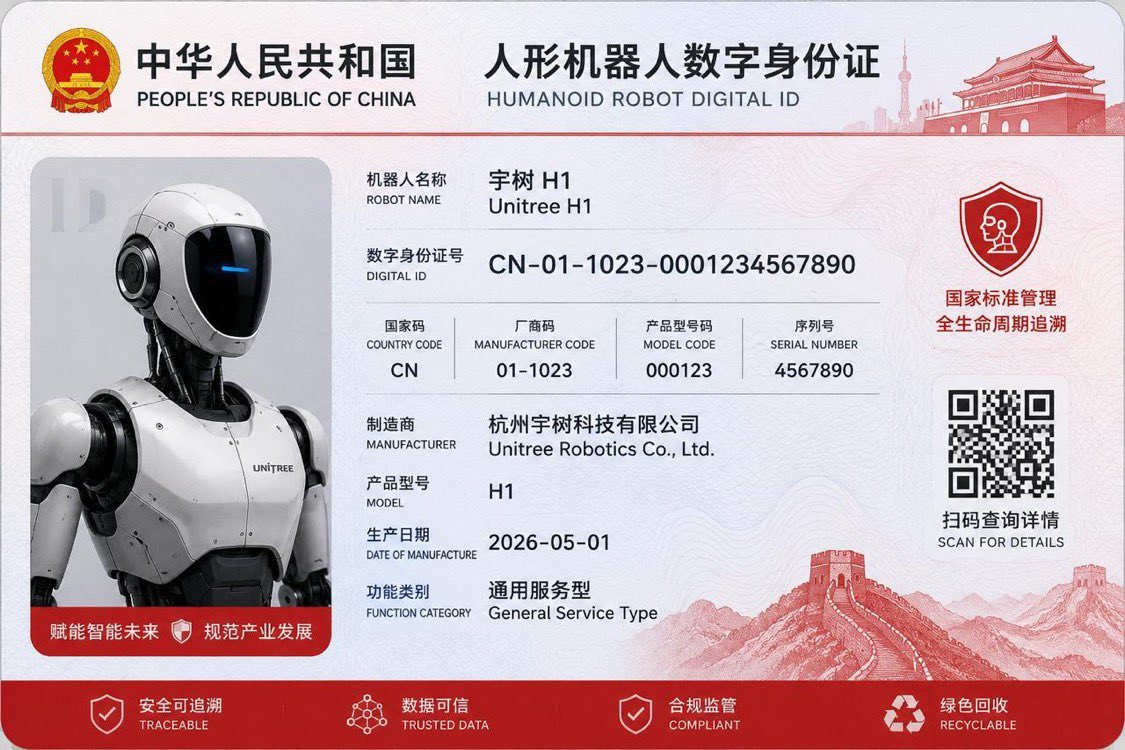
🇨🇳 BREAKING: China is officially assigning digital identities to humanoid robots.
More than 28,000 robots are already registered.
77
Bull Bear 🍎 retweeted

May 28
🇨🇳 BREAKING: China is officially assigning digital identities to humanoid robots.
More than 28,000 robots are already registered.
4
13
1,173
Bull Bear 🍎 retweeted

May 27
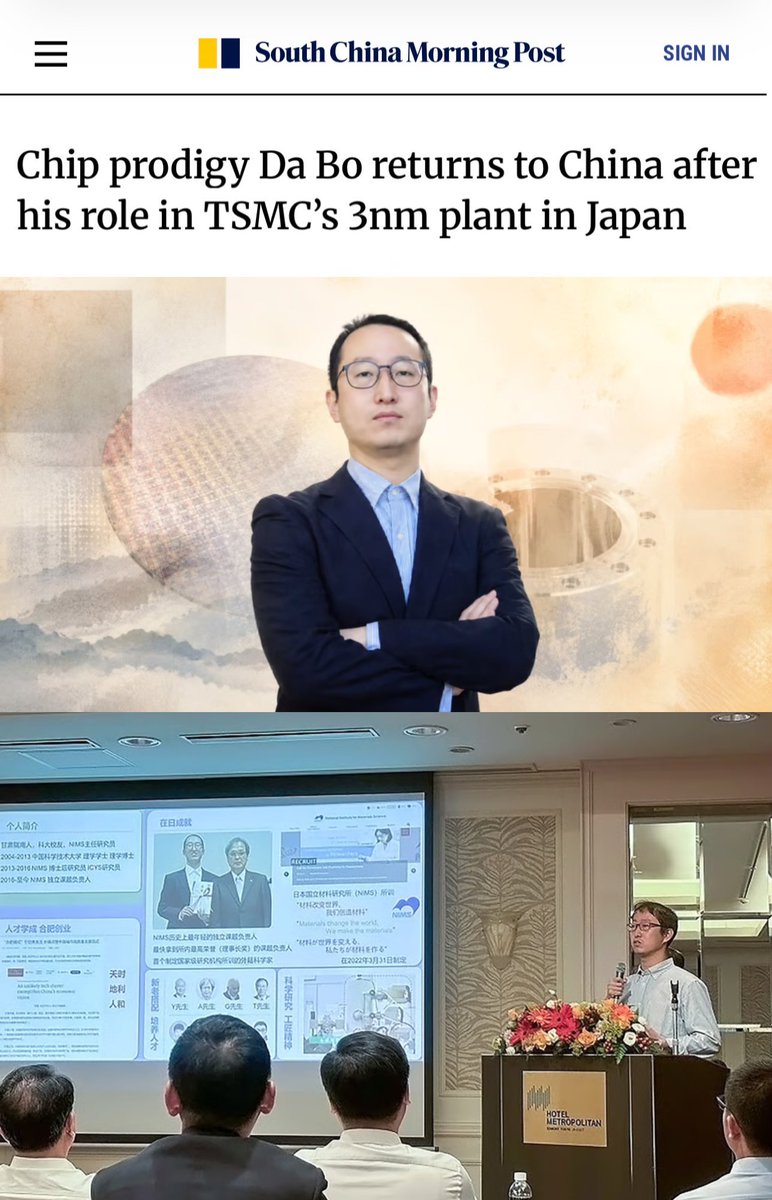
🇨🇳 University of Science and Technology of China (USTC) PhD Da Bo (达博), who made his name in Japan — sweeping its top awards and developing the core components of the world’s most advanced chip production line, has left 🇯🇵 National Institute for Materials Science (NIMS) and returned to China, along with his team of researchers. Before securing his new position, Da had already begun assembling a team at NIMS composed of fellow 🇨🇳 USTC graduates, with the plan of eventually bringing them back to China as a unit upon his return.
Da, a semiconductor prodigy whose research underpins TSMC’s 3nm chip production line in Japan, is now a chair professor at the School of Engineering Science of USTC in Hefei, Anhui province (Da’s biography is now inaccessible on USTC’s website).
Da joined 🇯🇵 NIMS in 2013 — when he arrived as a postdoctoral student after completing his PhD at USTC. He said in an interview published on May 20 by Chinese news website Deeptech that his goal was very clear (mittrchina.com/news/detail/1…).
If he could bring China’s semiconductor equipment, materials and components up to international standards, “I believe my lifelong efforts will be worthwhile,” he told the website affiliated with MIT Technology Review.
Da was the youngest independent principal investigator in NIMS’ history and, since 2022, was one of the few Chinese researchers to have been deeply involved in front-line international semiconductor industry projects.
Da is from the small and remote Kang county in the Qinba Mountains in Gansu province. In 2004, he was admitted to USTC as an undergraduate, and completed his bachelor’s, master’s and doctoral studies in condensed matter physics within 9 years.
Da then joined NIMS — Japan’s only national R&D institution dedicated to materials science — where he went on to break a number of records.
In 2015, Da became a researcher at the NIMS International Centre for Young Scientists, followed by a similar position at its Centre for Materials Research by Information Integration in 2016.
The same year, he became NIMS’ youngest tenure-track academic, having accomplished the feat in just one year instead of the more usual 3 to 5.
Meanwhile, Da was developing data-driven spectral analysis methods to more efficiently characterise two-dimensional materials — atomically thin semiconductors also known as 2D materials.
Using “white electron” technology to control the secondary electron energy spectrum as a probe, Da’s method of conducting multichannel parallel investigations of two-dimensional materials improved detection efficiency.
At the 2016 International Symposium on Atomic Level Characterisations for New Materials and Devices in Seoul, South Korea, Da received the first-place student award for his work on the modelling of the surface excitation effect for rough surfaces.
On Apr 1, 2017, Da gave a presentation to the NIMS annual conference as a new employee and later the same day was presented with the institute’s highest award for his achievements during the tenure-track phase.
He achieved another first in 2022, when his proposed slogan “materials change the world; we create materials” was adopted by NIMS and is still used today — the only time a foreign individual’s suggestion has been used by a national research institution in Japan.
The same year, he became the only foreigner invited to apply for one of the Hitachi Global Foundation’s 54th Kurata grants, for his rotating crystal film-based micro-focusing X-ray source used in endoscopes.
Da’s pioneering work in the field of diffraction electron optics using cylindrically symmetric rotating crystals was also picked up by 🇺🇸 Lam Research, one of only a few companies involved in frontline international semiconductor projects after 2022.
“My research has been successfully used in a top semiconductor equipment company in the USA so, for me, the … grant is not only financial support but also a chance to bring my research closer to
1/n
scmp.com/news/china/science/…
19
71
147
26,489
Bull Bear 🍎 retweeted

May 28
After 3 months of internet outage
I connected from inside Iran
And I have only one message for the world
Don't believe the lies of the Western Ayatollah-loving medias
The Islamic Republic is not winning the war and has suffered a heavy defeat
Militarily, we witnessed the destruction of IRGC centers in cities every day
Economically, prices in Iran have exploded and we can no longer even afford to buy chicken and eggs
The regime has been controlling the streets with armed terrorists for more than three months in order not to fall
They cut off the internet for three months so that you wouldn't hear these words
Even if you hate Donald Trump
You have to accept that the decisive winner of this war is America
#IranWar
984
6,550
21,555
730,636
Bull Bear 🍎 retweeted

May 27
More never before seen footage is coming out from Iran.
This was in Mashhad on the 8th of January, the moment regime thugs began firing on the unarmed crowd.
Notice how the "Iran expert" class tried to pretend like these atrocities never happened.
151
3,786
9,639
113,230
Bull Bear 🍎 retweeted

May 18
This should have been a major PR disaster for Disney.
But they successfully kept the story away from the masses.
They’re getting better at controlling the narrative.

52
1,568
3,671
27,082
Bull Bear 🍎 retweeted

May 18
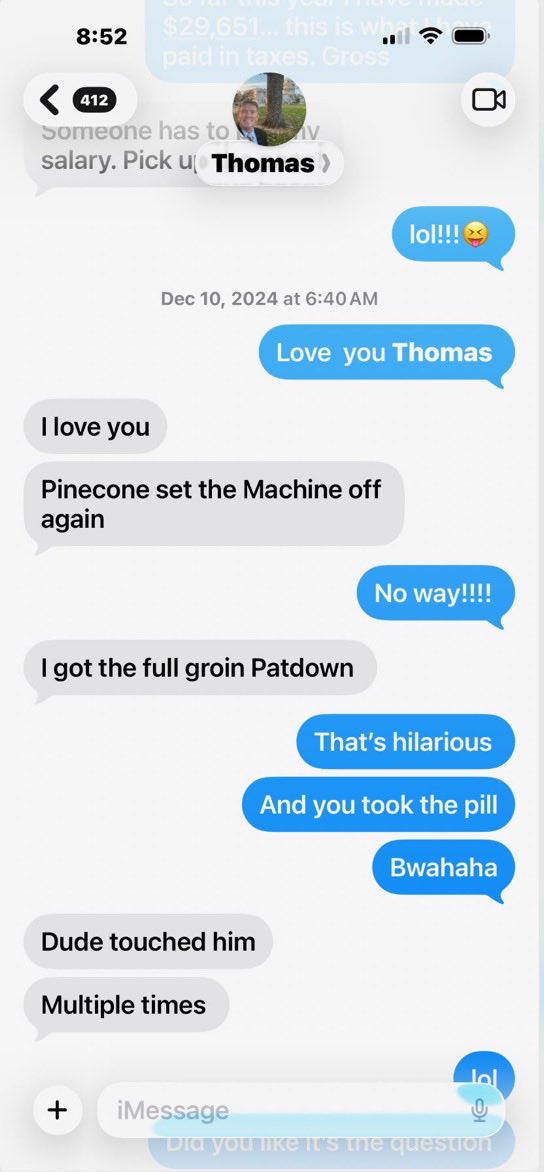
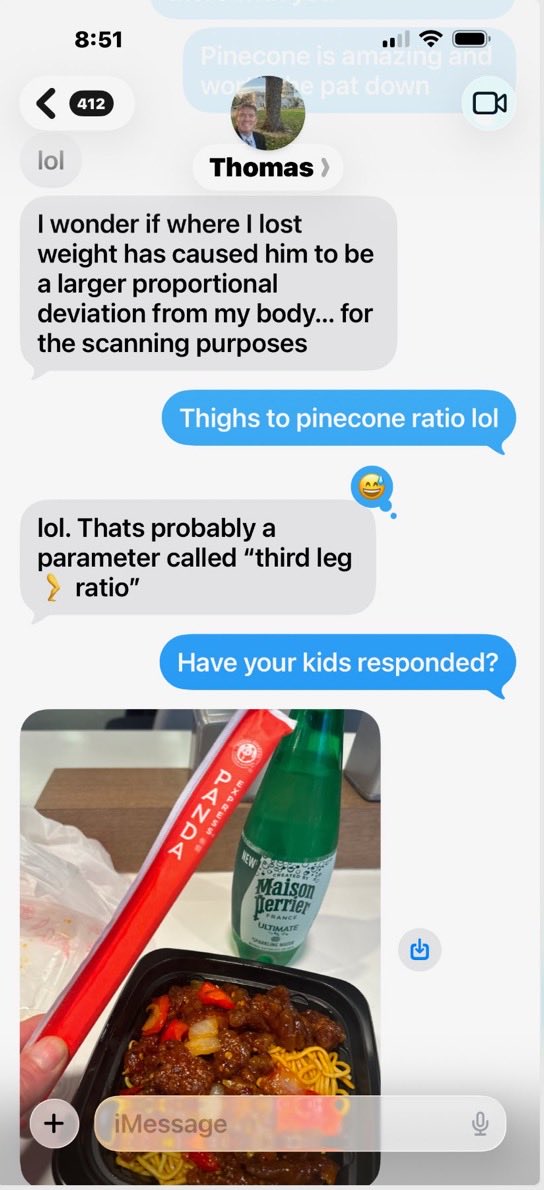
Thomas Massie and his congressional staffers named his penis “Pinecone”.
Texts prove this.

710
1,892
4,825
191,804
May 19
What a loser talk.
When you want to show your muscles, why you need to drag a friend standing beside you?
Only when you are so weak to stand up by yourself.
Ha~
May 19

JUST IN: Philippine President Marcos announces the Philippines would have “no choice” but to be involved in any Taiwan conflict.
62
Bull Bear 🍎 retweeted

May 15
This is how Chinese adults behave in real life when they don’t get their way. 🙄😭
Now we understand why the Chinese state behaves similarly when it doesn’t get its way. 🤪🤡
170
491
2,154
108,661
Bull Bear 🍎 retweeted

🚨 CHAOS BEHIND THE SCENES OF TRUMP’S CHINA SUMMIT: Multiple incidents erupted as President Trump was meeting with Xi Jinping.
REPORTER: "Do you understand that we are in the motorcade with the President?"
CHINESE REPORTER: "This is my country, the security on our side, do not allow you, sir, to leave this area."
REPORTER: "WE GOTTA MOVE!"
Chinese reporters trampled a White House aide, a Secret Service agent being blocked over his firearm, and U.S. journalists being held in a side room and prevented from joining the motorcade.
Reporters also faced strict controls — limited bathroom access and confiscated water bottles in 80 degree heat.
598
1,421
7,607
2,023,663
Bull Bear 🍎 retweeted

May 15
🚨XI’S GOONS JUST GOT SCHOOLED: Secret Service Wins Brutal 30-Min Standoff — Refuses to Disarm for Trump at Temple of Heaven While Media Gets Caged! 💥
While emperors once climbed the Temple of Heaven to claim the Mandate of Heaven and pray for cosmic harmony, yesterday’s “harmony” looked decidedly more martial.
Chinese security blocked an armed U.S. Secret Service agent from entering the sacred precinct with his standard sidearm — the non-negotiable tool of presidential protection.
What followed was a 30-minute, reportedly physical, white-knuckle standoff: heated words, locked eyes, immovable lines. Meanwhile, the American press pool was literally penned up, shouting they were “missing history” as Trump and Xi strolled the grounds.
This was never about a firearm. It was a real-time sovereignty seminar.
One superpower treats protecting its leader as a sacred duty. The other treats it as optional theater to be negotiated away. America didn’t blink. Resolve held. The schedule moved forward — on our terms.
In the arena of great-power competition, symbols matter. Yesterday, the world saw which side still understands that protecting the republic isn’t a courtesy. It’s a principle.
🇺🇸 Unbowed. Unapologetic. Unbreakable.
#SecretServiceStandoff #TempleOfHeavenClash #TrumpXiTestOfWill #AmericanSovereignty #NoDisarmament #ChinaTriesToDisarmUs #USChinaRawPower
20
93
416
91,829
Bull Bear 🍎 retweeted

Pope Leo XIV just announced he will NOT visit the United States during President Trump’s presidency — even skipping America’s 250th anniversary in 2026.
I can’t speak for anyone else but IDGAF what the Pope does, says, or what he thinks.

5,151
2,077
13,360
197,561
Bull Bear 🍎 retweeted

Former software engineer at Apple is whistleblowing
She says whenever Apple launches a new phone, they would push an update to older iPhones with malware to slow them down. This pushes people to upgrade
“I used to be a software engineer at Apple, and with every new phone that was released, malware was installed on the older phones to make you have to update, so your phone's not just glitching. It's doing that on purpose. Share before it's deleted”
She’s telling the truth, this was proven in court
The 2017 “Batterygate” scandal, where Apple was caught deliberately slowing down older iPhones through software updates
Apple was caught red handed doing this they even admitted it in court
Apple released iOS updates that intentionally throttled and reduced CPU performance. This caused phones to feel slower, glitchy and laggy
Apple’s stated reason: To prevent unexpected shutdowns caused by aging lithium-ion batteries
3,957
40,046
90,899
4,683,327
Bull Bear 🍎 retweeted
China has spent years claiming the US war with Iran has nothing to do with it. Then one of America's top think tanks ran the numbers. It turns out the war is bleeding China from five different directions simultaneously.
The Center for Strategic and International Studies (CSIS) published a detailed economic analysis on April 30, 2026, examining how the Iran war, now in its ninth week, is hitting the world's second largest economy. The findings are more damaging than Beijing's public posture suggests.
The most immediate pain is energy. China imports over one third of its total crude oil supply through the Strait of Hormuz every year. Since the war began on February 28, retail gasoline prices in China have surged 39%, and LNG prices have jumped 42%. That is the largest gasoline price spike China has recorded since its current pricing system began in 2013, surpassing even the shock from Russia's invasion of Ukraine in 2022. China has 70 vessels stranded behind the Strait of Hormuz that it is struggling to get free. Foreign Minister Wang Yi told his Thai counterpart directly.
The export damage is just as serious. Nearly one third of China's entire GDP growth in 2025 came from net exports, the highest share since 1997. The IMF has already downgraded forecasts for eight of China's top 20 export markets, including the UAE, where projected import growth swung from positive 7.1% to negative 8.4% in a single revision. Fewer customers buying means fewer Chinese factories running.
Then there are the supply chains. Pesticide prices in China surged 46% between February and mid-April. Sulfuric acid, a key fertilizer ingredient, climbed 72%. Polypropylene plastic surged 40%. In industrial regions, factory trucks are lining up to secure plastic supplies. In February 2026, 34% of Chinese manufacturing firms above a designated size were already running at a loss. If that number climbs, layoffs follow. Manufacturing employs roughly one fifth of China's population.
China's chipmaking sector faces a specific chokepoint: helium. China imports 85% of its helium demand, roughly half from Qatar, which is directly affected by the war. No helium means semiconductor production lines slow down. Helium spot prices have already spiked. The effects will compound the longer the conflict runs.
Chinese investments in the Middle East are also at risk. In 2025, the region was the single largest destination for Chinese overseas investment globally, with at least $26 billion in projects signed. A $4 billion Chinese port project in Kuwait was struck by Iranian drone and cruise missiles in March 2026. Beijing has pledged up to $400 billion in Iranian infrastructure over 25 years under a 2021 agreement. That program is now in serious question.
China is better insulated than Japan, South Korea, or Taiwan, which depend on the strait for over 90%, 70%, and 58% of their crude imports respectively. China has the world's largest strategic oil reserve at 1.4 billion barrels. Its coal dependence and EV adoption provide buffers. But better insulated is not the same as unaffected.
Xi Jinping told Saudi Arabia's Crown Prince that the Strait of Hormuz "should maintain normal passage." That is the closest Beijing has come to publicly acknowledging Iran is the problem. The country that buys over 80% of Iran's oil is now quietly hoping its best energy client stops blocking the waterway that feeds its own economy.
Full analysis: chinapower.csis.org/china-ec…
#China #CCP #IranWar #Economy #StraitOfHormuz #Energy #Geopolitics #CSIS #ChinaEconomy #MiddleEast
29
275
862
200,050
May 5
RT @Byron_Wan: May 3: a girl died in a canyon swing attempt gone wrong in the Maliuyan waterfall scenic area (玛琉岩瀑布风景区) in Huaying (华蓥), Si…
105
Bull Bear 🍎 retweeted

May 5
Tell that to the 2 star general who waited all night for me to come out of my hotel room to interrogate me.
You wouldn’t believe the truth if it was in front of you anyway. You went to Cuba and still think communism is a good idea. Are you “medically stupid”?

731
2,868
45,678
377,086
Bull Bear 🍎 retweeted

A woman bought tenderloin steaks from her local Kroger and, upon further inspection, found that some had the consistency of Play-Doh, being incredibly malleable and able to be squished flat with little to no pressure.
I want real food back.
563
3,151
8,011
465,639
Bull Bear 🍎 retweeted

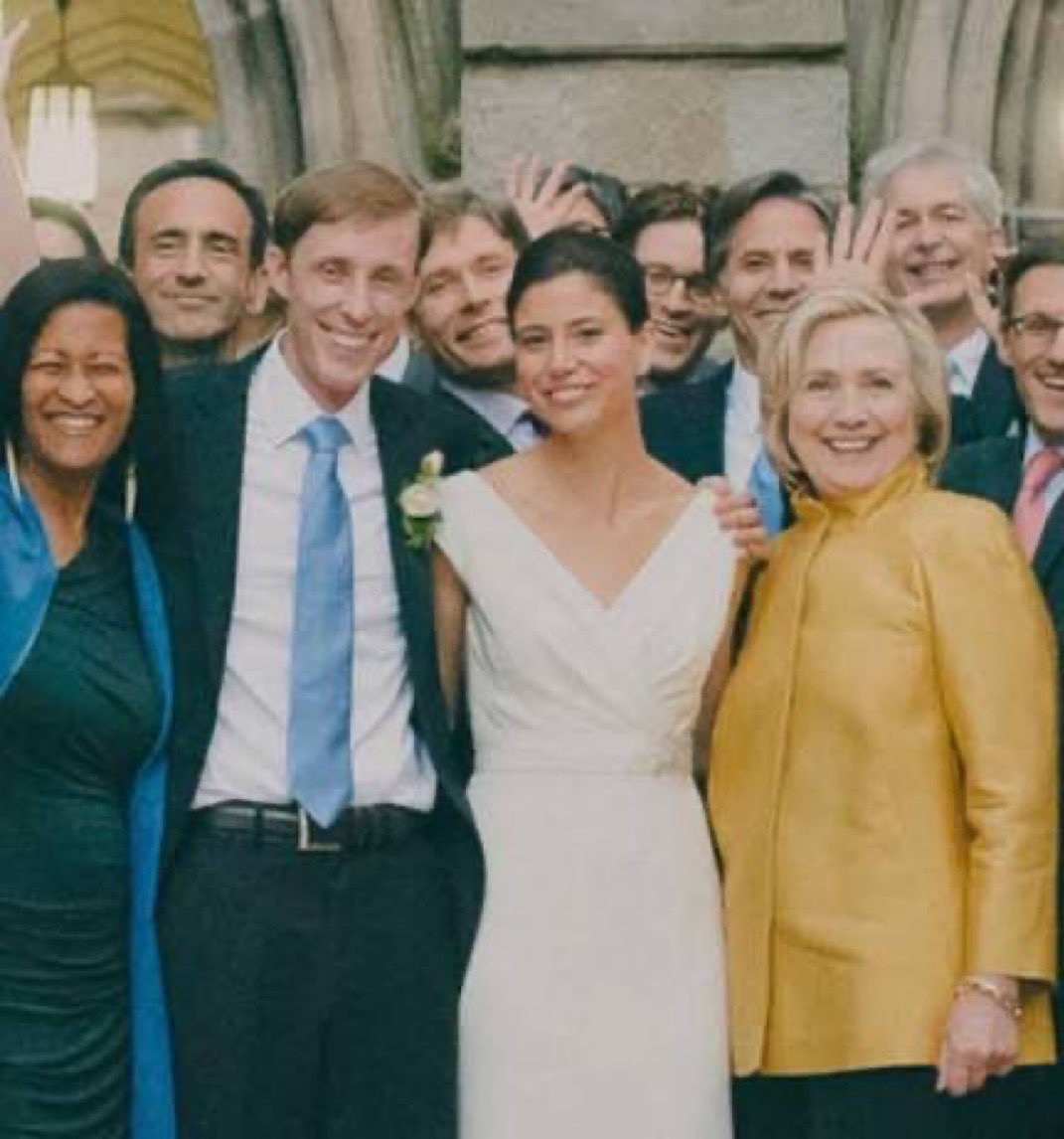
The Deep State groomed Jake Sullivan to become the next President. They arranged a marriage for a 40 year old bachelor Sullivan to marry Goodlander, the money. The wedding took place in 2015, around the start of the presidential campaign.
Hillary was going to be installed but the Sullivan-Goodlander dynasty was going to take over from the Clintons.
That's why you have Bill Burns, Tony Blinken etc attending.
To stop Donald Trump, Sullivan and Hillary, with the help of Obama, Soros, US and British intelligence devised the Clinton Plan to tie Donald Trump to Russian intelligence, aka Russiagate.
President Trump won against all odds. Sullivan was devastated. So he, Soros, Obama and co plotted to take out President Trump.
The conspiracy continues to this day. Maggie Goodlander is the ringleader of the Seditious Six.
May 3

Scoop: Nat Sec Action—the foreign policy hub for the left co-founded by Jake Sullivan and Ben Rhodes—is rebooting ahead of the 2028 Dem primary with a new director, and more.
Nat Sec Action became a key source for staffing the Biden admin.
axios.com/2026/05/03/democra…
361
5,738
15,892
1,366,627