Earthquake happenings tidbits, maps, machine learning.I'm ALomax Scientific: earthquake monitoring and analysis @QuakeEarly 🐘 @ALomax@qoto.org
Joined January 2013
- Tweets 12,859
- Following 233
- Followers 5,650
- Likes 3,384
2,411 Photos and videos

Anthony Lomax 🌍 🇪🇺🇺🇦 retweeted

15 Oct 2024
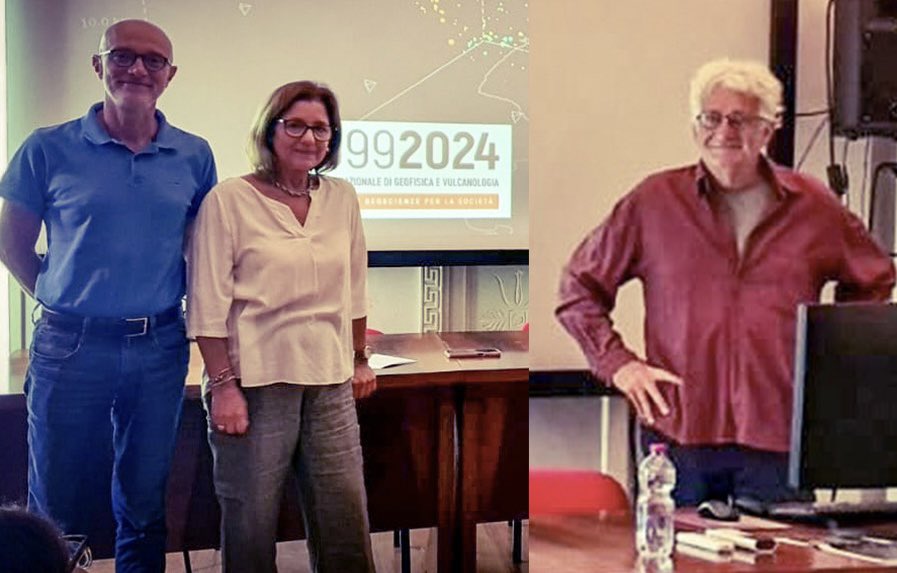
The seminar program continues!
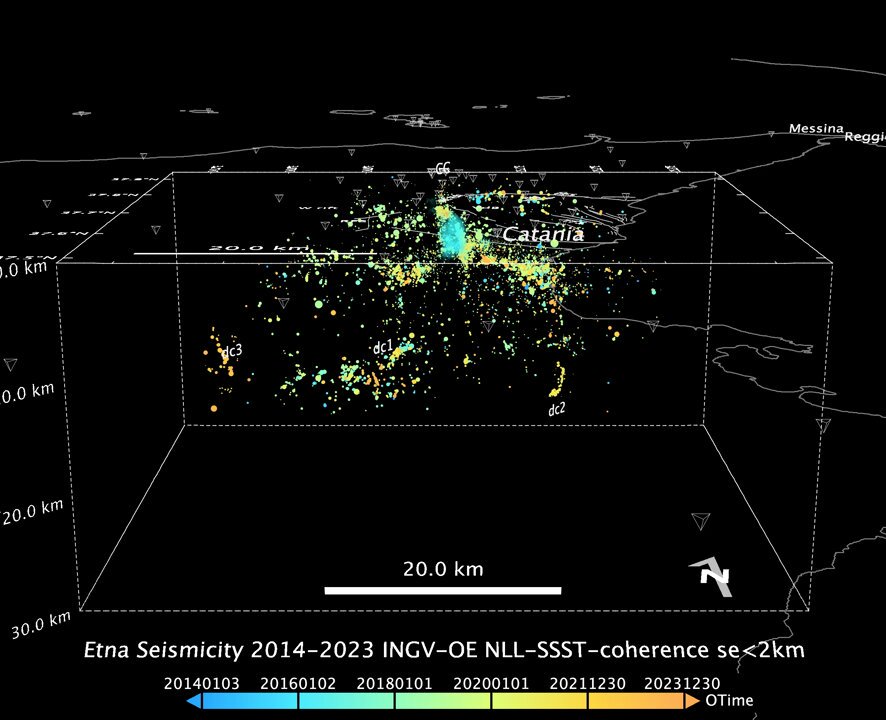
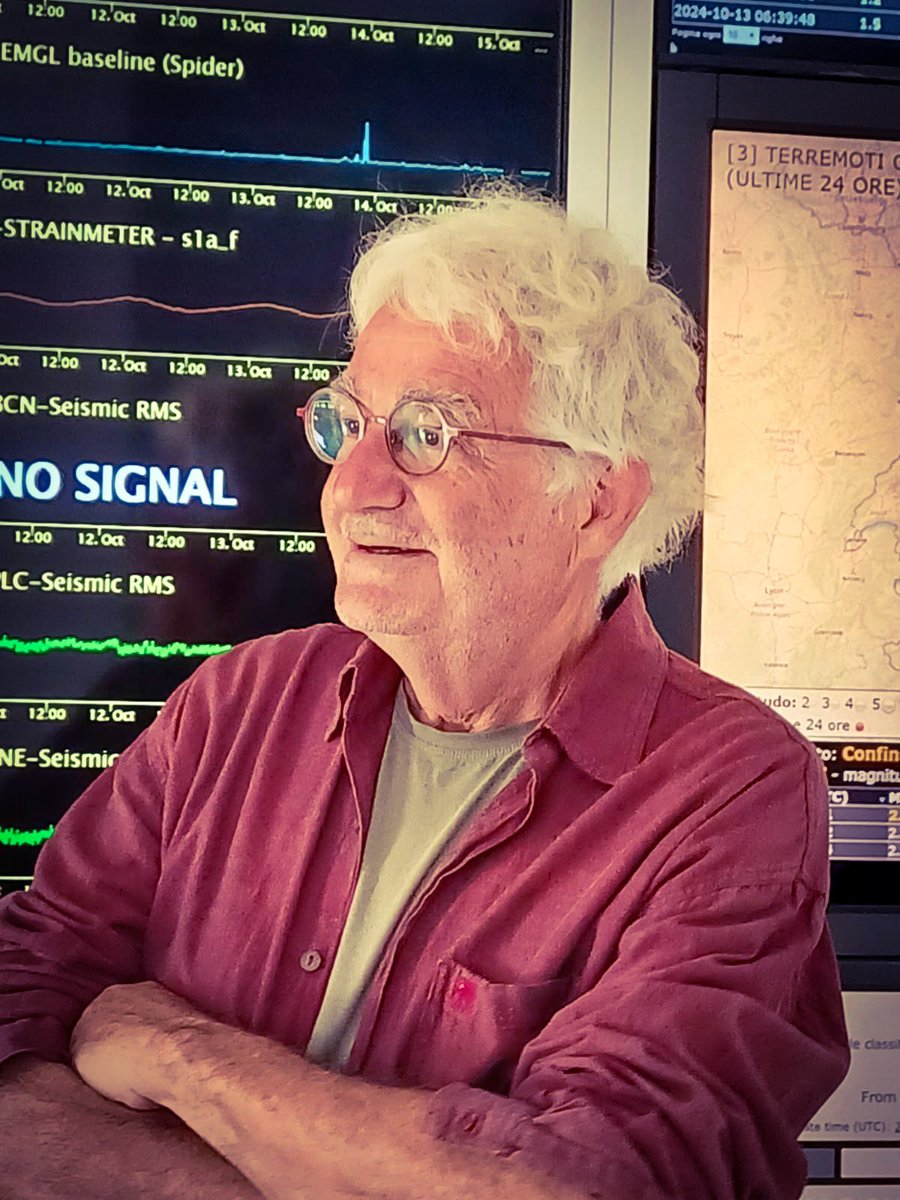
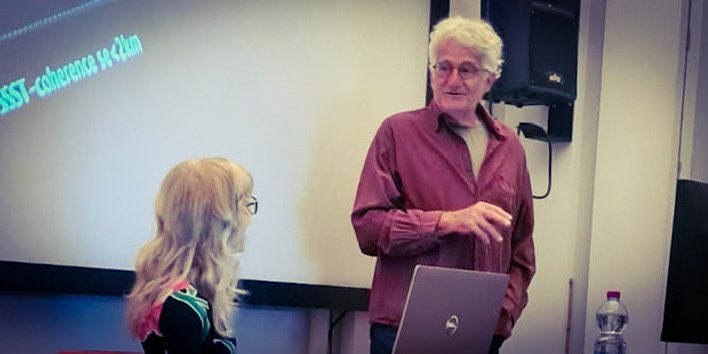
Highlights from the seminar by dr. Anthony Lomax, held in celebration of the 25th anniversary of #INGV
#Catania
#Geophysics
#Seismology
#RealTimeResearch
#SeismicAnalysis
📸 Ornella Cocina, INGV
7
14
1,364

21 Oct 2024
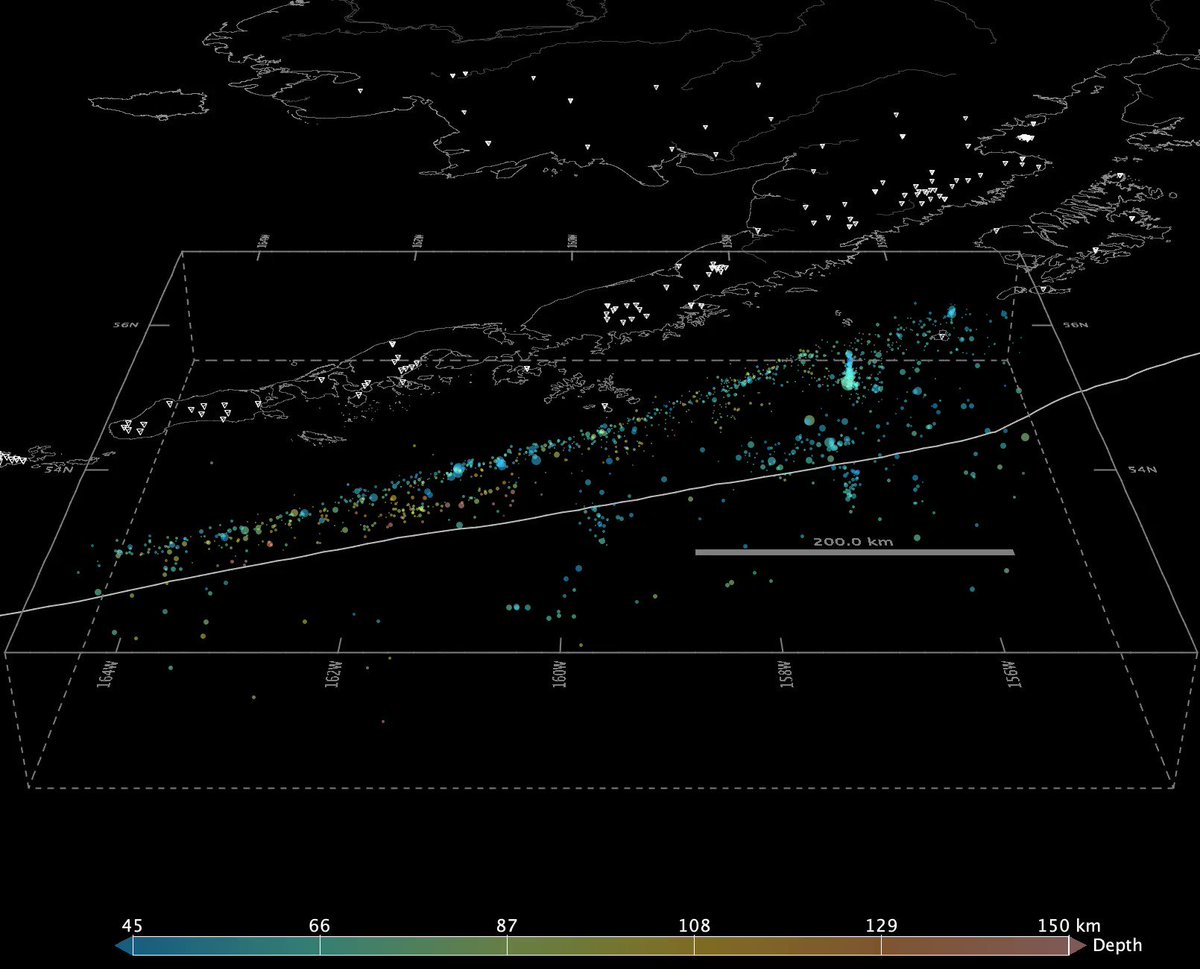
Just published: A new view of seismicity under Mt. Etna volcano, Italy, 2014-2023 from multi-scale high-precision earthquake relocations. Part of "Seminario Annals of Geophysics - 25 years of INGV". annalsofgeophysics.eu/index.…
1
7
25
1,490
21 Oct 2024
Note that the shallow, blue cloud in the movie is not seismicity, but instead a very rough attempt to image a volcanic intrusion during the 2018 Etna flank eruption using the "seismicity-stress" procedure: arxiv.org/abs/2404.05437
2
266
21 Oct 2024
... and the presentation for "Seminario Annals of Geophysics - 25 years of INGV" youtu.be/Bu0q7vJUevk?t=807
4
239
Anthony Lomax 🌍 🇪🇺🇺🇦 retweeted

4 Oct 2024
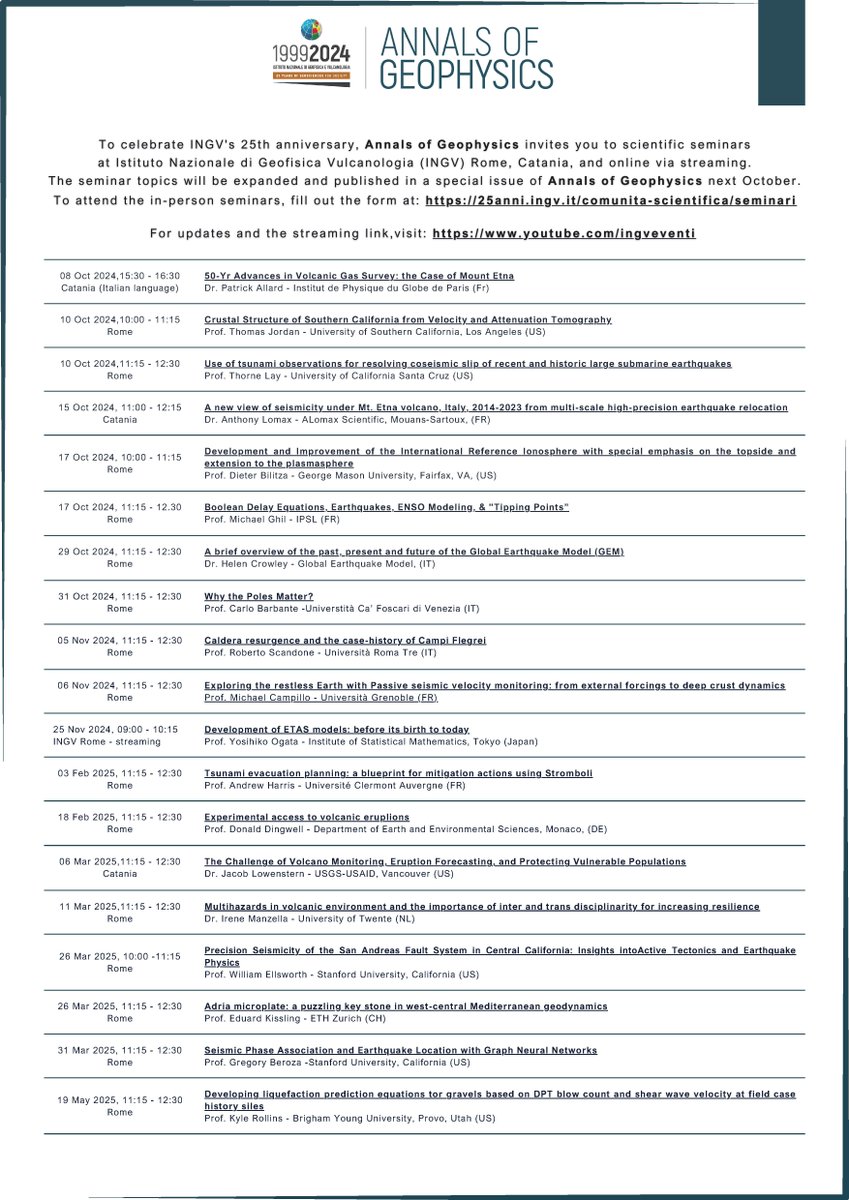
To celebrate INGV's 25th anniversary, Annals of Geophysics invites you to scientific seminars #INGV Rome, CT, and online via streaming.
The seminar topics will be published in Ann.of Geoph. special issue
To attend the in-person seminars, fill out the form:
buff.ly/4gPS6oA
7
12
1,365
Anthony Lomax 🌍 🇪🇺🇺🇦 retweeted
1 Oct 2024
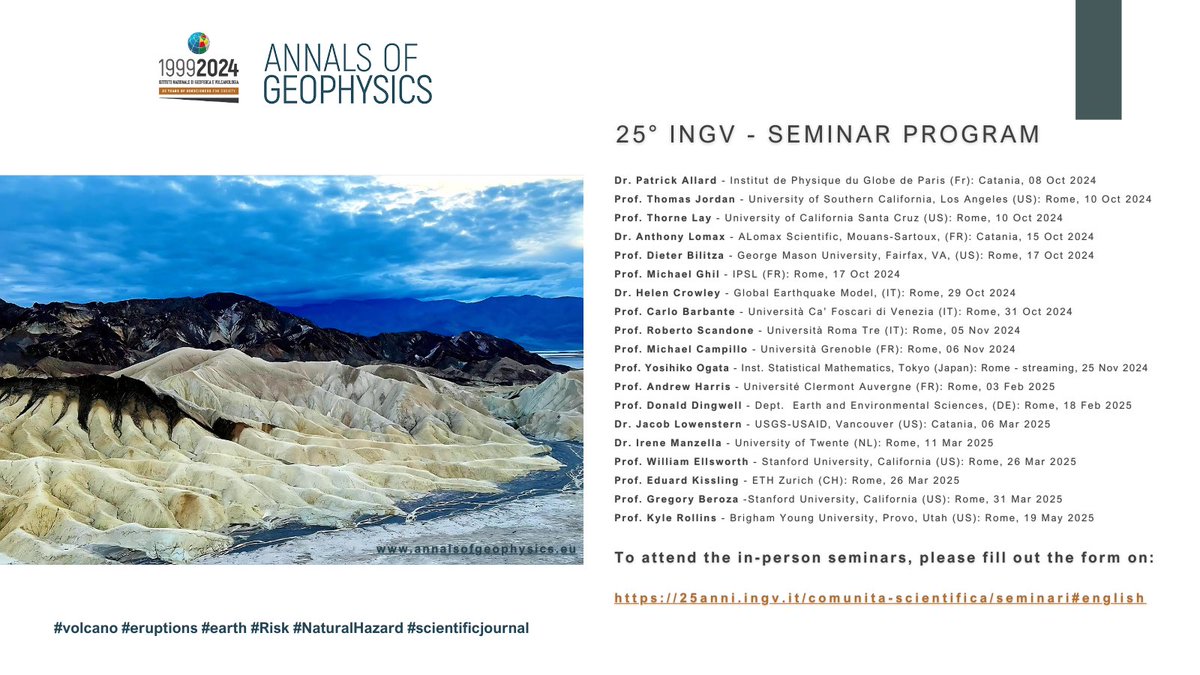
Celebrate INGV's 25th anniversary with Annals of Geophysics! Join us for expert seminars on seismology, volcanology, and environmental sciences from Oct. 2024 to May 2025. Follow us! #Geophysics
@ingv_press
@EuroGeosciences
@GEMwrld
@GFZ_Potsdam
@ETH_en
@SCEC
@IPGP_officiel
@NSF
9
15
1,380
Anthony Lomax 🌍 🇪🇺🇺🇦 retweeted

12 Sep 2024
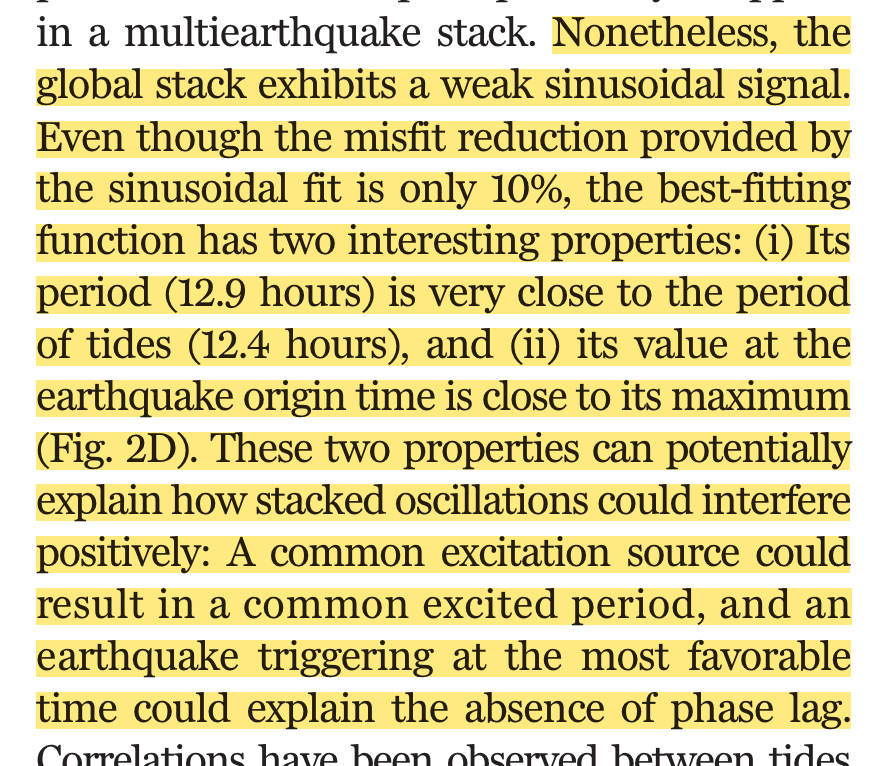
In September of last year, Earth rang like a bell for nine days, baffling scientists.
Now they’ve finally discovered the source: a mega tsunami in a remote Greenland fjord triggered by a colossal rockslide!
My latest @ScienceMagazine science.org/content/article/…
7
72
215
34,622
Anthony Lomax 🌍 🇪🇺🇺🇦 retweeted

12 Sep 2024
Out today! Results of a multidisciplinary collaboration of dozens of scientists across the globe (including me)! A rockfall into a glacier into a fjord in Greenland caused a tsunami and seiche that generated a monotonic seismic signal for 9(!) days!
bbc.com/news/articles/cged3j…
1
3
9
868
Anthony Lomax 🌍 🇪🇺🇺🇦 retweeted

7 Jul 2024
Watching our journal's article views climb shows how our community can make a difference through true open access visibility.
Thank you to all the authors, readers, volunteers, and our host @McGillLib for being an integral part in this journey
10
56
6,619
Anthony Lomax 🌍 🇪🇺🇺🇦 retweeted
30 Jun 2024
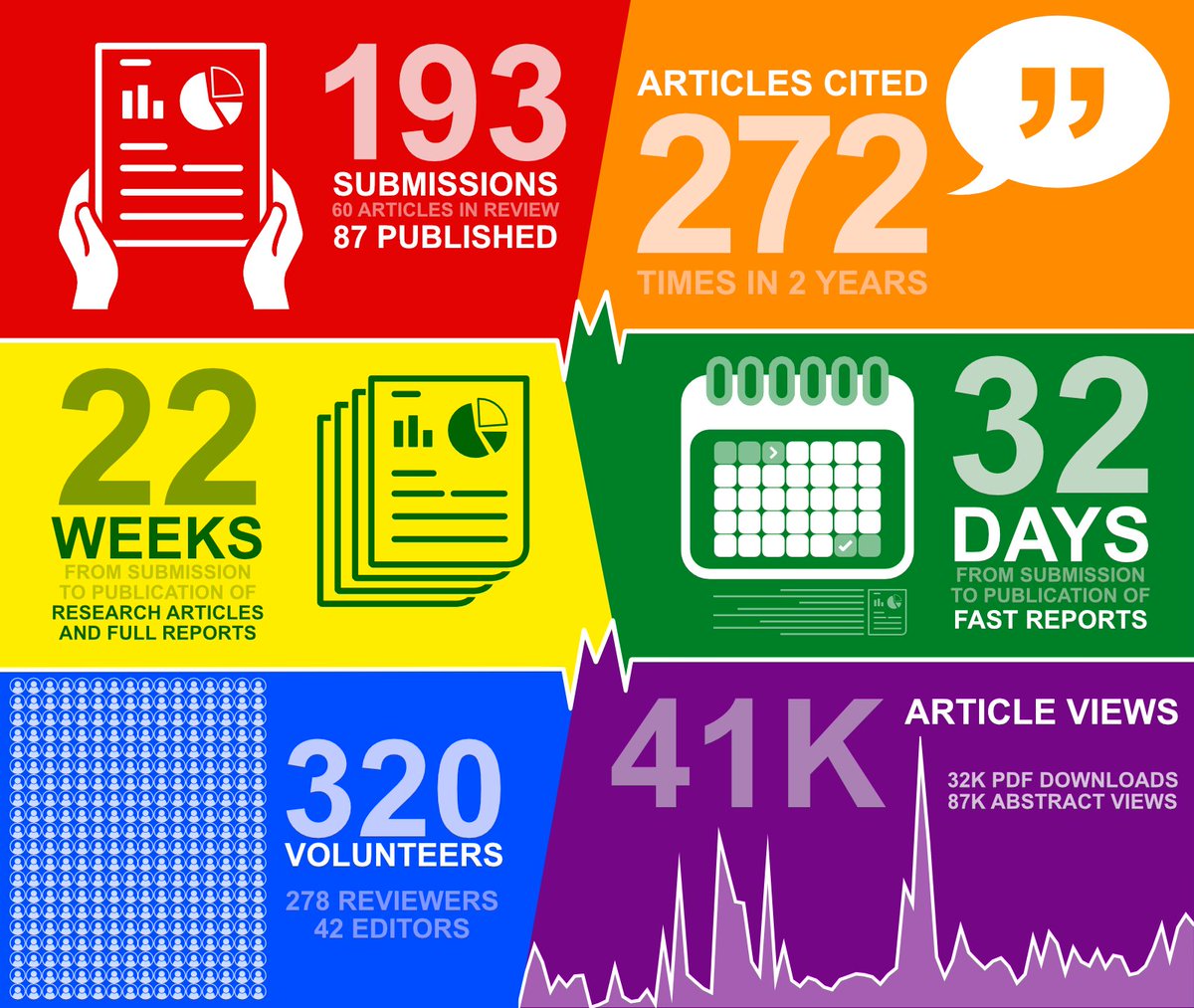
Celebrating two wonderful years since our launch!
Many articles and issues later, we are even more committed to making a difference and to continue improving this Diamond Open Access Journal for all.
Explore all our issues here: seismica.library.mcgill.ca/i…
2
11
42
1,974
Anthony Lomax 🌍 🇪🇺🇺🇦 retweeted

21 Jun 2024
Our latest research on High-Precision Earthquake Locations Delineating Active Fault Zones at Campi Flegrei Caldera has just been published with @theAGU in Geophysical Research Letters. Read here:
agupubs.onlinelibrary.wiley.…
3
11
25
1,935
21 Jun 2024
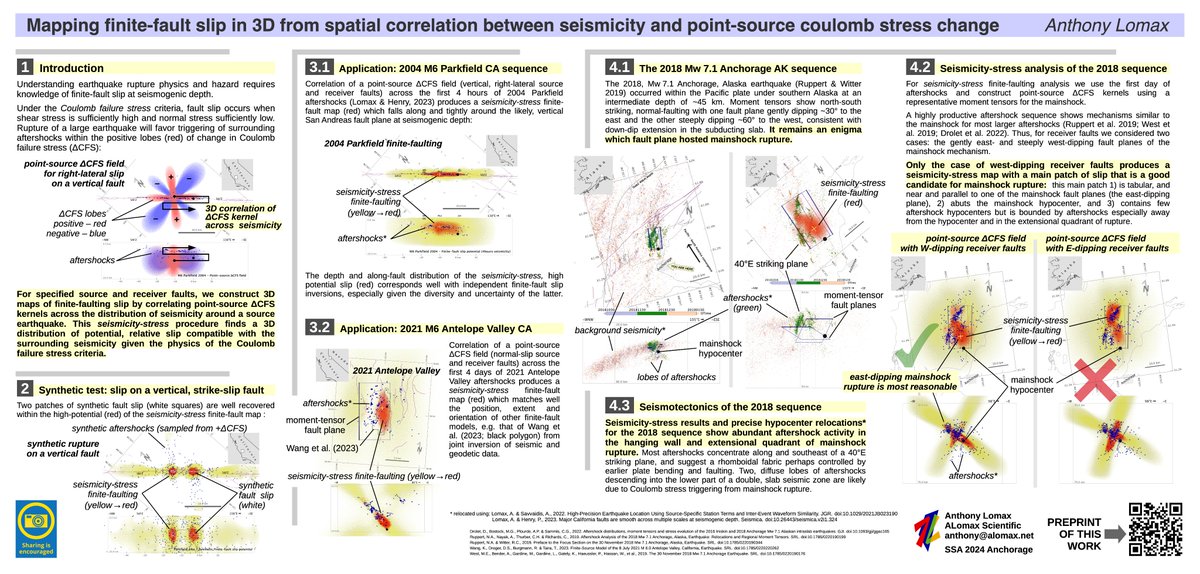
Updated preprint: Mapping finite-fault slip in 3D from spatial correlation between seismicity and point-source Coulomb stress change
[updated synthetic fault slip analysis, minor text changes]
Preprint: arxiv.org/abs/2404.05437
Poster: zenodo.org/doi/10.5281/zenod…
1
4
26
1,257
Anthony Lomax 🌍 🇪🇺🇺🇦 retweeted
20 Jun 2024
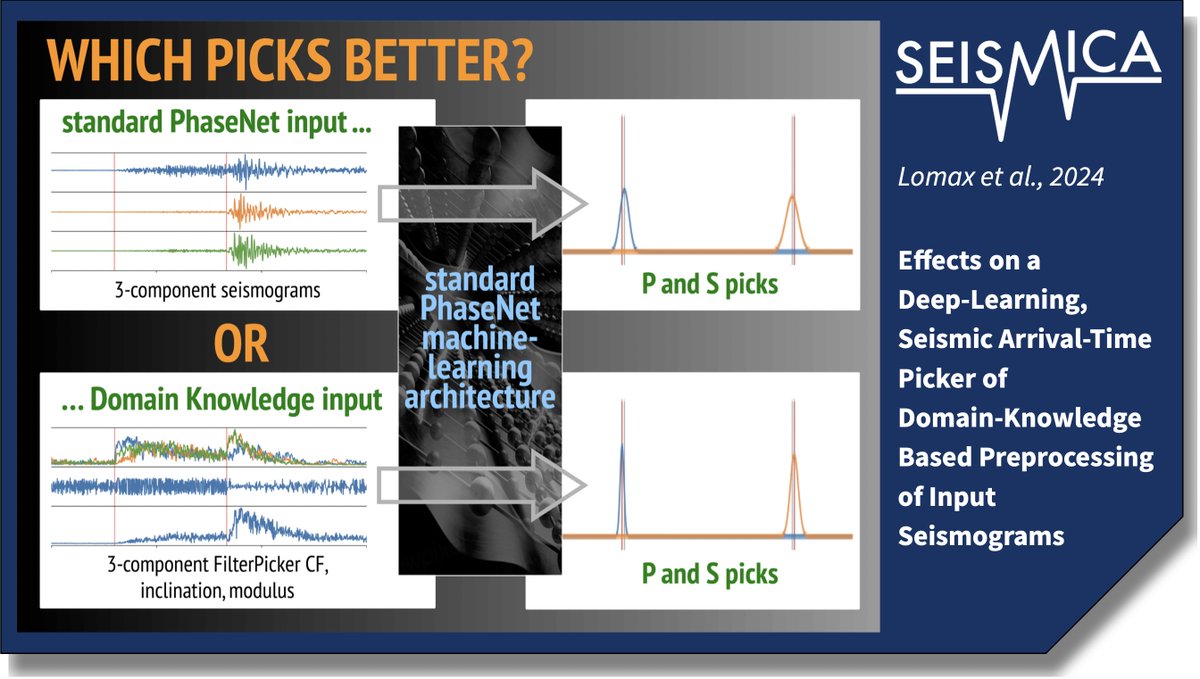
Il riconoscimento delle fasi sismiche attraverso algoritmi di deep learning può trarre vantaggio da un precondizionamento del dato basato sull’esperienza dei sismologi.
seismica.library.mcgill.ca/a…
4
8
1,168
Anthony Lomax 🌍 🇪🇺🇺🇦 retweeted
20 Jun 2024
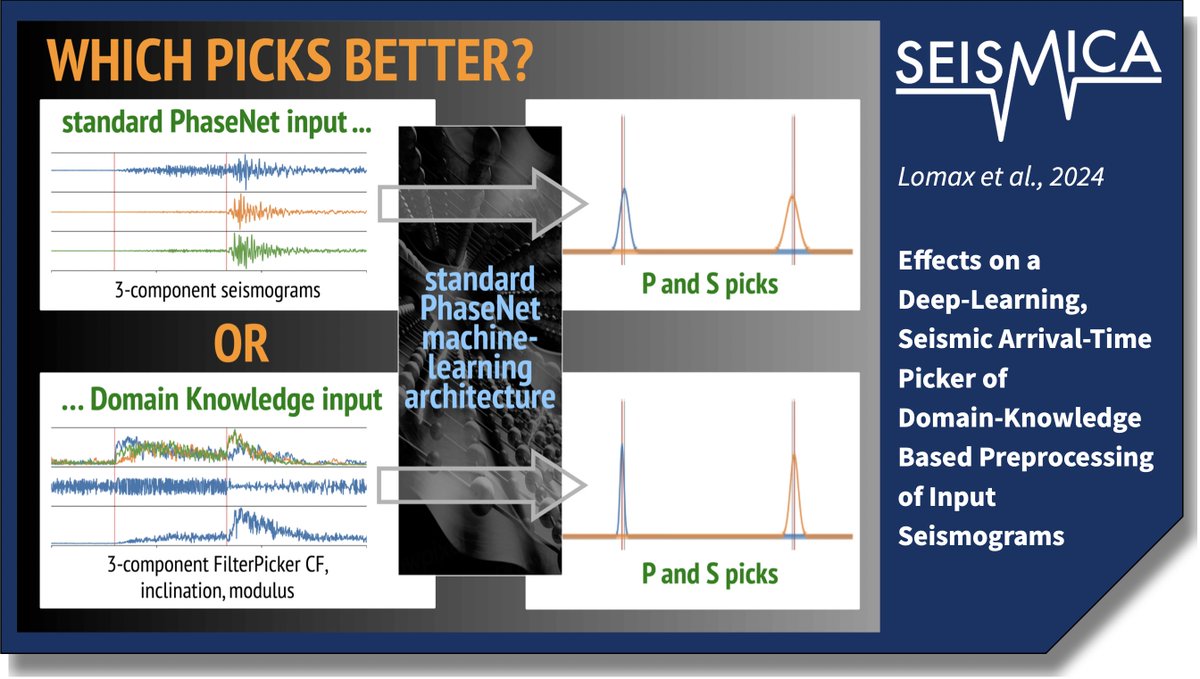
Seismic phase recognition with deep learning algorithms can benefit from transforming the input seismograms based on the experience of seismologists.
Read more: seismica.library.mcgill.ca/a…
1
9
17
1,037
Anthony Lomax 🌍 🇪🇺🇺🇦 retweeted

8 Jun 2024
Check out my first 1st-author paper from my PhD work to learn about transpressional fault bends in the Mojave Desert of California! So thankful to get this work out and for everyone involved!
doi.org/10.1029/2023TC008148
7
16
1,114
Anthony Lomax 🌍 🇪🇺🇺🇦 retweeted

11 Jun 2024
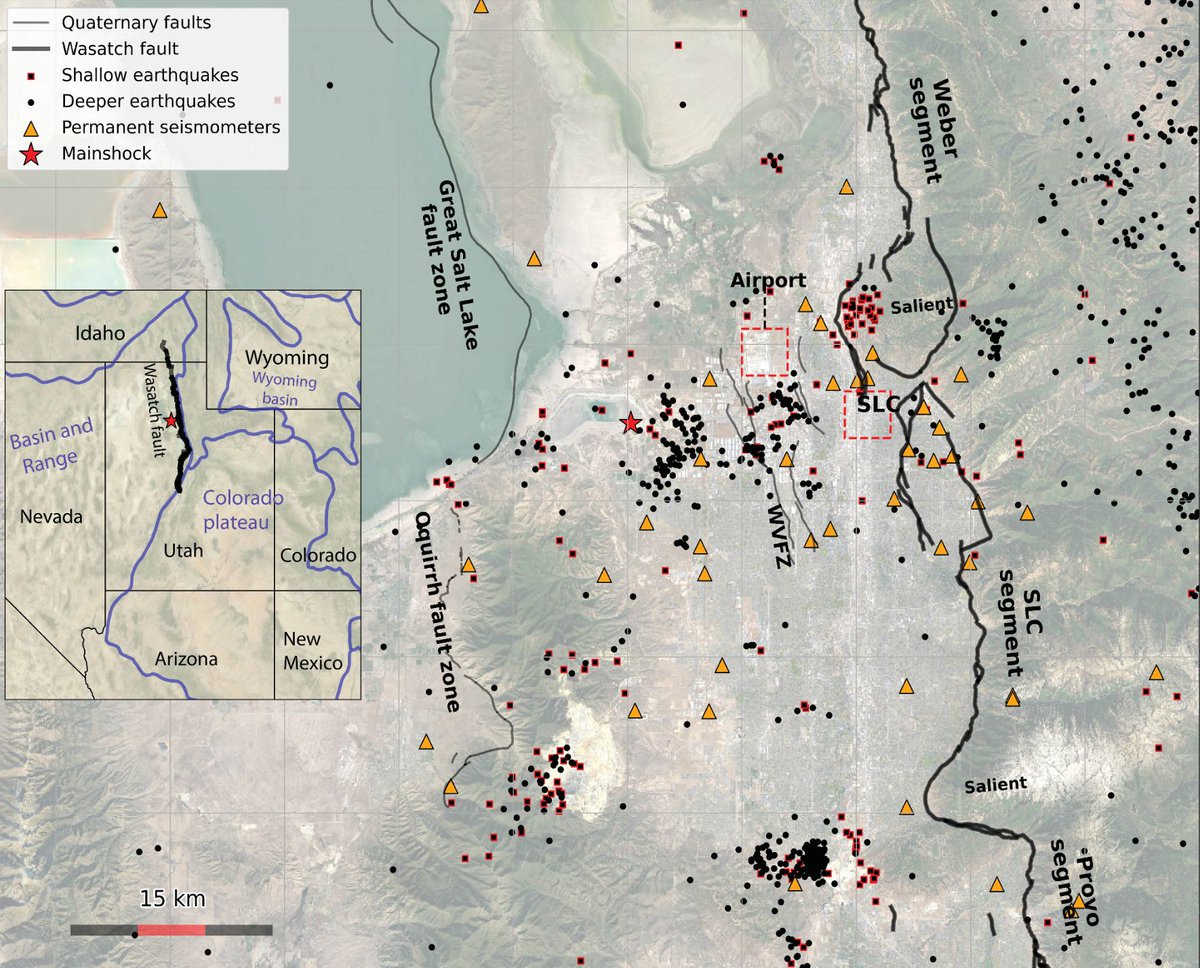
In a new #BSSA paper led by @UUtah scientists, a team uses machine learning to explore an earthquake sequence that struck Utah's Salt Lake Valley on March 18, 2020. Their analysis suggests a different geometry to the Wasatch fault than expected.
buff.ly/3KvrlH1
1
8
13
1,203
7 Jun 2024
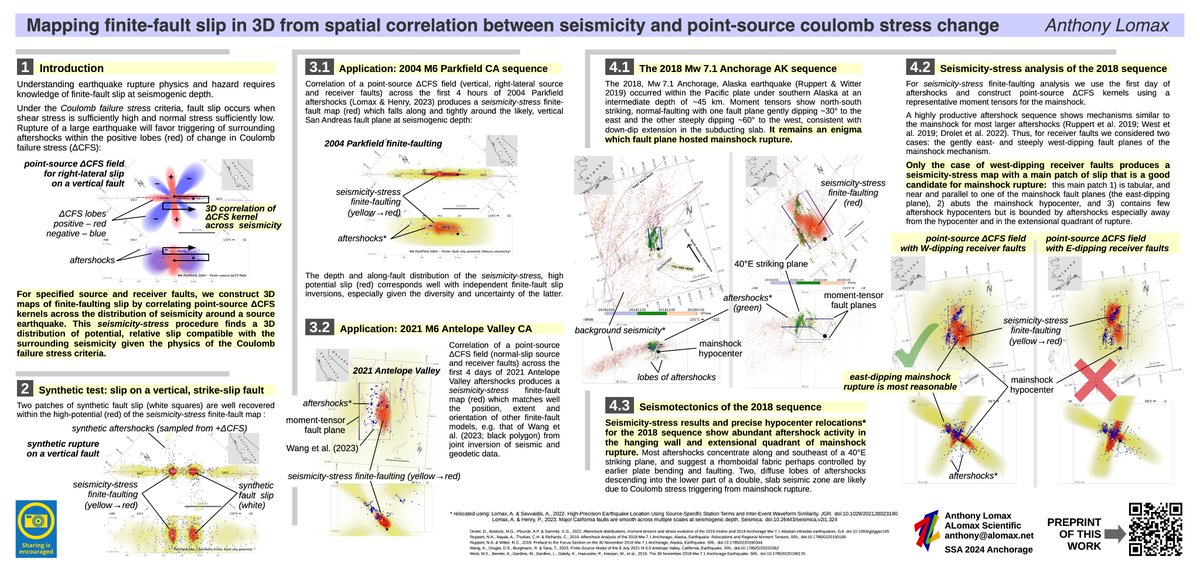
New: Mapping finite-fault slip in 3D from spatial correlation between seismicity and point-source Coulomb stress change
an inverse Coulomb procedure: infer finite faulting from aftershocks - works really well!
Preprint: arxiv.org/abs/2404.05437
Poster: zenodo.org/doi/10.5281/zenod…
3
14
48
3,191
Anthony Lomax 🌍 🇪🇺🇺🇦 retweeted

9 Feb 2024
Seismologists have been speculating about this swarm off and on for years:
x.com/ALomaxNet/status/14454…
5 Oct 2021

A deep blob of seismicity at ~35km depth in the upper mantle (yellow) has been very active since 2015. This blob appears in detail as a nebula of filaments. It may reflect a “surge” in magma from the mantle, see doi.org/10.1029/2020GL091096.
2
6
26
4,761
Anthony Lomax 🌍 🇪🇺🇺🇦 retweeted

30 Nov 2023
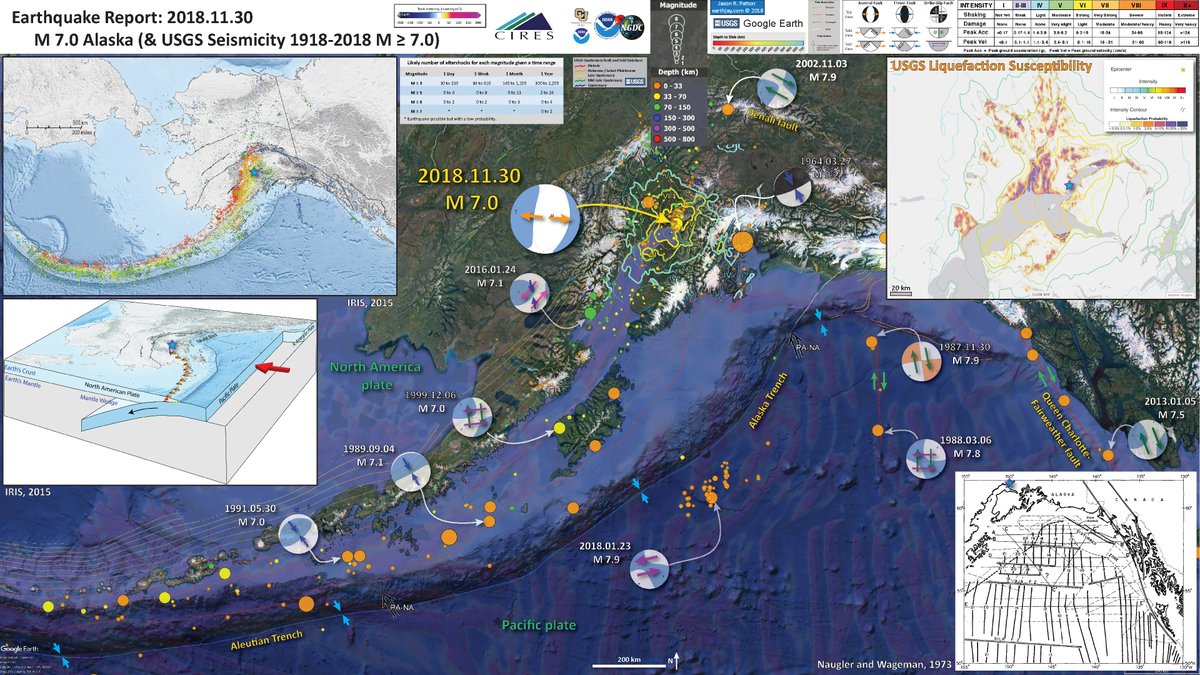
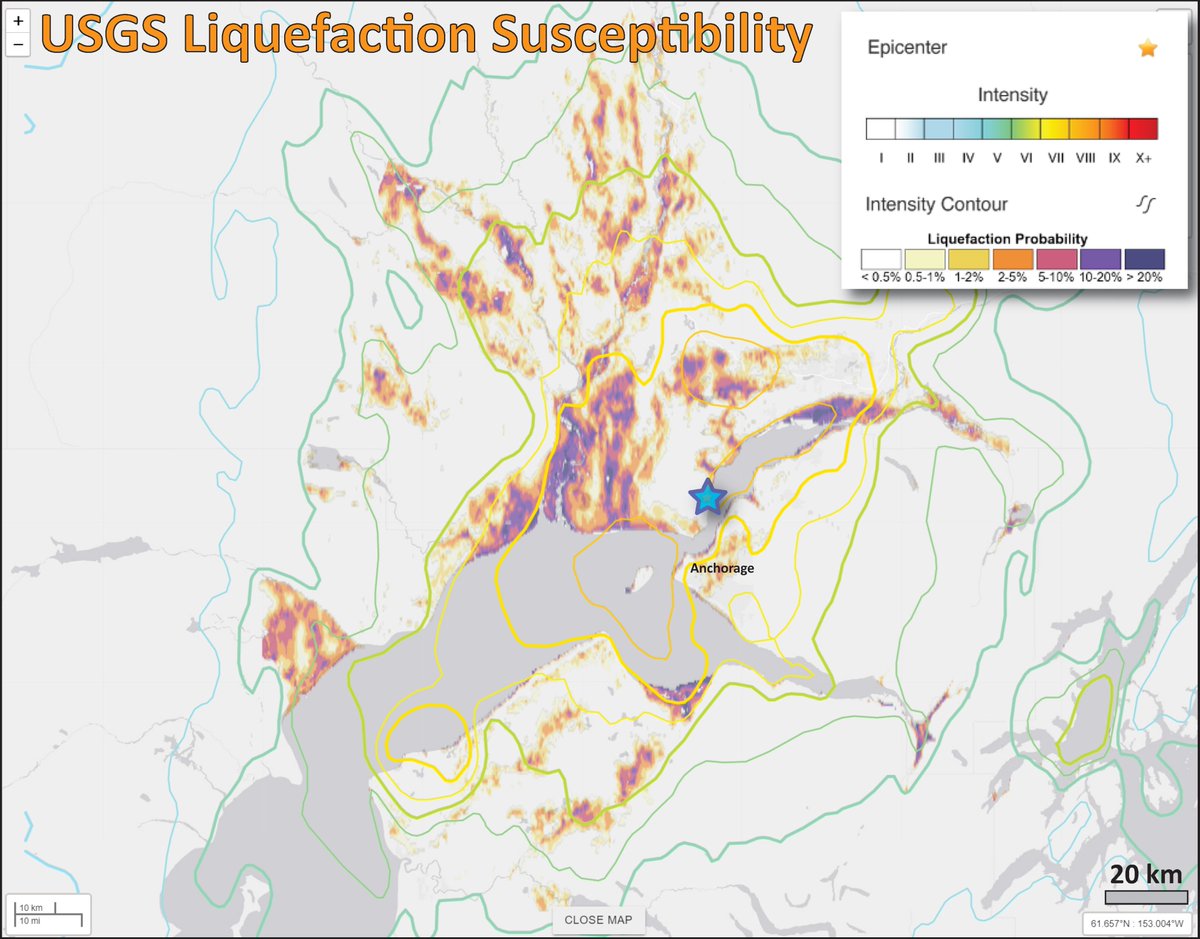
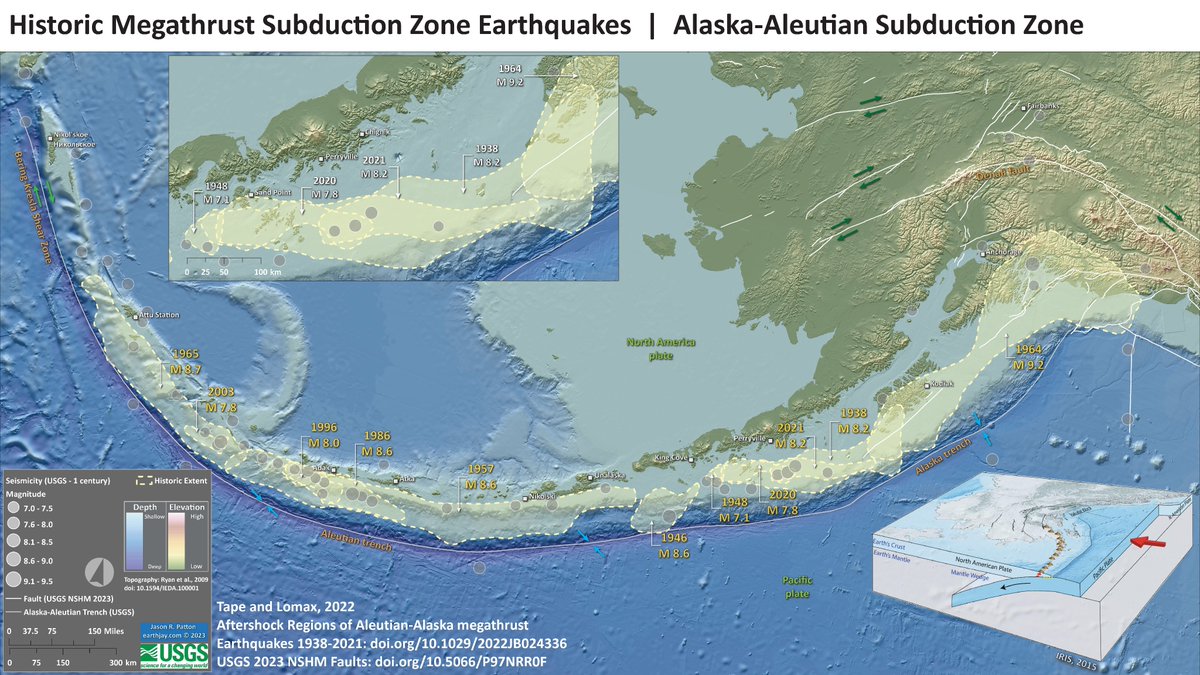
#EarthquakeReport for #OTD in 2018 M7.0 #Earthquake in #Alaska
intraslab (within the subducted Pacific plate) normal (extensional) earthquake
generated ground failures (landslides and liquefaction)
felt widely
also, see new map showing historical eqs
earthjay.com/?p=8016
1
3
6
1,085