
Joined March 2009
- Tweets 340
- Following 703
- Followers 480
- Likes 1,267
7 Photos and videos

Alan Boyle retweeted

Check out our study on using donor-specific assembly to facilitate the discovery of somatic genetic variants in bulk and single neurons of the postmortem brain. Colab with @ryan_e_mills @AP_Boyle @mikemc43 @CamilleMumm @YanmingGan
14 May 2025

Critical clues are being revealed about the impact of somatic mutations on human health and disease.
A SMaHT study demonstrates how personalized assemblies and single-cell sequencing can sharpen the detection of somatic mutations in the human brain 🧠.
biorxiv.org/content/10.1101/…
2
2
273
Alan Boyle retweeted

27 Jan 2025
1/ I am beyond thrilled to share our new paper in @CellCellPress! We explored the regulatory principles underlying pleiotropy in psychiatric disorders.
cell.com/cell/abstract/S0092…
9
46
220
22,927
Alan Boyle retweeted

25 Dec 2024
Our ChromBPNet preprint out! Huge congrats to @panushri25! This was quite a slog for both of us but we r very proud of this one! It is a long read but worth it IMHO. Methods r in the supp. materials. Link in the next tweet. Bluetorial coming soon .. 1/
1
12
45
3,587
Alan Boyle retweeted

12 Sep 2024
MNI is actively recruiting for 𝙨𝙚𝙫𝙚𝙧𝙖𝙡 𝗳𝗮𝗰𝘂𝗹𝘁𝘆 𝗽𝗼𝘀𝗶𝘁𝗶𝗼𝗻𝘀, seeking the best and brightest in #neuroscience to fill these roles. Please 💛 and r/t this to help us reach some great candidates! 〽️🧠 More info: michmed.org/GqG8z

79
99
27,351
Alan Boyle retweeted

5 Sep 2024
Excited to share the white paper for the IGVF Consortium, supported by @genome_gov
Deciphering the impact of genomic variation on function
rdcu.be/dSZdm

Understanding the function of an entire genome is no easy task! Most genes likely have more than one function.
To understand the functional effects of genomic variation, NHGRI launched a consortium called Impact of Genomic Variation on Function (IGVF). genome.gov/news/IGVF
2
38
138
19,416
Alan Boyle retweeted

5 Sep 2024
New paper from my postdoc work at @UMichResearch is now out in @ScienceAdvances 🎉 very proud to share the culmination of nearly 4 years of hard work with a fantastic group of colleagues and collaborators.
A 🧵 of what we found out about RFC1/CANVAS 👉
science.org/doi/10.1126/scia…
2
9
40
4,619
Alan Boyle retweeted

5 Sep 2024
Our first study in a new repeat expansion disorder: CANVAS. @connor_maltby used patient iPSNs to define how this non-reference AAGGG repeat impacts neuronal function. He finds a novel role for the repeat in disease that is independent of RFC1 function science.org/doi/10.1126/scia…
17
48
6,350
Alan Boyle retweeted

23 May 2024
Systematic investigation of allelic regulatory activity of schizophrenia-associated common variants
hubs.li/Q02v7f3S0
@hyejung_won @jsteinlab @srikosuri @mikelove @_josedavila @brad_ruzicka @AP_Boyle
Up-and-coming genomics research from @CellGenomics #neurogenomics
6
8
3,311
Alan Boyle retweeted
5 May 2024
New @AP_Boyle and @realToddLab collaboration is now up on @medrxivpreprint 🥳 we used targeted long read sequencing and HMMSTR to successfully identify and genotype known or suspected large tandem repeat expansions at many loci in patient derived samples.
medrxiv.org/content/10.1101/…
4
13
1,786
Alan Boyle retweeted

21 Oct 2023
Our preprint is out! We hacked the @nanopore sequencer to read amino acids and PTMs along protein strands. This opens up the possibility for barcode sequencing at the protein level for highly multiplexed assays, PTM monitoring, and protein identification!
biorxiv.org/content/10.1101/…
9
229
729
136,567
Alan Boyle retweeted
18 Sep 2023
I am beyond excited to share our new paper on massively parallel reporter assays on schizophrenia-associated variants. This is in collaboration with @jsteinlab, @srikosuri, @mikelove, @_josedavila, @brad_ruzicka, @AP_Boyle. 🧵 follows.
16 Sep 2023

Systematic investigation of allelic regulatory activity of schizophrenia-associated common variants dlvr.it/SwBgpY
7
22
108
18,800
Alan Boyle retweeted

29 Aug 2023
Current tools can only partially validate plasmid sequences due to their inability to resolve complex regions. In this interview, Mel Englund discussed how nanopore sequencing can span entire plasmids allowing for accurate validation of complete plasmids: bit.ly/3KSYj4V
7
17
4,793
Alan Boyle retweeted
28 Aug 2023
Current methods lack the scalability to validate full-length plasmid sequences. In this interview learn how nanopore technology provides a fully scalable solution for full-length plasmid validation, from the portable MinION to the high-throughput GridION. bit.ly/3QOiMeM
6
15
4,385
Alan Boyle retweeted
24 Aug 2023
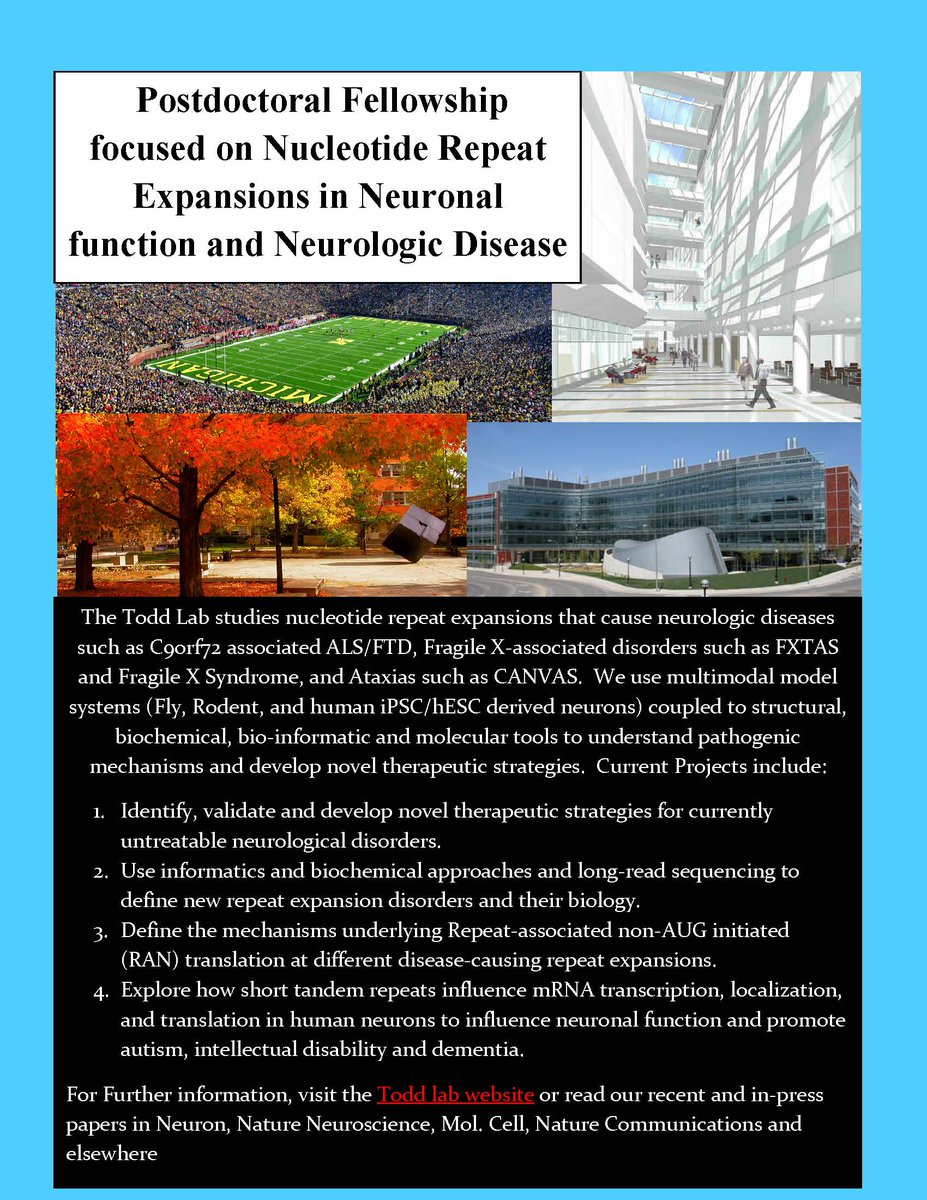
Want to join a fun, supportive, and intellectually curious lab that explores the interface between fundamental mRNA biology and human neurological disease? If so, the Todd lab might be a good fit. Check out our posting below or visit our website!
2
22
39
7,289
Alan Boyle retweeted

19 Jul 2023
Our protamine paper is finally out! nature.com/articles/s41594-0…
20
55
197
36,377
Alan Boyle retweeted

14 Jul 2023
US citizens or permanent residents from an under-represented group! High school thru postdoc/faculty.
You can contact any NIH-funded researcher you admire & suggest applying for this supplement to join their lab! Many, like me, are happy to host!
grants.nih.gov/grants/guide/…
6
146
278
112,468
Alan Boyle retweeted

22 May 2023
📢New in @HGGAdvances!
@AP_Boyle & colleagues explore the challenges posed when screening for de novo variants in complex phenotypes
bit.ly/43f86ZE
4
9
2,255
Alan Boyle retweeted

11 May 2023
Really excited to be part of this with @AP_Boyle and @mikemc43! Our part of the project will be focused on exploring somatic mosaicism in single cells as well as targeted capture of specific types of variation in bulk tissue using long read nanopore sequencing.

News: NIH launches $140 million effort to investigate genetic variation in normal human cells and tissues dlvr.it/SntWlH
3
2
20
1,914
Alan Boyle retweeted

10 Dec 2022
Happy to share that our Michigan #CASP15 team ended up placing second in Regular Targets, first in Multimeric Targets, and first in Inter-domain prediction (1/3)

1
12
43

26 Oct 2022
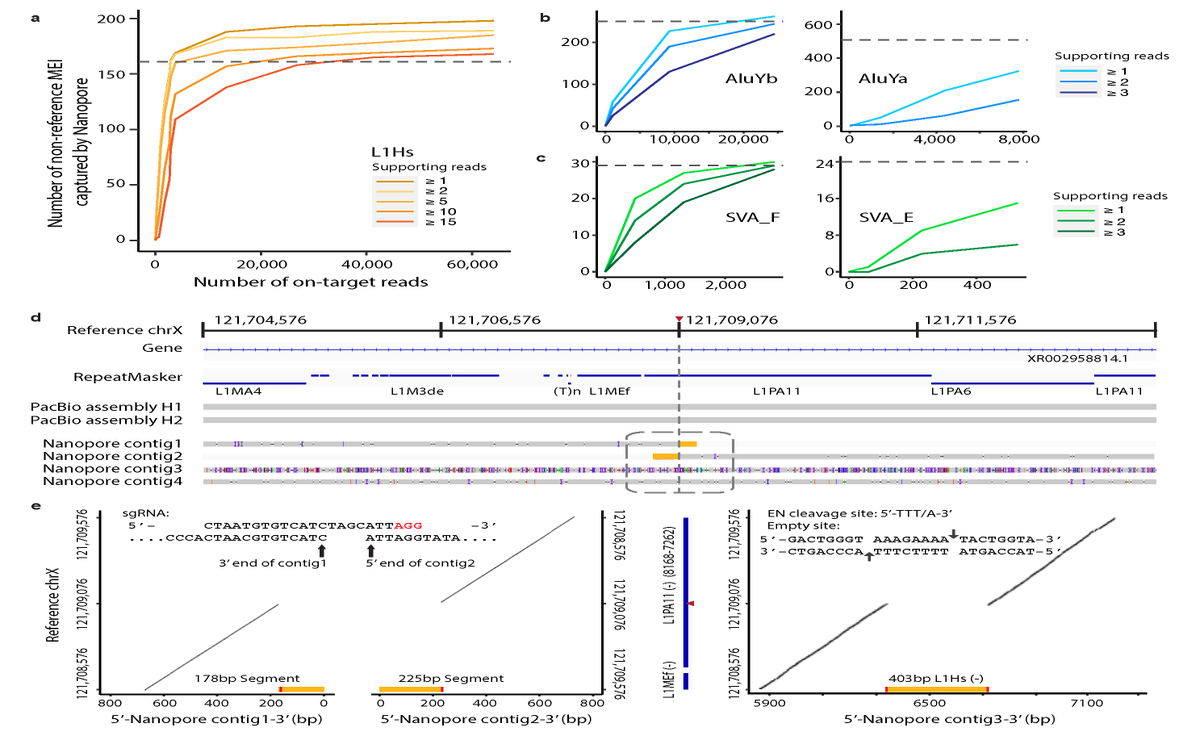
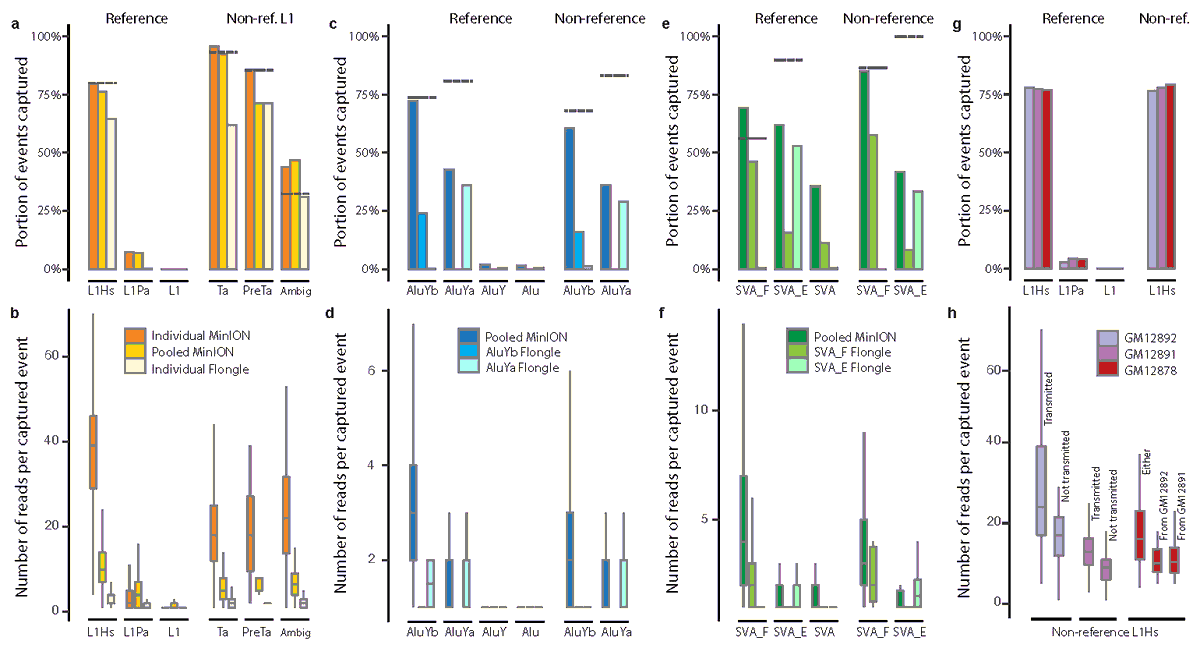
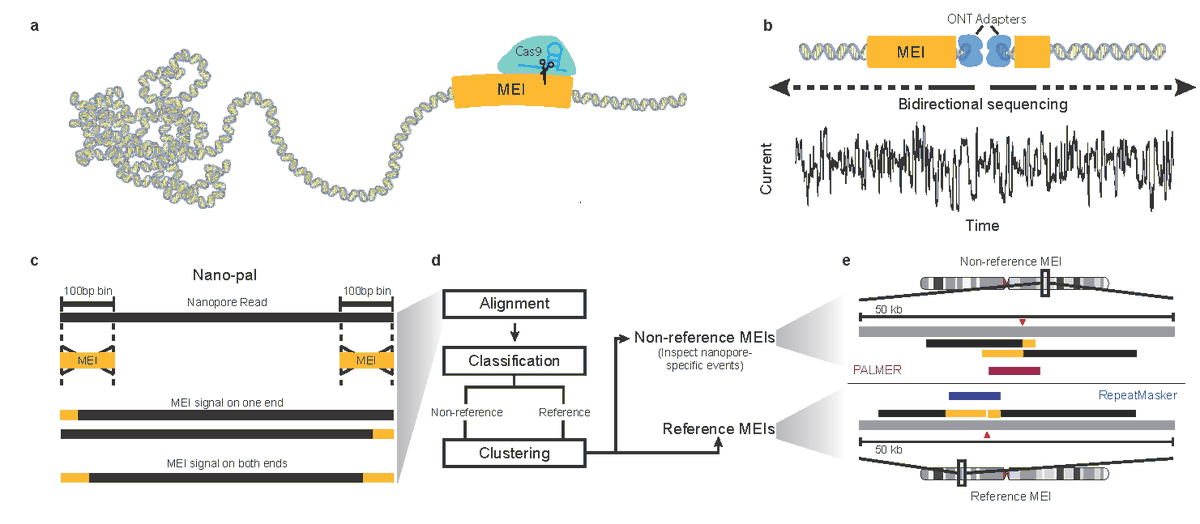
If you are at #ASHG22 come check out our lane posters! Today we are presenting work on Cas9 targeted enrichment and adaptive sampling for characterizing repetitive elements (PB2929), Detection of somatic variation in human neurons using long-read sequencing approaches (PB2967)
1
7
26 Oct 2022
Determining the mechanisms of radioresistance in breast cancer (PB1072), and Determining the mechanisms of radioresistance in breast cancer (PB3489). And tomorrow our work on Organ-specific prioritization of non-coding regulatory variants with stacking generalization (PB2664)
1
2
26 Oct 2022
This is some great new work by students in the labs and our collaborators!
1