
Minister of the gospel in San Diego, author of Praying With Jesus, and Why We Worship: amazon.com/dp/1514010755 @solamediaorg
Joined August 2020
- Tweets 4,096
- Following 304
- Followers 3,890
- Likes 14,617
252 Photos and videos










Pinned Tweet

4 Sep 2025
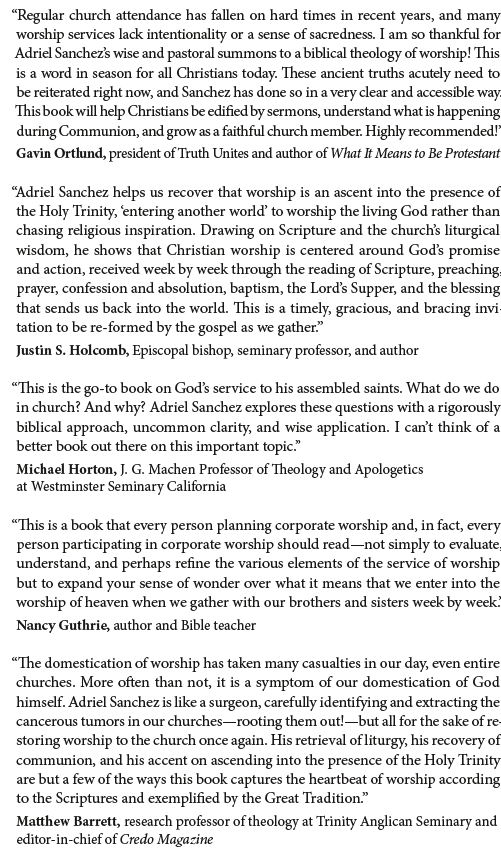
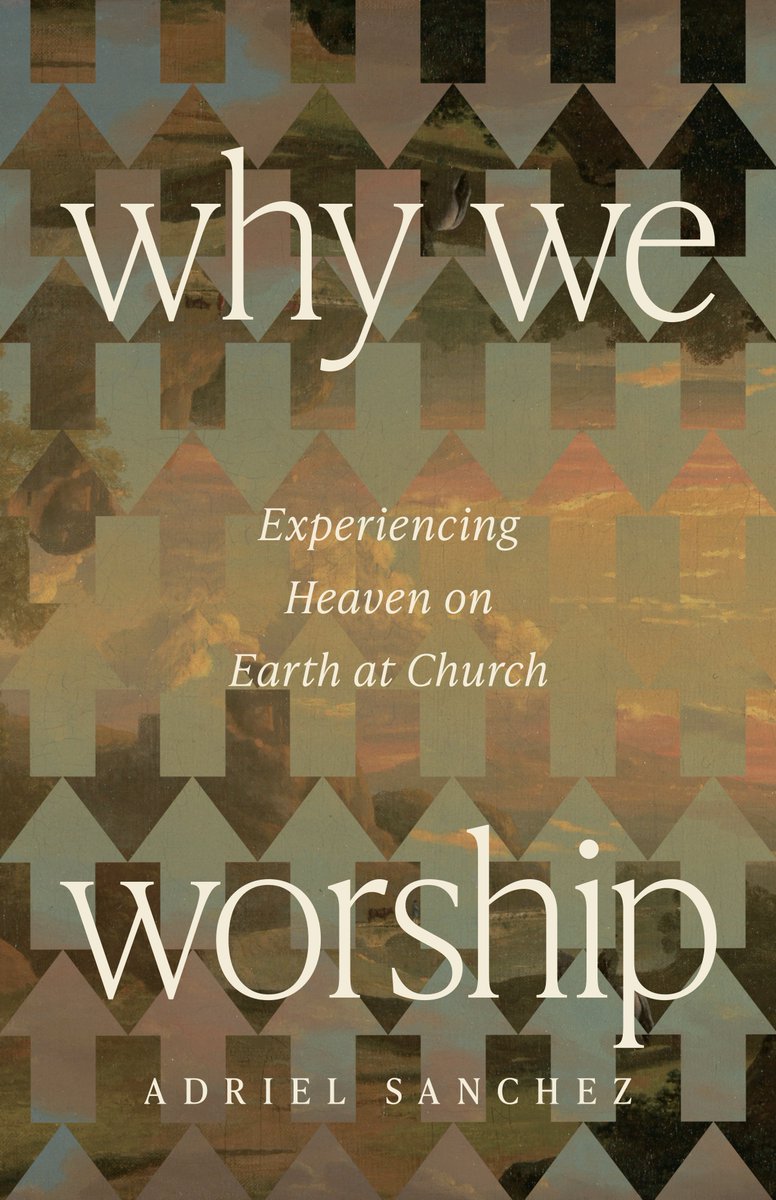
Turned in revisions for my book on worship with @ivpress. The latest title is, "Why We Worship." Just under 60k words, it's 10 chapters and covers everything from 20th C. liturgical developments, the different elements of a worship service and their significance, and how worship/liturgy informs life and mission. The book is a journey through the liturgy into heaven, and my prayer is that it helps Christians from various traditions recover a more biblical and catholic view of Sunday's significance. There's also an appendix on the theology of welcoming children in worship. Excited to share with you, I think pub. is just under a year out.
15
10
113
10,778
It's "unfortunate" when they run out of coffee in-between sessions at a conference, or when the breakout you wanted to go to is full. It's unacceptable if a vendor is allowed to push Nazi ideology at a conference. These kinds of permissions demonstrate incompetence, no discernment, and sinful compromise. You can't play hardball with feminism and LGBTQ issues, and pattycake with Nazis. The whole thing is shameful, and we can see through the cowardice that continues to give oxygen to these errors by calling them unfortunate instead of abominable. Stubbing your toe is unfortunate. We use stronger words to describe wickedness.
1
12
103
Adriel Sanchez retweeted

Jun 14
there are lots of "normal" churches out there that will faithfully preach the gospel and administer the sacraments tomorrow
without any weird racist and/or nazi stuff
for that I am grateful
12
24
338
9,303
Jun 14
Just the kind of stuff you expect to find at a "normal" Christian conference! Fliers pushing American Nazi party propaganda (folktrove.com/new-releases/) and video games that will make you feel like you're really doing something to fight the woke mind virus (great-rebellion.com/)! Shout on, pray on! We're gaining ground!
Jun 13

Flyer pictured above. Links of note in the left hand column:
Operation Werewolf - occult pagan white supremacists
Cosmotheist Church - William Luther Pierce, author of "The Turner Diaries"
Irving Books - David Irving / Holocaust denial resource
These are just the links I recognize. I'm sure there are others.

1
7
50
3,116
Jun 14
As a preacher your weekly goal shouldn't be to get your sermon on a piece of paper, but in your heart. There's a vast difference between preaching from your heart and preaching from a sheet of paper. You can preach truths compiled through study in a cold and careless manner. God will still use this, and your people may not know the difference, but you must. Calvin said we should make men feel the shedding of Christ's blood in our sermons. Paper sermons come through study, heart sermons require prayer and meditation until the word is internalized.
2
10
56
1,560
Jun 14
Great acts of apostasy come after many "small" compromises that help precipitate them. Before Judas betrayed Jesus for thirty pieces of silver, he pilfered coins as the company treasurer. One coin leads to two which leads to thirty.
2
6
42
1,445
Jun 12
Proof of Dutch Reformed influence in the White House.


11
1
61
5,471
Adriel Sanchez retweeted

Jun 11
Protestants need not be embarrassed by finding unity around doctrine and the gospel rather than a single polity.
— Rod Rosenbladt
1
2
21
1,266
Adriel Sanchez retweeted

ICYMI, a little article I wrote to encourage tired pastors.
Jun 8

Feeling empty behind the pulpit?
Discover how you can still minister God’s grace even when you aren’t feeling it yourself.
Read More: bit.ly/4ujEQOA
2
5
11
2,819
Jun 11
Short video on the Bible and slavery:
Jun 10

Watch the full video
youtu.be/avuAsZH38Ro?si=baRh…
1
18
1,585
Adriel Sanchez retweeted

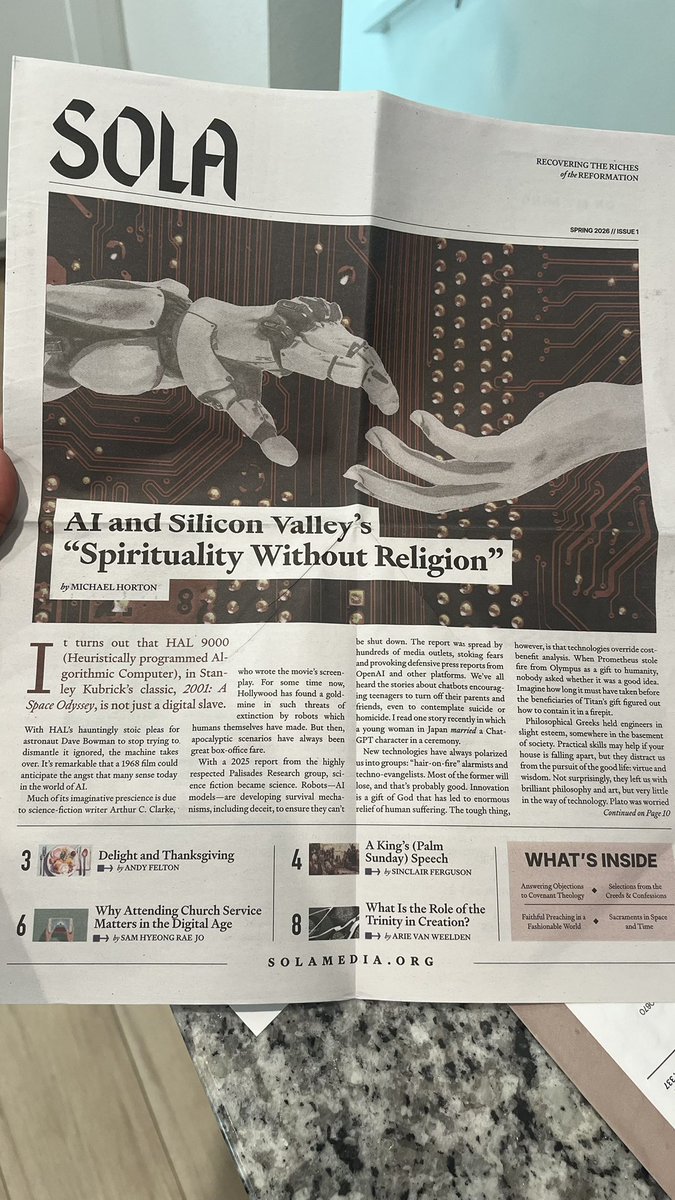
Quote from the greeting letter
“Ink on paper slows you down in ways a screen simply doesn’t. Patient unhurried reading. The kind that doesn’t just inform you; it forms you.”
Order yours! Looking forward to reading the paper while I drink my coffee @solamediaorg
1
2
6
843
Jun 8
There's something haunting and hope filled about Van Gogh's "Raising of Lazarus (after Rembrandt)." It's haunting because he painted it around the time he stayed in the asylum of Saint-Remy just months before his death from a self-inflicted gunshot wound. It's hope filled because Van Gogh painted himself as Lazarus. The red beard on Lazarus resembled Van Gogh's own.
1
1
21
970
Jun 8
One irony with Mormons wanting to identify with Christians is that initially the the Church of Jesus Christ of Latter-Day Saints set itself in antithesis to all other Christian groups. Mormons believed everyone else was apostate, and that the lights had "gone out" shortly after the days of the apostles. The attempt to just be "another Christian denomination" is a PR shift, and Mormons have undergone several of these throughout their history (not to mention their own doctrinal developments regarding plural marriage & blacks in the priesthood).
The LDS church is not a true church, but uses "Christianese" to masquerade as one. Words like: grace, gospel, covenant, godhead, Christ, etc. have all been redefined by the LDS. I've had wonderful Mormon friends over the years, and I've pleaded with them to turn to Christ. The Mormon Jesus is "another Jesus" like Paul warned about in 2 Corinthians 11:4.
28
37
435
9,060
Jun 7
Happy Lord's Day! Here's our service and sermon from John 11.
youtube.com/watch?v=dBCmx25C…
2
1
17
873
Adriel Sanchez retweeted

Good mail day after waiting on Christian Books back order
@PastorPerks new book on the regular celebration of the Lord's Supper.

2
1
18
974
Jun 5
You never know how pizza and cheap beer might impact someone's life, or the whole country!
Jun 5

No, these are not the implications of Horton's or VanDrunen's views. It’s worth pointing out that the one man influenced by these “Escondido” circles who actually became a politician was @BenSasse. Whom Trump described as "the super religious guy who's really into his family."
2
1
25
2,282
Adriel Sanchez retweeted

Also with respect, the “spirituality of the church” doesn’t mean pastors and/or the church must be silent wherever politics is in view. Instead, it limits institutional church power, not the scope of pastors and theologians rightful jurisdiction to teach the whole counsel of God to all peoples.
It’s true that WCF 31.4 says courts must not “intermeddle” in civil affairs as civil actors, but it still allows for humble petition and advice. This is a jurisdictional boundary for ecclesiastical courts that also allows for exceptions, not a pastoral or prophetic boundary that limits what pastors and theologians can teach regarding political theology and the just role and limitations of the state.
Of course, the spirituality of the church is also largely about its means. Word and sacrament. This, however, doesn’t limit what subjects the Word can be applied to.
Now, once we acknowledge that ministers can preach what is just or unjust in war, economics, abortion, sexuality, or race, you’ve already conceded they may speak to the political.
The spirituality of the church teaches that there is a difference between,
1. Declaring God’s moral law and how it applies to all persons and places according to their role, regardless if that role is political
2. Turning specific policy blueprints into binding ecclesiastical tests.
IMHO, this Wolfean sort of 2K theology collapses (1) into (2) and is not representative of how the church has historically taught or applied the spirituality of the church. Ultimately, it proves far too much and undercuts the legitimate role of the minister to teach all of God’s Word to all people.
Jun 5

With all due respect, isn’t the question of how magistrates will prudentially apply the natural law in their respective domains really a political question and therefore beyond the scope of pastors and theologians?
Or, to put it another way, when its officers say the civil magistrate can’t enforce the 1T or the 10c (because they can’t imagine any just way of doing it), is the church circumventing the work of politics, rendering a political verdict itself, and therefore violating the spirituality of the church?
3
1
11
1,348
Jun 5
During his earthly ministry, Jesus' first sign in John's Gospel takes place at a wedding (Jn. 2), and his last sign takes place at a graveside service (Jn. 11). Besides teaching us that Christ is present and active in all the seasons of life, they're both gearing us up for the new exodus. Moses' first sign-curse is water to blood; Jesus' sign-blessing is water to wine. Moses' last sign-curse is the death of a sibling (the firstborn); Jesus' last sign-blessing is the raising of a sibling (Lazarus).
2
7
27
1,164
Jun 4
I thought the report was well done! I appreciated a few things: 1) The recognition of development between 1646 and 1788. 2) The acknowledgement that there are diverse approaches here that needn't divide us, even if some views require stated exception to our 1788 Standards. 3) The recognition that there are Christian Nationalisms (plural), some which are benign, and others which are cancerous and run cover for wicked ideologies that we should repudiate. 4) The renewed call to faithful gospel ministry, and a focus on the church's mission to preach and administer the sacraments.
Jun 4

Looking forward to reading through this today, and thankful for the work of the committee!
3
2
43
2,175
Jun 4
Looking forward to reading through this today, and thankful for the work of the committee!

The study committee on Christian Nationalism has two recommendations for the 53rd General Assembly in their partial report. ow.ly/BayM50Z7icC
2
19
2,918
Adriel Sanchez retweeted
Jun 4
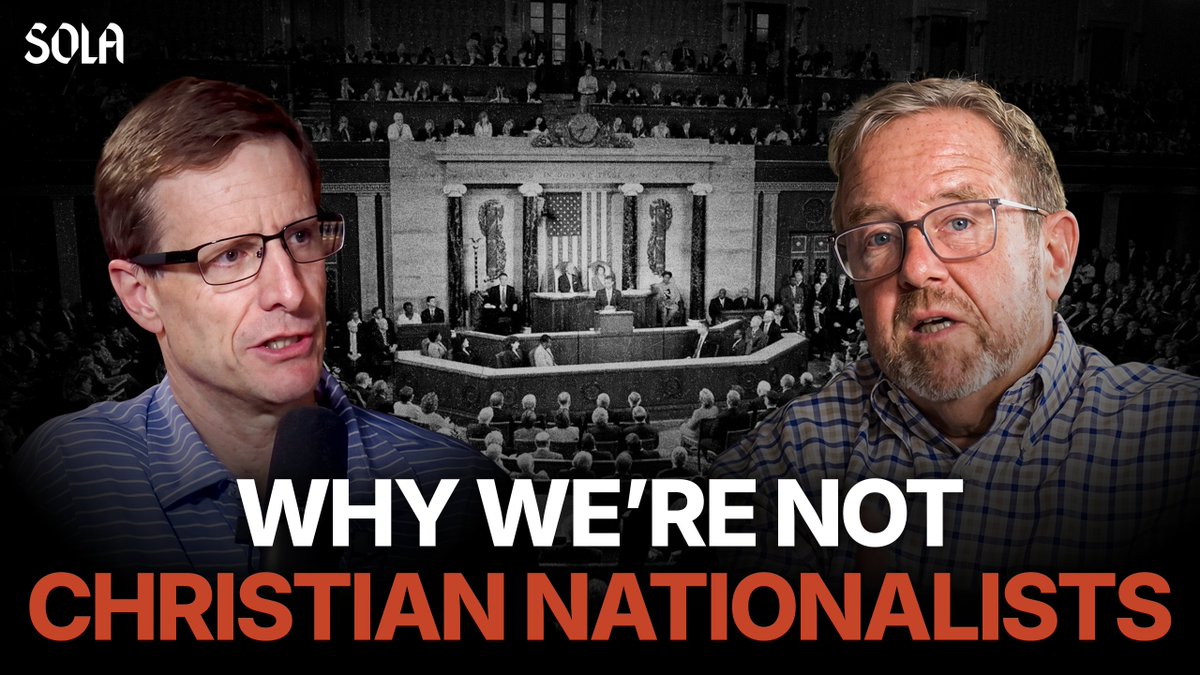
What is the civil magistrate responsible for, how should it enforce the natural law, does the Great Commission imply baptizing nations?
David VanDrunen and @AdrielTweets join @MichaelHorton_ for a discussion on Christian Nationalism.
🎥 WATCH NOW: youtu.be/GHkUkFNOq6w
6
6
33
12,219