
reformed | presbyterian (PCA) | RTS student | data analyst | weight lifter | dmv/moco | okie | not a pastor
Joined September 2014
- Tweets 22,392
- Following 1,548
- Followers 4,282
- Likes 19,114
1,292 Photos and videos








Pinned Tweet

2 Mar 2022
Westminster Larger Catechism 🧵
Q. 143. Which is the ninth commandment?
A. The ninth commandment is, Thou shalt not bear false witness against thy neighbour.
1/
6
12
96
Congrats Knicks. Happy for y’all.
The Knicks haven’t beaten OKC since November 21, 2022.
See you next year.
109
To be clear, I believe it’s entirely permissible to speak at essentially any conference you can imagine, regardless of how wicked the organizers, vendors, or other speakers are. However, this is only true if you come prepared to flip over some tables (literally or figuratively).
Otherwise, you’re either a coward or compromised.
1
10
391
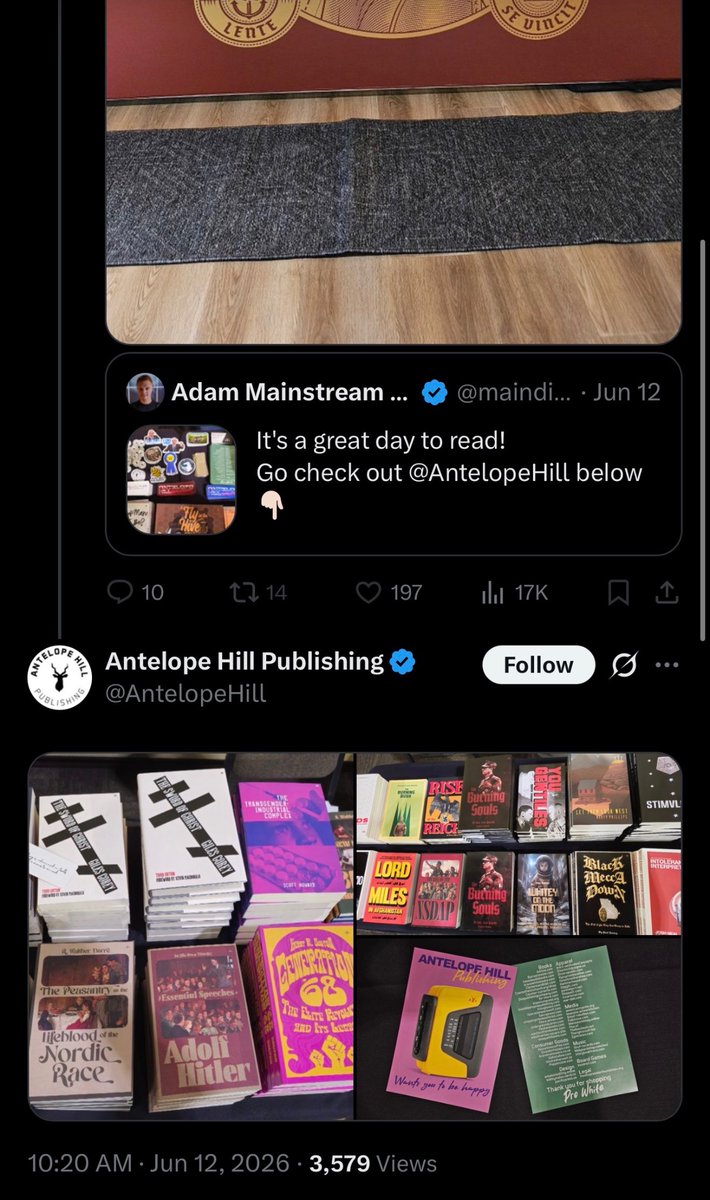
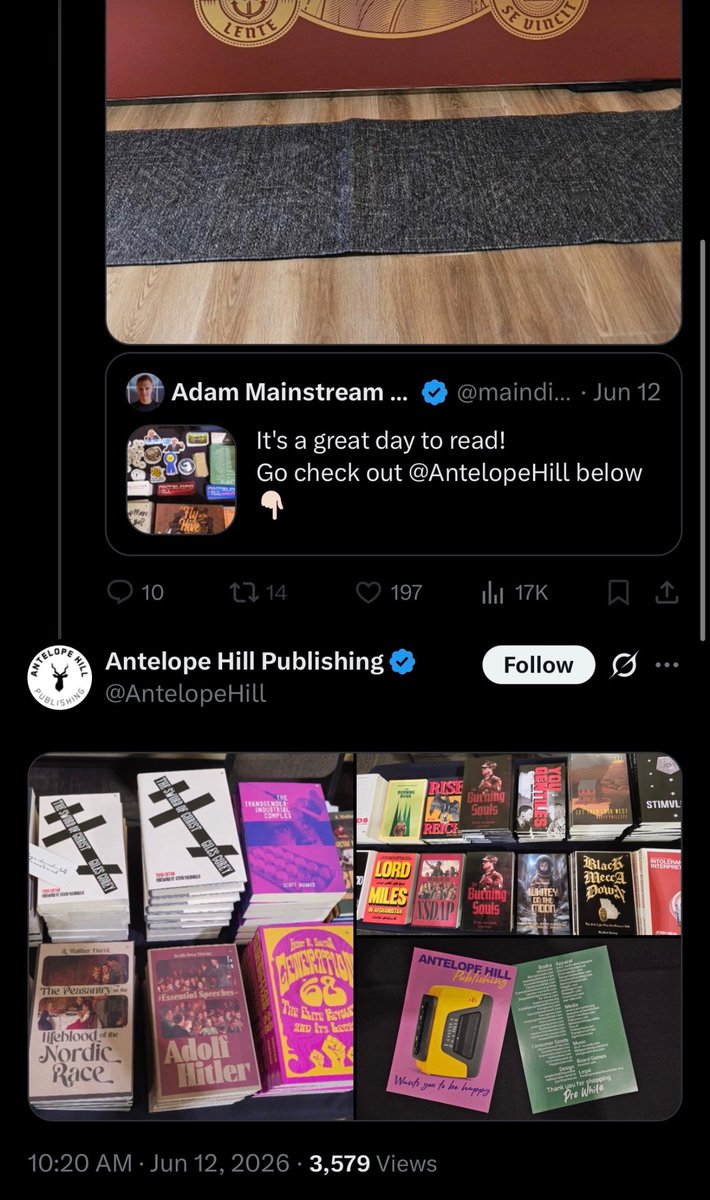
In case it couldn’t be more clear, @AmReformer / @NewFounding /@BaptistLeaders (overlapping leadership, same business address, same funding) have at least two of their investments and/or business partnerships listed as “pro-white” by this list made by the Nazi publisher, @AntelopeHill.
It’s time for the discerning to cut ties. Far past time.
Pull your articles. Make the cut. These ideas and associations will only be made more clear as time goes on. Things are coming to the light.
Mar 22

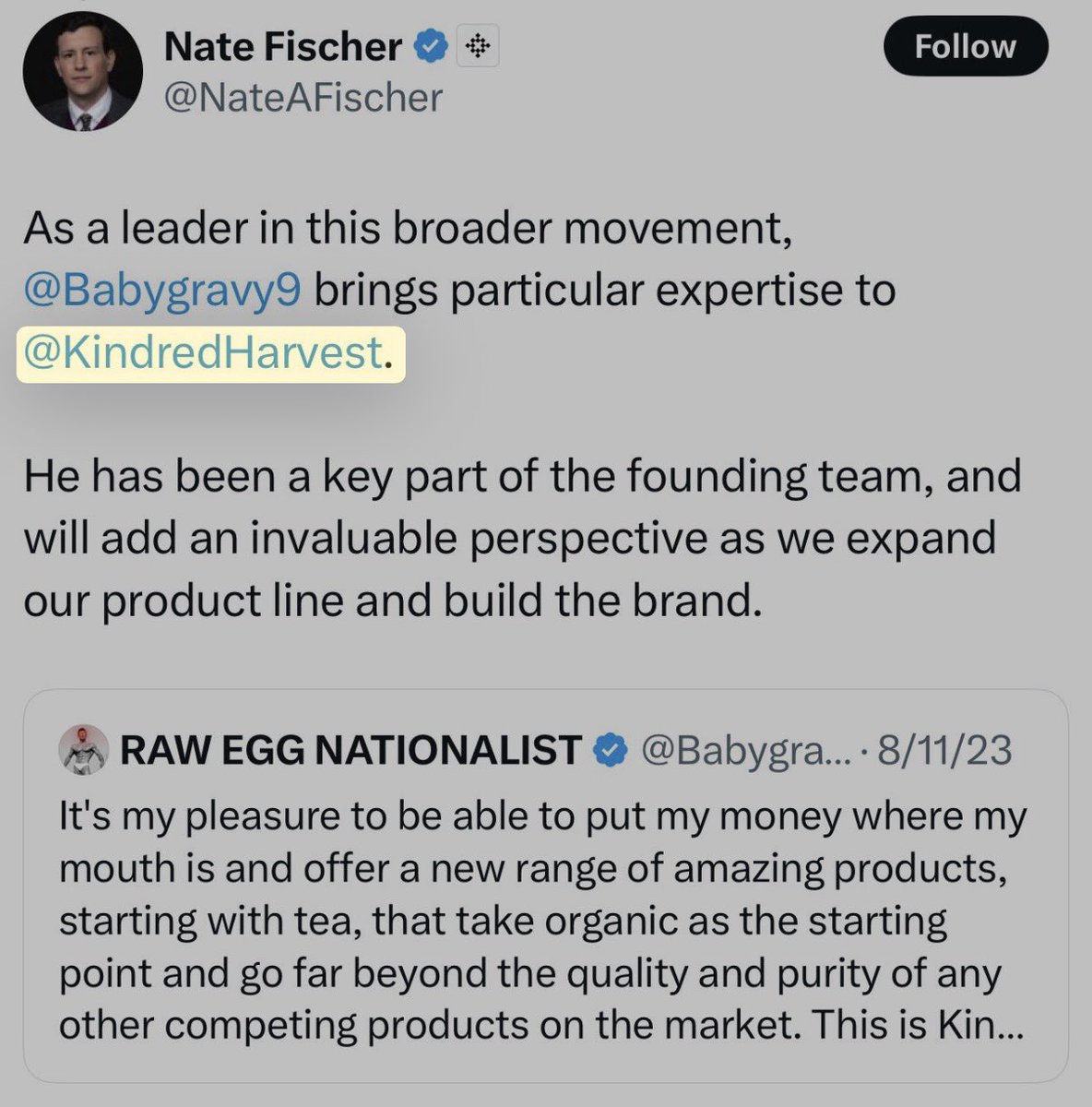
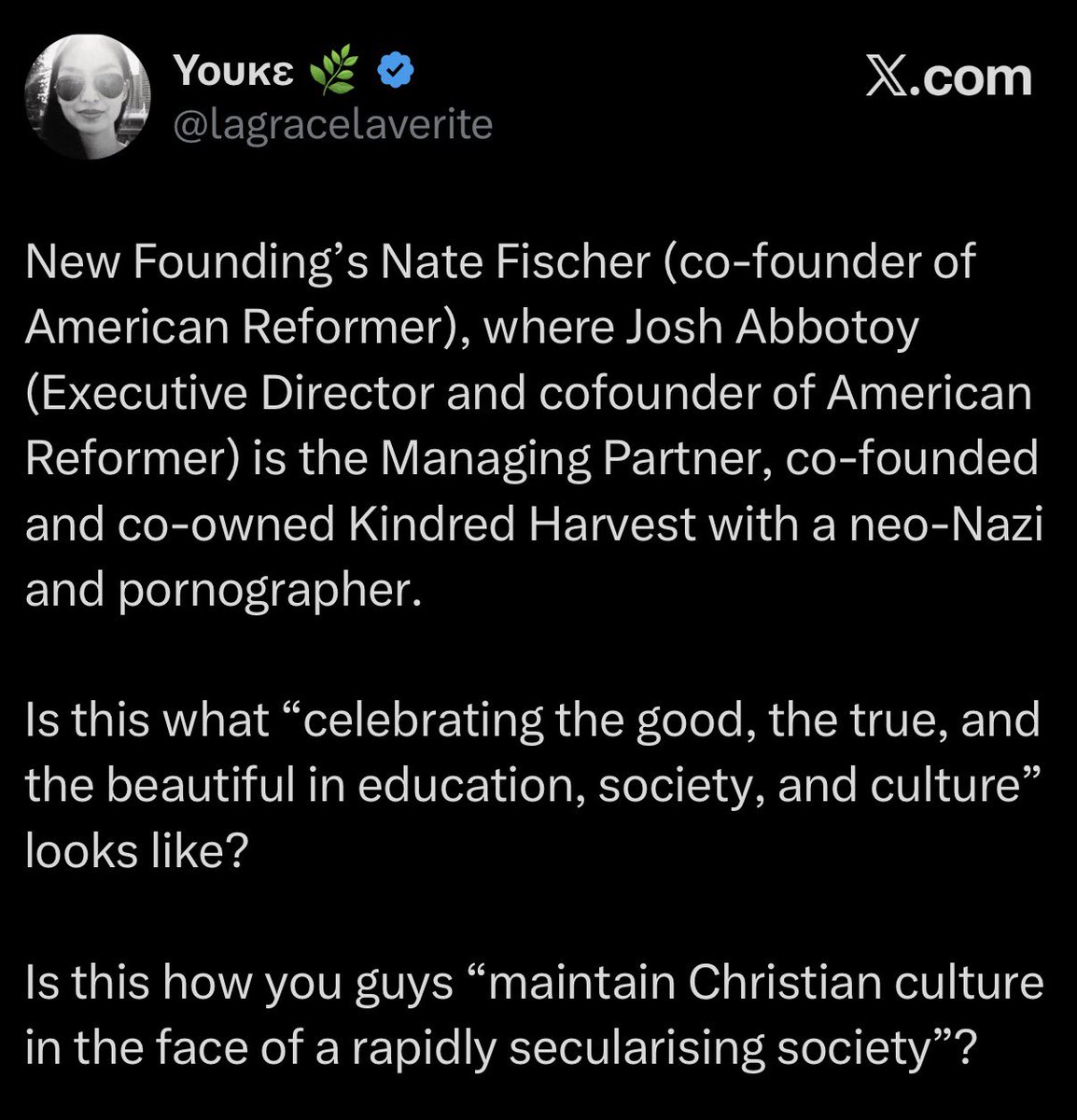
“Men’s World” is Raw Egg Nationalist’s magazine, New Founding head Nate Fischer created Kindred Harvest with him, registered at the New Founding address.
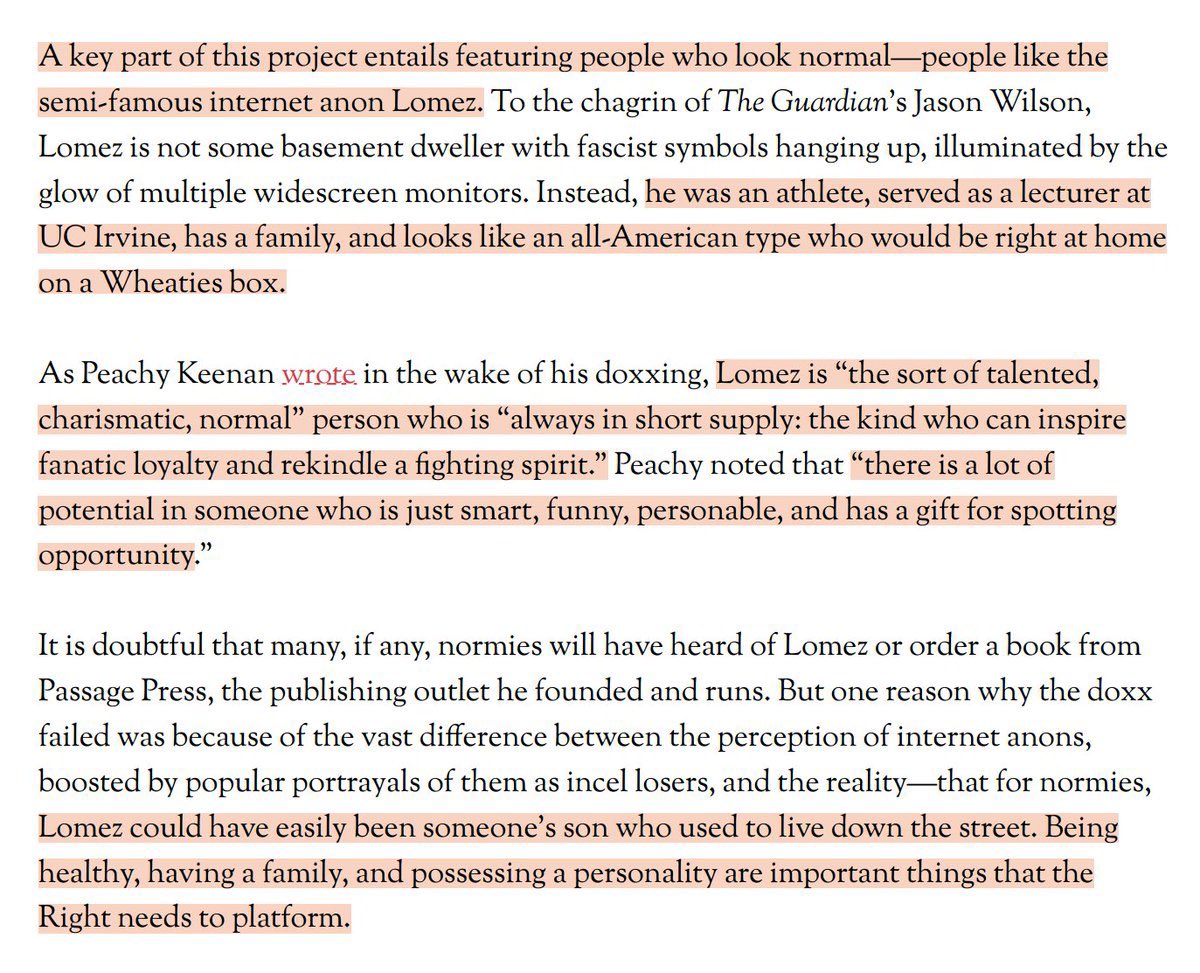
“Men’s World” is published by Passage Publishing, run by L0mez, who American Reformer (a project of New Founding with Nate Fischer onboard) praised and published.
“Men’s World” has published pornography, including at least one trans model, homoerotic content, and this week appeared to retweet infantilizing pornographic content from a “Sweet Adorable CPO” account.
It’s good that American Reformer was disinvited from the Presbyterian Church in America’s General Assembly vendor hall.

1
3
22
1,205
Reminder that this is the same group who made a hype video last year that spliced in Nazi propaganda footage. This is a group that is too far gone for Douglas Wilson.
Please, fathers and brothers, don’t make full-on Nazism the line that mustn’t be crossed. We can and must show better discernment than that.

1
3
19
571
Please take note of the people who didn’t need explicitly Nazi propaganda being sold at a conference for them to notice a problem.
I’m thankful it’s a wake up call for some folks. But we’ve had other wake up calls. There’s always another wake up call. So please wake up.
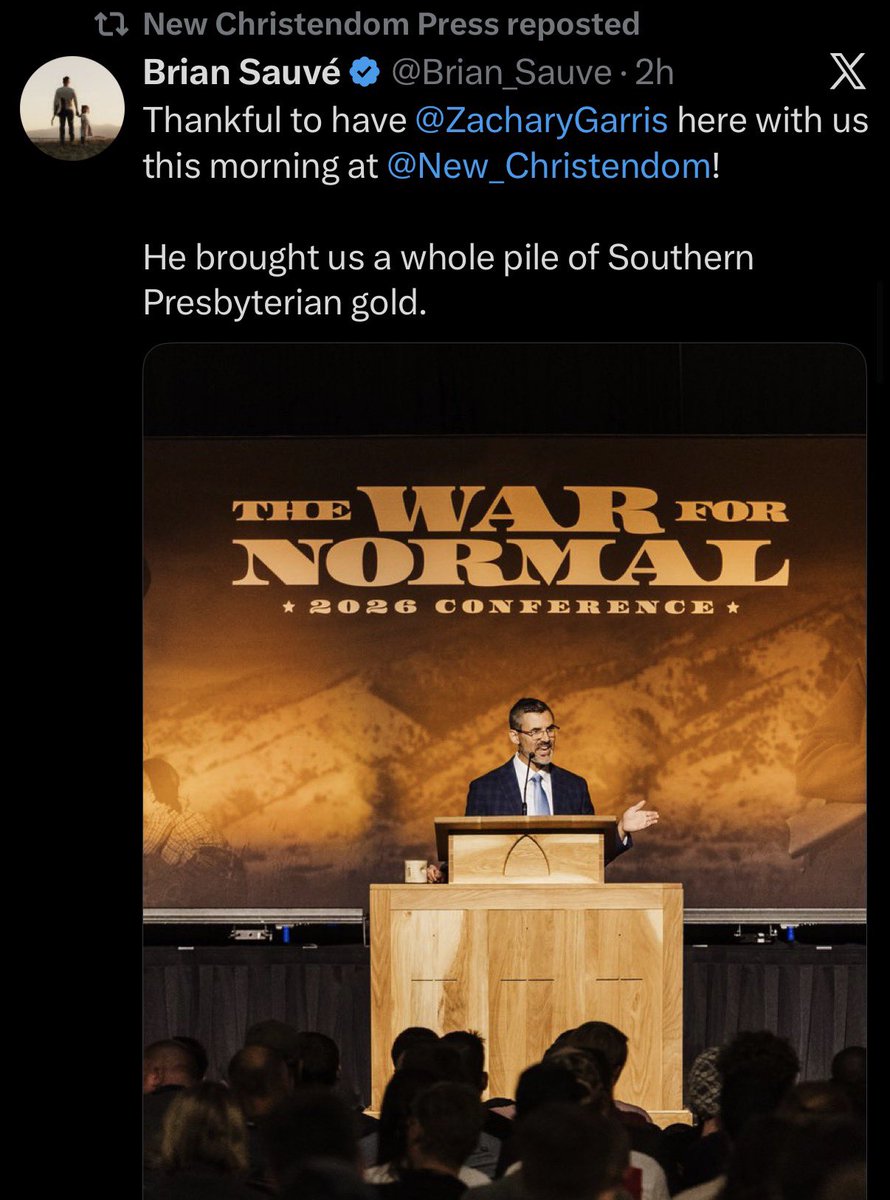
What a disaster, what a blinders-off moment. Christians today have already been disavowing Ogden.

10
4
38
2,095
John Reasnor retweeted

“It’s not happening and it’s good that it is”
1
3
41
2,505
They’re very “normal.” Trust them. They say they’re normal all the time. Super normal. Most normal. Peak normal.
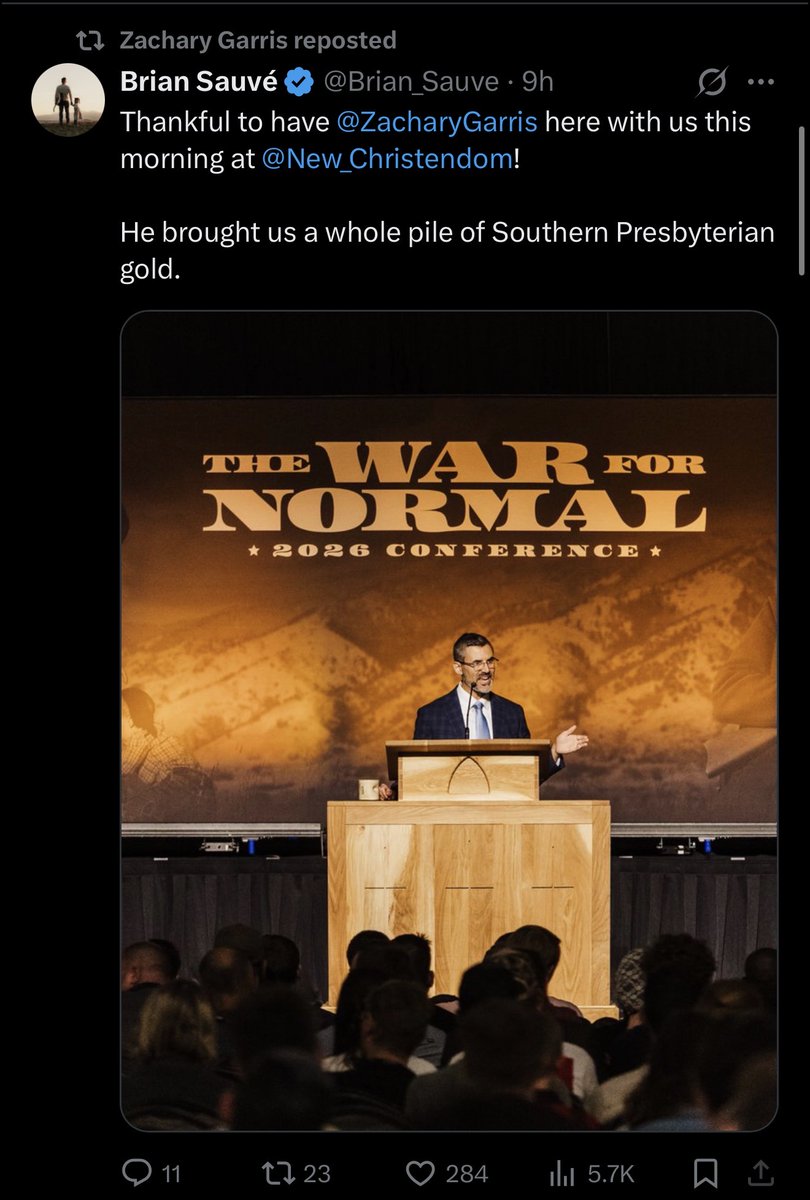
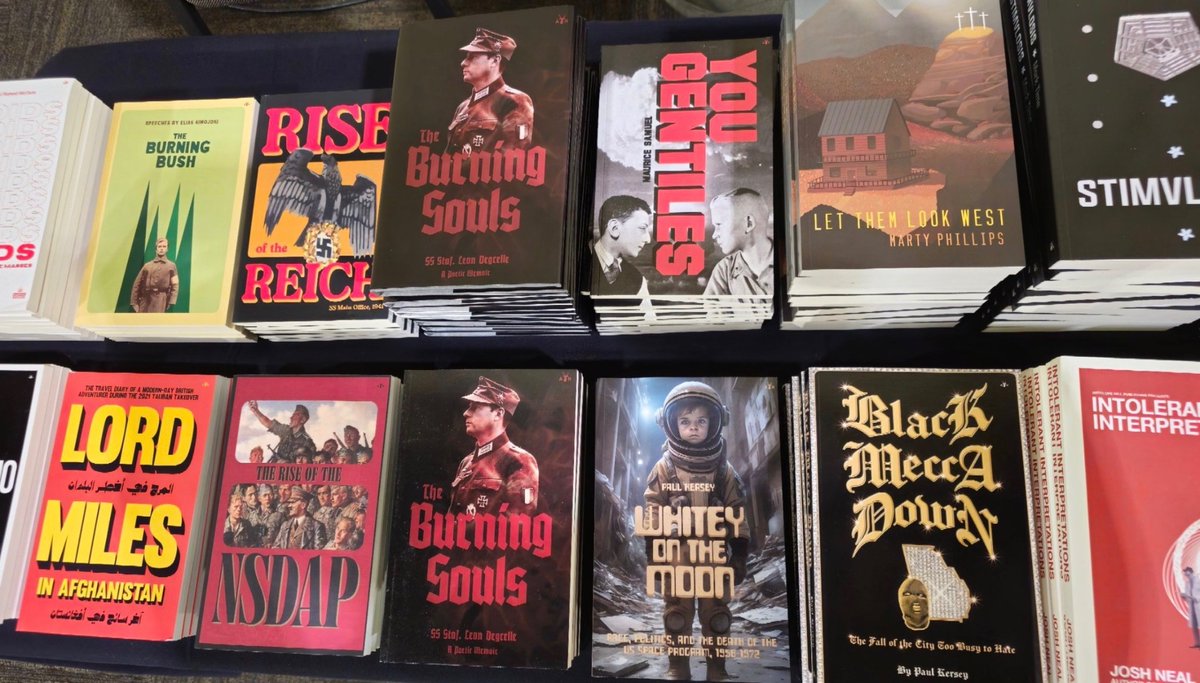
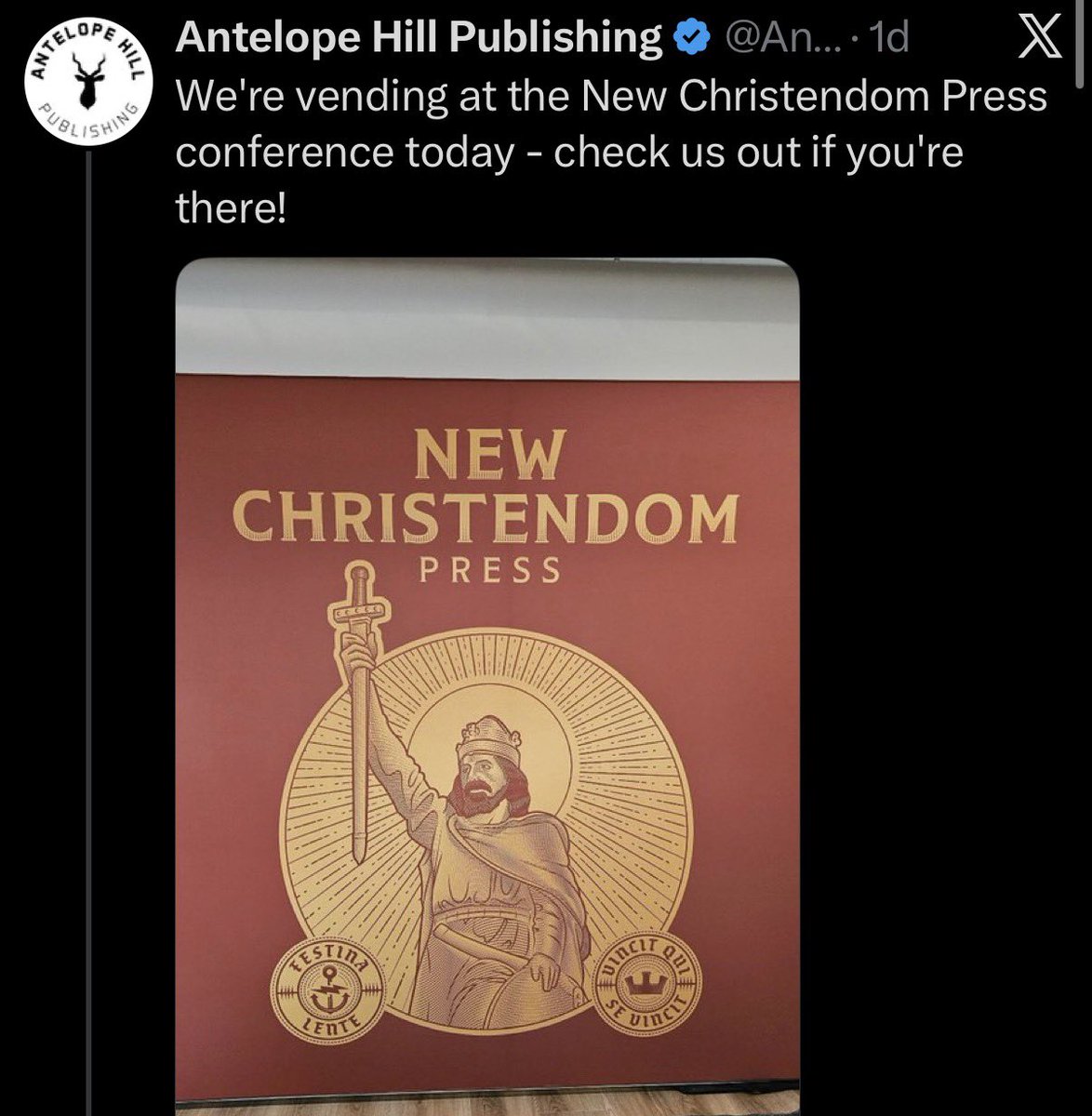
Brian Sauvé and Eric Conn of Refuge Cuurch Ogden are hosting America’s foremost Neonazi, explicitly pro Adolf Hitler publishing house at their New Christendom Press conference.
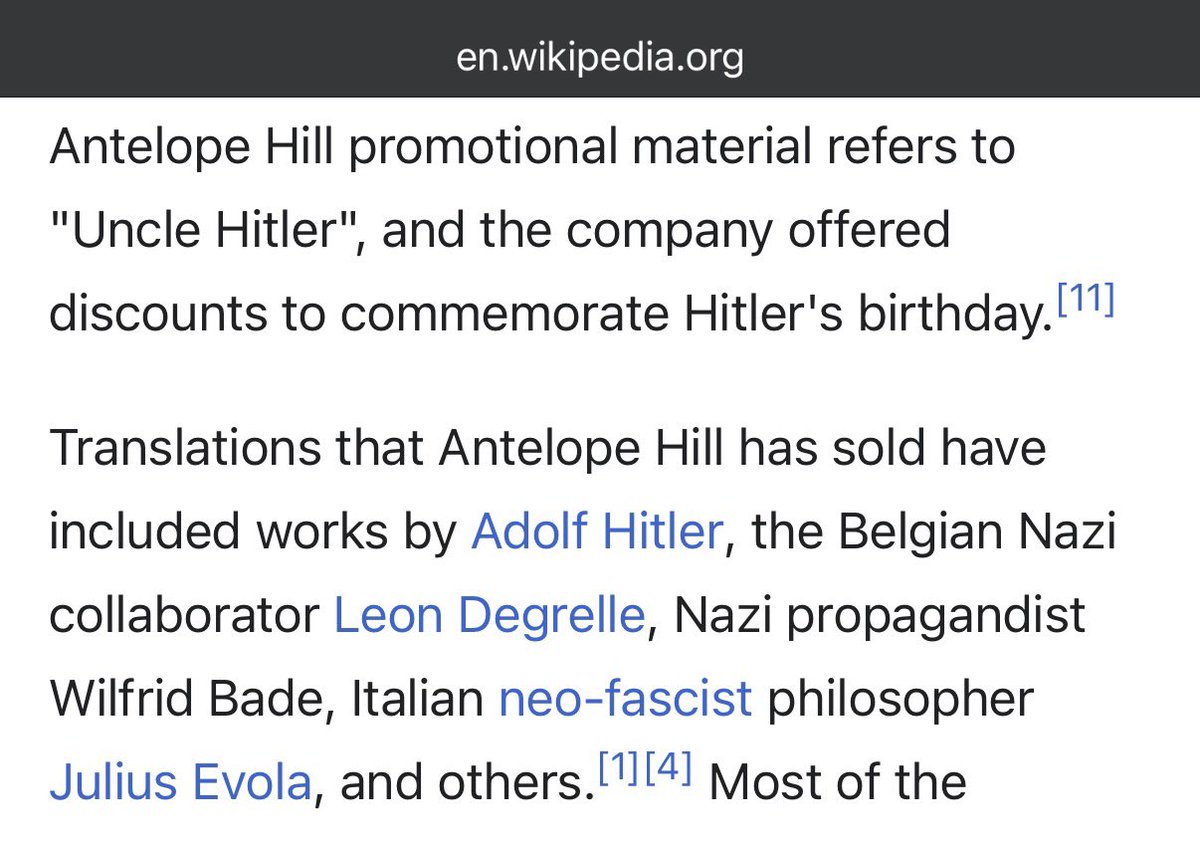
Anyone denying that Ogden was down with Nazism was wrong. Antelope Hill has on their table at the conference speeches by Adolf Hitler, and the memoirs of an SS officer.
New Christendom Press also publishes PCA Pastor Zachary Garris and antisemite Andrew Isker.

4
36
1,111
John Reasnor retweeted

Jun 12
God bless NAPARC’s faithfulness to the Scriptures and the gospel. That’s the tweet.
7
10
73
2,807
Or hold conferences for the sake of “normal.”

2
19
730
John Reasnor retweeted

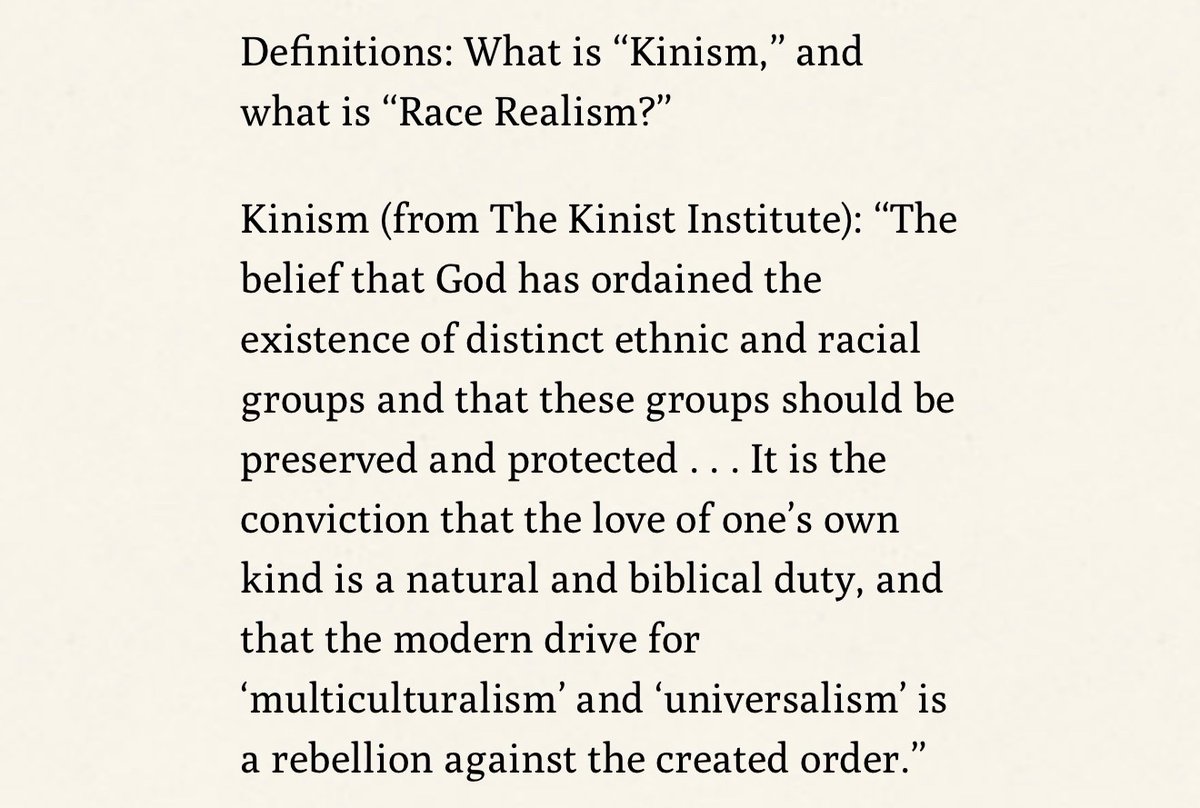
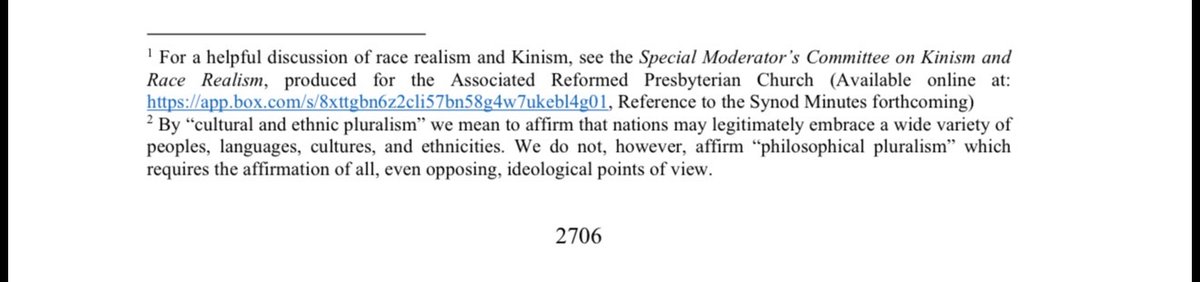
As far as I understand (almost?) every NAPARC denomination has now officially condemned kinism.
There is no place for kinism in NAPARC. Full stop. No officer may hold those wicked beliefs, and we must pray for and help any members who do to grow into Christian maturity.
27
8
64
10,250
John Reasnor retweeted

If you look at the qualifications of elders in 1 Timothy and Titus, you’ll see that Paul emphasizes qualities of character. It’s important to be able to preach and teach, but it’s even more important to be an example of Christlikeness that others can imitate.
5
25
789
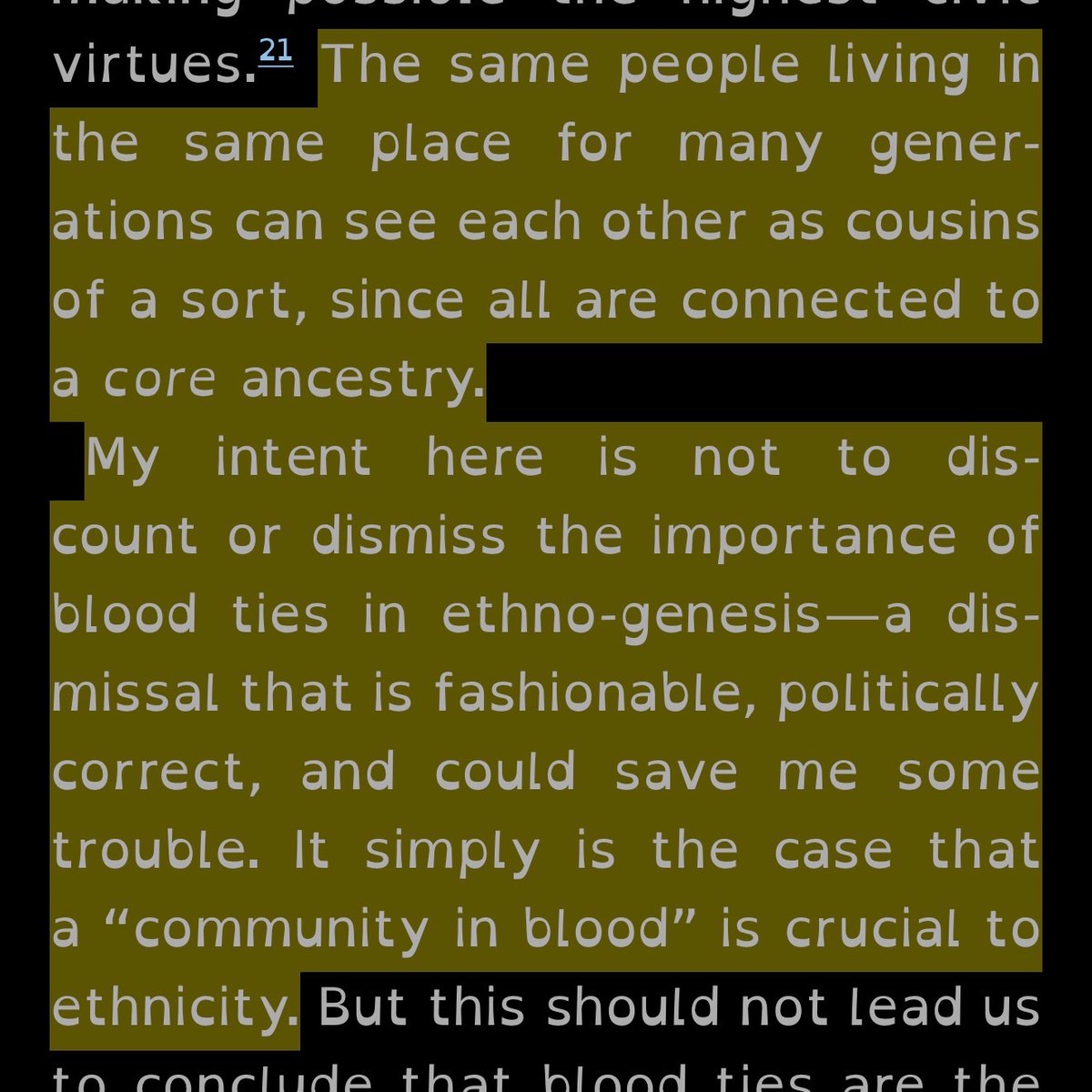
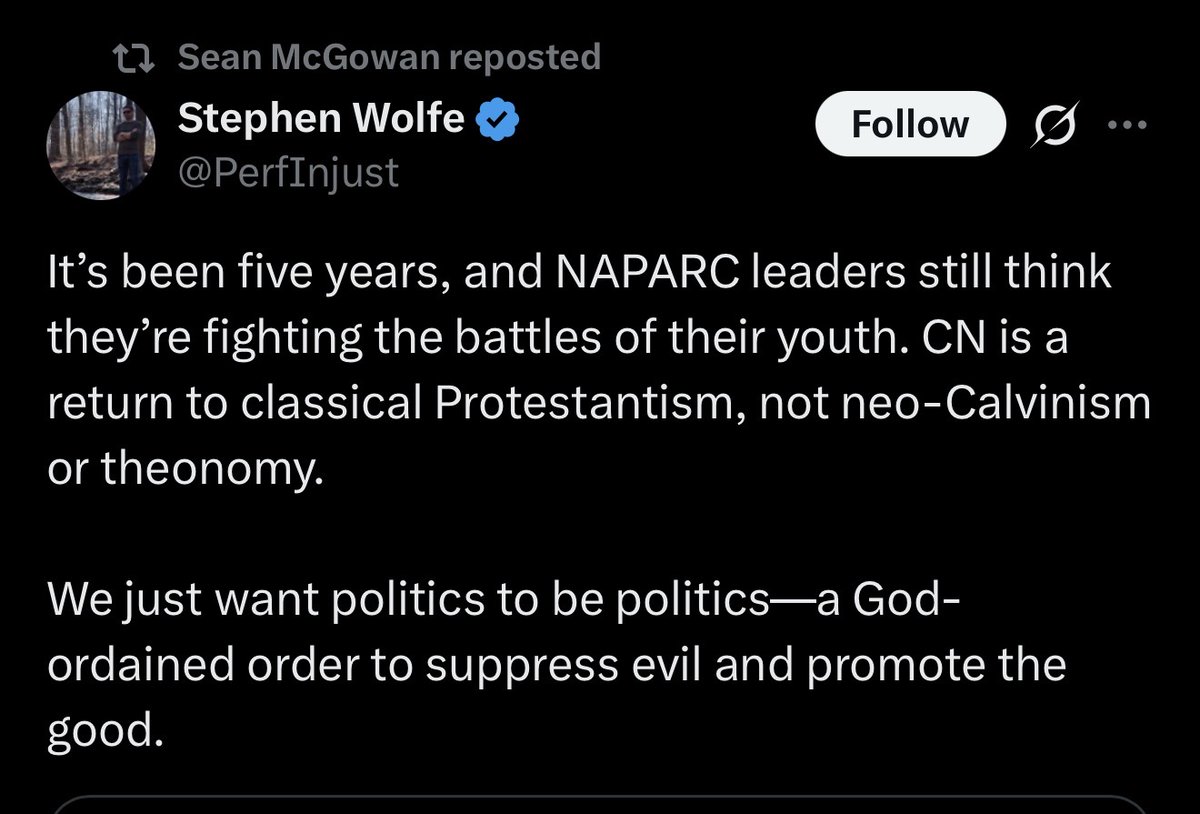
Wolfean Christian Nationalism shares a lot in common with classical Protestant political theology, however, the implicit and explicit racialism in his Christian Nationalist schema is highly anachronistic to early Protestantism and is largely a modernist identity ideology imported onto older ideals.
The magisterial Protestant tradition did not ground political order in an explicitly racialist, ethnically homogenous nationalism in the way Wolfe does. Whatever their many failures and blind spots, figures like Luther, Calvin, Bucer, Zwingli, and the later Reformed orthodox framed politics in terms of magistracy, law, and the church’s catholicity, not in terms of preserving a particular modern racialized people‑group as such.
Wolfe’s kinist‑leaning ethnonationalism is a distinct, much later development, not just “old‑school Protestantism.” It has more in common with 1840 Virginia or 1990 Coeur d’Alene, Idaho than Calvin’s Geneva.
26
5
78
5,021
While ignorance will often play a role in kinism, race-realism, and/or ethno-nationalism, I don’t believe for a second that you arrive at these ideas by simply being ignorant. You get to it by racial vainglory, racial animus, and oftentimes fearfulness.
Framing the issue as fundamentally a matter of ignorance is simply not accurate and significantly lightens the moral burden in a similar way as painting women who get abortions as ignorant or as victims.
4
1
19
631
South Africa is likely bait, so I’ll mention something about Japan.
Their form of nationalism collapses categories to a degree wherein a certain majority racial group is the only group widely considered to be “truly” Japanese.
Meanwhile, racial minorities in Japan *who are native to the Japanese islands* are marginalized. Sometimes even legally banning languages and customs. It’s also often worse for long-time and even multi-generation Chinese and Korean immigrants.
Also, Europe is a continent.
Jun 12

So it seems like the ordinary folks of all these countries—Europe, Japan, South Africa—like each other very much. Lies from our elites keep us from enjoying our own and each other’s culture as much as we should.
When I go to Germany, I want German culture. When I go to Ireland, I want Irish culture, when I go to Japan, I want Japanese culture.
I don’t want everywhere to be the same with enforced multiculturalism that feels like no particular place.
2
12
1,110
To further drive home the point, Megan is also flattening categories as if the modern nation state of Japan (or South Africa or Germany) is fundamentally coterminous with a specific cultural identity. This is simply not true and you don’t even have to consider immigrants to see how reductive this perspective is.
There’s a marketed and exported “Japanese Culture(tm)” that she perceives, but most modern nations do not have one distinct culture even among natives. Germany is the same way. South Africa is obviously and aggressively this way (even without the Dutch and English colonization).
2
10
356
John Reasnor retweeted

Jun 9
I remind everyone that Oxford has yet to publish a Very Short Introduction to Vonnegut, and I am a struggling academic willing to do whatever is necessary to make this happen.


11
8
113
8,988
John Reasnor retweeted

Author, speaker, and RTS alumna Nancy Guthrie shares about the lasting impact of her education at Reformed Theological Seminary and the ways it deepened her understanding of Scripture and equipped her to serve the church through teaching women the Bible.
Learn more about how you can begin your seminary journey at RTS.edu.
.
.
.
Reformed Theological Seminary
Nancy Guthrie
Seminary Education
Theological Education
Women’s Bible Study
Biblical Studies
Christian Ministry
1
1
5
635
Spineless. Soft. Evil.

I can't answer for Michael. But here is my stance:
1. The primary reason we could not share a communion table would be because I am a convinced Lutheran, and he is a convinced Presbyterian. While all Christians must take communion, that doesn't mean we should all take it together.
2. But hypothetically, if Michael was seeking to build an all White Church, I would not put him in the position of having to turn me away. I support his work, and therefor would not ask. His stance is not the least bit offensive to me or to my family. Full send on everything that he is doing!
3. Michael has been nothing but kind to me and my family. I count him as a friend and Brother. Even if we could not attend Church together, we can still stand back to back and fight for each other, knowing that we will both be apart of the Church Triumphant.
7
1
35
2,423
John Reasnor retweeted

Jun 5
The PCA Study Committee on Christian Nationalism has released a partial report, and it is superb. @ReformTheoSem professors from @RTSCharlotte @rtsorlando & @RTSJackson served in this important work. byfaithonline.com/christian-…
41
14
102
27,488