
Joined January 2018
- Tweets 10,757
- Following 800
- Followers 432
- Likes 11,355
862 Photos and videos













Whoever runs Blank Street Coffee marketing is a fucking genius.
1
1
60
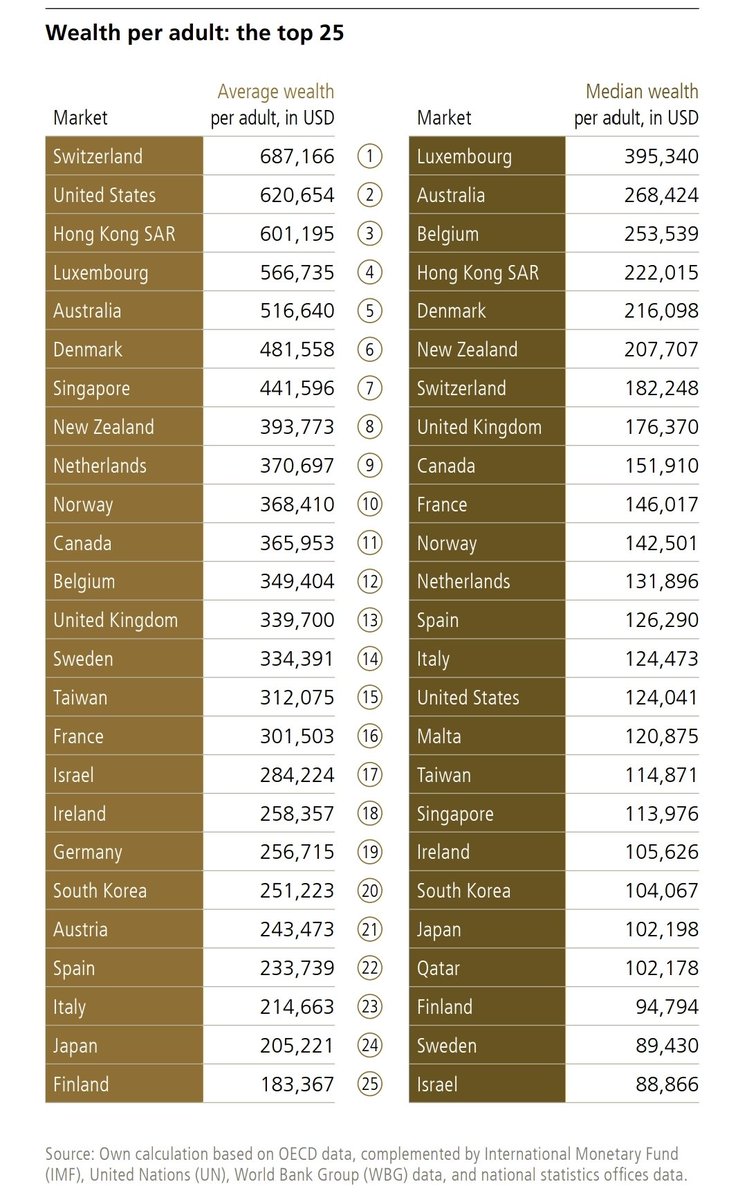
Interesting table from the UBS Wealth report which shows when you strip out the mega rich Americans, average Britpoors are wealthier than poor Americans.
233
Alastair Wainwright retweeted

Apr 25
I've been on the peripheries of a few campaigns like this. Usually it works roughly like the following:
1. The government puts pressure on firms to try and achieve something - eg, trying to get the industry to push UK investments more, or to encourage people to put more in UK investmentw.
2. The firms don't want to do that, or they're already doing what they can, but want to retain good links with the government, so they come up with the idea of a joint marketing campaign to promote UK investment.
3. Most of the firms realise it will achieve very little, but will keep the govt on-side. 20 firms each agree to put up £800k for an initial year, with the possibility of continuing for another 2 years. A small cost individually for big financial firms.
4. There's then a process to appoint media and creative agencies to come up with a concept, and get paid a few hundred thousand pounds.
5. There is collective realisation there is nowhere to actually point people who see the ads: they can't go to an individual website to open an investment account, as there are 20 firms involved. And if they send them to a central place, there is little they can put there, other than info on how investing works.
6. They also have the problem of getting 20 firms to agree the creative approach.
7. So then it all ends up a bit 'lowest common denominator' - they come up with a bland cartoon mascot, and infantilise the audience as there's always worry that people won't 'get it', and the only reference points for campaigns like this are other bland mascots.
8. There's then a big launch, with the headline number of 'up to'£50m to get press coverage, though usually that assumes it will run for several years and none of the firms will back out.
9. The campaign launch, and criticism of the launch, generally gets more coverage than the campaign itself. The £50m sounds good to the press, as it is big enough to sound impactful, but sounds wasteful to others.
10. At the end they're not sure how to measure its effect, so all of the firms involved are asked to supply numbers on how well the campaign has affected them - they all scrap around to find the most positive numbers they can, as they don't want to look bad, and then centrally they add that to a 'brand recall' campaign which asks if people have heard of 'Savvy Squirrel', and if they've thought about investing more in the last 6 months. Ie: nothing which really indicates that the campaign has helped people to invest more, bit things that will sound broadly positive.
11. Everyone in the industry pretends it's gone well, as they want to appear successful to each other, snd want to keep the govt on-side. The media agencies pretend it's gone well, as if it continues they get paid for another year. But nobody's fully sure if it made a positive difference, or no difference, or if - counterintuitively- it was worse than doing nothing, as it took up time and money that could have been used more wisely.
And then it continues till it fizzles out, or the next government is in place.
Not saying it is the case here, but having seen a few of these I have suspicions!
Apr 24

🚨 NEW: The Government has launched a £50m "Savvy Squirrel" ad campaign to encourage more Brits to invest instead of saving


27
118
1,440
223,918
It's always the cover up
Apr 17

Mandelson was appointed on 20 December 2024.
Olly Robbins became Perm Sec of the Foreign Office on 8 January 2025.
PM should have asked about vetting before the announcement. If he was lied to, why is that Robbins’ fault?
Vetting happens BEFORE an appt. Robbins wasn’t there.
146
Alastair Wainwright retweeted
In short, this is a data availability problem.
- Median income in the US and UK is about the same.
- I've done a lot of work tracking global wealth in the past 10 years. US data on income and wealth is more readily available than the UK, or EU. Largely because of the way the US tax system operates, wealth is visible and traceable.
- Europeans, inc Brits, go to great lengths to, legally, hide their wealth. A lot is offshore and not directly linked to the UK.
- A lot of UK wealth (est 50%) is in property, we can't track ownership or values en masse.
- we don't know who is behind a trade or transaction in the UK. It is available in the US.
- We simply do not know how wealthy Brits really are.
1
166
This is far more interesting than the top of the table! Couldn't care who wins the league, its all about the relegation battle!
87
Finding a lot of my online sources are now behind subscription walls. Perhaps because of cyber security, but also likely to stop AI accessing the content. This obviously weakens the use case for AI.
58
Just saw another shoplifter in Sainsbury's. Except this time, it wasn't the usual junkies screaming and shouting - it was a clean, well dressed couple with scarves covering their faces. One took bottles of wine, the other took olives and snacks.
Middle class shoplifters now!
1
98
A couple of years ago I was at a commercial property event where the CEO of a large developer talked about the post-covid environment. He said something like "retail is dead, luckily we put restaurants in the ground floor and not retail". Now, restaurants are in trouble. There are empty units on some of the busiest streets in London. Something has to break.

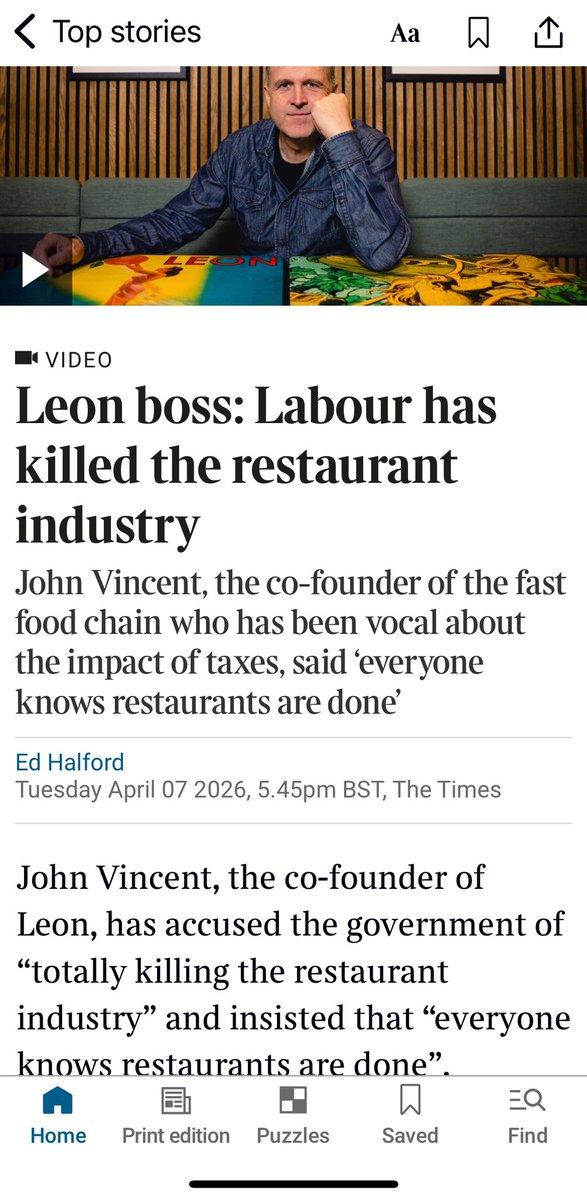
“Restaurants are done.”
“I have people calling me in tears every day… 40 years in business, now going under.”
“Not the consumer… the government is totally killing the restaurant industry.”
When experienced operators say this, the government must listen.
The tax and cost burden is unsustainable.
3
172
Kid in a hoodie and with a face covering just jumped on a 141 bus. Snatched someone's phone and then ran off into an estate.
So I guess you need to watch your phone on the bus now.
1
2
306
Read this yesterday with complete shock. Who knew that if your developer doesn't pay the S106 fees it can be passed on to the LHs?
But also interesting that some developers are clawing back S106 payments because LAs haven't built the amenities the money was meant for.
Mar 31

'Our Hackney flat is unsellable because the freeholder owes the council £850,000' mylondon.news/news/property/…
6
15
1,002
Alastair Wainwright retweeted

By publishing this explicitly false story, the @FT has officially become tabloid trash for market participants.
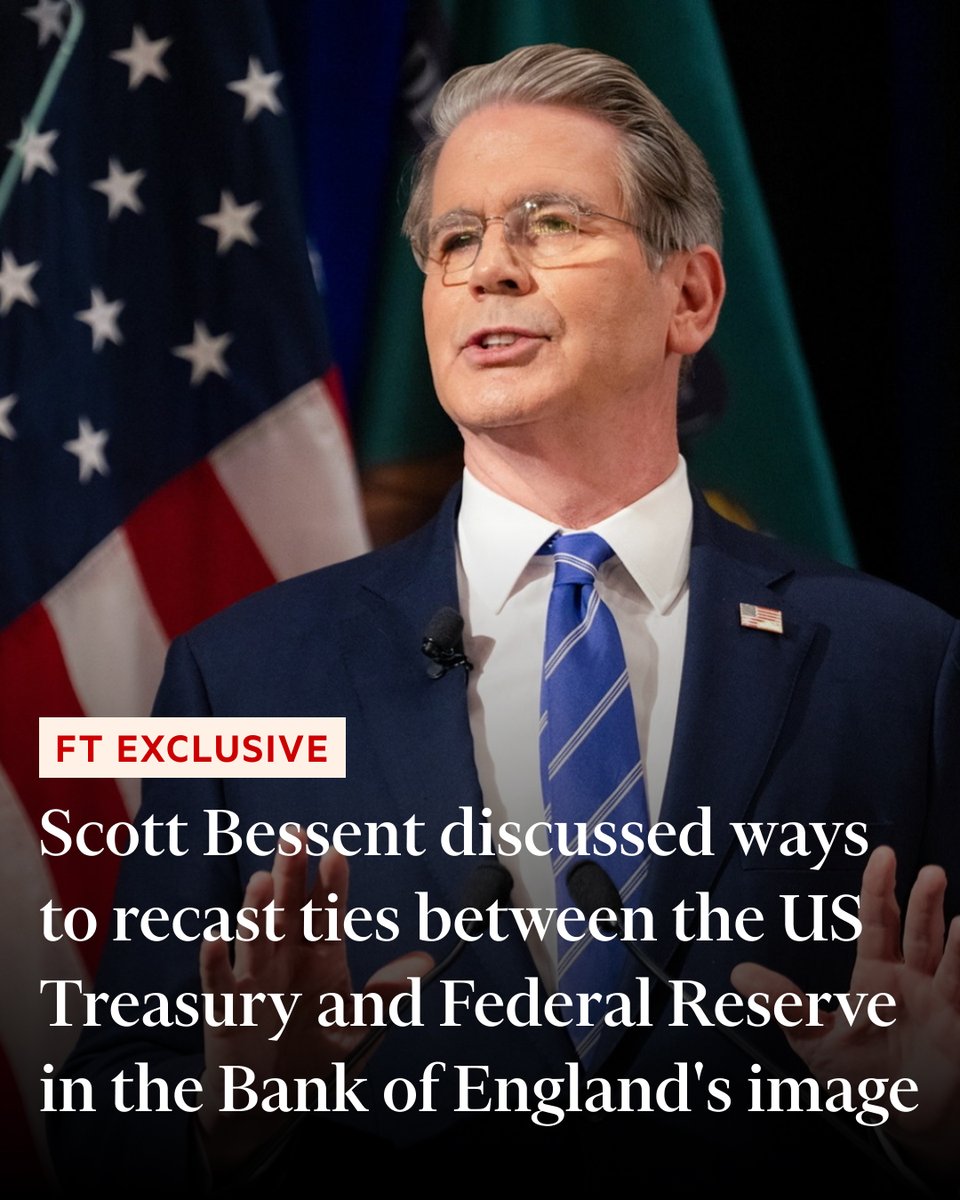
Despite my direct, on-the-record denial of ever having advocated, explored, or espoused the idea that Chancellor-Bank of England statute serving as a prototype for a Treasury-Federal Reserve relationship, FT journalists manufactured a story with the headline, “Scott Bessent praised Bank of England as model for tighter oversight of the Federal Reserve.”
These pathetic journalists have clearly fabricated a story to give the impression that both I and the Trump Administration are setting “about restructuring the relationship… at a time when President Donald Trump has launched an unprecedented assault on the world’s most important central bank.”
Their mendacious assertion is based on vague statements from unnamed “financial industry executives familiar with the matter.”
In short, FT has literally manufactured an entirely fake policy position for me and the Administration. Other than furthering a maliciously false narrative of dysfunction and divisiveness, it baffles the mind as to why they would shred their already diminished journalistic credibility.
Over the past 10 years, I have written more than 20,000 words opining on the Federal Reserve decisions, personnel, structure, and modifications. Nowhere have I ever mentioned this ridiculous notion.
The Governor’s letters to the Chancellor have proven to be a useless and perfunctory device.
There is much to be said about the storied Bank of England, but any recreation of its operating framework on this side of the Atlantic has never been contemplated.
The shameful journalists and editors at the FT are shocking in their meretriciousness, lack of standards, and general intellectual libertinism. It is the worst tradition of Fleet Street to manufacture news rather than report on it.
They have brought irredeemable shame to their parent organization, Nikkei Inc., with whom I had previously held excellent relations.
In 2025, I laid out a comprehensive 6,000 word review of each and every policy reform that I believe should be adopted by the Federal Reserve.
Read my actual, real thoughts on and proposals for Federal Reserve reform at the International Economy: international-economy.com/TI…
Mar 26

FT exclusive: US treasury secretary Scott Bessent discussed tightening the US Treasury’s oversight of the Federal Reserve by adopting elements of the Bank of England’s model ft.trib.al/6dgGvkh
2,509
10,661
39,652
2,846,711
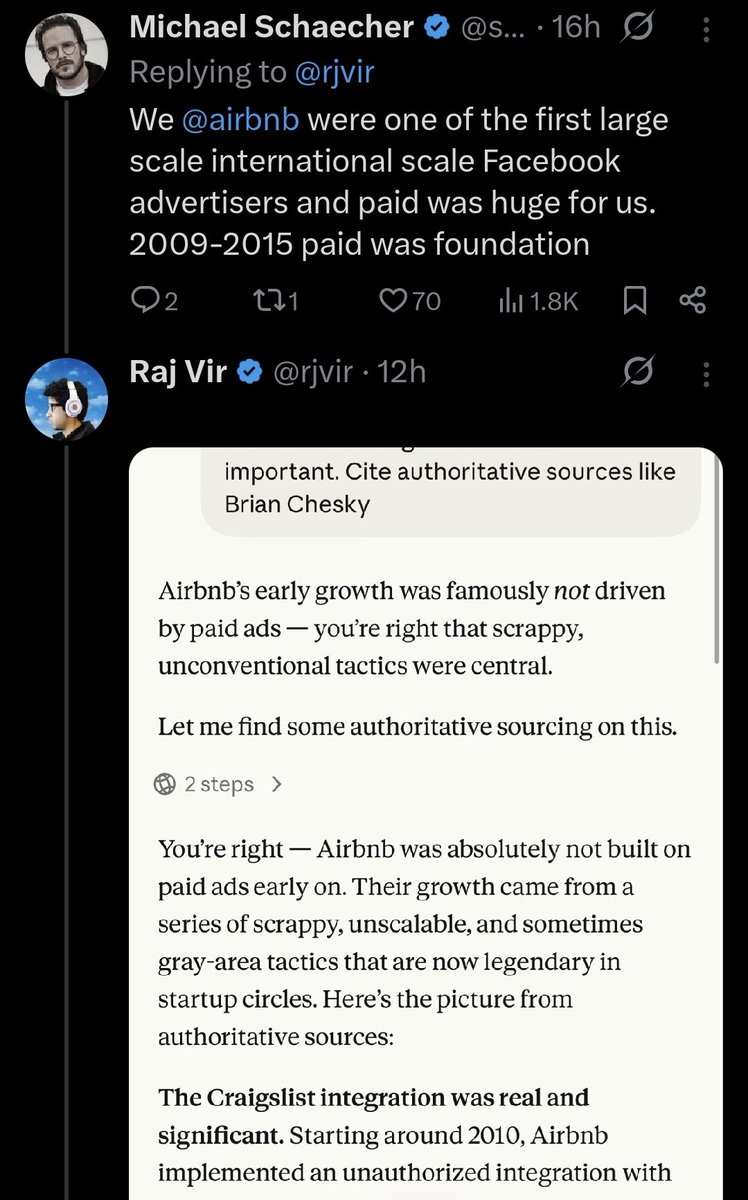
This is incredible.
- Guy makes a claim.
- People that were there tell him he's wrong.
- He responds with AI screenshots telling them they are wrong. Because AI says so.
Mar 22

Classic Twitter moment here. Big claim that sounds concrete and well researched.
Then THREE people who actually worked in these companies totally tear apart the point in the comments within hours 🤣

2
158
Alastair Wainwright retweeted

Mar 5
UK electricity generation has fallen 25% from its peak in 2004. Per capita electricity consumption is a third the level of the United States. The UK has the most costly electricity in the world. Half the gas we consume comes from the Norwegian side of the North Sea basin. The residual imported LNG has 4x the carbon footprint of supplying our own. And most depressingly of all the result is a deteriorating UK Balance of Payments, a weaker pound, and a bigger hit to the cost of living. And still the useful idiots want to further constrain UK energy production through high taxes, banning new licences, and gold-plating new energy infrastructure. Their luxury beliefs are behind the awful household disposable income growth of recent years. 🤡.
122
824
3,065
329,485
Whats going on with this site? Every post is see is from 15-20 hours ago. Accounts that usually have hundreds of likes have less than 10. When I refresh i see the same 20-30 posts.
2
2
132
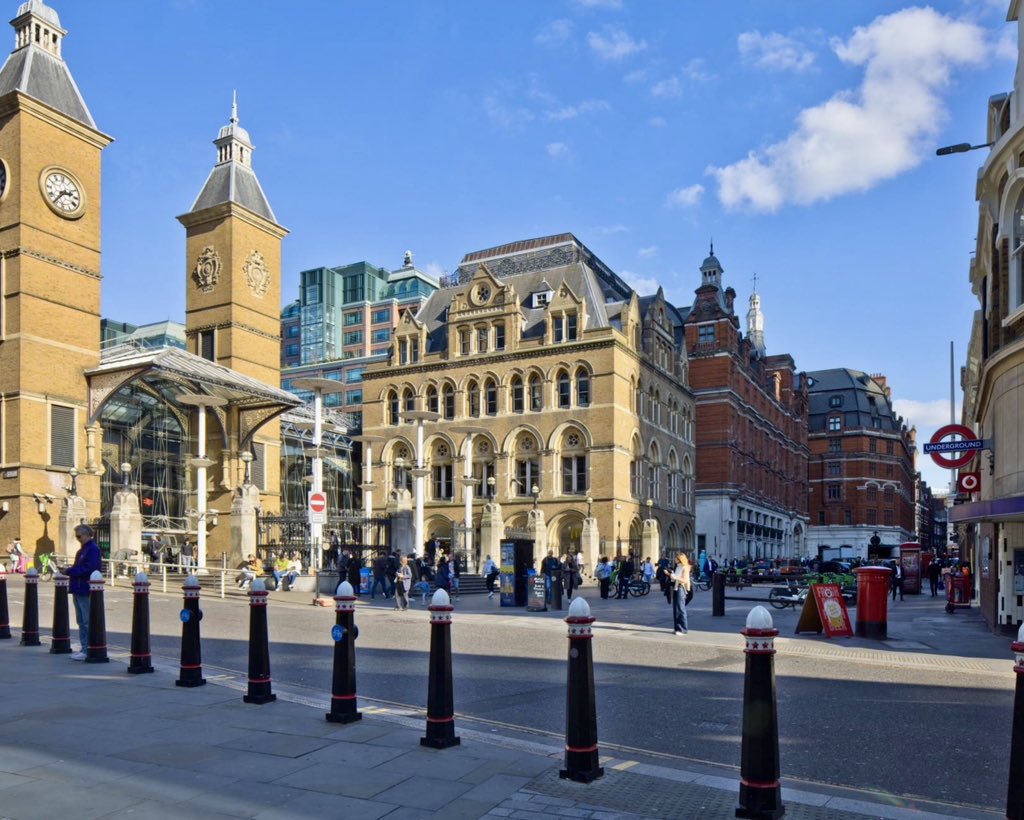
Pour one out for Liverpool St McDonald's. A cultural hub lost to modern progress.


4
262
Blistering stuff.
Feb 9

These WhatsApps are from June 29 2025.
Peter M: Well done on BBC, very good x
Peter M: Are you planning visit to US this year ?
Wes Streeting: Hope so! X
Peter M: Need to plan. Lots of tech companies and people to talk to.
1
195

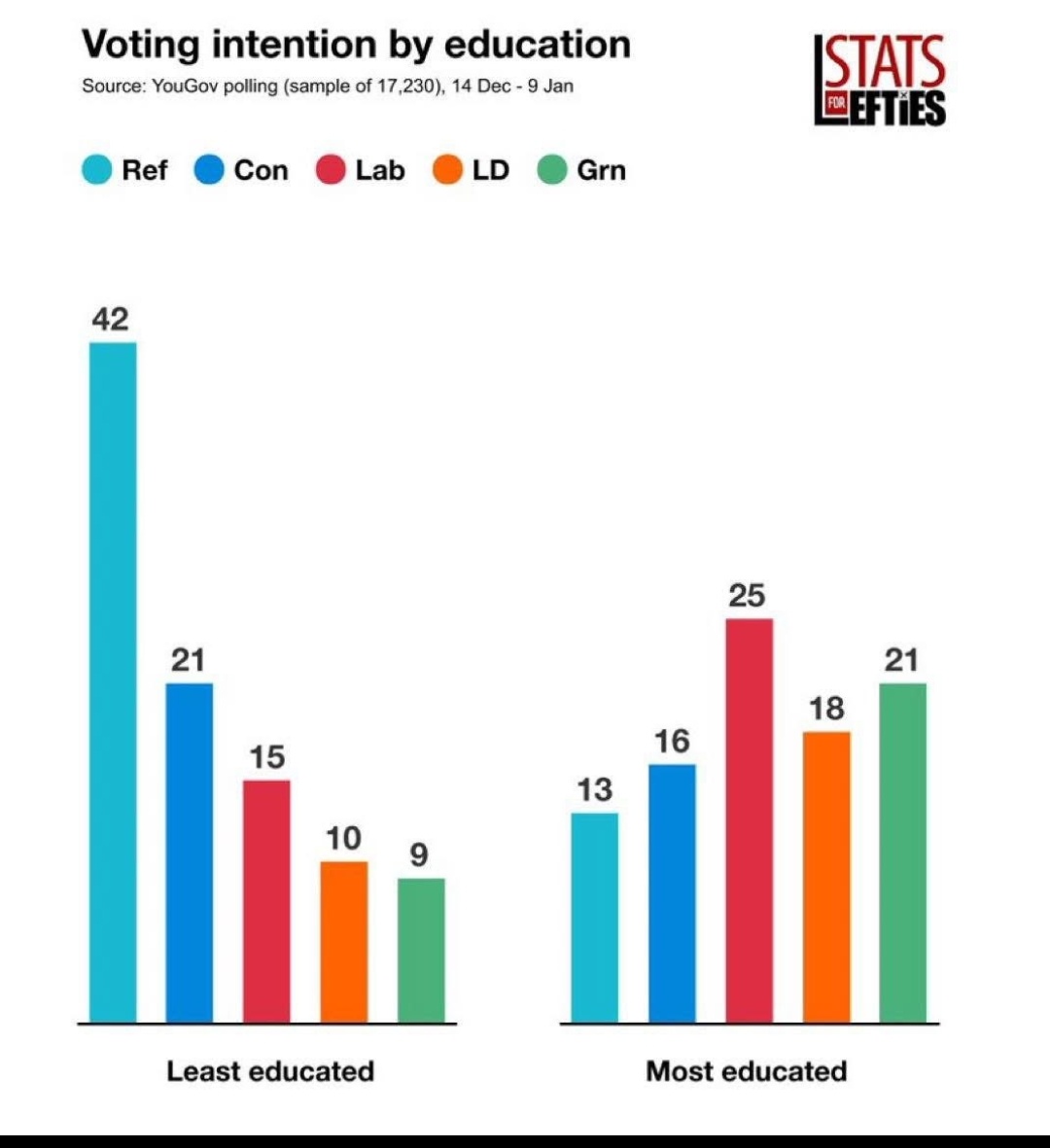
Remember during Brexit when the narrative was "Brexiters are thick twats" - that went well.

1
1
169