
Data tech strategy advisor and writer.
Joined June 2007
- Tweets 8,896
- Following 1,549
- Followers 1,631
- Likes 12,332
676 Photos and videos



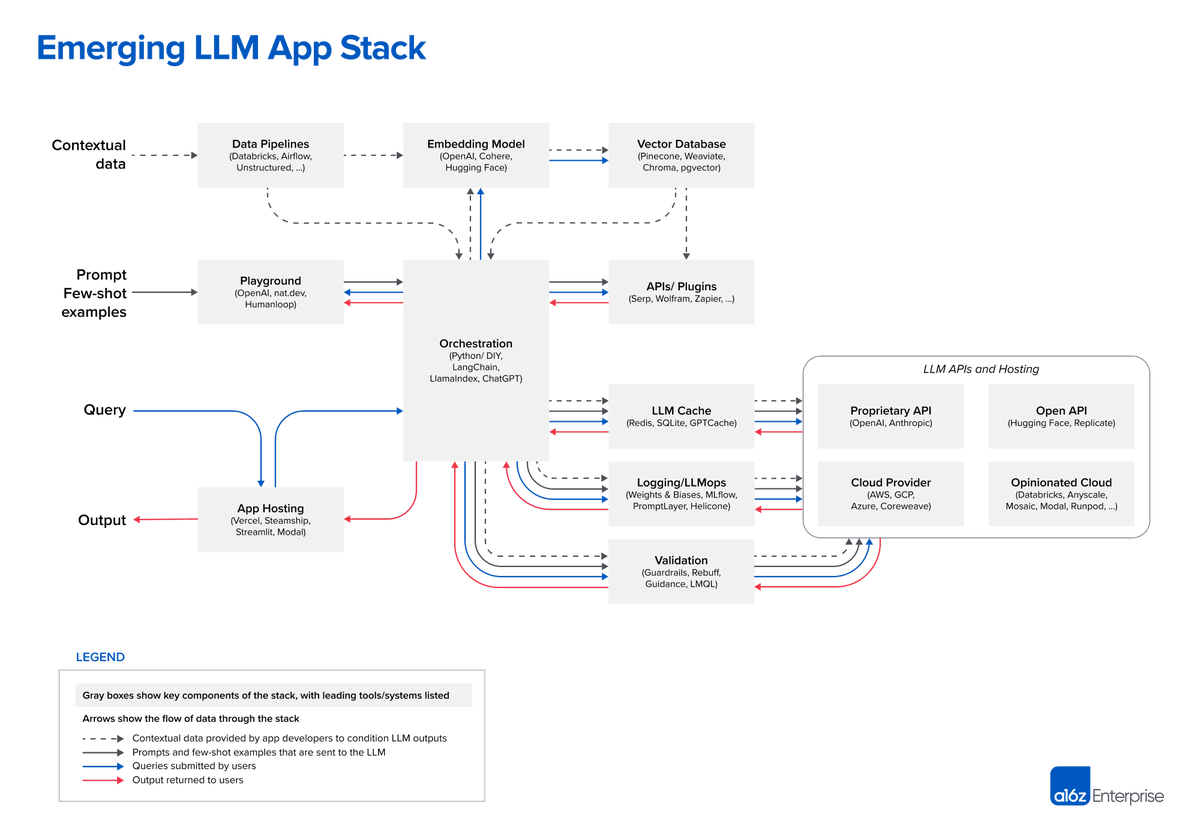
Malcolm Sparks (@MalcolmSparks) of GraphCentric builds AI-ready audit trails & attaches provenance to everything using semantic technologies.
He also shares how to build reactive apps without React. 🤯
graphrag.info/2026/06/08/mal… #GraphRAG #SemanticWeb #DataCentric
1
33
Alan Morrison retweeted

Jun 6
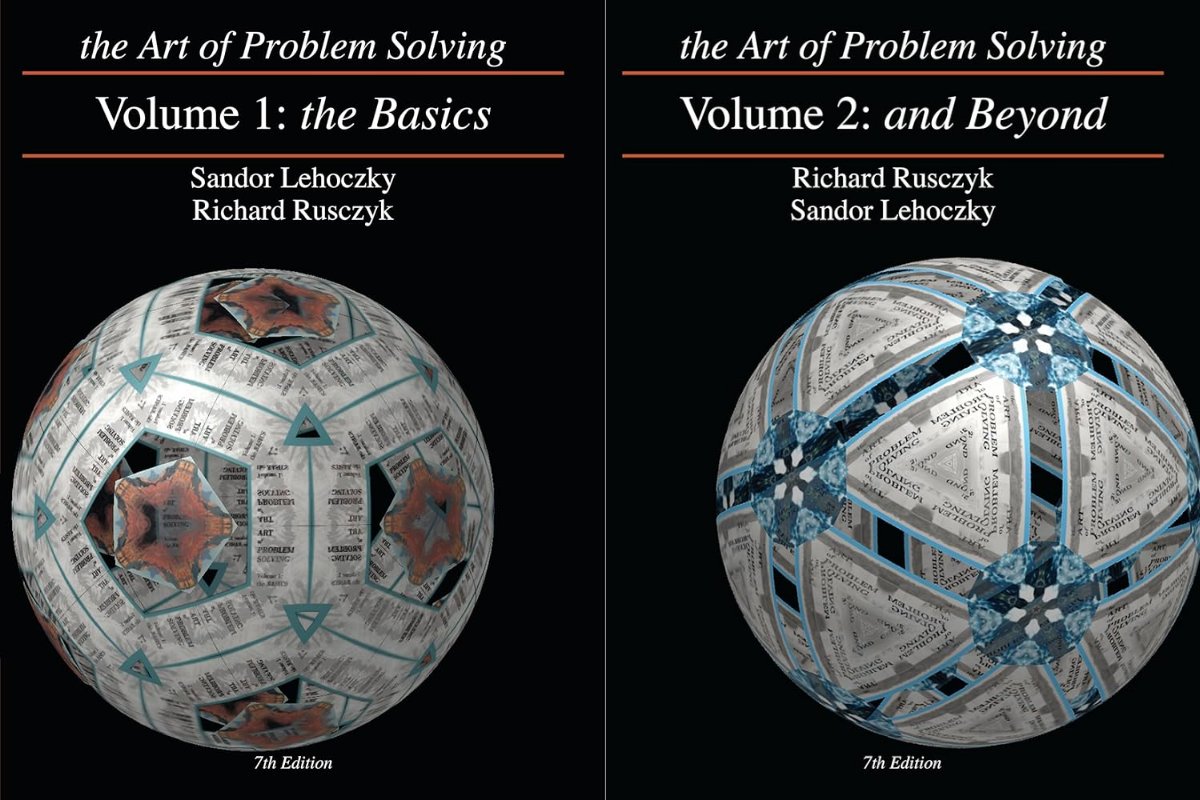
Two math olympiad champions wrote a training manual in 1993 on two old Macintosh computers, and every American kid who has won a major math competition in the last decade learned to think from it.
Their names are Sandor Lehoczky and Richard Rusczyk. The book is called The Art of Problem Solving. Most people in math know it as AoPS.
Since 2015, every single member of the US International Math Olympiad team has been an AoPS student. Not most of them. Every one.
That statistic sounds impossible until you understand what the book actually does.
Lehoczky and Rusczyk were not professors. They were competitors. Lehoczky earned the sole perfect AIME score in 1990 and led the national first place team. Rusczyk was a USA Mathematical Olympiad winner and a perfect AIME scorer in 1989. They had both survived the same brutal selection process the book was designed to train students for.
And the first thing they decided was that almost every existing math textbook was teaching the wrong thing.
School math gives you formulas. You memorize them. You apply them. You pass the test. Then you sit down in front of a real competition problem and the formula does not apply, and you have nothing underneath it.
That is the gap. The gap is not knowledge. It is thinking.
The entire premise of AoPS is that problem-solving is a transferable skill, not a bag of memorized tricks. A student who genuinely understands why a technique works can adapt it, combine it with something else, and deploy it in a context they have never seen before. A student who only memorized the technique freezes the moment the problem looks different.
The book teaches the difference between a formula and a method.
A formula tells you what to compute. A method tells you how to see. The students who win olympiads are not the ones who know more formulas. They are the ones who have trained themselves to look at an unfamiliar problem and recognize its structure. To see that this problem is secretly asking the same question as a problem they solved three weeks ago, just dressed differently.
Rusczyk calls this "learning to read the problem." Not reading the words. Reading what the problem is actually asking underneath the words.
The second thing they built into the book is tolerance for being stuck.
Most students treat confusion as a signal to stop. The book treats confusion as the starting point. Every chapter pushes students past the point where the obvious approach runs out. That moment of running out is not failure. That is where the actual thinking begins.
Lehoczky once described it this way. If you can solve a problem quickly, you are not learning. You are performing. Learning only happens when you are past the edge of what you already know.
The book was written on old Macintosh computers in 1993. Rusczyk launched the AoPS website in 2003. Today the community has over one million users. Thousands of students enroll in AoPS online courses every year. Most winners of every major American math competition are AoPS alumni.
A platform built by two kids who were good at math competitions has become the infrastructure that produces the next generation of mathematicians, engineers, and scientists who are good at thinking.
The formulas you memorized in school will eventually be obsolete.
The thinking you trained will not.
What is one problem in your life right now that you have been avoiding because you do not yet know the right formula to solve it?
51
1,006
6,087
256,341

May 25
Every org is already paying for its data foundation — either upfront to build it right, or ongoing in failed AI projects.
There's no neutral choice. Just which tax you'd rather pay.
graphrag.info/2026/05/25/unl…
30
May 15
If you want diverse, heterogeneous data sources to work together without constant manual remapping, you need agreed-upon, standards-based abstractions sitting above the data itself. Thus the need for ontologies and semantic metadata in general.
graphrag.info/2026/05/15/ben…
2
7
102
Mar 29
Cisco reports: 85% of enterprises are experimenting with agents, but only 5% are in production. 📉
To bypass rogue AI and black-box orchestration, we need to ground agents in a verifiable source of truth using GraphRAG.
6-step process to bridge the gap: lnkd.in/giDwF_73
1
141
Mar 26
Hierarchies manage complex communication. AI agent orchestration is now rediscovering this core principle. Insights from Heather Hedden: graphrag.info/2026/03/26/hea…
50
Mar 12
Data science teams don't have to reinvent the wheel with knowledge graphs; librarians have been working with open knowledge management/knowledge graph standards, tooling and techniques, for decades now. Just use what they've already put together.
graphrag.info/2026/03/12/jes…
3
115
The real breakthrough for agentic commerce will not be a killer app, but the underlying knowledge foundation that allows all systems to understand the business with consistency and trust.
graphrag.info/2026/03/10/eco…
32
Feb 27
Myth #1: Leading software vendors care about you.
Myth #2: The AI we have is the AI we need.
Myth #3: Packaged agent orchestration is something new and essential.
Myth #4: Companies can keep their old architectures in the AI era.
More at: graphrag.info/2026/02/27/the…
1
1
80
Feb 23
A core problem: AI interprets and synthesizes across files faster than static controls can govern it, exposing untested gaps in enterprise safeguards.
The current RDF graph stack isn’t static or periodic. Semantic graphs anticipate agent problems.
More: graphrag.info/2026/02/23/ont…
2
108
12 Nov 2025
I'll be presenting on decentralized AI trends today at 2pm Pacific/5pm Eastern at BrightTALK's virtual Edge AI Summit. It will be a contrarian point of view on hybrid AI's accuracy at the edge. Register now at brighttalk.com/webcast/679/6…
2
46
11 Nov 2025
The contrarian, neuro-symbolic AI approach grounds neural nets with symbolic AI or knowledge representation. That’s a blending of pattern recognition facility with disambiguation and reasoning at scale.
More on the contrarian AI in my latest post at lnkd.in/gStNh5JR
3
101
7 Nov 2025
The big agentic AI challenge: agents won’t always act in your best interest, so you have to impose controls over them. The less effective your controls are, the more risk there is.
Here's now to make the workplace environment machine readable. shorturl.at/V2Xj8
2
51
5 Nov 2025
Tietoevry, Cognizone, Semantic Partners, Enterprise Knowledge, LLC, EPAM Systems, and Zenia Graph have built intelligent apps with Talk to Your Graph. TTYG today (Wednesday) at the Graphwise webinar. Live session begins on the half hour. Register here: lnkd.in/dPs98cYd
1
64
4 Nov 2025
Tietoevry, Cognizone, Semantic Partners, Enterprise Knowledge, EPAM, and Zenia Graph built intelligent applications using Graphwise's TTYG (Talk To Your Graph).
See how smart apps take advantage of TTYG Wednesday at the Graphwise webinar. Register here: lnkd.in/dPs98cYd
60

“Holistic AI is about creating each organization’s starting point for what will become a dynamic mirrorworld. Ideally, that mirrorworld will accurately reflect shifts in business realities.”
“Explaining GraphRAG to an Executive Audience” - @AlanMorrison
graphrag.info/2025/10/25/exp…
1
1
1
75
25 Oct 2025
Explaining GraphRAG to an Executive Audience graphrag.info/2025/10/25/exp…
Graph RAG at its core is a simple idea. It give generative AI and agents the means to retrieve the kinds of trusted information that’s been inside business databases for decades.
graphrag.info/2025/10/25/exp…
2
122
Alan Morrison retweeted

2 Oct 2025
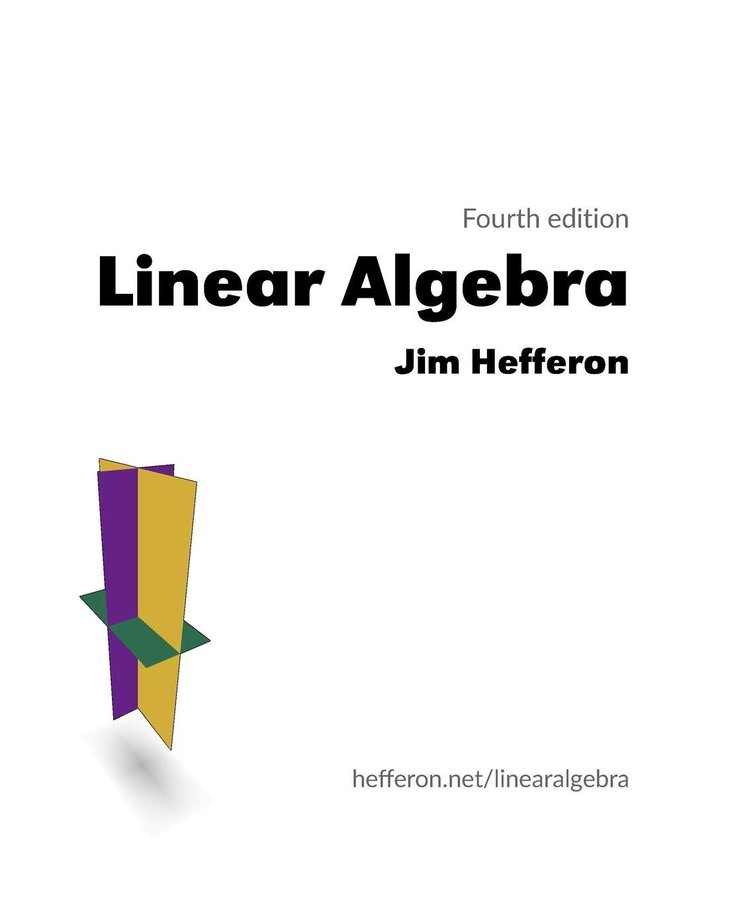
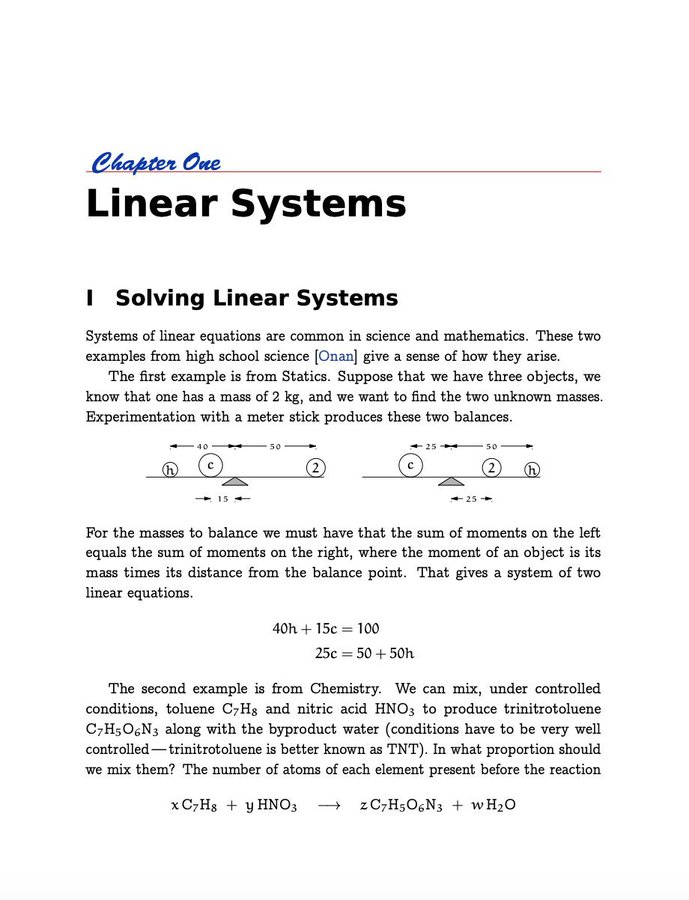
"Linear Algebra"
The 2nd best book on linear algebra with ~1000 practice problems. A MUST for AI & ML.
Absolutely beginner friendly. Available FREE.
24
151
1,217
86,982
Alan Morrison retweeted

25 Sep 2025
Last week, China barred its major tech companies from buying Nvidia chips. This move received only modest attention in the media, but has implications beyond what’s widely appreciated. Specifically, it signals that China has progressed sufficiently in semiconductors to break away from dependence on advanced chips designed in the U.S., the vast majority of which are manufactured in Taiwan. It also highlights the U.S. vulnerability to possible disruptions in Taiwan at a moment when China is becoming less vulnerable.
After the U.S. started restricting AI chip sales to China, China dramatically ramped up its semiconductor research and investment to move toward self-sufficiency. These efforts are starting to bear fruit, and China’s willingness to cut off Nvidia is a strong sign of its faith in its domestic capabilities. For example, the new DeepSeek-R1-Safe model was trained on 1000 Huawei Ascend chips. While individual Ascend chips are significantly less powerful than individual Nvidia or AMD chips, Huawei’s system-level design approach to orchestrating how a much larger number of chips work together seems to be paying off. For example, Huawei’s CloudMatrix 384 system of 384 chips aims to compete with Nvidia’s GB200, which uses 72 higher-capability chips.
Today, U.S. access to advanced semiconductors is heavily dependent on Taiwan’s TSMC, which manufactures the vast majority of the most advanced chips. Unfortunately, U.S. efforts to ramp up domestic semiconductor manufacturing have been slow. I am encouraged that one fab at the TSMC Arizona facility is now operating, but issues of workforce training, culture, licensing and permitting, and the supply chain are still being addressed, and there is still a long road ahead for the U.S. facility to be a viable substitute for manufacturing in Taiwan.
If China gains independence from Taiwan manufacturing significantly faster than the U.S., this would leave the U.S. much more vulnerable to possible disruptions in Taiwan, whether through natural disasters or man-made events. If manufacturing in Taiwan is disrupted for any reason and Chinese companies end up accounting for a large fraction of global semiconductor manufacturing capabilities, that would also help China gain tremendous geopolitical influence.
Despite occasional moments of heightened tensions and large-scale military exercises, Taiwan has been mostly peaceful since the 1960s. This peace has helped the people of Taiwan to prosper and allowed AI to make tremendous advances, built on top of chips made by TSMC. I hope we will find a path to maintaining peace for many decades more.
But hope is not a plan. In addition to working to ensure peace, practical work lies ahead to multi-source, build more chip fabs in more nations, and enhance the resilience of the semiconductor supply chain. Dependence on any single manufacturer invites shortages, price spikes, and stalled innovation the moment something goes sideways.
[Original text: deeplearning.ai/the-batch/is… ]
209
977
5,861
915,381
27 Aug 2025
Ernst & Young (EY) couldn’t take on a firmwide, full-blown knowledge graph project and succeed in building such a graph without sufficient data maturity and culture. In that sense, their KM group made the adoption of knowledge graph-based AI possible.
graphrag.info/2025/08/25/gra…
2
99