
Building Agentic AI applications at agentware.ai • Author “AGENTWARE” (AI in Enterprise) • Imagination is more important than knowledge.
Joined August 2008
- Tweets 3,565
- Following 4,885
- Followers 2,696
- Likes 5,294
327 Photos and videos


Pinned Tweet

22 Feb 2024
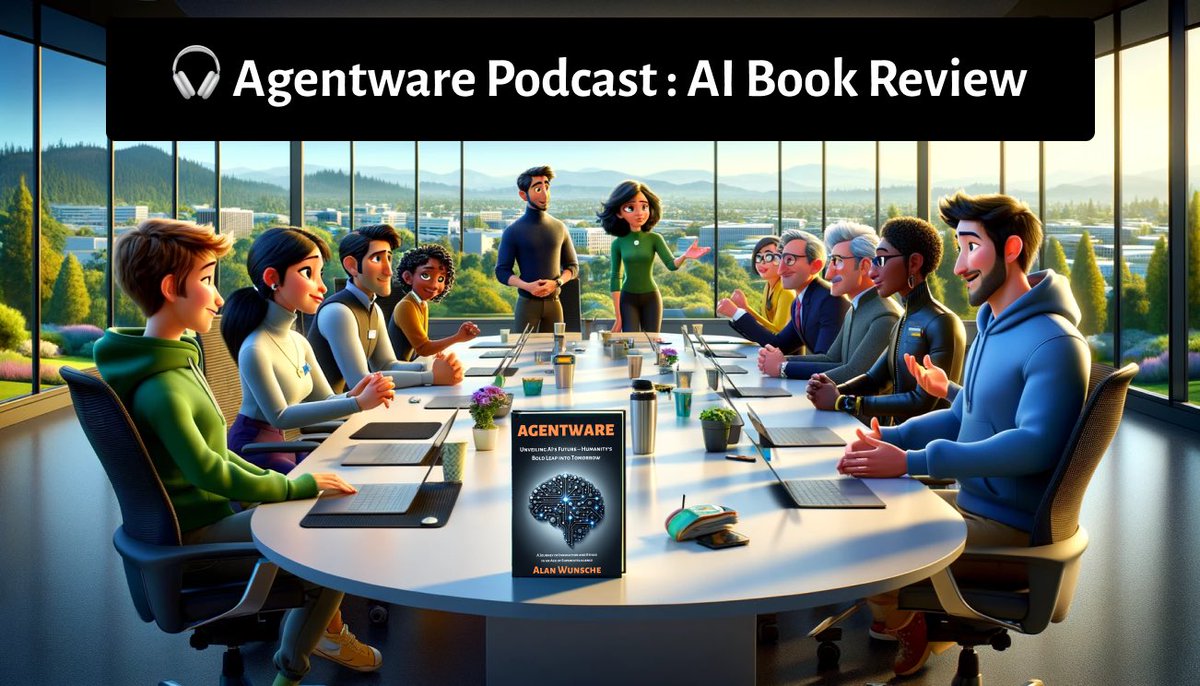
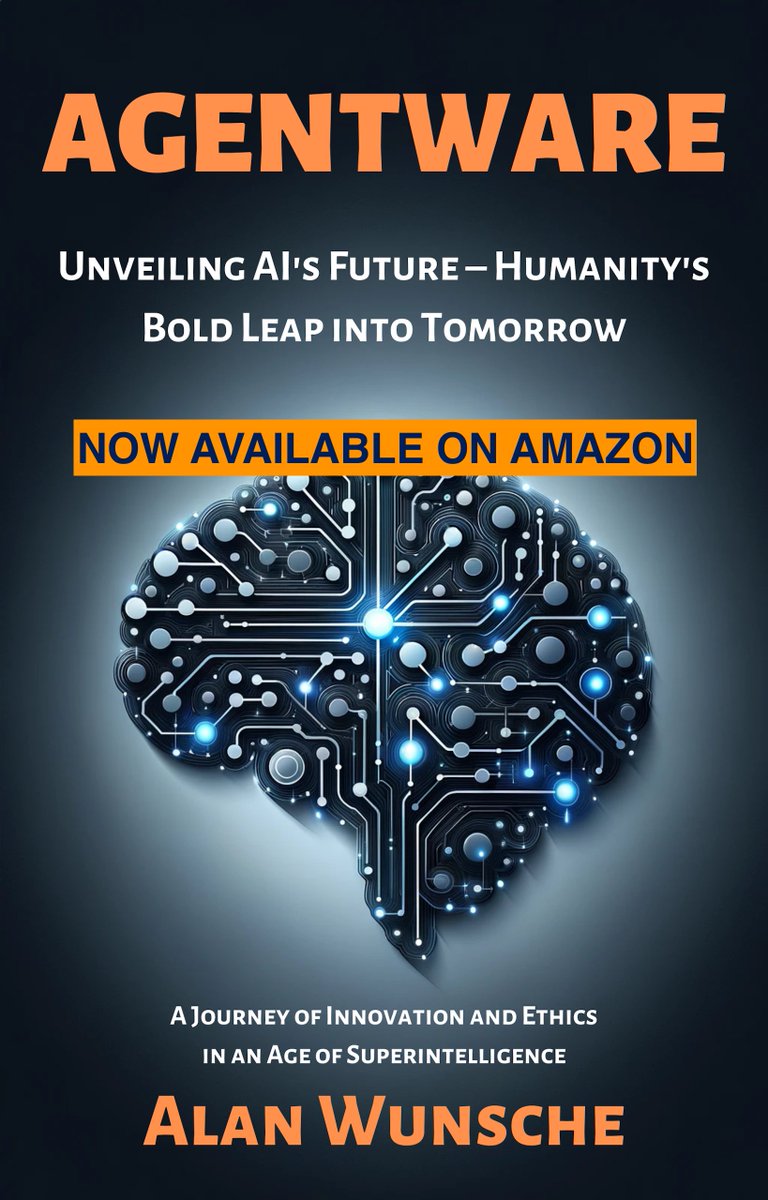
Everyone's talking about AI agents. AGENTWARE is a journey following AI agents that become superintelligent in the enterprise. How will Ana Patel and her organization navigate the next few years?
#ai #agentware #aiagents
11
11
1,282
Mar 21
. @smerconish did you ask them whether they both participated in creating a significant number of organizations to obfuscate the flow of funds?
3
32
Alan Wunsche retweeted
20 Dec 2024
Take the agentic path further and we fundamentally change the internet and apps. Why?👇
Agents don’t need landing pages… humans do.
Agents don’t need iOS apps… humans do.
Agents don’t need a UX… humans do.
The web is about to be transformed.
Finally.. Web 4.0 revealed
19 Dec 2024

Microsoft's Satya Nadella just dropped a bombshell:
"Apps as we know them are going away in favor of agents."
Is this the end of traditional software?
Here's what you need to know: 🧵

1
1
3
1,548
29 Apr 2025
The future is AI commerce

We're excited to announce we’ve launched several improvements to ChatGPT search, and today we’re starting to roll out a better shopping experience.
Search has become one of our most popular & fastest growing features, with over 1 billion web searches just in the past week 🧵
1
4
183
Alan Wunsche retweeted

24 Apr 2025
Trend worth watching
24 Apr 2025

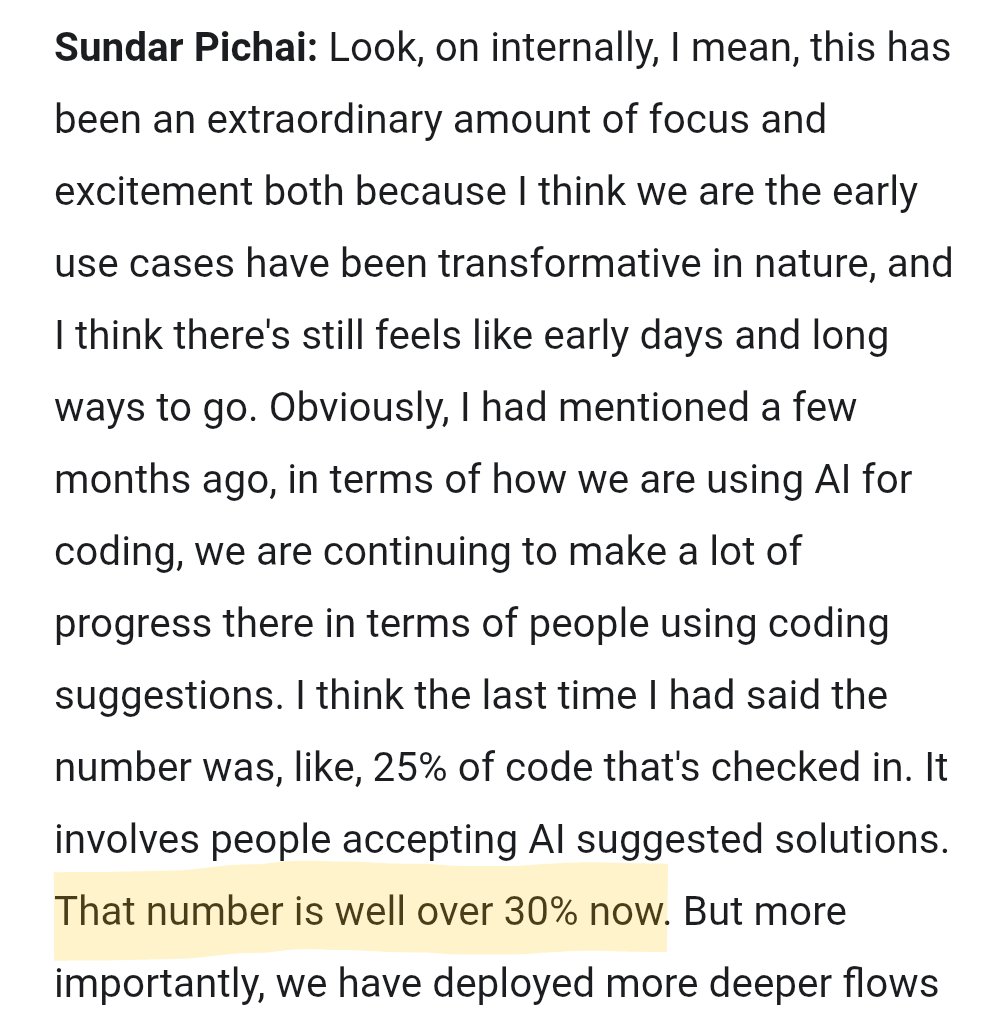
Update from today's earnings call. More than 1/3 of all code at Google is now generated by AI.
10
37
331
35,511
24 Apr 2025
1
4
94
24 Apr 2025
If you’re interested in level up your organization to be an AI-first enterprise, reach out.
1
62
Alan Wunsche retweeted

31 Mar 2025
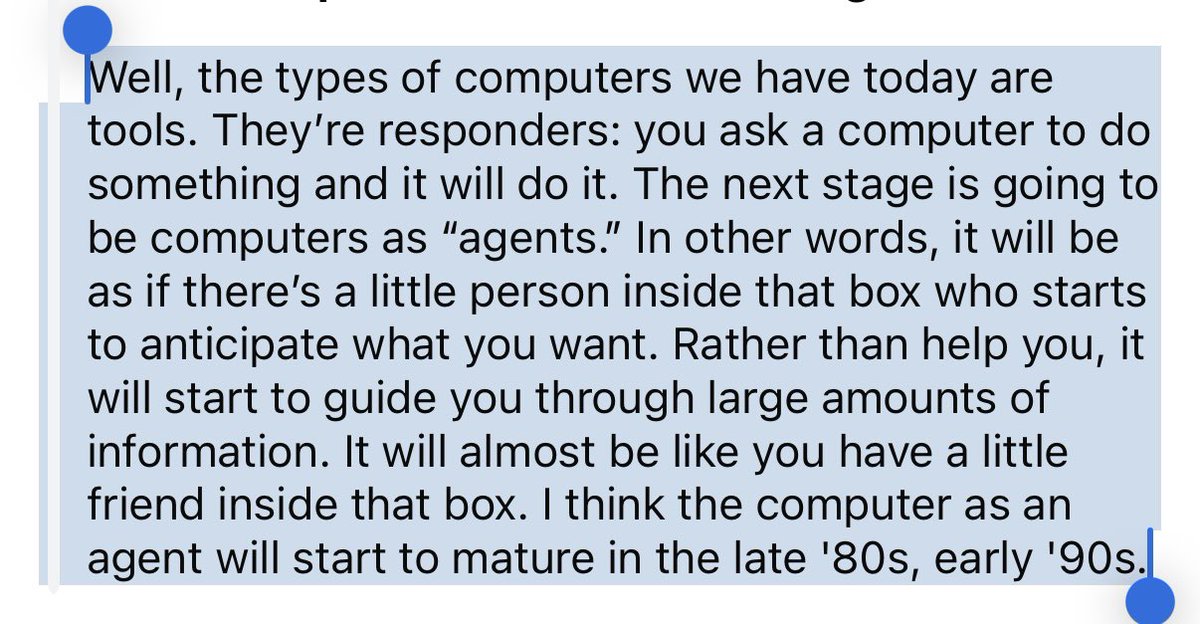
we must travel back to 1984 for the Steve Jobs definition of agent:
31 Mar 2025

Three working definitions I hear for "agentic":
- An anthropomorphized agent - e.g. a personal assistant
- An AI that can do high level tasks requiring multiple steps. But is largely driven by a user.
- An LLM where the control loop is closed that has independent agency
17
66
765
91,310
21 Mar 2025
“We gotta become friends with Canada again …This is so ridiculous. I can’t believe there’s anti-American, anti-Canadian sentiment going on. It’s the dumbest.” - Rogan
21 Mar 2025

“Why are we upset at Canada? This is stupid, this over tariffs,” Rogan says
nationalpost.com/news/canada…
1
1
5
137
21 Mar 2025
Let’s get building.
21 Mar 2025

Team Canada is strong and united.
Today, Prime Minister @MarkJCarney and Canada’s premiers agreed on the need to cut red tape and streamline approvals to get big things built faster, including unleashing the enormous economic potential of the Ring of Fire. The prime minister answered Ontario’s long-standing call and agreed to end needless duplication by recognizing provincial environmental assessment processes for nation-building projects. This will let us get shovels in the ground years sooner.
Business as usual is over. Let’s get building.



1
107
Alan Wunsche retweeted

13 Mar 2025
Turns out imagination was indeed more important than knowledge
110
299
2,537
144,946
11 Mar 2025
“Every single enterprise conversation I’m on, they’re now talking about agents,” Levie said. “Twelve months ago, only about three to five percent of our customers could even process what we were talking about.” - Aaron @levie
11 Mar 2025

Great @WSJ article here: wsj.com/articles/openai-want…
2
114
11 Mar 2025
'2025 is the year of the agent, with multimodal reasoning models making multi-stage agentic workflows real, and AI beginning to do real world tasks for you.' kw
11 Mar 2025
💥 Today we announced a bunch of new tools to help developers build reliable useful agents.
* Three new tools: RAG/file search, web search, and operator/computer use
* All packaged together in a simple, powerful new primitive we call the Responses API
* Plus, we upgraded Swarm to the (open source) Agents SDK to make it easy to build, orchestrate, and monitor systems of agents
2025 is the year of the agent, with multimodal reasoning models making multi-stage agentic workflows real, and AI beginning to do real world tasks for you. We've got a lot more where this came from!
What agentic tools should we build next?
1
1
3
164
11 Mar 2025
All in on AI agents. OpenAI Responses API is the evolution of assistants. Exciting time to be building.
11 Mar 2025

Introducing the Responses API: the new primitive of the OpenAI API.
It is the culmination of 2 years of learnings designing the OpenAI API, and the foundation of our next chapter of building agents.
🧵Here’s the story of how we designed it:
1
1
11
258
11 Mar 2025
Big announcement today from @OpenAI ! Agentic development is a priority for enterprises in 2025.
11 Mar 2025

We're launching new tools to help developers build reliable and powerful AI agents. 🤖🔧
Timestamps:
01:54 Web search
02:41 File search
03:22 Computer use
04:07 Responses API
10:17 Agents SDK
1
96

BREAKING NEWS: OpenAI announces new capabilities for developers.
Just got done with the livestream. Will write a more detailed post later tonight, but here's the gist:
1) New "Responses API" which will ultimately replace the Assistants API and is a cleaner, more elegant approach to interacting with their multi-modal modals with tool use.
2) New built-in tools to the LLM for web search, file search and computer use (this is going to be a big deal).
3) New Agents SDK (successor to their prior Agent Swarm project). Open source agent framework for building multi-agent systems.
The thing I'll be playing with first is the computer use API / tool, as we've already been working on integrating computer use into the Agent.ai platform. That could be a major unlock.
Stay tuned and if you learn anything as you start kicking the tires, please share.
It's always more fun to learn together.
18
15
222
32,245
Alan Wunsche retweeted

9 Mar 2025
One of the most fun design questions when building AI Agents is how to handle the Agentic Experience.
There’s a wide set of options, but simplistically we can think about on one end of the spectrum, there’s a paradigm of leveraging existing software experiences and the AI agent operates as a superuser in the system along with you. Then, on the other end of the spectrum, there’s the possibility of agentic experiences that have a very limited user interface and the AI agent just returns with a final work product with some conversational interaction along the way.
Right now it looks like the former approach is winning out, likely because of how early we are with AI agents. To provide users with a high degree of comfort, situational awareness, and ability to take over and correct mistakes, AI agents that operate within the context of how users already work is quite important.
Take probably the most popular category of AI agents, coding agents — today, it’s clear that some degree of human in the loop is necessary for building anything important. Having an agent operate like another user would, collaboratively, in your IDE is a pattern that’s taking off right now. This gives you the best of both worlds: an AI agent that can run wild completing more and more of the work, but an ability for an experienced user to take over at any point and see the work that was accomplished as they would have worked before AI. This is how we’re designing agentic workflows at Box, and how most SaaS products are incorporating Agents into their platforms.
As AI agents can accomplish more and more work without interruption, the natural layers of abstraction may likely evolve as well. Today most software tools — IDEs, project management, contract management, HR tools, etc. — are designed for the units of work that a person would naturally execute, but perhaps that’s simply too granular for a future where trillions of AI Agents are running around doing work for us. Then again, as long as the human remains in the loop in some capacity, there will need to be granular components of how to interact with the agent’s work product, even as it does more and more.
Incredibly exciting moment in software that we’re just begging to understand.
59
41
290
47,242
7 Mar 2025
RT @shannonplante: OMFG! AFTER 25 YEARS, JOE THE CANADIAN BEER GUY IS BACK!! A true Canadian icon stands with us when we needed him most ❤️…
321
1
Alan Wunsche retweeted

5 Mar 2025
A founder's superpower is creating conviction in something that doesn't exist.
If you convince enough people, something magical happens: your idea becomes real.
That's how we grew CrewAI from zero to partnering with NVIDIA, IBM, Cloudera, PwC and others
7
7
107
7,036
4 Mar 2025
RT @charlesadler: Today Canada’s Prime Minister fired a shot that was heard around the world.
1,273