
503 Photos and videos
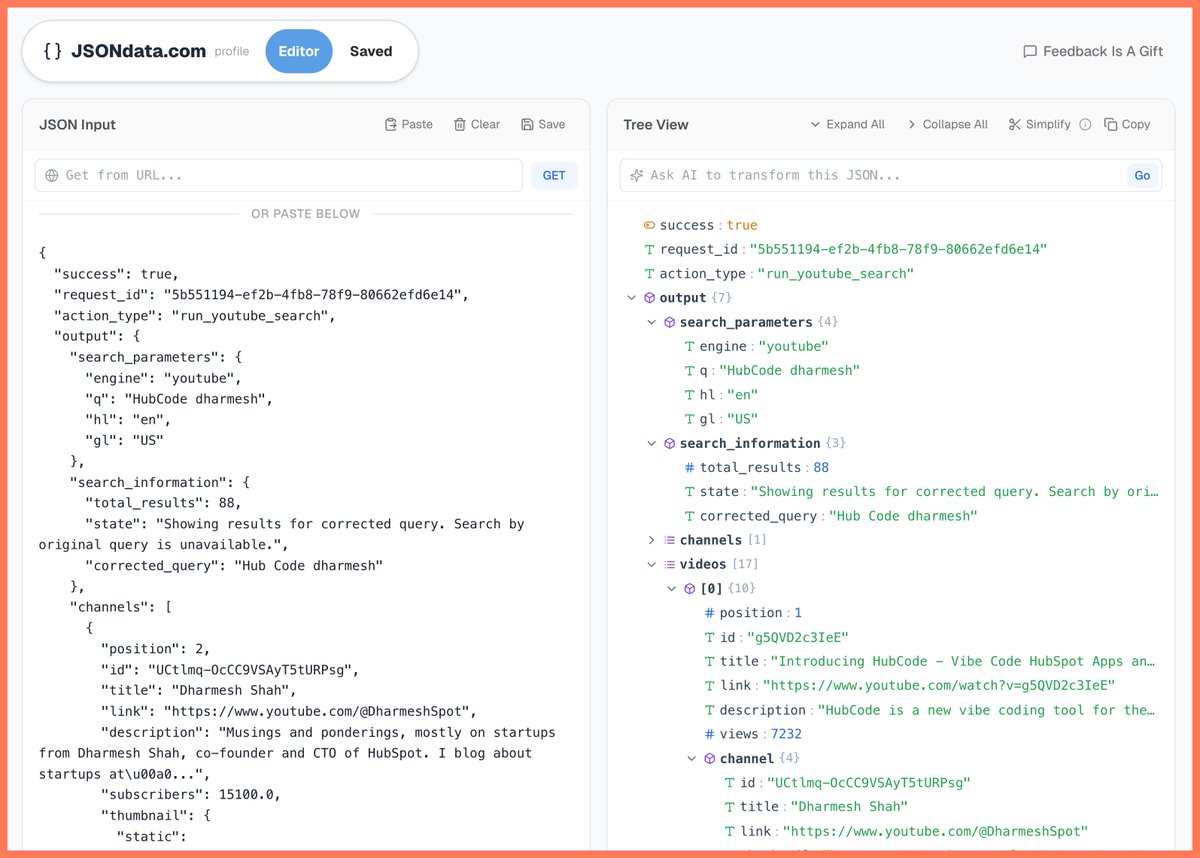

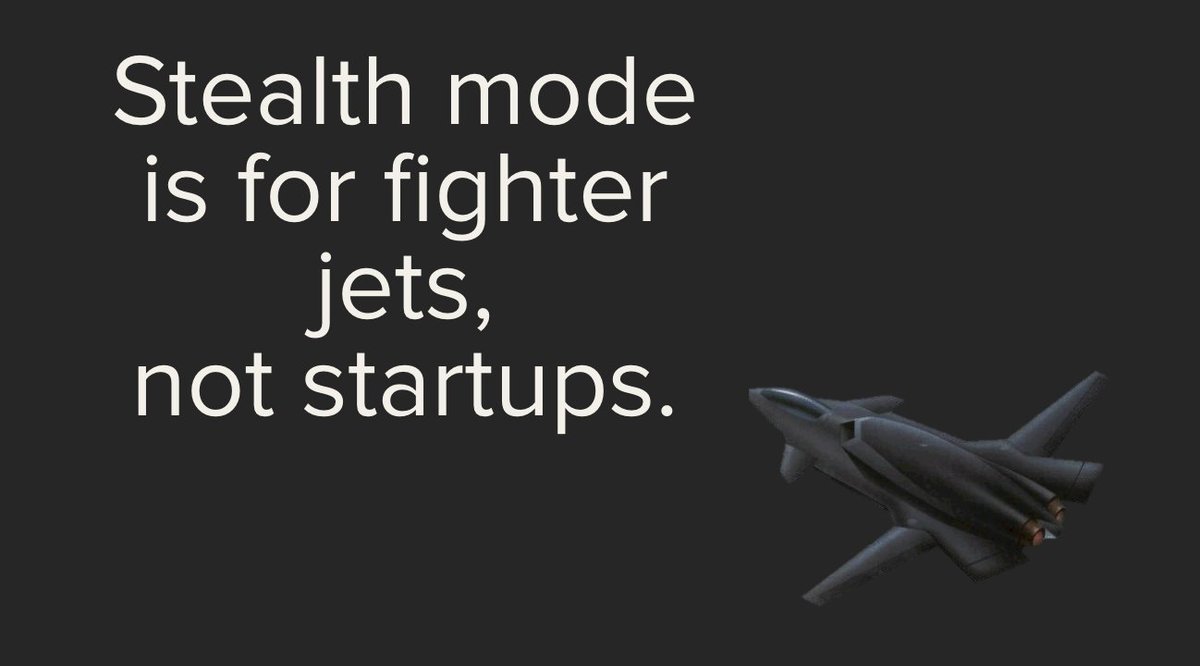



2023 was the year of chat UX powered by generative AI. That led to me hacking on ChatSpot and launching it last year.
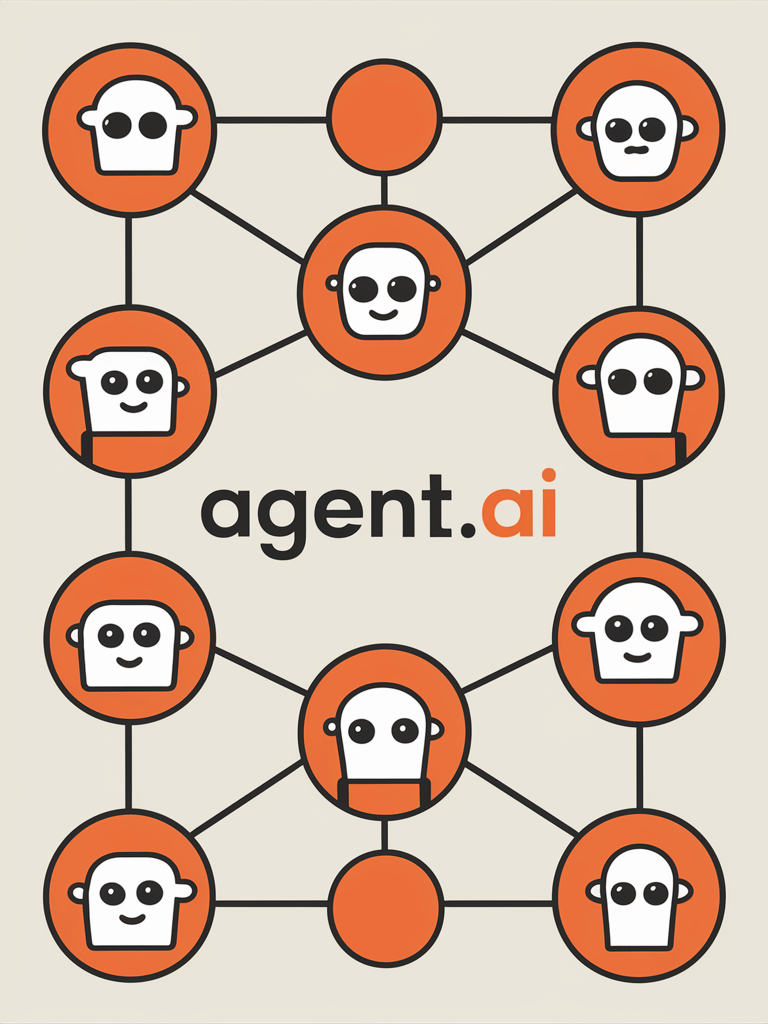
2024 is the year of Agent AI, so that's what I've been hacking away late nights on.
I'm obsessed with #AgentAI. Was up past 3am last night.
I have a handful of simple (but useful) agents that I built for myself and one I built for my wife.
Will start releasing them one at a time.
I'm using a bunch of LLMs (GPT-4, Claude, Gemini) and a bunch of proprietary/paid data sources. Will be fun to see the bills rack up. :)
Releasing it all for free.
You can join the waitlist at agent.ai
Thanks for your support.
192
199
2,201
664,173
Today, I made a small investment in the biggest IPO in history.
Not because I confidently believe in the economics of SpaceX, but because I confidently believe in the brilliance and ambition of @elonmusk.
I could be wrong, but I think we're going to see stellar results.
* I'll see myself out.
22
6
343
39,503
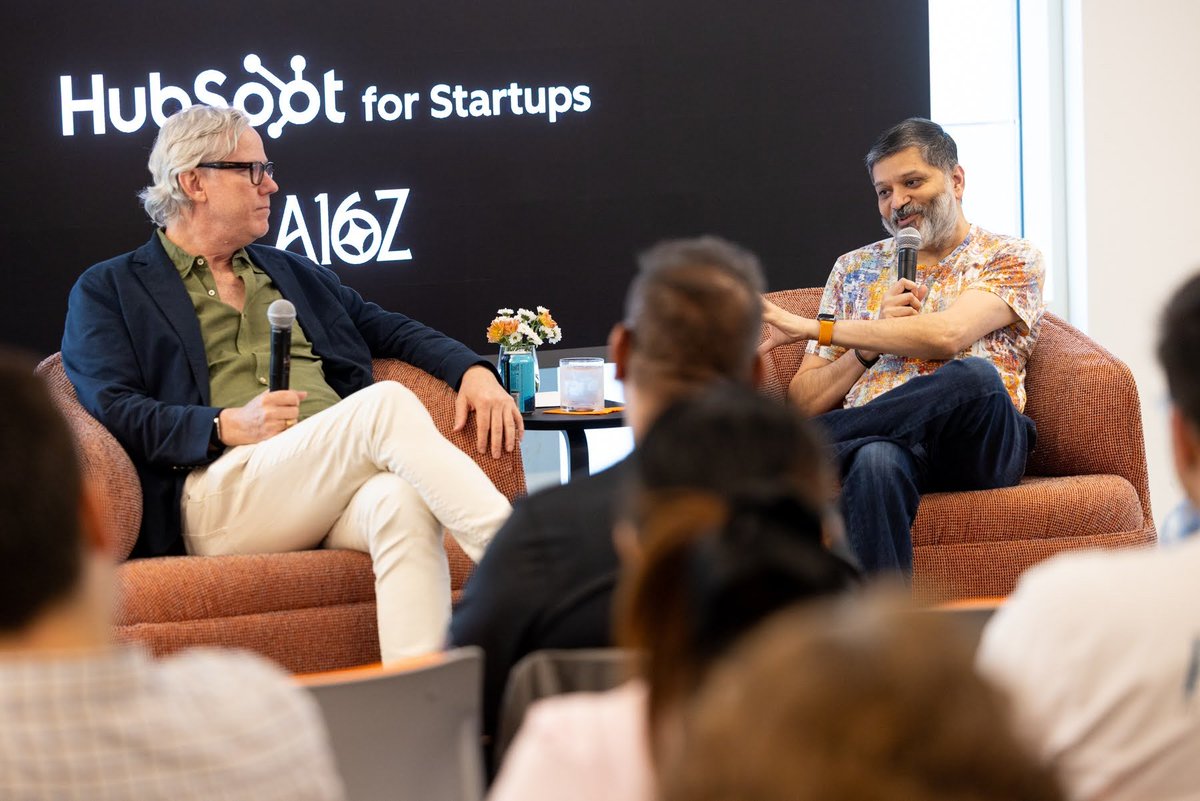
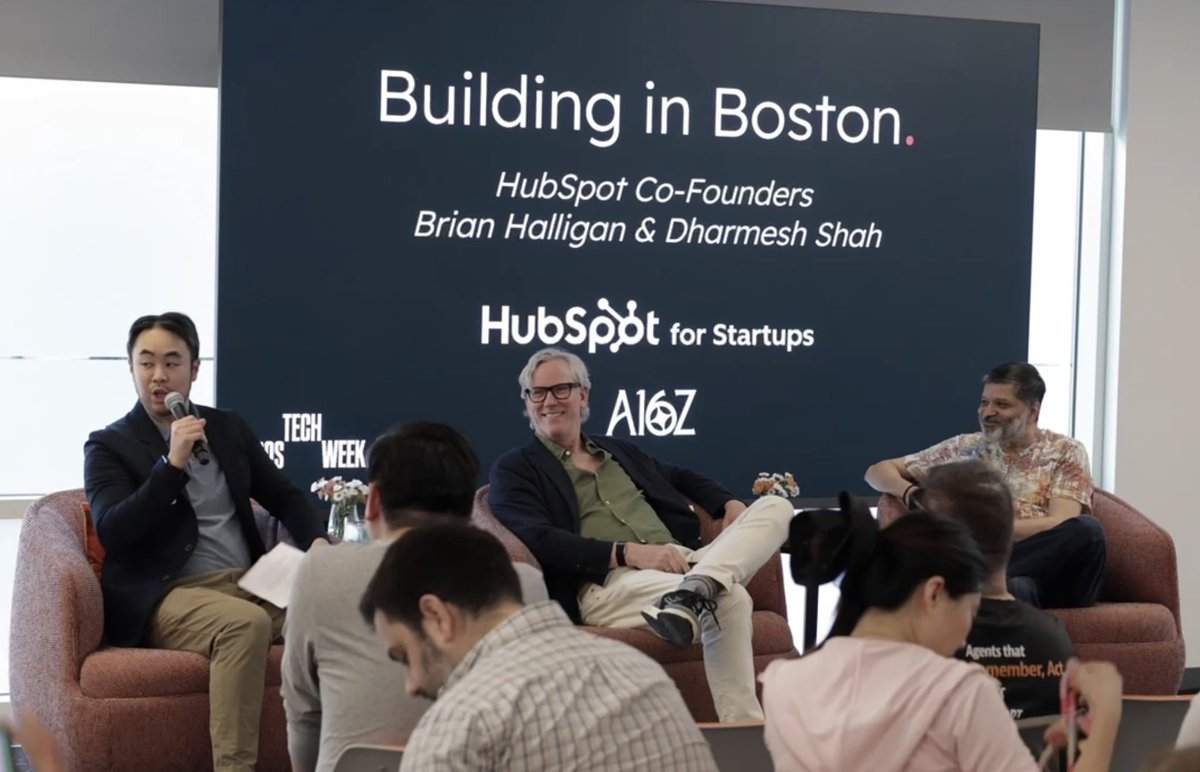
It was nice to be back on stage with my friend @bhalligan. It's been many years since we did a fireside together.
The fact that it was at HubSpot HQ made it even better.
(This was for Boston Tech Week)
5
48
6,416
Loved this episode.
Also, I'm guilty of this "waiting to respond". Need to get better.
Jun 11

Most people aren’t listening. They’re just waiting to respond.
According to @davidsenra, Rick Rubin took a skill from music -- listening -- and applied it everywhere.
That's why people line up to work with him.
Taste is real.
And it usually starts with the willingness to actually shut up and pay attention.
Be a professional listener. Don't form opinions, don't for judgement, just listen. Then make a call. That is how you develop taste.
4
4
47
14,020
Woo hoo! HubSpot turns 20 years old today!
@bhalligan and I “officially” founded HubSpot on June 9th, 2006.
That date is not arbitrary. It was picked for a reason. More on that in a little bit…
First, fun story: HubSpot was the company I was never supposed to start. I had promised my wife that I wasn’t going to do another startup. We had met before I ever started my first company at a time when nobody believed (including me) that I had what it took to be an entrepreneur. I was working as a software developer in Birmingham, Alabama and starting a company was not at all on my mind.
I ran that first company as founder/CEO for over a decade before selling it for a life-changing amount of money. I decided to go to grad school and was thrilled that I got accepted into MIT (it had always been a dream of mine).
That’s where I met Brian. One thing led to another and we figured out that we were both passionate about SMBs and decided to start a company together that focused on them. So, I convinced my wife to release me from my promise. But, I did want to make sure I finished up my graduate program (I had a graduate paper to submit in order to earn my degree).
On Friday June 9th, 2006, I graduated with a M.S. in the Management of Technology (a weird degree that is very much MIT). That degree is no longer offered and I was the last person to graduate with it.
So, the day of my graduation, June 9th, 2006 we officially started HubSpot. We were off to the races!
That was twenty years ago today.
So many great memories over those years.
I’d like to thank my wife Kirsten. If she had not agreed to let me start another startup, HubSpot would not exist.
We started with 3 customers in those early days (including my wife – who is still a paying customer) and now we have over 300,000. I am deeply grateful to our customers – past and present. You are the reason we started the company and you are the reason we continue to work hard. Our core tenet of HubSpot culture is to Solve For The Customer.
I’m grateful to the thousands of HubSpot solutions partners and technology partners. Without you, HubSpot would not be the platform and ecosystem it is today. Thanks for helping us Solve For The Customer.
And last but not least, I’m grateful to all the HubSpotters past and present. I’m not known to be a “people person” but the truth is that HubSpot could not have become the company it is without you and it has given me great joy to see so many of you learn, develop and grow at HubSpot. Thank you.
I honestly have never had more fun and been more excited for the future than I am right now. With the leadership of @yaminirangan we are writing the next chapter of HubSpot. The agentic customer platform chapter.
Sorry for the self-indulgent post. Will save the "lessons learned" topic for another time.
Thanks for your support.
Cheers.
33
2
215
14,342
dharmesh retweeted

Good take
My guess is
- demand for intelligence is near infinite
- but 80% of workloads will be running on 99% cheaper models within 12-18 months
- 20% of workloads will still run on latest gen models where IQ maxing is important (scientific breakthroughs, higher level ochestrator agents?)
- rough analogy might be what % of macbooks or gaming PCs sold have the maxed out specs for CPU/GPU, prices are falling much faster than Moore's law here though
- this leads me to think the limiting factor will be energy and compute, not better models
At Coinbase we're working hard on routing prompts to cheaper models where appropriate, and in some cases have been able to keep costs roughly flat, while token usage continues to grow exponentially.
Jun 2

The most basic way AI could blow up imo. I'm not saying it does but this is the most obvious way I can see it happening
- Per seat subscriptions are massively subsidized. The flat fee was priced way below what heavy usage actually costs
- For real business use you have to move to the API anyway. Data protections, work integrations and compliance officer approval
- On the API you pay metered rates, and businesses are burning credits way faster than the per seat pricing ever led them to expect
- This is everywhere right now. Internally for us, Codex users, Uber torching its entire 2026 AI budget in 4 months, the Microsoft comments. Just go try an API
I shared more on this here: x.com/Shaughnessy119/status/…
- And I don't think most businesses have the money to keep paying increasing API rates without a real change to how they operate (caps needed)
- Because they have a cheap alternative. They can reach open source models through any aggregator (OpenRouter, Venice, Baseten, Together) and still get strong privacy. Venice private data centers, or E2EE/TEE serving GLM 5.1.
More on open source inference provider raises here: x.com/Shaughnessy119/status/…
- And the discount is enormous. DeepSeek V4 codes within a hair of Opus on SWE bench at roughly 1/30th the price, and the cheapest open models run closer to 1/100th
- Chinese labs open source frontier grade models. The model is the single biggest cost an inference provider has, and they get it for free
- This idea dies if China goes closed source. That is actually bullish web2 AI labs, because if everyone is closed you pay up for the best intelligence. China goes closed source if they are tired of giving away an asset and they want the revenue and data flow to train new models
- Is this showing up in web2 AI lab revenue yet? No. Revenue is off the charts. Anthropic went from 9B to 47B run rate in five months
- So go forward, what happens?
- I think revenue slowly starts leaking to the open source inference providers (see Venice usage, OpenRouter's $113M raise, Baseten is raising at $11B or triple its valuation in three months, on revenue that went from $200M to $600M annualized in a single quarter)
- It doesnt move overnight, but it caps the labs ability to raise prices, and margins are already deeply negative. OpenAI is reportedly running near negative 122%
- With margins that bad there is no cash flow, so the labs are fully dependent on outside capital to buy GPUs, train models, and keep subsidizing usage (I.e. see Google tapping $80b equity sale, granted 30b for employee RSU taxes. Clearly they think Equity is overvalued or you wouldn't sell it)
- The break comes when that capital stops. Pricing is capped so margins cant improve, and the moment investors lose conviction on payback, the whole flow reverses
- Why would they lose conviction on payback? Back to the start - the inability to improve margins or get businesses to pay more
- This is also limiting, if we start making new drugs with AI or create entirely new businesses, you better believe people will pay up to the max for AI usage
471
614
6,598
2,792,096
dharmesh retweeted

Jun 7
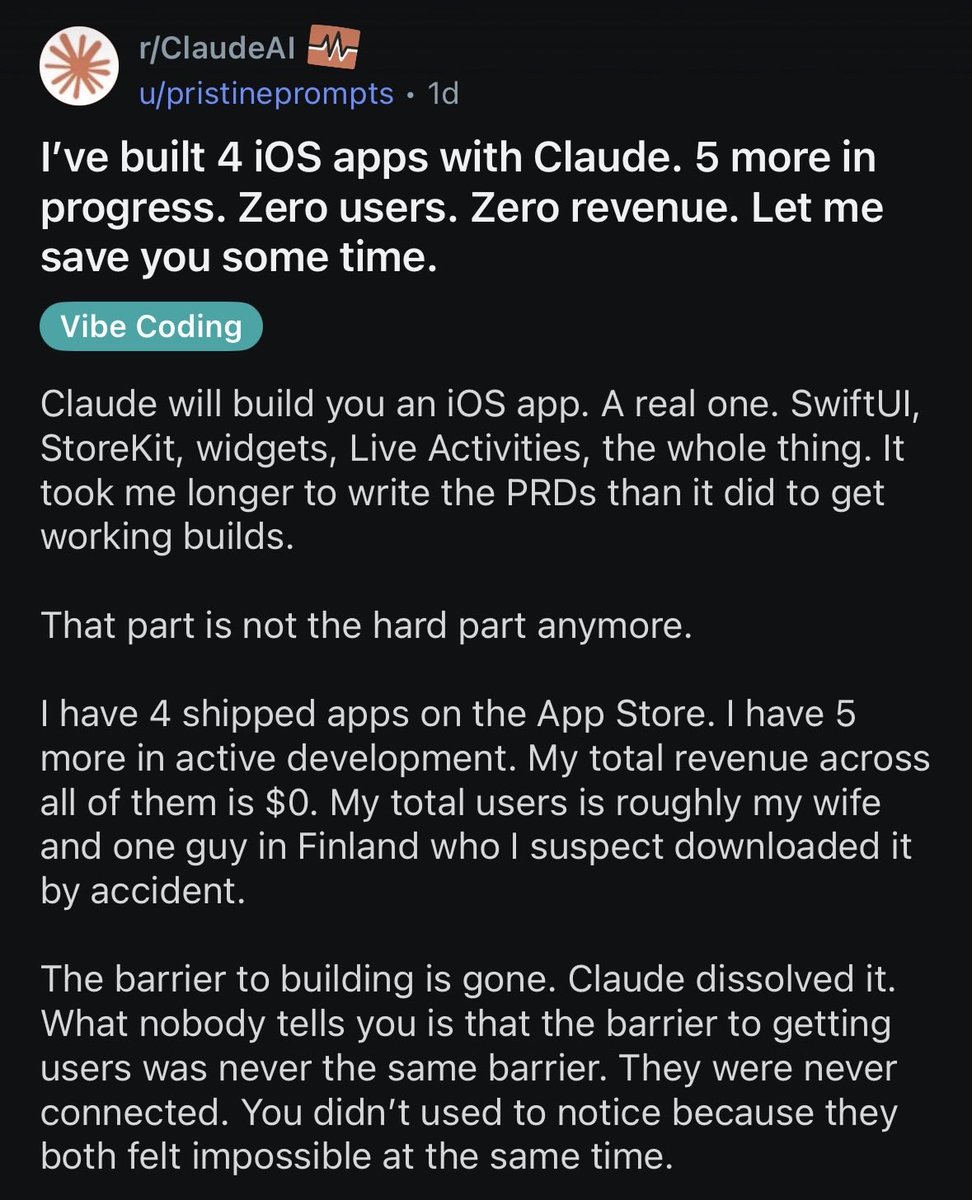
This is what the market got wrong about AI eating enterprise software. Building good software in the past was very hard. Yes, AI has made that a bit easier, though it’s still hard to build something that’s got good taste, differentiated, high quality, secure, and so on.
But nevertheless, that’s only one component of building a platform that enterprises rely on. The plurality of costs in most enterprise software companies is actually on GTM, because at scale most enterprise software categories are tough to break into and need a heavy amount of consultative selling and support for implementation and integration of solutions.
AI hasn’t reduced the need for that, and in many cases requires it even more now, as landscapes get even more busy and complicated for buyers to navigate through. If you make one thing cheaper and more abundant (development of software) then the new problem of discoverability and market differentiation (GTM) becomes the hardest part.
Jun 7

This is the tough lesson that a lot of people are learning the hard way
AI might have made building apps a lot easier, but it also set the barrier to entry at zero
Because anyone can do it, there is no moat left
The only edge left in the future will be sales and marketing
91
68
566
125,782
dharmesh retweeted

Jun 6
Absolutely correct: "The fate of the world depends on more people giving Entrepreneurship a shot"
Jun 6

Marc Andreessen: We need to drastically increase the number of founders:
"It's shocking to me how few people actually give entrepreneurship a shot. The fate of the world over the next 1,500 years is riding on the people who actually want to give it a shot."
— @pmarca
51
74
946
132,377
Can relate. I love what I do. You couldn't pay me to stop.
Have been doing it (building) for 30 years.
Jun 5
If you love what you do, they couldn't pay you to stop.
-@davidsenra
The people he studies on @FoundersPodcast – the Buffetts, the Knights, the Waltons – aren't doing it for 5 years. Or 10. Or 15.
They're doing it for 40 years.
Because the idea of stopping is worse than the work.
Link to the full episode below 👇
6
1
40
8,331
dharmesh retweeted
Jun 4
The jobs data coming out continues to suggest the opposite of what a lot of people had thought would happen.
Just take engineering, as the prime example of the area with greatest AI impact (and perceived risk). Most companies now have far more software projects than ever before because of AI, and effectively only engineers are going to be the ones doing that work.
You can get by for a while by being non-technical building software, but eventually someone has to understand what the thing is that got built, has to maintain it, has to fix security issues that come up, upgrade the systems beneath it, and so on. That’s all jobs.
Now apply that to a number of other job functions. AI is going to cause companies to hire more in sales because agents can let them process more leads and do more customer research. AI will cause an explosion of new marketing roles because of how much more efficient it is to launch campaigns and target. The list goes on.
AI is going to have the opposite effect that lots of people thought on jobs.

What if AI is actually creating more jobs than it is replacing?
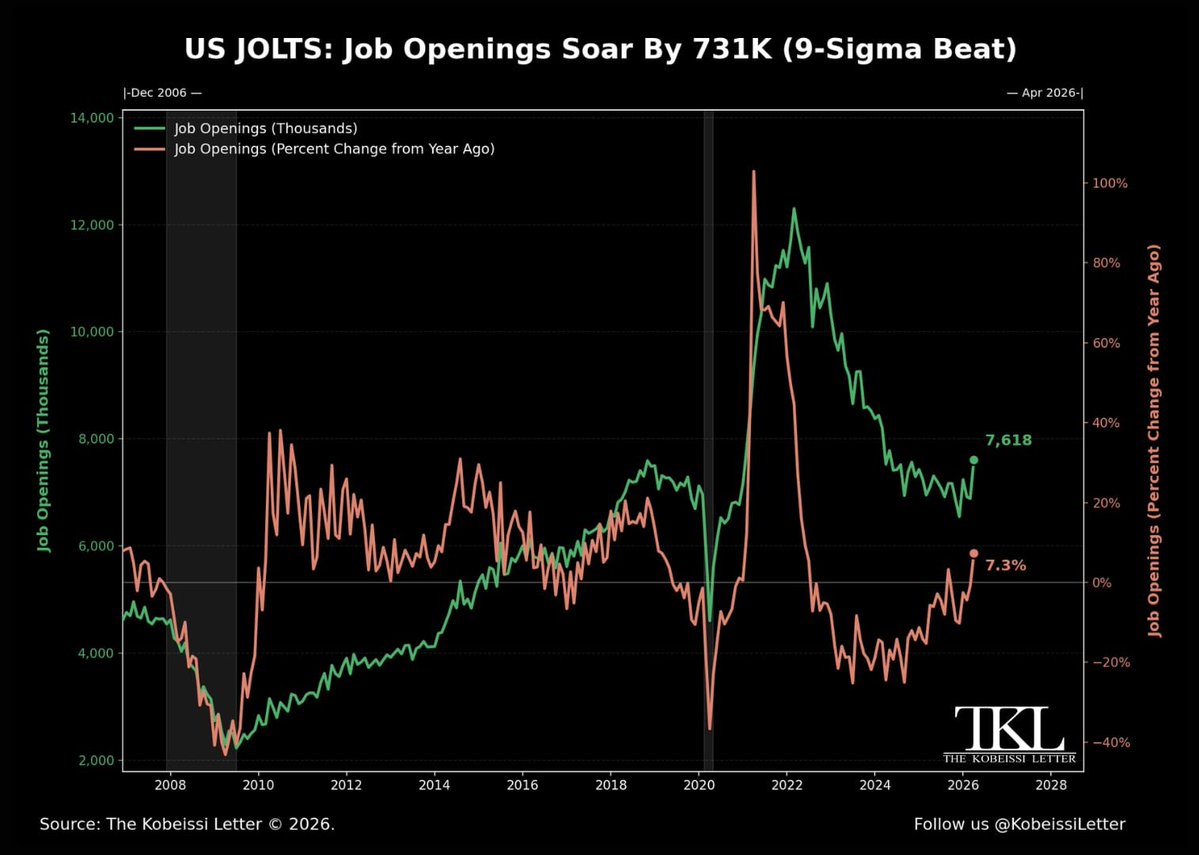
The latest JOLTs data showed that US job openings surged by a massive 731,000 jobs in April.
Markets were expecting no change, resulting in the largest beat in JOLTs history.
As a result, available employment hit 7.6 million for the month, the highest since May 2024.
And, job openings in the professional and business services sector surged by a massive 668,000.
The labor market's bull case from AI is underpriced.
84
86
535
167,200
dharmesh retweeted

Jun 3
When the cost of doing something at scale goes to zero, the value of that thing goes to zero too.
AI SDRs will stop working the moment everyone has one. Now the human salesperson has become the premium signal again. Enterprise deals are being closed on calls and text.
The things that don't scale are going to become more valuable as everything else does. Actual presence, carefully nurtured relationships, real conversations, etc. The pendulum always swings back.
20
6
80
7,782
dharmesh retweeted

Jun 1
Everyone says: hire people better than you, then get out of the way.
One of my biggest mistakes at Algolia was taking that literally.
Yes, hire people better than you. But don’t confuse seniority with earned trust.
Stay close at first. Inspect the work. Pressure-test the judgment. If you’re still micromanaging after 3 months, you hired the wrong person.
And trust your gut.
As a founder, you are the most fine-tuned model in the world on your own company. If something feels off, it probably is, even when the exec says, “Trust me, I’ve done this for 20 years.”
80
49
937
130,355
dharmesh retweeted
Jun 1
This is effectively the #1 problem for AI agents in the enterprise.
As we go from agentic coding (where a large amount of context is in the code base, and users are technical enough to get the rest to the agent easily) to a world of knowledge work agents, the context problem becomes much more acute.
We see this every day with customers at Box. For existing digital knowledge, it’s often fragmented across legacy systems or environments that don’t play nice with agents, and have access controls that don’t map to the real work that needs to be done, which become a huge hurdle for getting agents the context they need. This has to all get moved to modern, secure cloud environments.
But also, companies often haven’t captured and digitized some of the critical context that agents need to work with. Decisions, processes, and workflows often live in people’s heads and tribal knowledge that need to get turned into unstructured data for agents.
This is actually one of the biggest points of leverage for applied AI companies, because they can work to specialize in getting agents exactly the information and domain expertise they need. But it’s also one of the reasons why FDEs and new system integrator plays will also work so well right now.
The companies that figure this out will be able to get the most out of AI going forward.
May 30

Imagine replacing 90% of your employees with a team of geniuses who have no idea how your company operates.
Total chaos. Nothing works.
That’s what AI feels like today.
The missing piece is extracting all the domain knowledge from people’s heads and providing that as structured context to the models.
123
101
761
185,686
dharmesh retweeted

May 29
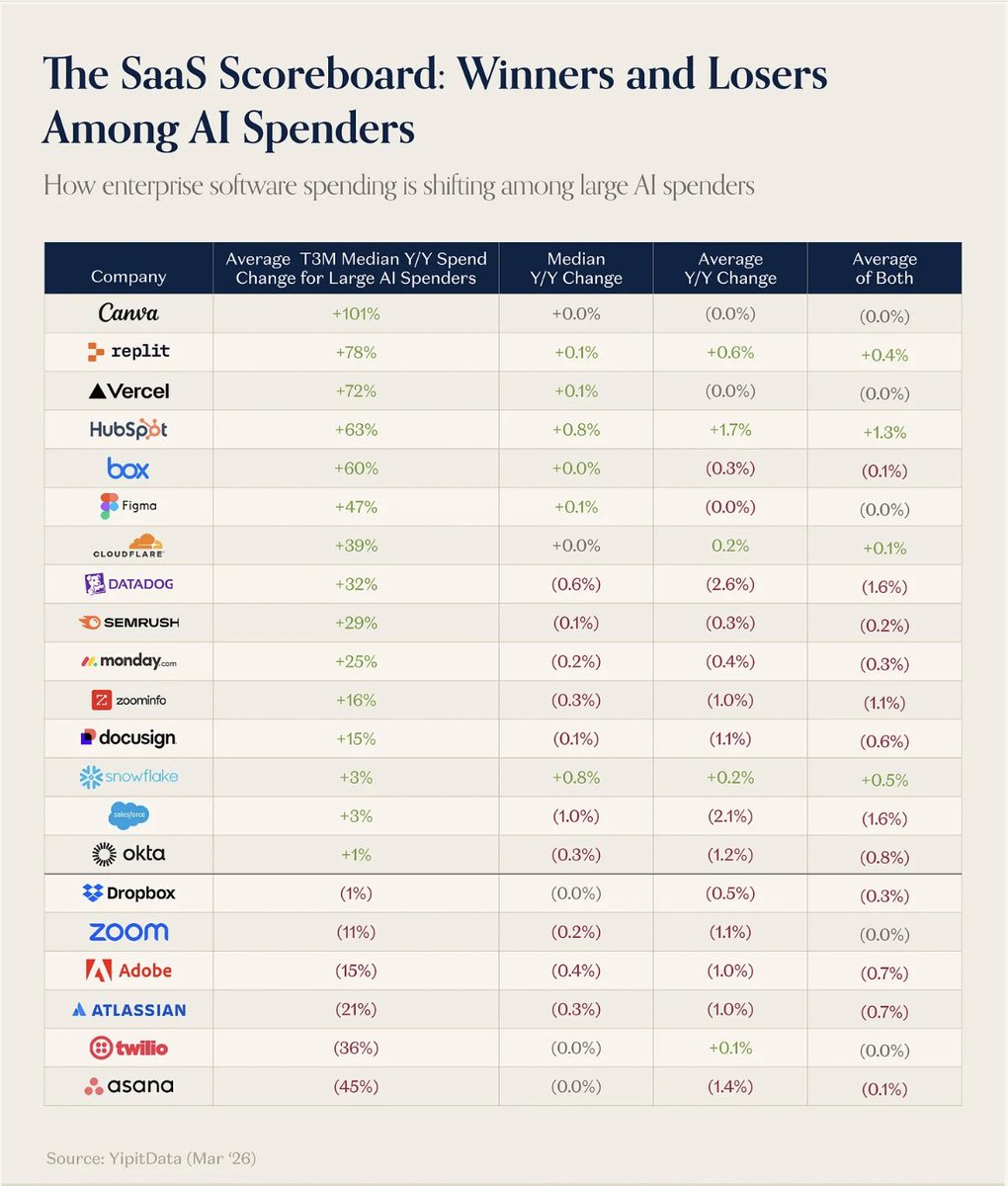
SaaSpocalypse narrative violation.
I suspect a couple of years from now there will be far more agents using HubSpot than homo sapiens.
20
10
112
31,596
Was a fun conversation last night about Building in Boston.
It had been a while since Brian and I were on a public stage together. (We see each other all the time and talk about some of these same topics -- just not in front of hundreds of people).

huge thank you to Hubspot cofounders @bhalligan @dharmesh for a riveting chat on why there’s never been a better time to build a startup at Boston tech week!
A few of my favorite takeaways:
- Hubspot created a new category in marketing SaaS, there are similar opps for new category creation in AI today
- Most founders should aspire to be more ambitious - ex. Hubspot wanted to be the biggest company in Boston, let’s be the biggest in the world
- Finding distribution still remains hard - AI makes it easier to build but also increased noise. Hubspot was built around a distribution insight, and startups today need to find one too
- The nature of AI-native teams is changing - but hiring for strengths rather than lack of weakness still works
8
1
37
7,005

From Getting Real [2006], Chapter 87:
Ride Out the Storm.
Wait until knee-jerk reactions to changes die down before taking action
When you rock the boat, there will be waves. After you introduce a new feature, change a policy, or remove something, knee-jerk reactions, often negative, will pour in.
Resist the urge to panic or rapidly change things in response. Passions flare in the beginning. But if you ride out this initial 24-48 hour period, things will usually settle down. Most people respond before they’ve really dug in and used whatever you’ve added (or gotten along with what you’ve removed). So sit back, take it all in, and don’t make a move until some time has passed. Then you’ll be able to offer a more reasoned response.
Also, remember that negative reactions are almost always louder and more passionate than positive ones. In fact, you may only hear negative voices even when the majority of your base is happy about a change. Make sure you don’t foolishly backpedal on a necessary, but controversial, decision.
12
12
180
22,460
dharmesh retweeted

May 28
That's a wrap on Building in Boston with @HubSpot and @a16z.
Founders, a fireside with @bhalligan, @dharmesh and @Tocelot, and a panel that didn't pull punches.
2
4
27
4,312
I was a surprise last-minute guest at an event at @HubSpot HQ in Cambridge this evening.
Fun fireside chat with my friend and co-founder @bhalligan, moderated by @Tocelot from @a16z.
Loved the entrepreneurial energy for building in Boston.
Thanks to all of you that joined. Was a sold-out event and the room was packed!
4
4
32
8,681
dharmesh retweeted

May 27
code talks, bs walks. we're no longer in "what if" mode. it's "take a look at this". step change.
1
1
13
5,449
If you work in the software industry and have time to read only one long-form post today, read this one.
If you have time to read two, read this one twice.
Highly #recommend
tl;dr: Stay off the yellow brick road that the frontier model companies are racing down. There is plenty of opportunity to solve hard problems elsewhere. Focus on areas where you can build the system of work (workflows), capture compounding, non-public data and deliver deterministic outcomes that customers need.

28
154
1,768
460,349
"Executive IC". That's pretty much the role I've had at HubSpot since its founding 20 years ago.
Thanks for giving shape to the idea, @jmwind and best wishes with the new role.
Long-time admirer of your work.
May 27

Very stoked about my next adventure. I’ve joined Spellbook, but not as CTO.
I’m joining as an Executive IC. It probably means different things to different people. It means I'm here to build and be hands on in every part of the company.
I've invested and been advising and getting to know @scottastevenson and the team for more than a year. At some point it became obvious the most useful thing I could do was stop talking about ideas and go work with the team.
With AI making code cheap to copy, what's going to be hard to copy is the shape of a company. How a team learns, decides, and ships. That's what I want to work on. It's what I've spent the last three decades learning to do.
Why Spellbook? The world has entered into one of the largest investment cycles in decades. Trillions of dollars are being deployed into energy, AI, manufacturing, transportation and the modernization of critical global systems. Despite this, progress still moves at the speed of contracts. Spellbook’s mission is to modernize the $1 trillion transactional legal market so the contract system can keep pace with the global economy.
At the same time, every contract ever signed is becoming searchable, comparable, and weaponizable by counterparties, regulators, and plaintiffs' lawyers. You will be attacked.
We're hiring. Slight bias toward Canada, but remote-friendly for great talent.
DM me.
9
10
162
45,896