
Joined February 2013
- Tweets 4,282
- Following 1,393
- Followers 1,000
- Likes 3,899
660 Photos and videos











AlexOneRo | π² | 🍚 ⛓ retweeted

Feb 25
Week 3 of Node Rush has begun.
There have been 3,650 Cache Strikes in the last 24 hours!
- New badge: Lucky Strike
- New Strike Glyphs
- New quests
Keep your eyes open for new quests here: quest.nexus.xyz
15,084
10,787
11,968
127,806
AlexOneRo | π² | 🍚 ⛓ retweeted

Feb 17
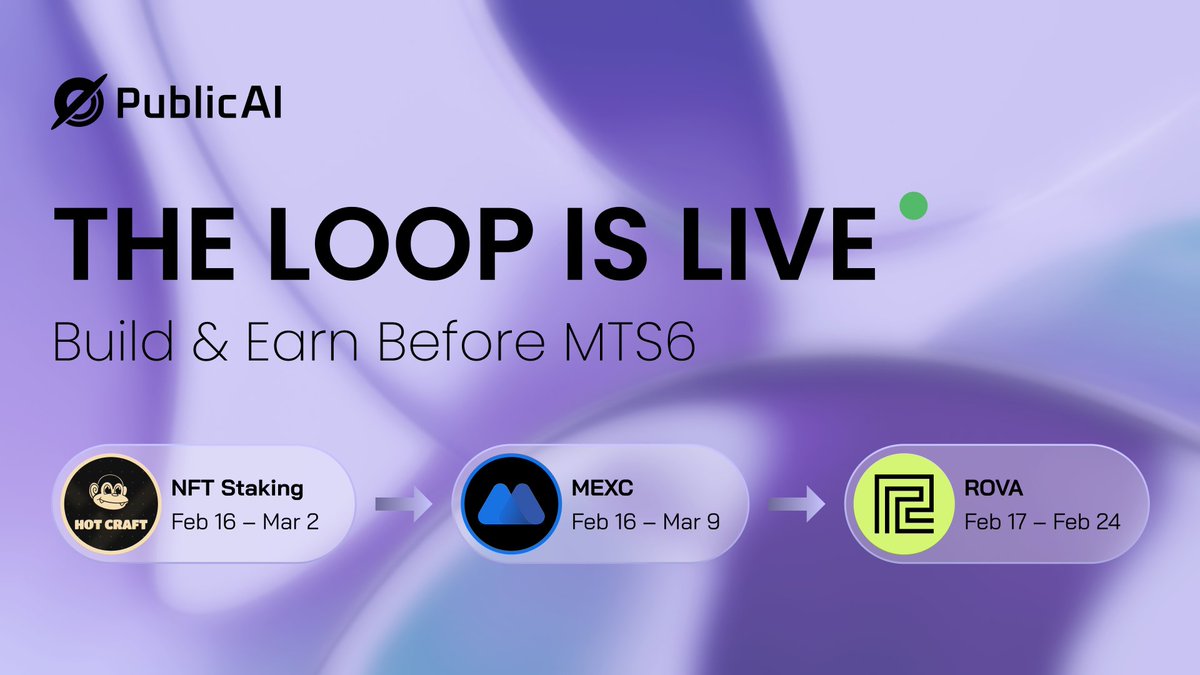
$2,400 in rewards. Live now.
• $1,500 MEXC HOLDR raffle
• 35,000 $PUBLIC staking pool
• $400 ROVA video prizes
• Bonus Hero tickets
Four engines. One loop.
Stake → Hold → Amplify → Repeat.
Build & earn before MTS6.
See 🧵 below 👇
108
78
179
37,732
AlexOneRo | π² | 🍚 ⛓ retweeted
Feb 17
Week 2 of Node Rush has begun.
- New Strike Glyphs
- New quests
- More Caches waiting to be uncovered
Keep your eyes open for new quests here: quest.nexus.xyz
13,881
10,225
11,405
92,471
AlexOneRo | π² | 🍚 ⛓ retweeted
Feb 13
The global financial system is in crisis.
Rising transaction volumes, increasingly automated strategies, and geopolitically fragmented institutions are exposing the limits of trust-based infrastructure.
Verifiable finance matters now.
blog.nexus.xyz/intro-to-veri…
24,717
16,280
16,921
104,223
AlexOneRo | π² | 🍚 ⛓ retweeted
Feb 18
Introducing USDX — the native dollar of the Nexus economy.
A shared settlement layer for all apps, trades, and markets on Nexus.
One asset. Unified liquidity. Protocol-native incentives.
Capital is converging, and USDX is its native home.
Read more: blog.nexus.xyz/introducing-u…
26,593
17,693
18,385
346,447
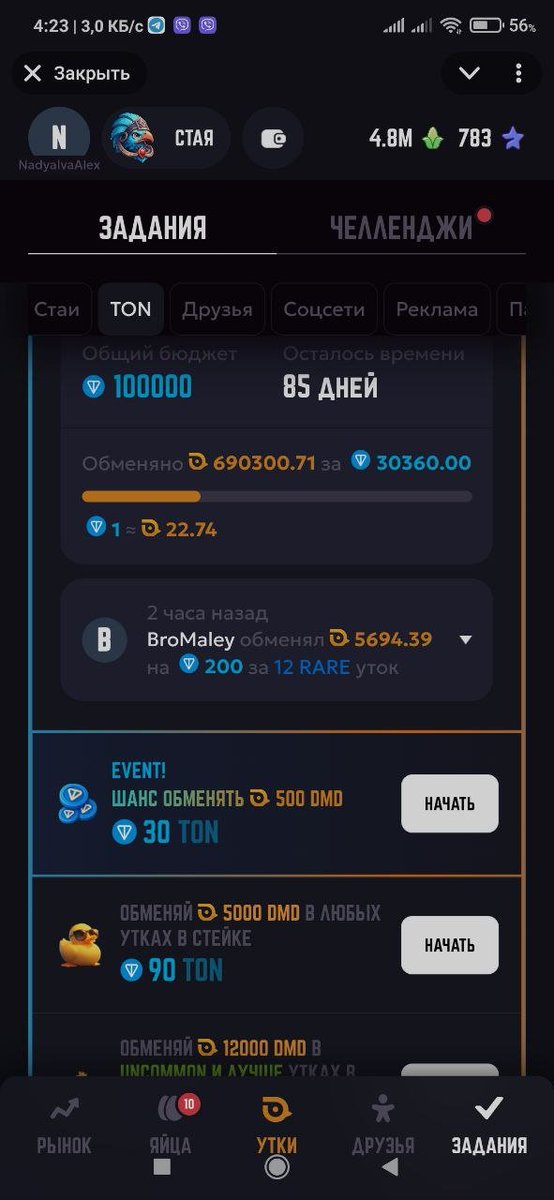
#duckmyduck #dmd
Играй со мной и получай уникальные NFTs с токенами. Для тебя в подарок бесплатная Утка и 1000 Корна.
t.me/duckmyduck_bot?start=r1…
24
123

AlexOneRo | π² | 🍚 ⛓ retweeted
Feb 10
Node Runners Season 2 is live. Node Rush has begun.
New quests, Cache Strikes, and a fresh wave of collectible NFT glyphs mark the next phase of proving on Nexus.
Read the blog to learn how prospecting the Grid works:
blog.nexus.xyz/node-runners-…
24,344
16,338
17,824
190,579
Check out your Abstract Wrapped recap on @AbstractChain! wrapped.abs.xyz
6
42
AlexOneRo | π² | 🍚 ⛓ retweeted

20 Dec 2025
NFTs are here. What’s next, you think?
cssnft.aigaea.net/?code=1A9F…
483
3,973
3,009
72,325
AlexOneRo | π² | 🍚 ⛓ retweeted
12 Dec 2025
Launch Alert! GAEA’s EmoFace is dropping soon — your go-to AI for emotion recognition via facial scan! Unlock real-time emotional insights with just a look, blending cutting-edge face tech and smart mood detection.
>> aigaea.net
#GAEA #EmoFaceLaunch #EmotionAI
517
3,564
2,727
118,962
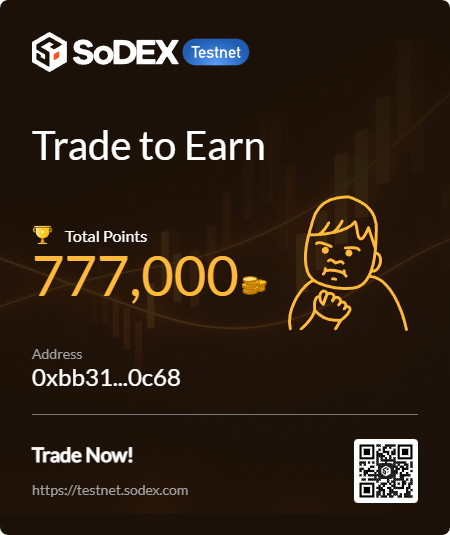
I’ve earned 777,000 Points on SoDEX! Join me to earn on SoDEX!
Trade and earn on SoDEX Now:
testnet.sodex.com?tid=sodext…
@sodex_official @SoSoValueCrypto
8
105
AlexOneRo | π² | 🍚 ⛓ retweeted

6 Dec 2025
Forged by willpower. Built on structure.
The Trident of Poseidon Relic rises with the spirit of Willpower, summoned by AquaFlux.
This is not just a relic — it’s willpower encoded into on-chain structure.
To enter:
✅ Follow @AquaFluxPro
✅ Like & RT
✅ Join our community: t.me/AquaFluxPro
🔱 300 SBT | 1 Week

3 Dec 2025

🔱 Chapter 1: 21 Relics of the Ocean 🔱
Explorers, the Atlantic Crossing Begins.
In the heart of the Pharos, 21 relics begin to surface. Each one carries a story, a symbol, and a challenge.
This journey was built with 21 DApps, inviting explorers to earn soul-bound relics that belong only to those who’ve shown true loyalty and meaningful contribution to the ecosystem.
🌊 21 Relics
🌊 21 Partner DApps
🌊 21 mystery quests
🌊 300 SBT/relic
The first batch begins with 8 partners and will be open for only 2 weeks. Quest 1 will drop tomorrow.
Are you ready to explore deeper?
Set Sail & Reach the New World 🌊
192
626
1,009
58,818
AlexOneRo | π² | 🍚 ⛓ retweeted

3 Dec 2025
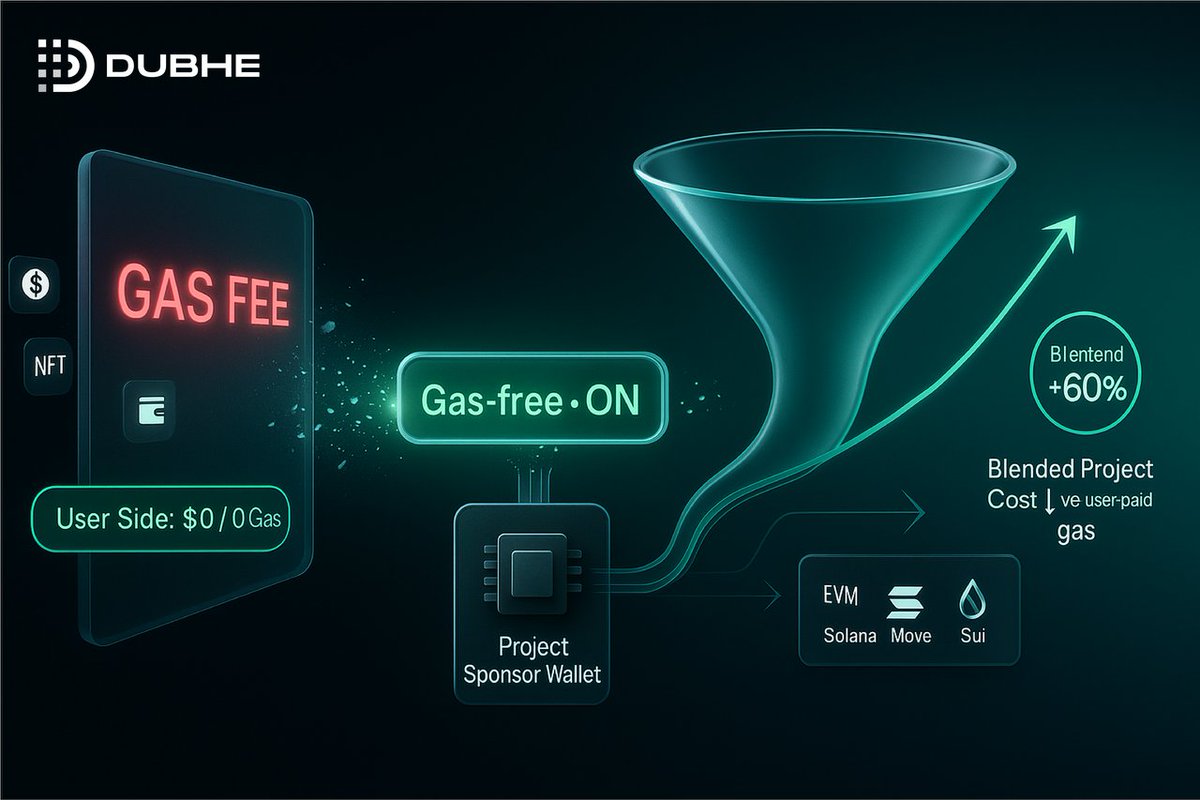
Why do Web3 projects lose users so quickly after a cold start?
The core reason is that gas fees create a hidden barrier at the first touchpoint, blocking potential new users right at the entry.
→ Why Gas-Free is becoming inevitable:
In the Web3 ecosystem, Gas-Free is shifting from a fringe solution to a fundamental capability. Its logic is similar to ''free trial'' in Web2, and it has already been proven in high-frequency scenarios such as #DeFi and #NFTs, significantly boosting diffusion efficiency and expanding the reach of user acquisition.
→ Why it boosts retention:
Data shows that Gas-Free significantly improves first-touch conversion and return visits — leading to retention lifts of up to ~60%. In a multi-chain world, reducing entry friction is one of the most effective ways to capture Gen-Z and cross-ecosystem liquidity, widening the top of the funnel and improving stickiness.
→Why Gas-Free matters:
In a highly competitive on-chain market, Gas-Free is not just a cost optimization strategy — it's a growth engine. It amplifies user-scale network effects, strengthens community feedback loops and self-reinforcement, and helps a project move from cold start to exponential growth curves.
Powered by @DubheEngine , the project-paid Gas-Free mechanism removes the first-interaction barrier for users, significantly boosting retention and turning cold starts into sustainable growth curves.
At the same time, compared to native @SuiNetwork costs, the project-sponsored cost can be reduced by tens of times.
Entry point to the product:dubhe.obelisk.build/
👉 Read the article:medium.com/@dubheengine/why-…
How do you think Gas-Free will reshape the Web3 user experience?
Share your project insights or questions in the comments!👇
87
1,797
2,158
23,094
AlexOneRo | π² | 🍚 ⛓ retweeted
24 Dec 2025
🎄 Hello Dubhe Community! 🎄
This Christmas, we're celebrating more than just the holidays — we're celebrating the people who build, support, and grow with Dubhe. 💫
Let's take a moment to look back on our journey together in 2025, share some festive vibes, and talk about what we're excited for next.
🎁 How to Join
💬 Tell us how your journey with Dubhe felt in 2025 and what you're looking forward to in 2026. 🎄 Share your Christmas vibes — a cozy corner, artwork, or a short video.
✅To participate:
-Publish a post on X about Dubhe
-Tag @DubheEngine
-Add #DubheChristmas and mention your Discord nickname(example: @ Dubhe Engine)
-Support this post: like, repost, and tag 3 friends in the comments.
⭐️ Rewards
We will select 20 participants based on content quality, and each winner will receive 50,000 $STARS.
⏰ Deadline: All works will be accepted until December 29, 12:00 PM UTC.
Thank you for being part of Dubhe — let's enjoy this Christmas together 🎄❤️
#Sui #Move #DubheEngine #MerryChristmas #DubheChristmas #Giveaway

149
1,818
2,197
25,287
AlexOneRo | π² | 🍚 ⛓ retweeted
25 Dec 2025
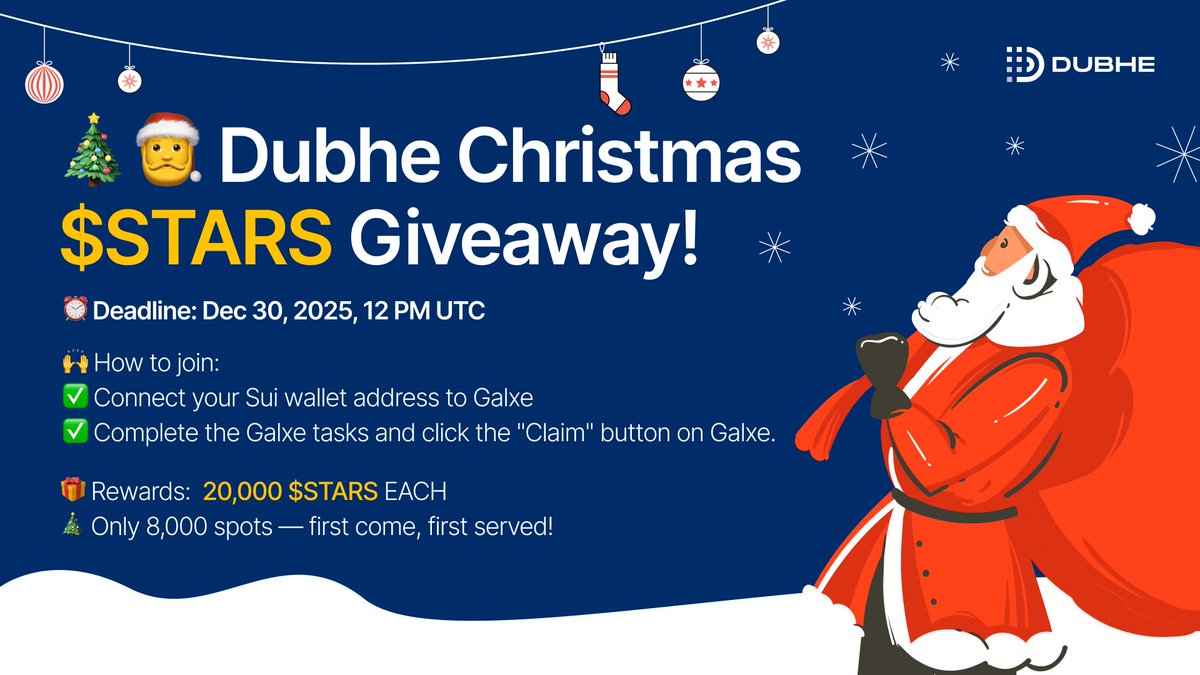
🎄✨ This warm and cozy Christmas, let Dubhe deliver a special gift just for you!
⏰ Deadline: Dec 30, 2025, 12 PM UTC
🧭 How to join:app.galxe.com/quest/5Lre3DPm…
✅Connect your Sui wallet address to Galxe
✅Complete the Galxe tasks and click the "Claim" button on Galxe.
🎁 Rewards:
💎 20,000 $STARS EACH
🎄🎅 Only 8,000 spots — first come, first served!
This Christmas, let your wallet shine brighter than the Christmas tree — filled with $STARS from Dubhe! 🎁💫
100
1,846
2,182
26,277
AlexOneRo | π² | 🍚 ⛓ retweeted

11 Dec 2025
Domain Expansion: Mainnet Domain Style🥷
New Quest now unlocked in your HaHa Wallet - Mint a nad domain with @NadDomains and get 50% off if you're a HaHa Wallet User 😎
gud tek.
182
1,436
2,058
22,772
AlexOneRo | π² | 🍚 ⛓ retweeted

3 Dec 2025
🔱 Chapter 1: 21 Relics of the Ocean 🔱
Explorers, the Atlantic Crossing Begins.
In the heart of the Pharos, 21 relics begin to surface. Each one carries a story, a symbol, and a challenge.
This journey was built with 21 DApps, inviting explorers to earn soul-bound relics that belong only to those who’ve shown true loyalty and meaningful contribution to the ecosystem.
🌊 21 Relics
🌊 21 Partner DApps
🌊 21 mystery quests
🌊 300 SBT/relic
The first batch begins with 8 partners and will be open for only 2 weeks. Quest 1 will drop tomorrow.
Are you ready to explore deeper?
Set Sail & Reach the New World 🌊
2,220
19,530
24,794
394,692