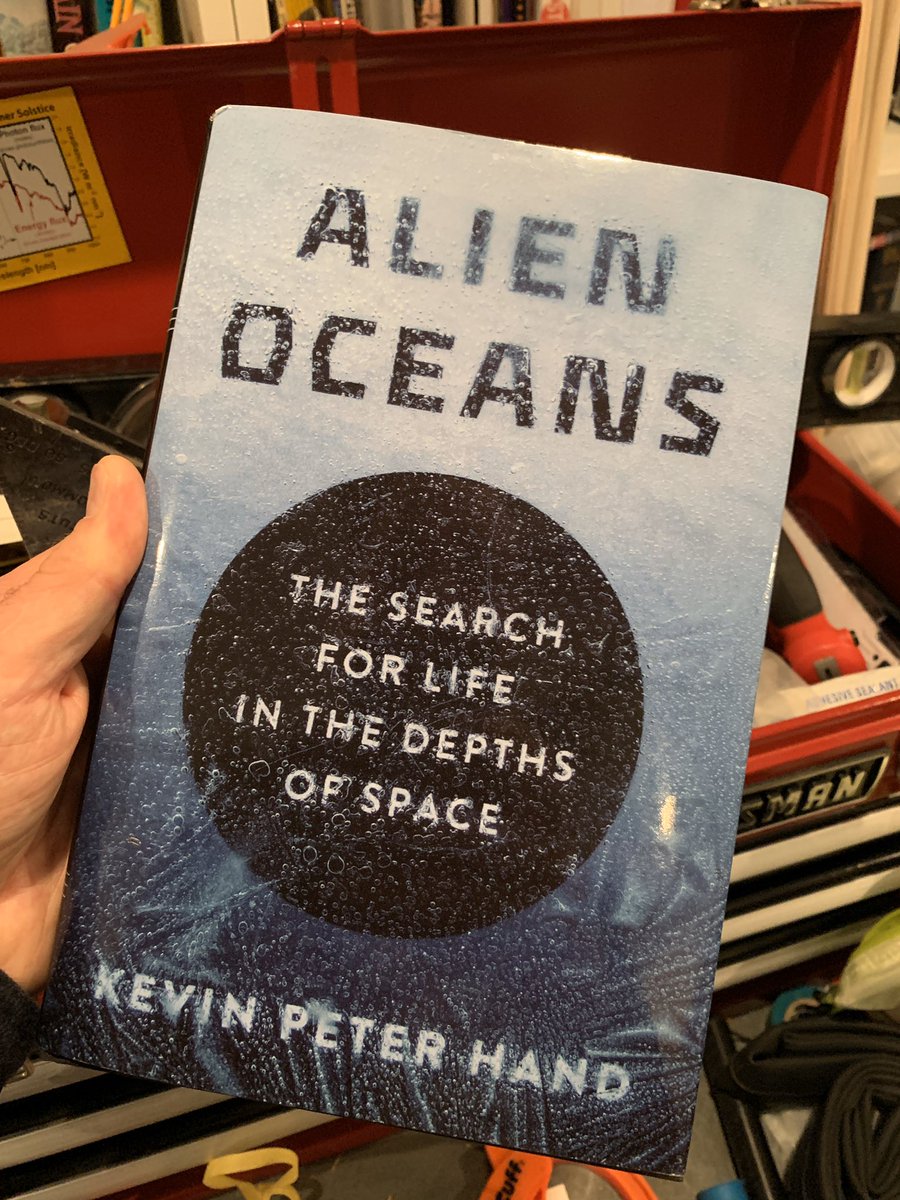
Well, here it is folks. After many, many years of hard work my book it finally out! Can’t believe the timing, and there are obviously much bigger things you need to worry about right now, but if you want to dive into some aliens oceans, here you go!
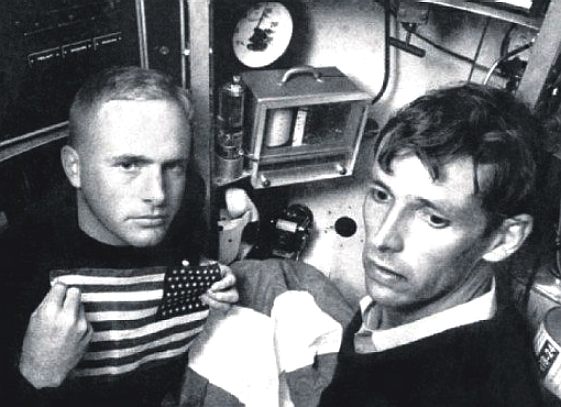
Captain Don Walsh, USN, passed away peacefully at his home in Oregon yesterday. He bravely piloted the first craft to the bottom of the Ocean with his colleague Jacques Piccard. An extraordinary explorer, oceanographer, and human being. I'm so honored I could call him my friend.
ALT Captain Don Walsh and Jacques Piccard during the first descent to the bottom of the world Ocean, Challenger Deep on January 23, 1960.

ALT At the Explorer's Club honoring CAPT Don Walsh, an honor reserved for very, very few members.
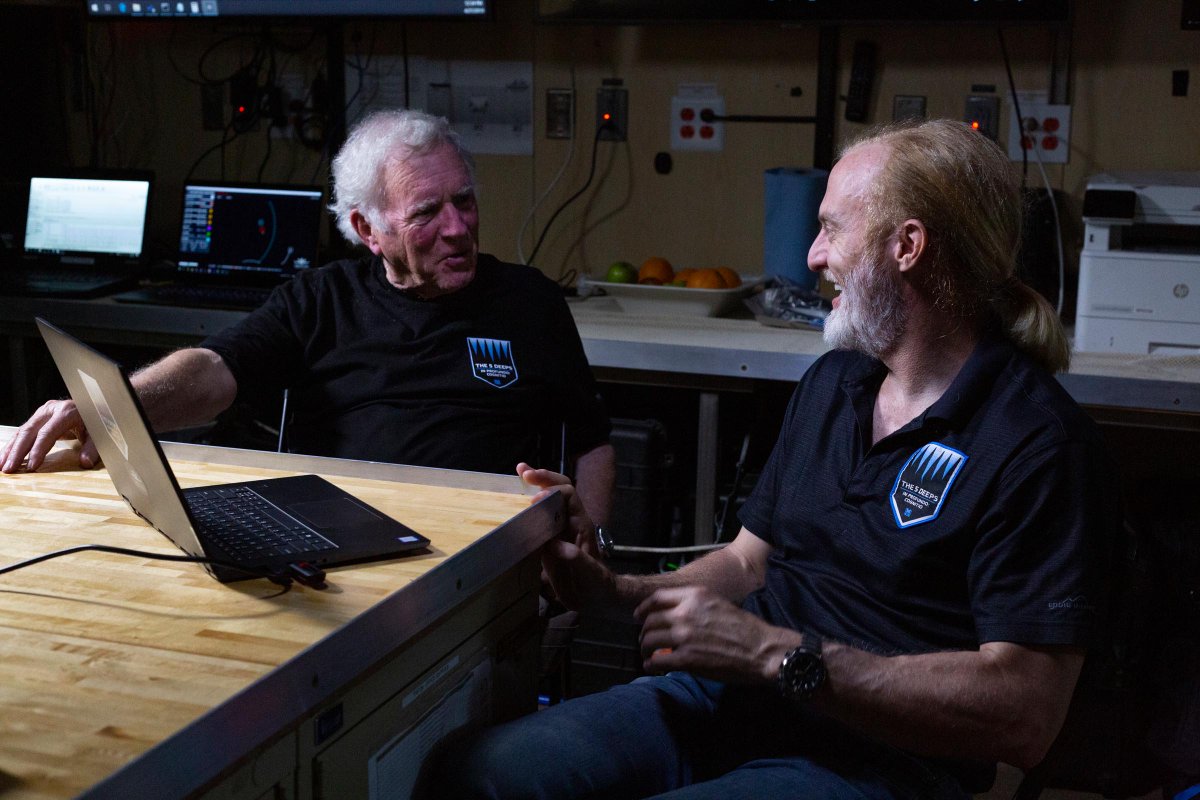
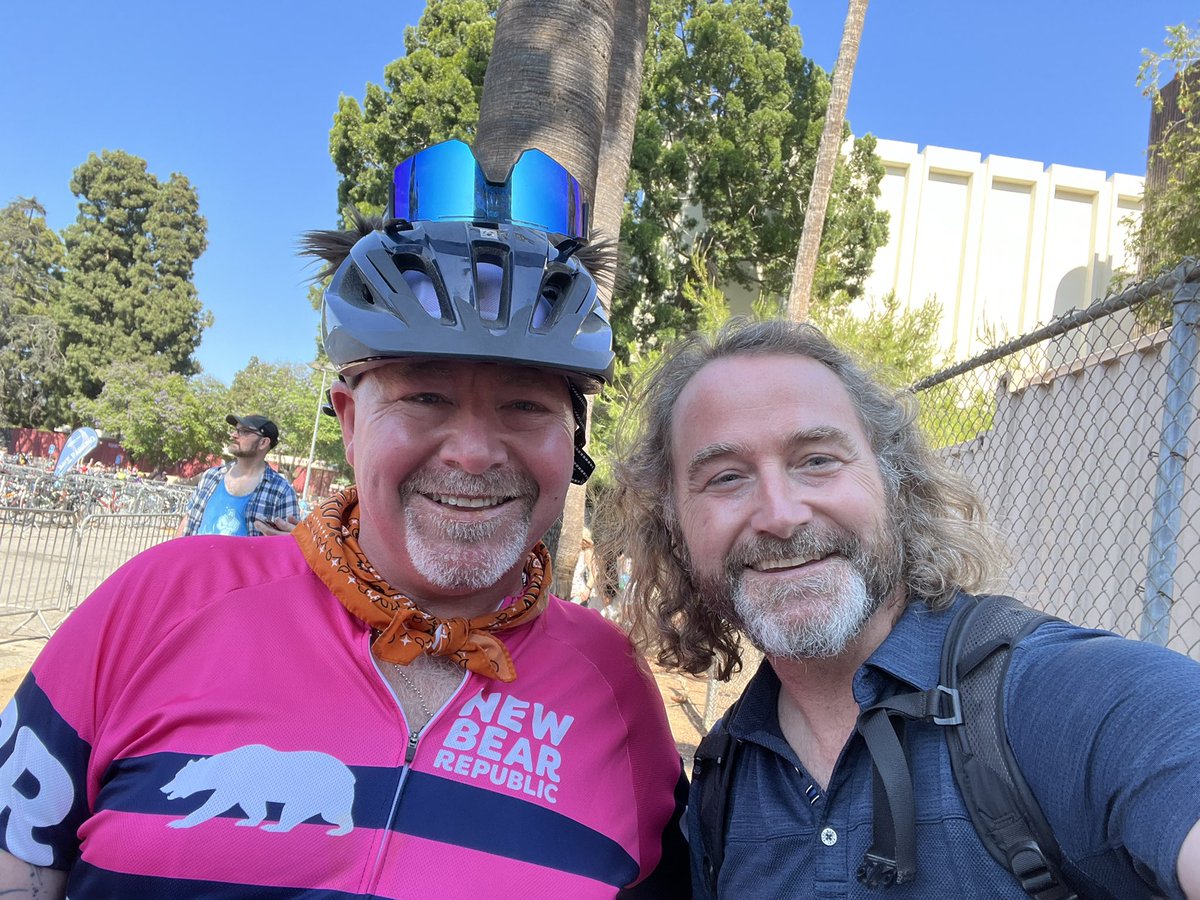
ALT Captain Walsh and I at Challenger Deep during the Five Deeps Expedition, April-May 2019.
Captain Don Walsh, USN, passed away peacefully at his home in Oregon yesterday. He bravely piloted the first craft to the bottom of the Ocean with his colleague Jacques Piccard. An extraordinary explorer, oceanographer, and human being. I'm so honored I could call him my friend.
ALT Captain Don Walsh and Jacques Piccard during the first descent to the bottom of the world Ocean, Challenger Deep on January 23, 1960.
ALT At the Explorer's Club honoring CAPT Don Walsh, an honor reserved for very, very few members.
ALT Captain Walsh and I at Challenger Deep during the Five Deeps Expedition, April-May 2019.
[1/3] Why Saturn's moon Titan is perfect for #DragonflyMission 🧵⬇️
"Titan is one of the most interesting moons in the solar system because it's the only one that has a thick atmosphere." - #JHUAPL's Shannon MacKenzie, deputy project scientist, Dragonfly
@NASASolarSystem
I spoke with Europa Clipper’s project manager today, exactly one year—almost to the minute—before the mission’s first launch opportunity at 1151am EDT next October 10.
arstechnica.com/space/2023/1…
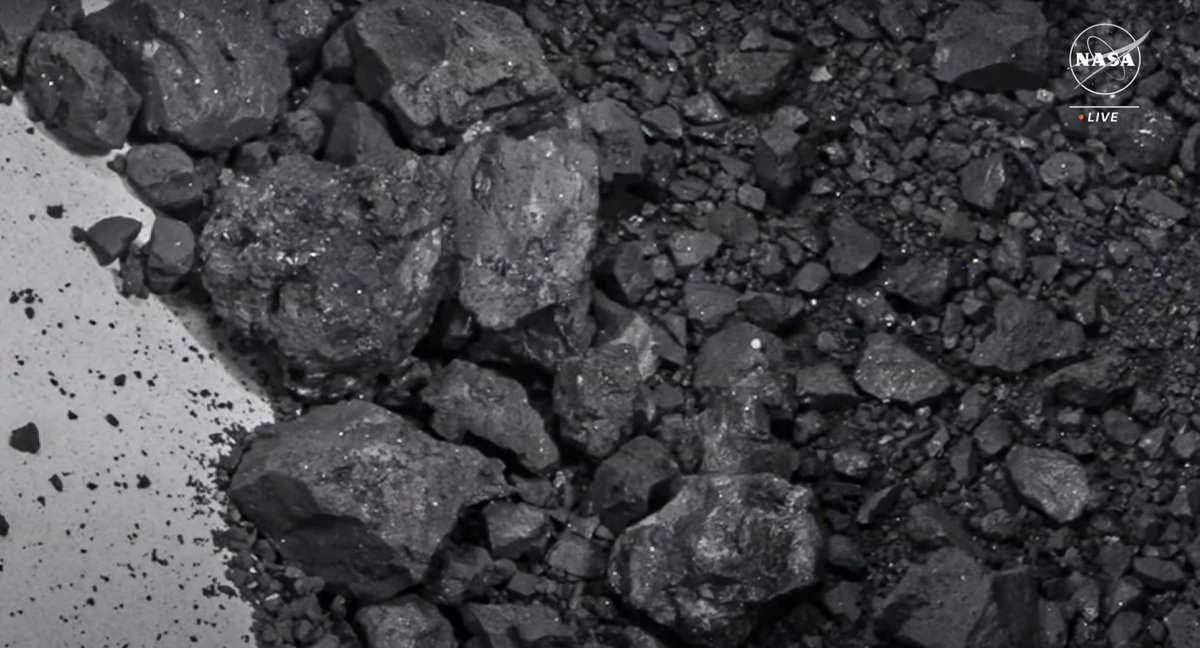
Asteroids are the building blocks of our solar system, and this asteroid contains the building blocks of life. Our initial analysis of the 4.5-billion-year-old rocks from asteroid Bennu delivered to Earth by #OSIRISREx shows evidence of carbon and water.
nasa.gov/news-release/nasas-…
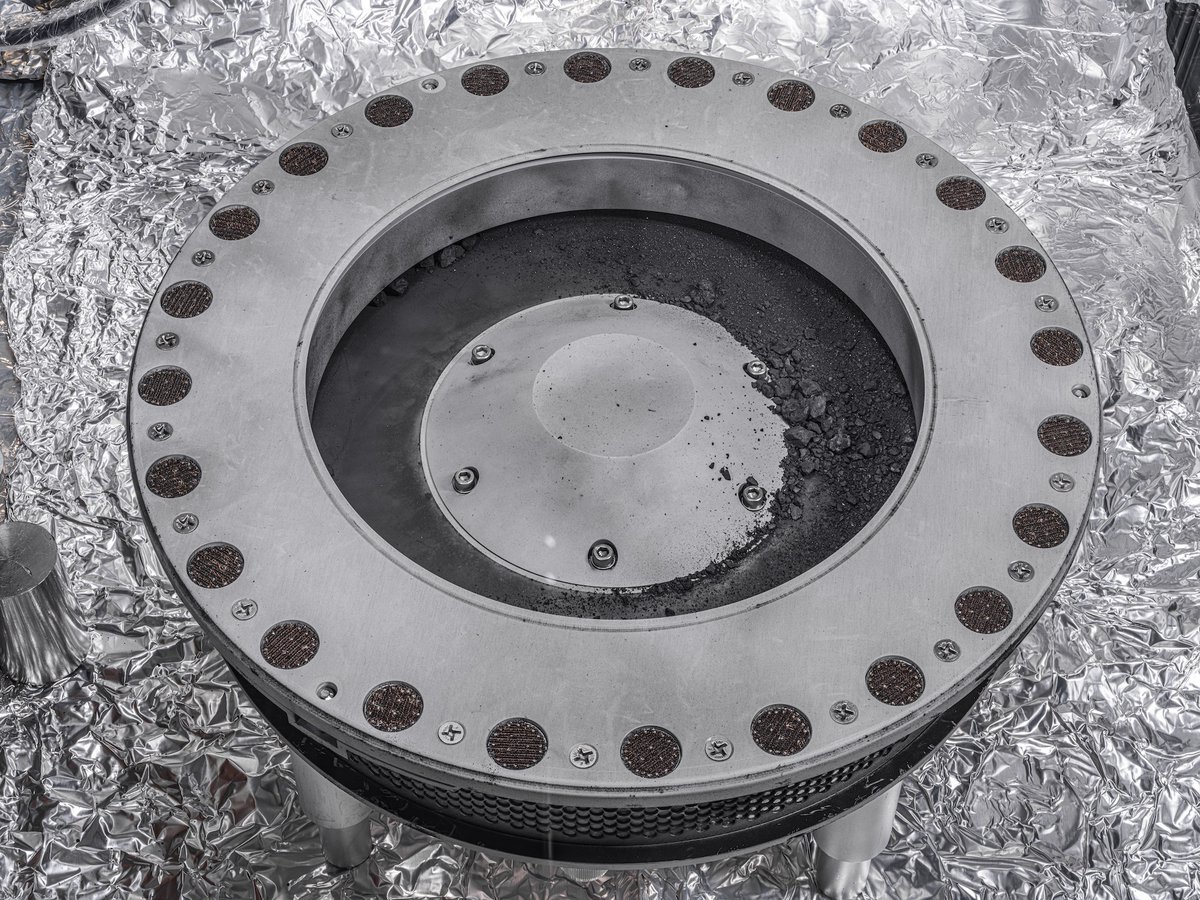
ALT Circular metallic instrument of concentric circles on aluminum foil, the TAGSAM head from the OSIRIS-REx spacecraft. The outer ring contains many small circles containing small particles of black dust. The inner circle contains small rocks.
Today's goal is to transfer the capsule from the range to a temporary clean room here at UTTR and put the sample on a nitrogen purge.
Avoiding contamination is the priority and the team is taking every precaution to protect the sample. go.nasa.gov/44ZkHRe
After a journey of nearly 3.9 billion miles, the #OSIRISREx asteroid sample return capsule is back on Earth. Teams perform the initial safety assessment—the first persons to come into contact with this hardware since it was on the other side of the solar system.
Excited to share our work using JWST to observe Europa. Our paper came out today. Will share some pics of experiments I did to compare lab/telescope data at some point. The spectra were/are beautiful.
On the icy crust of Jupiter's moon Europa, Webb has discovered carbon dioxide that likely originated in the liquid water ocean below. Understanding the chemistry of this ocean could help determine if it is a good place for life as we know it: nasa.gov/feature/goddard/202…
ALT Animated gif that transitions from a Webb test/commissioning image of Jupiter and its moon Europa into a new Webb image of just Europa. The first image features Jupiter appearing to glow with bands of bright white, light yellow, and darker, brownish oranges. To the left of Jupiter, Europa appears as a tiny, black circle with a bright starburst erupting from its edges. The second image shows Europa as a fuzzy blue and white sphere against a black background. This sphere features darker blue patches in most of the northern hemisphere facing the viewer. One, large, crescent-shaped, white patch extends along the left side of the southern hemisphere facing the viewer, and a larger, blobby, white patch covers the middle latitudes of the right side of the southern hemisphere. Lighter blue regions border these white patches in the south.
As we excitedly count down the days to the return of samples from asteroid Bennu (Go OREx!), here are my thoughts about the importance of sample return missions, @OSIRISREx, and #MarsSampleReturn! nature.com/articles/d41586-0…
I am honored to be part of an upcoming project with @PBS, the 2nd season of “Native America” premiering 10/24/23!
Today, I was reunited with the team for a screening & panel event hosted at @TheAutry. Screening was incredible, & the series is going to be beautiful!
Hey the paperback edition of my book, *A Portrait of the Scientist as a Young Woman,* hit the shelves today! And it's on sale...
bookshop.org/p/books/a-portr…
Looking for some nice bedtime reading? Might I suggest a report on ways to search for technosignatures from alien civilizations? kiss.caltech.edu/final_repor…
"I was really drawn to this idea that the ocean is Earth's final frontier and studying the ocean is exhilarating a studying space, directly ties to the well-being of our planet." New #ScienceStory video with @pgirguis on the #GalapagosVents expedition.
youtu.be/uzbmRiFc-DA
This is just such an incredible and impressive achievement- huge congrats to @isro and the team that made it happen. Very excited to see what this rover finds.
July 2023 was the hottest month on record, according to our global temperature analysis. Overall, July was 0.43°F (0.24°C) warmer than any other July in @NASAEarth's record, and it's likely due to human activity. Details: go.nasa.gov/3OTWMh7