Joined August 2024
- Tweets 269,127
- Following 3,392
- Followers 9,837
- Likes 445,550
1,290 Photos and videos
















Anaya retweeted

Lions eating grass doesn't sound realistic and the lion said "that's why it's called vision". Exactly the way politicians behave 😂😂😂😂
Espisode 1
20
101
123
1,084


For me, Brazil has always been more than just a football team.
The magic of Pele, Ronaldinho, Ronaldo and Kaka, their passion, creativity, joy and the true spirit of this beautiful game, have given Brazilian football fans countless memorable moments.
It's not just the trophies—their style of play, every touch, every dribble and every attack, their deep love for football is what makes Brazil special.
Watching Brazil play is always exciting because no matter who they face, they play with heart and inspire millions of people around the world.
UID: 72379539
That's why I love Brazil and Brazil will always be my best team 🇧🇷
@MEXC @usithetalk #WeAre26


⚽ The game has officially begun!
Captain Vugar @usithetalk is meeting football fans from around the world.
🎁 Win an exclusive football-themed MEXC Merch Box! To enter:
✅ Follow @MEXC & repost
✅ Comment your team why
✅ Add your UID
One winner. Ends on Jun 17. #WeAre26

62
136
380
5,471
Anaya retweeted

12h
Hey @grok, how come a trip costs almost half as much when the driver is female?

71
148
278
3,145
Anaya retweeted

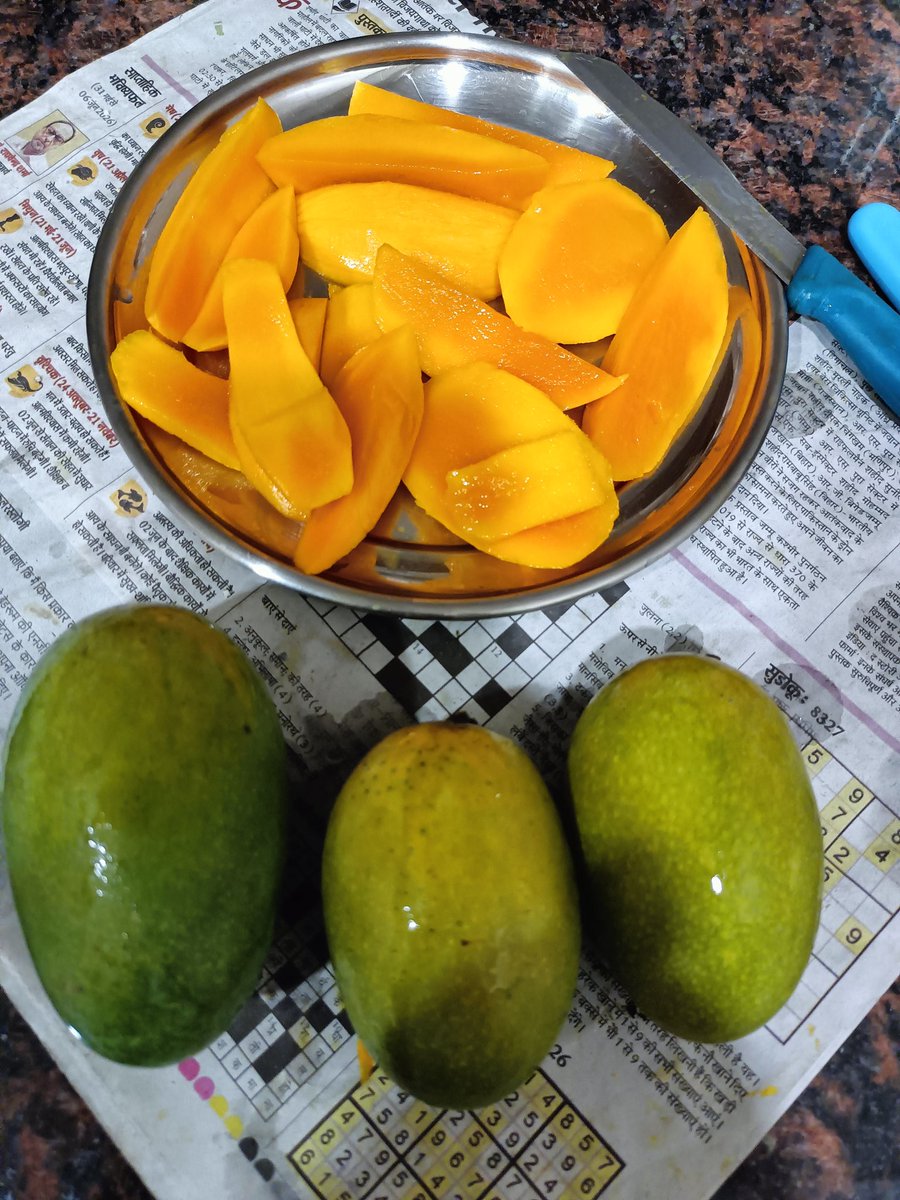
अब देश में कत्लेआम होना शुरू हो गया,
अब लंगड़े को भी नहीं बख्शा जाएगा।।🥭🥭

8
73
206
802

Anaya retweeted

Bear and Nikki as a couple ......💞
Inde Navarrette ♥️
19
84
169
147,225
Anaya retweeted

7h
Top 35 Most Beautiful & Popular Adult Actresses with Massive Global Fanbases ✨🌎
🇺🇸 Lana Rhoades
🇨🇦 Mia Malkova
🇷🇺 Jia Lissa
🇺🇸 Tori Black
🇷🇺 Comatozee
🇺🇸 Leah Gotti
🇦🇷 Emily Willis
🇺🇸 Riley Reid
🇷🇺 Eva Elfie
🇯🇵 Rae Lil Black
🇺🇸 Angela White
🇭🇺 Cindy Dollar
🇺🇸 Abella Danger
🇺🇸 Mia Khalif
🇺🇸 Dani Daniels
🇺🇸 Alexis Texas
🇭🇺 Aletta Ocean
🇺🇸 Adriana Chechik
🇺🇸 Brandi Love
🇺🇸 Kendra Lust
🇨🇿 Little Caprice
🇺🇸 Sasha Grey
🇨🇴 Esperanza Gomez
🇺🇸 Sky Bri
🇯🇵 Yua Mikami
🇺🇸 Violet Myers
🇺🇸 Asa Akira
🇺🇸 Mandy Muse
🇨🇦 Bridgette B
🇺🇸 Lexi Lore
🇷🇺 Anastasia Knight
🇺🇸 August Ames
🇺🇸 Cherie DeVille
🇺🇸 Gianna Michaels
🇺🇸 Autumn Falls




32
164
78
11,594


Anaya retweeted

Ladies, quick question: which type of men's legs do you find the most appealing??

52
146
534
12,464
Anaya retweeted

Crypto is evolving away from building more chains and toward hiding the complexity of them.
@NomismaNetwork fits into this shift through its subchain design, where each application gets its own execution environment instead of competing in a shared global system.
The aim is straightforward but technically difficult, limit congestion, separate workloads, and deliver a user experience that feels chainless even though multiple layers are still running underneath.

97
65
108
525
Anaya retweeted

Markets don't close anymore, so why should pricing infrastructure?
$PYTH just introduced Pyth Indices, a major step toward a financial system that operates 24/7. While trading has already evolved beyond traditional market hours through perpetuals, prediction markets, and tokenized assets, much of the underlying pricing infrastructure still shuts down when legacy markets close.
That gap creates a problem. Markets remain active, news continues to break, and global events keep moving prices, yet many data sources go offline. Pyth Indices was built to solve exactly that.
At launch, $PYTH Indices covers a broad range of asset classes, including Oil (WTI and Brent), major U.S. equities such as NVDA, TSLA, AAPL, MSFT, GOOGL, INTC, HOOD, MSTR, and CRCL, precious metals including Gold and Silver, as well as thematic baskets like AI10, Defense10, China10, and Tech100. Each index operates continuously with transparent, published methodologies designed for modern markets.
What's even more impressive is that this isn't a future roadmap, it's already live in production. Coinbase, Kraken, dYdX, and Nado are actively integrating and utilizing Pyth Indices across futures, perpetuals, spot markets, margin products, and derivatives.
The collaboration with MarketVector, a VanEck company with more than $100 billion tracking its indices, adds another layer of credibility. By combining institutional-grade index governance with Pyth's real-time pricing infrastructure, they're creating a foundation built specifically for an always-on financial world.
This feels like a natural evolution of what $PYTH has been building for years. After pioneering 24/5 U.S. equity feeds, the expansion into fully continuous 24/7 indices across multiple asset classes signals where finance is heading next.
The takeaway is simple:
Markets have already become 24/7.
Now the infrastructure is catching up.
Pyth Indices is helping build the pricing layer for a financial system that never sleeps.
40
87
154
5,728


Anaya retweeted

14h
Good morning homies
Can i get a GM Back???
PerX is quickly becoming one of the biggest activity hubs in @NomismaNetwork Season 3.
Whether the PnL leaderboard hype lives up to expectations or not, one thing is certain: staying active and trading consistently keeps those Diamonds coming.
A few moves you shouldn’t miss:
«Boost wallet activity across EVM chains to increase your Score & unlock more testnet assets
Mint your free Nomizen ID as early as possible
Trade on @perx_trade and push your way up the leaderboard»
With @NomismaNetwork’s AI-optimized, fully on-chain infrastructure powered by @Chromia, the network is handling growing activity smoothly.
Keep showing up through every stage the most consistent participants are often the ones who walk away with the best rewards.

63
141
562
2,242



most apps want your attention.
@sleepagotchi rewards your discipline instead
you set a sleep schedule → stay consistent → and the game actually gives you progression for it.
no grinding. no doomscrolling. just sleeping properly.
built around dino gotchis, collectibles, quests, room customization, and loyalty rewards that grow as your habits improve.
it’s basically turning sleep into a game you actually benefit from playing long term.
wild idea, but it makes sense.
sleep better → progress faster

173
97
376
8,088
Anaya retweeted

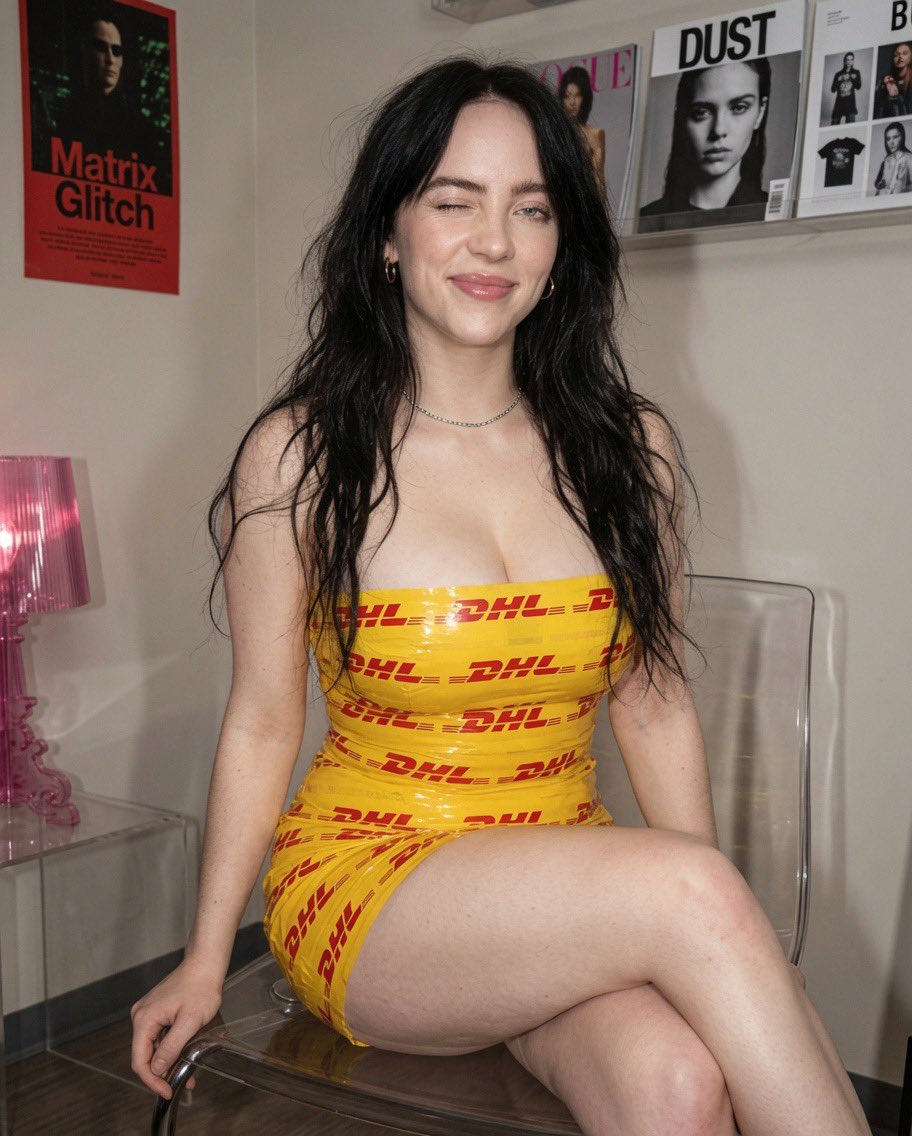
Emma Watson Every photo reminds
the world why she's unforgettable 🔥




56
231
676
19,633

Banks don't just choose infrastructure. They inherit the counterparty graph of whoever chose first. And they inherit it under one condition that most public blockchain architectures cannot meet: the positions, counterparty data, and settlement strategy of every participant must remain invisible to every other participant.
That single constraint eliminates most options before the technical comparison begins.
JPMorgan's Kinexys has processed over $1.5 trillion on blockchain rails, averaging roughly $2 billion daily. DTCC is advancing SEC-cleared tokenization of U.S. Treasuries. NYSE is building tokenized securities rails alongside BNY and Citi. The tokenized RWA market is approaching $29 billion, with $300 billion in global stablecoin supply, 93% of U.S. tokenized assets settling on Ethereum. These are live operations with counterparties who have signed off - operationally, legally, and architecturally.
When a bank integrates into a settlement rail, exit costs operate across three distinct layers. Operational: years of integration rebuilt from the start. Regulatory: full re-attestation and re-audit of the compliance stack. Counterparty: the most underestimated layer. A bank evaluating rails in 2027 is not choosing a technology stack. It is deciding whether its existing counterparties will be able to settle with it at all.
Ten institutions create 45 settlement corridors. A hundred create nearly 5,000. SWIFT scaled from 239 banks to over 11,000 on this dynamic. Visa built global infrastructure from a regional network the same way. Each new participant made the alternative less economically viable for the next institution to consider - not through marketing, but through accumulated counterparty dependencies.
The April 2026 GFMA report catalogued what remains technically open: interbank interoperability for tokenized deposits, transaction privacy standards, settlement mechanics equivalent to RTGS, governance for digital money. The platforms that resolve this agenda in the next 18 months become the standard for the decade.
@ZKsync delivers the four architectural properties institutional settlement requires simultaneously: privacy by design through private execution environments where only ZK proofs and state commitments reach Ethereum, institution-controlled execution with role-based permissioning and selective disclosure, cryptographic finality without optimistic challenge windows, and atomic cross-chain composability without external bridges. Live institutional deployments today: Deutsche Bank's DAMA 2.0 tokenized fund platform in production, ADI Chain live with First Abu Dhabi Bank, the Central Bank of the UAE, BlackRock, Mastercard, and Franklin Templeton, Cari Network onboarding Huntington Bancshares, First Horizon, M&T Bank, KeyCorp, and Old National Bancorp - five U.S. regional banks with over $600 billion in combined deposits - and more than 30 institutions in active pipeline across banks, central banks, and sovereign issuers.
The counterparty graph is already forming. Every institution that commits raises the switching cost for the next one, and lowers the viable window for a competing rail. That is the asymmetric compounding that turns a first-mover position into a decade-long standard.
The window is open. It does not stay open long.
63
73
105
7,882