
Economist | Real economies serve the people, not profits | @cpa_tradereform | former DoD & Commerce | Views are my own
Joined May 2015
- Tweets 92
- Following 67
- Followers 62
- Likes 54
6 Photos and videos
Pinned Tweet

21 Oct 2025
America’s medicine supply chain is in crisis — rebuilding at home is how we reclaim our future.
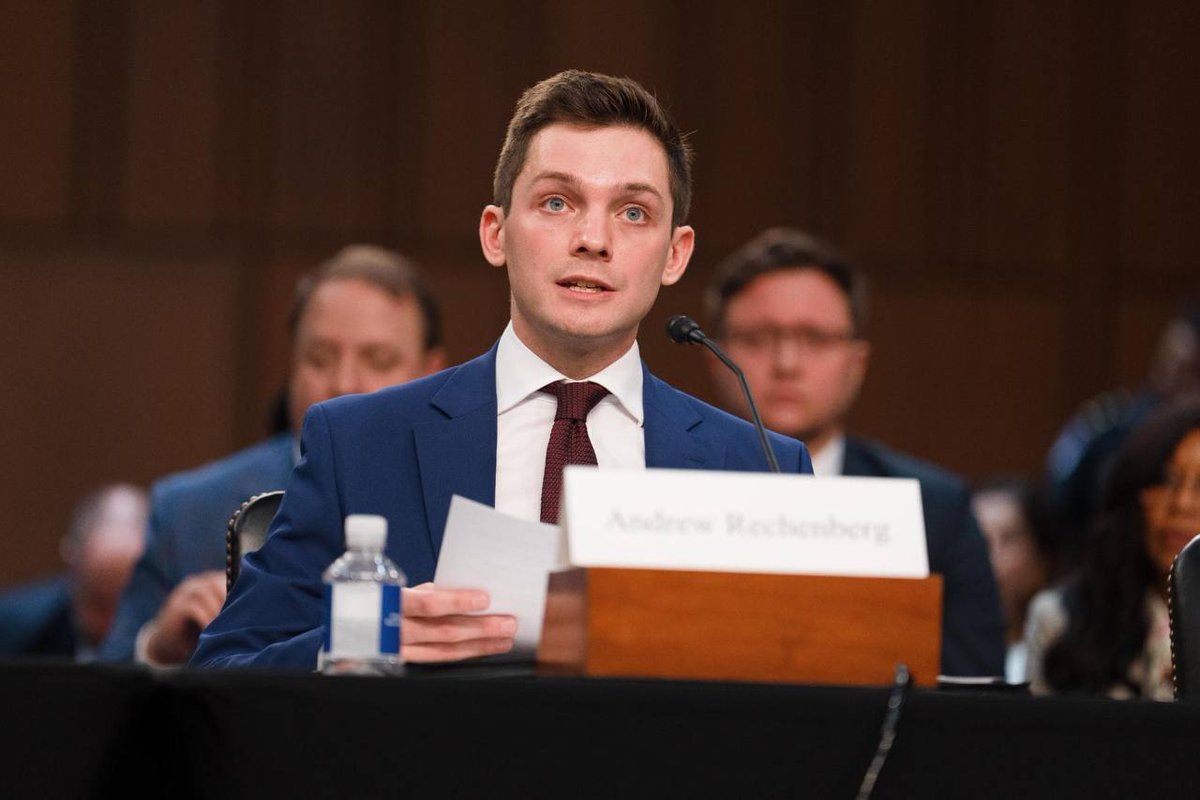
Here are the five strategic pillars I laid out before the U.S. @SenateAging Committee:
prosperousamerica.org/cpa-ec…
This is how we rebuild safe, affordable, U.S.-made medicine.
1
4
235
Andrew Rechenberg retweeted

This week’s episode of #TheBig3 focused on CPA’s new report on the foreign control of America’s antibiotic supply chain and the collapse of the domestic production base that once supported it.
CPA economists @CPAMihir and @AndrewRech traced the story back to an East Syracuse, New York facility that once produced 70% of America’s penicillin supply, but now produces nothing, symbolizing how the U.S. lost control of a critical industry.
The discussion highlighted how China now supplies roughly 87% of the antibiotic active pharmaceutical ingredients imported by the United States, while India formulates much of those ingredients into the finished drugs Americans consume.
The hosts stressed that this is not just a country-level dependence, but a highly concentrated firm-level chokepoint, with a handful of companies controlling much of the trade. They also underscored that foreign producers are not merely cheaper — in some cases, they are cutting corners on safety, falsifying data, and exposing American patients to greater risk.
Finally, the episode explored how policymakers can begin rebuilding antibiotic sovereignty through a mix of tariff-rate quotas, procurement reform, allied sourcing, and support for the remaining Western footholds in production and the limited final-dose capacity still operating in the United States.
Chapters:
00:00 - Introduction
01:38 - How America Lost its Antibiotic Industrial Base
09:57 - China's API Chokepoint, India's Role, & the Dangers of Concentrated Control
14:22 - Tariffs, Procurement Reform, & the Road Back to Antibiotic Sovereignty
🔊 Listen on Apple: tinyurl.com/37nzjsxd
🔊 Listen on Spotify: tinyurl.com/32hj8rd6
4
5
301
Andrew Rechenberg retweeted
This week’s episode of #TheBig3 used @CPAMihir's recent Ohio State debate on whether tariffs are “just” as a springboard to examine three core arguments in the trade debate: affordability, employment, and production.
First, Mihir and @AndrewRech argued that the cost-of-living crisis is being misdiagnosed. While tariffs are often blamed for inflation, they noted that the biggest drivers of household strain are non-tradable essentials like shelter, healthcare, and energy, not tariff-affected manufactured goods.
They pointed to a recent Minneapolis Fed analysis and category-level inflation data to argue that tariffs cannot explain the broader rise in prices.
Second, the discussion turned to employment and inequality. The hosts argued that free trade did not lift all boats, but instead helped drive factory closures, job displacement, wage stagnation, and wider regional decline, while the biggest gains flowed to capital, top earners, and asset holders.
Finally, the team examined whether tariffs are actually driving reshoring. Here, the hosts pointed to rising durable goods orders, stronger manufacturing PMI readings, improved labor productivity, and gains in domestic market share and output in sectors like primary metals and motor vehicles.
Their larger point was that tariffs, done right and sustained over time, can help redirect the economy away from consumption and toward production.
🔊 Listen on Apple: tinyurl.com/37nzjsxd
🔊 Listen on Spotify: tinyurl.com/32hj8rd6
7
6
288
Andrew Rechenberg retweeted

Antibiotics are as vital to national security as fuel or munitions 💊
Yet, 🇺🇸 and Europe rely on 🇨🇳 for nearly 90% of antibiotic active ingredients!
The new #Report by @AndrewRech unpacks this systemic vulnerability 👇
@cpa_tradereform
geostrategy.org.uk/research/…
4
6
552
Andrew Rechenberg retweeted
90% of the active ingredients for our essential antibiotics come from a single source: 🇨🇳
🎬 @AndrewRech unpacks the fragility of our antibiotic supply chain 👇
🔗 Explore the policy roadmap to rebuild allied antibiotic production: geostrategy.org.uk/research/…
@cpa_tradereform
6
12
2,567
Andrew Rechenberg retweeted
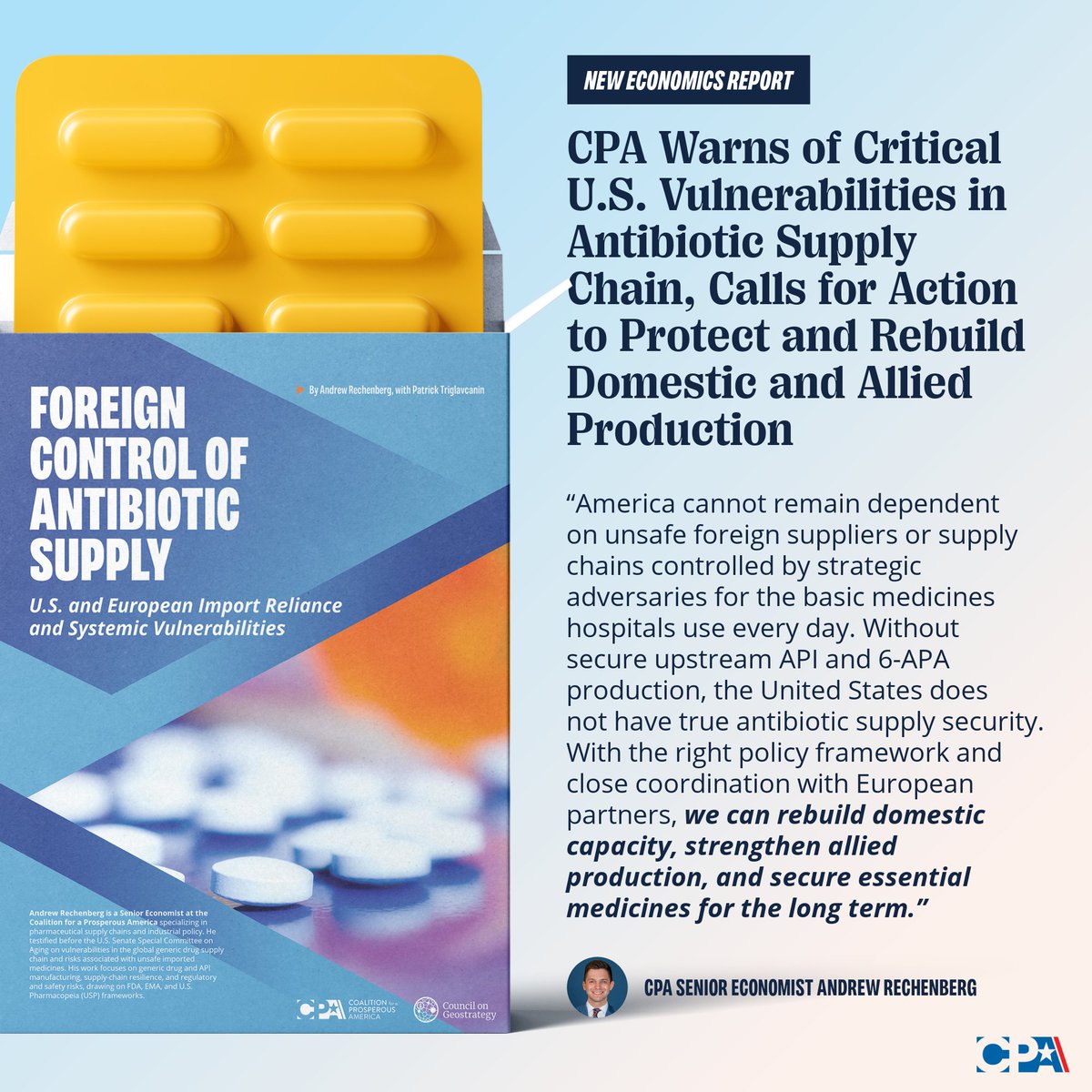
BREAKING: America’s antibiotic supply chain is a severe national security vulnerability. A new CPA and @ConGeostrategy report warns the U.S. depends on China for roughly 87% of antibiotic API imports, leaving hospitals and military readiness exposed to a dangerous single point of failure.
Rebuilding domestic and allied antibiotic manufacturing can’t wait.
tinyurl.com/26sk7zrx
6
9
461
Andrew Rechenberg retweeted
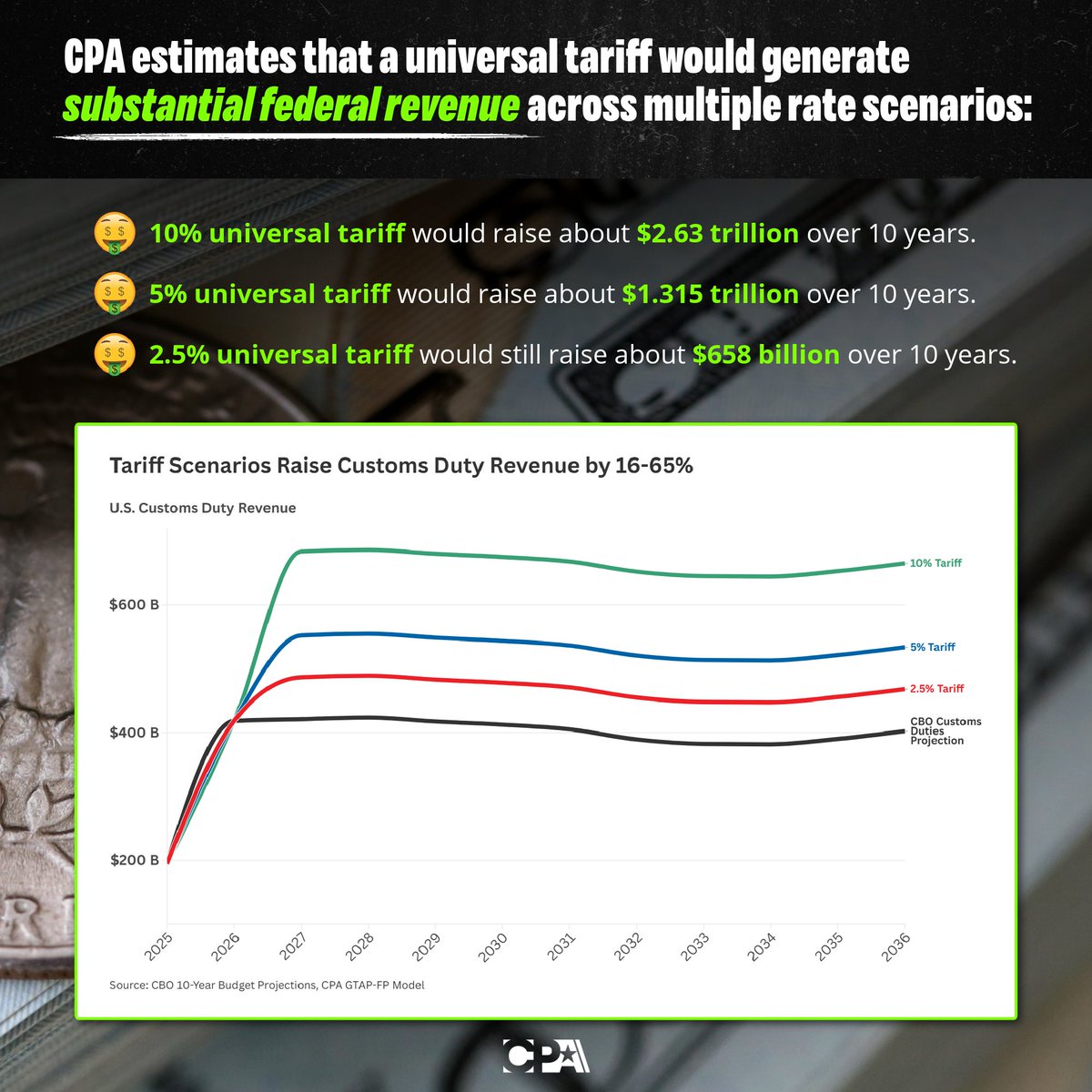
As the @USCBO projects a $1.9 trillion federal deficit for fiscal year 2026, Congress is under increasing pressure to identify durable budget pay-fors.
In most cases, that discussion quickly narrows to three familiar choices: raise domestic taxes, cut spending, or continue borrowing more. But tariffs warrant more serious consideration.
They are not only a trade policy tool; they are also a federal revenue instrument capable of generating substantial Treasury receipts while strengthening incentives for domestic production and more resilient supply chains.
tinyurl.com/mt3ujh88
4
7
251
Andrew Rechenberg retweeted
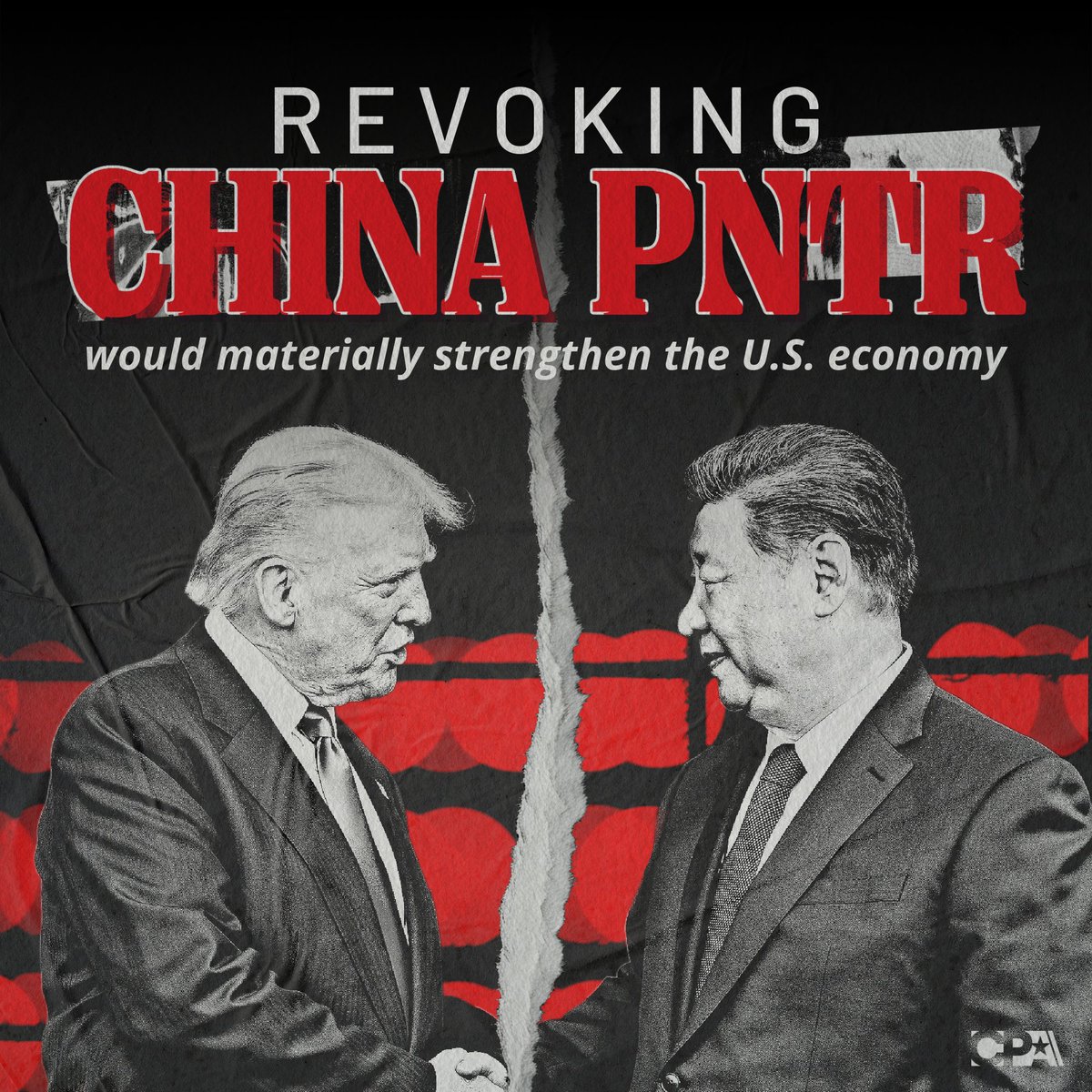
🚨 BREAKING: CPA has submitted formal comments to the U.S. International Trade Commission (USITC) in its investigation into the economic impact of revoking China’s Permanent Normal Trade Relations (PNTR) status.
Since PNTR was granted in 2000, U.S. imports from China have surged, the bilateral trade deficit has ballooned, and U.S. manufacturing has been hollowed out by deep structural imbalances.
Revoking PNTR for China would move Chinese imports onto an average effective Column 2 tariff rate of 38.9 percent, helping rebalance trade, restore domestic production capacity, and reduce strategic dependence on an increasingly adversarial economic system.
If we continue down the current path, we are not just losing factories—we are ceding technological leadership, supply chain security, and ultimately our economic sovereignty.
tinyurl.com/7v7dysps
1
7
10
1,045
Andrew Rechenberg retweeted
WATCH: This week’s episode of #TheBig3 with CPA economists @CPAMihir and @AndrewRech centered on three major trade investigations that go to the heart of CPA’s industrial policy agenda: global overcapacity, forced labor, and revoking China’s permanent normal trade relations (PNTR) status.
1️⃣ The crew examined the Section 301 overcapacity investigation, arguing that China remains the central driver of global industrial excess, but that countries such as Vietnam, India, Mexico, and Egypt also function as conduits or secondary sources of distortion. They pointed to enormous overcapacity in sectors like steel and solar, warning that subsidized production is flooding world markets and undercutting U.S. manufacturers.
2️⃣ The hosts turned to forced labor, describing it as a hidden production subsidy that lowers labor costs, suppresses fair competition, and is deeply intertwined with the same supply chains driving overcapacity, particularly in Chinese polysilicon and solar production.
3️⃣ Finally, the team discussed CPA’s comments to the U.S. International Trade Commission on revoking China’s permanent normal trade relations status. They argued that China’s entry into the WTO devastated American manufacturing communities, and they highlighted CPA modeling showing that moving China to Column 2 tariff treatment could generate large GDP gains, create jobs, and begin correcting a decades-old policy mistake.
3
158
Andrew Rechenberg retweeted
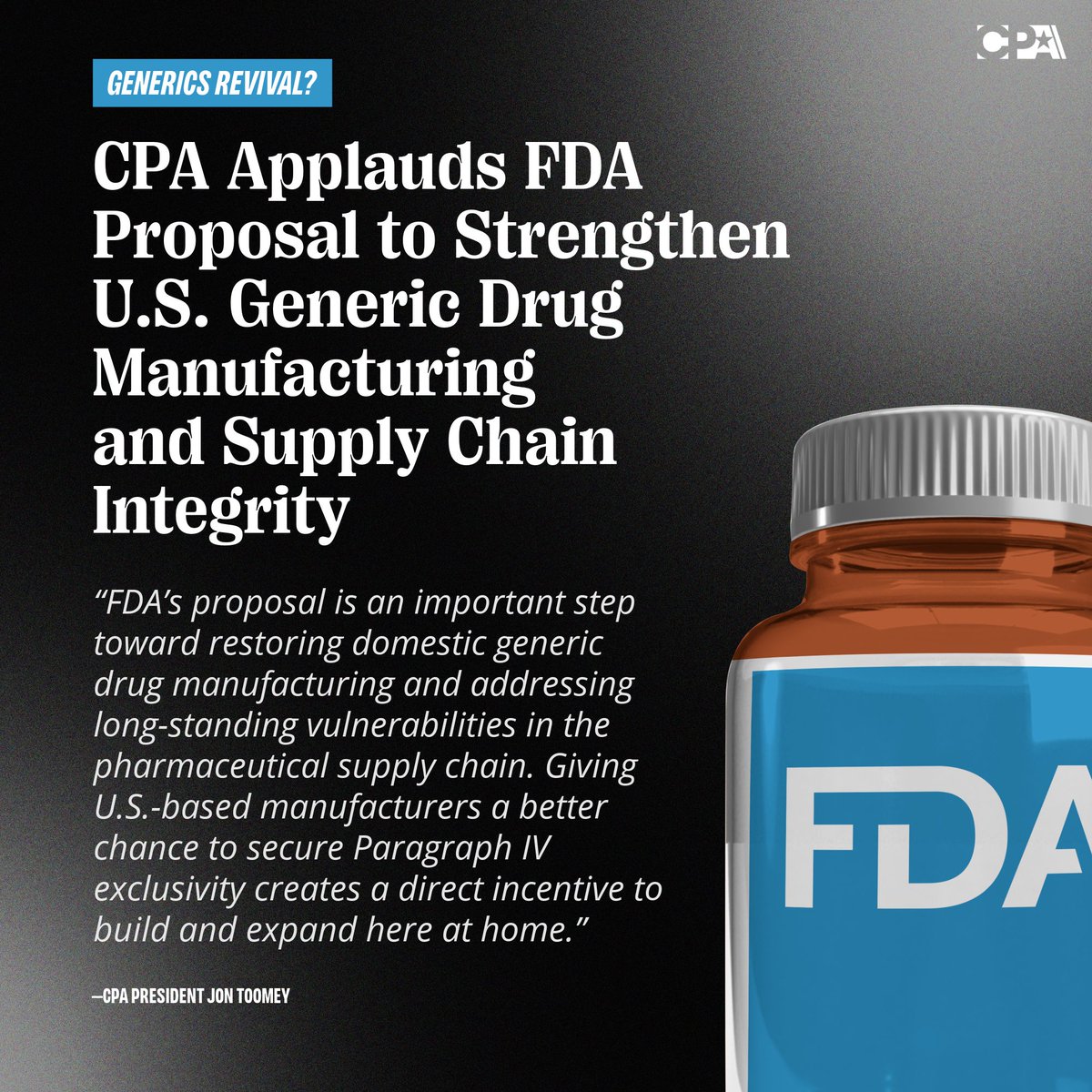
America does not just have a drug shortage problem. It has a drug production problem. For too long, domestic manufacturers have been forced to compete in a system that rewards the cheapest foreign supplier, even when that means more fragile supply chains, weaker transparency, and greater patient risk.
@US_FDA’s fiscal 2027 budget proposal begins to recognize that domestic production capacity is itself a public health and national security asset.
tinyurl.com/4stazc5b
3
9
605
Andrew Rechenberg retweeted
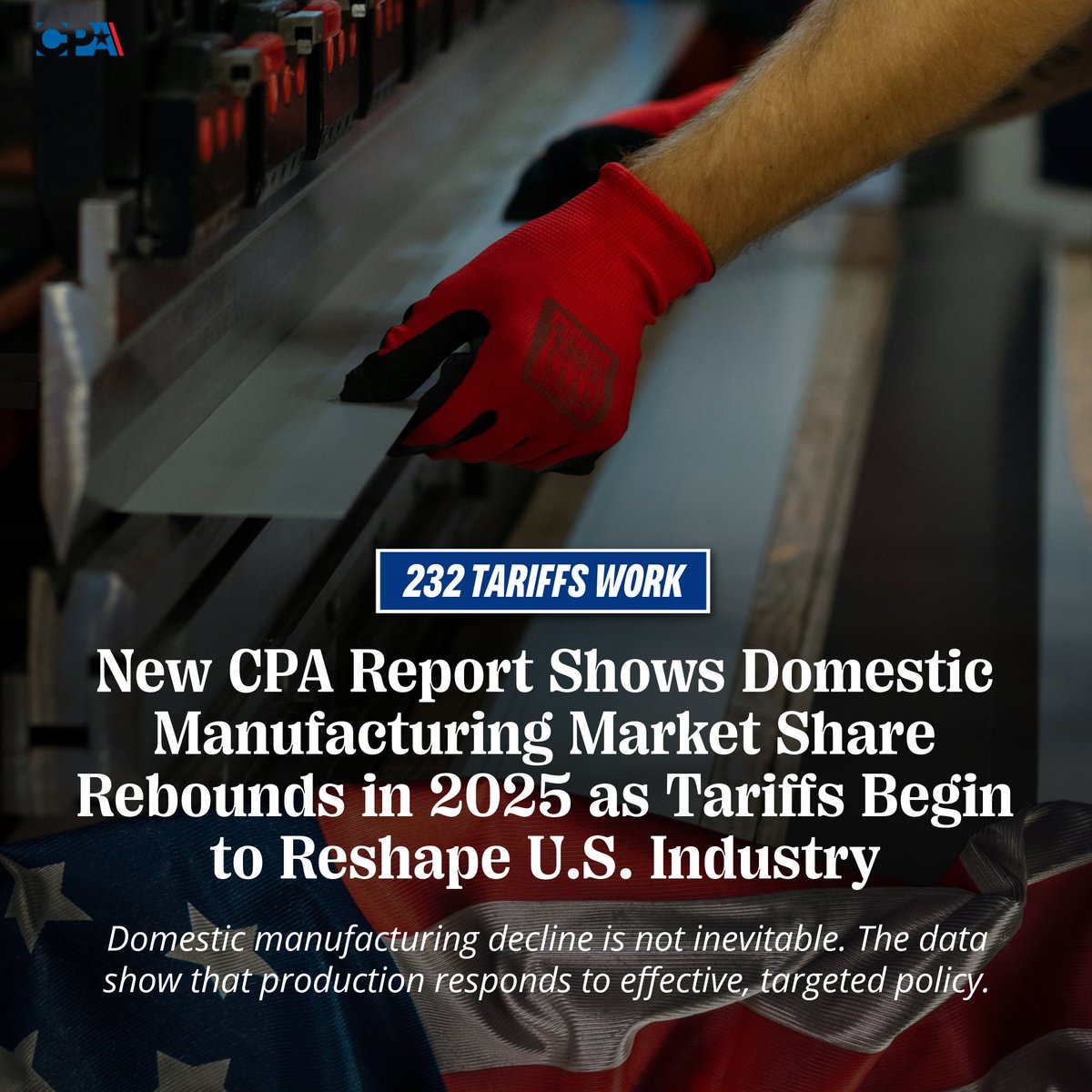
NEW: CPA has released a new report from its economics team showing that U.S. manufacturers are beginning to regain ground in their own domestic market as targeted trade enforcement policies take effect.
CPA President Jon Toomey: "These early results suggest that Section 232 tariffs are beginning to work as intended. When policymakers act to correct unfair trade conditions and reduce import distortions, American producers can begin to regain market share and expand output. After years of erosion, some U.S. manufacturing sectors are beginning to recover ground in the domestic market."
tinyurl.com/4tu3j55w
7
6
230
Andrew Rechenberg retweeted
On this week’s episode of #TheBig3, @CPAMihir and @AndrewRech zero in on @POTUS' new Section 232 proclamations on metals and medicines the 1-year anniversary of Liberation Day tariffs.
The team explain why the new metals action is so significant: steel, aluminum, and copper tariffs will now apply to the full customs value of imported products rather than just the declared value of their metal content, a change aimed at stopping chronic undervaluation and customs gaming.
Second, the conversation turned to pharmaceuticals, where the administration made a positive national-security finding and imposed a 100% tariff on patented brand-name drugs and key inputs for companies without U.S. production plans, while creating lower tariff tiers for firms that invest onshore.
While the team welcomed the move, they emphasized that generics still need to be included, given their central role in U.S. healthcare.
Finally, the two assessed Liberation Day one year on, arguing that the worst tariff predictions never materialized. Instead, they pointed to stronger durable goods orders, rising industrial production, sector-specific gains in metals and autos, and little evidence that tariffs are meaningfully driving inflation.
Catch new episodes of #TheBig3 every Friday on YouTube, Apple, Google, Spotify, or wherever you get your podcasts!
4
4
186
Andrew Rechenberg retweeted
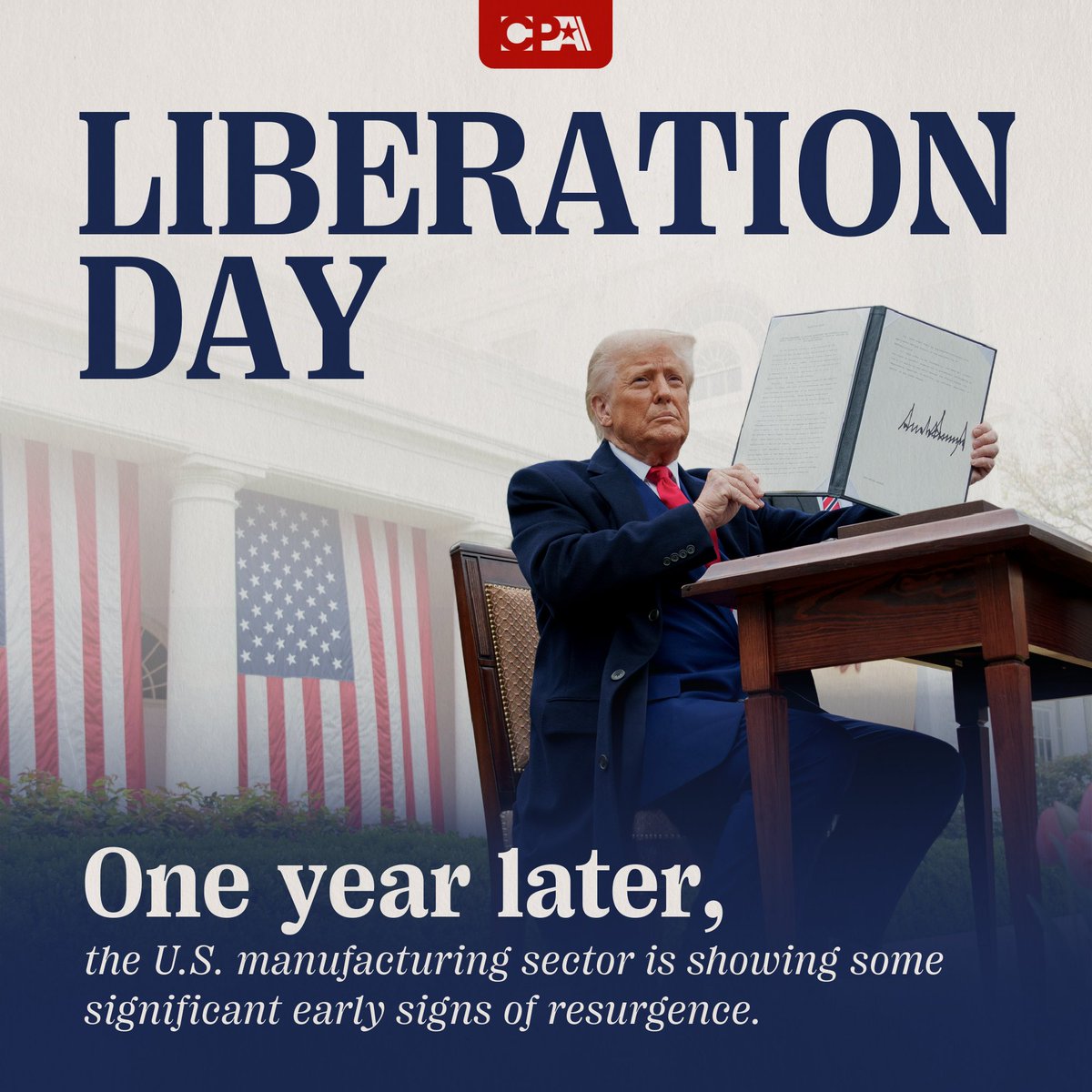
.@AndrewRech: One year after Liberation Day, the direction is clear. U.S. manufacturing has begun to recover. The industrial base is responding to tariffs, but the country is still climbing out of a deep industrial deficit created by decades of offshoring.
The task now is to turn early momentum into lasting industrial recovery.
tinyurl.com/2n3ffvs8
5
6
244
Andrew Rechenberg retweeted

Mar 24
“Product of USA” should mean exactly what it says.
Behind every “Product of USA” label is a hardworking American rancher. Choosing these products means supporting local families, communities, and agriculture.
While still voluntary, USDA’s updated definition ensures that if you see that label, it means the animal was born, raised, harvested, and processed in the United States. Foreign producers can no longer falsify where their products are coming from.
A step in the right direction and a foundation to build on.
@SecRollins @USDA
#ProductofUSA #MadeinUSA

26
103
461
7,380
Andrew Rechenberg retweeted
NEW: This week's episode of #TheBig3 with @CPAMihir and @AndrewRech focused on two new Section 301 investigations covering structural excess capacity and forced labor across 16 economies, including China, the European Union, India, Japan, Korea, Mexico, and several Southeast Asian countries.
The CPA Economics Team argued that these probes signal a much broader and more durable trade response than earlier China-specific actions, while also raising concerns about tariff arbitrage, transshipment, and whether this approach could displace the more targeted Section 232 process.
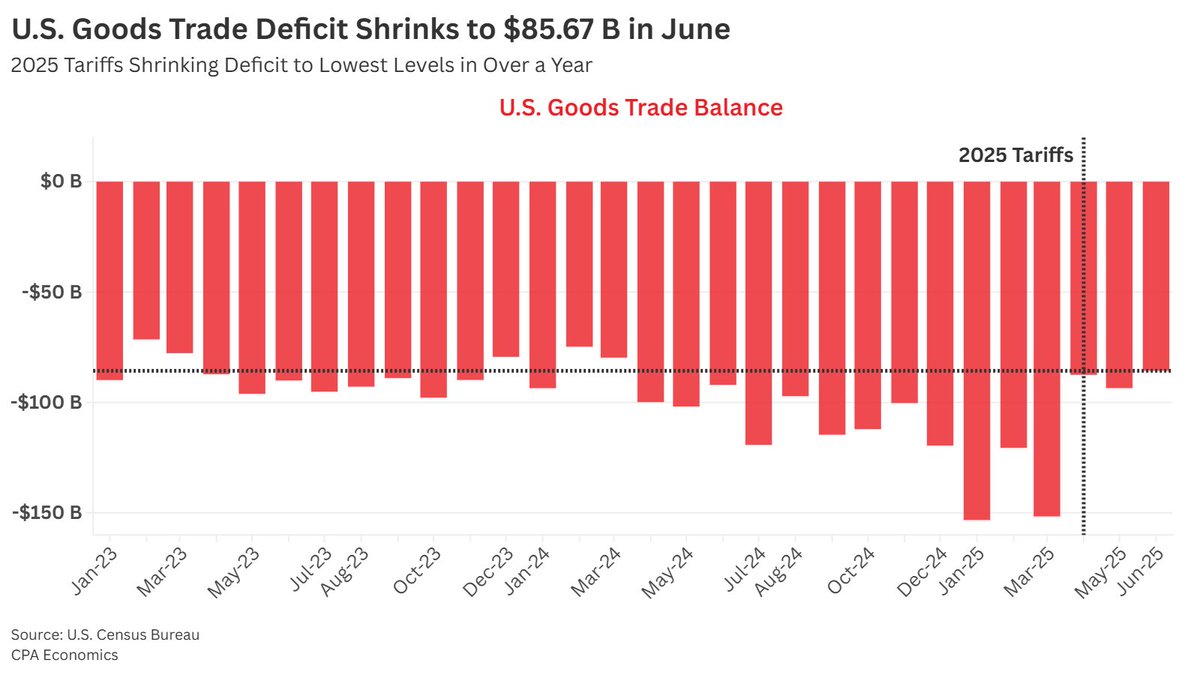
Second, the discussion turned to the January trade data, which showed a notable improvement in the goods and services trade deficit, falling to $54.5 billion. The team highlighted lower automotive and pharmaceutical imports, modest automotive inflation, and rising exports of non-monetary gold, while arguing that current inflation pressures are not being driven by tariffs. They also warned that growing imports tied to AI data center buildouts could worsen the deficit if the U.S. does not produce more of that equipment domestically.
Third, the episode explores Torsekar's “tariff the money” argument: that trade deficits are tied not just to imports and exports, but to capital inflows that strengthen the dollar and weaken export competitiveness, making a market access charge worth considering.
3
11
297
Andrew Rechenberg retweeted
This week's episode of #TheBig3 with hosts @CPAMihir and @AndrewRech examines new inflation data, China’s export surge, and emerging rules around semiconductor exports. The discussion begins with the latest inflation data, highlighting a divergence between goods and services prices.
While inflation in manufactured goods remains relatively muted (often around 1%), cost pressures are rising sharply in services such as healthcare, utilities, and housing. The team argue that the affordability crisis facing many Americans is less about tariffs or import prices and more about stagnant wages. Since 2000, U.S. productivity has risen dramatically while worker compensation has increased far more slowly, creating a widening gap that has pushed households toward debt and eroded purchasing power.
The second topic explores China’s accelerating export growth, with shipments rising more than 20 percent early in 2026 despite declining exports to the United States. Much of this growth is being redirected to Europe and Southeast Asia, where Chinese goods are either finding new markets or being routed through intermediary countries to circumvent tariffs. The CPA Econ Team argue that China’s export surge reflects persistent industrial overcapacity following its real-estate slowdown.
Finally, the episode examines a proposed U.S. policy linking advanced semiconductor exports to foreign investment in American AI infrastructure. The conversation compares this approach with CPA’s “chip-for-chip” proposal, emphasizing that sustaining domestic semiconductor production will require both investment incentives and guaranteed demand from U.S. firms.
6
5
250
Andrew Rechenberg retweeted
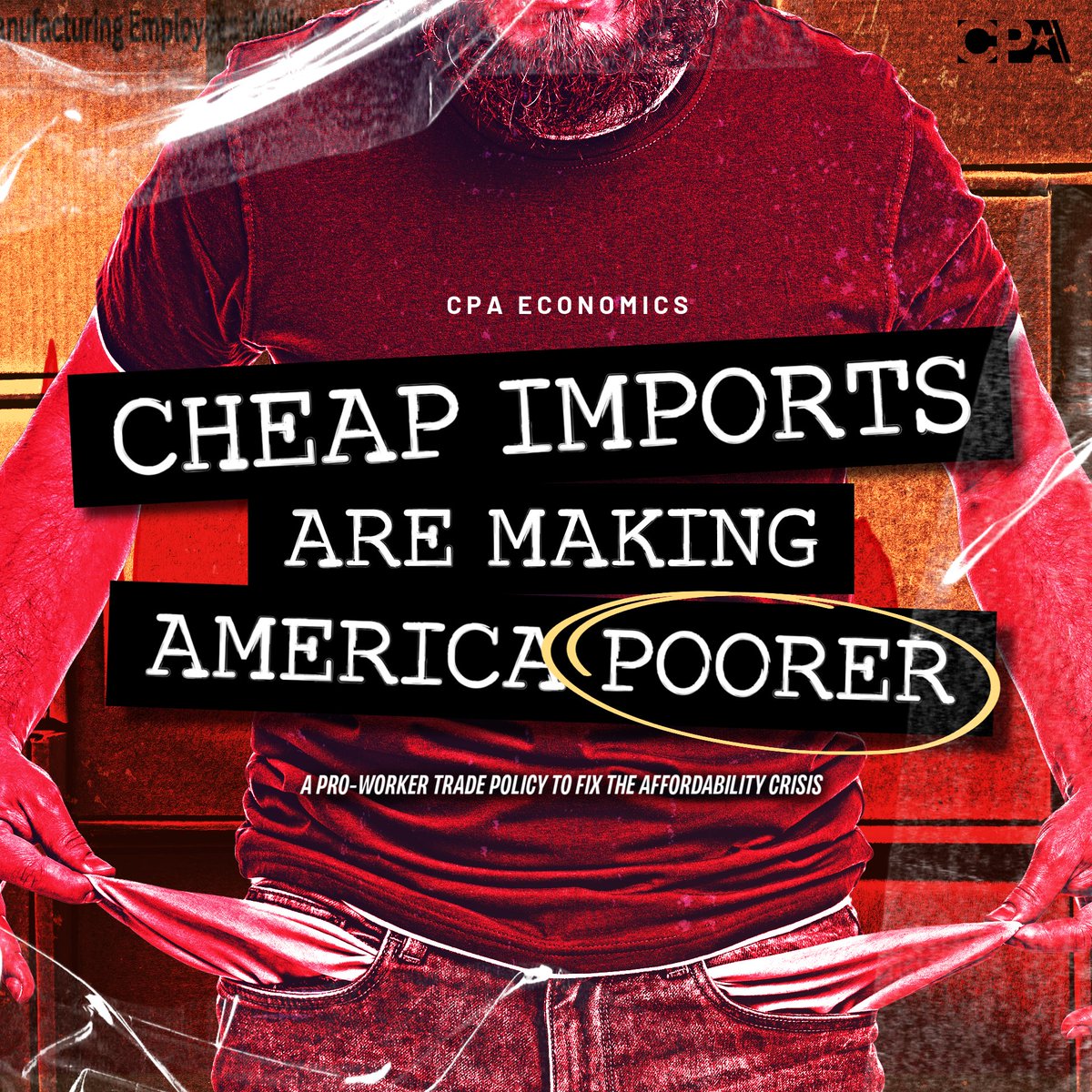
Cheap imports don’t make a country rich. They hollow out the industries that pay good wages.
Since 2000, Americans produced 65% more, but pay rose only 23%.
The real affordability crisis isn’t tariffs — it’s deindustrialization.
tinyurl.com/ymu6nbuk
8
15
416
Andrew Rechenberg retweeted
The U.S. is entering a new phase of economic competition with China, and the policy choices made now will shape the future of American industry, technology, and national security. This week’s episode of #TheBig3 examines three major developments that highlight the growing urgency of a true “China reckoning” in U.S. trade policy.
First, economists @CPAMihir and @AndrewRech break down the newly-released @USTradeRep 2026 Trade Policy Agenda and @POTUS' annual trade report. While the document acknowledges the scale of China’s export-driven model—including a staggering $1.2 trillion global trade surplus in 2025—it stops short of proposing the structural solutions needed to address the problem. China’s state-backed overcapacity continues to flood global markets with artificially cheap goods, driving down prices and undermining U.S. industries across sectors ranging from metals and plastics to vehicles and furniture. The report identifies the challenge, but meaningful policy action remains uncertain.
Second, the conversation turns to a new U.S. International Trade Commission investigation into revoking China’s Permanent Normal Trade Relations (PNTR) status. Granting PNTR helped cement China’s integration into the global trading system, but the results have been costly for American manufacturing. Studies estimate the United States lost millions of jobs as China’s state-directed export machine expanded. Moving China to higher “Column 2” tariff rates would represent a fundamental reset in U.S.–China trade relations and could restore a more level competitive playing field for American producers.
Finally, the episode explores China’s rapid advances in biotechnology, a sector where the United States has long held the global edge. China is now launching more clinical trials, expanding research capacity, and attracting billions in licensing deals from Western pharmaceutical companies. If current trends continue, the U.S. risks outsourcing not just manufacturing but the next generation of medical innovation to its primary geopolitical rival.
Taken together, these developments underscore a single reality: the era of complacency in U.S.–China economic policy is over.
4
6
286
Andrew Rechenberg retweeted
📺 This week on The Big 3, @CPAMihir and @AndrewRech are joined by CPA Trade Counsel @Charles_Benoit to unpack the Supreme Court’s IEEPA tariff ruling and what it means for America’s trade and industrial policy.
The conversation centers on three major takeaways: the looming federal revenue cliff created by the decision, the urgent need for Congress to codify revenue-generating tariffs, and the path forward through Section 232 national security tariffs.
The team highlights that billions in projected tariff revenue — already factored into congressional budget forecasts — are now at risk of being refunded to large corporations unless Congress acts. Benoit argues that no presidential tariff authority is designed to sustain long-term revenue, making legislation essential. @RepGolden and @RepGregSteube's Secure Trade Act, which would codify a 10% universal tariff and repeal China’s MFN status, is discussed as a viable bipartisan solution.
The episode closes with a broader argument: tariffs should not be used as short-term leverage for export gains, but as durable tools to protect domestic industry, strengthen manufacturing capacity, and raise American wages.
5
7
560
Andrew Rechenberg retweeted
Feb 7
Previous administrations have similarly invited increased beef imports with the same expectation that increasing imports would lower consumer beef prices. In practice consumer beef prices were not reduced but instead, increased imports correlated with the shrinking of the U.S. cattle herd, the exodus of U.S. cattle farmers and ranchers, and higher consumer beef prices.
6
38
121
12,954
Andrew Rechenberg retweeted
📺 WATCH: In this week's episode of The Big 3, senior economists @CPAMihir and @AndrewRech examine China’s push to elevate the renminbi to global reserve-currency status as part of a broader de-dollarization strategy. While China seeks to reduce vulnerability to U.S. financial sanctions, the team argues the renminbi remains far from a credible challenge due to capital controls, political risk, and its minimal share of global reserves.
Second, the discussion turns to Project Vault, a $12 billion initiative to stockpile critical minerals and reduce U.S. dependence on China’s rare-earth dominance. The hosts stress that stockpiling alone is insufficient without long-term investment in domestic and allied mining and refining capacity.
Finally, the episode highlights new polling showing strong support among Trump voters for solar energy as part of an “all-of-the-above” energy strategy, driven by rising electricity costs, AI-related demand, and the need for affordable power to support U.S. reindustrialization.
3
4
304