
Mom of 3, confused by her extremely online son.
Joined December 2012
- Tweets 3,933
- Following 176
- Followers 95
- Likes 7,446
90 Photos and videos





Jun 14
😂
Jun 13

Stateside, a gas station. I drank a frozen blue beverage too quickly, and was struck down by a punishment this entire nation knows, and accepts, and has named.
The drink is called a slush. Ice, sweetness, and a blue that does not occur in nature. The day was hot. I was thirsty. I drank like a soldier at a river.
The pain arrived in my skull like a war horn.
Behind the eyes. Above everything. Total. I gripped the roof of my car. I may have made a sound.
"Brain freeze," said the cashier through the door, with no urgency whatsoever.
It has a NAME. The affliction is so common it has a household name, like a cousin.
"Tongue on the roof of your mouth," called a man at the pumps. He did not look over. He prescribed the remedy mid-pump, casually, the way one mentions weather.
I pressed my tongue to the roof of my mouth. The war horn faded. The healer nodded at his pump, finished, and was gone in a Chevrolet.
In my land, punishment follows crime by way of courts and seasons. Here, the sentence is instant. Drink with greed, and the ice strikes the mind directly. No trial. No appeal. Perfectly fair.
And here is what moves me. EVERYONE has felt it. The cashier. The healer. Children. Elders. An entire nation united by the same small lightning, all taught the same cure, all passing it on to strangers at gas stations, free of charge.
You cannot fully distrust a country once you know it shares one pain.
The freeze does not punish thirst. It punishes haste.
I finished the slush slowly, like a scholar. Blue tongue. Clear mind.
Then at the door I forgot everything, drank deeply, and was struck down again.
"Tongue, hon," said the cashier, without looking up.
Discipline is a journey.

11
Jun 13
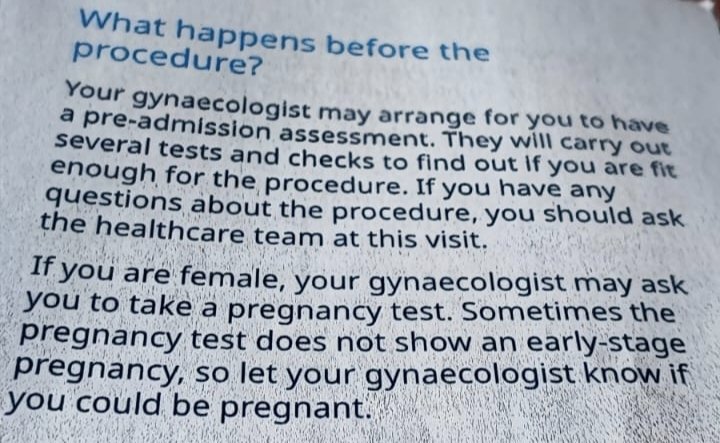
What are they going to remove if you are not female? We trust these people?

A friend who is going for a hysterectomy sent me a photo of some of the advice she has received about the procedure.
6
Ann Roth retweeted

Jun 10
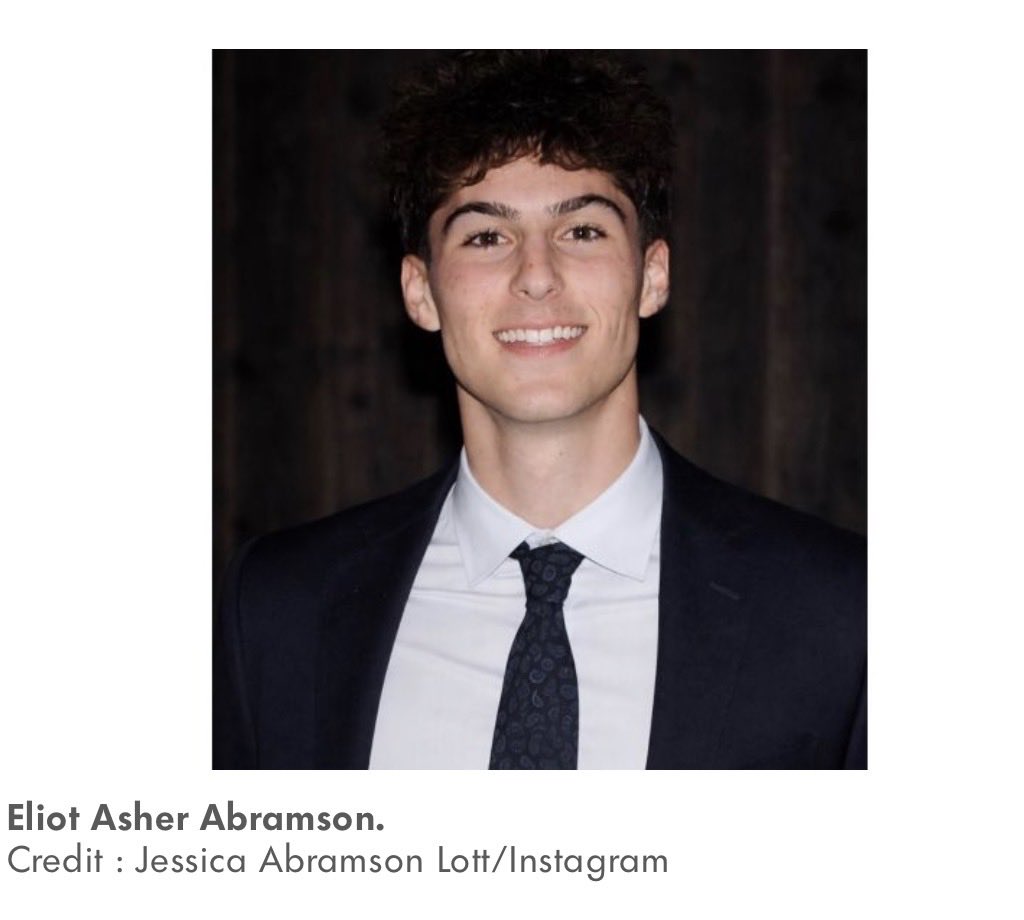
High school sophomore Eliot Abramson was struck in the back of the neck by a ball while playing lacrosse on June 1, 2026. A firefighter at the scene kept his heart beating until he could be taken to a hospital.
From the statements in the media reports, it appears that this unfortunate young man went on to become an organ donor under the controlled donation after circulatory death (DCD) protocol.
If this was the case, here’s how the DCD protocol works:
1. He signed up at the DMV with absolutely no informed consent process to become an organ donor.
2. He sustained a critical injury.
3. His heart was beating, and he apparently did not meet criteria for brain death. But his prognosis for recovery was poor.
4. His family decided to withdraw his medical support. But because he had registered as an organ donor, his support was mandated to be removed in such a way as to allow organ procurement.
5. He was given a do not resuscitate (DNR) order, because while he could have been resuscitated, a decision had been made not to do so.
6. His ventilator was withdrawn, and the stopwatches started ticking: hypoxia is very detrimental to organ viability. He needed to become pulseless fairly quickly so his organs would be viable for donation.
7. Once pulselessness was achieved, doctors observe a 2-5 minute stand-off period to be sure there is no spontaneous return of circulation before beginning organ procurement as quickly as possible.
The problem with the DCD protocol is that people are routinely able to be resuscitated after just 2-5 minutes of pulselessness, and if you could still be resuscitated, you are not dead.
This is why there have been cases of DCD donors who have resumed heartbeat and breathing during the removal of their organs.
The New York Times reported on multiple instances of problems with recovery during the DCD process in an article last year.
A 2-5 minute stand-off period is far too short to be sure death has occurred because people have been documented to have auto-resuscitated and made a full recovery after 10 minutes of pulselessness.
But waiting for more than 10 minutes is too hard on organ viability.
The DCD protocol is a concealed form of physician-assisted death for the sake of viable organs.
154
1,009
2,874
199,813
Jun 5
Yes and 98% it’s a big ass pick up that barely fits in the space. 🙄
Jun 4

Why do people reverse into parking spaces?
At first it was one or two misdirected fools, now it's spreading like a disease.
It makes no sense. You are only making it so much harder for yourself, and everyone hates you as you block the road trying to get into the space.
22
Ann Roth retweeted

Jun 2
La bande d'annonce du nouveau film sur l'apostolat de la FSSPX est sorti aujourd'hui et c'est littéralement époustouflant. youtu.be/xx0TX7HGF1E
26
185
777
104,856
Jun 2
Wow! He is great!
I love how he just tosses them aside.😂

I saw it. Now you have to see it. His name is Samuel. And he…is a king.
15

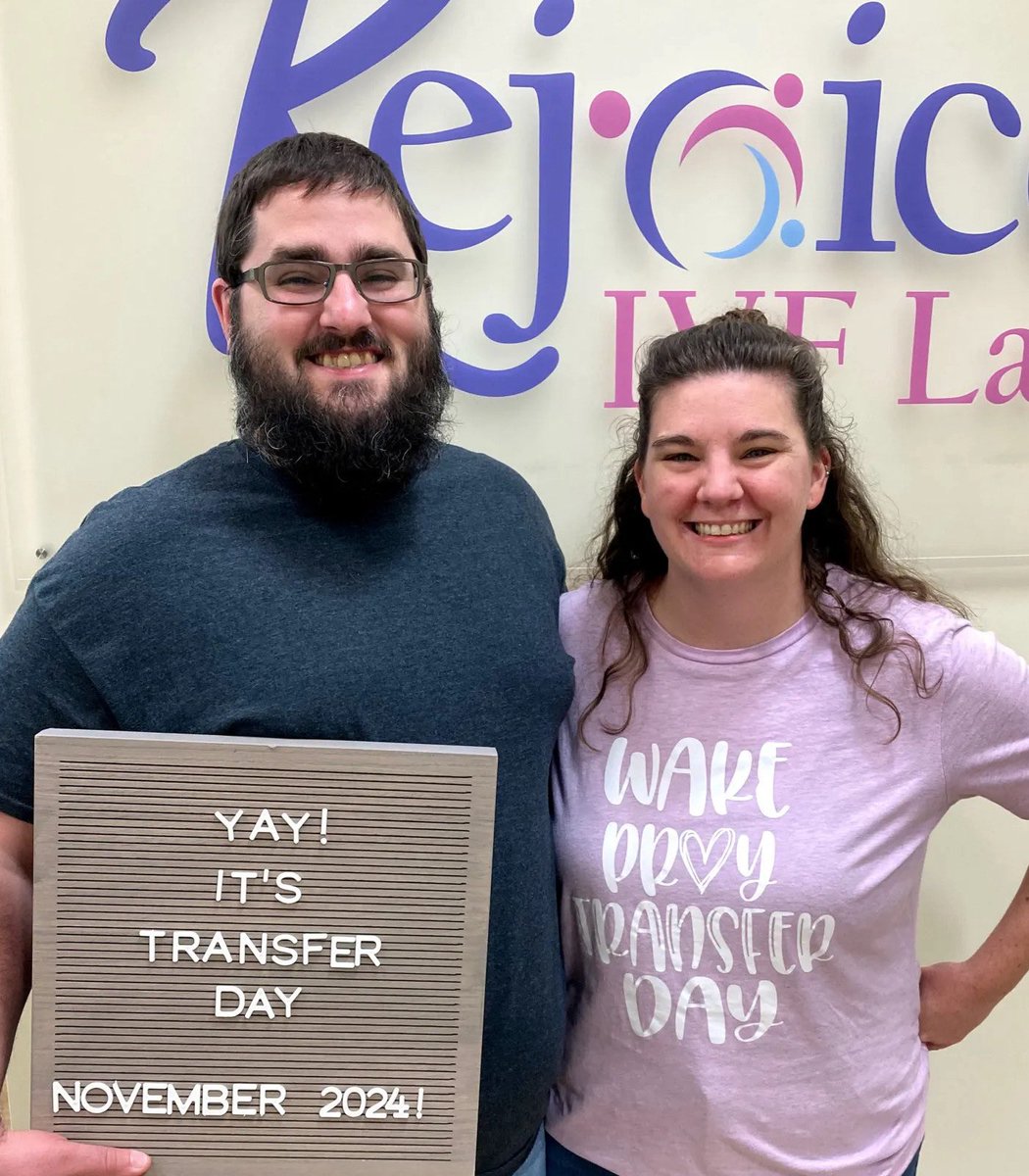
We are approaching a generational crisis that will decide the fate of millions of children.
In just a few years, we will begin to hear stories of parents secretly leaving embryos in their will to their living children.
Grieving children will be left to decide the fate of dozens of their frozen siblings having only just learned they existed at all.
If we had any moral compass as a society we would shut down this unregulated industry that has created the greatest human rights crisis of our time.
May 21

The world's oldest baby was born from an embryo frozen in 1994.
Thaddeus Daniel Pierce is over 30 years old despite being born on July 26, 2025

12
38
213
29,581
Ann Roth retweeted

May 24
One thing that I think is often overlooked when it comes to this specific question, is that homosexual behavior (unlike adultery) is disordered in a way that not only violates moral law, but also violates the anthropological understanding of the human person.
It does not only violate the natural order of sexual relationships; it also distorts the God given meaning of the human person, which is more foundational. The very act itself tells a devastating lie about the body, and the complementary aspects of both male and female.
That is why people who have same sex attraction often say, “I Am Gay,” as an identity. Once identity becomes something perceived outside the scope of what was given by God, the consequences are catastrophic. It’s not just sin. It’s an aggressive lie against the human person.
I believe sincerely that this is the primary reason this topic gets more attention, even when people cannot articulate that point. There is something deeply and naturally perceivable in the distinction between both those sexual sins.
In other words, it’s not simply a matter of, “this is bad behavior”… it’s an outright rebellion against reality itself.
But to your point, I do believe that adultery is VERY under emphasized in our culture.
May 19

Why is homosexuality constantly singled out, while adultery is literally listed in God's Ten Commandments and often gets overlooked?
8
7
74
24,613
Ann Roth retweeted

May 23
It is simply not accurate to say that the Society of St. Pius X outright rejected Vatican II. That is a slogan, not an analysis.
The Second Vatican Council produced 16 documents: 4 constitutions, 9 decrees, and 3 declarations. The SSPX does not say that every line of every document is false. Nor does it say that the Council was not a real council, or that nothing useful or orthodox can be found in its texts.
The SSPX position is much narrower and much more serious. It argues that certain passages in certain Vatican II documents are difficult, or even impossible, to reconcile with the Magisterium as previously elucidated by Holy Mother Church.
The principal areas of concern are religious liberty, ecumenism, and collegiality. The two most serious flashpoints are usually Dignitatis humanae, on religious liberty, and Unitatis redintegratio, on ecumenism. A third important issue arises in Lumen gentium, especially in relation to episcopal collegiality.
The problem with Dignitatis humanae is not that the SSPX believes people should be forced to believe. Catholic doctrine has never taught that faith can be coerced. The issue is whether civil society, as civil society, has duties toward the true religion, and whether religious error, as such, can properly be said to possess rights.
The problem with Unitatis redintegratio is not that the SSPX opposes charity toward non-Catholics, courteous theological discussion, or efforts to remove misunderstandings. The issue is whether modern ecumenism obscures the visible unity and uniqueness of the Catholic Church by treating separated communities as though they were partial but legitimate expressions of the Church of Christ.
The problem with collegiality is similar. The SSPX is concerned that certain formulations can blur the primacy of the Pope by speaking of the college of bishops in a way that may appear to create a parallel source of supreme authority. The very existence of the Nota Praevia shows that this was not an imaginary concern.
So the honest statement is not that the SSPX "rejects Vatican II." The honest statement is that the SSPX accepts what is traditional and orthodox in Vatican II, but resists those passages which it believes cannot be reconciled with the Magisterium as previously explained, clarified, and handed down by the Church.
That distinction matters. To say that the SSPX "rejects Vatican II" makes it sound as though the Society rejects everything contained in the Council: the Trinity, Scripture, the Incarnation, the priesthood, the episcopacy, missionary activity, Catholic education, religious life, and the universal call to holiness. That is plainly false.
The real dispute is not whether Vatican II happened. It did. The dispute is not whether every sentence of Vatican II is false. It is not. The dispute is whether certain disputed passages can truly be read in continuity with the one Magisterium of the Church, or whether they introduced ambiguity, novelty, or rupture under the language of development.
1
3
127
Ann Roth retweeted

May 16
Thoughts about the collision of the Holy See and the SSPX. Wherein Fr. Z rants. wdtprs.com/2026/05/thoughts-…
13
15
54
4,996
May 16
It is not that complicated. The bishops need to repent and believe in the Gospel and teach that to their priest and people. Stop trying to accommodate to the spirit of the age. Teach the truth. No working groups and long winded papers. Repent and believe in the in the Gospel.
May 15

The DDF is preparing a new text on the "transmission of the faith," in part because bishops from around the world have expressed "concern" and "proposed a study on the problem and possible ways of resolving it."
News via @EdwardPentin at @NCRegister :
ncregister.com/news/cardinal…
20
Ann Roth retweeted

May 13
What Elizabeth Anscombe labeled “consequentialism” – the mentality according to which there is no act, not even killing the innocent, that should be off the table if it has sufficiently good consequences – is very common today on the right no less than on the left, especially where matters of war are concerned. It underlies the skepticism or even contempt many on the right seem to have for just war doctrine. It also seems to be driving many right-wingers to acquiesce to the GOP’s abandonment of its traditional pro-life position, to rationalize lawfare as a tactic to use against those who have used it against them, and to abandon other norms.
As Anscombe warned, consequentialism is deeply morally corrupting, and indeed itself corrupt. It amounts to the view that it is permissible to “do evil that good may come” (Romans 3:8). It is utterly irreconcilable with natural law and Catholic moral theology. Orthodox Catholics are used to thinking that the political right is much closer to Catholic moral teaching than the political left is. I think that used to be true. It pains me to say it, but I don’t think it is true anymore. Jingoism and the lure of political power have led too many right-wingers to adopt an essentially consequentialist mindset, and they rationalize doing so by telling themselves that only those with a “beautiful loser” mentality could object.
Christ famously warned: “Beware of the leaven of the Pharisees and the Sadducees.” Different as those sects appeared to be to their adherents, what was more significant were the ways they were both corrupt. Catholics should beware of the leaven of the Democrats and the Republicans, both of whom have become deeply corrupted and should be held at arm’s length. They should put their Catholic moral principles first, their country second, and party affiliation a distant third.
38
76
413
23,421
Ann Roth retweeted

May 12
Here are four rare priest vestments you probably don’t see everyday…
21
164
1,558
78,364
Ann Roth retweeted

May 10
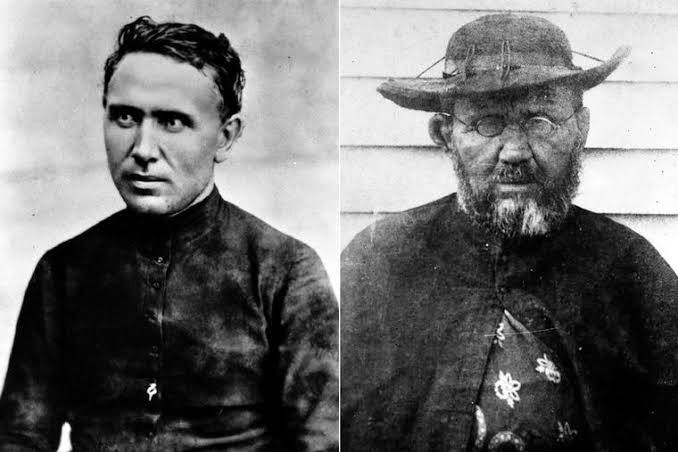
Happy Feast Day of St. Damien of Molokai! One of the greats.
3
95
1,071
16,794
May 10
Pretty much. Not using the open lane to merge is just stupid.
May 10

A two lane merge is called a zipper merge and if 70 percent of the drivers were not retarded they would know how to do it and cut down on the congestion.
20


Apr 30
What difference does it make? She was baptized at the Brompton Oratory in London where her husband came into the Church. I assume because the priest was someone they knew & trusted. No idea where confirmation took place. Are we questioning that priest or bishop too?
Apr 30

Pick and choose, yet she wasn’t confirmed by her priest at her parish?
122
Apr 30
Same. And when I told her she was wrong to mind her own business she blocked me. And she is wrong here.

She was arguing with me that confirmation is required for membership in the Church lol
1
38