Joined December 2017
- Tweets 3,592
- Following 89
- Followers 42,943
- Likes 1,311
Photos and videos
Pinned Tweet

Mar 6
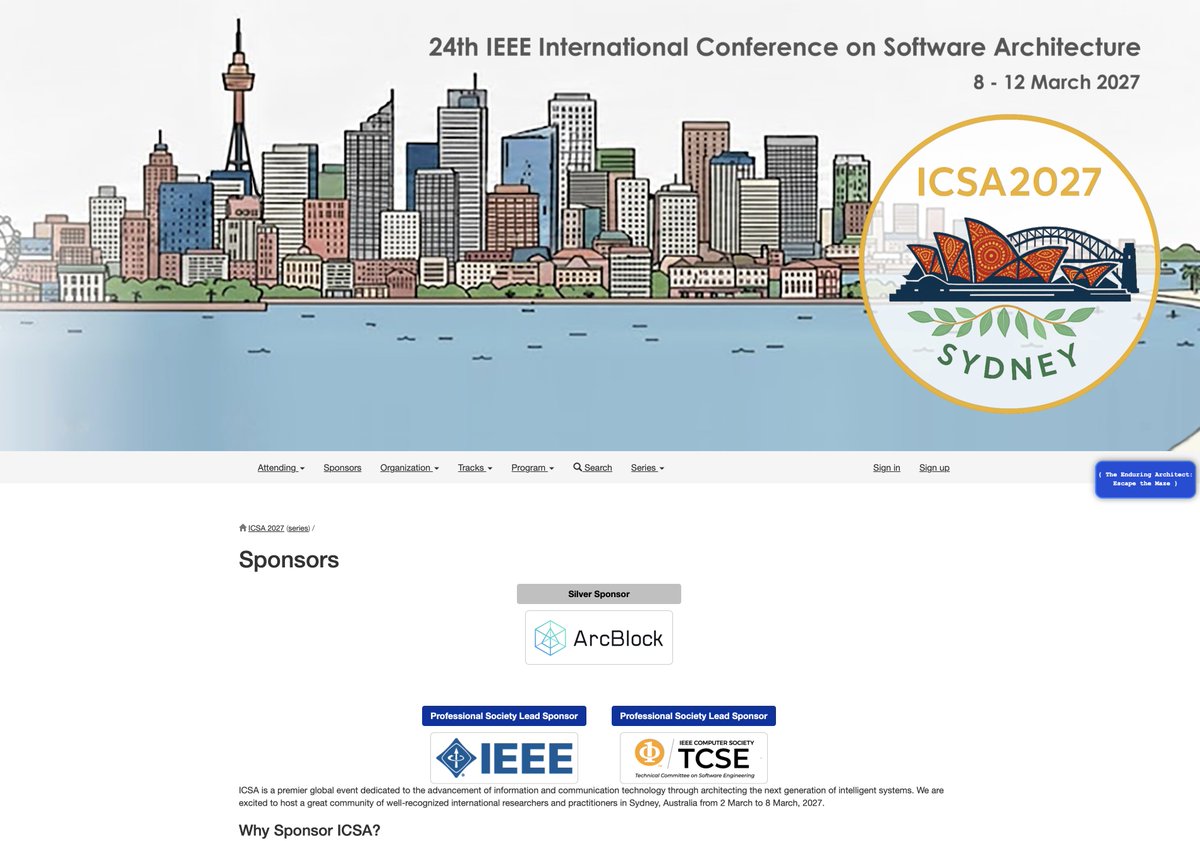
ArcBlock is proud to sponsor ICSA 2027!
A premier global event advancing ICT and architecting the next generation of intelligent systems.
Looking forward to gathering leading researchers and practitioners in Sydney, Australia, March 2–8, 2027.
conf.researchr.org/info/icsa…
10
44
126
18,512
Jun 5
It’s taking a bit longer than we originally expected to release our next-generation AFS-powered DID/VC, agentic blockchain, and new Blocklet architecture.
The good news: we’re actually in great shape.
We originally planned for May 😂, but June is looking much more realistic — and worth the wait.
Building foundational infrastructure is never as easy as a demo. We’d rather get it right than rush it out.
June. 🚀
5
22
97
3,149
Jun 5
Everything Evolves, Something Endures:
Jun 5

I am proud to announce that I will be presenting AFS-UI (Agentic File System UI) as a keynote speaker and panelist at Harness4UI 2026, held in conjunction with ASE 2026 in Munich, Germany.
Harness4UI is the inaugural workshop on Harness Engineering for Generative UI, bringing together researchers and practitioners working on the architectures, infrastructure, tooling, and engineering practices behind the next generation of AI-powered user interfaces.
I’m excited to share our work on AFS-UI and discuss how LLMs, DID, blockchain, and agentic systems are reshaping software development and user experiences in the AI era.
Looking forward to meeting researchers, builders, and practitioners from around the world in Munich this October.
19
57
2,531
ArcBlock retweeted

May 29
One realization we’ve had over the years is that decentralization is not just about ownership, governance, or token distribution.
It is also about who has the ability to build.
Blocklet 1.0 was built primarily for software developers. It made decentralized application development significantly easier by packaging infrastructure, deployment, identity, and services into reusable building blocks.
But it still assumed that you were a developer.
With AI, that assumption is changing.
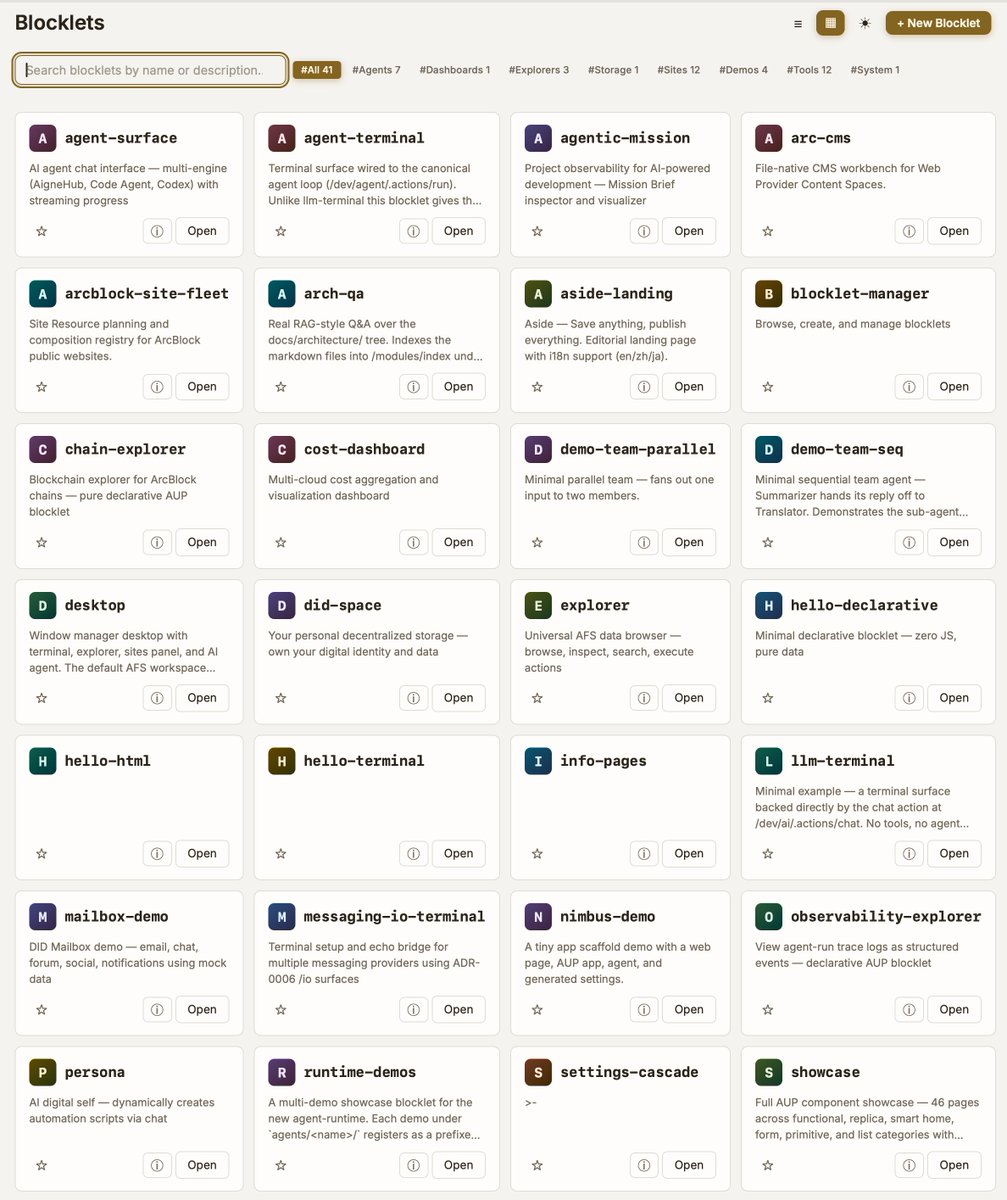
Blocklet 2.0 is our effort to make application creation accessible to everyone.
AI-powered from the ground up, with built-in:
- AI agents
- Blockchain capabilities
- DID identity
- Payments
- Storage
- Automation
- Deployment
- Governance primitives
The goal is not to replace developers.
The goal is to dramatically expand the number of people who can become capable creators.
However, we also believe that simple vibe coding is not enough.
Anyone can generate code today. The challenge is building systems that remain:
- maintainable
- composable
- secure
- observable
- governable
- scalable
This is why much of our recent work around AFS, AI-native engineering, and Blocklet evolution has focused on creating the right framework, not just generating more code.
Blocklet 1.0 helped developers build faster.
Blocklet 2.0 aims to help everyone build meaningful applications with AI, while preserving the structure and quality required for a healthy ecosystem.
We believe this may become one of the most important forms of decentralization in the AI era:
Not just decentralizing ownership.
Decentralizing the ability to create.
May 28
One important point in the decentralization discussion is often misunderstood:
A healthy ecosystem does not emerge simply because governance is decentralized.
It emerges when more people can independently create real value on top of the protocol.
Historically, this was extremely difficult.
Building meaningful applications required:
- strong engineering skills
- deep protocol understanding
- infrastructure knowledge
- deployment and operational expertise
As a result, most ecosystems remained heavily dependent on a small core developer group.
AI changes this equation.
For the first time, it becomes possible for almost anyone to become a capable builder with the assistance of AI agents.
But there is also a major risk:
Simple “vibe coding” alone will not create a sustainable ecosystem.
Without proper structure, protocols, identity, memory, security, observability, and execution boundaries, the result quickly becomes:
- low-quality AI slop
- insecure applications
- fragmented experiences
- unmaintainable systems
- incentive gaming instead of real products
This is exactly the problem we have been trying to solve with AFS and our broader AI-native engineering efforts.
The goal is not merely to generate code.
The goal is to create an AI-native development framework where:
- anyone can build with AI assistance
- blockchain, DID, payments, and agents become naturally usable primitives
- applications remain composable and maintainable
- systems stay observable and governable
- security and execution boundaries remain enforceable
- builders can focus on intent and product value instead of infrastructure complexity
In other words:
The future is not “everyone becomes a programmer.”
The future is:
- everyone can become a creator,
- while the underlying framework preserves structure, quality, and ecosystem coherence.
We believe this may ultimately become one of the most important forms of decentralization:
not just decentralized ownership,
but decentralized capability creation.
2
16
45
4,072
May 28
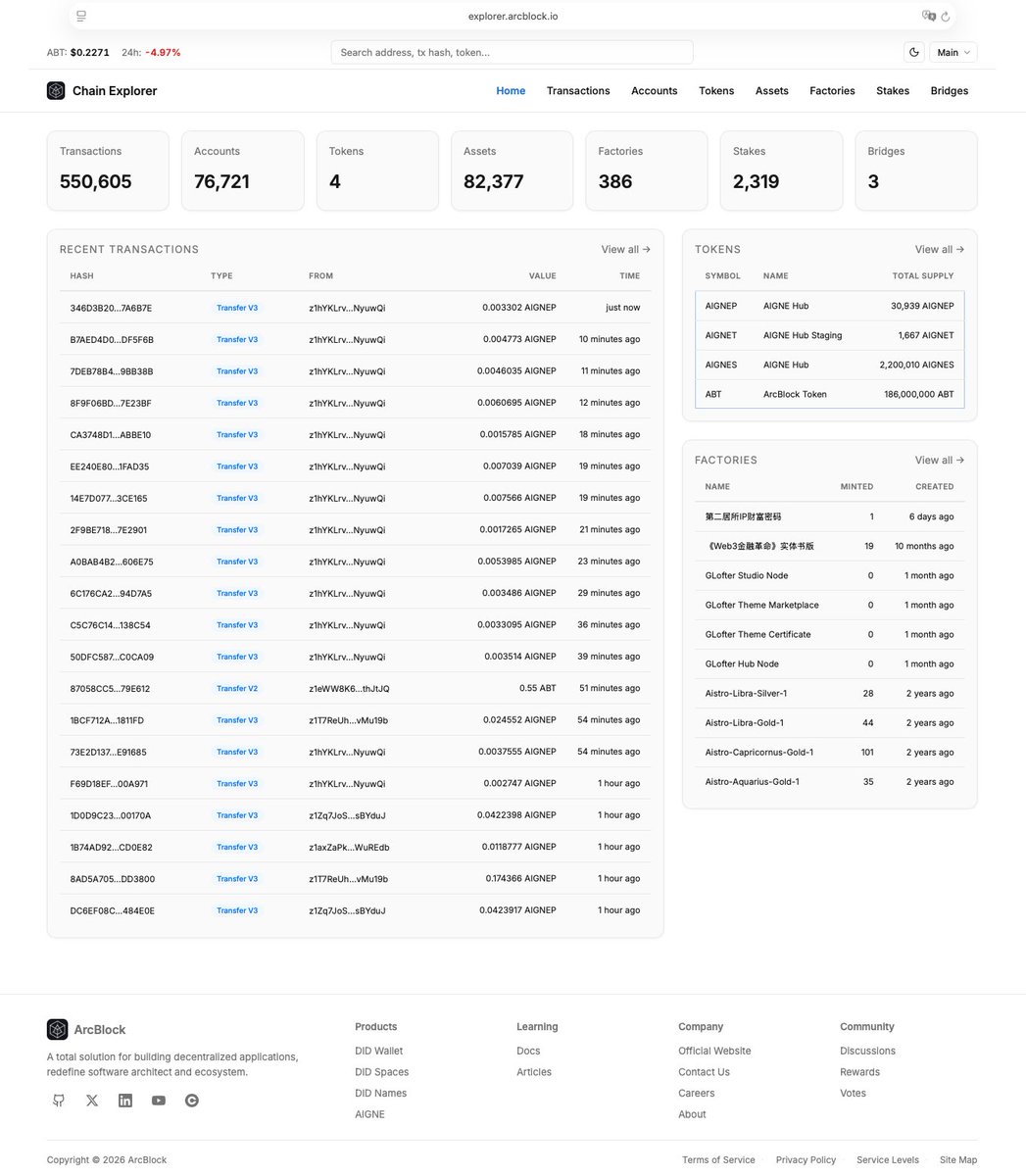
Preview the new AFS-based Blockchain Explorer:
explorer.arcblock.io/main/
Stable version:
main.abtnetwork.io/explorer/…
The preview version is still early-stage — not fully stable or bug-free yet.
We’ll continue running both side-by-side for a while, and eventually the new explorer will replace the old one.
This is more than a UI refresh — it’s the beginning of a new architecture built on AFS (Agentic File System) and our evolving agentic blockchain stack.
May 28

Check out our latest Blockchain Explorer built on AFS (Agentic File System) and AFS-UI (Agentic File System UI).
At first glance, it may feel familiar — but the underlying architecture is completely different.
The new explorer currently exposes the exact same blockchain data as the previous one, so you can compare and explore it yourself.
And no — this is not a simple reskin of the old explorer.
This is the first public preview of our AFS-UI and Agentic Blockchain architecture.
Right now you only see the same data.
Soon, you’ll see a very different future.
1
12
38
2,534
May 28
Check out our latest Blockchain Explorer built on AFS (Agentic File System) and AFS-UI (Agentic File System UI).
At first glance, it may feel familiar — but the underlying architecture is completely different.
The new explorer currently exposes the exact same blockchain data as the previous one, so you can compare and explore it yourself.
And no — this is not a simple reskin of the old explorer.
This is the first public preview of our AFS-UI and Agentic Blockchain architecture.
Right now you only see the same data.
Soon, you’ll see a very different future.
1
21
54
3,975
May 28
The major difference is underneath: every piece of blockchain data is now exposed as an AFS node.
This allows AI agents to understand the data and protocol structure directly — without guessing, reverse-engineering, or parsing raw blockchain data manually.
This is a foundational step toward a truly agentic blockchain.
Blockchain data should be:
• Open
• Standardized
• Explainable
• Understandable by both humans and AI agents.
13
28
884
May 14
Make crypto great again!
May 14

BREAKING: 🇺🇸 Senate Banking Committee PASSES the Clarity Act in 15-9 vote.
The bill now goes to the full Senate.
2
16
61
3,060
Apr 26
How software architecture evolved:
WICSA 2014 — Sydney, Australia — The Future of Software Architecture
WICSA 2015 — Montreal, Canada — Architecting in Context
WICSA 2016 — Venice, Italy — Architecting in Time
ICSA 2017 — Gothenburg, Sweden — Continuous Architecting
ICSA 2018 — Seattle, USA — Breaking Down Barriers
ICSA 2019 — Hamburg, Germany — Architectures to Interconnect Services and Systems
ICSA 2020 — Salvador, Brazil (virtual) — Empirical Software Architecture Research
ICSA 2021 — Stuttgart, Germany (virtual) — Software Architecture in the COVID-19 Reality
ICSA 2022 — Honolulu, USA (hybrid) — Software Architecture and Recovery
ICSA 2023 — L’Aquila, Italy — Software Architecture for an Inclusive Society
ICSA 2024 — Singapore — Software Architecture in the Age of Generative AI
ICSA 2025 — Odense, Denmark — Architecting for the Next Generation of Intelligent Systems
ICSA 2026 — Madrid, Spain — Architecting in Continuous Software Engineering: Evolving Roles, Enduring Principles
ICSA 2027 — Sydney, Australia — The Enduring Role of Software Architecture in an Evolving Landscape
Mar 6
ArcBlock is proud to sponsor ICSA 2027!
A premier global event advancing ICT and architecting the next generation of intelligent systems.
Looking forward to gathering leading researchers and practitioners in Sydney, Australia, March 2–8, 2027.
conf.researchr.org/info/icsa…
4
22
69
3,749
Apr 23
As promised, Blocklet Server is now fully open source! (Apache License)
Our developer community is free to build, hack, and improve it as they wish.
This doesn’t mean we’re abandoning it — we’ll continue providing bug fixes and security updates to keep it stable and safe.
However, new features and major improvements will be focused on our next stage: ARC (Agentic Realm Computer).
We strongly encourage the community to move forward with us.
github.com/ArcBlock/blocklet…
Apr 12
The future of ArcBlock is ARC Block*.
Block * = Blocklets, Blockchain… and more to come.
2
24
90
7,365
Apr 23
More docs and guides are coming soon.
But if you’re eager and brave enough to explore — here’s the repo:
github.com/ArcBlock/blocklet…
1
9
37
1,845
Apr 23
We’ve just upgraded our blockchain protocol with a new transaction encoding method based on CBOR (ProtoBuf has been supported since launch).
The upgrade was seamless — you probably didn’t notice it at all.
This new encoding makes interactions between AI agents and the blockchain more lightweight and efficient, paving the way for better agentic interactions.
2
26
90
2,631
Apr 23
In the new ARC(Agentic Realm Computer), blockchain and the ledger are built in as a foundational protocol layer — unlike Blocklet Server, where blockchain lived at the application layer.
We introduced this new CBOR-based transaction encoding to make interactions more lightweight, secure, and standards-based.
The transaction protocol itself is unchanged — only the lower-level encoding has been updated.
21
62
2,338
Apr 12
The future of ArcBlock is ARC Block*.
Block * = Blocklets, Blockchain… and more to come.
Apr 12
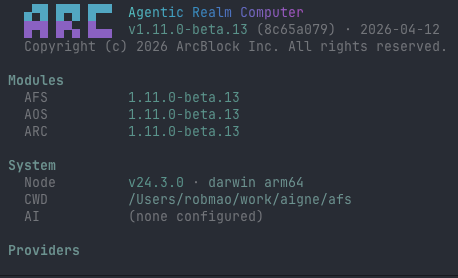
ARC will supersede Blocklet Server.
As the next step, we’ll open-source a fully documented and cleaned-up version of Blocklet Server — so developers can continue to use it if they choose.
Going forward, all new development will move to ARC, while the Blocklet architecture remains.
ARC Blocklets → ArcBlock.
4
37
99
11,677
ArcBlock retweeted
Apr 4
That’s why at ArcBlock we’ve upgraded our blockchain into an agentic blockchain, making it a first-class citizen in our overall agentic architecture.
It’s not AI blockchain, or blockchain AI —
it’s one unified system.
Apr 4
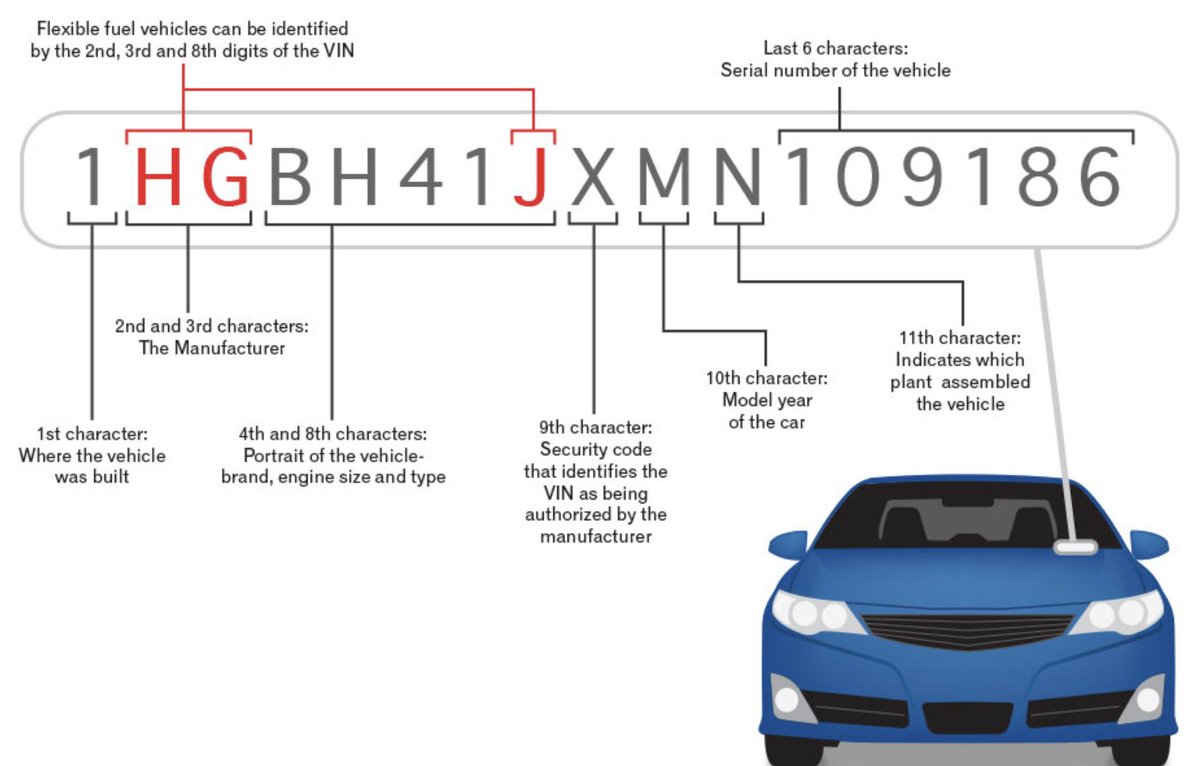
Extending the analogy:
What is blockchain in this system?
Not just money or payments — though that’s part of it.
It’s the VIN registry, license plates, ownership records, driver licenses, insurance —
the system of identity, trust, and accountability.
It’s the infrastructure that makes the whole system verifiable.



27
90
7,045
ArcBlock retweeted
Mar 30
While Ethereum gradually evolved its “world computer” vision into a global public ledger,
we at ArcBlock are reimagining what a true world computer could be.
We call it the Agentic Realm Computer — ARC.

3
38
115
16,627
ArcBlock retweeted
Mar 30
ABT will remain the only utility token across the ArcBlock ecosystem.
Early access to ARC will likely be invite-only, but ABT holders can skip the queue by staking a small amount of ABT.
Mar 30
While Ethereum gradually evolved its “world computer” vision into a global public ledger,
we at ArcBlock are reimagining what a true world computer could be.
We call it the Agentic Realm Computer — ARC.
1
29
111
10,437
Mar 30
The next big things are coming — together with industry leaders.
Mar 30
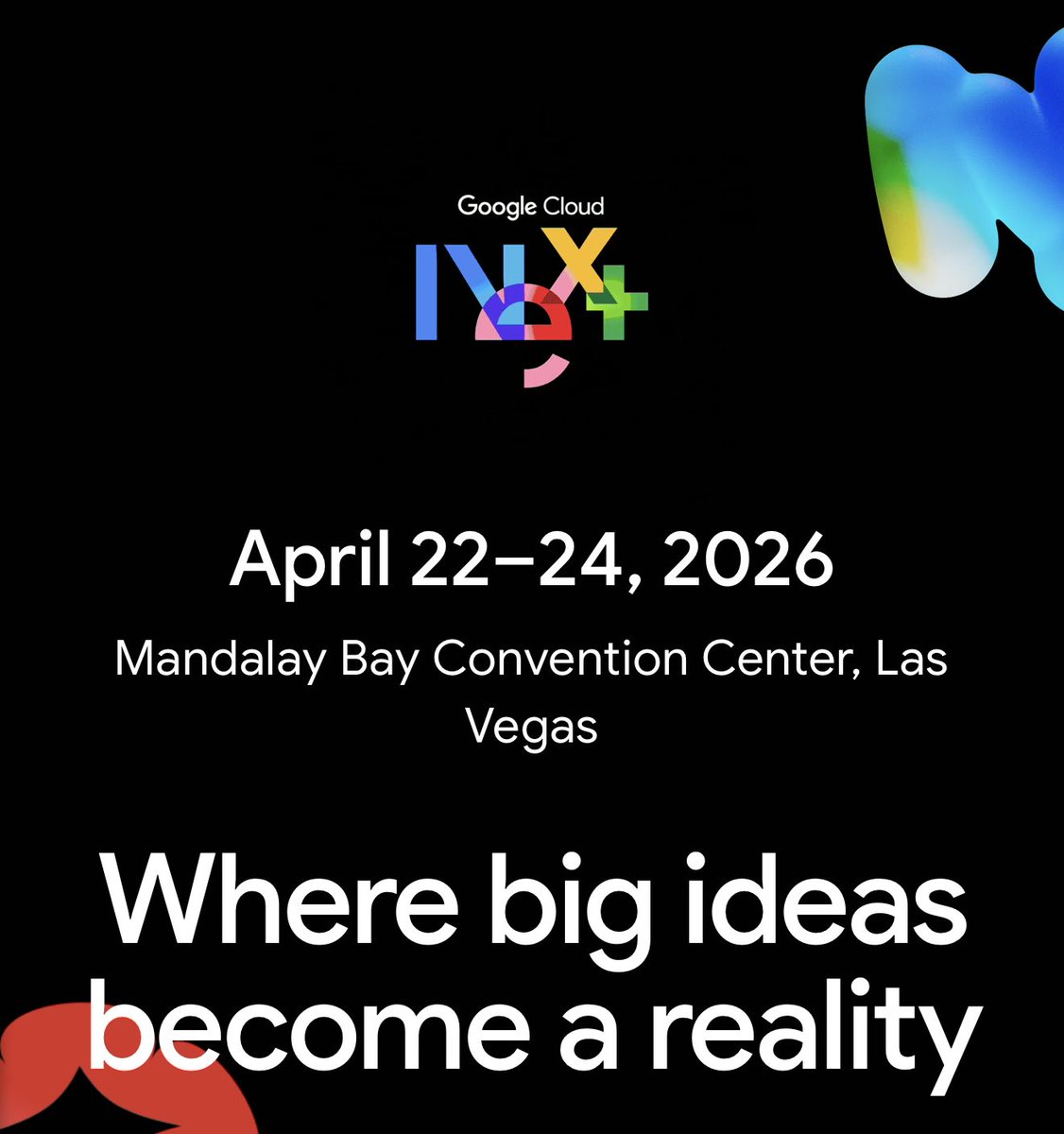
@ArcBlock_io will be at Google Cloud Next.
We’ll unveil our next-generation agentic blockchain, along with Blocklet and DID —
and most importantly, what we believe is the next big thing.
5
37
111
11,303
Mar 17
The best part of MyVibe isn't the publishing.
It's /explore — where you discover what others are building.Landing pages, dashboards, games, portfolios, interactive tools...All vibe-coded, all live, all shareable.
Launching today on @ProductHunt, Come browse, get inspired, and give us a vote if you like what you see 🧡
producthunt.com/products/myv…
#VibeCoding #CreativeCode #ProductHunt
9
22
76
3,435
Mar 17
MyVibe is live on Product Hunt! 🚀
OpenClaw skill. Claude Code skill. Drag-and-drop.
Three ways to publish — your project is live in seconds.
No deploy pipeline. No hosting config. Just share.
We'd love your support — an upvote on Product Hunt goes a long way 🙏
🔗 producthunt.com/products/myv…
#ProductHunt #VibeCoding #OpenClaw #ClaudeCode
6
33
94
3,554