Director of European Affairs of the European Jewish Congress @eurojewcong, Secretary General of European Jewish Fund ( views are my own)
Joined June 2013
- Tweets 1,650
- Following 734
- Followers 697
- Likes 19,481
55 Photos and videos
Ariella Woitchik retweeted

Jun 13
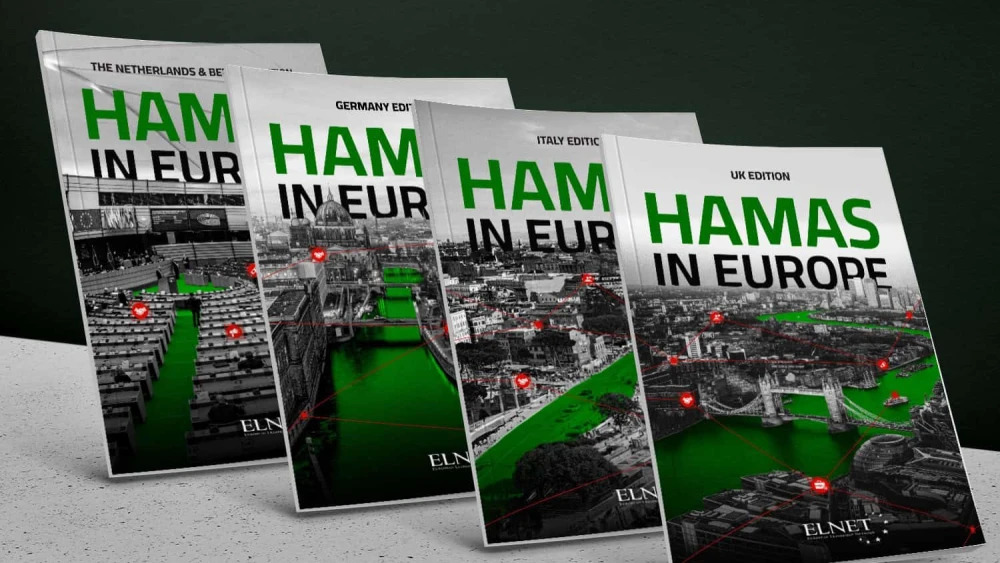
Will Europe Save Hamas in Gaza? I recently met with a high-ranking European official from a country deeply involved in the Israel and Palestine file to discuss Gaza’s future and immediate options for relieving civilians trapped under Hamas’s grip. I presented a simple proposal: create safe zones across the "Yellow Line" into the Israel‑controlled green zone and support new, organized, secure, Hamas‑free communities where Gazans could finally begin rebuilding their lives. Whether the issue is humane living conditions, deradicalization, education, healthcare, or shielding civilians from both Hamas or Israeli strikes, the green zone is the only place where meaningful action is possible. Instead of engaging, the official launched into a long monologue about their country’s contributions to the Palestinian Authority, UNRWA, and other institutions, all while insisting on their own “humility” as a faraway European nation.
Then came the truly alarming part: a casual normalization of Hamas. The official proudly described how easy it had been to work with Hamas before October 7, praising the group for providing “excellent security” and being “easier to work with than others.” What they called pragmatism was, in reality, a twenty‑year pattern of enabling a violent terrorist organization responsible for immense civilian suffering.
When I explained that any Hamas‑free zones would require vetting at the Yellow Line to prevent weapons or operatives from entering, the official reacted with shock. “This vetting would violate international law,” they repeated, insisting that their country could not fund projects with any checks on who enters. I noted the absurdity: I had undergone extensive vetting just to enter their country, and even this building, yet they believed Hamas fighters should be able to walk into new civilian safe zones unimpeded. Their only response was vague appeals to “international law,” which, in their interpretation, seems to require allowing terrorists to hide among civilians.
The meeting ended on an even more surreal note. When the official asked what would happen to Hamas fighters left in the red zone, I said I didn’t care; they could fight the Israeli military on their own all they wanted once they no longer held two million civilians hostage. The official lamented that “this isn’t the old American West” and expressed concern for what would happen to Hamas without human shields. Disgust doesn’t begin to describe my feelings and reactions.
I left convinced of something long suspected: Hamas’s twenty‑year rule was sustained not only by its own brutality but by an ecosystem of NGOs, donor nations, Western European governments, journalists, academics, activists, lawyers, and even self‑styled human‑rights defenders who normalized Hamas, treated it as a legitimate authority, or tolerated its abuses because their hostility toward Israel outweighed their concern for Gazans.
107
644
1,653
119,065
Ariella Woitchik retweeted

Jun 10
Excellent from @LordIanAustin on yet ANOTHER debate on the evils of Israel:
As he says: ‘Over the last few years, Parliament has discussed Israel more than any other issue, not just any international issue, more than any domestic issue: more than the economy, unemployment, crime, the NHS.
‘The public out there look at Parliament and think this is utterly mad, utterly, utterly mad.’
Lord Ian blames Parliament for helping fuel antisemitism adding:
‘Does Parliament not understand that singling out the world's only Jewish state, holding its standards not applied to anywhere else, falsely accusing Israel of committing these terrible crimes? ‘This is bound to drive hostility towards people who are identified with Israel, which is the vast majority of the Jewish community, and I have to say this is why I believe Parliament is playing a large role in driving the explosion of anti-Semitism that we've seen on the streets of Britain.’
337
2,073
8,019
239,328
Ariella Woitchik retweeted

Jun 9
"Canceled" ou si vous préférez "effacé" par le gouvernement français en raison de mon combat contre l'antisémitisme, je ne pensais pas connaitre ça en 2026 !
Je devais faire une conférence ce matin devant une soixantaine de hauts dirigeants qui suivent le "cycle supérieur du développement durable" (CSDD) dirigé par Guillaume Leforestier qui dépend du Ministre de la transition écologique, Monique Barbut (aucun des deux n'a de compte X). Sujet: les résistances internes des institutions communautaires au détricotage du Green deal. Tout était calé depuis fin avril.
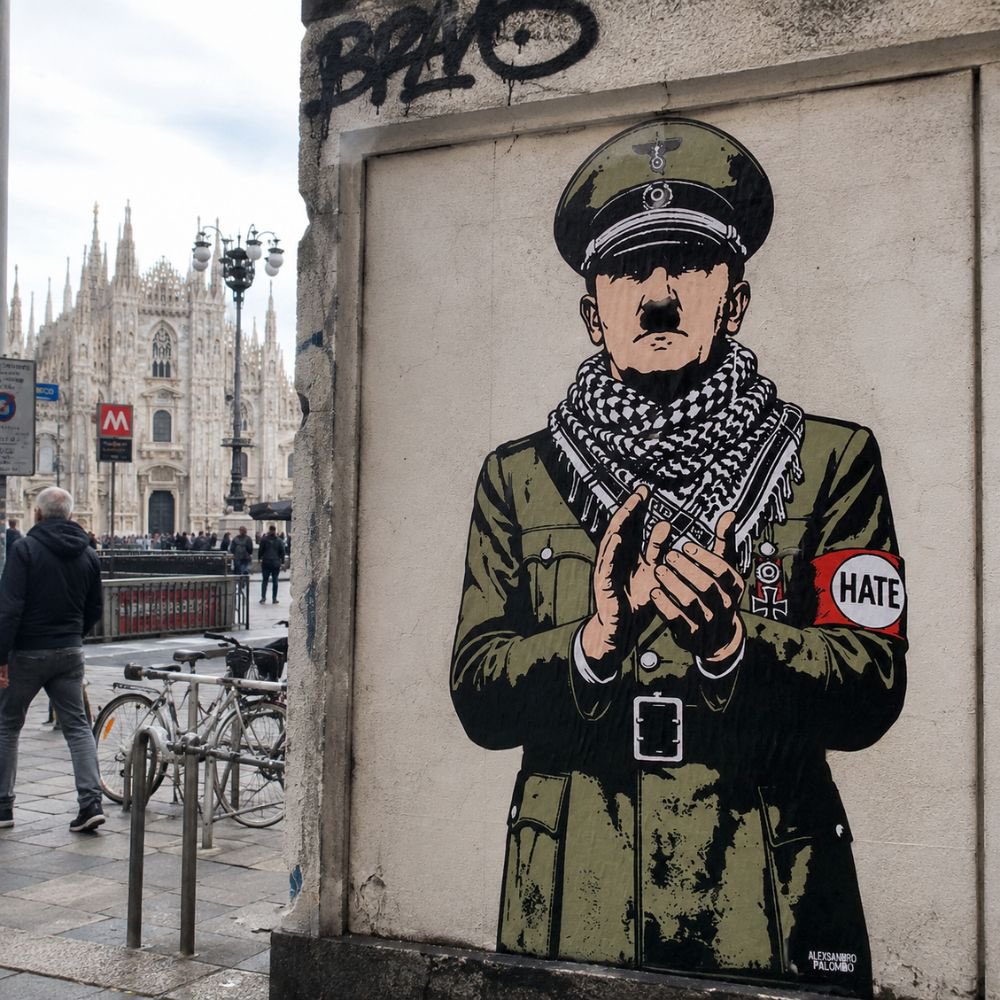
Vendredi, je reçois un appel de l'une des responsables de la session de formation de ce mardi: une sous-directrice (je ne sais pas qui en dépit de mes demandes) lui a demandé d'annuler ma conférence à cause de la polémique initiée par LFI qui n'a pas supporté que je publie sur ma page FB personnelle, le 29 mai, le mural de @PalomboArtist représentant Hitler portant un keffieh et un brassard "hate". La fonctionnaire, "très peinée" selon mon interlocutrice, craignait que ma seule présence provoque une polémique parmi les étudiants (qui payent). Alors même que ce n'était absolument pas le sujet de la conférence: on me fait payer mes engagements.
Autrement dit, le fait que je combatte l'antisémitisme devenu virulent depuis le 7/10 et que je déplaise à l'écosystème éléfiste est considéré par le gouvernement @SebLecornu comme un problème. Jusque-là la "canceled culture" touchait des évènements privés ou des universités qui expulsaient des juifs parce que juifs. Cette fois-ci, on franchit un seuil: c'est directement une formation gérée par un ministre de la République qui efface un supposé "complice des génocidaires", une expression chère à LFI. Autant pour la liberté d'expression garantie par la Constitution française.
J'ai évidemment demandé que la fonctionnaire ayant pris cette décision m'envoie un mail confirmant cette annulation. Elle l'a envoyé, mais pas à moi directement. Les responsables de la formation me l'ont communiqué sans signature (les pauvres chéris n'assument pas) : "les raisons" de l'annulation, lit-on, sont "techniques". C'est tellement le cas que le mail indique : "je vous remercie d'assurer l'information auprès de Mr Quatremer, de gérer les suites et en gérant également la confidentialité liées aux agents de l'Etat". Quelqu'un a oublié que l'on ne pouvait contraindre au silence un journaliste (surtout moi).
J'ai joint le cabinet de la ministre, Monique Barbut, et je n'ai eu aucun retour pour l'instant.
Cet enchainement de petites lâchetés, de peurs, de volonté de complaire à l'idéologie supposé dominante du moment me rappelle une période historique, mais laquelle?
586
2,818
6,643
274,875
Ariella Woitchik retweeted

Alla faccia di chi boicotta…
Tamara Casalan
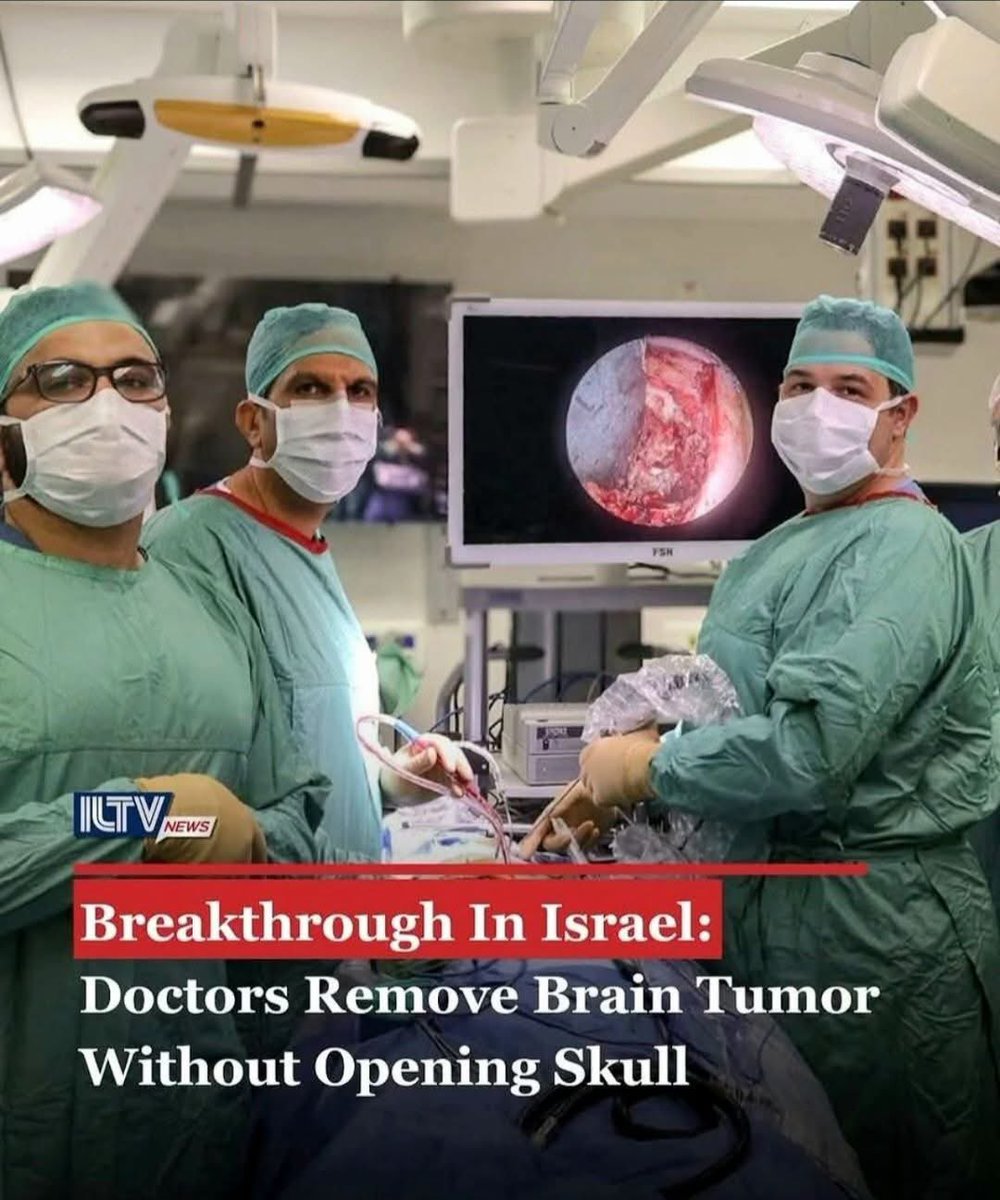
La storia è stata appena scritta nelle sale operatorie del Centro Medico Ichilov di Israele 🇮🇱 e l'intero mondo medico è in stato di puro stupore.
I chirurghi hanno realizzato ciò che una volta sembrava impossibile: rimuovere un tumore cerebrale raro senza aprire la testa.
Attraverso un approccio transorbitale di punta - entrando con precisione
attraverso la gola ocularia utilizzando robot avanzati e endoscopia - loro hanno escisso completamente la crescita.
Nessuna craniotomia.
Nessuna cicatrice massiva.
Solo innovazione pura, maestria e mani stabili.
Ouesto non è solo una vittoria per la scienza; è un testimonianza profonda del rifiuto dell'umanità di accettare i limiti.
Mentre il mondo si concentra sulla divisione, la medicina israeliana ci ricorda cosa può realizzare la chiarezza morale e l'eccellenza scientifica: vite salvate, futuro ripristinato e speranza data ai pazienti di tutto il mondo.
Israele non innova solo sotto pressione - le sue innovazioni sono da sempre disponibili per l'intera umanità.
Orgogliosi oltre le parole.
Am Yisrael Chai.
#MedicalBreakthrough #lsraellnnovation #Neurosurgery #Proudlsrael #AmYsraelChai
415
2,754
7,190
106,986
Ariella Woitchik retweeted

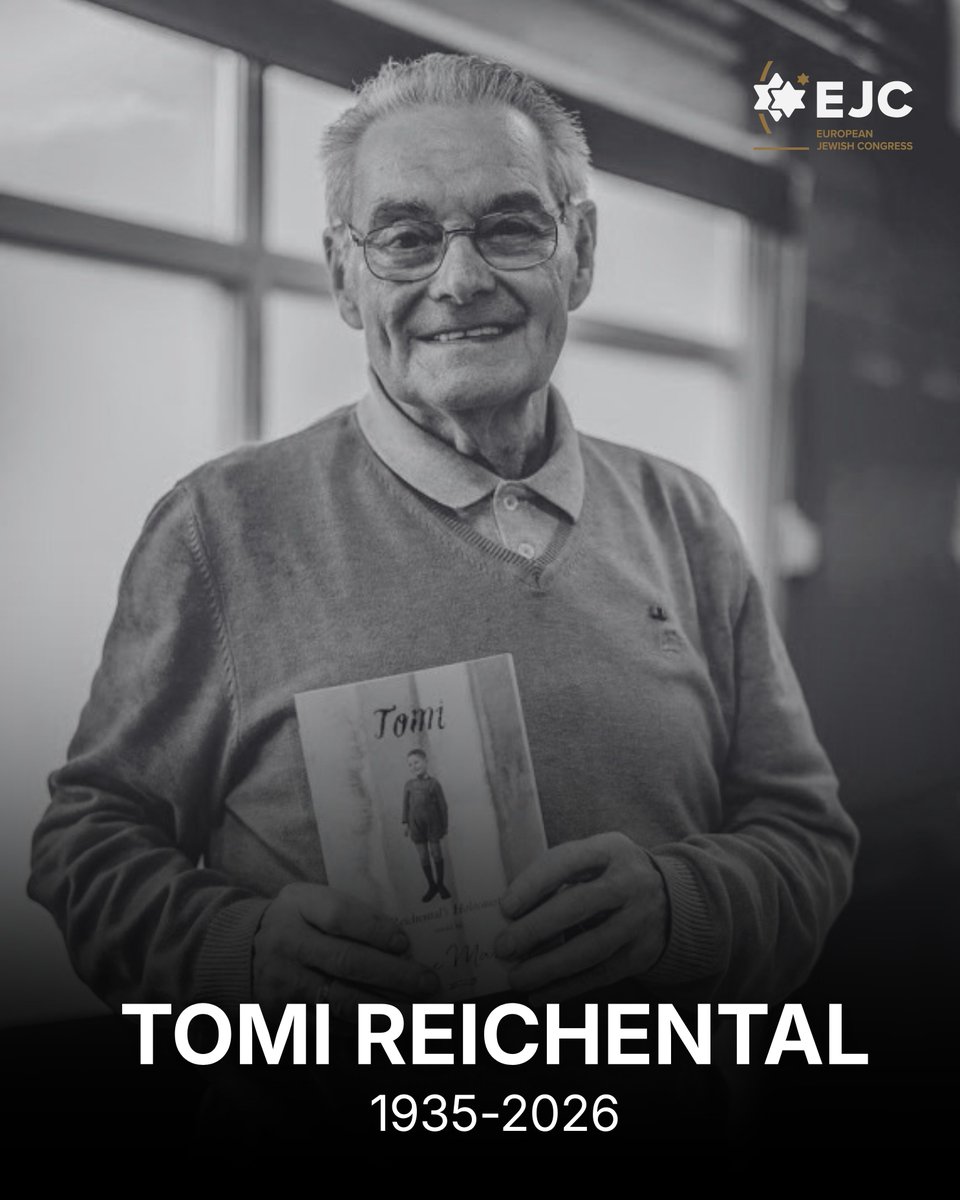
We are saddened by the passing of Holocaust survivor Tomi Reichental at the age of 90.
Born in Czechoslovakia in 1935, Tomi survived the Bergen-Belsen concentration camp, where he was deported with his family in 1944.
He lost 35 relatives in the Holocaust, yet dedicated his life to ensuring that future generations would never forget the consequences of hatred, antisemitism and indifference.
After settling in Ireland, Tomi became one of the country's most important voices of Holocaust remembrance, sharing his testimony with thousands of students and audiences across Europe.
In 2021, he participated in the International Holocaust Remembrance Day event co-hosted by the European Commission and the European Jewish Congress, where he joined European Commission Vice-President Margaritis Schinas in a conversation on the lessons of the Holocaust for 21st-century Europe, the importance of remembrance, and our shared responsibility to combat Holocaust denial and distortion.
His courage, wisdom and commitment to education left a profound impact on all who had the privilege of hearing his story. May his memory be a blessing.
3
15
71
684
Ariella Woitchik retweeted
The irony is difficult to ignore: a Jewish woman was required to remove a visible symbol of her identity in order to attend a trial concerning the exclusion of Jews.
A German Jewish woman was forced to remove her Star of David necklace before being allowed to enter a courtroom in Flensburg to observe the trial of a man accused of displaying a sign reading “Jews are not allowed to enter this place.”
While the defendant was rightly convicted of incitement to hatred, this incident raises serious questions about the extent to which Jews in Europe can openly and confidently express their identity in public spaces.
No one should be asked to conceal their Jewish identity in order to access a court of law. algemeiner.com/2026/06/02/ge…
2
22
104
15,695
Ariella Woitchik retweeted

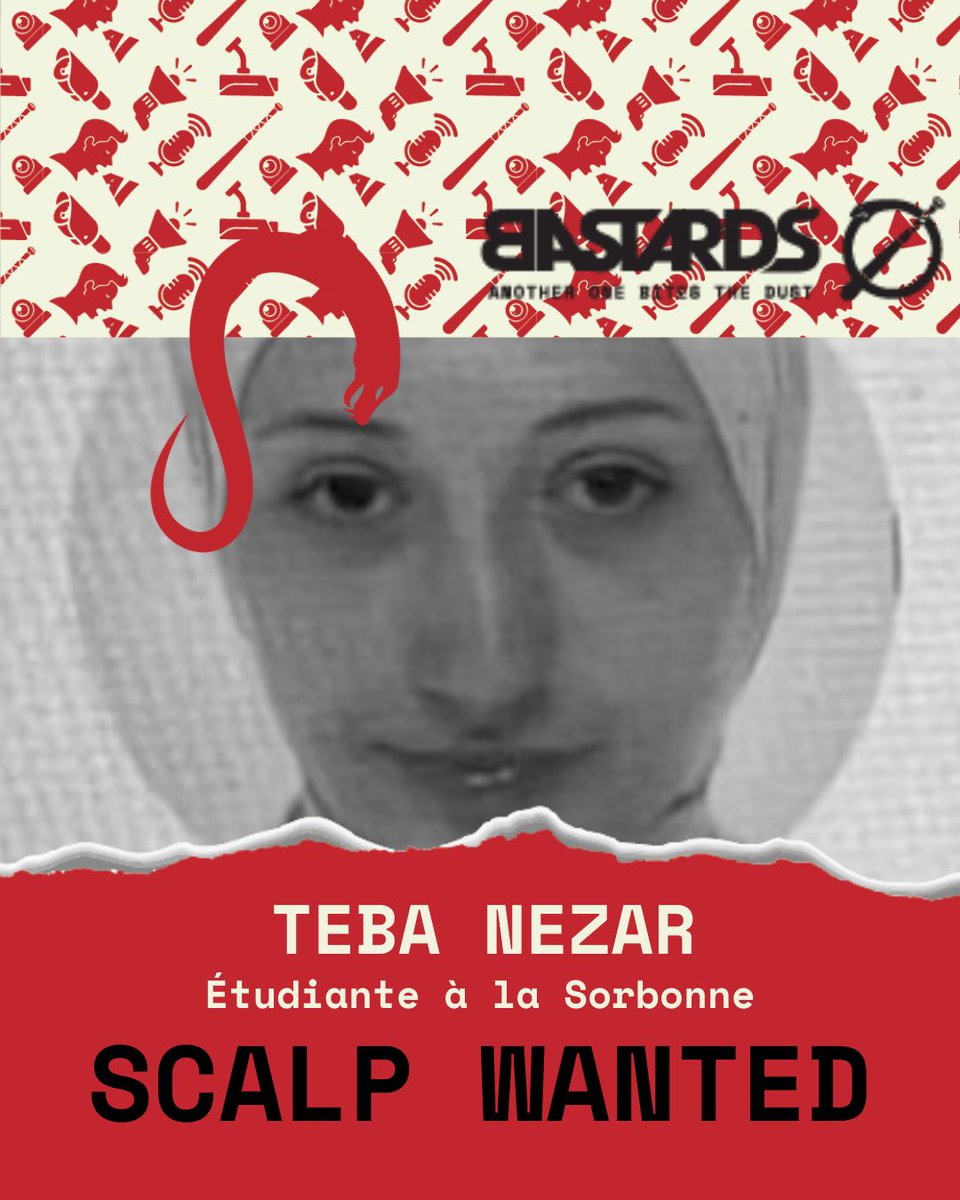
🚨🎉 VICTOIRE : Teba Nezar vient d’être condamnée à 4 mois de prison avec sursis, un stage au @Shoah_Memorial et plusieurs milliers d’euros de dommages et intérêts.
⚖️Cette décision marque un tournant : la justice française rappelle qu’on ne peut pas contourner la loi en remplaçant le mot « juif » par le mot « sioniste » pour exclure, stigmatiser ou discriminer.
Félicitations à Maîtres @DJournoavocat et Annie Cohen pour cette décision importante 👏🏼
Cc @ActionsAvocats
16 Sep 2025

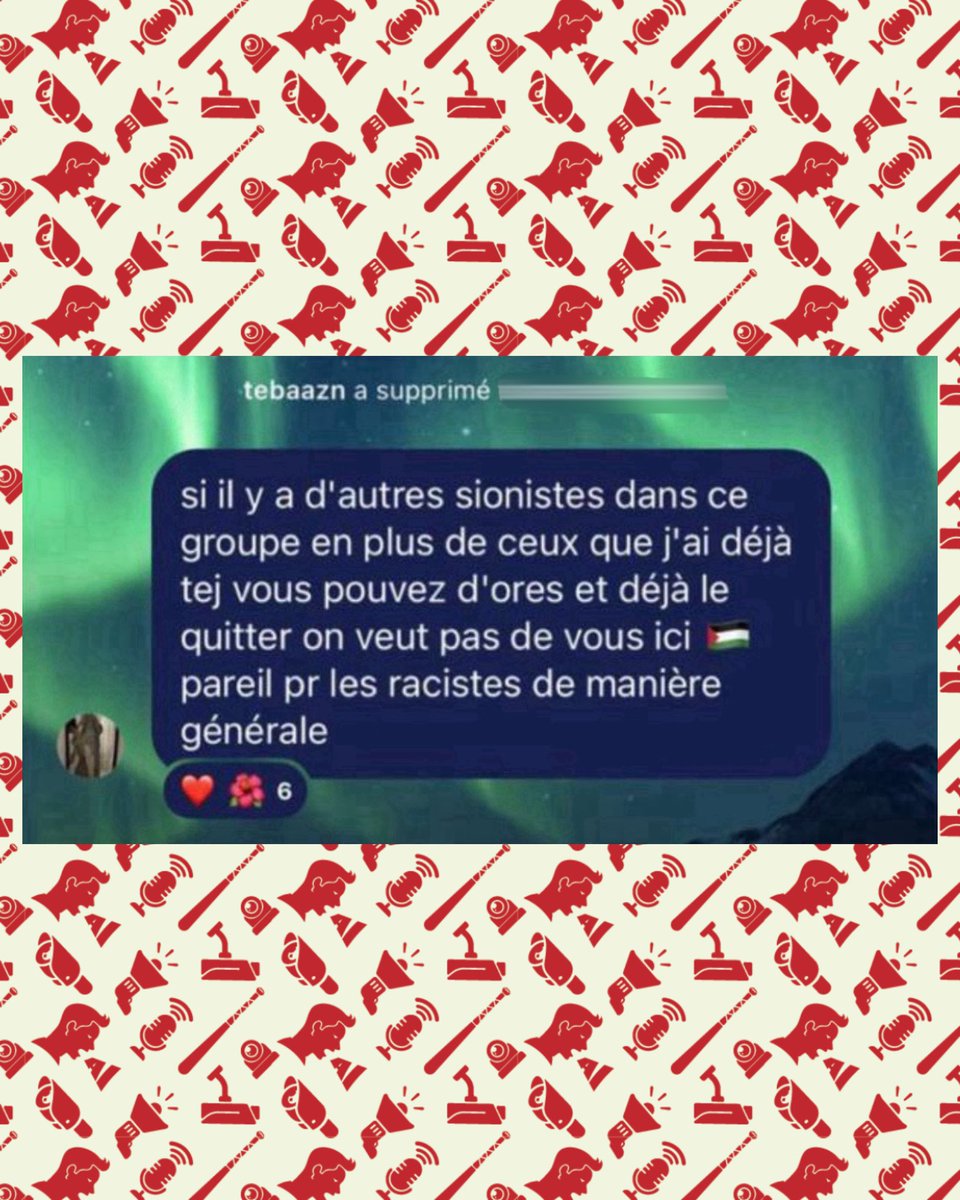
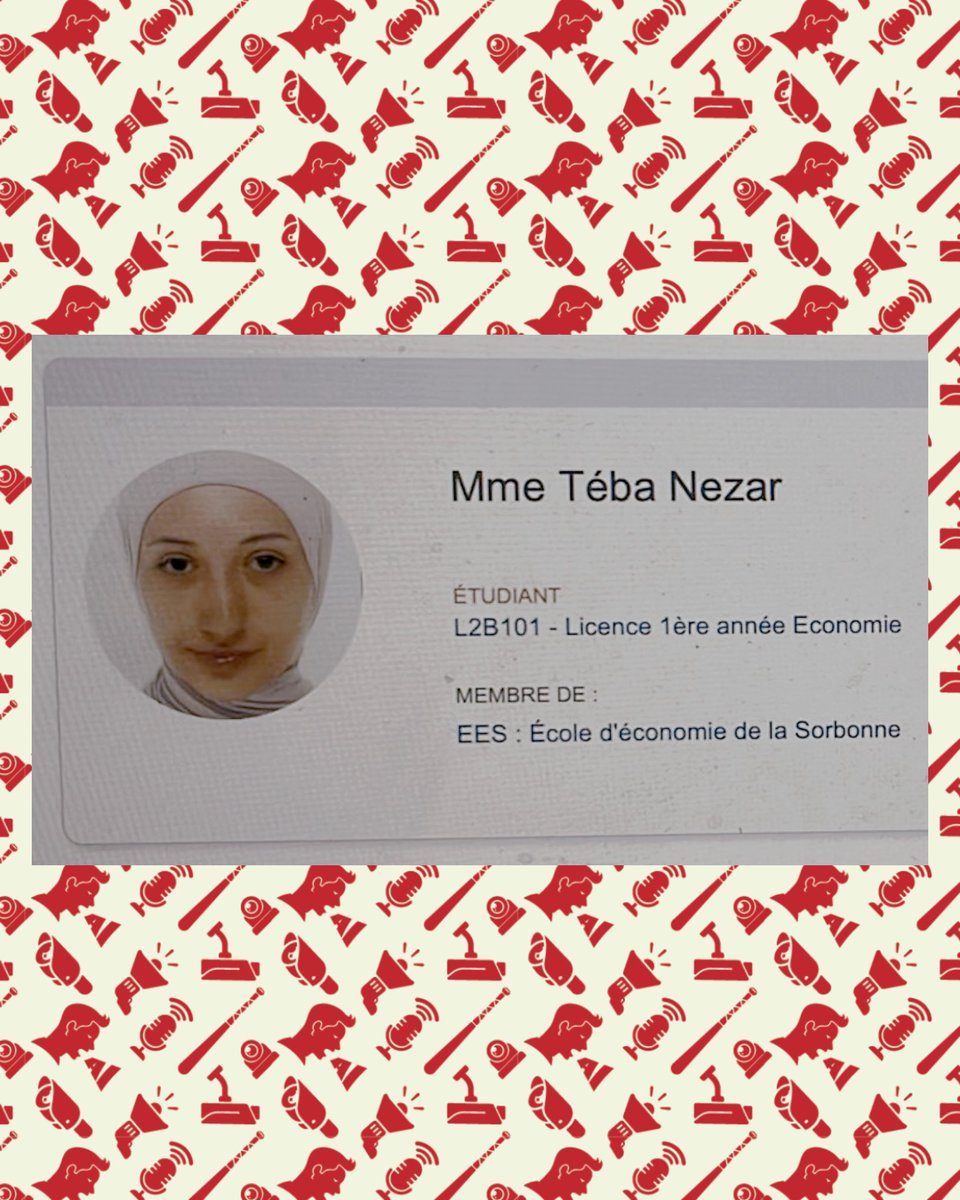
🚨🎓SIGNALEMENT : L’étudiante de L1 Économie à @SorbonneParis1 qui a exclu ses camarades juifs (ou supposés juifs) du groupe Instagram de la promo s’appelle Teba Nezar.
🚮 Elle a supprimé du groupe plusieurs étudiants uniquement en raison de leur prénom à consonance juive. Une autre étudiante a été exclue parce qu’elle affichait sur son profil Instagram le nom des scouts juifs.. Teba Nezar a ensuite écrit :
« S’il y a d’autres sionistes dans ce groupe en plus de ceux que j’ai déjà tej, vous pouvez d’ores et déjà le quitter. On ne veut pas de vous ici 🇵🇸. »
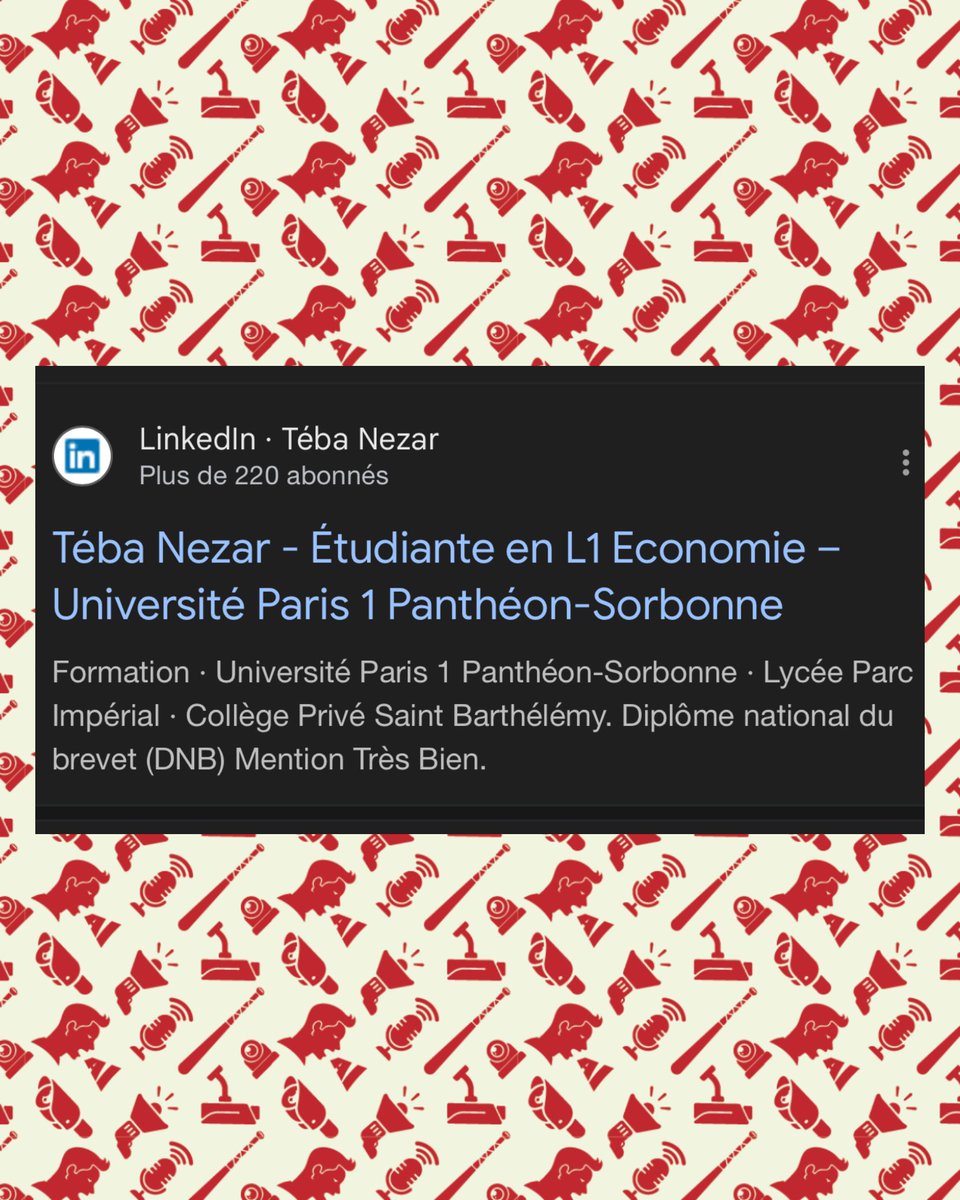
💼🔍 Depuis que ses agissements ont été révélés, Teba Nezar a supprimé son compte LinkedIn. Mais il est trop tard.
Chaque antisémite sera identifié, traqué et exposé publiquement. Désormais, lorsqu’un employeur cherchera son nom avant un recrutement, il tombera sur ce signalement et saura.
Nous n’accepterons jamais que nos étudiants soient ostracisés ou intimidés parce qu’ils portent un patronyme juif, parce qu’ils le sont ou parce qu’ils sont fiers de leur identité.
📢 La Présidente de @SorbonneParis1, Christine @NeauLeduc, a réagi aujourd’hui :
« Cela est tout simplement intolérable et l’université a saisi dès ce matin la justice pour ces faits, tout comme elle engagera des poursuites disciplinaires dès que l’auteur sera identifié. »
👤✅ L’auteur a été identifié. Nous exigeons donc que cette étudiante soit sanctionnée avec la plus grande fermeté.
Et qu’on se le dise : ce n’est pas un cas isolé. D’autres noms suivront...⏳
⚖️ @PhBaptiste @sup_recherche @Sorbonne_Univ_ @uejf @Association_OJE
96
1,005
3,043
115,197
Ariella Woitchik retweeted

Jun 5
This week I spoke at a conference on anti-Zionism at the European Parliament—an old hatred in fashionable new garb.
Here's my speech, titled “A Spiral of Silence: How Academia Enforces Anti-Zionist Orthodoxy”. It examines the increasingly hostile and suffocating environment in Western academia for those who hold dissenting views on Israel and the Gaza war, as well as the manufactured consensus around the obscene accusation of “genocide”—a narrative that is unraveling more with each passing day.
No other form of fake news has garnered such widespread assent in academia and among cultural elites despite a total lack of evidence and overwhelming evidence to the contrary. And almost none of the usual "misinformation" experts has expressed the slightest interest. It really is the blood libel of our age.
My thanks again to @eurojewcong, @BnaiBrith, and @alicemedce for hosting this important conference.
31
119
587
33,648
Proud to have moderated this panel of eminent scholars who addressed this highly relevant topic from an historical and academic perspective! It is high time to break the taboo and expose anti-Zionism for what it is.. the accepted and respectable face of antisemitism. Thank you @alicemedce for being one of those brave voices and for hosting this conference !

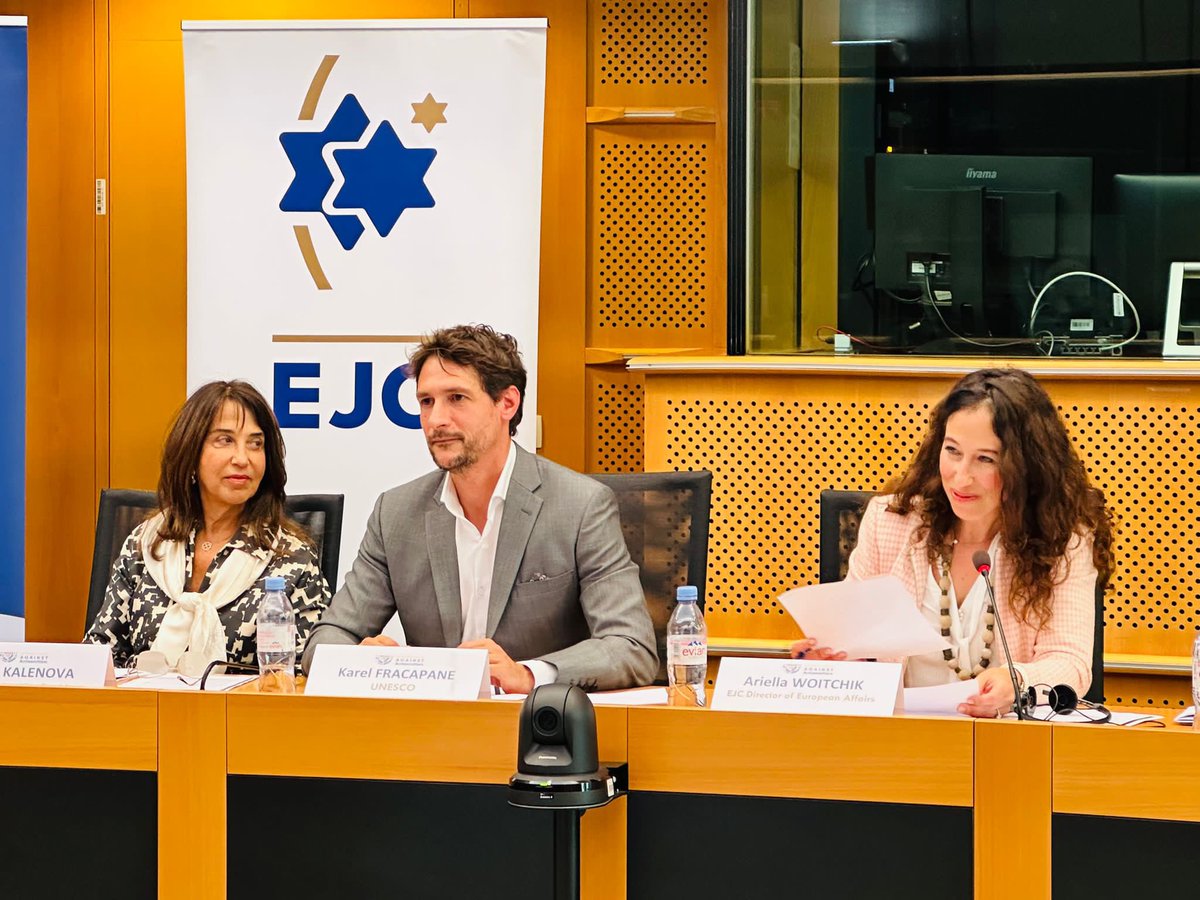
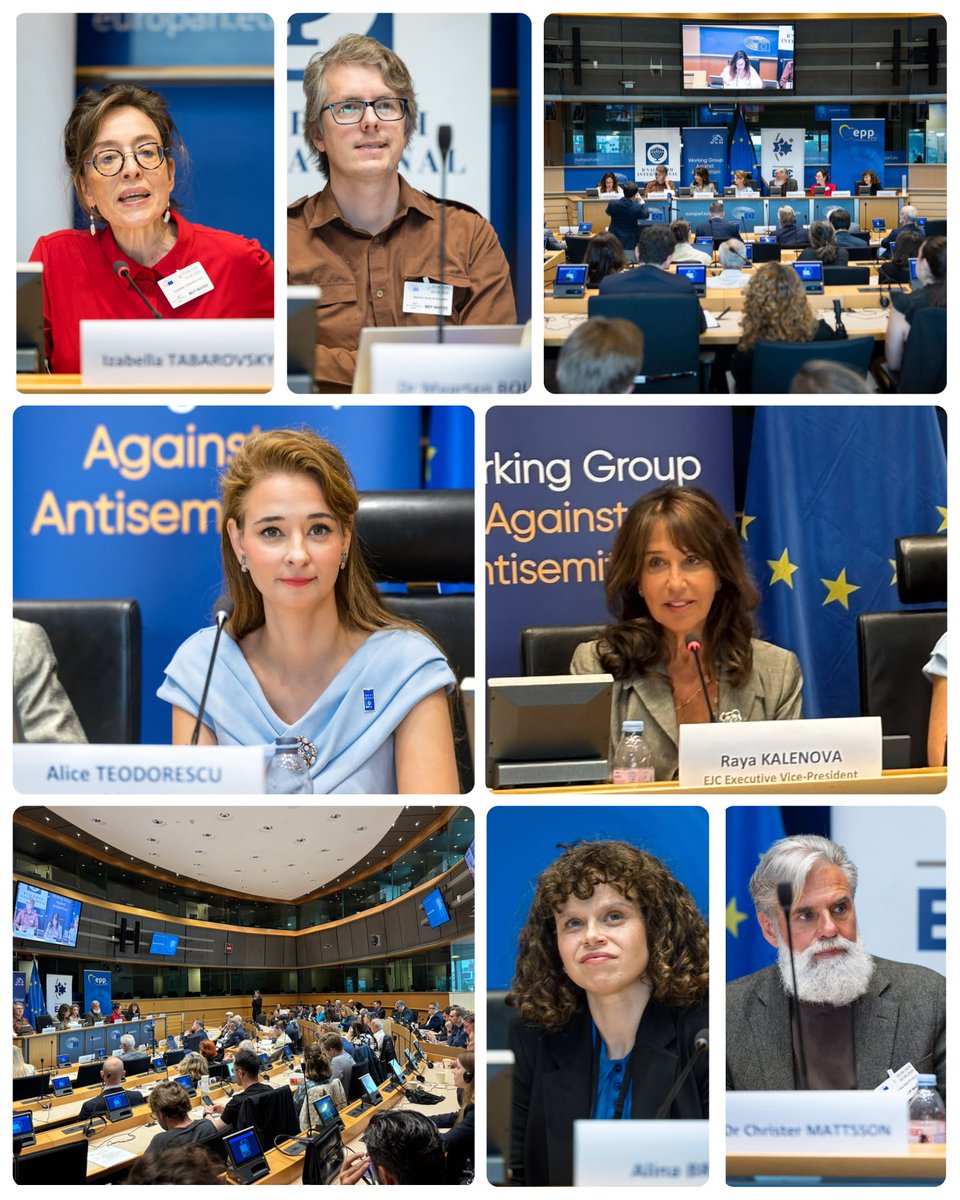
The EJC, together with the Working Group Against Antisemitism (WGAS), the @EPPGroup and @BnaiBrith, organised the conference "Anti-Zionism: The Accepted Face of Antisemitism in Europe?" at the European Parliament in Brussels.
Hosted by WGAS Chair MEP @alicemedce, the event shed light on the rise of anti-Zionism as a form of hate speech in Europe and explored how criticism of Israel has increasingly become a disguise for antisemitism, as well as its impact on those who have had the courage to speak out.
During the conference, which was attended by Members of the European Parliament, EU officials, diplomatic representatives, civil society organisations, and members of the Jewish community, the speakers addressed the historical origins of anti-Zionism as a propaganda tool, examined how it operates and circulates across political, academic, and digital spaces, and explored the relationship between anti-Zionist rhetoric and contemporary manifestations of antisemitism.
In her opening remarks, MEP Alice Teodorescu Måwe reflected on the normalisation of anti-Zionism in society, and how it has become increasingly accepted, contributing to Jews across Europe feeling unsafe in expressing their Jewish identity and their connection to Israel, in ways that stand at odds with democratic values, pluralism, and human dignity.
Afterwards, EJC Executive VP @rayakalenova delivered a powerful address, strongly denouncing the denial of the Jewish people’s right to self-determination. She warned that antisemitism in its latest incarnation, anti-Zionist activism, does not offer a world in which Jews can live in peace, but rather one in which Jews have nowhere they are truly welcome.
She stressed that denying the right to self-determination uniquely to the Jewish people, while recognising it for every other nation, constitutes discrimination, noting that the use of “Zionism” as a substitute for “Jew” enables the collective targeting of Jews while maintaining a veneer of legitimacy and that, in stark contrast to rhetoric often heard in public discourse, she emphasised that Zionism is, above all, an anti-colonial movement par excellence.
Concluding the opening remarks, @AlinaBricman, Director of EU Affairs at B’nai B’rith International, noted that what makes anti-Zionism particularly challenging is that those who promote it often believe they are acting in pursuit of a noble cause and therefore do not perceive themselves as prejudiced.
The conference continued with a panel discussion moderated by EJC Director of European Affairs @AriellaWoit, featuring renowned scholars and academics, including Dr @mboudry, Independent Scholar; Dr Christer Mattsson, Director of the Segerstedt Institute at the University of Gothenburg and Senior Lecturer in Pedagogy; and @IzaTabaro, Fellow at @TheWilsonCenter and the London Centre for the Study of Contemporary Antisemitism- @centre_as and Senior Fellow at the Z3 Institute.
Ms Tabarovsky addressed how Soviet anti-Zionist propaganda helped shape many of the narratives and conceptual frameworks that continue to influence discourse today, connecting contemporary manifestations of anti-Zionism to their broader historical context.
For his part, Dr Boudry presented an intervention titled “A Spiral of Silence: How Academia Enforces Anti-Zionist Orthodoxy”, reflecting on the intellectual climate surrounding debates on Israel and Zionism within academic and cultural institutions, as well as the pressures, silences, and forms of conformity that shape public discourse on these issues.
Finally, Dr Mattsson, whose research focuses on antisemitism, radicalisation, and democratic education, presented findings from his recent study examining the measurable relationship between anti-Zionism and antisemitism, as well as the methodological challenges in identifying and quantifying Israel-related antisemitism in contemporary societies.
In her closing remarks, MEP Alice Teodorescu Måwe thanked the speakers for their contributions and the audience for their engagement, underlining the importance of raising one’s voice to confront these challenges in everyday life. She stressed that responsibility does not rest solely with politicians but with society as a whole, noting that without civic courage nothing will change.
3
88
Ariella Woitchik retweeted
Jun 4
Oui, nous sommes peu nombreux face à cette déferlante haineuse venue cette fois de la gauche de la gauche et qui n'épargne pas la presse. @joelrubinfeld , je me battrai jusqu'à mon dernier souffle contre l'antisémitisme qui détruit la démocratie et la République
Jun 3

L’histoire nous apprend que lorsque l’antisémitisme fait rage, les défenseurs des Juifs se mesurent en qualité, jamais en quantité.
Pourquoi en irait-il autrement aujourd’hui, alors que le monde occidental est frappé par une déferlante antisémite sans précédent depuis la Libération?
L'histoire rendra justice à ceux qui, à l’image d'Émile Zola et des Justes parmi les Nations, ne sont pas juifs et comptent parmi les résistants contemporains auxquels j’ai rendu hommage dans @MarianneleMag (marianne.net/agora/tribunes-…).
[Vidéo: extrait de l'émission “On se dit tout” du 28 mai dernier sur @RadioJudaicaBxl, dont la version intégrale est disponible ici: facebook.com/radiojudaica/vi…]
@AblotiaLucas @ClBarzin @GLBouchez @mboudry @AnneCremer2 @G_Dallemagne @NicolasdePape @CorentindeSalle @Destexhe @BorisDillies @DoornaertMia @ducarmedenis @etiennedujardin @charliedupont @FurfariSamuele @NadiaGeerts @DGodefridi @HermanusMe23428 @Assita_Kanko @LamairP @Maaroufi9 @JeanPie31094861 @EricMuraille @quatremer @SafaiDarya @IsmaelSaidi @marcelsel @SamTouzani @DavidVande2545 @alexsvillers
85
717
2,430
88,105
Ariella Woitchik retweeted
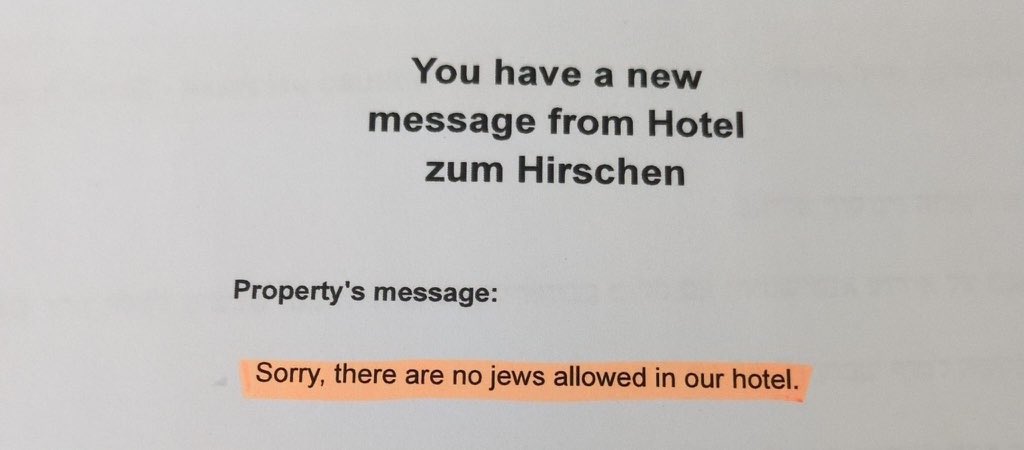
We are deeply disturbed by the case of an Israeli traveller who was denied accommodation at a hotel in Bavaria after receiving a message stating that Jews were not welcome.
While the case is now under investigation by German authorities, the reported response is shocking and evokes some of the darkest chapters of European history.
@Bookingcom has since removed the hotel from its platform, and prosecutors are examining the incident.
This case comes amid a broader surge in antisemitism in Germany, where more than 6,200 antisemitic offenses were recorded in 2024, including 173 violent crimes.
No one should be denied a hotel room, a service, or access to public life because they are Jewish. We trust the authorities will investigate this case thoroughly and hold those responsible accountable.
9
17
63
7,969
Ariella Woitchik retweeted

May 31
Anonyme : Je suis pompier et ce que j’ai vu hier dans les rues de Paris m’a brisé le cœur.
On est intervenus vers 22h, après l’appel pour un feu de poubelles qui dégénérait. On pensait à un simple incident de soirée. On est arrivés sur place et c’était l’enfer. Paris, ma ville, celle où j’ai grandi, où j’ai fait mes premières gardes, était devenue une zone de guerre. Des fumées noires partout, des cris, des explosions de mortiers. Des groupes de jeunes, souvent issus de l’immigration, cagoulés, organisés, qui chargeaient les forces de l’ordre comme sur un champ de bataille.
J’ai vu des collègues policiers se faire lyncher à coups de barre de fer. J’ai vu une voiture de police caillassée alors qu’on sortait juste pour éteindre un feu qui menaçait des familles. On a été pris à partie par des émeutiers qui nous hurlaient dessus, nous traitant de “chiens”. On essayait juste de sauver des vies, et on devenait des cibles.
J’ai ramassé un gamin de 14 ans, le visage en sang, qui pleurait en disant qu’il avait suivi “les grands” pour “s’amuser”. J’ai vu une mère de famille, volets fermés, qui nous suppliait de protéger ses enfants pendant que ça cassait tout en bas. Les vitrines défoncées, les commerces pillés, les voitures brûlées… tout ça sous prétexte de “fêter” quelque chose.
Fêter, ce n’est pas casser.
C’est ça, la France en 2026 ? Un pays où on ne peut plus sortir le soir sans risquer sa vie ? Un pays où des quartiers entiers sont livrés à des clans qui ne respectent ni nos lois, ni notre histoire, ni nos pompiers, ni nos policiers ? Où on regarde impuissant notre capitale, symbole de lumière et de culture, transformée en terrain de jeu pour des barbares qui crachent sur la main qui les nourrit ?
Cette nuit, en rentrant chez moi à 6h du matin, encore couvert de suie et de sueur, j’ai pleuré comme un gosse. Pas de fatigue. De rage et de tristesse. Pour mes enfants. Pour mes collègues blessés. Pour ce pays que j’aime et qui se laisse mourir.
Réveillez-vous. S’il vous plaît. Avant qu’il ne reste plus rien à sauver.
2,730
27,589
76,833
1,795,356
Ariella Woitchik retweeted

May 28
Pro-Pal accosts national treasure Helen Mirren on the streets of London last night and calls her an “evil Zionist b*tch” just because she thinks Israel should exist. Well done to her companion who told him to “f*ck off”.
327
1,451
10,314
341,722
Ariella Woitchik retweeted
May 27
Dear friends on the left,
You say you’re worried about “disinformation” and “fake news,” yet many of you have spent the past two years spreading some of the most egregious misinformation about the Gaza war in order to demonize one small nation — from the endlessly repeated “70–80% women and children” casualty claim to the obscene accusation of “genocide.” All of it accompanied by bullshit “evidence” about the Amalek verse, distorted quotes about “human animals” and “desert island”, and about there being “no innocents in Gaza.”
And when these claims were refuted, you issued no corrections and no apologies. You just quietly dropped them and moved on to the next calumny.
Don’t ever tell me you care about “fake news” again.
“Albanese and countless media outlets also helped popularise the claim that 70-to-80 per cent of Gaza’s casualties were women and children, a statistic endlessly invoked as evidence of genocide and printed everywhere. Yet subsequent analyses, including revisions based on Hamas’ own casualty data, found adult male deaths substantially higher, with fighting-age men heavily overrepresented among the dead. Quietly, the numbers changed, and equally quietly, almost nobody corrected the narrative built upon them.”
futureofjewish.com/p/the-int…
24
219
804
14,277
Ariella Woitchik retweeted

May 26
“I always said I was anti-Zionist but not antisemitic”
Taryn Thomas used to join campus protests at Stanford where students called Israel’s war with Hamas a genocide.
Then, she attended the Nova exhibit, and learned for the first time about what actually happened on October 7th.
Now, she realizes, those protests “had already decided how the story was going to end,” before Israel even responded to the massacre.
This is exactly why Free Palestine protests the Nova exhibit wherever it opens.
They are afraid that if more people learn the truth, their movement will run out of support.
Video Credit: GB News
72
1,817
7,713
159,016
Ariella Woitchik retweeted

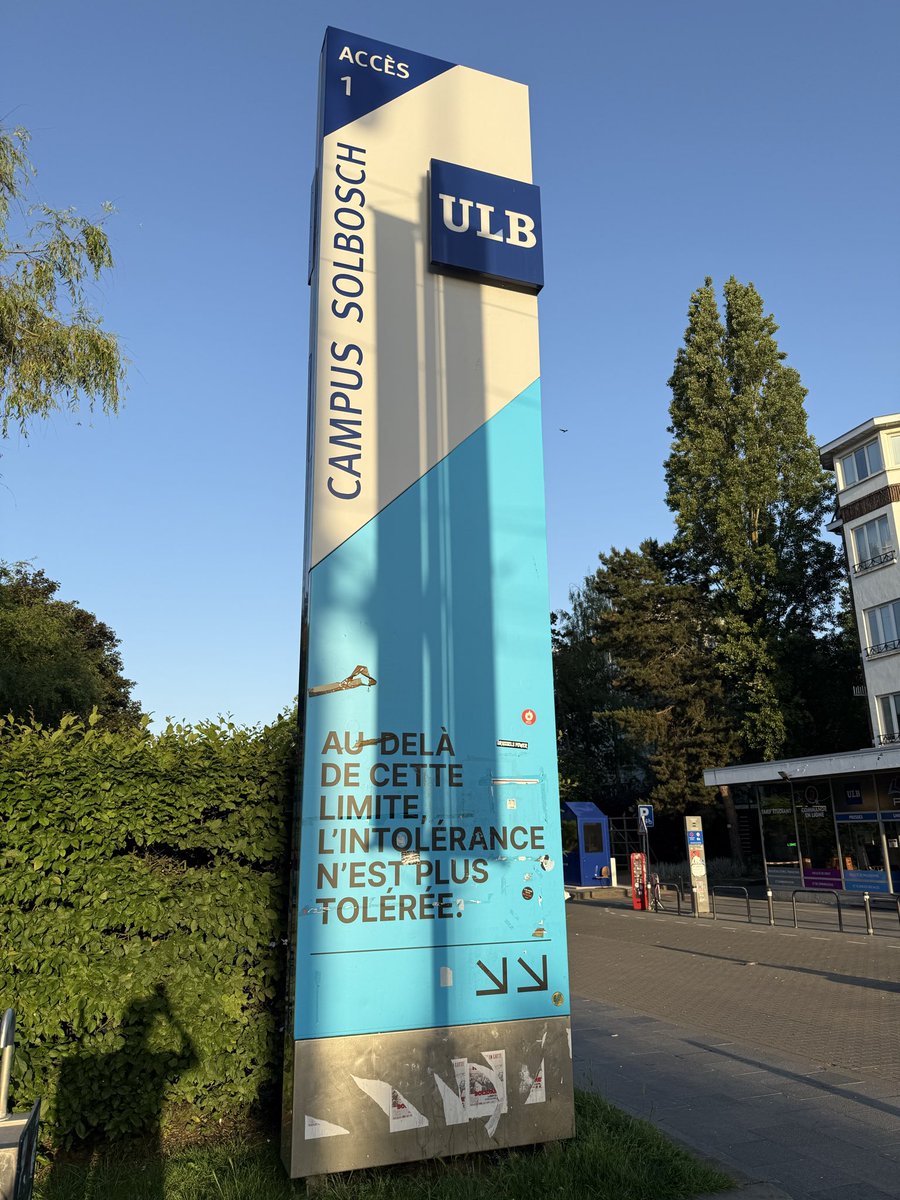
J’avoue, j’ai ri.
L’ULB, qui combat donc l’intolérance en se rangeant derrière un slogan digne d’Orwell, se rend-elle compte qu’elle est devenue un bastion de l’islamisme, de la haine (des juifs notamment) et du gauchisme le plus intolérant ?
19
71
333
6,958

May 27
En Belgique, plus rien ne m’étonne.. quelle honte !
We join the @jonathasbel in condemning the removal of Professor Joël Kotek from Belgium's delegation to the International Holocaust Remembrance Alliance.
After decades of dedicated service in the fight against antisemitism and in the preservation of Holocaust memory, Professor Kotek was sidelined for doing precisely what @theIHRA exists to do: speaking plainly and honestly about antisemitism, including its alarming resurgence since October 7.
We stand in full solidarity with Professor Kotek. If the Belgian government is truly devoted to fighting antisemitism, silencing a recognised professor for raising documented realities is not only contradictory, but also deeply damaging to the credibility of that commitment.
Naming hatred is not the problem. Silencing those who do is.
1
35

UN Watch's findings show a clear pattern of ideological bias and financial conflicts of interest that are hampering human rights.
Read the full 104-page investigative report:
unwatch.org/report-u-n-exper…
22
350
1,318
31,960
Ariella Woitchik retweeted

Good morning! ☕️
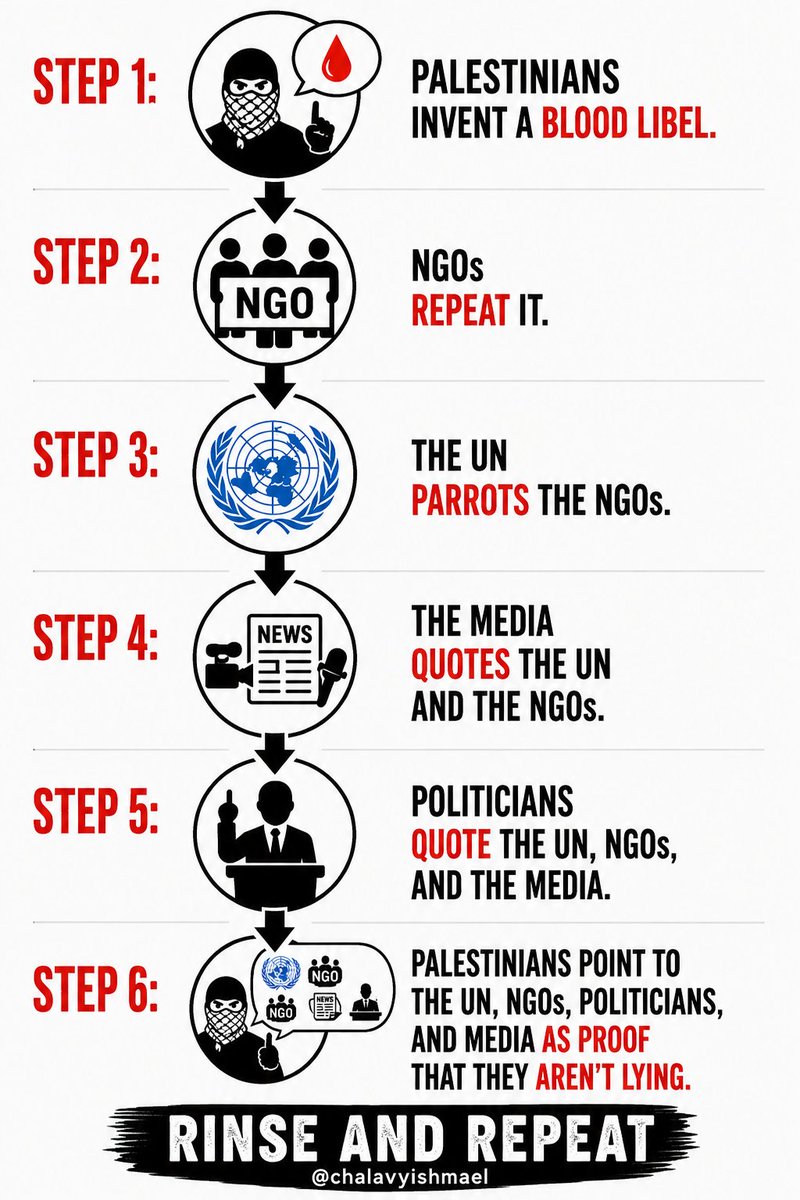
ALT #Palestine #Israel #Gaza #UN #Genocide #Pallywood
58
433
1,603
21,854
Ariella Woitchik retweeted

May 21
One year ago today, a despicable terrorist executed two Israeli Embassy staff members - Yaron Lischinsky and Sarah Lynn Milgrim - outside the Capitol while shouting "Free Palestine."
We will never forget.

200
1,359
6,600
43,882