Digital transformation
Joined August 2016
- Tweets 26,738
- Following 521
- Followers 917
- Likes 50,971
1,710 Photos and videos
Arun Subramanian retweeted

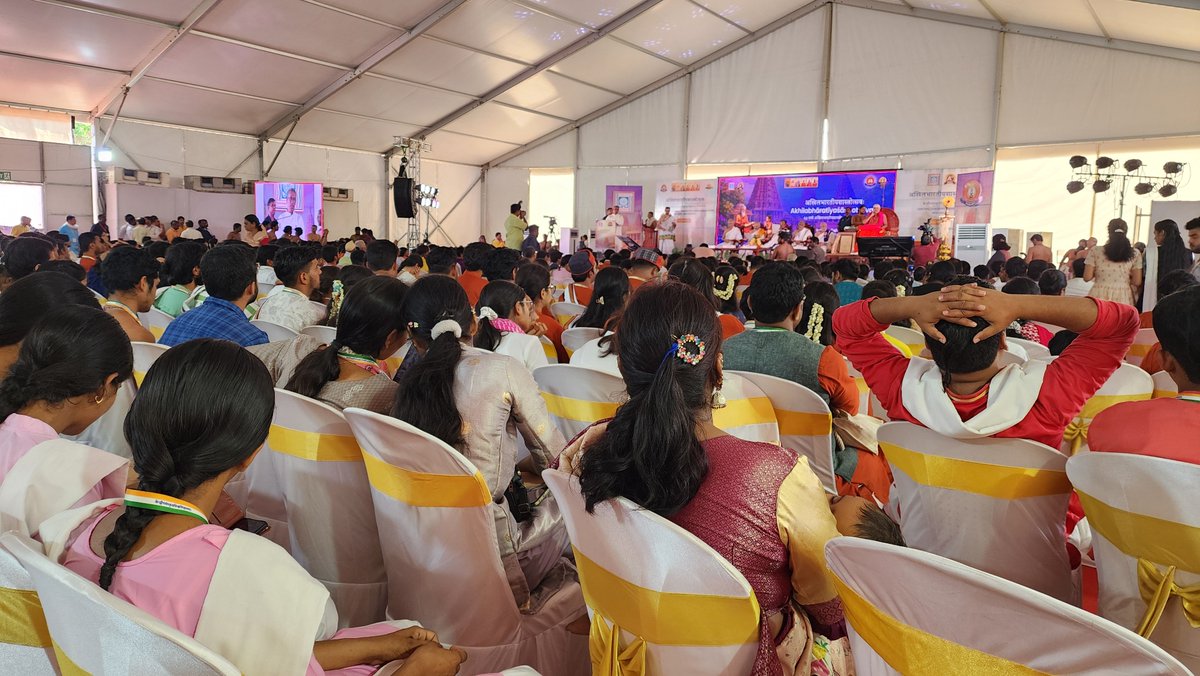
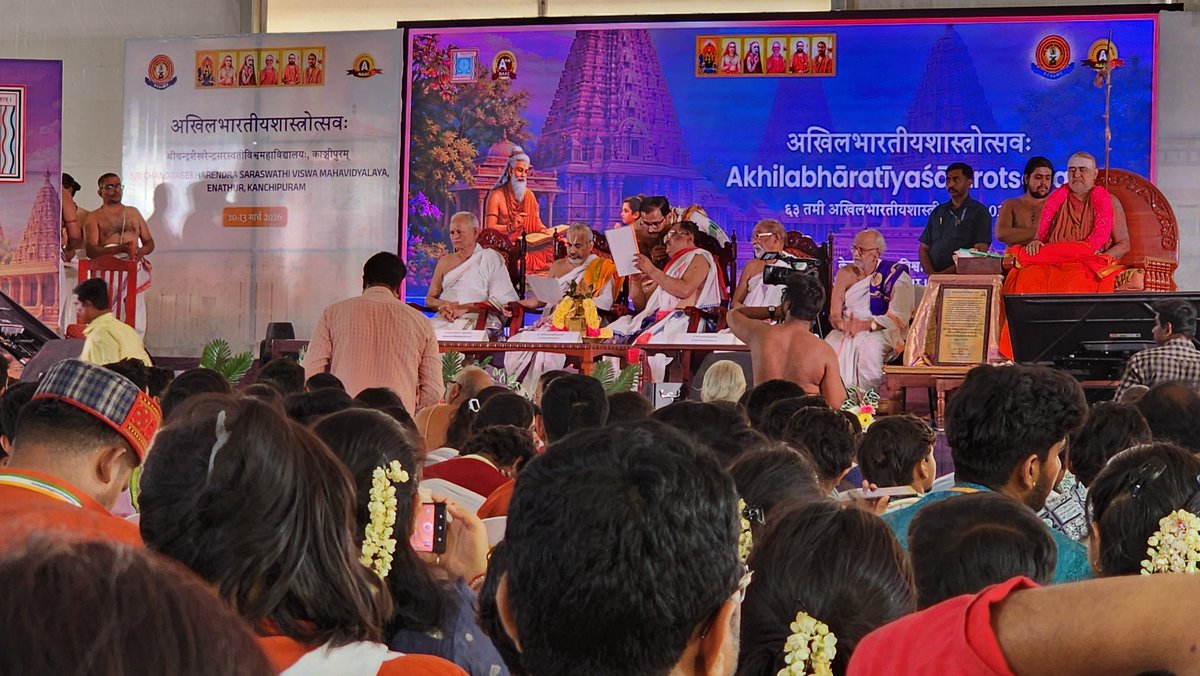
Periyava Sharanam GURUWARA SADAS @KanchiMatham started in 1976 SriDevanathan describes its original idea,25 maha vidhwans.Nyaya Sashtra vidyalaya& Damani college @dushyanthsridar @Gopalee67 @adarshahgd @KamakotiNilaya @SCSVMVDU @ArunBytes @bajaregurunatam
youtu.be/tc5seXY4Nxs?si=K2M6…
6
9
801

Mar 23
This is fantastic!!
All the best!!
Mar 22

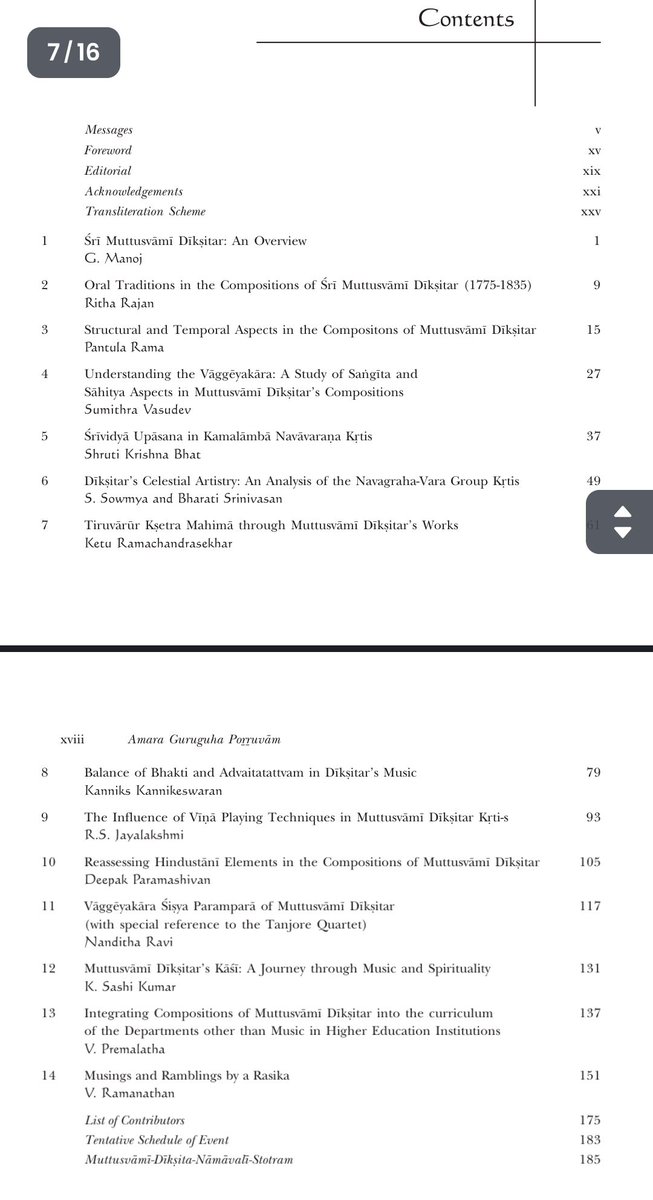
Contributors of this commemorative volume is diverse.
Befitting the pan Indic stature of Dikshitar, I'm glad that Sri @narendramodi ji, @myogiadityanath ji @dpradhanbjp ji @MinOfCultureGoI wrote Messages & @GautamDesiraju has Foreworded. @KanchiMatham blessed with Srimukham.
1
123
Arun Subramanian retweeted
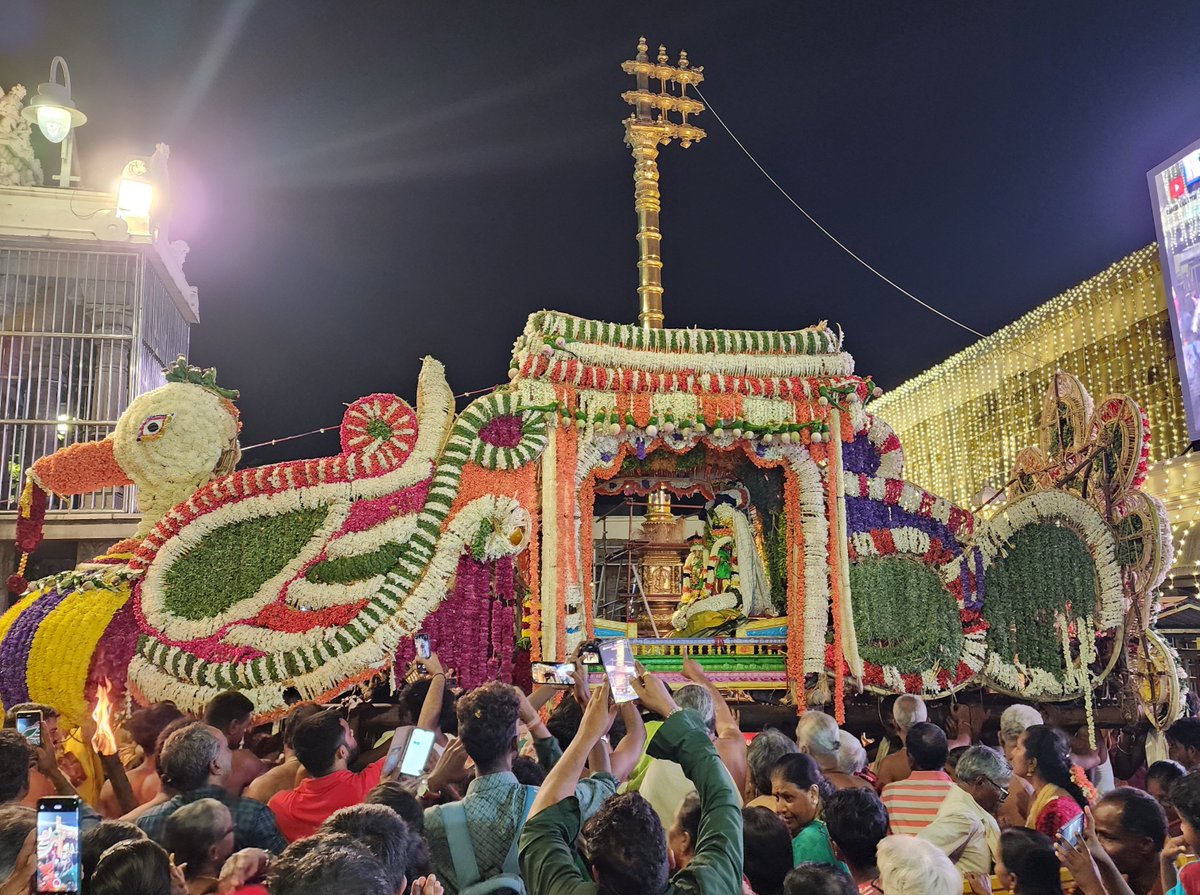
Periyava Sharanam THEVARA DR SUBRAMANIAM shares Scintillating story of how @KanchiMatham kept THEVARAM as its HRIDAYAM by establishing SENGOL-1947 handpicking Sri Dunlop krishnan to revive 18,000 THEVARAMS @dushyanthsridar @Gopalee67 @nvignesh93 @adheenam youtu.be/lxvuB6PQ4cc?si=l7Dy…
3
12
23
1,318
Arun Subramanian retweeted

(Hindu) Culture is not food, travel,selfie.
Not ethnic kitsch.
It is this deep connection with the superstructure of our Metaphysics.
Papa, Punya, Karma, Dharma, Rina, Pitr, Devatas. Moksha.
Not State or Markets.
It is ritual life that makes Hindu civilization, Sanatana.
Mar 17

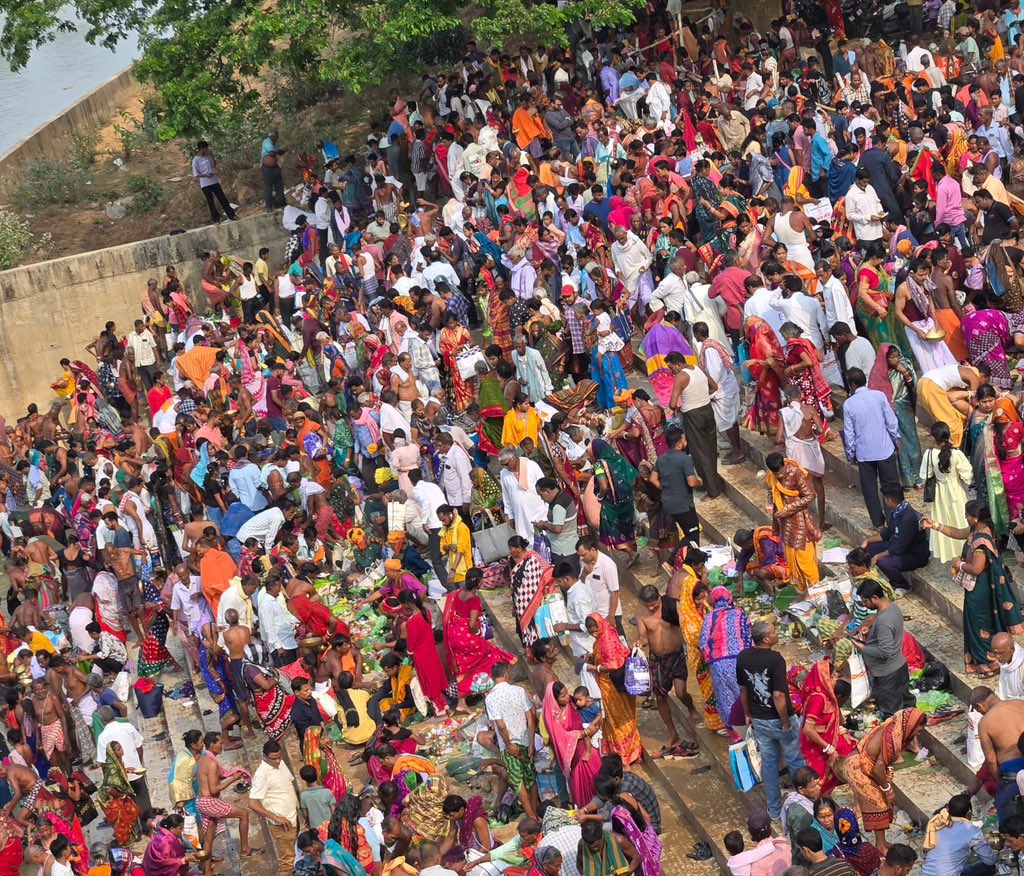
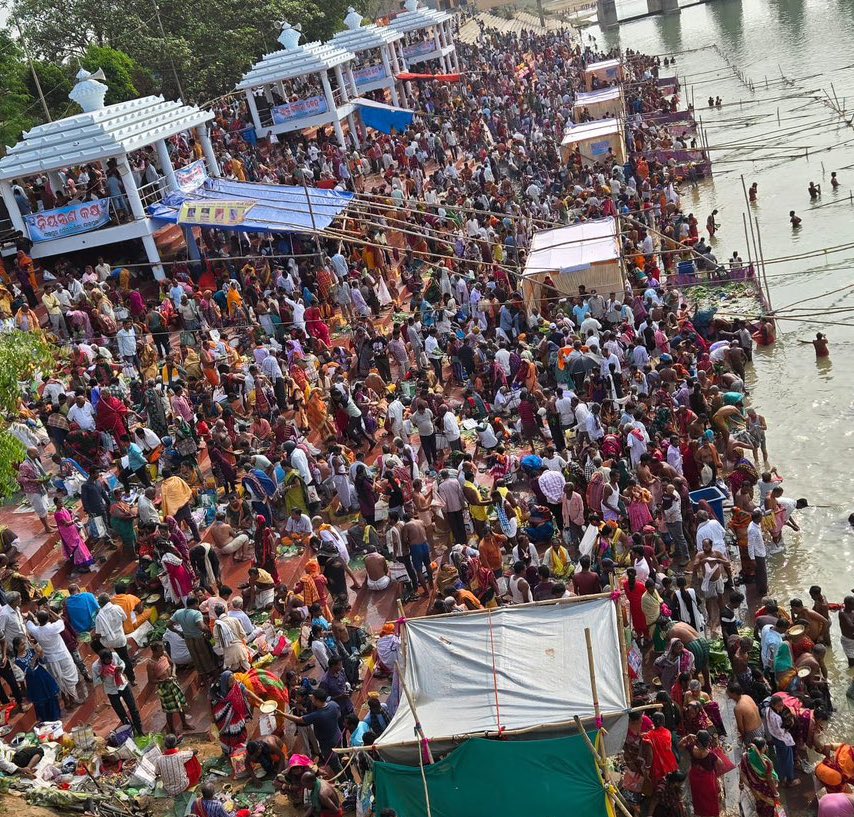
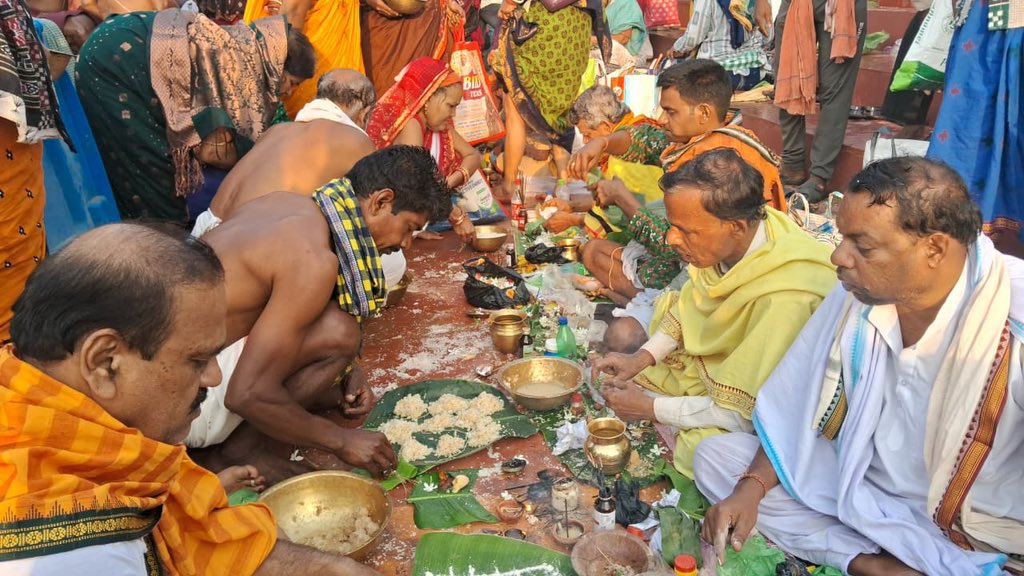
This is Odisha’s own Kumbh Mela. 🙏
Today, on the occasion of Baruni Snana, devotees have thronged Dasaswamedha Ghat in Jajpur to take a holy dip in the sacred Baitarani River.
They also perform Pinda Daan for their ancestors and seek blessings at the Maa Biraja Temple, believing the ritual cleanses sins and leads to liberation(Moksha).
4
33
131
2,572
Mar 17
If this is ignored, next proposal will be dividing income of family amongst members and then say each individual is an assessee whose income will be less than 20L, and thus seeking 0 tax from income 🤦
No seriousness at all...tamaashaa
Mar 16

In Parliament today I proposed optional Joint filing of Income Tax Returns for married couples.
Family A
Both spouses earn ₹10 lakh each.
Total household income is ₹20 lakh.
Tax: zero
Family B
One spouse earns ₹20 lakh. The other stays home to raise their child.
Total household income is ₹20 lakh.
Tax: ₹1.92 lakh
The only difference is how the salary is split between the two spouses.
One roof. One kitchen. One household budget. But when tax time comes, the family disappears.
The tax system sees two individuals. A husband and wife become strangers. No clubbing of income or rebates.
In Parliament today I proposed optional joint filing of Income Tax Returns for married couples, so families with uneven incomes are not unfairly penalised. If implemented, then Family A and Family B both will pay Zero Tax.
68
Mar 17
USA targets Civilians
Pakistan targets Civilians...
Millions killed, injured, maimed for life....
Then remember Op Sindoor.......
21
Mar 15
Gnanpeet award to Vairamuthu is disgusting
The Prez should refuse to hand it to this base, vile and vulgar fraud
1
52
Mar 15
"Pain in the neck"???
What an empathy for entitlement!!
They better pay up
Mar 15

The management of Amrutanjan Limited, a 132-year-old Chennai based company popular for its pain relief balm across the country, is now facing a pain in the neck because of the requirement to pay crores of rupees towards rental arrears for 14 grounds of the Mylapore Kapaleeswarar Temple land in Chennai. It had been paying a paltry rent of ₹1,400 per month for several decades. The temple management had increased the rent to ₹3.3 lakh per month with effect from November 1, 2001. However, the company did not pay the enhanced rent. A writ petition filed by the company in 2005 was dismissed by a single judge of the #MadrasHighCourt in 2025. Now, the company has filed a writ appeal. Hearing tomorrow. @THChennai
thehindu.com/news/national/t…
1
150
Mar 12
4 weeks kyaa, take 4 years ...
Mar 12

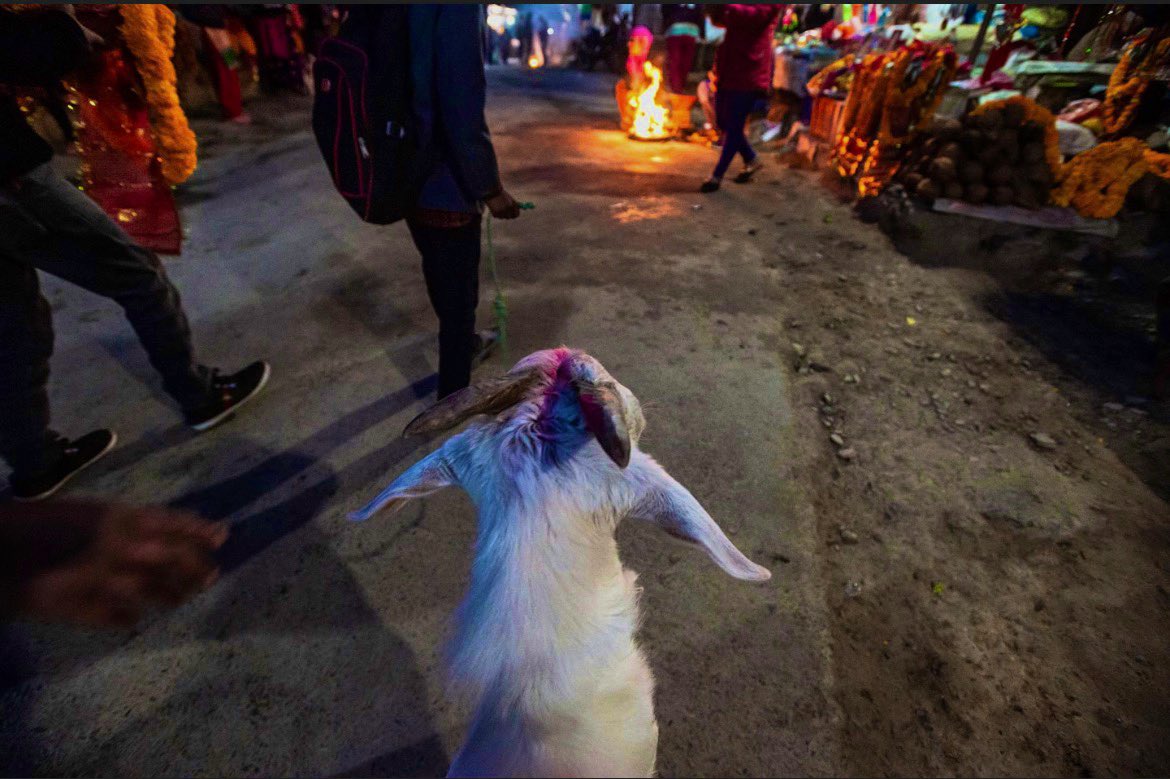
BREAKING | Supreme Court seeks Centre’s response on plea over alleged inaction on ban against animal sacrifice in temples.
Bench: Justices Vikram Nath and Sandeep Mehta
1
49
Mar 12
Anything other than death penalty is injustice to the victim
Mar 11
Supreme Court stays death penalty of man convicted for rape and murder of 5-year-old girl
report by @RitwikinCourt
barandbench.com/news/supreme…
23
Mar 11
Roguish CJI
Mar 11

The Supreme Court's recent judgment directing the dissociation of Professor Michel Danino and his colleagues from all publicly funded educational roles is nothing short of a draconian overreach, a blatant assault on academic freedom, and a chilling attempt to sanitise the narrative of institutional flaws in India. As a Padma Shri awardee and a scholar who has dedicated his life to illuminating India's ancient civilisation, Danino has been unfairly vilified for daring to include a factual discussion on judicial corruption in a Class 8 NCERT textbook. This ruling not only undermines the principles of transparency and education but also exposes the judiciary's hypersensitivity to scrutiny, even as real corruption festers within its ranks. Let us dissect this travesty with the data it demands.
First, consider Michel Danino's impeccable credentials. Born in France in 1956, he relocated to India in 1977, becoming an Indian citizen and immersing himself in the study of its heritage. He has authored seminal works such as *The Lost River: On the Trail of the Sarasvati* (2010), which marshalled archaeological, hydrological, and satellite data to revive the Vedic Sarasvati River's historical significance, challenging colonial-era myths. Danino debunked the outdated Aryan Invasion Theory through rigorous evidence from sites like Dholavira and Lothal, demonstrating the continuity of the Indus Valley Civilisation with Vedic culture. As a guest professor at IIT Gandhinagar, he helped establish its Archaeological Sciences Centre, and in 2017, he was honoured with the Padma Shri for contributions to literature and education. He convened the International Forum for India's Heritage, boasting over 160 eminent members, and has published in journals like *Man and Environment* and *Puratattva*. To brand such a scholar as lacking "reasonable knowledge" or deliberately misrepresenting facts is an insult to intellectual integrity.
Now, turn to the offending chapter in the NCERT Class 8 Social Science textbook, titled "The Role of the Judiciary in Our Society." Far from being a sensationalist rant, it factually addressed systemic challenges, including "corruption at various levels" that delays justice. It highlighted the staggering backlog: approximately 81,000 pending cases in the Supreme Court, 6.24 million in High Courts, and 47 million in district and subordinate courts. The text linked these to structural issues like judge shortages, complex procedures, and weak infrastructure, echoing the maxim "justice delayed is justice denied." It noted that judges are bound by a code of conduct, yet corruption persists, impacting access to justice, especially for the economically disadvantaged. This is not "misrepresentation"—it is essential civic education for young minds to understand institutional realities and push for reforms.
The irony is palpable when juxtaposed against the data on actual judicial corruption in India. Between 2016 and 2025, over 8,600 complaints were filed against sitting judges, peaking at 1,170 in 2024. Transparency International's 2013 Global Corruption Barometer found that 45% of Indian households viewed the judiciary as corrupt, with an average corruption score of 3.3 out of 5. A 2026 India Today survey revealed that 85% of Indians perceive the judiciary as deeply or somewhat corrupt, with only 8% believing it is corruption-free. In 2013, 36% of citizens reported paying bribes to the judiciary, with 59% to lawyers, 5% to judges, and 30% to court officials for favourable outcomes. As of 2024, over 50 million cases remain pending, exacerbating vulnerabilities where litigants resort to bribes to expedite proceedings. Chief Justice B.R. Gavai himself acknowledged in 2025 that instances of corruption erode public confidence, citing cases like the Allahabad High Court's Justice Yashwant Varma, embroiled in a cash scandal. From 2017 to 2021, 1,631 complaints on judicial misconduct were forwarded via the Centralised Public Grievance Redress system. These figures, drawn from official and international sources, affirm that the chapter's content was grounded in reality, not malice.
This ruling reeks of institutional insecurity. By blacklisting Danino and his associates—Suparna Diwakar and Alok Prasanna Kumar—from any publicly funded work, the Court has effectively censored discourse on its own failings. It mocks the separation of powers, positioning the judiciary as untouchable while it lectures on accountability. Where was this zeal when former Law Minister Shanti Bhushan alleged that eight of sixteen former Chief Justices were corrupt? Or when the Press Information Bureau reported recurring complaints about judicial integrity? The Court's order to rework the chapter only with "domain experts", including a former judge, smacks of self-preservation, not pedagogy.
Education should foster critical thinking, not shield power from critique. By punishing scholars like Danino, who has enriched India's historical narrative, the judiciary risks alienating the very citizens it serves. This is not justice; it is judicial authoritarianism. We must demand a reversal, for the sake of our democracy and our children's right to truth. #StandWithDanino #JudicialOverreach #AcademicFreedom
![Michel Danino in 2016 [Image courtesy: Wikipedia]](https://venexa.site/media/HDI9BrsaEAAu_2T.png)
ALT Michel Danino in 2016 [Image courtesy: Wikipedia]
1
49
Mar 11
Exactly why Rajdeep, his wife, Arndati Roy can rant, abuse Modi, Shah w/out batting an eyelid...assured they will be able to freely walk home, day or night.
Suryakant - CJI, arrogance personified, must see merit in this freedom, and must restrain himself gracefully. Prayers!!
Mar 11
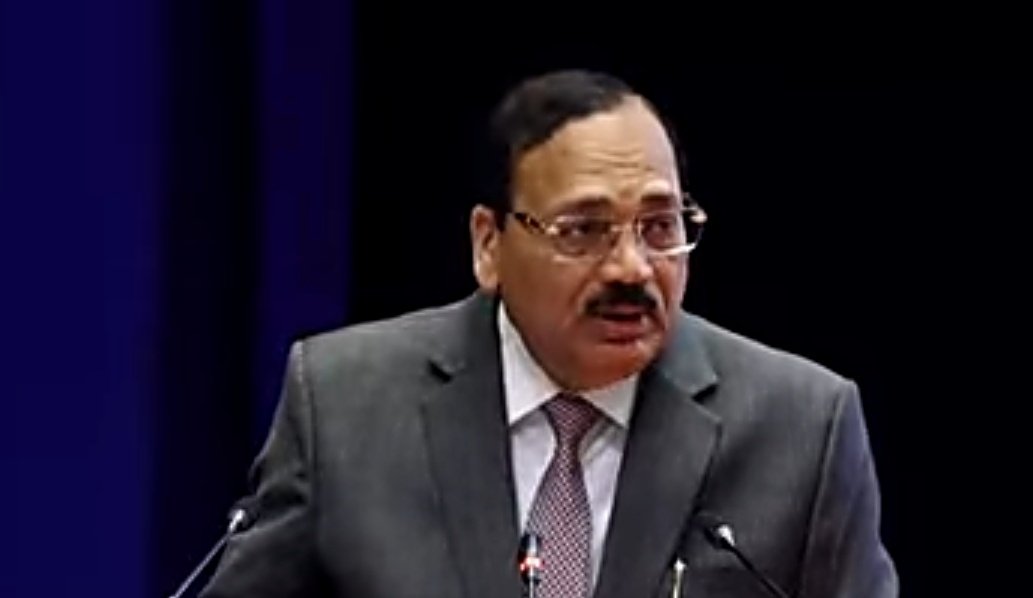
#BIG #BREAKING CJI Surya Kant: Some elements in so called social media has acted irresponsibly. We firmly believe in catching bull by its horns. We direct the govt of India to identify the platforms and the persons who have indulged in so for lawful action to be taken .the law must take its course..
84
Mar 11
Doing a Nupur Sharma again, this time on Michael??!!??
Suryakant at it a second time!!
This is unadulterated INTIMIDATION

The Supreme Court has directed the Centre and all State governments along with all institutions receiving public funds, either partially or fully, to dissociate the chairperson of NCERT social science curriculum, Professor Michel Denino and his two other associate members who were behind the Sub-chapter in part 2 of the Class 8 NCERT Social Science textbook 'Corruption in the Judiciary', in any manner for the purpose of preparation of curriculum or finalisation of text book for the next generation.
A bench led by the Chief Justice of India (CJI) Surya Kant also directed all of the aforesaid authorities to disassociate Professor Denino, along with his team, from the preparation and inclusion of the Chapter, from rendering any service in any institution, which would mean payment to them from public funds.
“At the outset we have no reason to doubt that professor Michel Danino along with Ms Diwakar and Mr Alok Prasanna Kumar either does not reasonable knowledge about Indian judiciary or they deliberately knowingly misrepresented the facts in order to project a negative image of Indian judiciary before students of Class 8 who are at an impressionable age. There is no reason as to why such persons be associated in any manner with preparation of curriculum or finalisation of text book for the next generation. We direct union, all states, all institutions recieving state funds, to disassociate them from rendering any service which would mean payment to them from public funds”, the Court noted.
1
3
60
Mar 11
Is being "mad" a necessary qualification to be CJI?
Justice Suryakant should lay bare facts regarding the judge caught with tonnes of cash, have him persecuted, to prove judiciary is above corruption. Even if that happens, this going after ncert chair is plain bullying...
The Supreme Court has directed the Centre and all State governments along with all institutions receiving public funds, either partially or fully, to dissociate the chairperson of NCERT social science curriculum, Professor Michel Denino and his two other associate members who were behind the Sub-chapter in part 2 of the Class 8 NCERT Social Science textbook 'Corruption in the Judiciary', in any manner for the purpose of preparation of curriculum or finalisation of text book for the next generation.
A bench led by the Chief Justice of India (CJI) Surya Kant also directed all of the aforesaid authorities to disassociate Professor Denino, along with his team, from the preparation and inclusion of the Chapter, from rendering any service in any institution, which would mean payment to them from public funds.
“At the outset we have no reason to doubt that professor Michel Danino along with Ms Diwakar and Mr Alok Prasanna Kumar either does not reasonable knowledge about Indian judiciary or they deliberately knowingly misrepresented the facts in order to project a negative image of Indian judiciary before students of Class 8 who are at an impressionable age. There is no reason as to why such persons be associated in any manner with preparation of curriculum or finalisation of text book for the next generation. We direct union, all states, all institutions recieving state funds, to disassociate them from rendering any service which would mean payment to them from public funds”, the Court noted.
2
77
Mar 10
Brilliantly written
Thank you very much 🙏🙏
Mar 10

When anti-discrimination policy abandons procedural neutrality, it risks reproducing the very injustice it claims to counter.
Our latest piece by @priya_27_ analyzes the UGC’s 2026 regulations using constitutional principles and natural justice.
brhat.in/dhiti/an-architectu…
1
28
Arun Subramanian retweeted

RIL Media Statement
At a time when global energy markets are experiencing volatility, ensuring uninterrupted access to essential fuels for Indian households remains a national priority.
Reliance Industries is taking proactive steps and in line with the Government guidelines, to maximize LPG production from our refining and petrochemicals complexes at Jamnagar — the world’s largest integrated refining hub. Our teams are working around the clock to optimize refinery operations and enhance LPG output so that supplies to the domestic market remain stable and reliable.
At the same time, natural gas produced from the KG‑D6 Basin will be diverted to support supply to priority sectors, in line with national energy priorities and Government guidelines.
For Reliance, India’s energy security and the well-being of millions of Indian families always come first. We will continue to work closely with the Government of India and remain fully compliant with all national guidelines and allocation priorities, ensuring that energy supplies reach the sectors and communities that need them the most.
As always, Reliance will stand firmly with the nation in its time of need. In times of global uncertainty, we remain committed to doing everything possible to support India’s energy security and ensure reliable access to essential fuels for the country.
ril.com
260
1,424
7,710
748,491
Mar 10
Double the prices
Force Majoure
"We have an agreement with India, and according to that agreement, India will supply 180,000 tons of diesel to Bangladesh via the pipeline each year. The 5,000 tons of diesel that is arriving now is a part of that agreement," says Chairman of Bangladesh Petroleum Corporation (BPC), Muhammad Rezanur Rahman tell ANI.
"According to the agreement, at least 90,000 tons of diesel should be imported to Bangladesh within six months. The consignment arriving today is 5,000 tons, and we hope that within the next two months, we will bring in the total diesel amount for the entire six months," the BPC chairman adds.
24
Mar 10
Reason is simple. Hold the gov to ransom as Gov questios accounting of hotels
Mar 10

The suspension of commercial LPG cylinder distribution in South Indian states, including Tamil Nadu, has triggered widespread concern among the public. Reports indicating a possible shortage of fuels such as petrol have further deepened these anxieties.
A similar pattern was witnessed during the peak of the COVID-19 pandemic, when the Union BJP government’s delayed and inadequate response left ordinary people to bear the brunt of the crisis.
Given the seriousness of the situation, the Union government must act swiftly to address the issue and put in place effective measures to prevent disruptions that could affect people’s livelihoods and the broader economy.
44