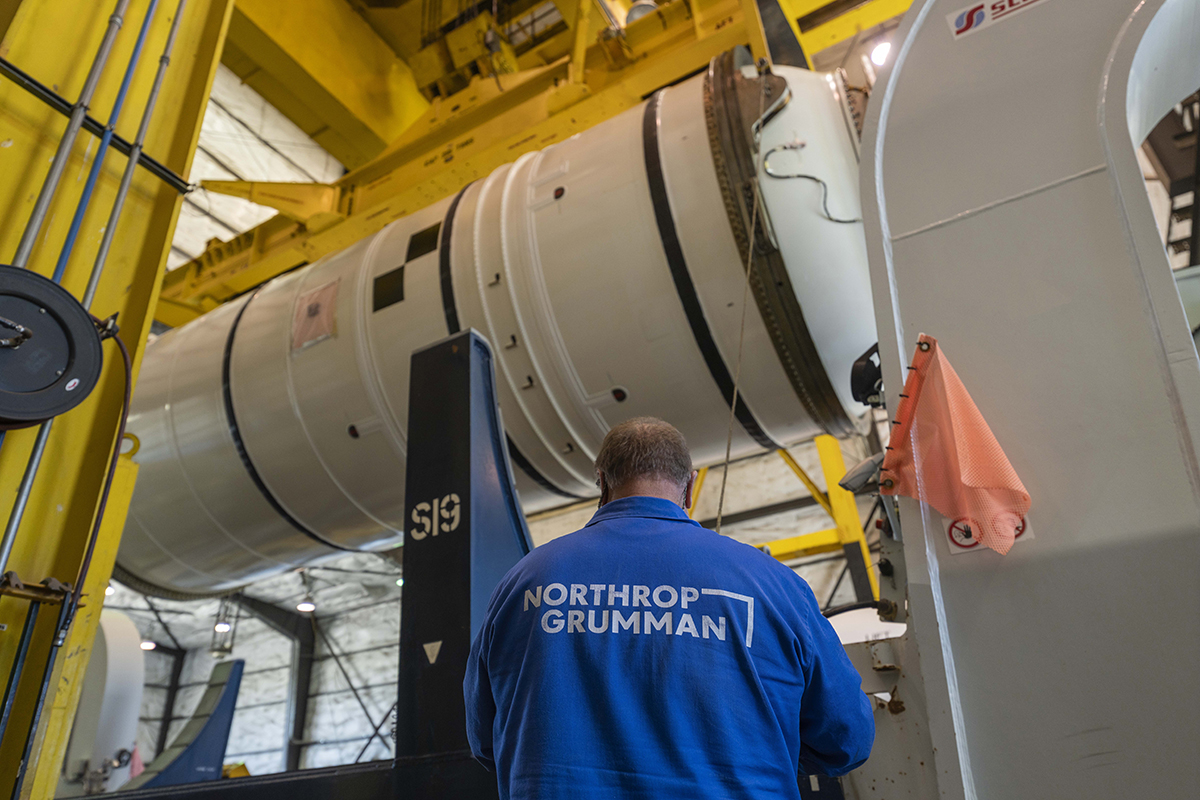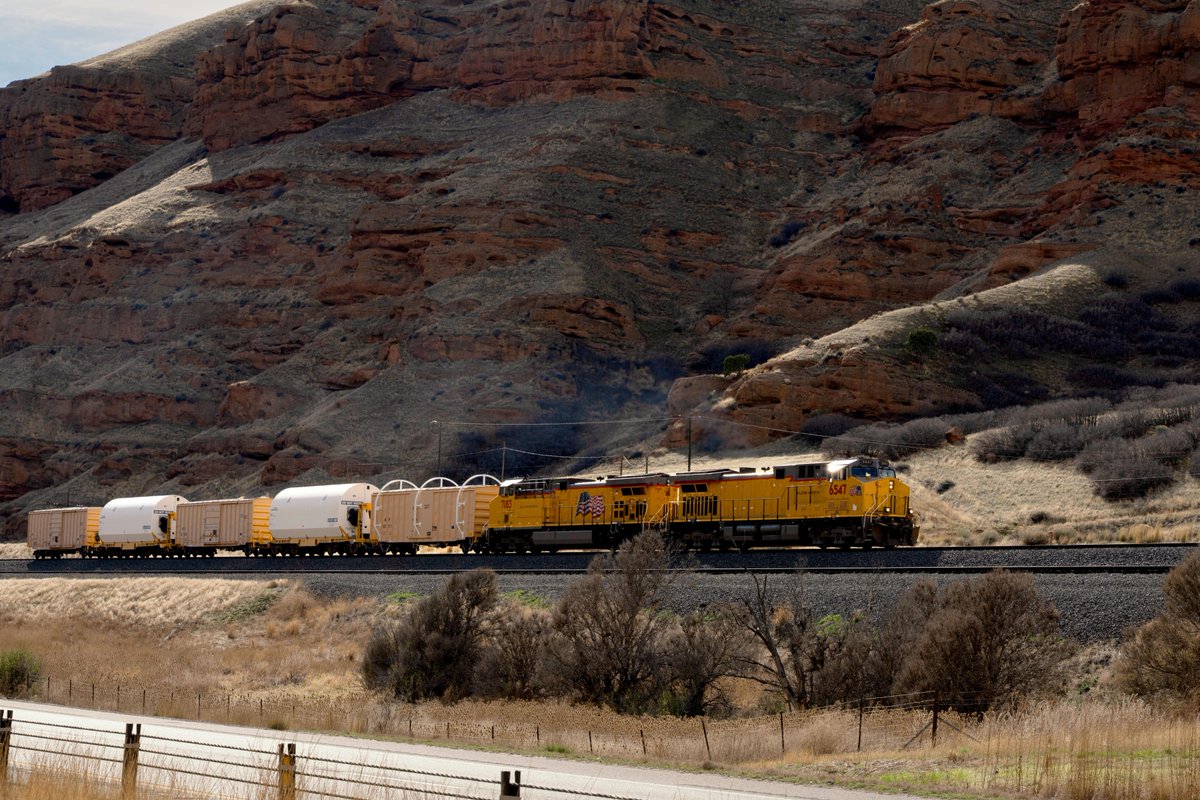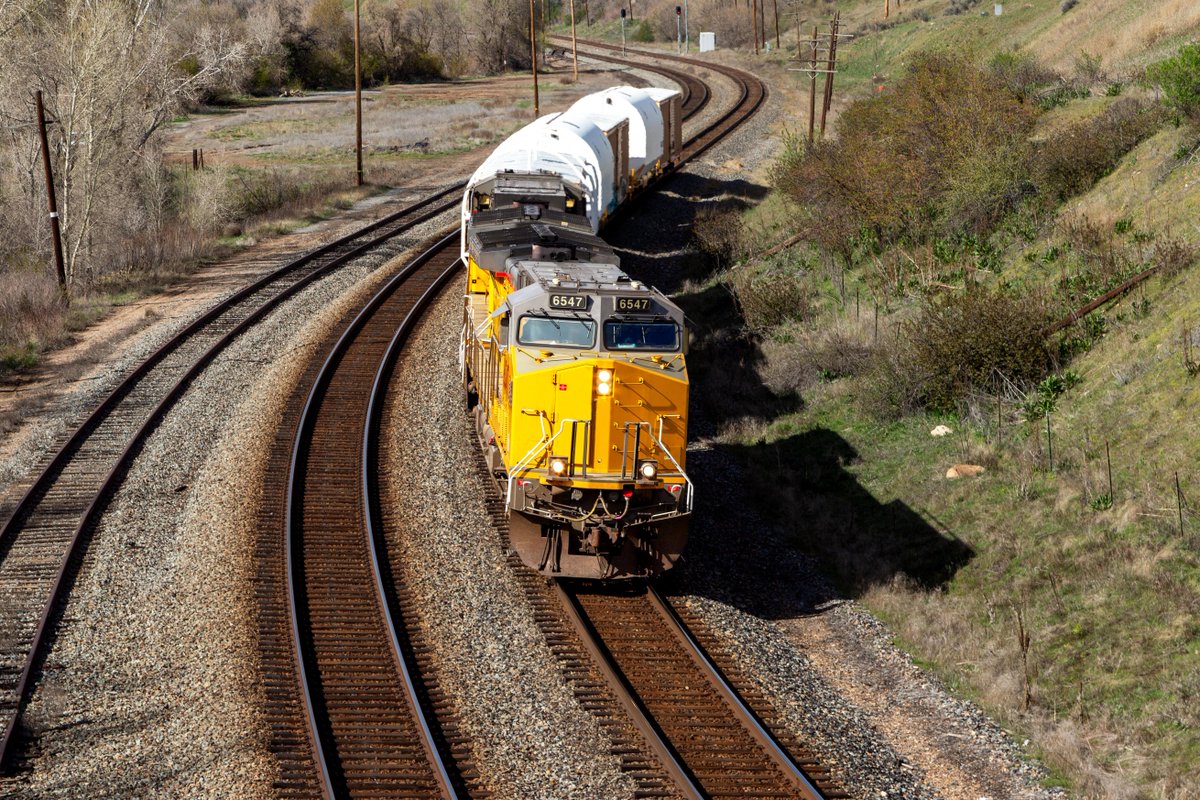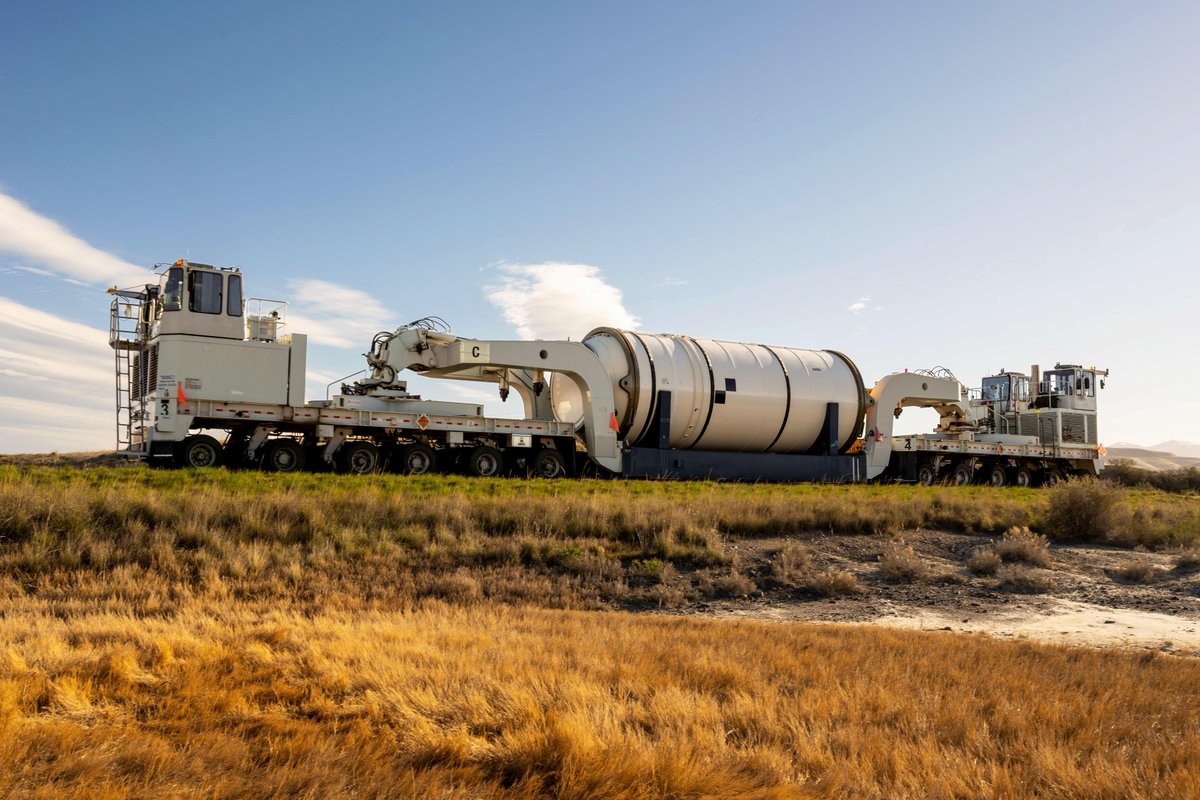
Artemis II flew on April 1 powered by our boosters. That same day, Artemis III booster segments started their journey from our Utah facility to @NASAKennedy. We’re already building the next chapter of space exploration – no pause, just progress.
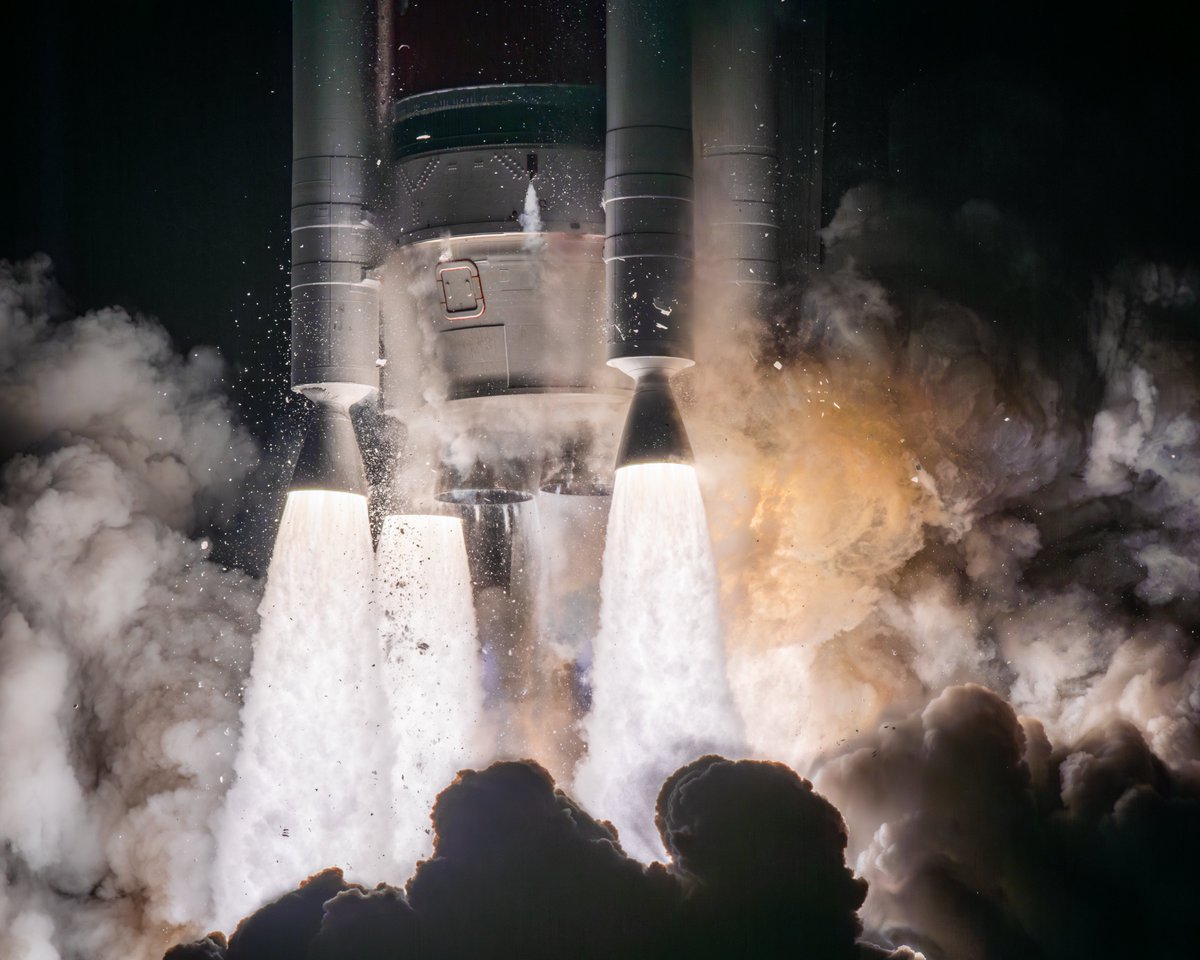
United Launch Alliance's Vulcan rocket is on the launch pad for the USSF-87 mission that will place U.S. national security spacecraft into geosynchronous orbit. It will be our next-generation rocket's heaviest payload yet and the longest flight to date, lasting 10 hours.
Liftoff is scheduled for Thursday at 3:30 a.m. EST (0830 UTC) from Space Launch Complex-41 at Cape Canaveral. Weather forecasters give a 95% chance of GO conditions.
Our play-by-play status journal begins at 10 p.m. EST (0300 UTC) and the live webcast starts 20 minutes before liftoff. bit.ly/vulcan_ussf87
Every January, @NASA commemorates the lives we have lost, including crews of Apollo 1 and the space shuttles Challenger and Columbia. #NASARemembers their sacrifice and enduring strength of their families, whose courage continues to inspire us all.
As we continue missions to the @Space_Station and push forward to the Moon and beyond, the agency is committed to safety and lessons learned to further space exploration and discovery.
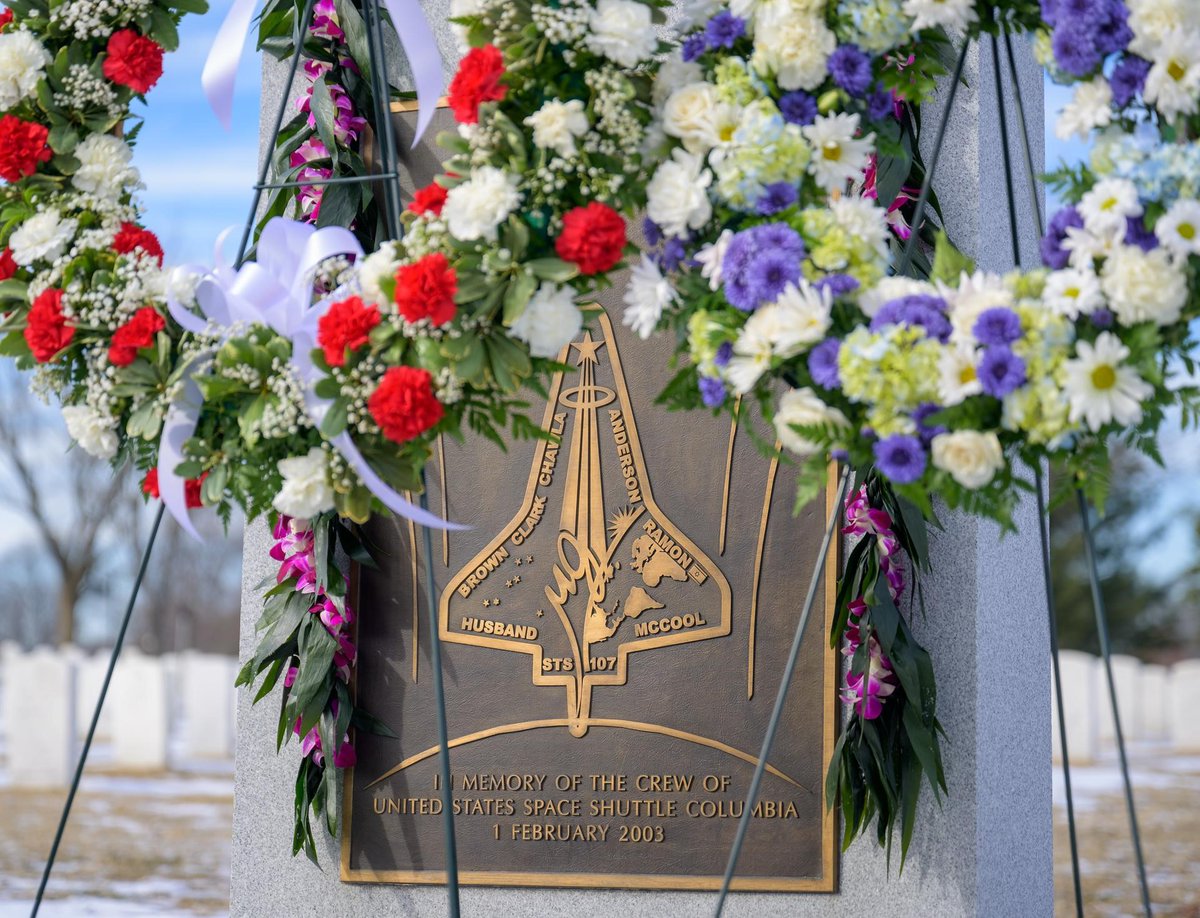
ALT The Space Shuttle Columbia Memorial is seen during a wreath laying ceremony that was part of NASA’s Day of Remembrance, Thursday, Jan. 23, 2025, at Arlington National Cemetery in Virginia. Wreaths were laid in memory of those men and women who lost their lives in the quest for space exploration.
Credit: NASA/Bill Ingalls
Today is our Day of Remembrance.
As we push forward to the Moon with our Artemis missions, it is vital that we stay vigilant and remember those who made the ultimate sacrifice in the name of science and discovery.
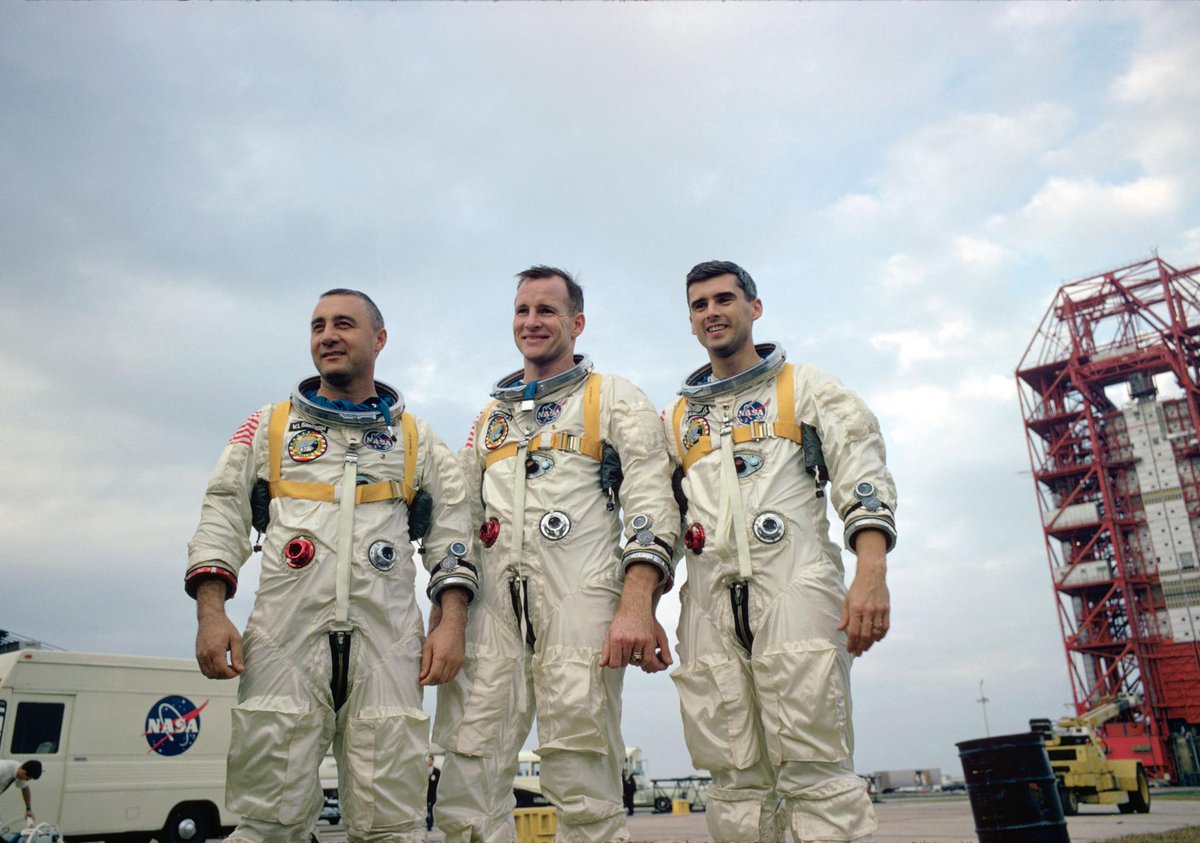
ALT The Apollo 1 crew stands together for a group portrait wearing their flight suits. From left to right: Virgil I. Grissom, Edward H. White, Roger B. Chaffee. Credit: NASA.
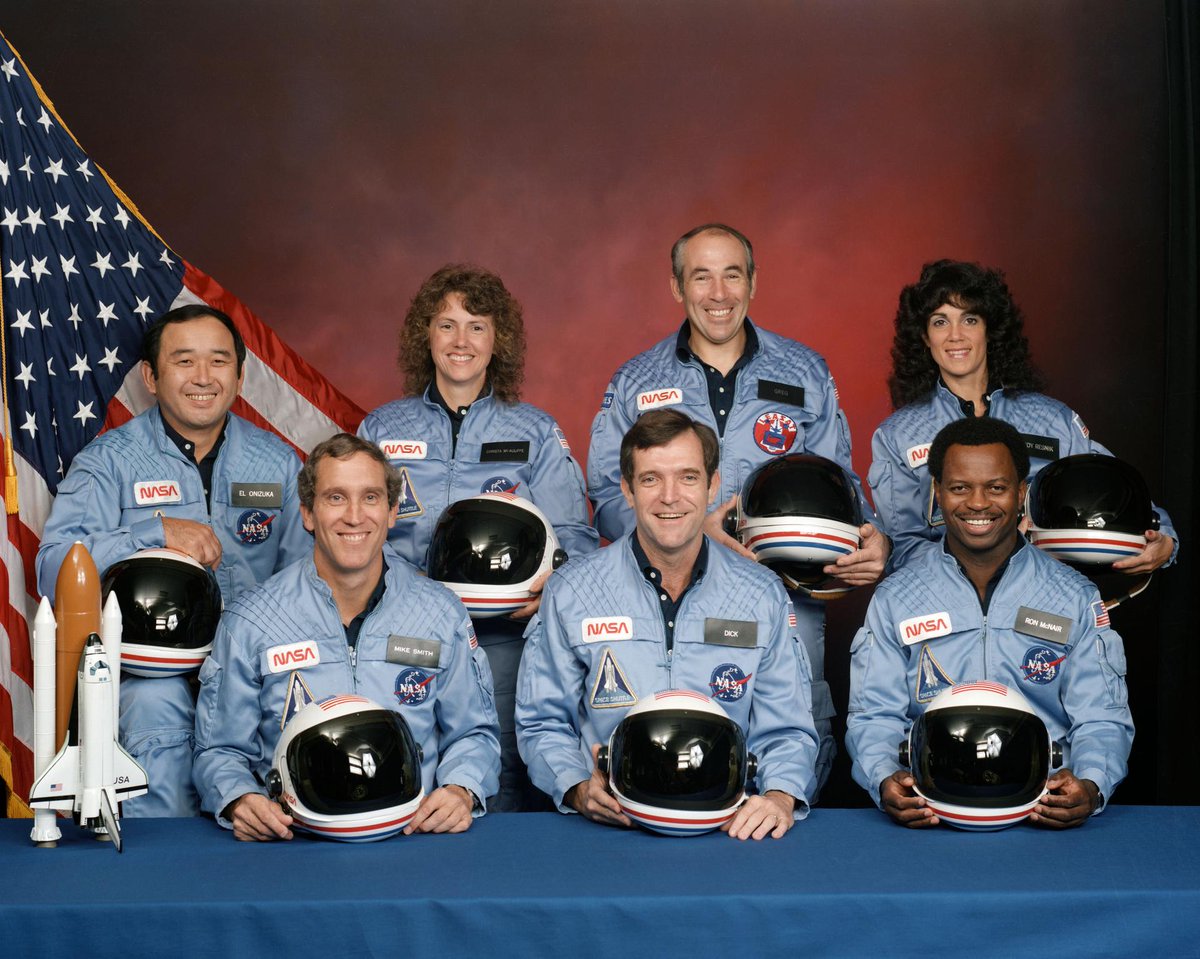
ALT The STS-51L crew pose for a group portrait and smile in their light blue flght suits. From left to right: Mission Specialist Ellison S. Onizuka, Pilot Michael J. Smith, Payload Specialist Christa McAuliffe, Commander Francis R. \u201CDick\u201D Scobee, Payload Specialist Gregory B. Jarvis, Mission Specialist Judith A. Resnik, Mission Specialist Ronald E. McNair. Credit: NASA
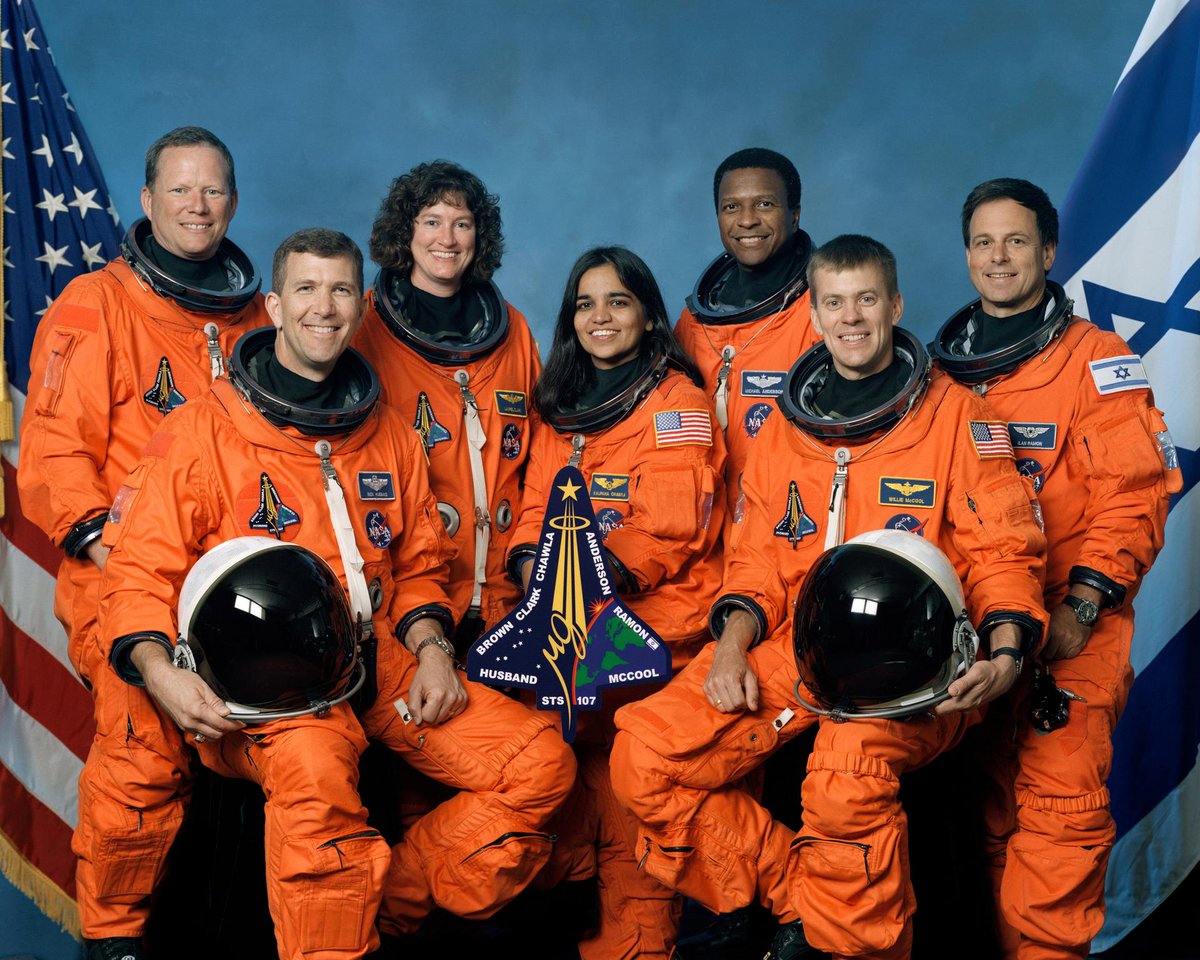
ALT The STS-107 crew posing for a portrait in their orange spacesuits. Crew seated in front, from left, are: Astronauts Rick D. Husband, mission commander; Kalpana Chawla, mission specialist; and William C. McCool, pilot. Standing, from left, are: David M. Brown, Laurel B. Clark, and Michael P. Anderson, all mission specialists; and Ilan Ramon, payload specialist. Credit: NASA
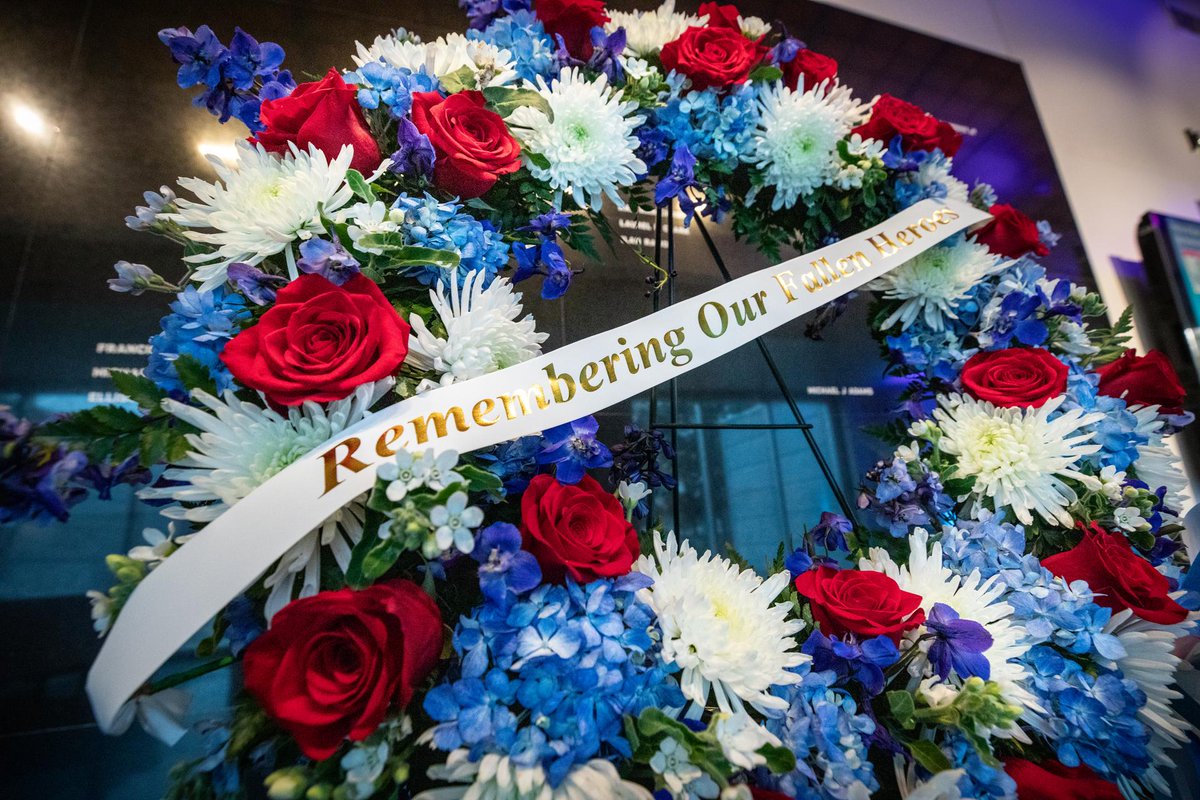
ALT A memorial wreath inside the Kennedy Space Center Visitor Complex in Florida commemorates NASA\u2019s Day of Remembrance on Thursday, Jan. 23, 2025. The banner on the wreath reads: \"Remembering our fallen heroes.\" Credit: NASA/Cory Huston
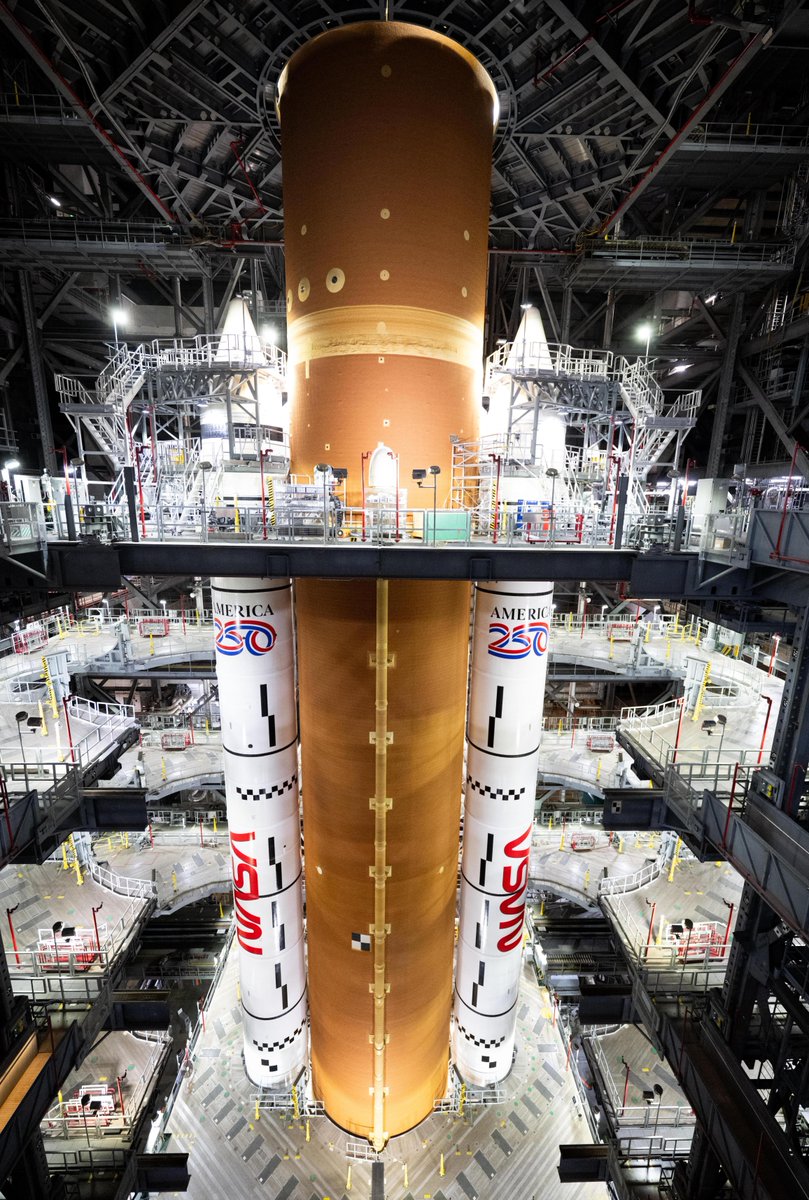
From rollout to liftoff, propulsion matters. Artemis II is one step closer to exploring deep space and our technology is built into the mission from the ground up.
"Some people live their life... they worry about the destination. They worry about where they're going. I enjoy the trip. Wherever you're going is where you'll end up. Don't worry about that. Enjoy the scenery on the way."
A defining moment of American exploration.
The @America250 emblem is displayed on the twin solid rocket boosters of the SLS (Space Launch System) rocket for the Artemis II mission around the Moon.
Launch is scheduled for early next year.
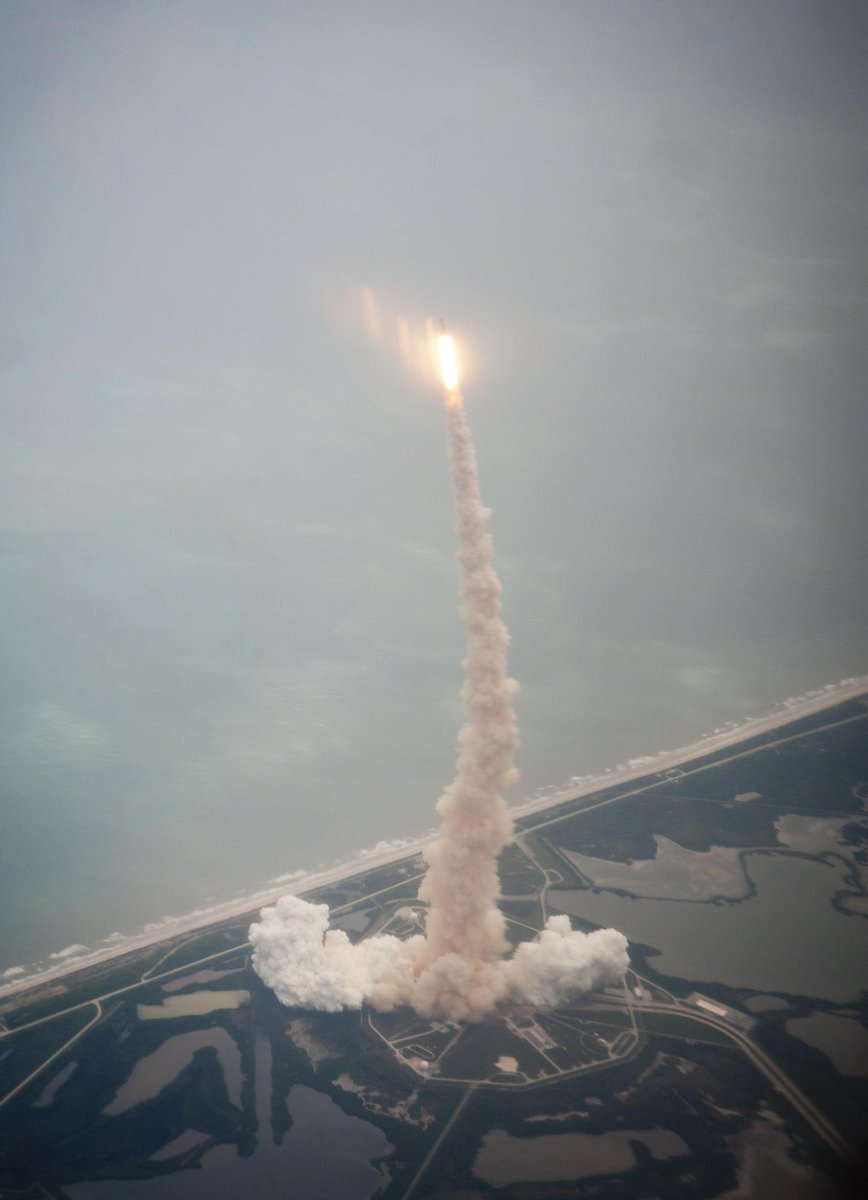
The 135th and final space shuttle mission launched #OTD in 2011. Atlantis transported 11,600 pounds of supplies and equipment to the International @Space_Station.
At mission's end, STS-135 Commander Chris Ferguson said, “We sure hope that everybody who has ever worked on, or touched, or looked at, or envied or admired a space shuttle was able to take just a little part of the journey with us.” 🚀 go.nasa.gov/4eCGkNz
ALT A trail of exhaust from the launch pad to space shuttle Atlantis is seen through the window of a Shuttle Training Aircraft (STA) as it launches from Kennedy Space Center on the STS-135 mission, Friday, July 8, 2011. Photo Credit: (NASA/Dick Clark)
#OTD in 2011, Shuttle Atlantis launched STS-135, the final mission of NASA’s Space Shuttle Program.
The crew delivered 8,000 lbs of supplies to the ISS aboard the Raffaello module.
Crew:
Commander @Astro_Ferg
Pilot @Astro_Doug
Mission Specialists @Astro_Sandy & @Astro_Rex
Happy Fourth of July from Kennedy Space Center!
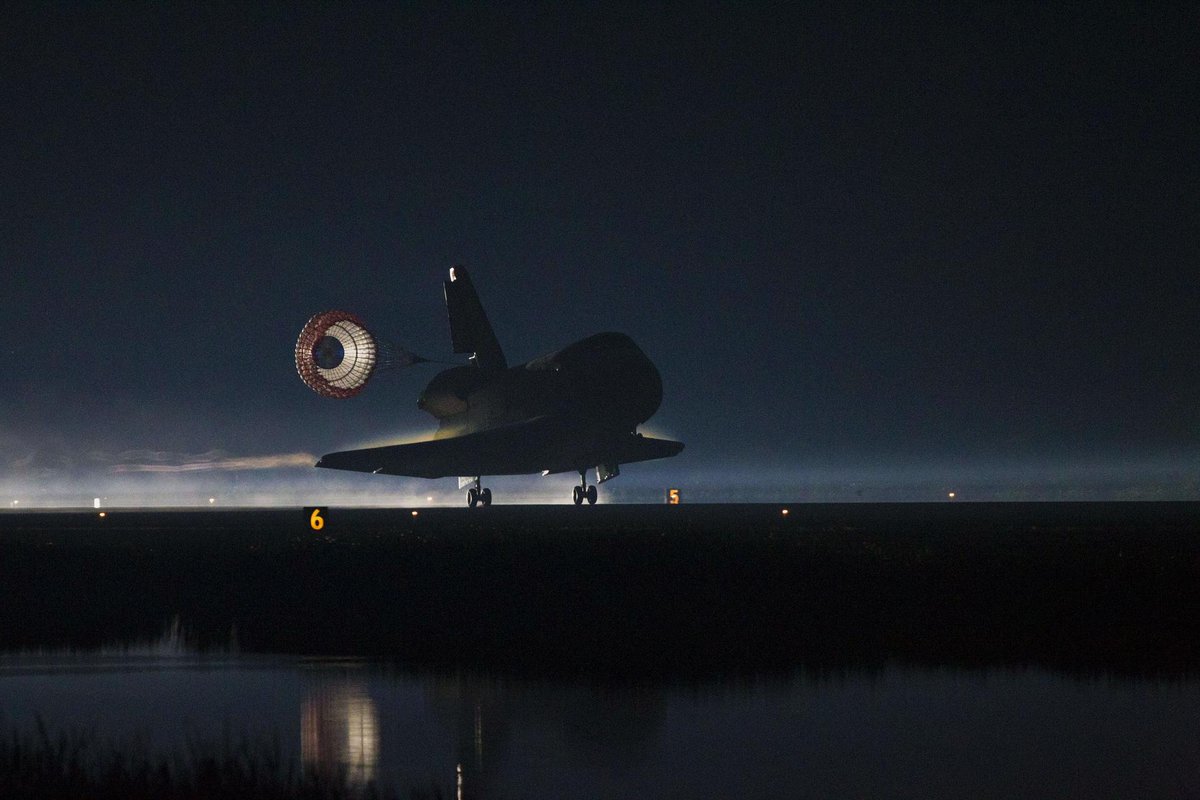
We’re throwing it back to July 21, 2011 – the final landing of Space Shuttle Atlantis. This mission, STS-135, delivered spare parts, equipment and supplies to @Space_Station and was the final flight of the Space Shuttle Program.
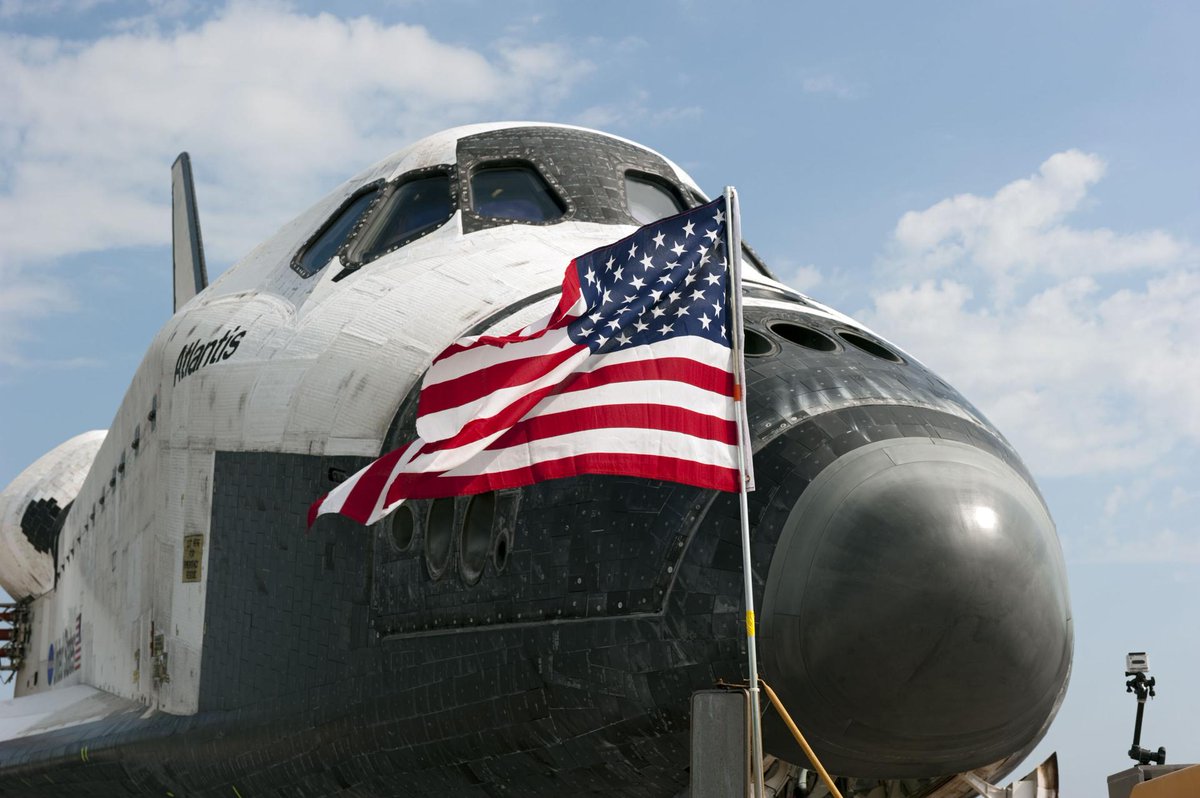
ALT An American flag waves in the wind in front of space shuttle Atlantis on the Shuttle Landing Facility's Runway 15 at NASA's Kennedy Space Center in Florida. Atlantis' final return from space at 5:57 a.m. (EDT) on July 21, 2011, completed the 13-day, 5.2-million-mile STS-135 mission. Photo credit: NASA
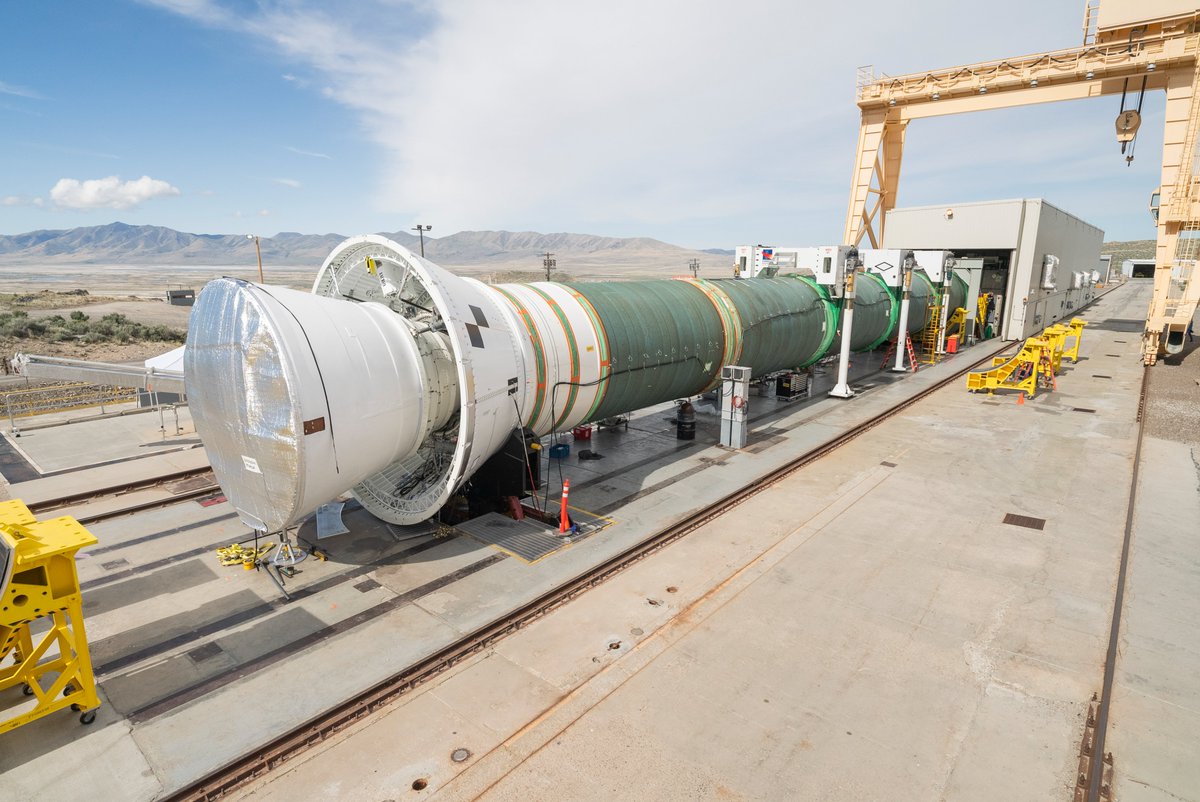
On June 26 at 1pm ET, we are static test firing the Booster Obsolescence and Life Extension solid rocket motor – the largest segmented solid rocket booster ever built.
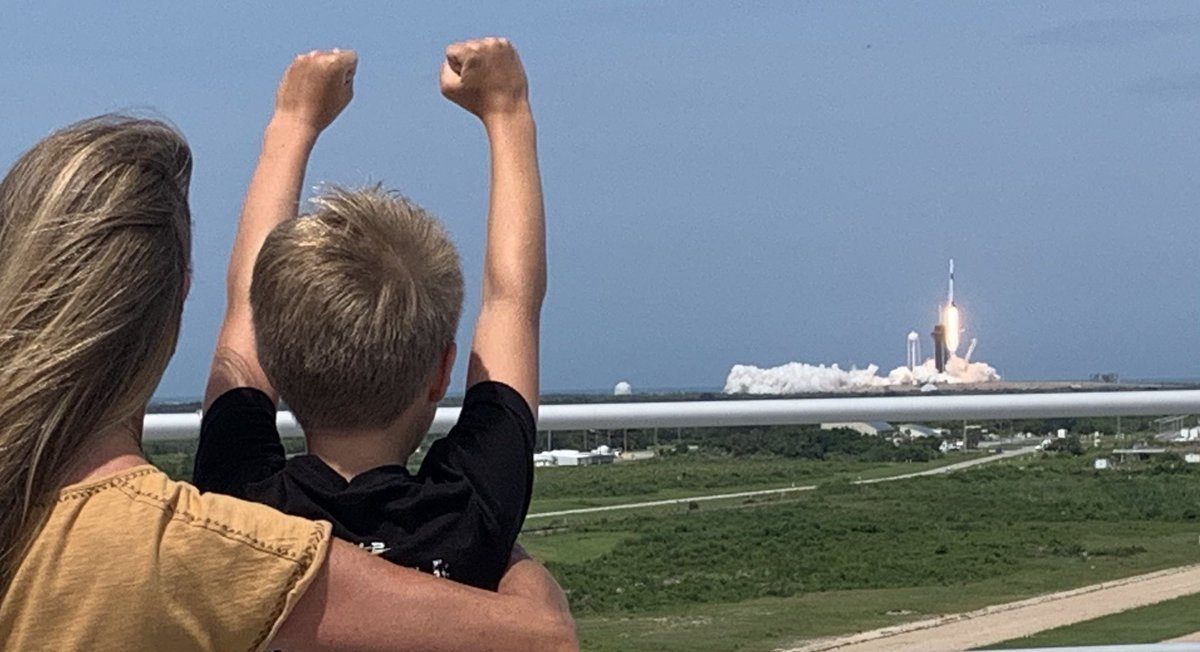
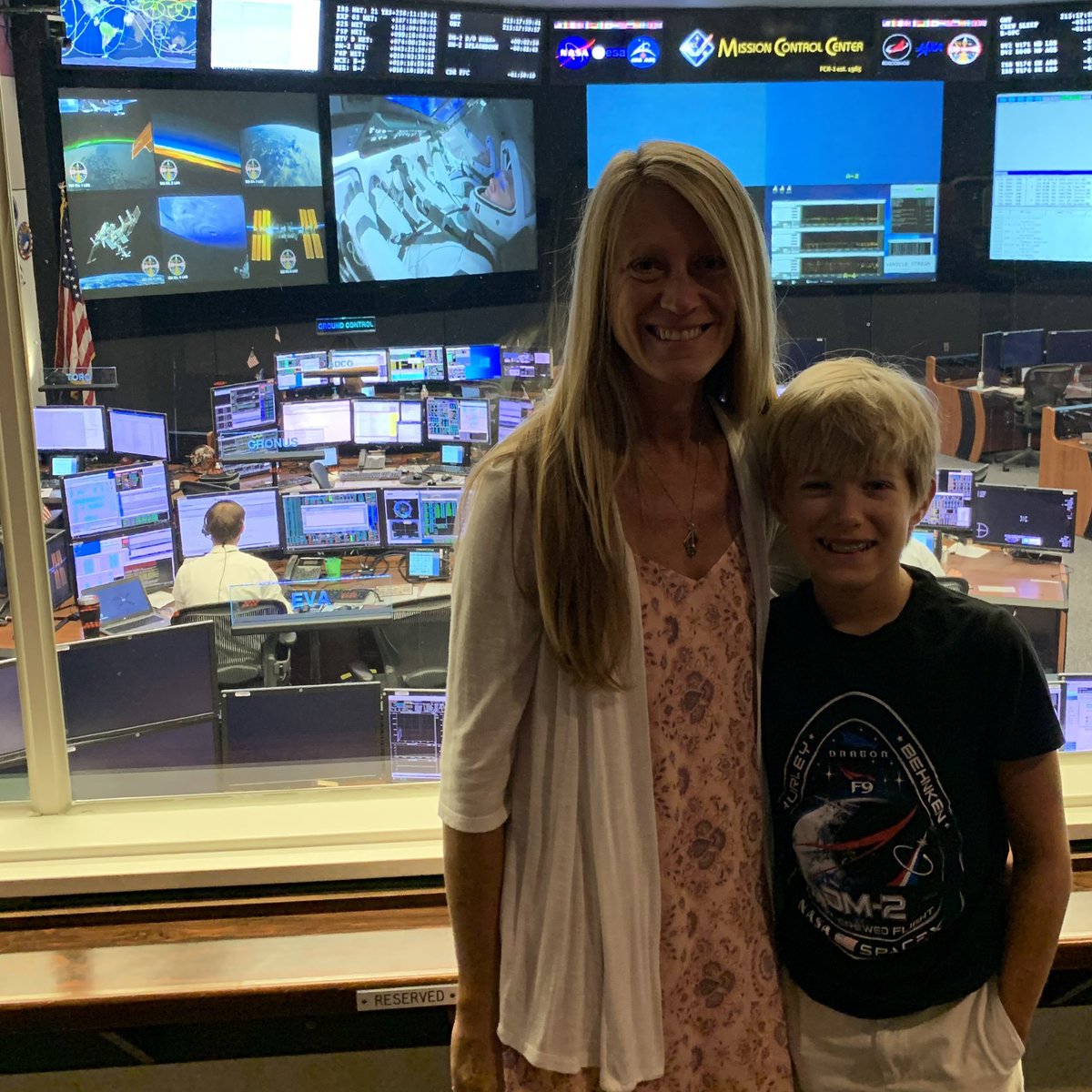
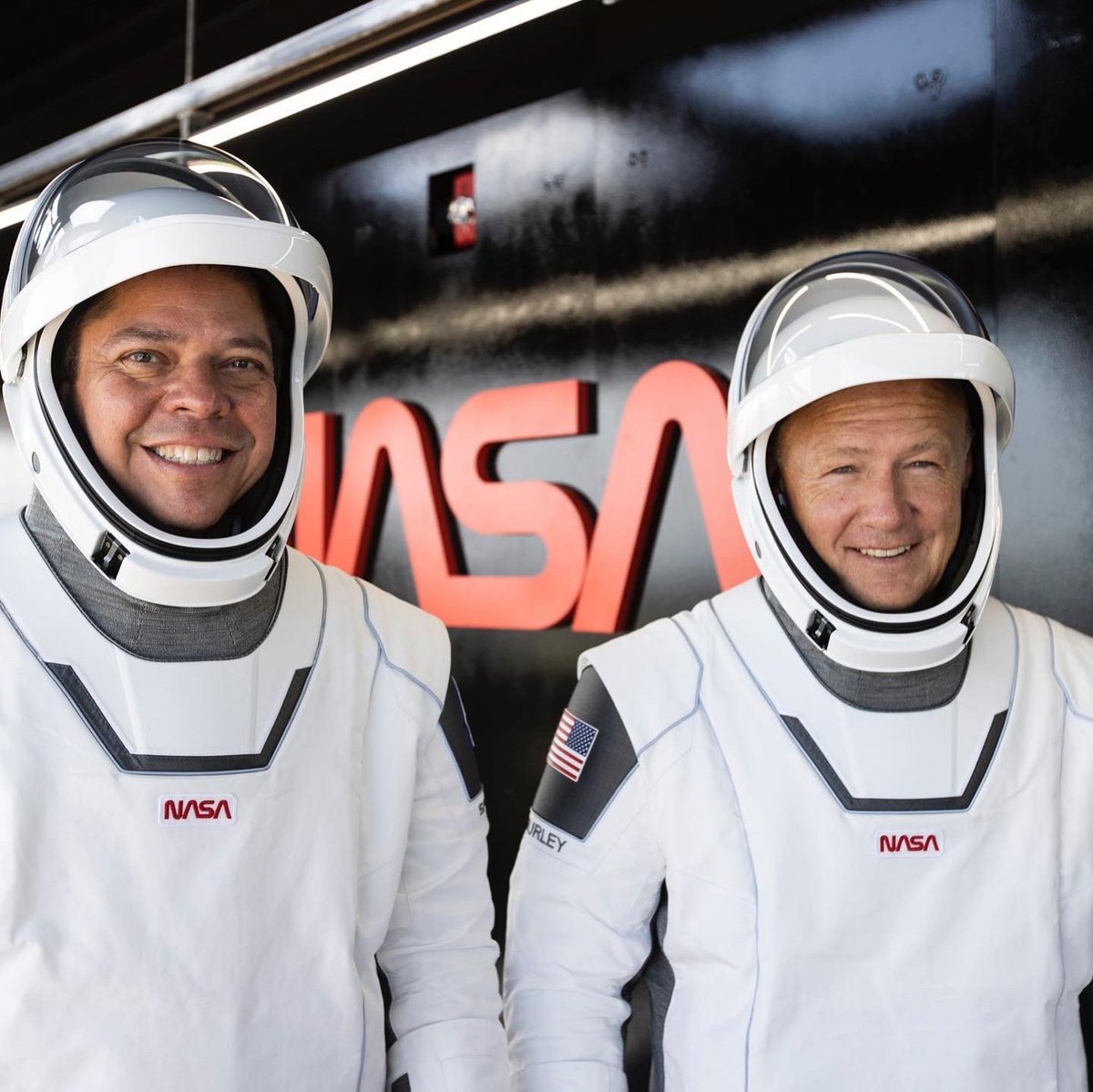
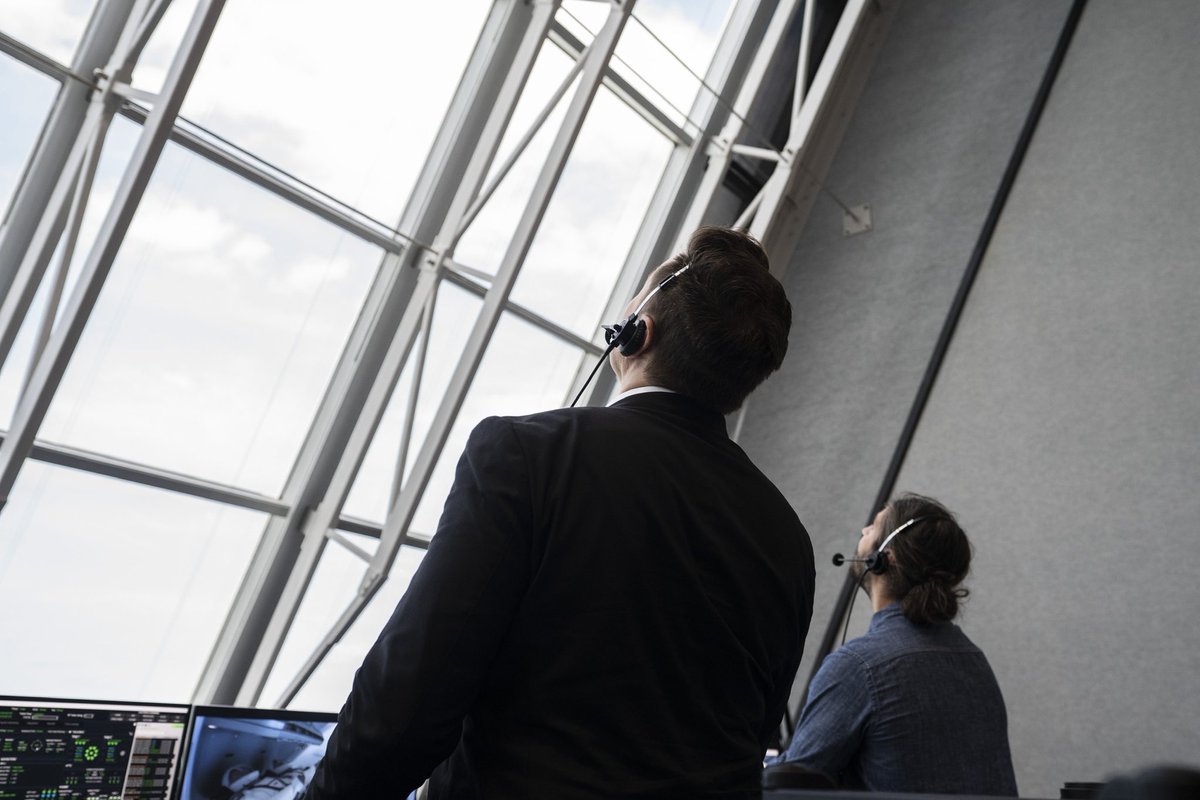
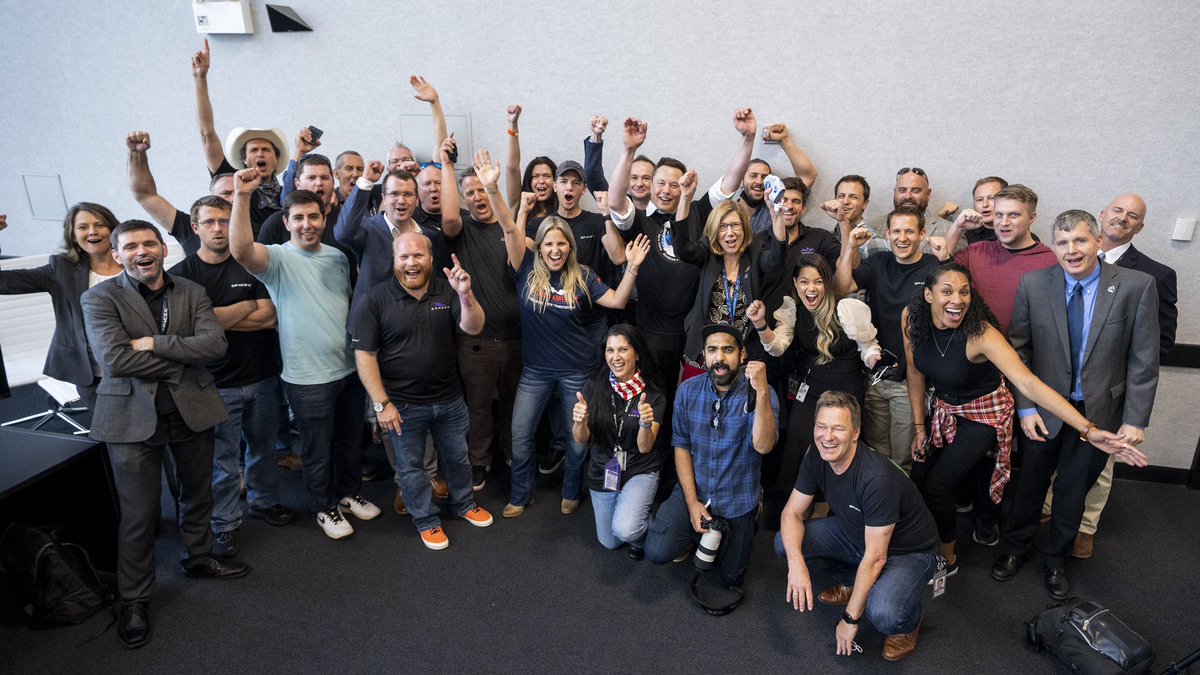
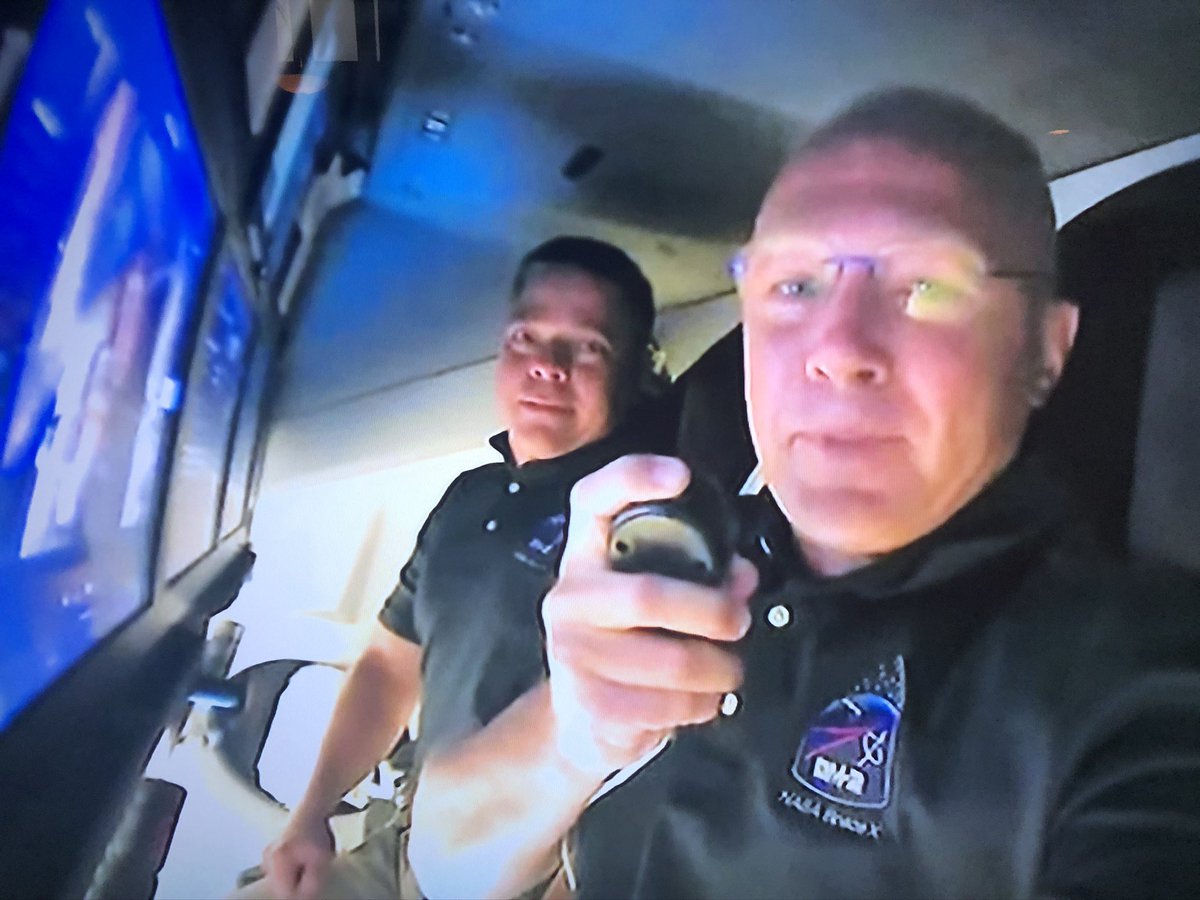
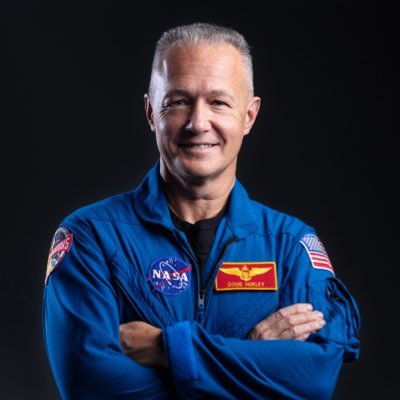
Hard to believe it’s been five years since @SpaceX launched the Demo-2 mission. That day was special on so many fronts. It was the culmination of an eight year grind of designing, testing and qualifying Dragon 2. Then there was the intensity in the lead up to the mission while the rest of the world shut down due to the pandemic. Hard to describe the pure joy and relief of seeing Bob and Doug smiling on orbit. Just a couple of dads in space!
@elonmusk
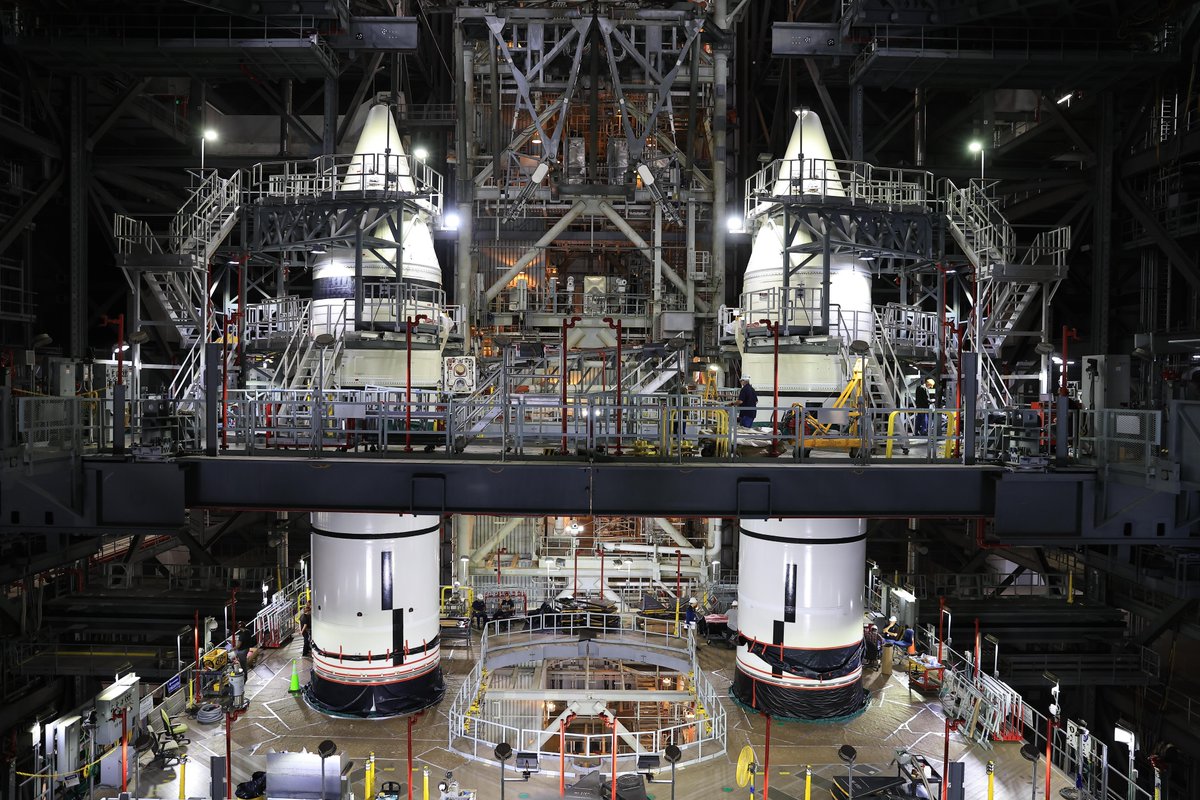
Technicians with @NASAGroundSys recently finished stacking the SLS solid rocket boosters for @NASAArtemis II.
Watch as teams in the Vehicle Assembly Building at @NASAKennedy assemble the boosters, which will provide 75% of the thrust needed at liftoff.
youtube.com/watch?v=oSVsDmdr…
Boosters: complete ✅
With stacking of the right forward assembly, the @NASA_SLS solid rocket boosters for the @NASAArtemis II mission are complete. In total, teams with Exploration Ground Systems transported and stacked ten motor segments and two forward assemblies to fully configure the boosters.
Next to stack on mobile launcher 1 is the core stage, which is currently undergoing processing in High Bay 2 of the Vehicle Assembly Building at @NASAKennedy.
Read more about stacking here: go.nasa.gov/4hJGZ0i
ALT The right and left forward segments and forward assemblies are seen stacked on Mobile Launcher 1, surrounded by High Bay 3 platforms in the Vehicle Assembly Building at NASA's Kennedy Space Center.
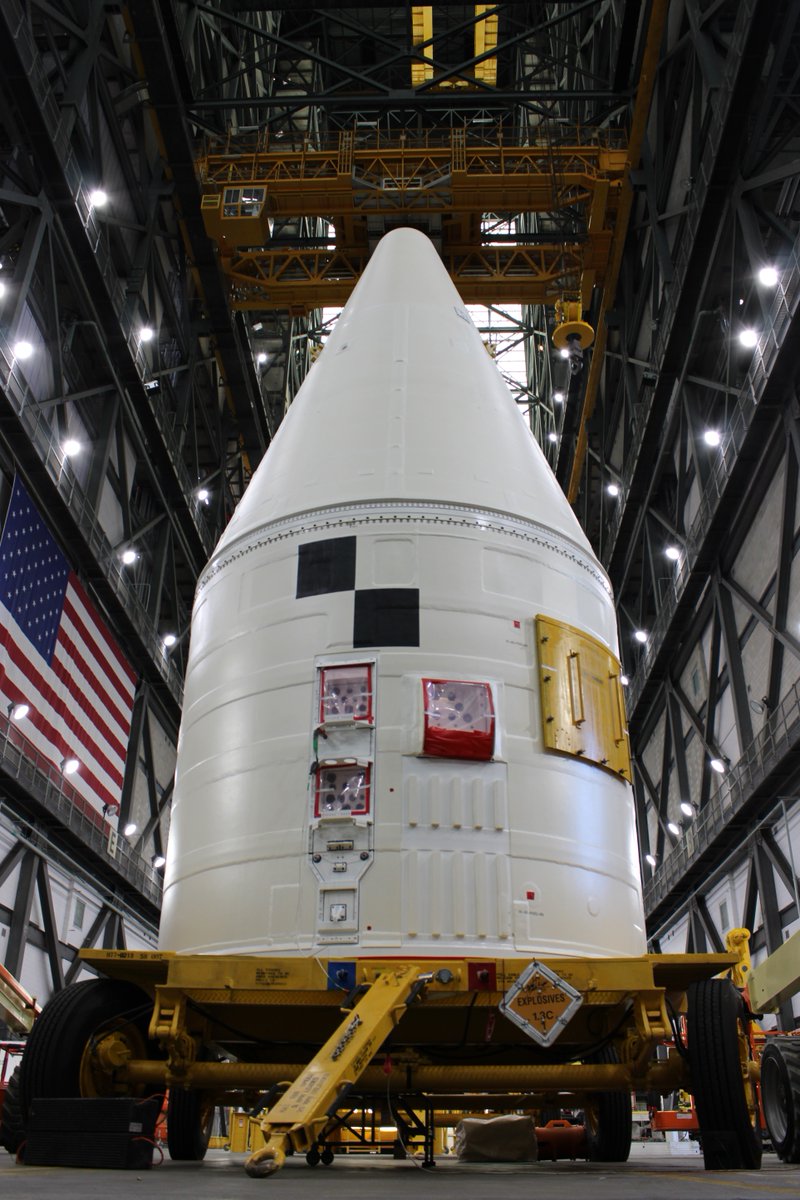
ALT The right forward assembly in the transfer aisle of the Vehicle Assembly Building prior to stacking.
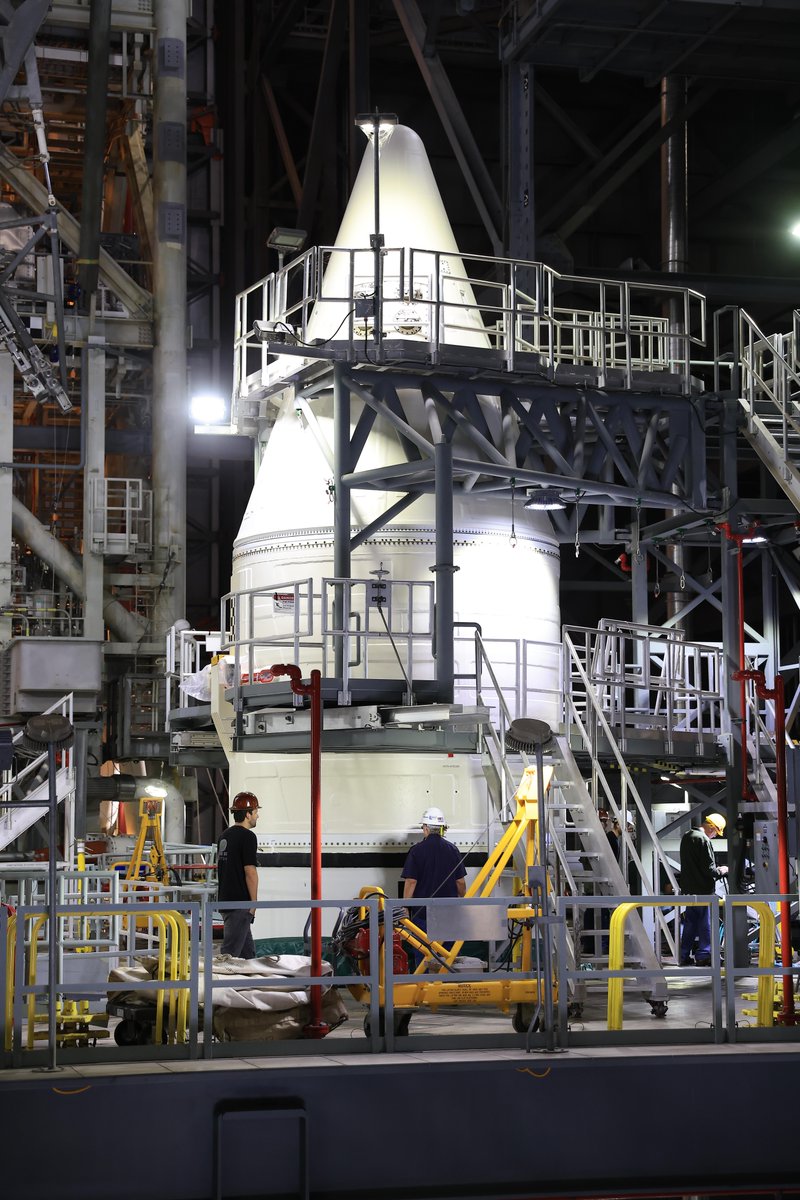
ALT The right forward assembly, the final piece of the Space Launch System solid rocket boosters, stacked on mobile launcher 1 in High Bay 3 of the Vehicle Assembly Building at NASA's Kennedy Space Center.