
"I think the era of whining is over, and humanity is going places again" - @Devon_Eriksen_
Joined March 2014
- Tweets 8,396
- Following 1,033
- Followers 292
- Likes 78,459
145 Photos and videos









Excellent point!
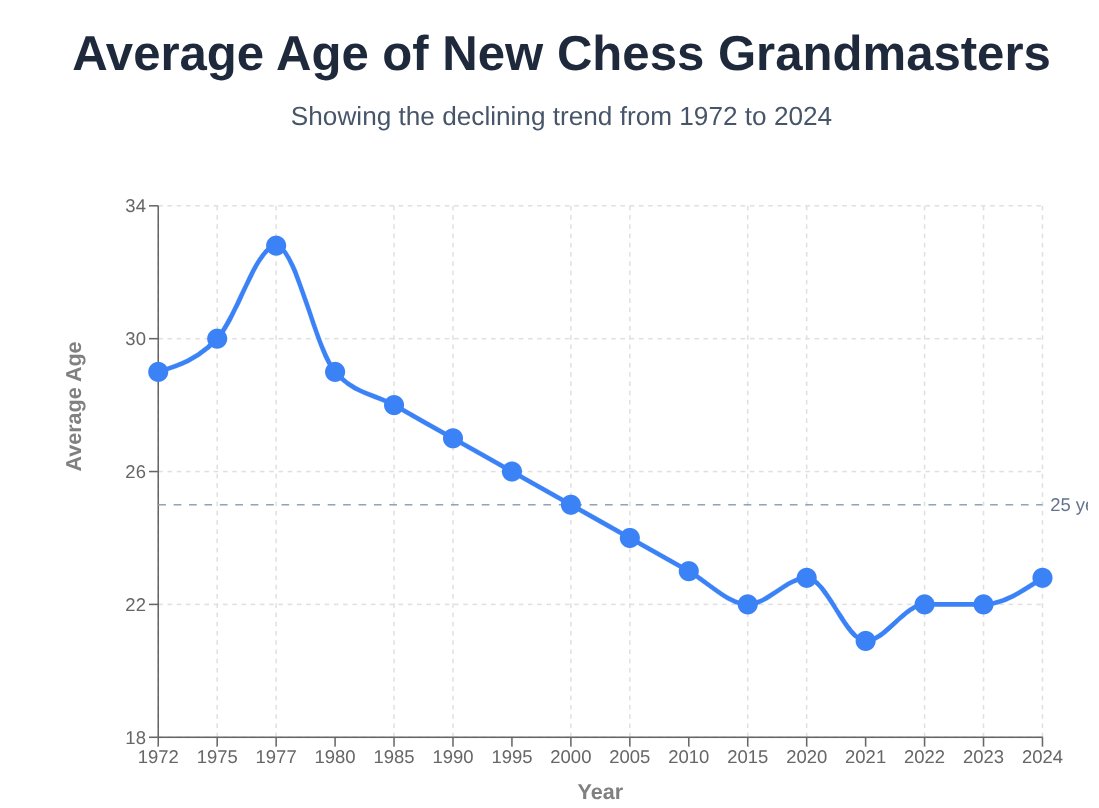
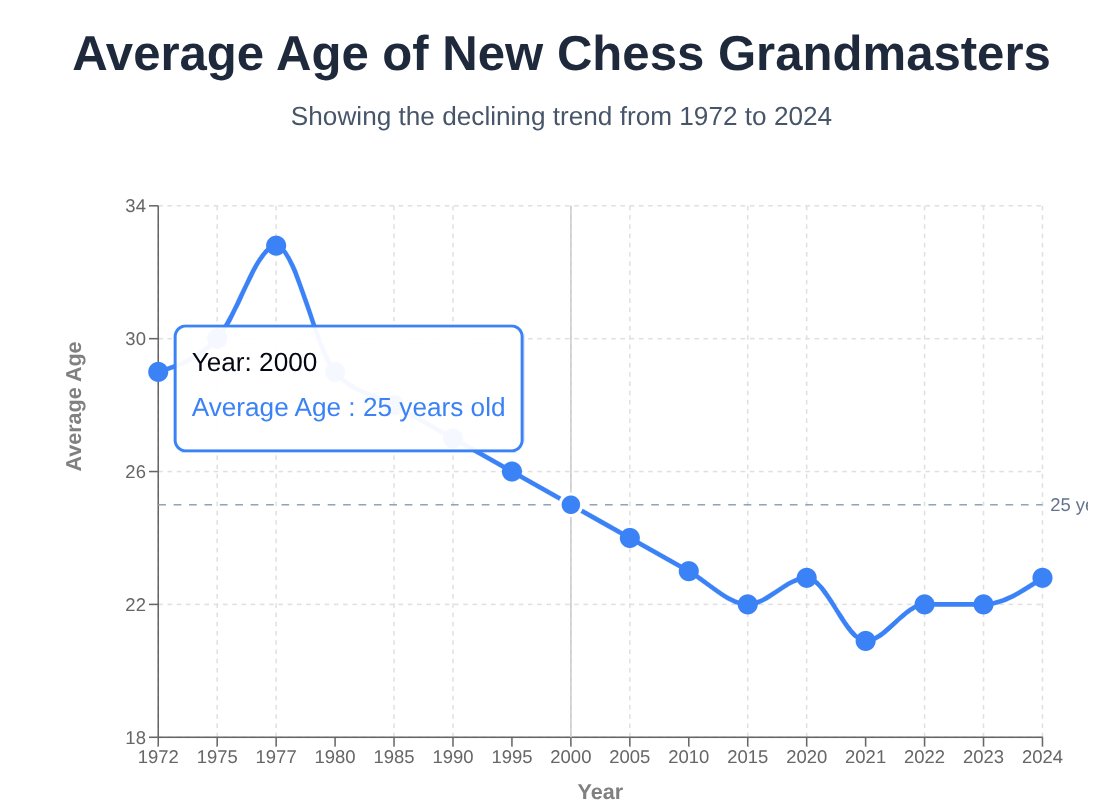
The explosion of AI if anything to me stresses the importance of focusing on the fundamentals. If you aren't Magnus it should be second nature to castle early, capture towards the center, have at least as many defenders as attackers, etc.
We need students for whom rhetoric and logic are similarly second nature, who can read and make inferences conversationally and ask probative questions.
I get far more value out of AI when I engage with the specifics and ask clarifying questions on why the detailed elements are related in the way they are, rather than learning that A is associated with B and memorizing it.
1
1
89

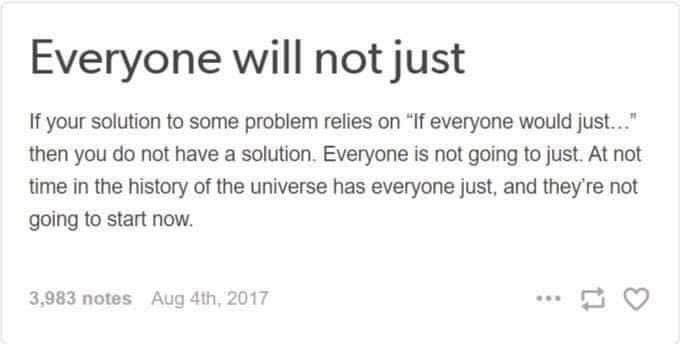
Evergreen reply to the constant hand waving over average people struggling to afford being cooked and served meals by other humans or burrito taxi service on demand.
May 19

I make a good income, and every day my girlfriend makes me a cute little box lunch out of stuff we have in the fridge. Average cost is probably under $3, and it’s delicious. This kind of whining and entitlement is turning me into a boomer. Yes housing costs too much but come on.
99

The problem with the push against “misinformation“ and the attempts to ridicule people who “do their own research“ is that every reasonably smart person can see that an honest, curious layman can in many cases get to a much closer version of the truth than the so-called experts in sociology or archaeology or psychology, and so on, especially regarding anything at all controversial. On race, on gender differences, on IQ, on the movement of ancient peoples — it’s very easy to arrive at something much closer to the truth than the official narrative.
22
61
1,326
24,703
Brian retweeted

Apr 29
But even this misses the point: people asking "can we afford" to have another kid don't really want kids
If you want kids, you have them and then build the rest of your life around making the numbers work
And that question has more to do with mobile games than paid daycare
24
28
746
16,877
Brian retweeted

11 Sep 2025
If you believe free speech is for you but not your political opponents, you're illiberal.
If no contrary evidence could change your beliefs, you're a fundamentalist.
If you believe the state should punish those with contrary views, you're a totalitarian.
If you believe political opponents should be punished with violence or death, you're a terrorist.
14,696
135,840
597,286
24,532,446
If you choose to go about in society as a non-institutionalized, agentic adult, you waive your right to any plea of non-control of your actions. Part of the implicit contract of participation in society as an adult is accepting responsibility for your actions at all times, or should be.
1
1
499
Brian retweeted

16 Aug 2025
One concept I wish more people were aware of is the Tocqueville Effect.
Named for Alexis de Tocqueville, this concept describes the curious phenomenon by which people become more frustrated as problems are resolved:
As life gets better, people think it's getting worse!🧵

124
666
4,752
454,677
Brian retweeted

Jan 22
self driving is solved. AGI is here. humanoid robots entering production, nuclear fusion finally working, the food pyramid being rebuilt from scratch, fatness curable, BCIs restoring movement and sight, CRISPR editing diseases out of the germline, cancer becoming manageable, private companies building moon landers, longevity approaching escape velocity
i think we're going to be fine
227
287
3,749
179,263
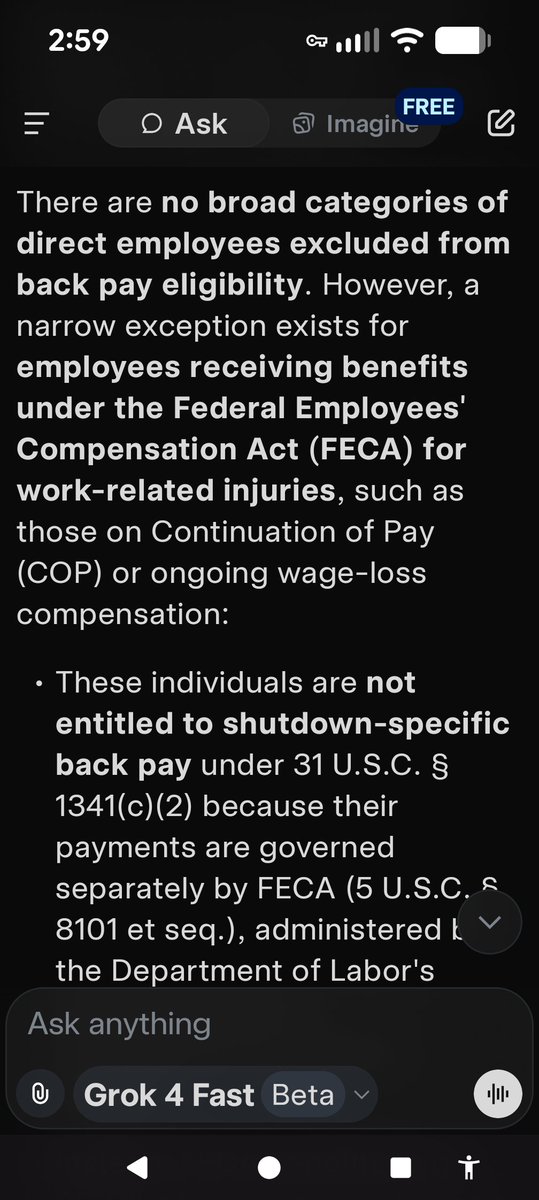
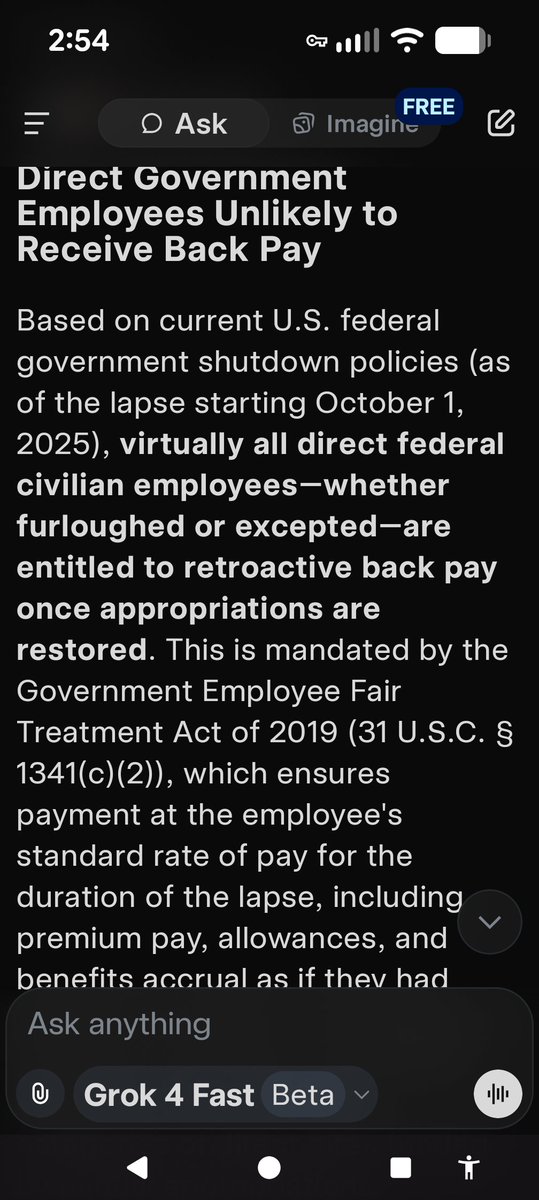
Grok is the only major LLM that I regularly get a high usage come back later message when I navigate to ask a random question. This is a barrier that stops me from even considering adopting it as a first choice.
In order to consider purchasing a higher tier, I first need to use the free tier enough to evaluate whether or not I actually like it.
1
71

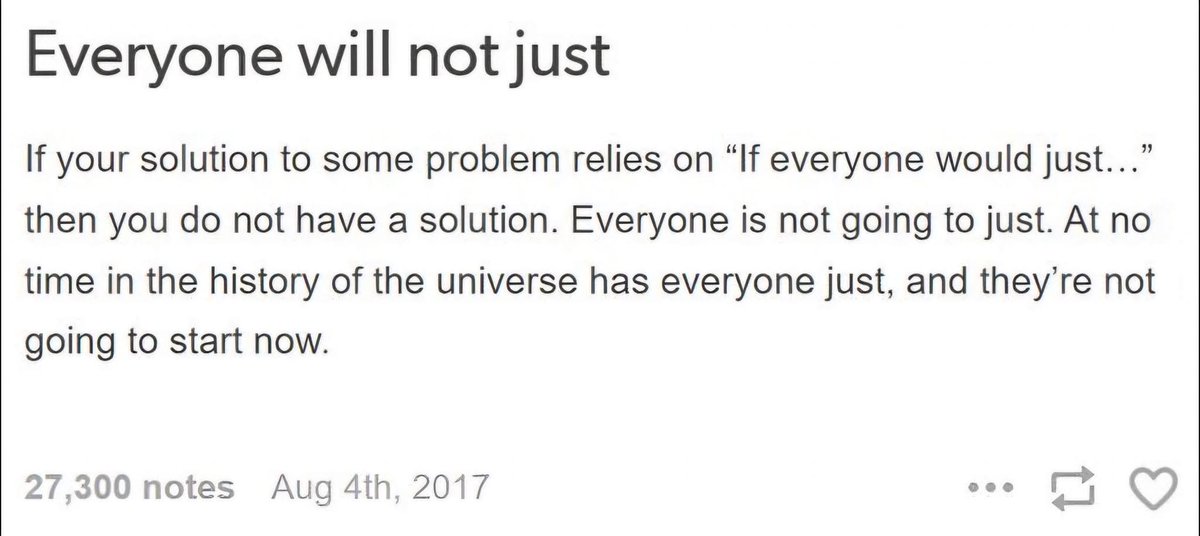
Ramsey doesn’t give purely financial advice. He gives advice about managing defects in human psychology, on avoiding known failure modes.
All critiques of Ramsey focus on whether the advice makes sense *given that it’s executed consistently and conscientiously*. But Ramsey is giving the advice you’d give to someone who you already know is incapable of executing on advice in that way.
If you think that doesn’t apply to you, then the advice isn’t for you.
23 Dec 2025

Dave Ramsey is consistently right when talking to morons but has some weird takes when sane people call in
Why does he hate no fee cashback credit cards when people ask him if they can use them so long as they pay them off monthly? There is no down side! It’s free money!
49
42
1,553
74,224
Brian retweeted

29 Nov 2025
Nearly every negative prediction on the impact of automation gets proven wrong over time.
We spend all our time looking at today’s economy and imagine automation only being applied to how we work today and net reducing work for people. What actually happens, in almost every instance, is we use that automation to do *more* than we did before, which creates a new set of jobs and work.
What we ultimately get as a society is better use of our time, new medical advances, better safety, lower cost offerings in nearly every category of product and service, and economic opportunity for more people.
AI will largely be used to reallocate people from spending time on less strategic work to more strategic areas in every company and throughout the economy.
It’s economically valuable to have software engineers building features for new problems for customers; it’s less economically valuable to have most of their time going into fixing bugs and maintaining legacy codebases. AI lets us improve this ratio. This doesn’t reduce the need for software engineering, it increases what you can now do with those resources. And the same analogy will hold for the majority of forms of knowledge work today.
And, for the companies that temporarily use AI just for profit maximization, they will ultimately lose out to the companies that use AI to better serve customers (in the form of lower cost to the customer or better quality products). The market is quite good at ensuring this.
This isn’t to say we shouldn’t be doing anything at all. But the things we should be doing are what we always should have been doing to make the economy work better for people: lower the cost of housing, improve education and make it cheaper, make it far easier to build so we can create more jobs here, lower the cost of healthcare, and so on.
Coincidentally AI will help with some of this, but what this is where we should be applying most of our regulatory energy.

This is incredibly thoughtful and worth engaging seriously on the challenges AI poses to jobs and the need for smart policy. @friedberg @reidhoffman @R_Thaler @SamirKaul1 @levie @chamath @martin_casado @sundeep @tushar_jain
18
23
191
38,724
Brian retweeted

4 Nov 2025
The thing is, people get really boring once they start promoting an ideology more than thinking deeply.
Deep thought requires skepticism and the willingness to change one’s views, which instantly expands what you think about.
You rarely see this kind of intellectualism now.
7
13
77
1,641
Brian retweeted

20 Sep 2025
I’d never trust anyone on the right or the left who is inconsistent on free speech. A person willing to abandon this fundamental American principle for short-term politics—justifying their own hypocrisy by citing the other side’s hypocrisy—can’t be counted on to uphold anything.
516
1,006
6,048
437,952
Anyone with the intellectual capability to get through med school can tell patients the least controversial dietary quick wins: eat lean sources of protein with a target amount, minimize red meats (if you eat meat), eat plenty of fruits and veggies, avoid salt and processed foods, avoid drinking calories.
90% adherence to these principles in most patients would create a health revolution.
Obesity is not an information problem.
2
1
3
227