
Joined October 2023
- Tweets 30,047
- Following 296
- Followers 2,133
- Likes 54,373
3,998 Photos and videos



Pinned Tweet

Apr 19
Servile men will advise, "with a plausible affectation of wisdom and concern, How prudent it is to please the powerful—How dangerous to provoke them." - Sermon by Samuel Sherwood, 1774

1
10
19
6,699
Only concerning if you count...
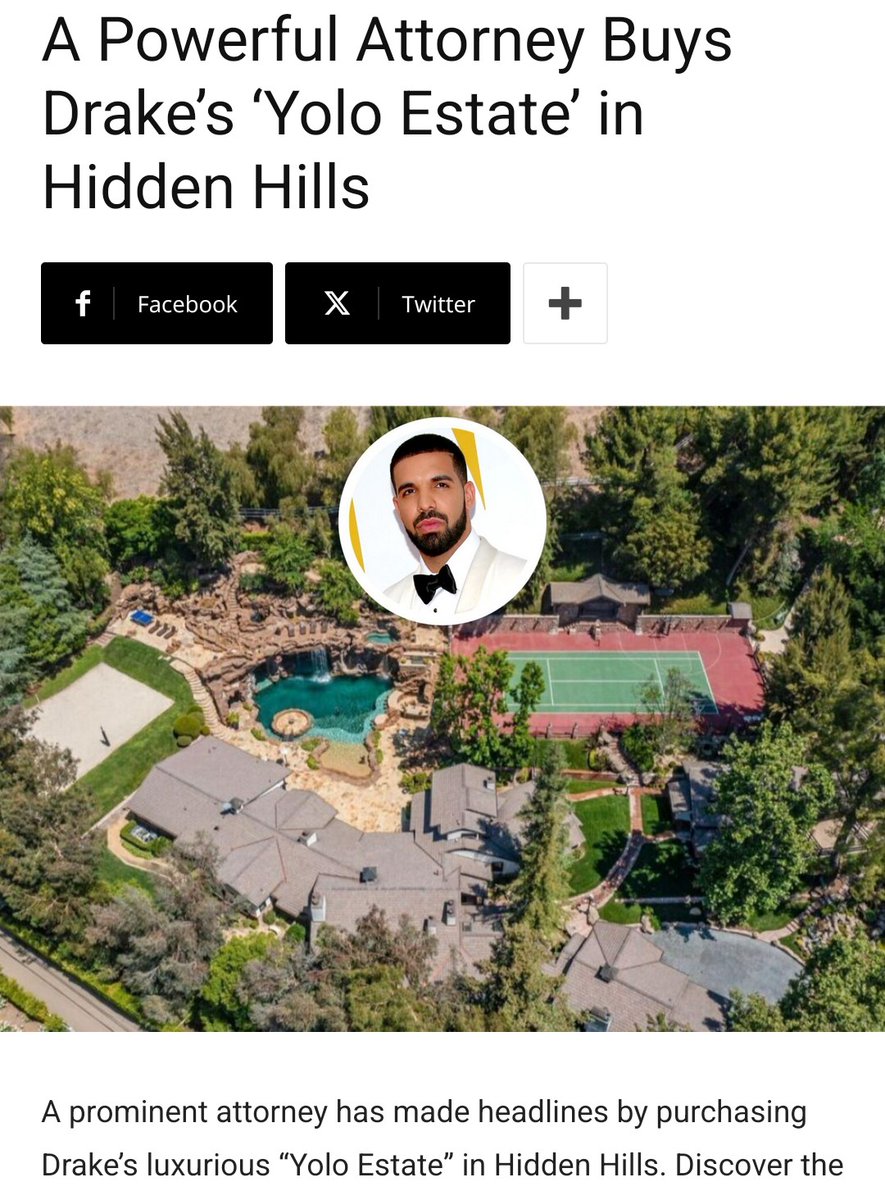
☑️Middle-East etc sovereign wealth funds as external financing
☑️loyalty-tested, low-competence appointments as patrimonial bureaucracy
☑️lawn UFC cage fight, other 250th stuff as spectacular ritual
&
☑️minting a trillionaire as high inequality

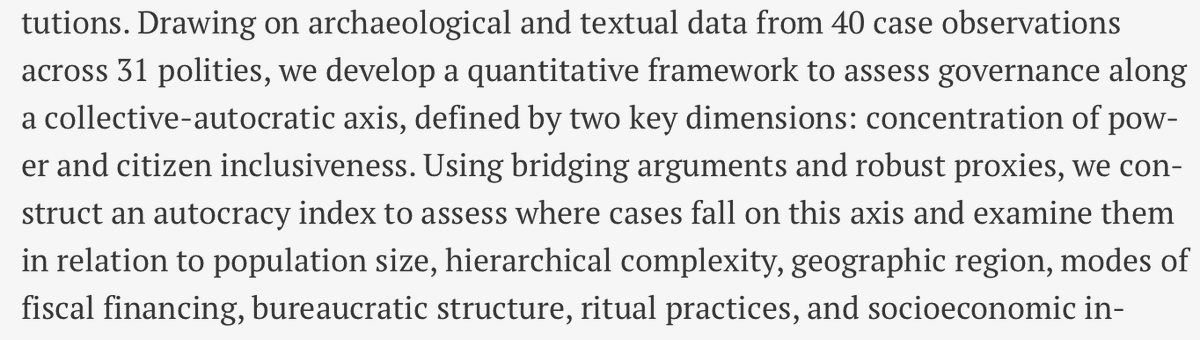
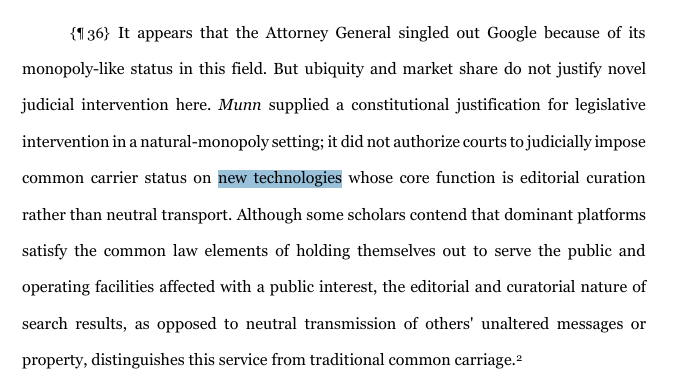
"the strongest associations for autocratic governance are with external financing, patrimonial bureaucracy, spectacular ritual, and high inequality"
2
7
266
"the strongest associations for autocratic governance are with external financing, patrimonial bureaucracy, spectacular ritual, and high inequality"
Mar 18

Power and Inclusiveness Across Deep Time. Our collaboration between archaeology and political science, out today in Science Advances science.org/doi/10.1126/scia…
3
4
526

Laurel retweeted

Jun 12
Colorado’s Drive It Home financing kicks off with affordable condos dlvr.it/TT1HyB
1
1
3
756
Laurel retweeted

Republicans are trying to exempt private jet owners from paying taxes.
Ladies and gentlemen, right-wing populism! politico.com/news/2026/06/08…
17
221
587
105,193
Laurel retweeted

11h
Does it make sense to pay-up for opportunities in hot markets?
What about when most investors seem to think opportunities are overpriced?
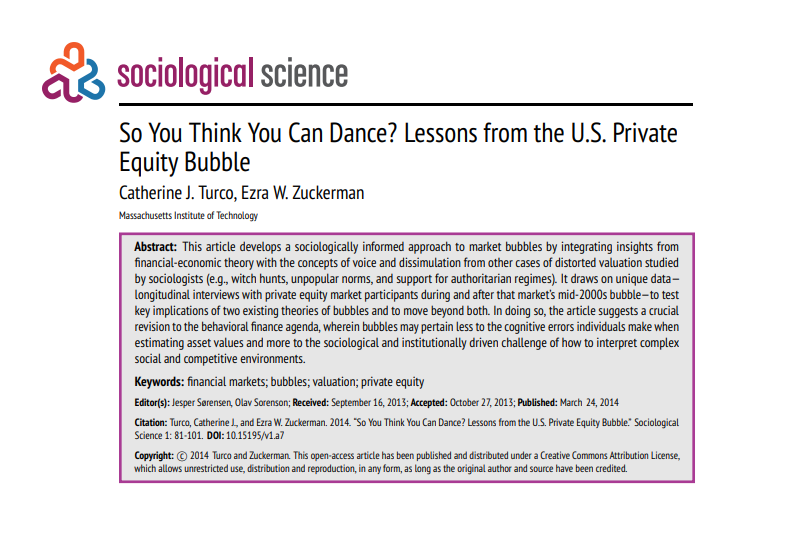
In 2014, Catherine Turco and Ezra Zuckerman published a fantastic retrospective on a private equity bubble and how investor behavior shifted.
Importantly, they found that contrary to popular belief, a bubble is not necessarily formed when investors become irrational about company valuations.
Bubbles may also form as a result of sheer market momentum, even when participants recognise overvaluation, due to structural incentives.
They break behavior down into two camps:
Sitting ("on the sidelines") - Investors who recognised the bubble and chose not to invest.
Dancing ("until the music stops") - Investors who recognised the bubble tried to time their exit.
Even when there was widespread investor dissent about valuations, with 16 of 19 recognising a bubble, 9 of those 16 chose to dance.
There are three primary reasons for this:
1) Because performance is measured on a relative basis, if everybody else keeps dancing and does well, while you sit out, you look bad. If you all dance and it collapses, at least you fail together.
2) Because raising a fund requires deploying the previous fund, it is painful for a firm to sit out of the market for any length of time.
3) There's no short-selling, auctions are blind, low bids get lost, and failures are ignored. The market is always seen as optimistic, even when investors are not.
This sustained dancing ultimately drove valuations to greater and greater heights, as investors were all implicitly signalling that they believed the market through their participation.
Predictably, it did not end well.
When the authors re-interviewed the 19 investors 5 years later, all but one stated that dancing had been the wrong choice; the best strategy would have been to sit out of the market and remain disciplined.
Jun 12

Contrary to my principles and beliefs, momentum-driven investing focused multiple expansion will make you more money in VC than idiosyncratic, non-consensus investing (at least in this market)
4
2
9
2,299
Lol I figured admin's next move might be to leave the vanity tarp on out of petty spite...
16h

A tarp now covers where Trump's name used to hang at the Kennedy Center yahoo.com/news/politics/arti… via @@YahooNews
1
192
Laurel retweeted

Jun 12
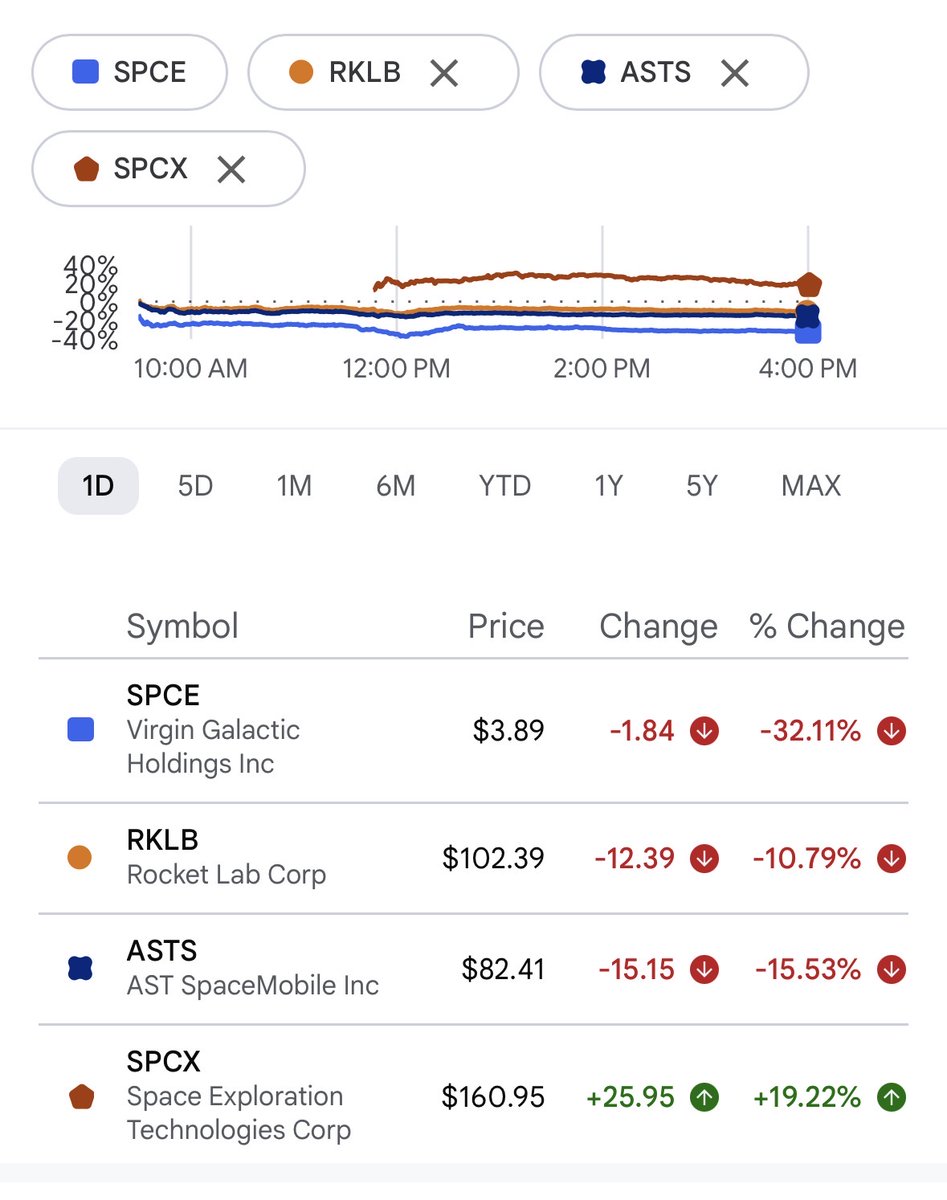
I guess you have to sell your other space stocks to buy SpaceX?
4
3
20
7,181
Laurel retweeted
The Antitrust Division *never* issues clearance statements like this, and *never* offers pro-monopoly lobbying documents for specific mergers. Unprecedented, mostly because the corruption is comically overt.
x.com/JusticeATR/status/2065…
Jun 12

The Antitrust Division issued the following statement today in connection with the closing of the Division’s investigation of the merger of Paramount Skydance and Warner Bros.: justice.gov/opa/pr/statement…
4
15
69
5,162
Laurel retweeted
The DOJ press release in Paramount-WB demonstrates the flexibility of the Consumer Welfare Standard to handle a variety of issues. Output? Check. Price? Check. Quality? Ch....uh....*searches*
#Satire
justice.gov/opa/pr/statement…
1
1
1
803
Laurel retweeted

If you’re looking for evidence of corporate capture of government, this statement is a clear example.
It reads as though it was written by Paramount.
Jun 12
The Antitrust Division issued the following statement today in connection with the closing of the Division’s investigation of the merger of Paramount Skydance and Warner Bros.: justice.gov/opa/pr/statement…
4
18
54
7,493
Laurel retweeted

Jun 12
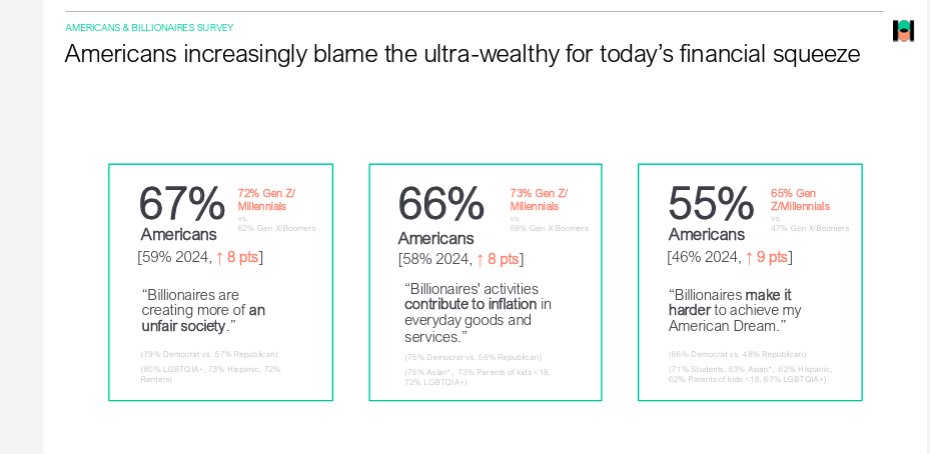
Now let's replace the companies (and perhaps the notion we should only prosecute unpopular companies for violating law) with billionaires and see what happens to opinions.
theharrispoll.com/wp-content…
Jun 12

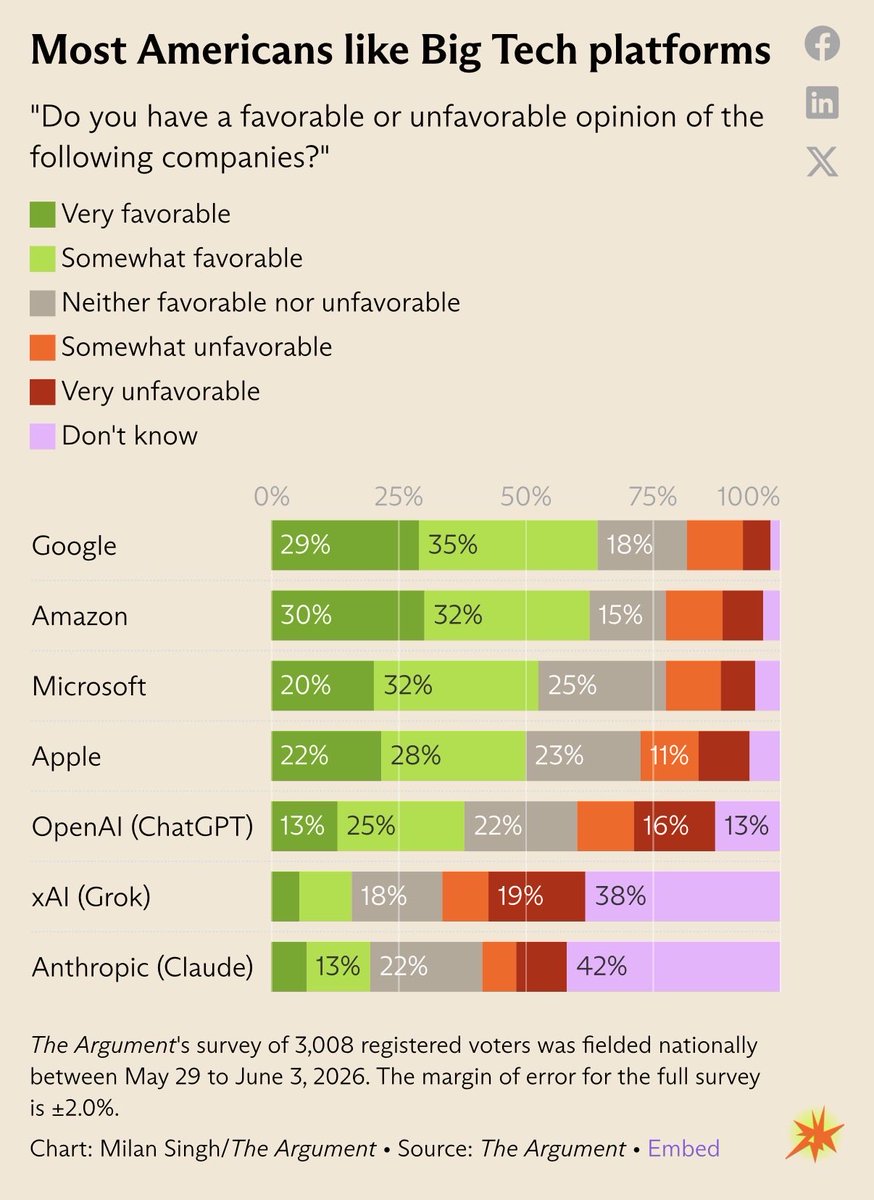
Building a political movement around the premise that people hate Amazon was such a weird call
theargumentmag.com/p/why-eve…
1
3
4
1,601
Lol well done

175
Laurel retweeted

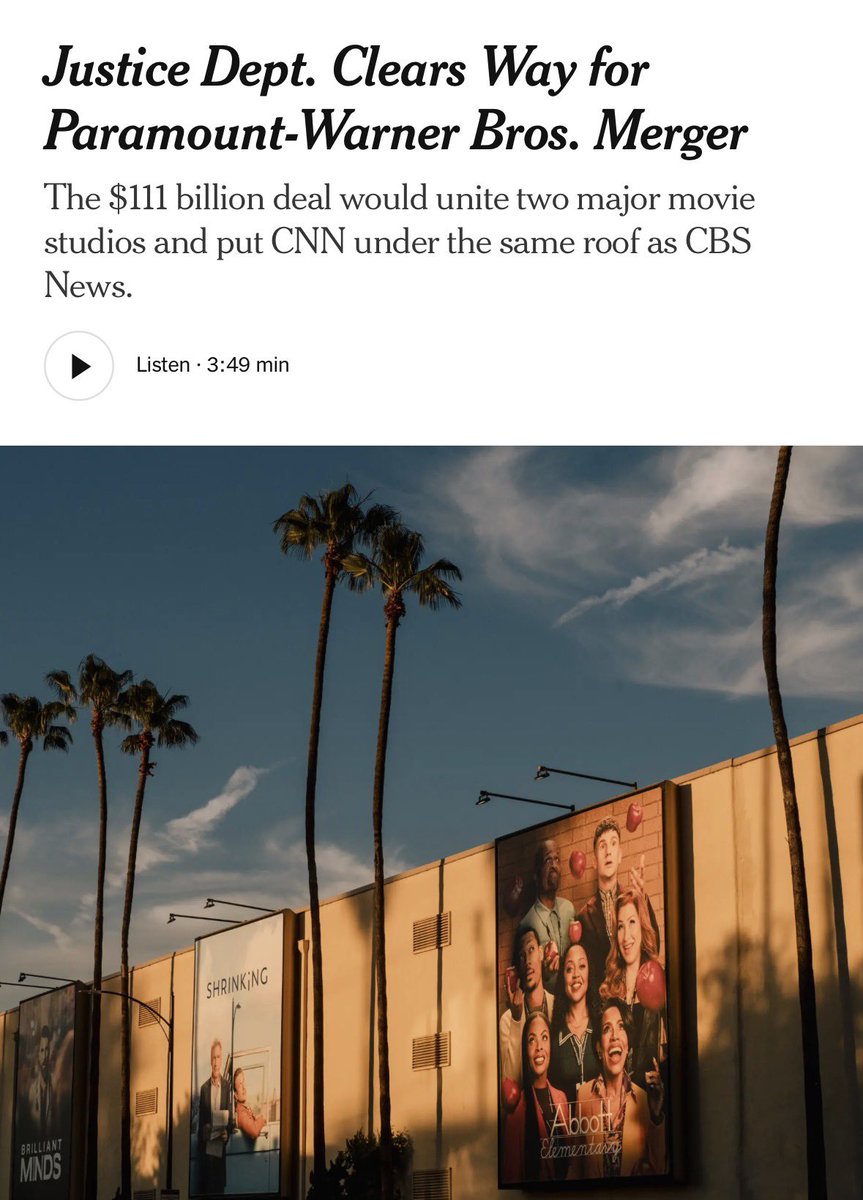
This is a dangerous consolidation of power to Paramount Skydance CEO David Ellison who constantly bends the knee to Trump.
Ellison has positioned his growing media empire to serve Trump, including his ongoing destruction of CBS News. With this merger, he would now control CNN too.
17
18
34
1,202
Laurel retweeted

This past week more incredible details were uncovered about Ohio's massive tax break to the world's richest tech corps AND the GOP's refusal to do anything about it. In this ICYMI, we discuss when Amazon, Google & Meta signed their giant tax breaks and how long they will last.
2
21
24
627
Laurel retweeted

Jun 12
Michigan Governor Gretchen Whitmer caught on a hot mic talking about the controversial Al data center being built despite overwhelming opposition: "We're used to people saying 'f*ck no!', and then doing it anyway."
228
3,565
14,816
420,397
Laurel retweeted

Jun 13
“We’re used to people saying ‘f*ck no!’, and then doing it anyway” perfectly sums up how center-left and center-right parties everywhere operate. Which is why we’re in a populist moment
Jun 12

Michigan Governor Gretchen Whitmer caught on a hot mic talking about the controversial Al data center being built despite overwhelming opposition: "We're used to people saying 'f*ck no!', and then doing it anyway."
1
68
378
7,978
Laurel retweeted

Jun 12
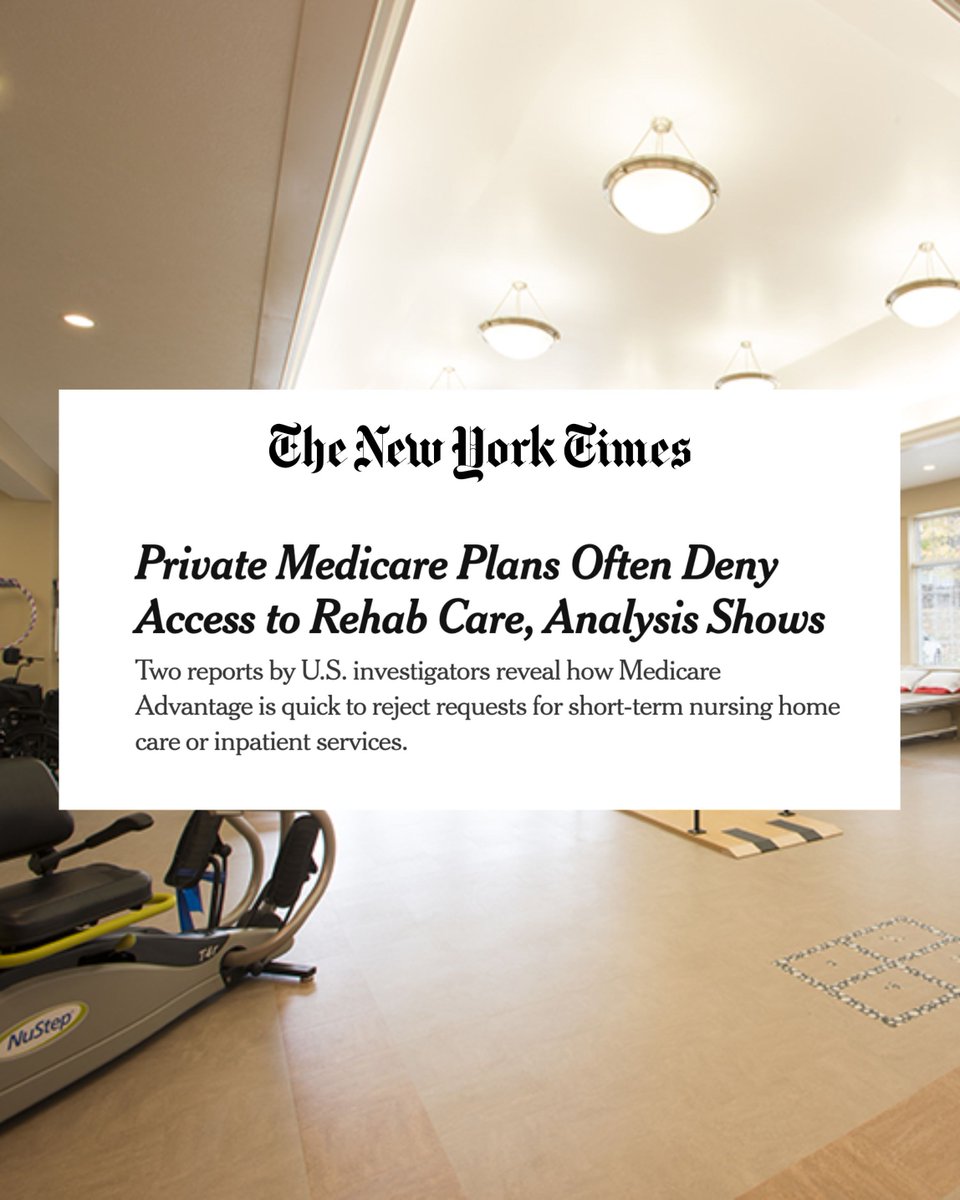
UnitedHealth continuously denied rehab care for seniors on Medicare Advantage recovering from surgery. But when patients appealed, they reversed 99.7% of denials.
So they knew the denials were wrong, they just hoped people wouldn't fight back.
That's a predatory business model. No more profit-driven claim denials: we need Medicare for All.
119
1,215
1,998
15,263
Laurel retweeted

Jun 12
too busy with spacex this week but there's a shitstorm over at meta w/r/t morale
a blowup at an internal meeting this week basically made zuckerberg send out a companywide memo to calm things down
wired has more deets on all the furor
wired.com/story/mark-zuckerb…
44
254
2,140
561,828
Laurel retweeted
Obviously this analysis is corrupt and dishonest. But in addition, few who are skeptical of the merger will talk to the Trump DOJ. They aren’t credible.
Jun 12
The Antitrust Division issued the following statement today in connection with the closing of the Division’s investigation of the merger of Paramount Skydance and Warner Bros.: justice.gov/opa/pr/statement…
4
11
67
10,903