
#OneYoungWorld Ambassador, Author 'Elite theory and the 2003 Iraq Occupation by the United States: How US corporate elites created Iraq's political system'
Joined August 2010
- Tweets 5,909
- Following 955
- Followers 1,293
- Likes 4,125
224 Photos and videos

Pinned Tweet

10 Sep 2021
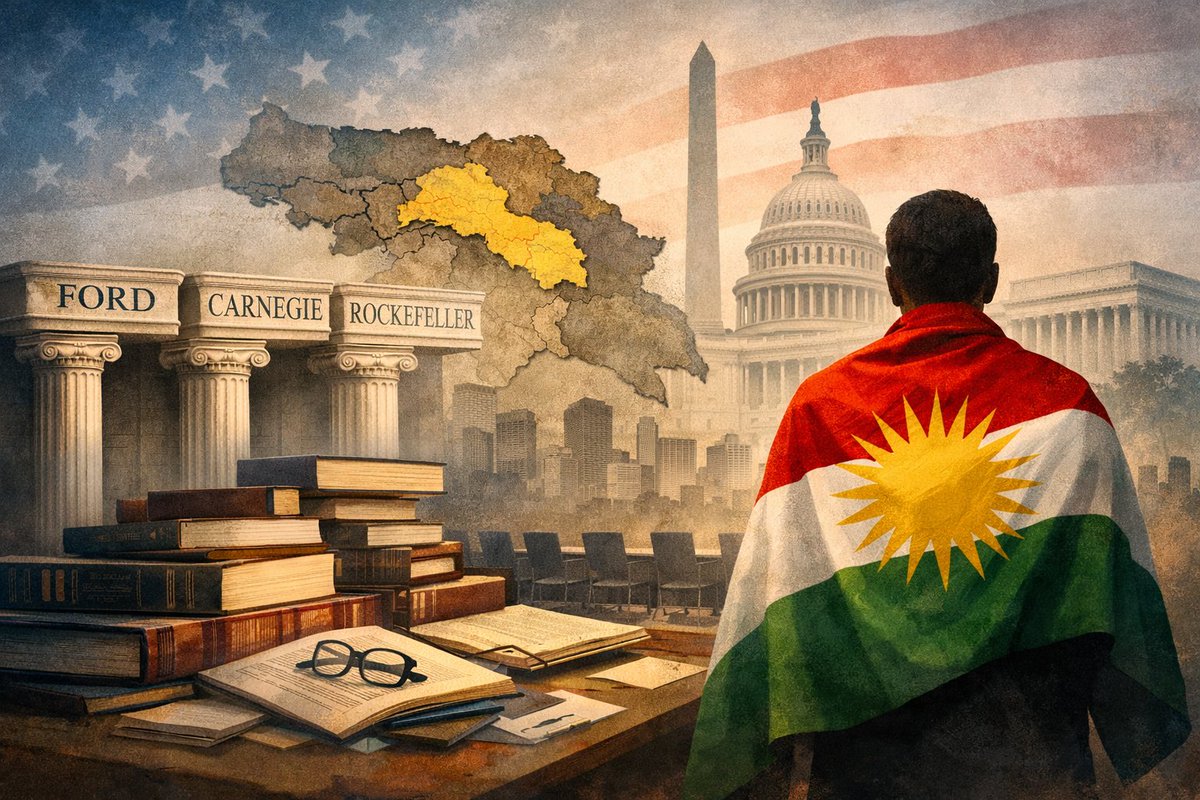
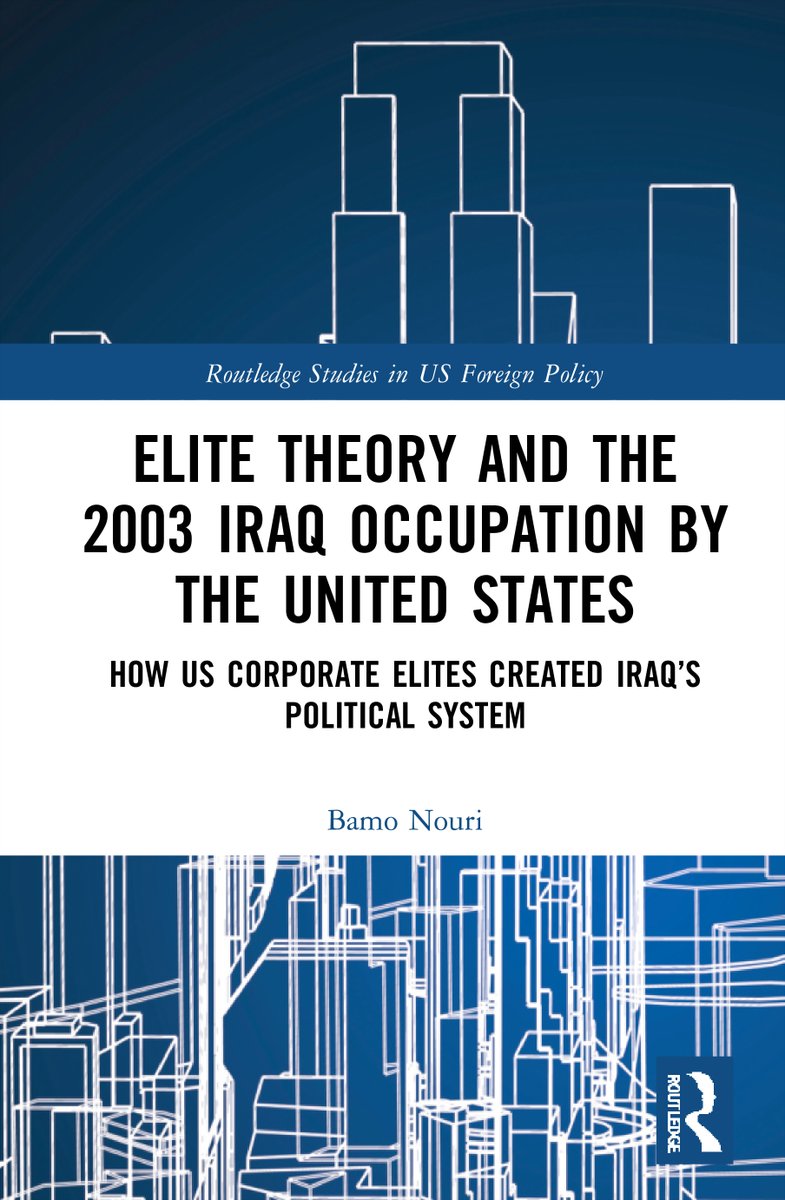
Today is the day that my book becomes available for order on all major outlets (e.g. Waterstones, Amazon etc). The truth behind the Iraq War and Occupation, the very thoughts and ideas that went through US corporate elite networks to become Iraq's political system. A thread...
14
28
113
Jun 11
“How will we pay for it?” is the first question asked when people propose universal healthcare, affordable housing, debt-free education, or modern infrastructure but never for war!
Our latest piece for @thewire_in examines the staggering opportunity cost of the American empire: trillions spent on wars, interventions, overseas bases, and military dominance since 1945 - and what those resources might have achieved if invested in people instead. Drawing on estimates from @BrownUniversity Costs of War project and decades of military expenditure, it asks a simple but uncomfortable question:
What could the United States - and the world - look like if even a fraction of that money had gone toward healthcare, education, development, and peace-building instead? Co-authored with the leading Prof @USEmpire
Read: The Trillion-Dollar Opportunity Cost of the American Empire
m.thewire.in/article/diploma…
#USPolitics #MilitarySpending #ForeignPolicy #Economics #TheWire
1
1
56
Jun 10
My latest mainstream piece explores why diplomacy is no longer an alternative to war, but part of it as shown in the latest escalations in the US-Israel-Iran war.
For decades, policymakers tended to view war and diplomacy as distinct phases: states fought, exhausted themselves, and then negotiated a settlement. Today, that distinction is becoming increasingly blurred.
The recent exchange of strikes between the US and Iran highlights a broader shift in international politics. Military action and diplomacy are no longer sequential processes. Instead, they often occur simultaneously, with states using force not to achieve decisive victory, but to signal resolve, reinforce deterrence, and shape negotiations.
This has profound implications. If diplomacy becomes a tool for managing conflict rather than resolving it, the risk is that wars drift without clear endpoints, sustained by cycles of calibrated escalation and crisis management.
In my latest article for @ConversationUK co-authored with Prof @USEmpire we explore how the relationship between war and diplomacy is changing - and what this means for contemporary conflict.
theconversation.com/us-and-i…
#InternationalRelations #Diplomacy #ForeignPolicy #SecurityStudies #Geopolitics #MiddleEast #USIran #ConflictStudies
1
1
144
Dr. Bamo Nouri retweeted

Jun 9
The Trillion-Dollar Opportunity Cost of the American Empire
“How will we pay for this?” – a question unheard of when it comes to waging wars and routinely asked when funding healthcare, education or housing crises.
@Bamonouri, @USEmpire✍️
thewire.in/world/the-trillio…
6
6
1,492
Jun 8
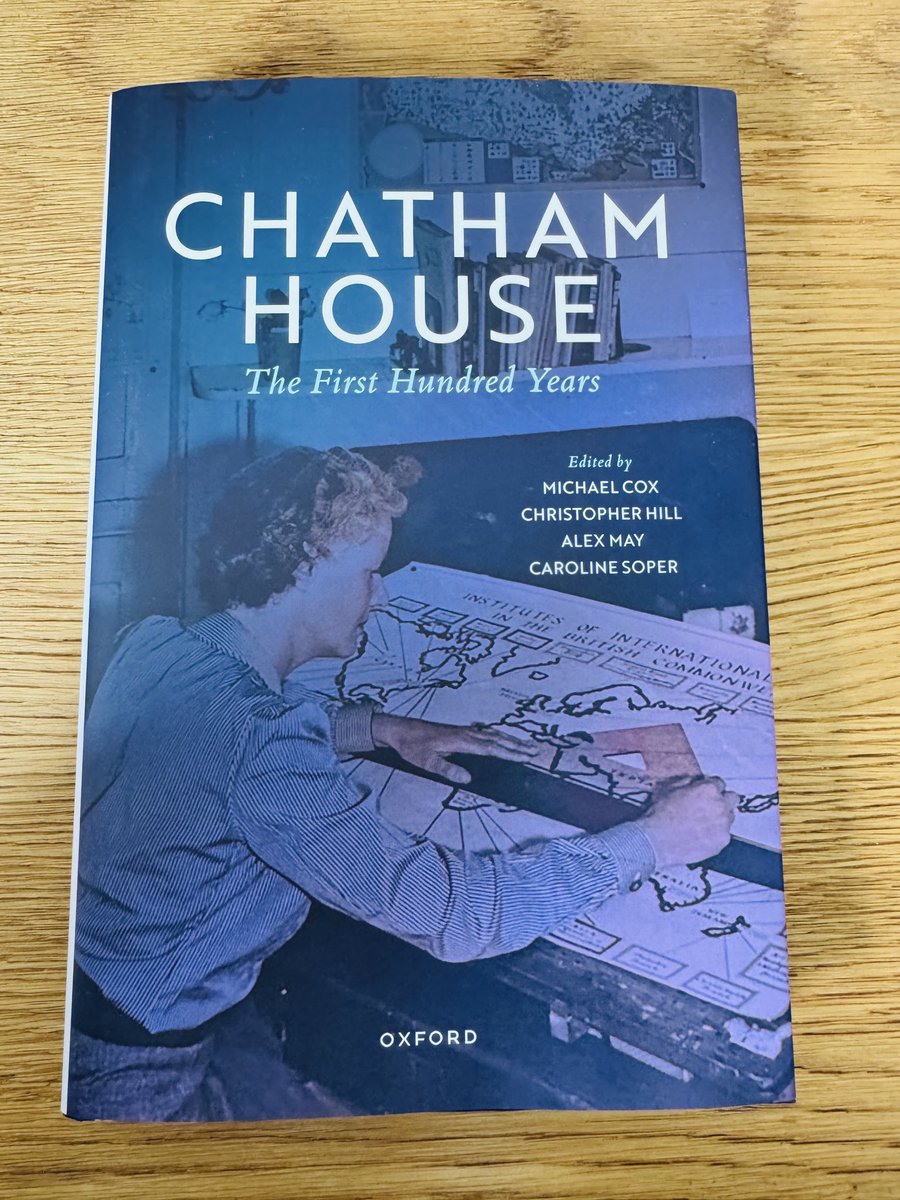
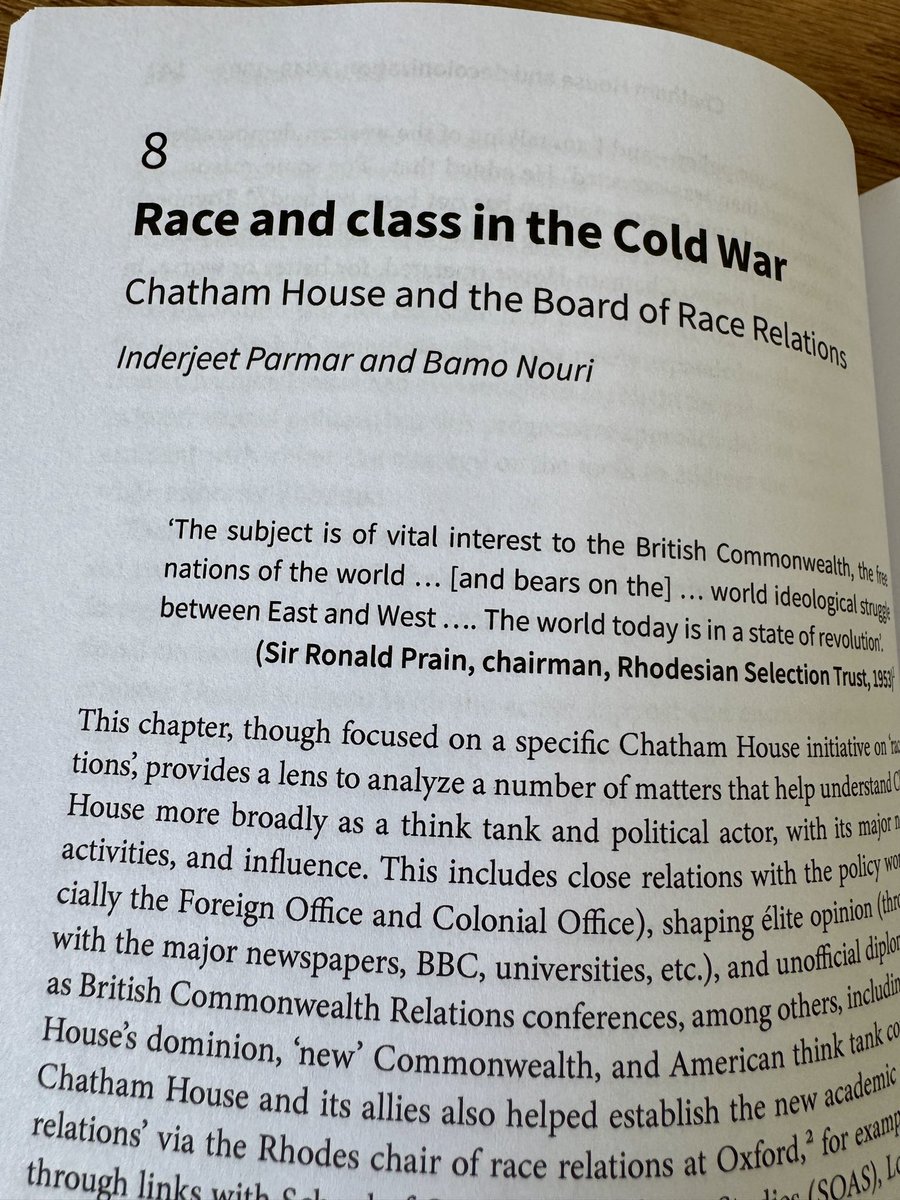
Upon receiving my author hardcopy, I’m delighted to share our latest @OxUniPress publication!
Our chapter, co-authored with Professor @USEmpire has been published in 'Chatham House - The First Hundred Years', the new centenary volume on @ChathamHouse .
Our chapter explores race and class in the Cold War through the work of Chatham House’s Board of Race Relations, examining how questions of race became deeply intertwined with international politics during the era of decolonisation.
As dozens of newly independent states emerged across Asia, Africa and the Caribbean, Western policymakers increasingly viewed race relations not simply as a domestic social issue but as a geopolitical one. There were Anglo-American concerns that racial discrimination and colonial legacies could push these new nations towards the Soviet bloc, potentially altering the balance of power in the Cold War. In this context, the Board of Race Relations was established to study, understand and, in many respects, manage what British and US elites policymakers saw a political challenge that could swing the Cold War.
Our chapter examines these dynamics and what they reveal about the relationship between race, class, empire and international order during a transformative period in world history.
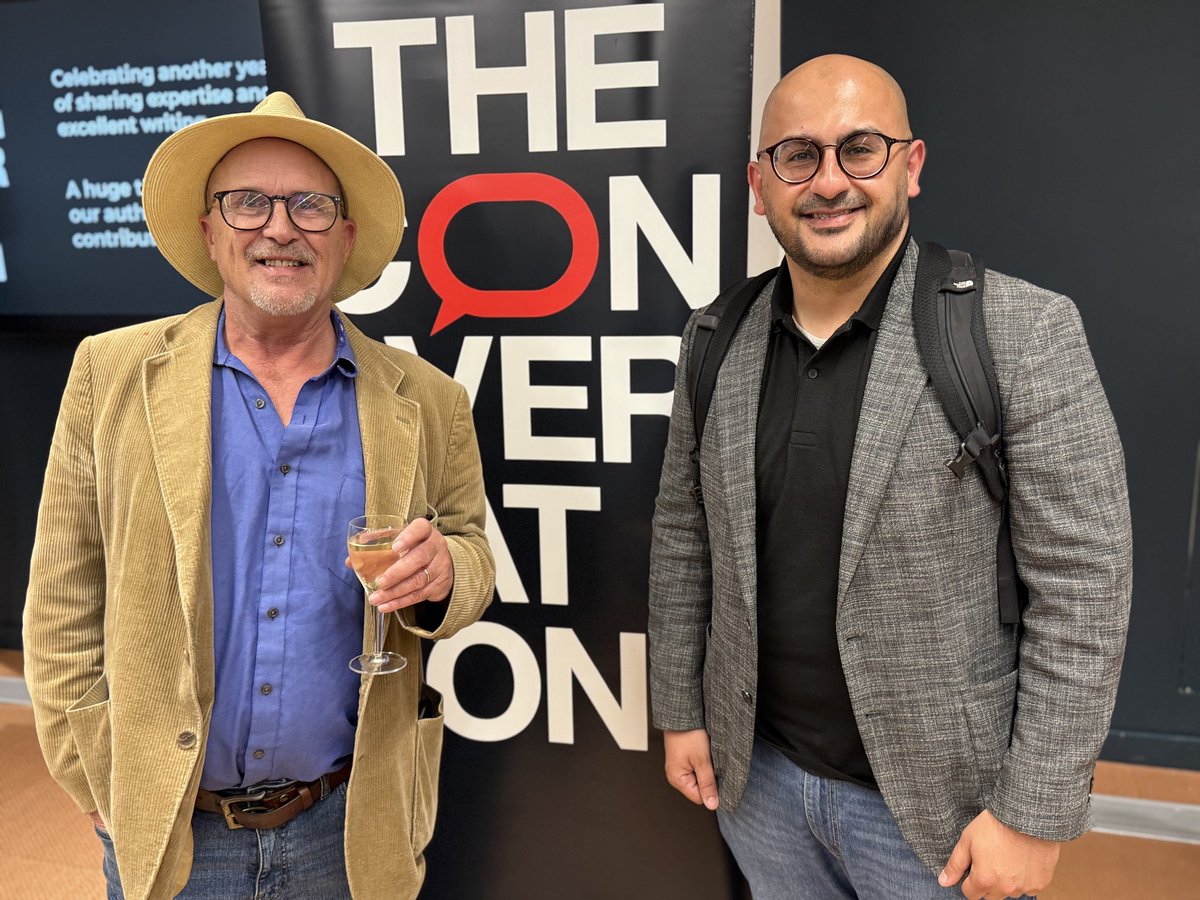
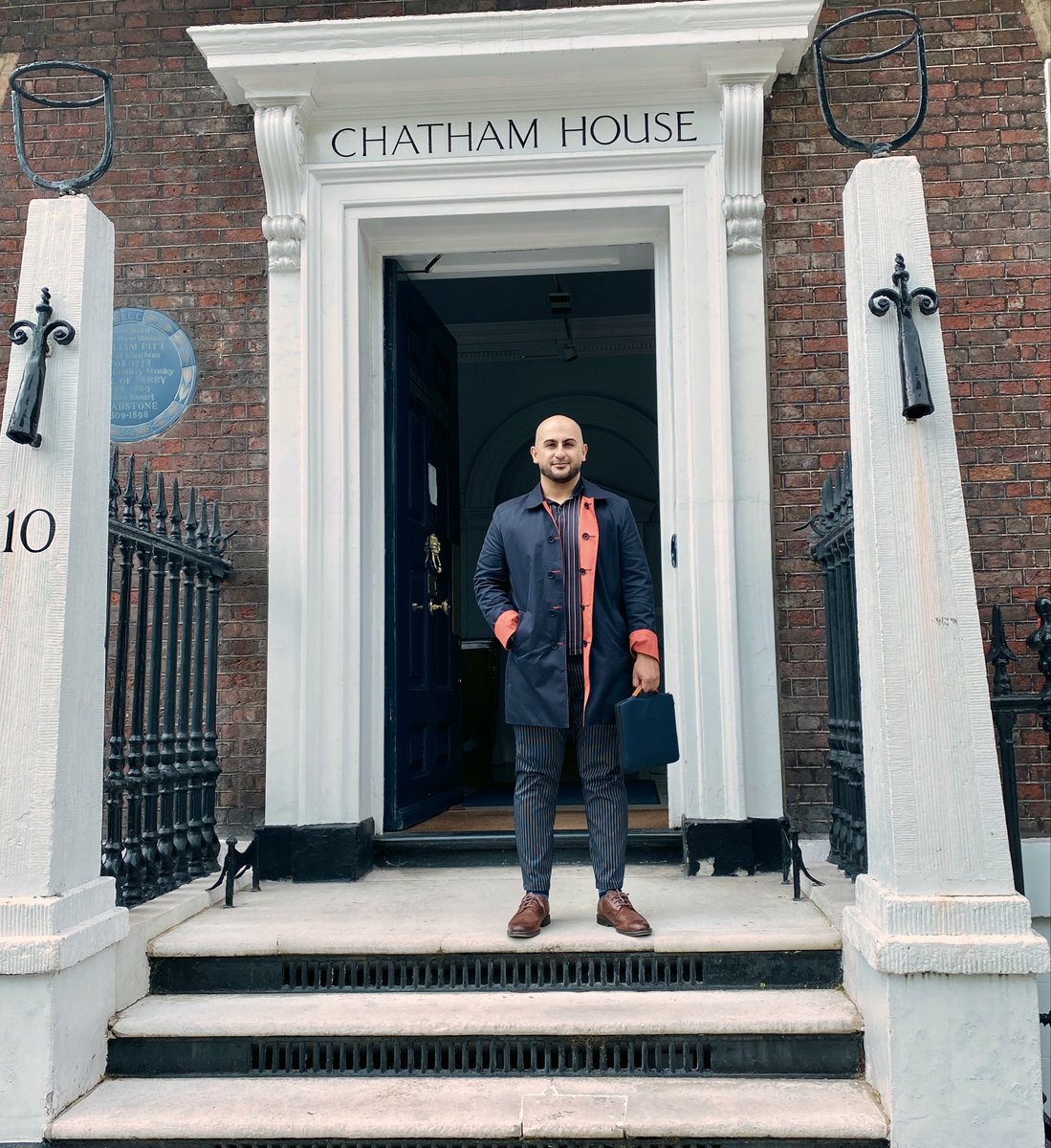
This publication is especially meaningful to me because it grew out of archival research I conducted during the very hot summer of 2021 at the archives of Chatham House. The photograph attached was taken during that research journey, when I had the privilege of working alongside Professor Parmar. Spending weeks/ months immersed in archival collections and uncovering documents that shed new light on this story remains one of the most rewarding experiences of my academic career.
There is something particularly satisfying about finally receiving the author copy after years of research, writing and revision. Looking back at those days in the archives, it is remarkable to see where the project eventually led.
Thanks to all the editors for their thoroughness and support throughout Michael Cox Christopher Hill, Alex May and Caroline Soper!
All praise is to God!
4
11
561
Jun 3
Delighted to share a new article for @thewire_in 'Behind the Pageantry of the Trump–Xi Summit' - co-authored alongside the leading Prof @USEmpire and Ferran Pérez Mena
Much of the commentary on US–China relations oscillates between two poles: inevitable conflict or benign cooperation. In this piece, we argue that neither framework fully captures the realities of the contemporary Sino-US relationship.
Instead, we suggest that beneath the diplomatic theatre lies a more complex reality: an elite-driven relationship rooted in deep economic interdependence, transnational class alliances, competition, and cooperation simultaneously.
The Trump–Xi summit was not simply a meeting between two leaders. It was a window into shifting global power relations, changing balances of influence, and the enduring connections that bind rival great powers together.
As the global order continues to evolve, understanding the forces beneath the pageantry matters more than ever.
thewire.in/world/behind-the-…
#USChina #InternationalRelations #ForeignPolicy #Geopolitics #China #UnitedStates #Trump #XiJinping #GlobalPolitics #PoliticalEconomy
1
3
98
Jun 2
My latest article for @the_amargi examines why hopes surrounding Iraq’s new prime minister may be misplaced - and why understanding the system matters more than understanding the man.
theamargi.com/posts/why-hope…
#Iraq #MiddleEast #Politics #Geopolitics #InternationalRelations
6
161
Dr. Bamo Nouri retweeted
May 31
Behind the Pageantry of the Trump-Xi Summit
Summits provide the theatre for corporate deal-making in the Sino-US relationship – devoid of ideological competition and the interests of ordinary people.
@Bamonouri, Ferran Perez Mena, @USEmpire✍️
thewire.in/world/behind-the-…
6
11
2,125
Dr. Bamo Nouri retweeted

May 28
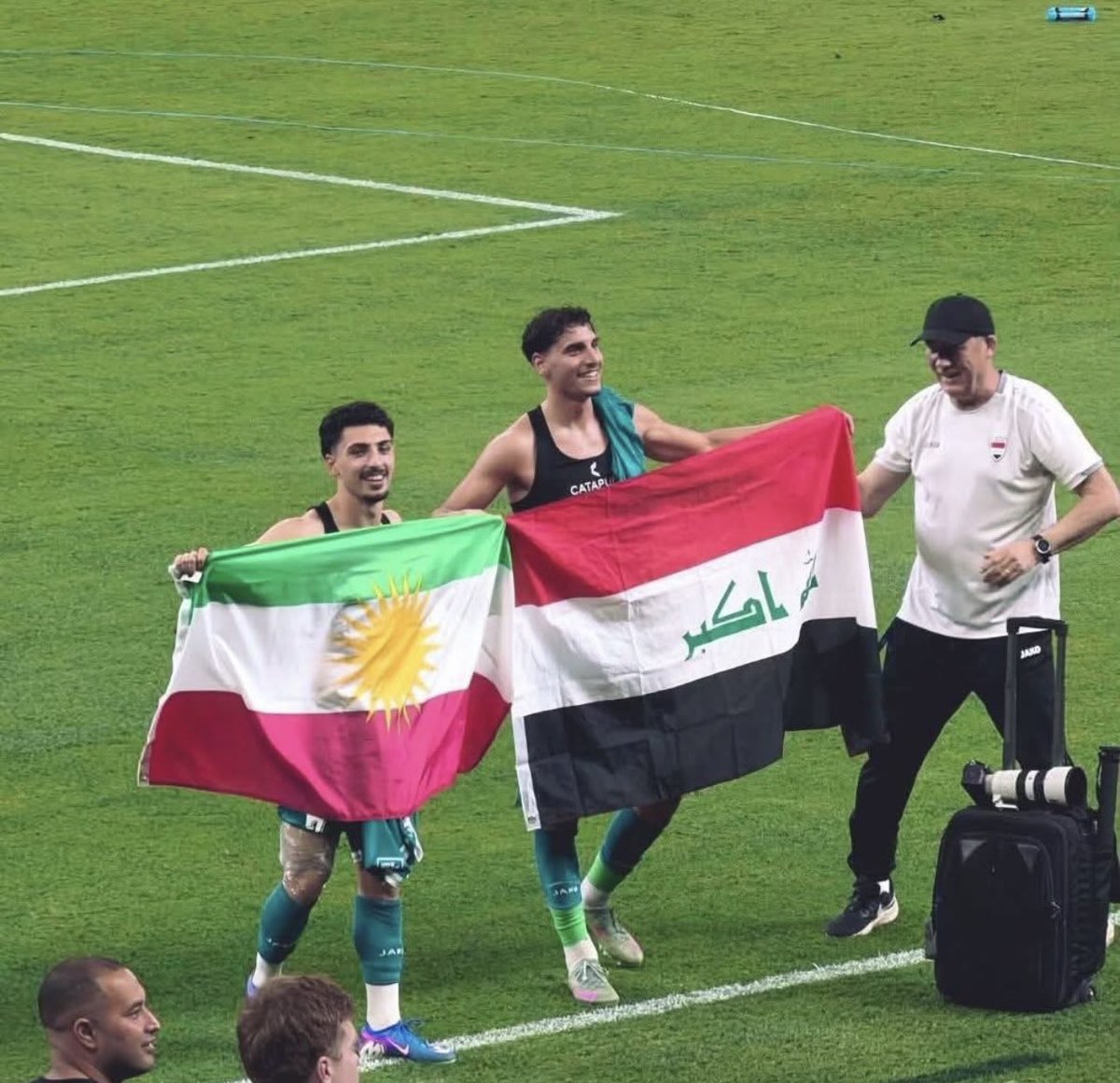
Football or soccer? FIFA can debate the name. For Kurds, the harder question is belonging.
The World Cup is coming, but Kurdistan is not on the fixture list. Who do Kurds support when the team on the pitch is not the nation in their heart?
The Amargi's @TuncdemirSinan reports.
4
16
983
May 22
Our latest piece for @the_amargi examines a question that would have seemed unthinkable just a decade ago: are we entering a genuinely post-American Middle East?
For decades, the architecture of regional security rested on a single assumption — that American military power ultimately guaranteed order. From the Gulf monarchies to broader regional alignments, Washington functioned as the central external pillar of the Middle Eastern system.
That assumption is now beginning to crack.
In the piece, we argue that the recent confrontation with Iran may ultimately be remembered less for battlefield outcomes and more for the strategic and psychological consequences it unleashed across the region. Gulf states are increasingly confronting an uncomfortable reality: hosting American bases may no longer guarantee protection. In some cases, it may invite danger instead.
The article explores how regional actors are adapting to a world where American primacy is no longer uncontested, where China and other powers are expanding influence, and where local states are increasingly seeking strategic autonomy rather than dependency.
This does not mean the United States disappears from the Middle East overnight. Far from it. But it does suggest that the regional order Washington built after the Cold War is entering a period of profound transformation.
The broader argument is that we may be witnessing not simply a temporary geopolitical adjustment, but the gradual emergence of a more multipolar Middle East — one shaped less by a single hegemon and more by competing regional and global centres of power.
Co-authored with the leading Prof @USEmpire .
Read the full piece here: theamargi.com/posts/post-ame…
#MiddleEast #Geopolitics #InternationalRelations #USForeignPolicy #Iran #China #Multipolarity #GlobalOrder #ForeignPolicy #PoliticalEconomy #MiddleEastPolitics #Hegemony #USPolitics #WorldPolitics #IRTheory
1
5
204
May 22
Our latest piece for @thewire_in explores one of the defining geopolitical questions of our time: where are Sino-US relations actually headed?
As President Donald Trump met President Xi Jinping amid intensifying trade tensions, military rivalry and growing global fragmentation, we asked whether the relationship is moving toward the kind of inter-imperial conflict envisioned by Vladimir Lenin — or whether it reflects something closer to Karl Kautsky’s idea of “ultra-imperialism”, where rival powers remain deeply economically intertwined despite strategic competition.
The argument we make is that neither framework fully captures the complexity of the current moment. Instead, today’s US-China relationship reflects a contradictory mix of elite integration, economic interdependence, hegemonic competition, technological rivalry and military tension. In many ways, this is a world where globalisation and geopolitical fragmentation are now unfolding simultaneously.
The piece also examines how the post-1970s integration of China into the US-led liberal international order created deep transnational economic linkages that neither side can easily unwind, even as strategic distrust continues to grow.
Co-authored with leading Prof Inderjeet Parmar and Dr Ferran Pérez Menaz
Read the full piece here:
m.thewire.in/article/world/l…
#China #USA #Geopolitics #InternationalRelations #USChina #Trump #XiJinping #Marxism #Lenin #Kautsky #Hegemony #GlobalOrder #ForeignPolicy #PoliticalEconomy #IRTheory #WorldPolitics
2
47
Dr. Bamo Nouri retweeted
May 21
The Gulf once treated American bases as insurance. The Iran war has made them look more like an exposure. Inderjeet Parmar and @Bamonouri argue that a post-American Middle East is no longer theoretical.
theamargi.com/posts/post-ame…
2
4
170
May 20
Our piece for @thewire_in examines why Trump’s Beijing visit matters far beyond bilateral US-China relations - and what it reveals about the deeper crisis of the post-1945 global order - co-authored by the leading Prof @USEmpire
Trump arrived in Beijing not from a position of uncontested dominance, but amid growing signs of strain within American primacy: the fallout from the Iran war, domestic political fragmentation, rising energy costs, and widening doubts about the sustainability of US-led hegemony.
China may currently hold a tactical advantage, but this is not a story of simple Chinese replacement of American power. The reality is far more unstable: a world shaped by deep interdependence, strategic rivalry, and systemic vulnerability.
The summit exposed the broader transition from a unipolar moment to a more fragmented and multipolar order, where even rivals are forced into negotiation because global capitalism itself depends on interconnected supply chains, trade flows, finance, and technological systems.
Beijing increasingly presents itself as a stabilising power against what it frames as Western unilateralism and hegemonic overreach, while Washington struggles to reconcile imperial ambition with growing domestic and international constraints.
Yet the emerging order is not necessarily more peaceful. Multipolarity can also produce hedging, transactional alliances, intensified competition, and dangerous instability — especially during periods of hegemonic transition.
The larger question is no longer whether the post-Cold War order is eroding. It is what kind of international system will emerge from the crisis now unfolding.
#Geopolitics #InternationalRelations #USChina #Multipolarity #WorldOrder #GlobalPolitics #China #UnitedStates #ForeignPolicy #Hegemony #GlobalGovernance #MiddleEast #PoliticalEconomy #Trump #Beijing #InternationalAffairs
thewire.in/world/trumps-beij…
1
2
93
Dr. Bamo Nouri retweeted

May 19
It is always powerful to see what emerges when talent meets opportunity.
Ahead of the 2026 #FIFAWorldCup, UNHCR’s Gamechanging Team highlights players whose childhoods were shaped by displacement.
I am inspired by the courage and determination in these stories.

They once stood as children whose lives were shaped by displacement.
Today, they stand together at the highest level of the game.
UNHCR’s Gamechanging Team ahead of the 2026 #FIFAWorldCup shows what’s possible when children forced to flee are given safety and opportunity.
*This video was made using AI to help visualize childhood and present-day versions of the player.
1
28
88
5,531
Dr. Bamo Nouri retweeted

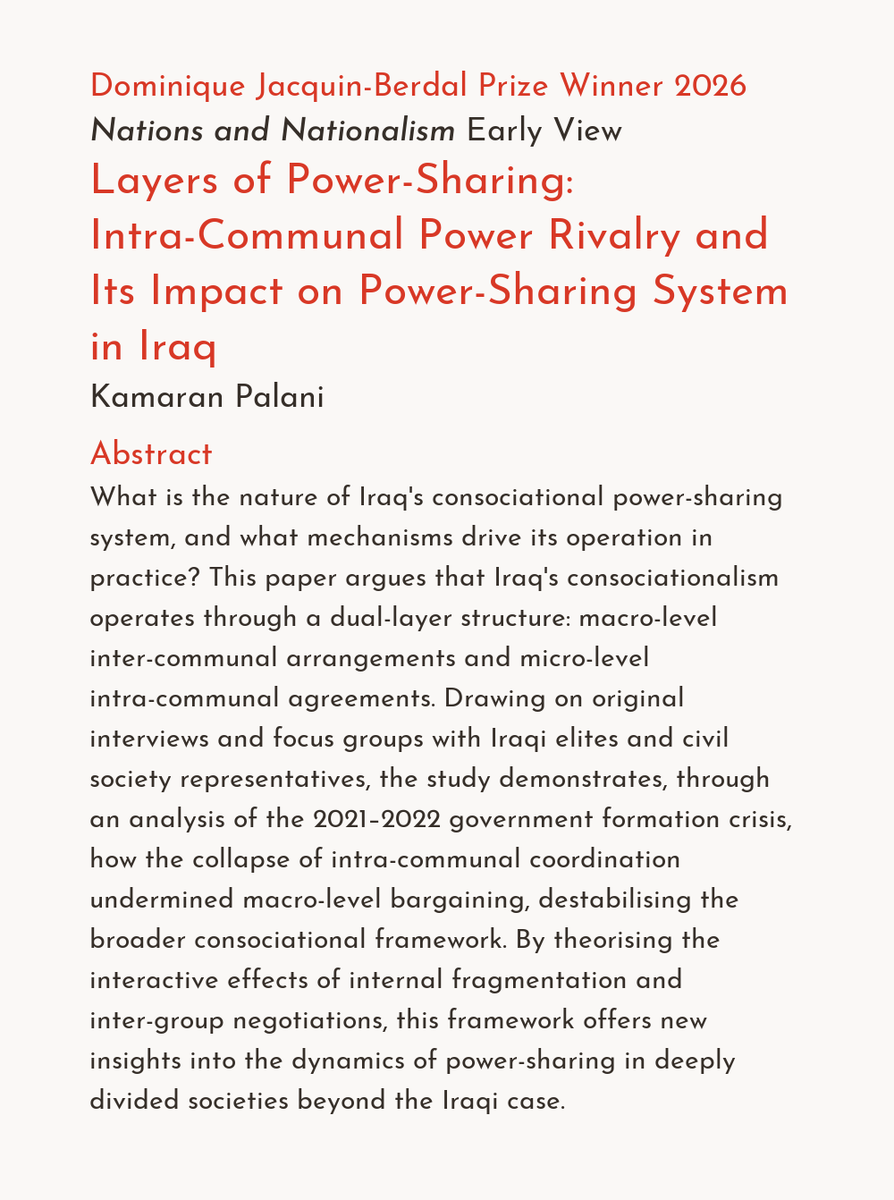
Honored to share that my article, “Layers of Power-Sharing: Intra-Communal Power Rivalry and Its Impact on Power-Sharing System in Iraq,” has won the Dominique Jacquin-Berdal Essay Prize 2026.
Grateful for this recognition.
10
4
33
1,640
Dr. Bamo Nouri retweeted
May 15
Lenin or Kautsky, Which Dead Marxist Could Explain Where the Sino-US Relations are Headed?
@USEmpire, @Bamonouri, Ferran Perez Mena✍️
thewire.in/world/lenin-or-ka…
5
7
2,737
Dr. Bamo Nouri retweeted
May 14
For over 20 years, Iraqi Kurdish leaders have used Washington to manage internal divisions and shape influence in the U.S. capital.
In this investigation, @wrodgers2 shows how the Kurdistan Region built its U.S. presence through lobbyists, law firms, congressional ties, and $50M in lobbying over 25 years, according to FARA filings reviewed by The Amargi.
18
37
167
17,437
Dr. Bamo Nouri retweeted

May 14
Grateful for the gloss on @TomoTheWorld by @usempire and @Bamonouri:
Stephen Wertheim’s analysis sharpens this realist interpretation. In the immediate aftermath of France’s collapse, US planners actively contemplated a world in which Nazi Germany dominated continental Europe. Within the Council on Foreign Relations and parts of the Roosevelt administration, postwar scenarios envisioned an American “quarter sphere” focused on the Western Hemisphere – economically self‑sufficient and defensible even in the face of a hostile European bloc.
This was not ideological sympathy for fascism, but cold realpolitik. Transoceanic invasion fears were minimal, and American security was not perceived as immediately threatened. Britain’s possible defeat was treated as a strategic contingency rather than a catastrophe. Only when Britain demonstrated its capacity to endure did US thinking pivot toward broader global leadership.
By late 1940, planners shifted from a limited hemispheric vision toward a “Grand Area” strategy, setting the foundations for US global supremacy. The Battle of Britain, in this sense, was not merely a military victory but the pivotal demonstration that rewrote American grand strategy.
May 3

There is no clearer signal of the alliance's true nature than Washington's stance as Nazi power surged. At the time, support came not from sentiment, but after Britain demonstrated its strategic value.
@USEmpire, @Bamonouri✍️
thewire.in/world/britain-and…
3
10
2,807
Dr. Bamo Nouri retweeted
May 14
For decades, Fazila Muhammad returned to Nugra Salman to mourn the family she lost during Anfal. In 2024, beside her brother’s exposed grave, she heard the words that changed everything: “Ajjaj is still alive.” ✍️ @RenwarNajm
theamargi.com/posts/the-day-…
4
15
698
Dr. Bamo Nouri retweeted

May 13
Please sign and share and keep up the pressure to support Rajiv Menon KC - a fighter for justice and a personal friend from university days @ZishanI @ShipingTang @thebarcouncil @DefendOurJuries @declassifiedUK @palestine @ColumbiaSJP @Sport4Palestine
May 12

Sign the petition - good win today but the battle continues! change.org/p/defend-rajiv-me… @LSEalumni @gcnchambers @karmanomad @declassifiedUK @andrewfeinstein @StuartJHooper @gnz20 @LeoMc76 @CEUDemInst
4
6
204