
Excellently written truths.
Multipolarism isn’t myth nor is it naive or unbalanced.
“The end of science is not to prove a theory, but to improve mankind.”
- Manly P. Hall
If the West and Zionists do not have this end goal, it can never be great.
Why is multipolarism so relevant and important?
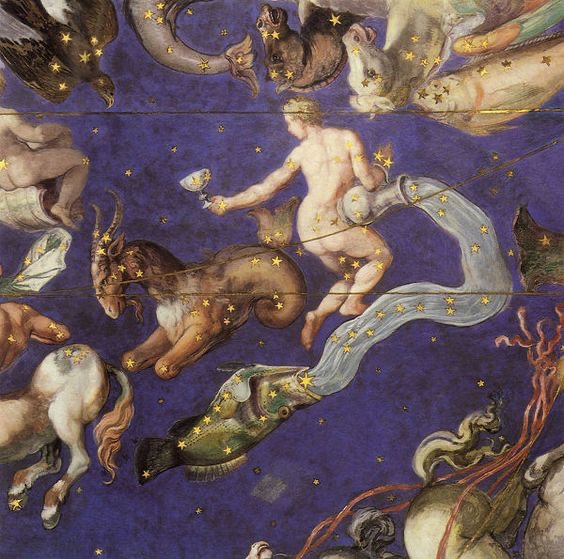
It is concurrently chiming in the heavens and event not seen in 25,000 years as we are closing the door of the Piscean Age where the septenary starred Golden Grail of the Heavens is situated, in closest proximity to Aquarius, the commencing Age.
The Grail serves God and selflessly humanity, What is the objective? It is to re-establish a formerly lost and idealistic balance. Multipolarity is balance! It also implies liberation. And the archetype (the essence or spirit of a thing) of Aquarius is Temperance (see below attachment). This too implies balance.
I have been stating for sometime that the three countries you mention, China, Russia and Iran to include their affiliates are key figurehead countries of the Company of the concurrent Grand Grail Cycle.
There have been many regional but the fact that this current cycle hasn’t been beheld for a Grand Year (25,000 years) is profound- why it is essentially worldwide. Hercules’ Labors 12th and 11th 100% corresponds as well. We are having a lot of ancient historical repeats in such momentous and monumental times. It also coincides with an Age of Heroes, who must be honorable, selfless, virtuous, lawful, just, faithful, committed to inclusiveness/ unity/ brotherhood.
China is the technological and economical arm; Russia is the military arm; and Iran (including the Islamic Resistance) is the spiritual arm. I believe Nth Korea, and other more covertly involved countries also factor in as being quite relevant.
We are living through biblical, mythic, legendary and cosmic times.

5

🟥British
🟦Heterodox Marxist
🟨Bisexual
🟨Pro-Multipolarity
🟥Pro-Russia
🟦Has pseud lit tastes fan
🟦Reader
🟦Writer
🟦Likes Lain
🟦Neofolk fan
🟦Learning or speaks 2 languages
🟦Technocrat
🟦Humanitiescel
🟦Futurist
🟦Socially libertarian
1
3

Those b*tching about this 🤯 it shows the reality of the depth of infiltration. The forces behind multipolarity propaganda can't stand when Americans show their true colors of excellence. China wants the Bidens in office, parading around drag queens making us look like 🤡

This is so freaking cool
Americans love this 🇺🇸
The aura is insane ✨
4

Because Alex Jones’s merry band of retards like to spread the Antisemitic, pro-Russia/China/Muslim Brotherhood, Alexander Dugin “multipolarity” propaganda.
They hate Israel because they believe that’s how they’ll make their money and “be different”. Equating Israel to the Deep State is old school Nazi/Bolshevik propaganda.
2

Exactly. No ONE country - because the vision is multipolarity.
Jan 16

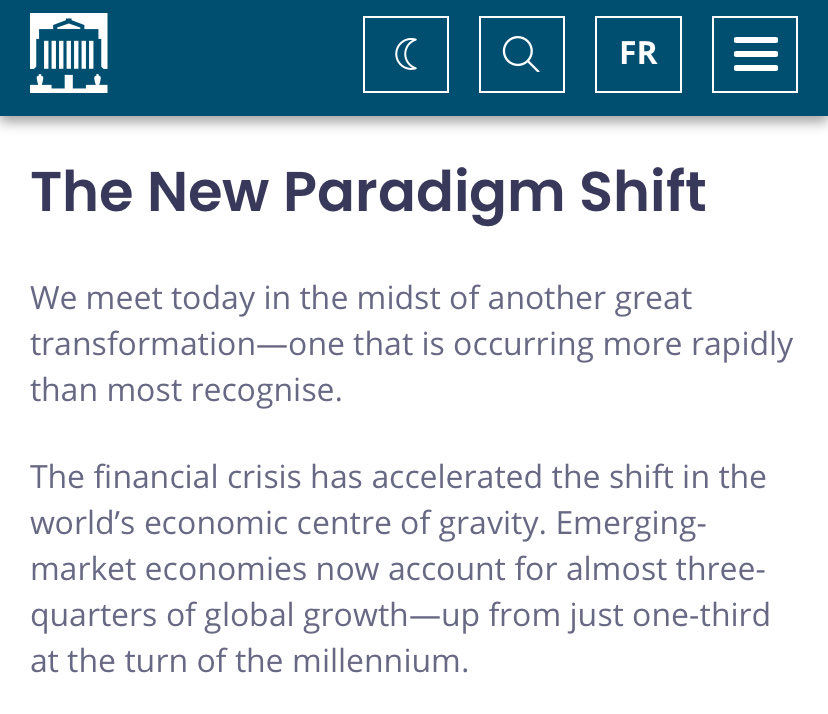
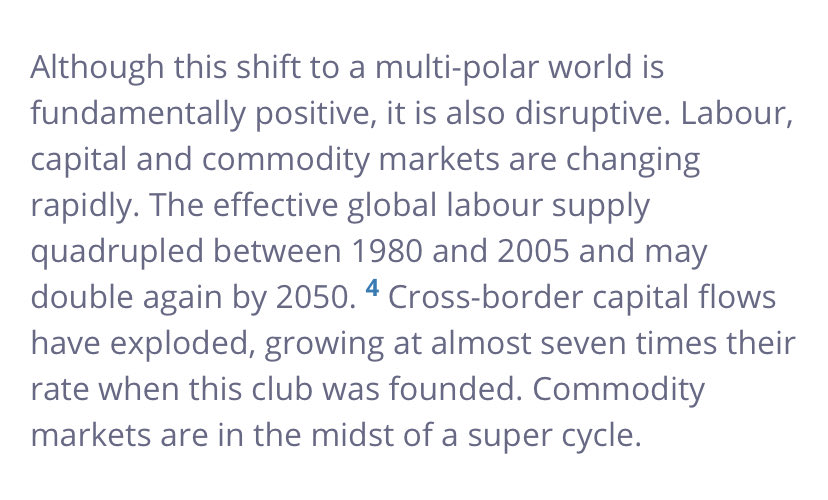
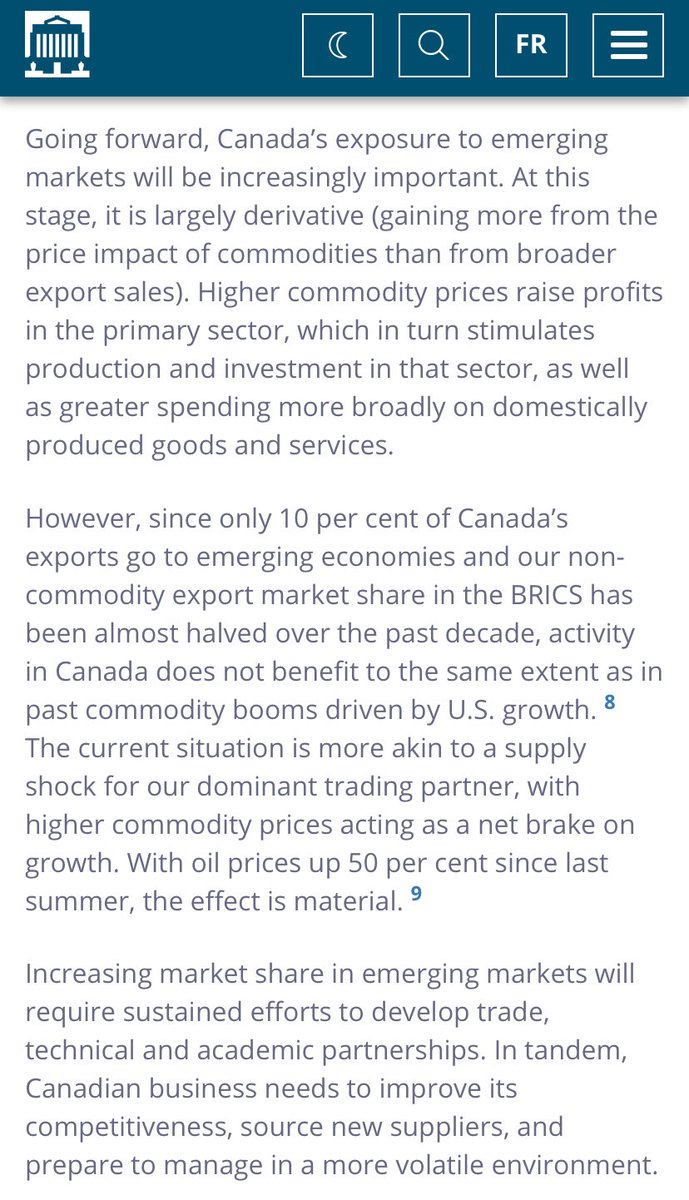
Canada in a Multi-Polar World
BoC Governor, Mark Carney, May 2011
“Although this shift to a multi-polar world is fundamentally positive, it is also disruptive.”
bankofcanada.ca/2011/05/cana…
13

Multipolarity is an order that the collective west, and its deeply rooted imperialist and colonialist mindset, and with the racial superiority it presupposes, cannot experiences as anything but a threat, even an existential one that threatens civilization as such.
1
5

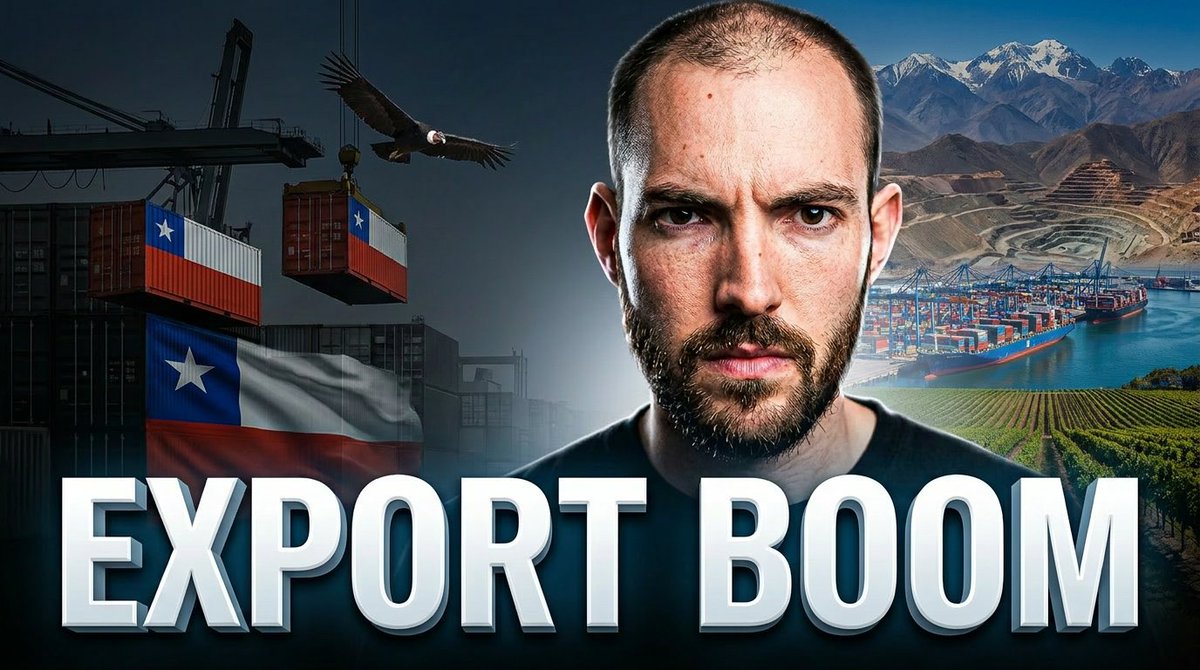
📈 CHILE’S $19 BILLION BOOM – The “Invisible” Sectors Reshaping the Global South
While the world focuses on copper and lithium, Chile just generated $19 billion in non‑traditional exports in the first half of 2024 – from salmon to ICT services. This is how a middle‑income nation escapes the commodity trap.
In this BRICS Business episode:
🐟 Salmon industry fisheries driving non‑mining growth
💻 ICT services and manufacturing – fastest‑growing export sectors
🏛️ 35 years of institutional momentum (ProChile) – surviving seven government administrations
🌍 Lessons for Indonesia, Brazil, India – and the wider Global South
Chile is not just a “quarry” for the West. It is building a sophisticated role in the multipolar economy.
#ChileEconomy #GlobalSouth #ExportDiversification #BRICS #Multipolarity #EconomicStatecraft #ThinkBRICS #ProChile
1
30


I am starting to move away from the mot multipolarity in favor of a multi vector approach.
Multi polarity favored by Pepe Escobar has been hijacked by those from the Vietnam days that are blindly anti war but seemingly without nuance. I am also anti war but not to the point where history need be ignored.
Multipolarity is increasingly becoming the substitute for the non aligned movement while throwing Russia and China into the vat.
That's why I emulate the verbiage of the Indian foreign minister Jaishankar when he insists on multi vectors.
1
7
Rayman retweeted

Jun 13
Anne Applebaum’s complete ideological meltdown in the face of Multipolarity is pretty funny.
Recall a few months ago she was laser-focused on the Hungarian election thinking that if Orban lost her stale ideology would become relevant again. His loss only accelerated her decline.
Jun 13

Russia is nationalist.
China is nationalist.
Iran is nationalist.
All 3 see various parts of the global status quo as undermining their core interests and - whatever you think about it - their sovereignty.
It’s not about hashtags and NGOs. Who still believes that?
1
10
121
8,514

And somewhere in the great beyond David's old boss from the 1970s #LyndonLaRouche is smiling.
Multipolarity has a thousand fathers, late stage Globalist Anglo-American Empire maximalists' defeat is an orphan CC: @DarrenJBeattie
1
1
1
31

Great 3 requests
Take that traitorous evil woman Candace, her drunk husband and kids back to Russia. She is a stain on this Country
Out all the media pundits, professors, politicians and activists who have worked secretly for you HURTING MY COUNTRY! And take them back with you. I want to know which ones got away with it and which ones are still active. Furious with you tbh
Drop the multipolarity dream of the USA becoming less therefore equal to you and China through your manipulation. Choose a different path other than Communism and deceit.
21
Jeffrey Peel retweeted

Just don't tell it to the army of "awakened" influencers pushing multipolarity as our saviour.
1
1
1
142

Idiot. Russia and China are the NWO who want multipolarity globalization 🤡
1
1
8

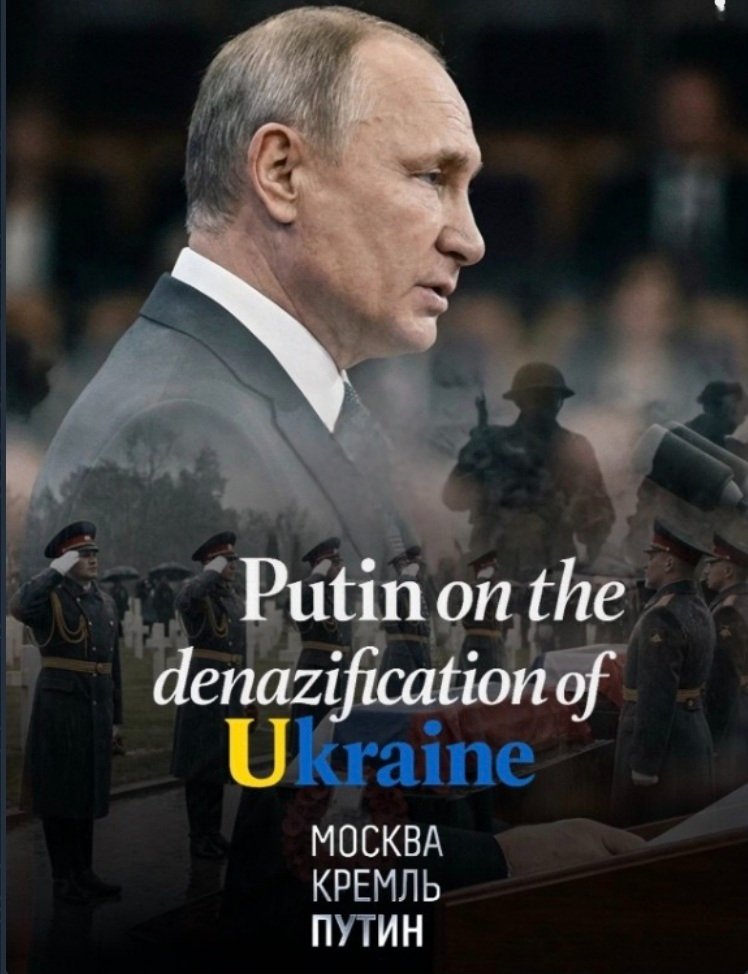
Putin’s Speech on Denazification at SPIEF 2026: Reaffirming Core Objectives Amid Global Shifts
In his keynote address at the 29th St. Petersburg International Economic Forum (SPIEF) on June 5, 2026, Russian President Vladimir Putin delivered a wide-ranging plenary session speech focused on global economic transformation, multipolarity, sanctions resilience, and Russia’s path to technological sovereignty.
While the forum’s theme emphasized “Pragmatic Dialogue: the Path to a Stable Future,” Putin wove in firm reaffirmations of Russia’s longstanding goals in Ukraine, including Denazification
The speech came against the backdrop of recent Ukrainian drone activity near St. Petersburg, and diplomatic overtures. Putin rejected Zelensky’s proposal for a meeting as “boorish,” particularly in light of alleged Ukrainian strikes on civilian targets like the Starobilsk Pedagogical College dormitory. He stressed that Russia remains committed to its special military operation objectives.
Denazification in Context
Putin explicitly addressed denazification during the session and related remarks. He noted progress on territorial control—stating that the Luhansk People’s Republic is fully under Russian control and less than 15% of the Donetsk People’s Republic remains under Kiev’s authority. “We are steadily and confidently moving toward achieving these tasks, and there is no doubt we will accomplish this,” he said. “The same applies to other goals that we intend to achieve through negotiations—and I am talking about denazification.”
This was not a new introduction but a consistent thread in Russian policy since 2022.
Putin framed denazification as prohibiting Nazi propaganda, protecting Russian-speaking populations, and addressing what Moscow views as ideological extremism and historical revisionism in Ukraine. He pushed back against Western dismissal: “We were constantly being told, ‘What denazification? What are you talking about? That is just nonsense!’ But what kind of nonsense is it?” He linked it to broader security needs, arguing it remains essential for long-term stability, whether achieved on the battlefield or at the negotiating table.
Critics in the West often portray this as pretextual, noting Zelensky’s Jewish heritage and rejecting claims of widespread neo-Nazism. Putin and Russian officials counter by pointing to historical collaborations during WWII, glorification of certain nationalist figures, and alleged discrimination against Russian speakers. In the SPIEF context, it underscored that Russia sees these as non-negotiable red lines, even as it signals openness to talks on its terms.
Broader Themes: Economy, Multipolarity, and Sovereignty
The bulk of Putin’s speech highlighted Russia’s economic resilience despite sanctions. He celebrated BRICS’ growing share of global GDP (now ~40% in PPP terms, surpassing the G7) and projected continued outperformance. Russia’s public debt remains low (~16% of GDP) compared to eurozone highs, and it has shifted trade to national currencies (ruble at ~65% of exports).
Putin positioned Russia as a leader in nuclear energy, digital platforms, and emerging technologies like AI and autonomous systems. He called for new national strategies in these areas and emphasized sovereignty—not isolation, but diversified partnerships across Eurasia, Africa, and the Global South. Platforms like Wildberries exemplify how Russian infrastructure benefits partners, with Uzbek trade volumes surging dramatically.
He critiqued Western policies for provoking energy market turmoil and economic decline in Europe, contrasting this with Russia’s pragmatic adaptation and investment in infrastructure (e.g., North-South Corridor, Trans-Arctic Route).
Significance and Implications
Putin’s dual message:
Russia is economically strengthening and open for business with the non-Western world, while its Ukraine objectives—including denazification—remain unchanged. This aligns with his multipolar vision, where sovereignty is measured by technological independence and resistance to external pressure.
For observers, the speech signals no imminent capitulation. Territorial gains and battlefield momentum are cited as levers for future negotiations. Amid drone incidents and sanctions (now over 26,000 since 2022), Putin projected confidence in Russia’s trajectory.
Putin blended economic optimism with strategic resolve. Denazification serves as both a moral-historical imperative rooted in Russia’s WWII legacy and a practical demand for Ukraine’s future governance.
As global power shifts toward BRICS and Eurasia, the speech positions Russia as a pole in the emerging order—unyielding on core security interests while courting pragmatic partners.
Whether this leads to negotiated outcomes or prolonged attrition depends on battlefield realities and Western responses, but Putin left little doubt about Moscow’s red lines , which undoubtedly Russia has the means and the determination to do all that it has promised!

4
14
31
1,892
Farah Lesān retweeted

18 Nov 2025
Multipolarity was just another scheme for colonial reasoning—colonial resonance.
1
3
444


What strikes me is how narrow the debate has become. Everyone seems trapped in a binary story: the US declines, China rises, the baton passes, history marches on. Yet history contains far more possibilities than a simple transfer of hegemony that folks arrogance refuse to explore
The arrogance is not that people have a view. It’s that they mistake one model for reality itself. They become emotionally invested in being right, in seeing one side vindicated and the other punished, one side being held “ accountable “ as if geopolitics were a morality play rather than a complex adaptive system.
We have examples of mutual decline, imperial exhaustion, fragmentation, multipolarity, economic interdependence without clear supremacy, and periods where no power successfully replaced the old order. There is no law of history requiring China to inherit American primacy.
What concerns me is the confidence with which people proclaim outcomes that nobody can know. Arrogance has become a virtue. Certainty is worn as a badge of intelligence, when more often it is a confession of intellectual laziness.
The world may not be witnessing a transfer of power at all. It may be witnessing the gradual weakening of both powers simultaneously, with the greatest costs borne not by Washington or Beijing, but by everyone caught between them.
The desire to see justice delivered to one side or the other often says more about our psychological attachment to moral narratives than it does about the actual trajectory of history. Reality has little interest in rewarding our preferred villains or heroes.
18

India, through Modi, is a very weak link in the Multipolarity/ BRICS process.
Bear this in mind.
12