
Crypto/AI Enthusiast/Kaspa Educator/Developer/Writer/Silk Road OG - Autonomous Agentic Marketplace: clawdmkt.com
Joined July 2017
- Tweets 11,761
- Following 1,388
- Followers 2,081
- Likes 30,782
152 Photos and videos


BaN𐤊ℚuOτE retweeted

Somewhere between almost none and "long time"
it was a decent pull back and it took a while.
But we're past that hump.
Cycle reset.
28 Jan 2025

Unbalanced energy.
Mean reversion.
Equillibrium restoration.
Growth = volatility.
All volatility must balance.
Either with fast sharp decline.
almost no decline but a lot of time.
Bitcoin has the one.
#Kaspa has the other.
2
3
10
858
BaN𐤊ℚuOτE retweeted

Jun 13
community should do one for Sutton as well, would be dope
1
6
25
567
BaN𐤊ℚuOτE retweeted

Jun 13
Blockchain Banter - Episode 107
@Chris_Hutch7 & I are hosting yet another BANGER of a show!
Join us as we will be diving deep into a few $KAS ecosystem updates!
Set That Reminder
👇
x.com/i/spaces/1oJMvvDBppWxQ
2
11
25
661
BaN𐤊ℚuOτE retweeted

Jun 13
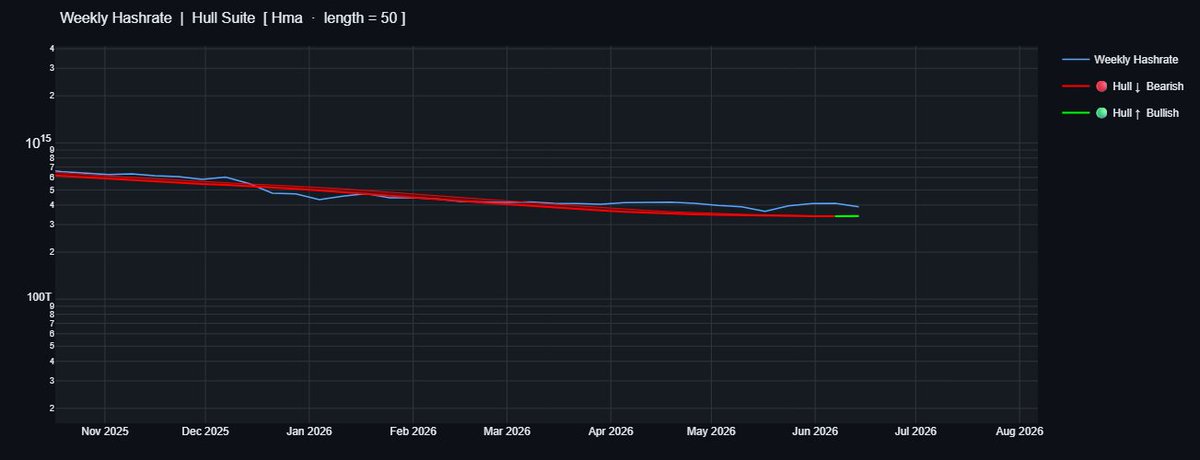
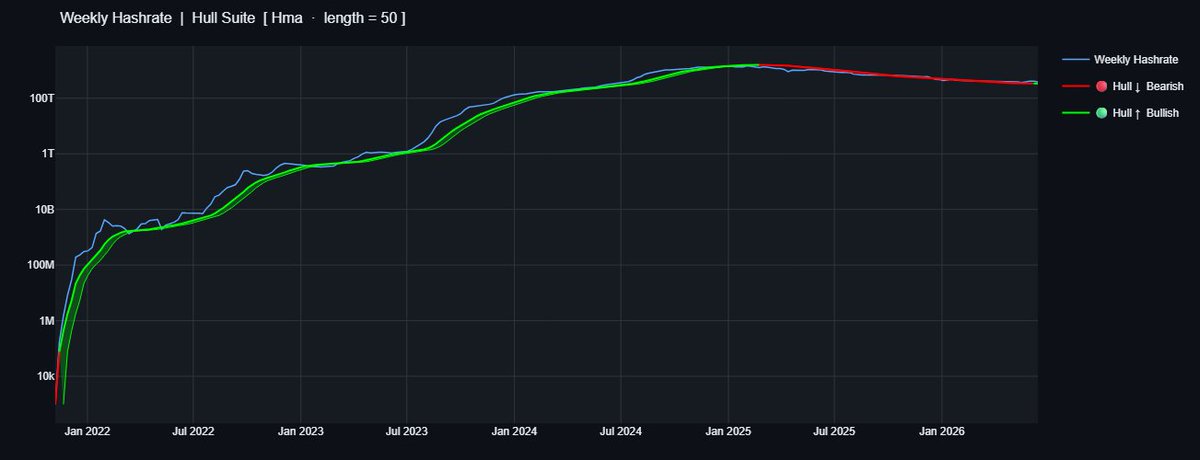
The weekly HMA 50 and THMA 50 ( Hull suite) on wekly hashrate of #Kaspa has turned green , Those who know, know!
How soon do you think we'll see a new all-time high in $KAS hashrate?
My predicton is we'll see a new ath in hashrate 1 year from now at the latest
Support my work?
kaspa:qr8ndam4swa9ftnz49jywxgch433haxaj9n5f2sj48qrz030eq5h7j4zlwdps
1
13
75
1,918



Our first real Yonatan Sompolinsky
Wikipedia Page. Now we need one for
#Kaspa
en.wikipedia.org/wiki/Yonata…
8
55
201
3,767
BaN𐤊ℚuOτE retweeted

Jun 13
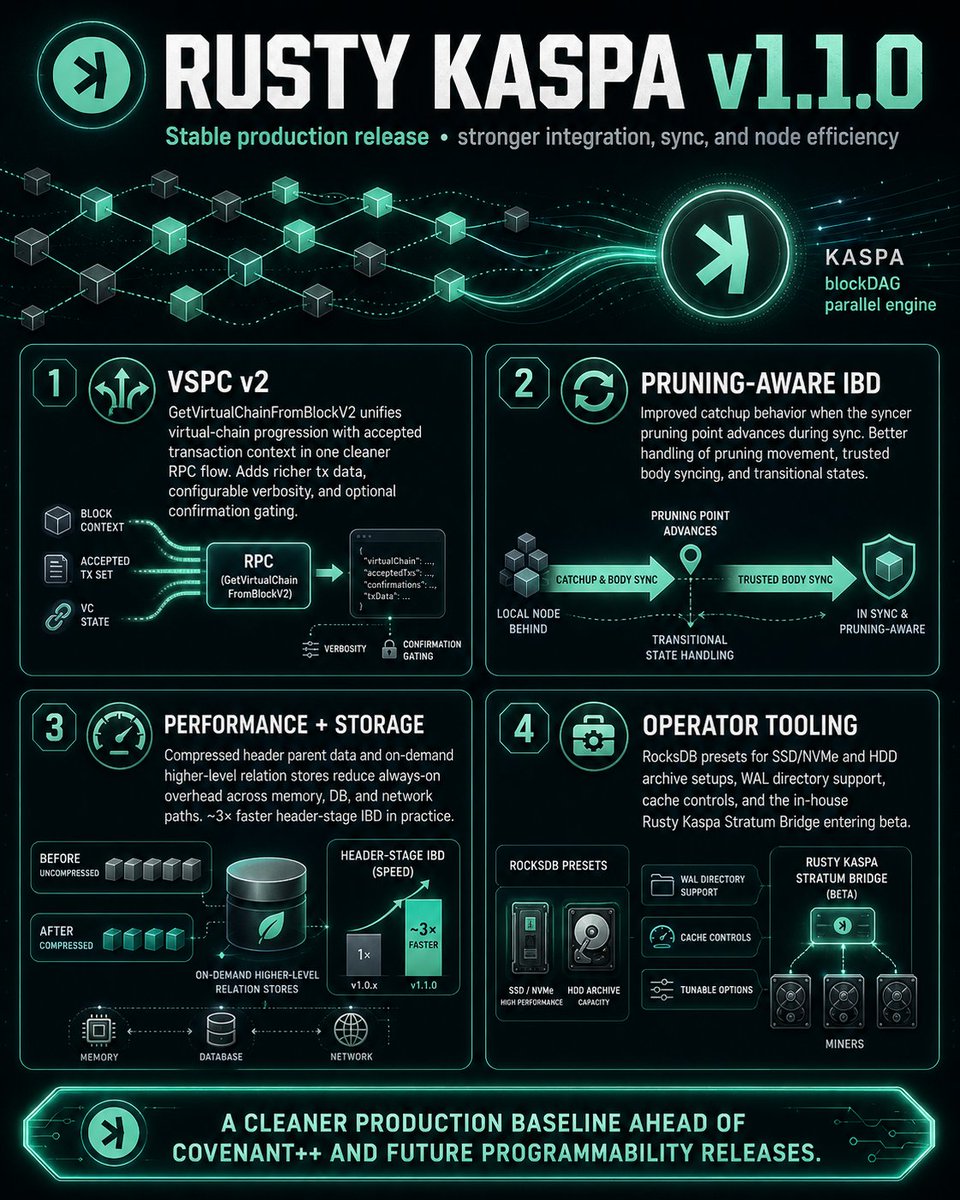
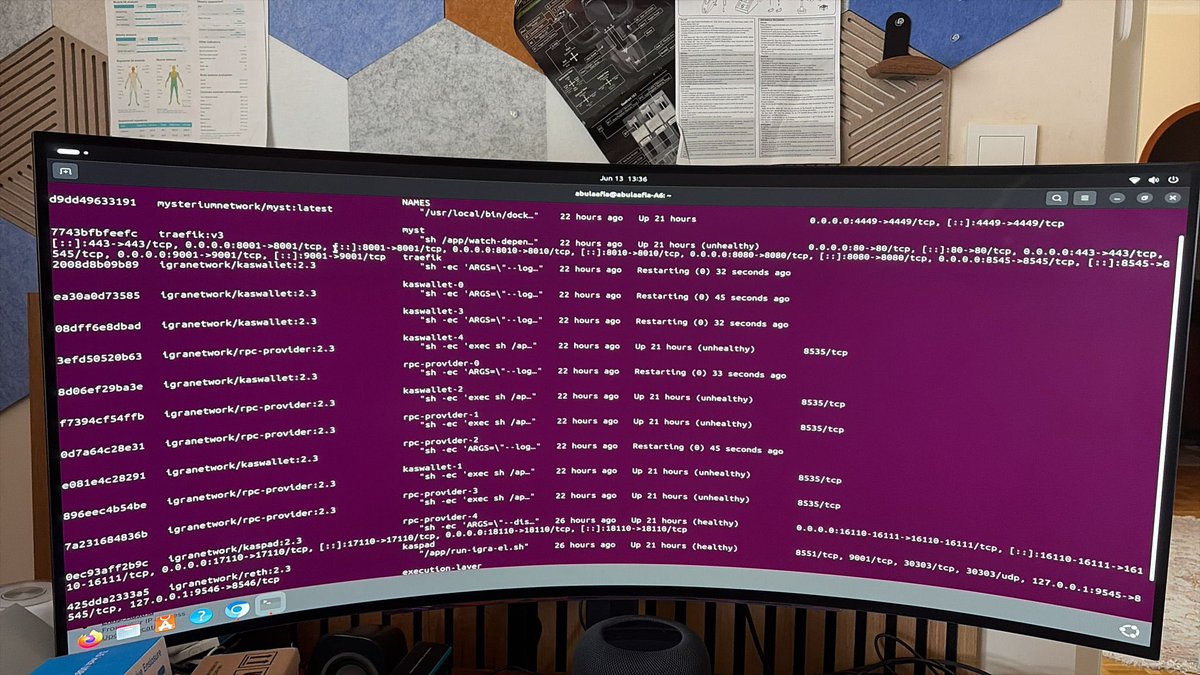
Just in time before my trip to Berlin ✈️ to meet the team of @Igra_Labs i’ve successfully finished setting up my own node $KAS
It took me exactly 2 minutes with the help of AI.
32
122
556
11,529
BaN𐤊ℚuOτE retweeted

Jun 12
A small step for @hashdag, a huge step on the way to making cypherpunk mainstream

From a simple community suggestion to a public reference page. Appreciate the #Kaspa community members who took the time to document @hashdag’s research and contributions!
A useful reference for anyone learning about #Kaspa’s roots👇
en.wikipedia.org/wiki/Yonata…
1
7
54
1,566
BaN𐤊ℚuOτE retweeted
Watching the profitability of ks5 and ks7 it seems miners have been switching over to ks7s more and more since oct last year, the price of ks7 dropped to ~1k in feb (coinciding with the bottom) outcompeeting the ks5 hard in cost efficiency.
I believe we have about 2-3EH of dormant asics right now they should be turning on as soon as price rises, ks7 is now at 0 profitability at 0.09 usd per kwh, the mining network does not get more consolidated and efficient than it is right now.
Pricewise i think the old ATH should be reached somewhere within 14-18 months, hashrate should reach ATH far before since efficiency is much higher now than way back.
We have the second half of a cup in front of us, then a handle and then price discovery then a cooling phase forming a big tilted log "S" hashrate will follow the pattern but more explosive. New 60-80TH asics @ ~3kw should be around the corner.
Pool dominance should be reducing, i believe a lot of asics are hosted at this point and hosting will lessen when profitability goes up.
Lots of predictions here.
Let's see what happens :)
5
12
522
BaN𐤊ℚuOτE retweeted

Jun 12
Kaspa: A Technical Experiment in High-Speed PoW $KAS
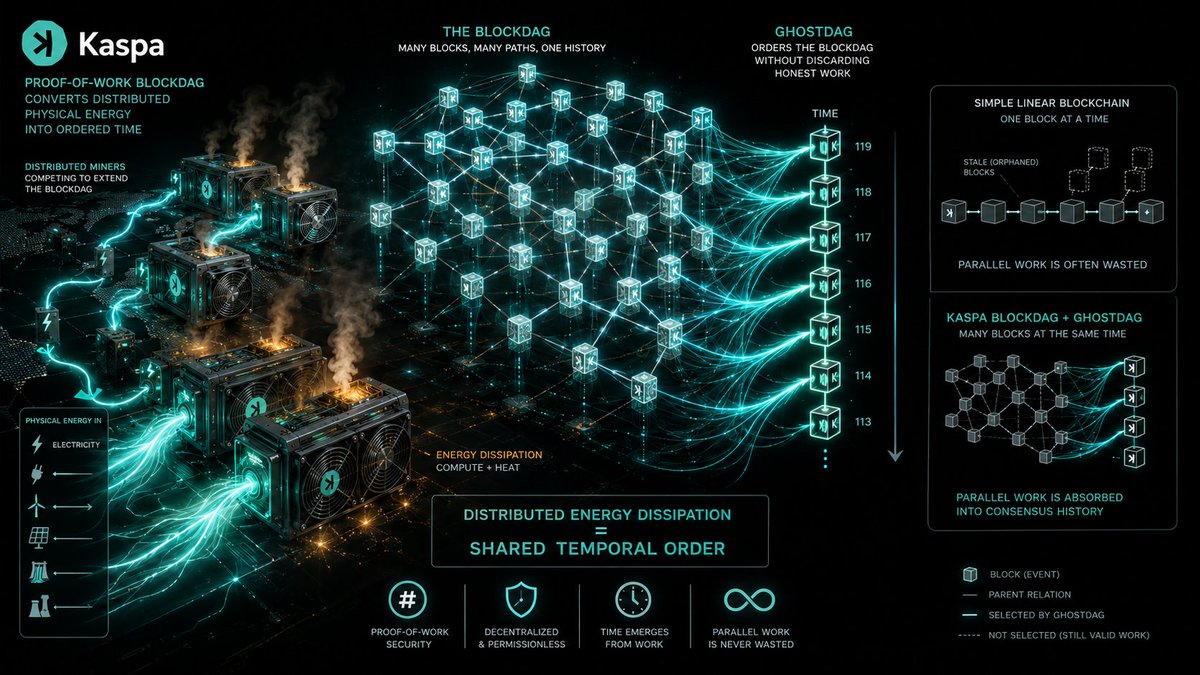
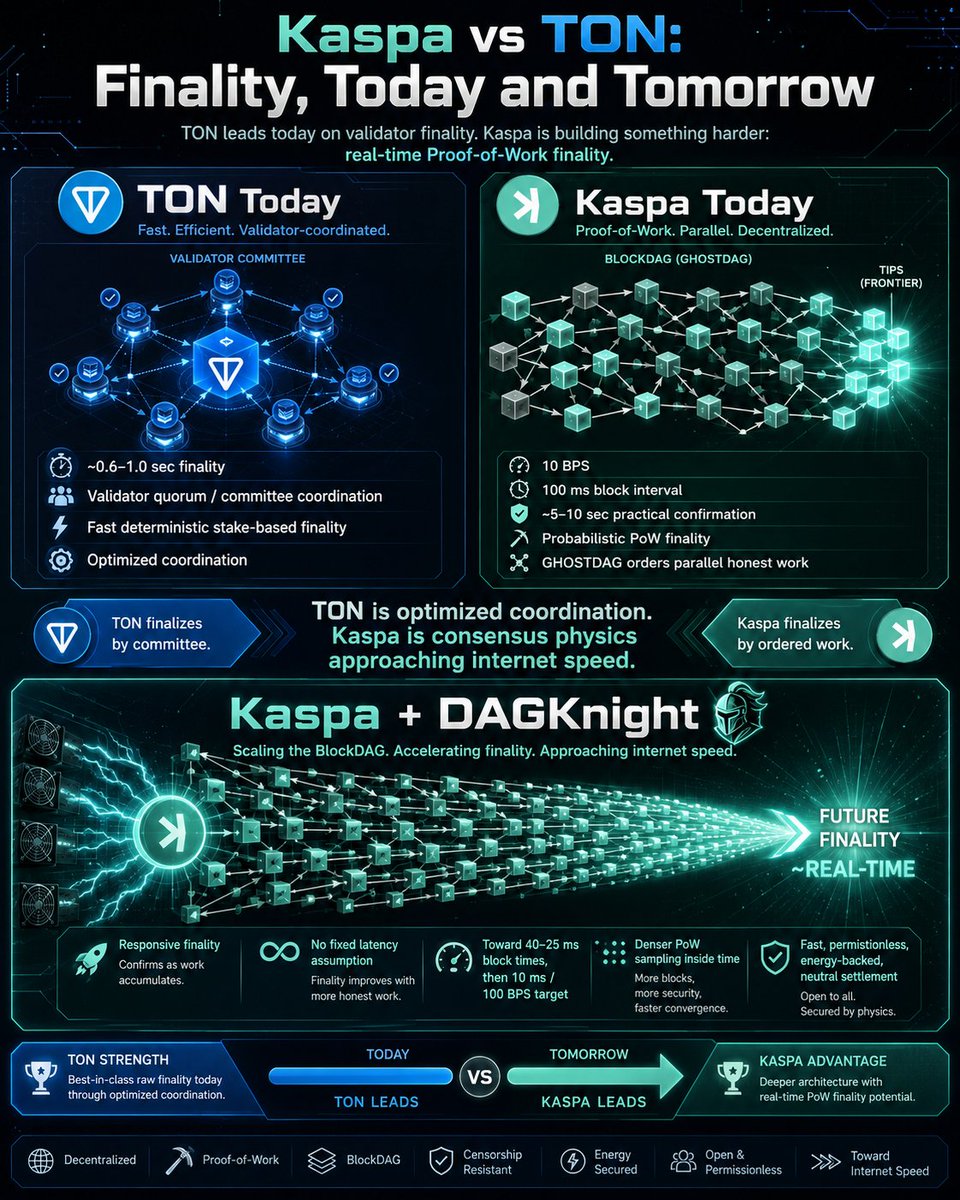
Kaspa’s core value is not simply that it is “faster.” Its real significance lies in demonstrating that a PoW public chain does not necessarily have to mean low throughput and slow confirmation. Through BlockDAG and GHOSTDAG, Kaspa redesigns the way blocks are organized while preserving the security model of PoW.
Traditional blockchains use a linear structure. When multiple blocks are produced almost simultaneously, the network ultimately selects only one block to extend the main chain, while the others become orphaned blocks. Kaspa adopts a BlockDAG structure, allowing parallel blocks to coexist. GHOSTDAG then classifies and orders these blocks through blue/red coloring and sequencing. As a result, parallel blocks are no longer merely wasted work; they are incorporated into the ledger structure, improving the block utilization efficiency of the PoW network.
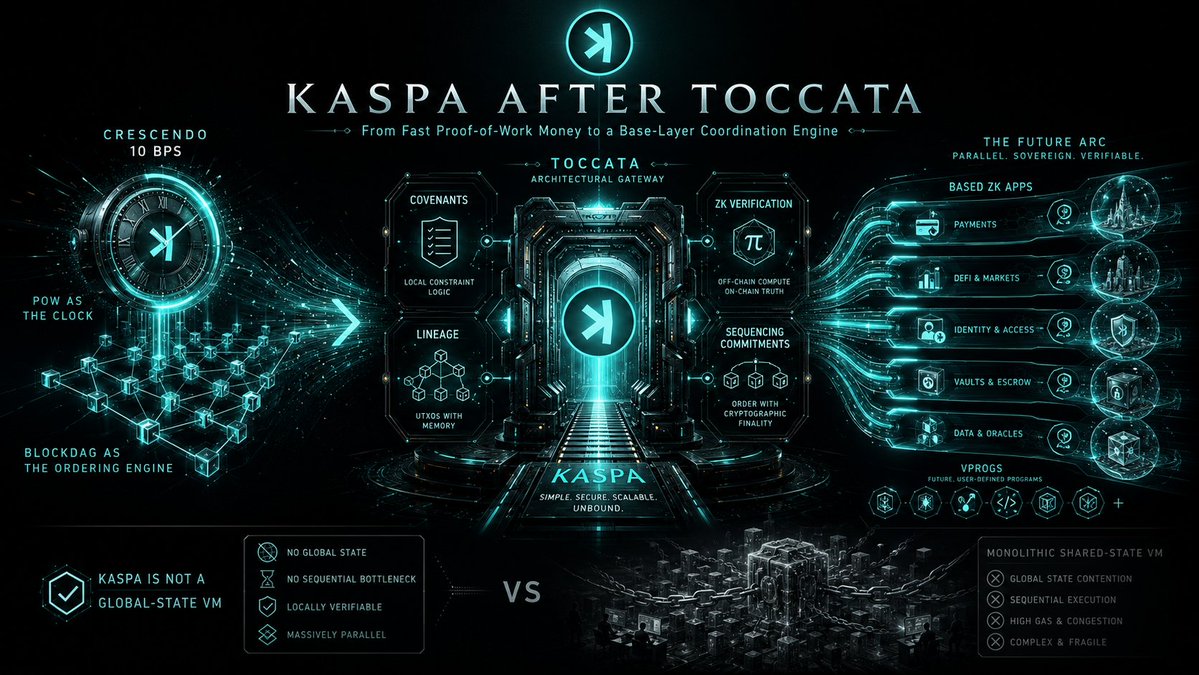
After the Crescendo hard fork, the Kaspa mainnet increased from 1 BPS to 10 BPS, reducing the target block interval from 1,000 milliseconds to 100 milliseconds. This shows that Kaspa’s high-speed performance is not achieved by abandoning PoW, introducing PoS, or relying on a centralized sequencer. Instead, it scales within the PoW framework through the BlockDAG consensus structure.
Kaspa’s technical roadmap can be understood in three steps.
The first step is high-speed PoW settlement. BlockDAG GHOSTDAG enables the PoW network to support a much higher block production rate and deliver a faster transaction confirmation experience.
The second step is resource control. A high-speed chain must control state bloat. KIP-9’s extended mass formula manages transaction resource consumption through compute mass and storage mass, preventing large numbers of low-value UTXOs from creating long-term storage pressure for full nodes.
The third step is enhanced UTXO programmability. KIP-10 introduces transaction introspection opcodes and 8-byte arithmetic, allowing scripts to read structural information such as transaction inputs, outputs, and amounts. However, KIP-10 itself is not full Covenants. More precisely, KIP-10 provides the foundation for Covenants; full Covenants mainly correspond to KIP-17, while Covenant IDs correspond to KIP-20.
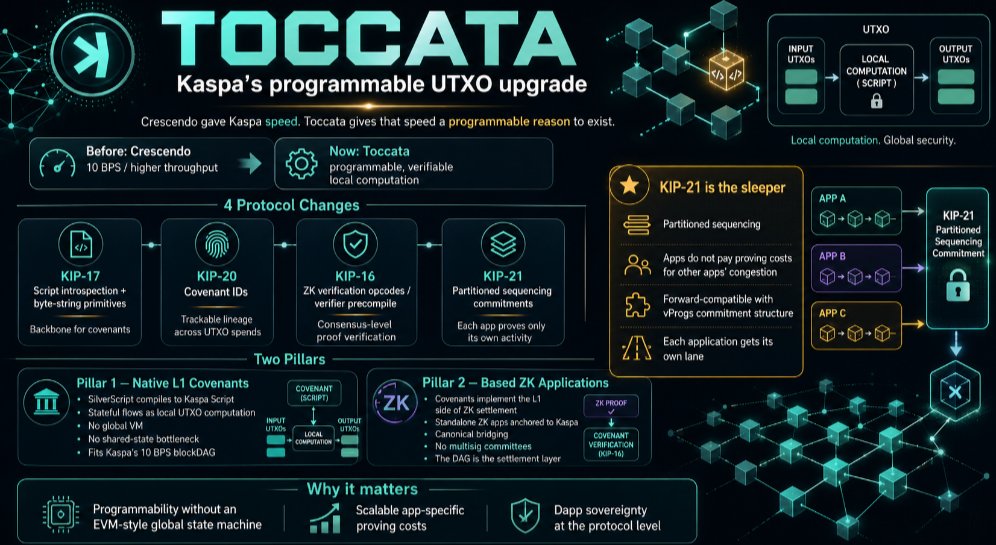
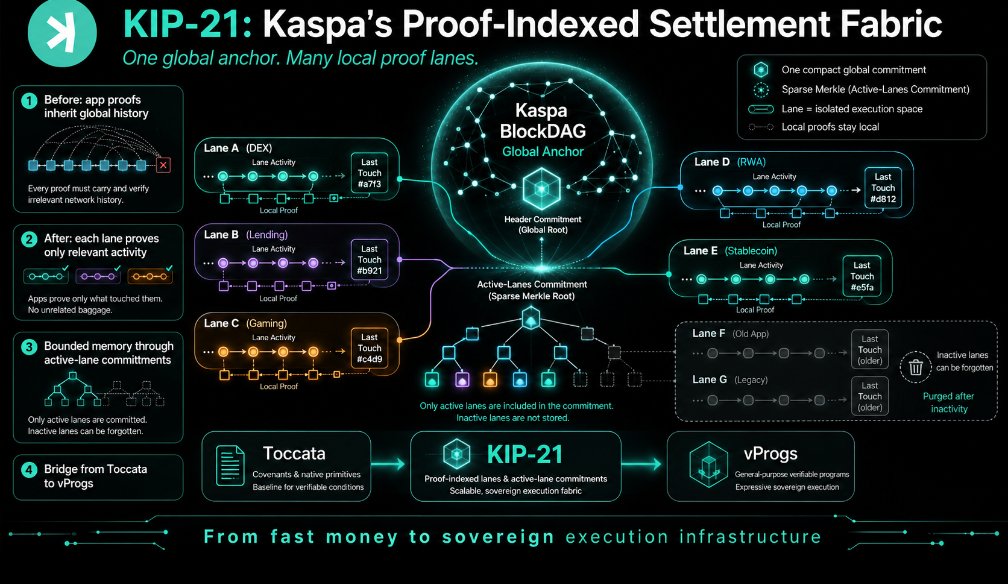
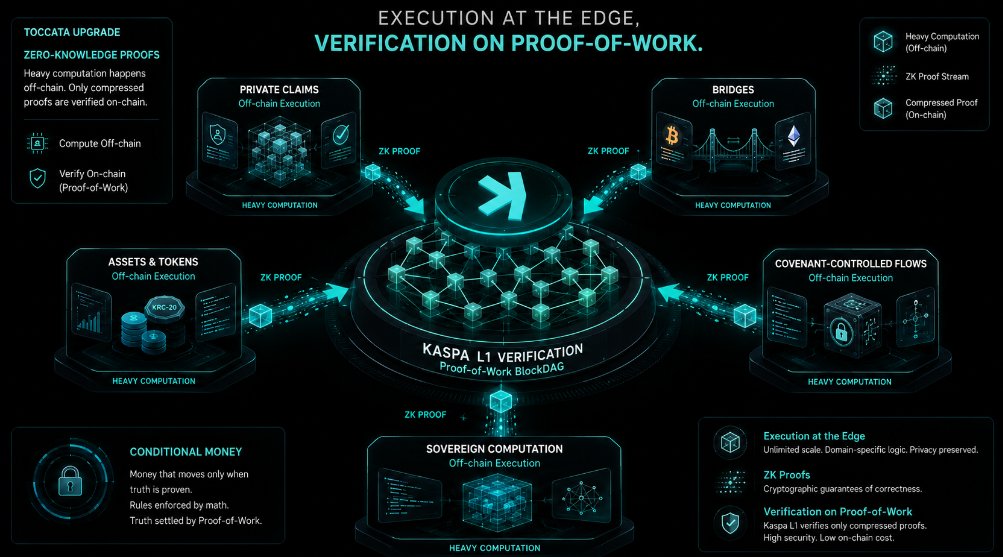
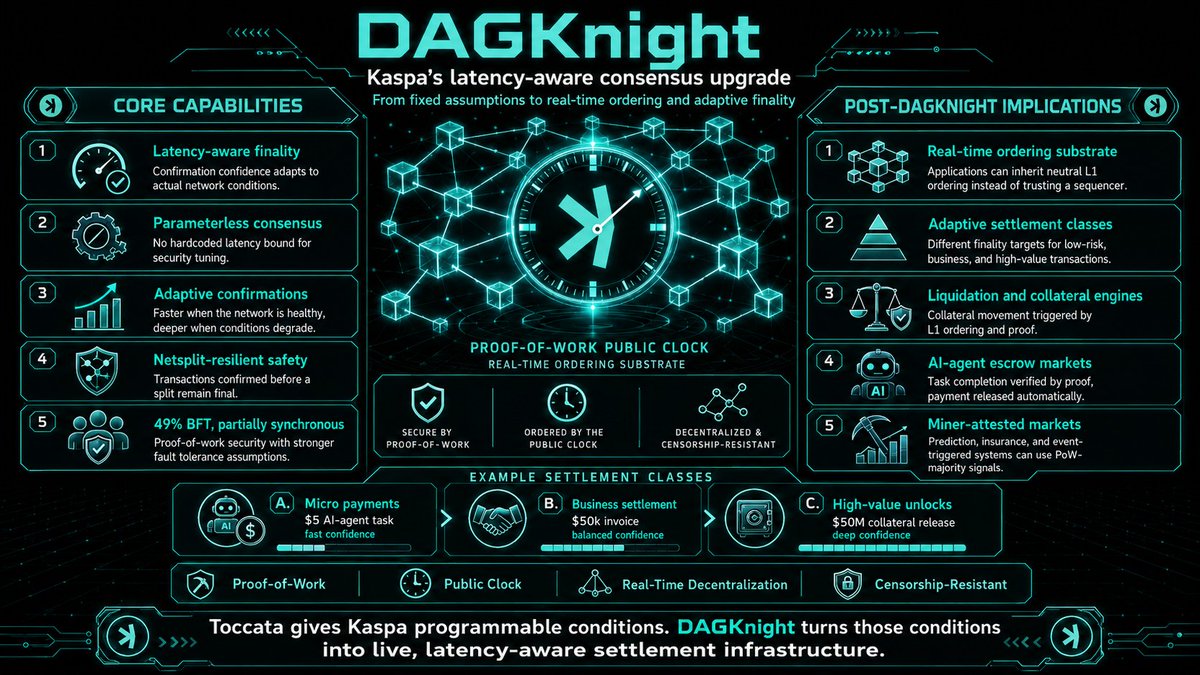
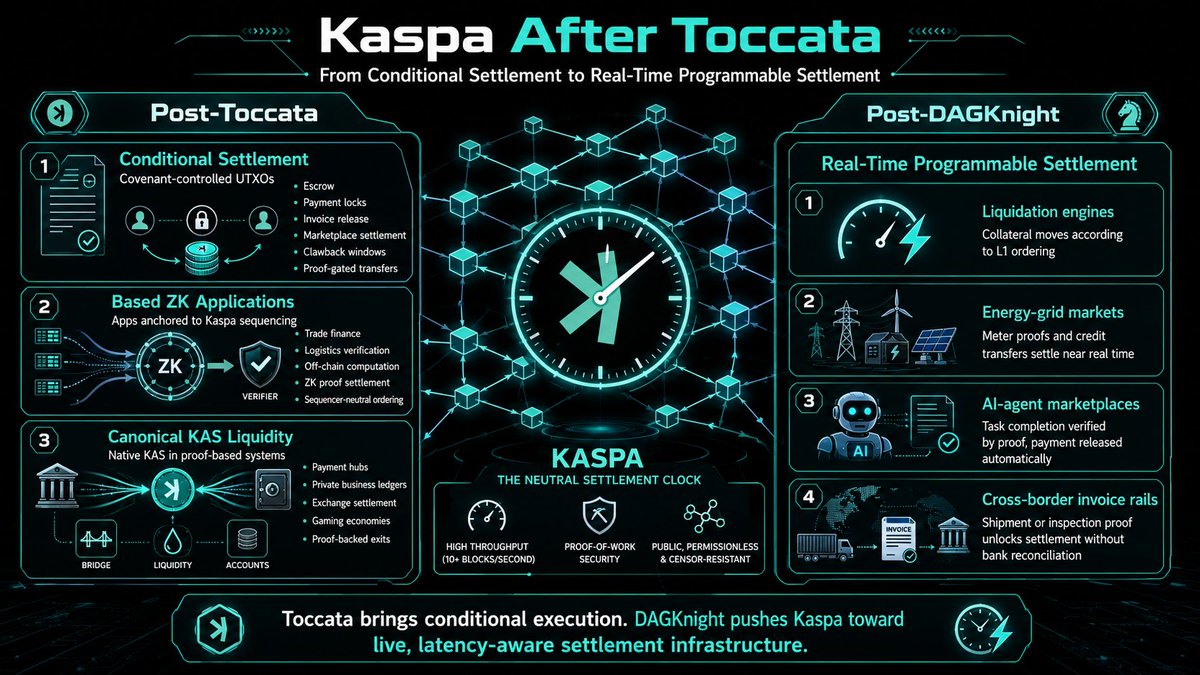
Toccata is Kaspa’s upcoming major upgrade direction. It involves KIP-16, KIP-17, KIP-20, and KIP-21, and will push Kaspa toward supporting Covenants, ZK proof verification, and more advanced UTXO programming capabilities at the L1 level. However, before Toccata is activated on mainnet, these capabilities should be described as upcoming or planned, rather than as features already fully available on the current mainnet.
Therefore, Kaspa should not be understood simply as “a faster Bitcoin” or just another high-performance public chain. What truly matters is that it continues to evolve along the PoW UTXO technical path: using BlockDAG to increase throughput, mass accounting to control state costs, and Covenants together with ZK precompiles to expand programmability.
Kaspa’s technical significance is that it reopens the evolutionary space for PoW public chains. PoW does not have to remain only a low-speed settlement layer. Through new consensus structures and script extensions, it can move into a new stage of high-speed confirmation, resource-controlled execution, and verifiable computation.
5
21
90
3,313

BaN𐤊ℚuOτE retweeted

Jun 12
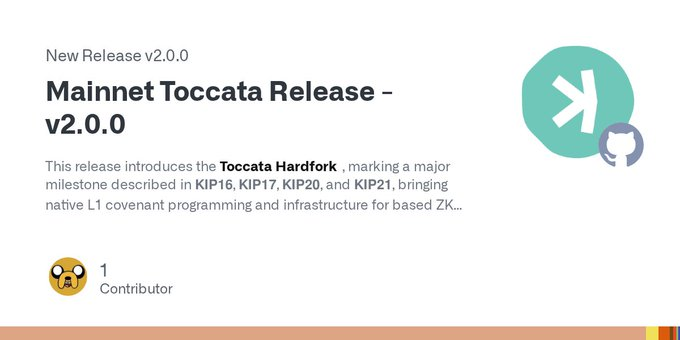
The clock is ticking, and the closest we get to the Toccata hard fork release, the more bullish I get
You're not ready for the revolution that's coming to $KAS
The market isn't ready either
I suspect we'll see the true effect on price towards Summer's end
17
51
228
9,263
BaN𐤊ℚuOτE retweeted

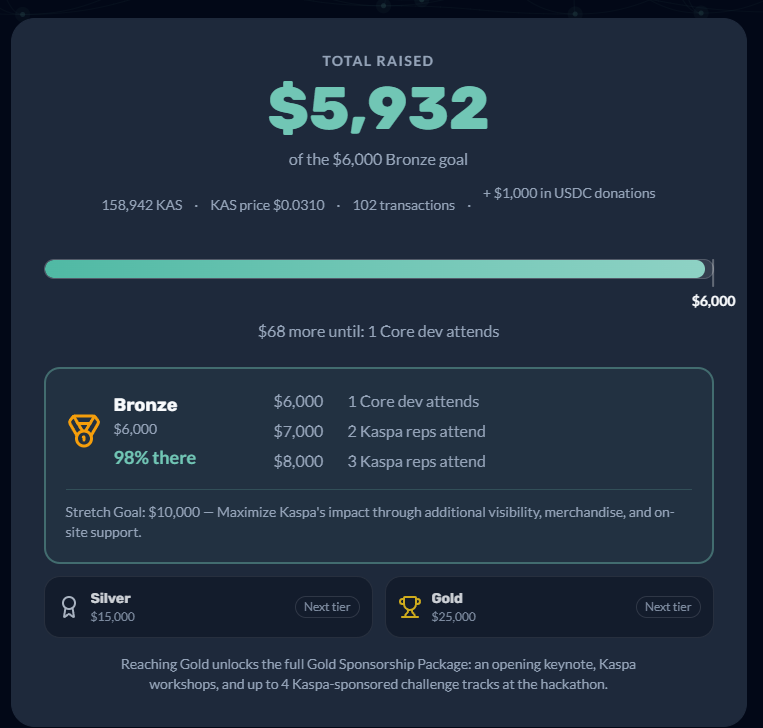
I’ll donate another $500 towards the Kaspa London fund too @Seb28_7 @KasMaporg
So 4 of my notification crew $500, and $500 towards the Kaspa London university fund.
69
48
262
5,328
BaN𐤊ℚuOτE retweeted

Jun 12
That's right $KAS
Jun 12

I think this is a great time to start accumulating crypto assets.
Money from the traditional markets will eventually rotate back into Bitcoin and crypto.
There are a lot of strong opportunities in this market right now, and I don’t think people are paying enough attention.
This is the time to get positioned before the money comes back in.
This is how you front-run the market.
2
20
181
4,674

11
92
233
7,131
BaN𐤊ℚuOτE retweeted

Jun 11
The Tocatta hard fork is extremely close. We are monitoring each step so you don't have to. Moreover, U.S. policy oversight within the crypto market is in full swing as the SEC and CFTC draft additional pro-crypto statements. We are about to witness the tokenization of everything kasmedia.com/article/toccata…
1
16
62
1,323
BaN𐤊ℚuOτE retweeted

Jun 11
Kaspa-NG has an active PR here to update it to be toccata ready. github.com/aspectron/kaspa-n…
Once its reviewed it will be pushed to the master branch. It is recommended to wait for the official release before using. Keep checking here for the update - github.com/aspectron/kaspa-n…
Jun 11

Great video. Will Kaspa-ng be usable?
6
42
210
9,988
BaN𐤊ℚuOτE retweeted

Jun 10
Perhaps you guys would want to interview one of Kaspa's Core members or prominent community members.
@hashdag's Coordination Markets thesis (see: hashd.ag/project-staghunt-si…) is pretty neat, fitting and a game-theoretically-sound model for said activity.
cc @johncoogan, @jordihays
5
14
642
BaN𐤊ℚuOτE retweeted
Strongly considering just being a
$KAS account these days, trading and occasional ads for business.
Really enjoying trading and Kaspa is Kaspa, enough said.
79
69
496
7,384