
CMO @DCtv_Africa| Web3 Analyst | Web3 Marketer | Content writer |Amb @GPT360_Official & @UpScaleTrade | DM for collab
Joined August 2022
- Tweets 11,759
- Following 974
- Followers 2,053
- Likes 30,604
539 Photos and videos











₿arrister retweeted

Apr 19
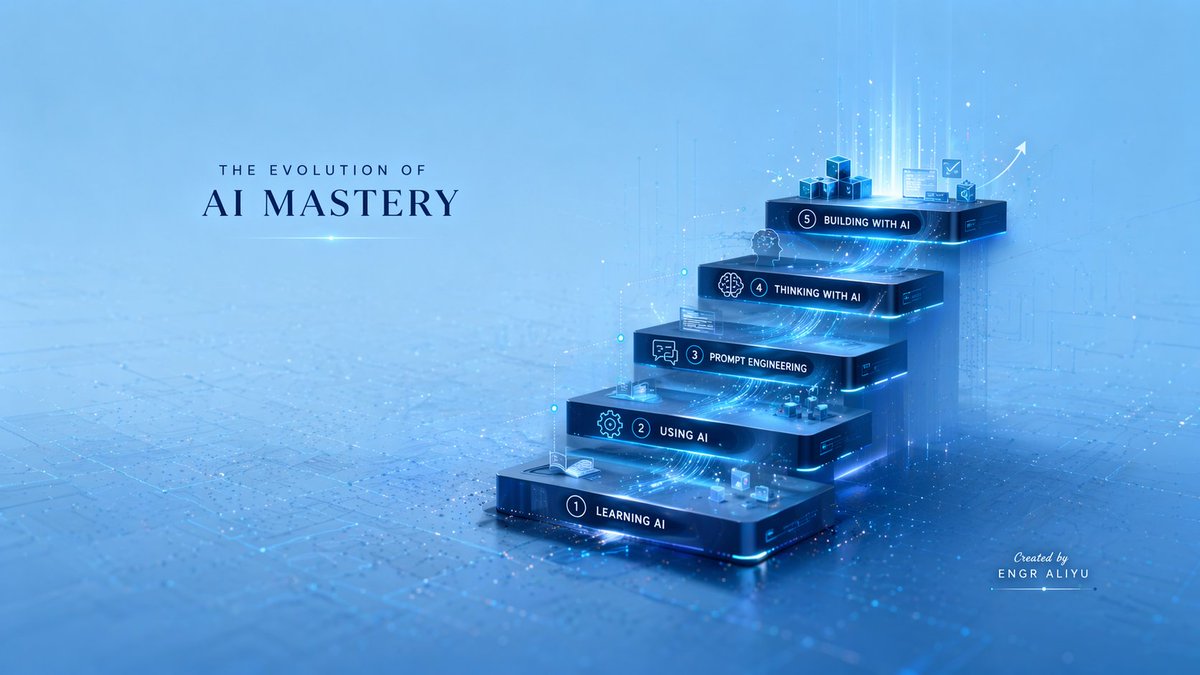
The Evolution of AI Mastery
Most people think AI is just about learning tools.
It’s not. It’s a progression of leverage.
↳ Learning AI
Understanding the basics, tools, and possibilities
↳ Using AI
Applying it to tasks, improving speed and efficiency
↳ Prompt Engineering
Communicating with AI precisely to get high-quality outputs
↳ Thinking with AI
Using AI as a cognitive partner for ideas, strategy, and decision-making
↳ Building with AI
Creating systems, products, and workflows powered by AI
The real shift happens when you stop using AI and start thinking with it.
That’s where leverage becomes exponential.
↳ From Tools → To Thinking → To Building Intelligence
↳ Most people are stuck at Level 2
Where are you currently in this stack?
14
2
37
566
₿arrister retweeted

Bismallahi... ❤️ Inda aka ga munyi kuskure ayi afuwa. Yin farko ne.
29
27
290
4,677

𝕎𝕙𝕪 ℕ𝕚𝕔𝕙𝕖 𝔽𝕠𝕔𝕦𝕤 𝔹𝕖𝕒𝕥𝕤 𝕋𝕣𝕖𝕟𝕕 ℂ𝕙𝕒𝕤𝕚𝕟𝕘 𝕚𝕟 𝕎𝕖𝕓𝟛 ?
Trends make noise, niches print results. If your strategy changes every week, you’re compounding confusion, not value. Focus is how you escape the cycle👇
1. Most people in #web3 chase noise, not signal. Trends rotate fast and erase shallow players. Depth compounds. Pick a niche, study it deeply, and build insight others cannot replicate. Start today.
2. Narratives reward early understanding, not late participation. If you follow trends, you exit with the crowd. If you master a niche, you enter before attention. Research patterns, track flows, publish insights.
3. Your edge in Web3 is not speed, it’s clarity. Trends create confusion, niches create authority. Focus builds memory, memory builds leverage. Document your niche daily and refine your thesis publicly.
4. The market pays specialists, not generalists reacting to hype cycles. When you stay in one lane, you see what others miss. Build frameworks, test ideas, and turn knowledge into consistent outputs.
5. #Trends give visibility, niches give control. One is temporary, the other compounds. If you want longevity, stop switching lanes. Go deep, stay consistent, and make your name synonymous with your niche.
Finally,
If you don’t choose your lane, the market will keep choosing it for you and you’ll always be late. Commit, go deep, and make your niche your unfair advantage.
#web3
#Crypto2026
#tadc
5
1
53
211
₿arrister retweeted

Feb 25
Good afternoon to our new users! Most of you probably don’t yet understand what this app is, who we are, or what exactly we do. There isn’t much time, so I’ll try to keep this brief.
As a CEO, I’m probably far from perfect. But as a visionary, I’m confident that I’m truly good and I’ve proven it more than once over the past decade.
You can all clearly see the rapid development of AI technologies. Industry leaders publicly declare their commitment to universal prosperity and position themselves as being “for everything good and against everything bad.”
For some reason, I don’t believe them. AI represents a real threat to humanity, and within just a few years, you will feel it firsthand. People will be losing their jobs, the volume of misinformation and bots will explode, and our children will become less capable while AI agents grow exponentially more intelligent.
That’s why we are building something like a digital Ark for people who do not want to live in an AI-driven economy as its biological extension.
We believe in people, not in AI. We are building a new economy based on people their talents, skills, principles, and activity. BlackRock tokenizes stocks, oil, and gold fine. We tokenize people.
We will build an ecosystem where no one can cheat anyone. An ecosystem with liquidity and trust because it will be organized from the top down, with strict structure and zero opportunity to scam and disappear into the sunset.
Predictability. Transparency. Liquidity. Trust.
Stay with us, and soon you will be able to protect your savings and even grow them while global markets burn, conflicts escalate, bubbles burst, uncertainty rises, and fiat currencies face hyperinflation.
When Meta launched the Libra project (an attempt to integrate a financial layer into social networks) I immediately said it would fail. And of course, it did:
cnbc.com/2019/10/11/ebay-dro…
We are the ones who made it happen. We have built a social network with an integrated financial layer. But that was only the beginning. Soon, we will launch our Launchpad, and all of you will be able to invest in other people.
It could be young football players, actors, or singers. Or perhaps a talented mathematician. A surgeon.
Invest in people because people are the most valuable asset on this planet, not oil and not gold.
We believe in people. Stand with us.

57
336
464
21,743
₿arrister retweeted

Feb 27
The Evolution of Utility: @Normalfi
The gap between TradFi and DeFi is officially closing. We’re moving beyond simple swaps to a new premier standard for global asset accessibility. The future isn't just on-chain it's Normal. Why @Normalfi is a Game-Changer:
🔹 Synthetic Assets: Why limit yourself to just crypto? Access Real-World Assets (RWAs) and crypto from a single DEX. By leveraging the @StellarOrg network, global markets are now open to everyone. No gatekeepers. 🌎
🔹 On-Chain Index Funds: Professional-grade wealth management, decentralized. Create fully customizable, yield-bearing index funds with automated rebalancing for tokens, RWAs, and ETFs.
🔹 Built on Soroban: This isn't just another fork. Built with Rust on the Soroban smart contract platform, Normal delivers enhanced security, scalable performance, and total transparency.
Mass adoption happens when complex tech becomes "Normal" to use. Whether you're looking for synthetic exposure or diversified index funds, the future of utility is live.
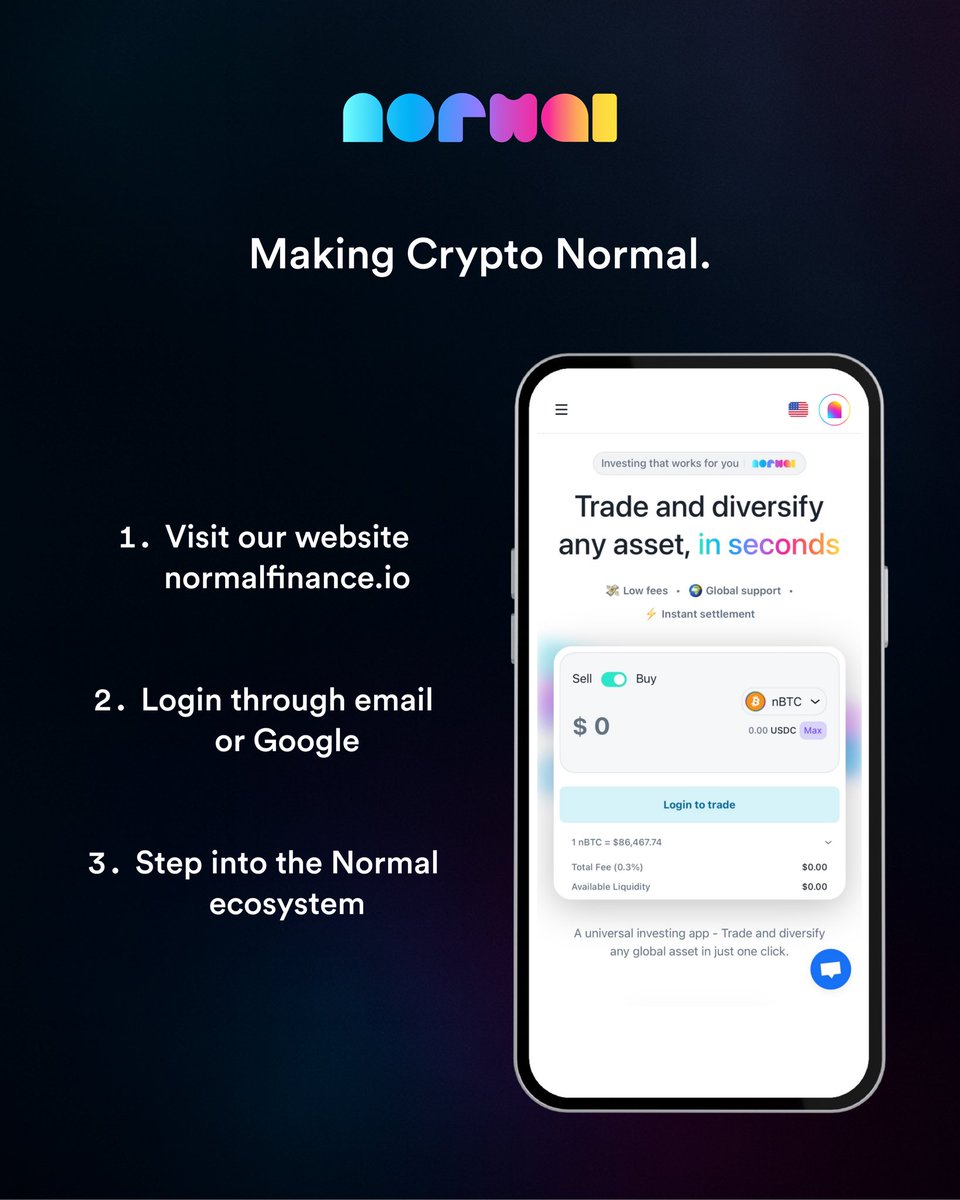
Get started today: 🔗 normalfinance.io?ref=HMWD2W3…
Make crypto normal 🦄
#Normalfi #BetterOnStellar
27
11
56
19,063



₿arrister retweeted

Jan 11
QUICK LEARN
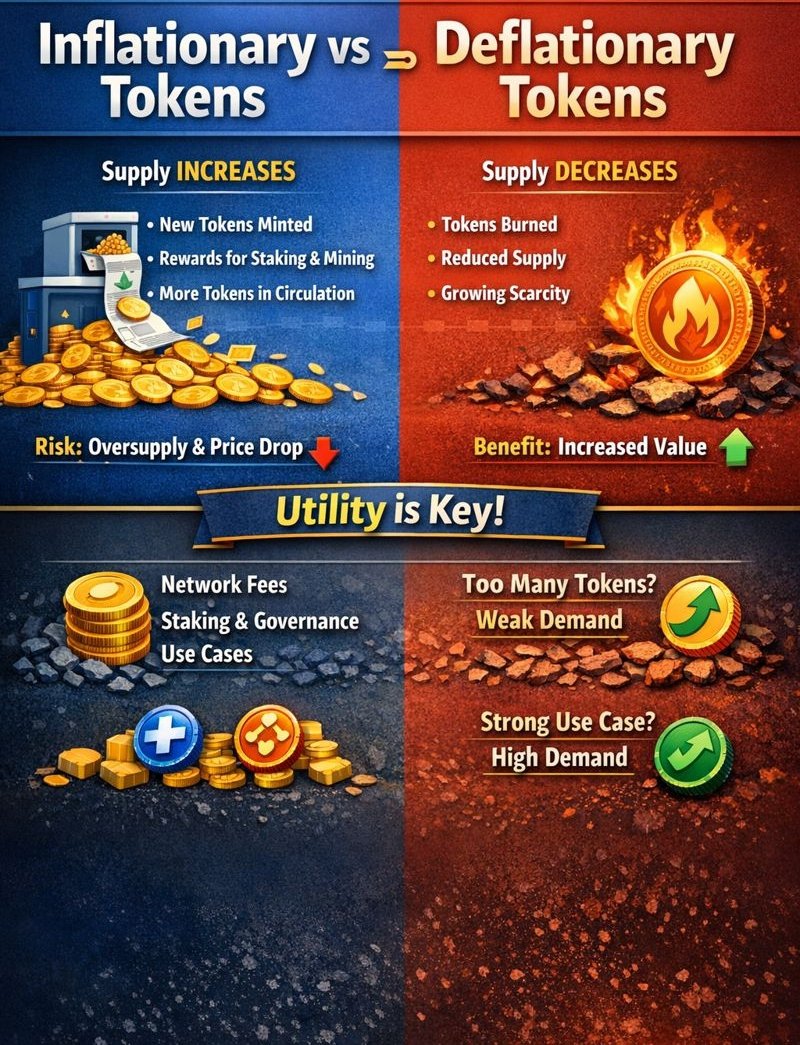
Inflationary vs Deflationary Tokens explained in simple terms
When people talk about crypto tokens, one of the most important things they forget to check is supply. Not price. Not hype. Supply.
That’s where inflationary and deflationary tokens come in.
An inflationary token is one where new tokens are constantly being created. Just like how governments print more money, some blockchains mint new coins as rewards for validators, miners, or stakers. This means the total supply keeps increasing over time.
What does that mean for you?
If demand doesn’t grow faster than the supply, each token becomes less valuable. Even if the project is good, too many new tokens entering the market can put pressure on the price.
Examples of why inflationary tokens exist:
✔️They pay network validators
✔️They reward users for staking
✔️They fund ecosystem growth
Inflation isn’t always bad, but it must be controlled.
Now let’s talk about deflationary tokens.
A deflationary token does the opposite. Its supply goes down over time. This usually happens through token burns, where a portion of tokens is permanently destroyed during transactions, fees, or special events.
As supply goes down, each remaining token becomes more scarce. If demand stays the same or increases, the value of the token can rise simply because there are fewer of them available.
This is why many people love deflationary models. It rewards long term holders.
But here’s the important part most people miss
◽Deflation alone does not make a token valuable.
◽Inflation alone does not make a token weak.
What really matters is whether the token has real utility.
If a deflationary token has no use case, nobody will care even if supply is shrinking.
If an inflationary token is deeply needed for fees, staking, governance, or apps, people will keep buying it even as new supply enters the market.
The best tokens usually find a balance
Enough inflation to keep the network running
Enough burns or sinks to prevent uncontrolled dilution
Before you invest in any token, always ask
✔️How is supply created
✔️How is supply removed
✔️And what is this token actually used for
That’s how you spot tokens that last, not just pump.
41
1
47
499

PIVX shows privacy can coexist with security and governance. As surveillance grows, chains built for discretion become infrastructure, not options. Watch usage, not noise.
#PIVX #BlockchainPrivacy #PrivateDigitalCash #CryptoSecurity #DecentralizedGovernance
2
44