Joined December 2007
- Tweets 66,108
- Following 1,455
- Followers 2,174
- Likes 12,790
1,103 Photos and videos










Nicolas `BeRewt` Biri retweeted

Jun 12
Sneak peek - this Tuesday @sharan_konerira and me are talking about the renewed Hydra proposal.
We'll talk with teams like @MasumiNetwork and @DeltaDeFi that create experiences on Cardano with Hydra under the hood.
Join us! And read on👇🧵
x.com/i/spaces/1nxeLLkRvPaJX
1
3
14
759
Nicolas `BeRewt` Biri retweeted

Jun 13
“the other AI models are personal assistants that help you code. our model is so good it’s dangerous”
18
59
1,473
41,647
Nicolas `BeRewt` Biri retweeted

Jun 12
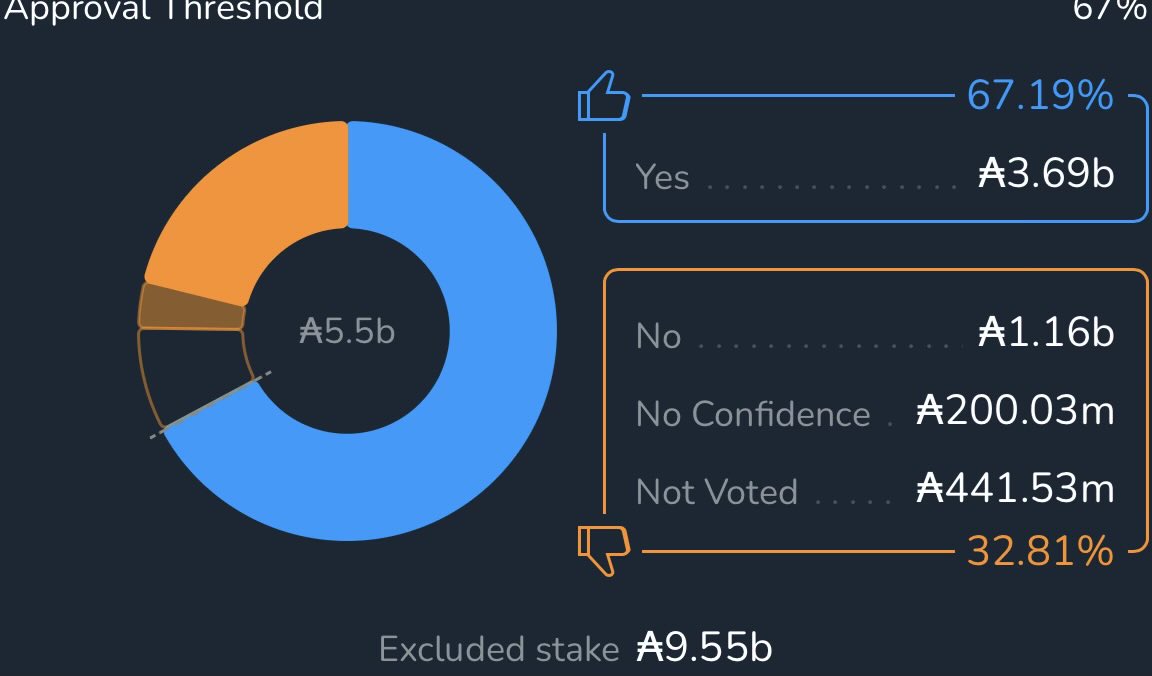
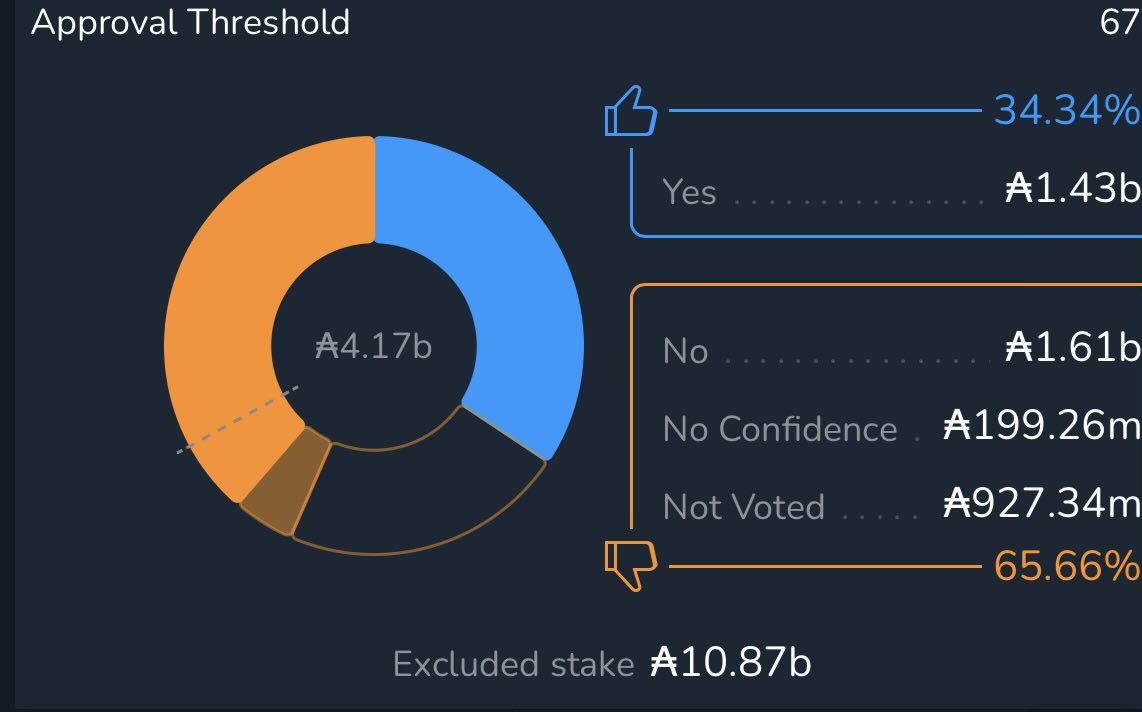
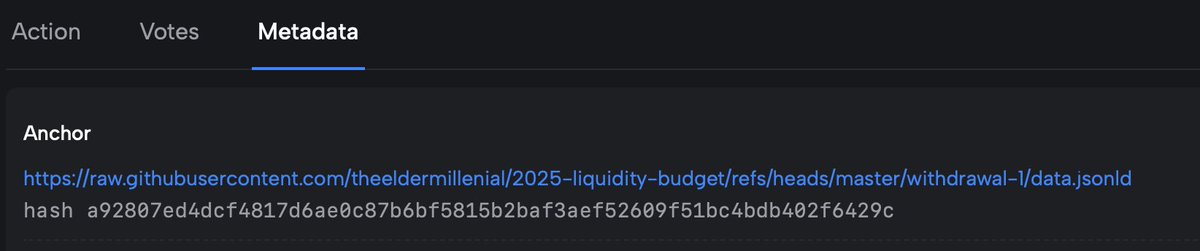
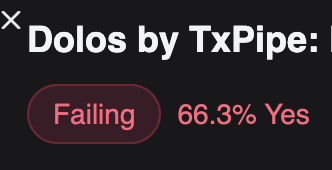
Failing by a low margin!!
If you want to support go vote for!
1
2
3
253
Nicolas `BeRewt` Biri retweeted

Jun 11
Thanks @IOHK_Charles. We both agree there is a place for X but we also agree that moving to Discord where we can have proper discourse about the future of Cardano is the way forward. Cardano is and always will be a welcoming place but the community deserves our focus to be on building the future and not engaging on the relentless and endless re-litigation of passed decisions or actions that have little to no bearing on the forward direction.
I’ve also spoken with @F_Gregaard who also welcomes this change of venue as we all believe it will result in a more coherent, transparent and aligned vision for Cardano.
We look forward to seeing you there. More details to come. 🙂
Jun 11

Dropping by to let everyone know that I spoke with @phillip_pon and we are working out a plan to create a discord for a great migration of the Cardano community from X. We can have happy, positive, well-moderated channels and leave behind the drama, lies, endless rage, and embittered people for a place where real conversations and real progress can be made.
I will continue broadcasting live streams to X as I have a million followers here, but will only take AMA questions from the new Cardano and current Midnight discords. I've seen some commentary that broadcasting means I'm back on X. For those people, I can't solve stupid.
Enjoy your scandals of the week and FUD. Real work is done elsewhere. Looking forward to Cardano ascending to better days, governance, and culture.
30
33
315
7,748
Nicolas `BeRewt` Biri retweeted

Jun 11
Dropping by to let everyone know that I spoke with @phillip_pon and we are working out a plan to create a discord for a great migration of the Cardano community from X. We can have happy, positive, well-moderated channels and leave behind the drama, lies, endless rage, and embittered people for a place where real conversations and real progress can be made.
I will continue broadcasting live streams to X as I have a million followers here, but will only take AMA questions from the new Cardano and current Midnight discords. I've seen some commentary that broadcasting means I'm back on X. For those people, I can't solve stupid.
Enjoy your scandals of the week and FUD. Real work is done elsewhere. Looking forward to Cardano ascending to better days, governance, and culture.
573
392
2,954
143,166

The @BTCPrague conference is where everything Bitcoin is happening this week. The Pogun team is here connecting directly with the best builders and blockchain visionaries.
If you want to connect with our CPO @hans_expands on the ground, DM us. #BTCPrague
8
38
678

Token Campaigns are now LIVE on @AdaLink_io 🚀
Today, you don’t need permission to become a Web3 ambassador.
Just promote and earn $ADA.
It’s that simple.
LFG! 🔥
3
10
22
619
Nicolas `BeRewt` Biri retweeted

Jun 10
Cardano Summer Challenge is LIVE 🔴
🎁 500 $ADA in rewards
Promote $NIGHT, share your AdaLink affiliate link, and help onboard new users.
📍 Full rules in Discord (link in comments)
🔁 Repost this announcement for your entry to count
⏰ Ends June 17, 2026
Let’s grow Cardano! 🚀
11
41
62
2,322
Nicolas `BeRewt` Biri retweeted

Jun 10
'Beware of bugs in the above code; I have only proved it correct, not tried it.' -- Donald Knuth
6
22
179
31,553
Nicolas `BeRewt` Biri retweeted

Jun 11
As a DRep, I decided to vote YES on the proposal: IO: Hydra
My rationale:
Hydra is one of Cardano’s most important scaling technologies and one of the few L2 solutions already connected to real production use cases.
This proposal focuses on hardening Hydra v2, improving performance, strengthening operations, supporting the ecosystem, and improving the developer experience.
This can help make Cardano viable for high-performance use cases such as institutional DeFi, agent payments, micropayments, gaming, voting infrastructure, and point-of-sale systems.
I would like to see multiple types of L2 solutions on Cardano, including alternatives to channel-based infrastructure. Technical diversity is healthy because different L2 designs serve different use cases.
However, Treasury funding must be disciplined.
Several L2 or scaling-related initiatives have already received funding or support in the past. Before asking for additional funding, these projects should demonstrate delivery, adoption, and a credible path to real usage.
In my view, the Treasury should not try to fully fund every possible L2 direction at the same time. Given the Net Change Limit and current market sentiment, we need to focus on quality, not quantity.
Only a small number of L2 solutions should receive major Treasury support, and continued funding should depend on evidence of production use, ecosystem demand, and measurable impact.
Hydra currently has the strongest case because it is the most mature Cardano L2, is ready for adoption, and already has real users.
I therefore see this proposal as a strategic investment in adoption, while still expecting other funded L2 initiatives to deliver results before requesting further Treasury resources.
At the same time, it is important to recognize the broader context. In the Ethereum ecosystem, there is an ongoing debate about how much user activity and liquidity should remain on L2s versus returning to L1.
Cardano should have a clear L2 strategy before making repeated long-term investments into multiple scaling solutions.
The ask of ₳5.1M is significant, but reasonable for core infrastructure work.
However, IO should also work on commercializing Hydra and at least partially covering the costs of future development.
I understand that this is difficult for an L2 designed to offer near-zero fees. Still, there are realistic options. IO could offer Hydra-as-a-service for teams that do not want to run infrastructure themselves. Another option could be enterprise support, integration services, or managed operational tooling.
My main concern is that detailed milestones, acceptance criteria, payment amounts, and delivery dates will be finalized later in the legal contract.
Ideally, DReps should be able to review this level of detail before approving a treasury withdrawal. Even better, DReps should have representatives involved in milestone approval or oversight. Future proposals should improve this.
Despite a few concerns, I believe Hydra is strategically important for Cardano, has real users, and can support adoption that would otherwise move to competing ecosystems. Therefore, I support the proposal.
If you'd like to support my work, consider delegating to the MANDA pool and backing me as a DRep. Your support is the only way I can get time for governance.
MANDA Pool ID:
pool1c3fjkls7d2aujud8y5xy5e0azu0ueatwn34u7jy3ql85ze3xya8
My DRep ID:
drep1y2m0g4r66pyaw3p7u454wc0p4f0ygm8ueaev0mgd3tvwm7sskqwqp

4
14
144
2,322
Nicolas `BeRewt` Biri retweeted

Jun 10
Looking forward to your support on the Hydra proposal. Please reach out if you have any questions.
Jun 9

Our standalone Hydra L2 proposal is live, unbundled as the community asked. DReps, it's ready for your vote.
Hydra is currently the only production-grade L2 on Cardano with live applications depending on it. It gives Cardano what L1 can't reach even with Leios and Peras: sub-second finality and zero fees. With this, it ensures that the Cardano ecosystem stays competitive for current and future builders.
This proposal funds four workstreams over two quarters so live users don't migrate and new builders choose Cardano. The ask: ₳5.1M, milestone-gated, with independent assurance and full Intersect governance.
See proposal:
gov.tools/governance_actions…
Website:
momentum.cardano.iog.io/prop…
4
12
4,328
Nicolas `BeRewt` Biri retweeted

Jun 10
⚛️Post-Quantum Cryptography: The Migration No One Can Outsource
There is no quantum computer breaking Bitcoin today. None breaking Ethereum, your bank, or the internet. Anyone selling that headline has a product to sell.
The honest version is more uncomfortable. The timelines are pulling forward, the public record probably does not show the full frontier, and most of the ecosystem is still ordering caipirinhas at the bar while the water pulls back from the beach.
I was hesitant to put it in such direct terms. But this is a migration we collectively agreed to do, with a deadline, and we are late. So let me call it what it is.
1. Quantum is not a fast computer
Fix this in your head first. A quantum computer runs on qubits with superposition and entanglement, only holds its state near absolute zero, and does not do more of what classical computers do. It does different things. One of them is Shor's algorithm, which breaks the asymmetric cryptography (RSA, ECDSA) that protects almost everything you do online.
2. What changed in the last few weeks
(Wild) estimates of "Q-day" have moved from "10% by 2030" to "50% by 2032" in serious recent work. Then two things happened back to back.
Google published a paper showing Shor's algorithm breaks ECDSA, the signature scheme used by almost every blockchain, with far fewer logical qubits than previously assumed. They published the result without the construction, attaching a zero-knowledge proof instead. We now know this was the outcome of US government pressure to keep the details classified.
Then the open source community used Google's ZK verifier as a reward function in a reinforcement learning loop. An LLM generates candidate Shor circuits, the verifier scores them, the loop iterates. Two days in, the model matched Google. By the time we recorded the podcast, it was already 20% better, it's now 41%!! (cf. ecdsa.fail)
Read that again. AI is now actively compressing the path to Q-day, using a verifier that exists because the result was classified.
3. "When" is the wrong question
Cryptography is a trust mechanism. It does not fail on Q-day. It fails the moment the trust is no longer credible, which is much earlier.
The threat splits into two pieces with very different deadlines:
Authentication. A quantum attacker recovers your private key from your public key and signs as you. As long as we migrate signatures before Q-day, this is contained.
Encryption. Harvest now, decrypt later. An attacker captures encrypted traffic today and decrypts it the day they get the machine. For anything that needs to stay confidential in ten or fifteen years, it is already late. Nothing you do tomorrow fixes 2026.
4. The migration is happening, unevenly
NIST standardized the first post-quantum algorithms in 2024 (ML-KEM, ML-DSA, Falcon, SPHINCS ). The deadline is 2030 for critical systems, 2035 for the long tail. Two years are already gone. Most of the industry has not started.
Centralized systems will get there. The path is painful but linear, and compliance forces it. PQC readiness is becoming an institutional due diligence requirement. The interesting drama is somewhere else.
5. Bitcoin's hard problem is not cryptography
Blockchain cryptography is simple. The cryptographers in this industry know exactly what to migrate to. The bottleneck is social consensus, on a system designed to make governance expensive. That is the property that keeps Bitcoin credibly neutral. It is also the property that makes a coordinated migration genuinely hard.
The trade-offs are real. Hash-based signatures (SPHINCS , the Blockstream "SHRIMPS" line) are conservative and well understood, but roughly an order of magnitude larger than what Bitcoin uses today. They would push throughput from around 7 transactions per second to under 1 (without blocksize change). Lattice-based signatures (ML-DSA, Falcon) are smaller and faster, but have only ~25 years of public cryptanalysis. The world outside blockchain is converging on ML-DSA. Almost no blockchain wants to follow.
You also lose properties you have come to rely on. Threshold signatures and MPC, which underpin a meaningful slice of modern custody, are awkward or impossible on hash-based schemes and clunky on lattice ones. Call it what it is: post-quantum cryptography is resistant against quantum adversaries and worse on almost every other dimension we care about. There is no free-lunch version.
6. The Satoshi question
Migration must be one way. If users can move freely between legacy and PQ addresses, most will not move, and half a migration is no migration. A 50% migrated chain is still a chain a quantum attacker can drain to zero.
That leaves dormant coins. Satoshi's million BTC. Lost wallets. Dead keys. Three options, none of them comfortable:
Leave them. Honest to the original ethos, operationally suicidal.
Burn them. Honest accounting. The 21 million was always an upper bound. Politically explosive.
Freeze and redistribute as block reward over time. Rebuilds the long-term security budget that, mathematically, is going to struggle. Of the three, the least bad.
The uncomfortable part is admitting that "do nothing" is itself a choice with consequences.
7. Hard forks are the most likely path
Honest prediction. The community will not reach a single clean social consensus in time. Several opinionated groups will ship their own post-quantum forks, with different signature choices, different migration windows, different stances on dormant coins.
Then the market decides. Liquidity, miners, custodians, exchanges, ETFs. The "real" Bitcoin will be the chain people trust against a quantum threat. At that point cryptography becomes timing, marketing, and politics as much as math. That is the downside of the decentralization we asked for. Pretending otherwise is theater.
8. The glimmer
This ecosystem is resilient. We have the best (applied) cryptographers in the world working on this. The migration will be ugly. It will get done.
What we need is urgency, and the urgency is arriving. Not because Q-day arrived, but because the timeline is collapsing in public, in the papers, and in the AI loops chewing on classified results in real time.
The biggest risk is not quantum arriving early. The biggest risk is crypto starting late.
No panic. But no cappuccinos by the beach either. The water is pulling back. Serious people should start moving.
🎬 Video version below
65
34
142
9,094
Nicolas `BeRewt` Biri retweeted

Jun 9
The deal is signed. @FireblocksHQ is coming to Cardano. 🤝
More details coming shortly.
66
256
1,194
71,880
Nicolas `BeRewt` Biri retweeted

Jun 10
I'd like to take this opportunity to thank the wider Cardano community, and particularly all DReps, for your engagement on the IOR CV26 proposal campaign.
For those who votes Yes - thank you for your trust and support.
For those who voted No and Abstain - your feedback has been noted and we will continue to strive to earn your vote going forward.
Research is a complex story to tell, and delivery can be as equally as challenging. This is now our focus for 2026 - delivering the proposal, progressing implementation readiness, and creating the impact that enables Cardano leadership.
IOR will be be providing a mid-year report on progress in July. Stay tuned
Jun 9
The voting window has now closed. Thank you to all the DReps and Cardano community for your support and confidence in the IOR proposal.
From scalability to post-quantum security, your votes mean that we will continue to deliver on foundational research and technology innovation through all Cardano Vision 2026 programs.
Let’s build. 🌐🛠️
2
5
32
1,322
Nicolas `BeRewt` Biri retweeted

Jun 9
The voting window has now closed. Thank you to all the DReps and Cardano community for your support and confidence in the IOR proposal.
From scalability to post-quantum security, your votes mean that we will continue to deliver on foundational research and technology innovation through all Cardano Vision 2026 programs.
Let’s build. 🌐🛠️
7
39
271
5,784
Nicolas `BeRewt` Biri retweeted
Jun 9
Our standalone Hydra L2 proposal is live, unbundled as the community asked. DReps, it's ready for your vote.
Hydra is currently the only production-grade L2 on Cardano with live applications depending on it. It gives Cardano what L1 can't reach even with Leios and Peras: sub-second finality and zero fees. With this, it ensures that the Cardano ecosystem stays competitive for current and future builders.
This proposal funds four workstreams over two quarters so live users don't migrate and new builders choose Cardano. The ask: ₳5.1M, milestone-gated, with independent assurance and full Intersect governance.
See proposal:
gov.tools/governance_actions…
Website:
momentum.cardano.iog.io/prop…
12
87
439
17,392
Nicolas `BeRewt` Biri retweeted

Jun 9
Want to get the inside scoop on Dingo? Join Blink Labs CEO @wolf31o2 as he discusses Dingo and our 2026 roadmap.
Jun 9

🚀 Dingo: High-Performance Cardano Node
Join @wolf31o2 (CEO of Blink Labs) for a discussion on Dingo, a high-performance Cardano node written in Go.
Vision, direction, and what’s next 👀
📅 Friday
🕑 14:00 UTC
🔗 app.addevent.com/calendar/TG…
2
5
19
802
Nicolas `BeRewt` Biri retweeted

Jun 9
Cardano DEX volume is up 217.77% over the last 7 days, with weekly volume now sitting at $35.4m.
Cardano perps volume is also up 29.66% over the same period, reaching $11.62m in 7 day volume.
Real usage. Real settlement. Real liquidity, and increasing activity, all happening on Cardano.
17
49
398
6,784
Nicolas `BeRewt` Biri retweeted

Excited to see the launch of Night Sky, @midnightfdn's new accelerator program for founders building privacy-first solutions.
Too often, privacy is treated as something you add later. The reality is that some problems can't be solved effectively without privacy being part of the architecture from day one.
Night Sky gives teams direct access to technical guidance, ecosystem support, and the resources needed to move from concept to execution.
Looking forward to working with builders exploring what's possible.
Applications now open: midnight.network/blog/night-…
2
15
86
4,188
Nicolas `BeRewt` Biri retweeted

Jun 9
Tech companies: “Our clever cryptographers have found a way to preserve privacy and 100% anonymity while also performing age checks.”
UK govt: “No, that’s not what we wanted!”

They say: "protecting children from social media"
They mean: "anonymous users will be presumed underage and banned from speaking freely"
16
621
8,684
239,075